28 Words That Exist in Other Languages With No English Equivalent
English has nearly a million words — more than almost any other language on the planet — and it still can’t do everything. There are feelings, social situations, and ways of experiencing the world that other languages have named precisely and English has simply left blank.
The technical term for this is a lexical gap: a place where a concept exists but the word doesn’t. Every language has them.
And when you discover what sits inside those gaps, you sometimes find that a feeling you’ve had a hundred times has been waiting, unnamed, for you to borrow its name from somewhere else. The 28 words here all describe real things — not linguistic curiosities invented for listicles, but concepts that millions of people understand in a language that happens not to be yours.
Some are feelings so common that the absence of an English word for them feels like an oversight. Others reveal that entire philosophies can be embedded in a single term.
The ones that stay with you are the ones where you recognise the experience immediately, long before you finish reading the definition.
Schadenfreude (German)

The most famous entry on any untranslatable list. Schadenfreude describes the pleasure felt at another person’s misfortune. The German combines Schaden (harm) and Freude (joy) directly. English can describe the concept in a paragraph — taking guilty pleasure in a rival’s failure, the quiet satisfaction when someone overconfident is publicly embarrassed — but has no single word for it.
German not only has the word but treats the emotion as routine enough to name neutrally, without obvious condemnation.
Saudade (Portuguese)

Portuguese speakers argue that saudade cannot be translated even into Spanish, its nearest linguistic relative. It describes a deep, melancholic longing for something or someone absent — a person, a place, a time — combined with the knowledge that what is missed may never return, and a kind of pleasure in that very longing.
It is sadness and love folded into a single emotional state. Saudade is so central to Portuguese cultural identity that it anchors an entire music genre, fado, and features prominently in the country’s literature and poetry going back centuries.
Hygge (Danish)

Hygge — pronounced roughly “hoo-ga” — describes a quality of coziness, warmth, and convivial well-being that comes from enjoying simple pleasures: candlelight, a good meal with friends, a thick blanket and something to read. The Danish concept has no English equivalent because it is not just a description of warmth but an actively pursued value, a deliberate philosophy of creating comfort and connection.
Denmark’s cultural investment in hygge is considered by researchers who study well-being to be a genuine contributing factor to the country’s consistently high scores on happiness indices.
Toska (Russian)

The novelist Vladimir Nabokov wrote that toska has no single word equivalent in English, and he tried to explain it this way: at its deepest and most painful, it is a yearning with nothing to yearn for, an ache of the soul with no clear object. At lower intensities it becomes ennui, restlessness, and dull dissatisfaction.
It is the emotional flavour of Russian literature — the sense of existential longing that runs through Chekhov’s plays and Dostoevsky’s novels — and it has no equivalent because English has never quite decided that a nameless ache deserves a name.
Ubuntu (Nguni Bantu Languages)

Ubuntu is a philosophical concept from southern and eastern African traditions, most often translated as “I am because we are.” It describes a worldview in which a person’s humanity is inseparable from their relationship to the community — a recognition that individual identity is constituted through connection rather than despite it.
Archbishop Desmond Tutu described it as the belief that “my humanity is caught up, is inextricably bound up, in yours.” The concept has been influential in post-apartheid South Africa and has been adopted in philosophy, business ethics, and political theory — always with the acknowledgment that there is no single English word that carries its meaning.
Mamihlapinatapai (Yaghan)

From the near-extinct Yaghan language of Tierra del Fuego at the southern tip of South America, mamihlapinatapai describes the look shared between two people who both want to initiate something but are each waiting for the other to go first. It is that specific moment of mutual desire and mutual hesitation — two people sitting at a table, both wanting to order dessert, neither wanting to say it first.
The word has been cited in the Guinness World Records as one of the most succinct words in any language, in the sense that it describes something highly specific in a single term.
Torschlusspanik (German)

Literally translated as “gate-closing-panic,” torschlusspanik describes the anxious, claustrophobic feeling that life’s opportunities are closing off — the time-sensitive dread that you have missed something important, or that you are about to. It is the fear behind the 40-year-old who suddenly decides to change career, the person who feels the window on some version of their life is shutting.
It combines urgency and regret in a way that “fear of missing out” only partially captures, because torschlusspanik is specifically about the irreversibility of time, not the appeal of alternatives.
Wabi-Sabi (Japanese)
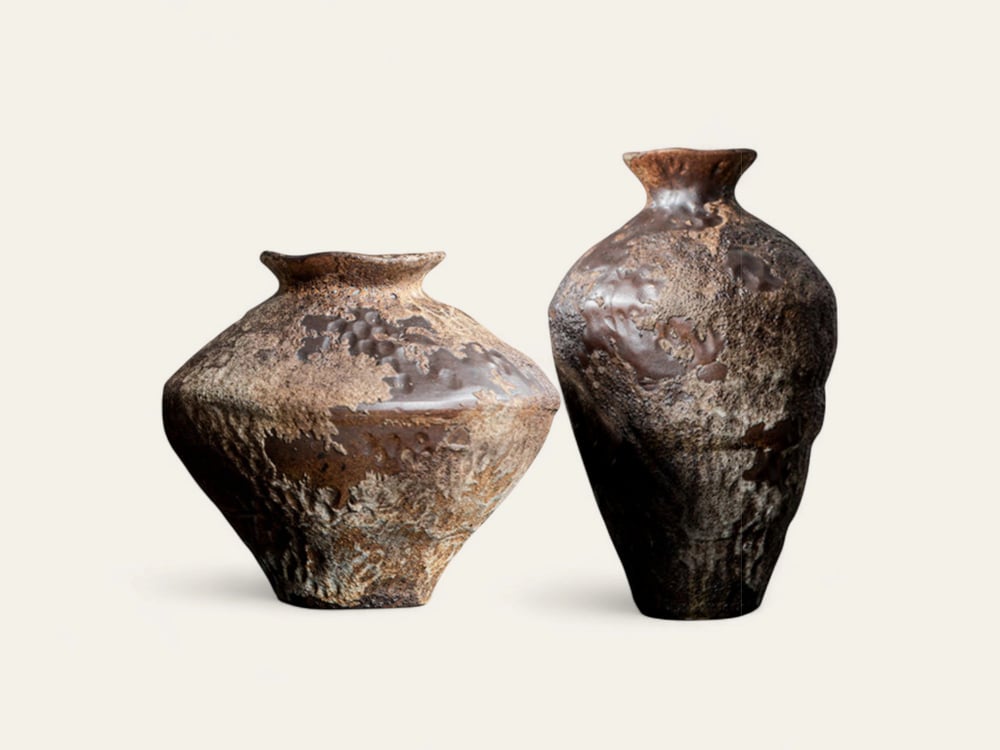
Wabi-sabi is an aesthetic and philosophical concept that finds beauty specifically in imperfection, incompleteness, and transience. A cracked ceramic bowl repaired with gold lacquer (kintsugi) is a physical expression of wabi-sabi.
A gnarled old tree, a faded photograph, the uneven texture of handmade paper — all embody it. The concept is rooted in Zen Buddhist ideas about the nature of existence and is the aesthetic opposite of the Western ideal of polished, symmetrical perfection.
Trying to translate it as simply “rustic charm” or “imperfect beauty” loses the philosophical weight, which is why the word itself has been gradually absorbed into English design and wellness conversations.
Forelsket (Norwegian)

Forelsket describes the euphoria of falling in love — specifically the early stage, when the feeling is new and overwhelming and the person seems to fill every available space in your mind. English has “falling in love” as a phrase but no single word for the state itself.
The Norwegian word captures it as a discrete, nameable experience with its own beginning and its own quality, rather than a process described by metaphor.
Meraki (Greek)

When a person pours something of themselves into what they are doing — their soul, their creativity, their care — and the work carries a trace of that investment, the Greeks call it meraki. A baker who takes genuine pleasure in the craft, a woodworker who makes something beyond the specification, a teacher who brings themselves fully to a lesson — all are working with meraki.
The English phrase “putting your heart into something” gets close but treats it as a choice rather than a quality of the work itself.
Jayus (Indonesian)

Jayus describes a joke so badly told, so unfunny, that it becomes funny — the kind of groan-inducing non-joke that produces laughter specifically because of how completely it fails as humour. English has no single word for this, only the circuitous description “so bad it’s good” or the concept of a “dad joke,” which doesn’t quite capture the same mechanism.
The Indonesian term suggests that this specific type of failed comedy is a culturally recognised and valued category of humour in its own right.
Gigil (Filipino/Tagalog)

Gigil is the almost irresistible urge to squeeze or pinch something that is overwhelmingly cute — a baby’s cheeks, a puppy, anything so adorable that the appropriate emotional response apparently involves wanting to compress it slightly. English describes the phenomenon but has no word for it.
The closest approach is the scientific term “cute aggression,” which captures the paradoxical impulse accurately but entirely lacks the warmth of the Tagalog original.
Litost (Czech)

The novelist Milan Kundera described litost as a torment created by the sudden sight of one’s own misery. It is the humiliated despair felt when someone’s casual remark or effortless accomplishment accidentally exposes everything you feel has gone wrong in your own life.
A friend mentions they are renting a beautiful house for the summer. Someone your age has achieved something you always wanted to achieve.
The flash of self-pity and shame that follows is litost. Kundera considered it so untranslatable that he used it in Czech even in the French editions of his novels.
Sobremesa (Spanish)

Sobremesa literally means “over the table” and describes the time spent lingering at the table after a meal has ended, talking and enjoying each other’s company. In Spanish-speaking cultures, particularly in Spain, the sobremesa can last for hours and is considered as much a part of the dining experience as the food itself.
English has “lingering over dinner” but no single word for the specific, valued practice of staying at the table after the meal is done, doing nothing in particular.
Gezellig (Dutch)

Gezellig functions similarly to hygge but with a more specifically social emphasis — it describes the warm, convivial feeling of being together with people in a comfortable, pleasant atmosphere. A crowded café full of animated conversation is gezellig.
A quiet evening with old friends is gezellig. The word can also describe a person — “she’s very gezellig” — meaning warm, companionable, and fun to be around.
The Dutch use it casually and frequently in the way English speakers might say “nice” or “lovely,” except that it carries more specific cultural weight about togetherness.
Fernweh (German)

German has two apparently opposite words for travel longing. Wanderlust is the one English has borrowed; fernweh is the one it hasn’t. Where wanderlust is a desire to roam, fernweh is more specifically a homesickness for places you’ve never been — an ache for distant, unknown places.
It is the feeling of being in the wrong geography, of belonging somewhere you haven’t yet been. English has no word for this type of longing, which may explain why fernweh is gradually migrating into travel writing.
Hüzün (Turkish)

The Turkish writer Orhan Pamuk devoted a long essay in his memoir Istanbul to hüzün, which he described as a collective melancholy — the feeling of sadness, weariness, and spiritual loss felt not by an individual but by an entire city or people. In Pamuk’s account, hüzün is the defining emotional tone of Istanbul: the sense that the city’s former Ottoman grandeur is in permanent decline, and that this decline is felt by everyone who lives there simultaneously.
It is not personal sadness but civic, inherited, shared gloom.
Tsundoku (Japanese)

Tsundoku describes the habit of buying books and letting them pile up without reading them. The word combines the verb tsunde-oku (to stack things) with dokusho (reading).
It is the specific condition of a person who accumulates books faster than they read them and feels the weight of the unread stack without quite being able to stop adding to it. English speakers who experience this have started using the Japanese word directly rather than constructing the circumlocution every time.
Komorebi (Japanese)

Komorebi describes the effect of sunlight filtering through leaves — the interplay of light and shadow created when sun shines through a forest canopy. It is a single word for something that English requires a sentence or a photograph to describe adequately.
The word captures both the visual phenomenon and something of the feeling it produces — a quality of gentle, dappled light that poets write around in English and Japanese names directly.
Iktsuarpok (Inuktitut)

From the Inuit languages of eastern Canada, iktsuarpok describes the restless feeling of anticipation that makes you keep going outside to check whether someone is coming. The repeated trip to the window, the door opened to look down the street, the inability to concentrate while waiting — all of this is iktsuarpok.
The word bundles impatience, anticipation, and a specific physical behaviour into a single term.
Dépaysement (French)

Dépaysement describes the disorienting feeling of being in a foreign country — the sense of being out of your element, surrounded by the unfamiliar, not quite at home in the world around you. English has “culture shock” for the distressing version and various phrases for the pleasant version, but dépaysement covers the whole spectrum without judgment: it is simply the feeling of being elsewhere.
Many French people consider it one of the pleasures of travel rather than a problem.
Fika (Swedish)

Fika is the Swedish practice of taking a coffee break with others — but it is more than a break. It is a deliberate pause in the day for coffee, something to eat, and conversation, treated as a social ritual rather than a fuel stop. Swedish workplaces often have a designated fika time.
The word describes both the activity and the value system around it: that slowing down to connect with others is not a luxury but a regular, scheduled part of a civilised day.
Lagom (Swedish)

Lagom means “just the right amount” — not too much, not too little, but precisely sufficient. The Swedish concept extends beyond portions into a broader cultural philosophy: that the ideal is balance, moderation, and appropriateness rather than excess or deprivation.
Swedish design aesthetics, social norms, and the cultural discomfort with conspicuous consumption all connect to lagom as a value. “Enough” in English implies making do; lagom implies that enough is, in fact, exactly right.
Sprezzatura (Italian)

Sprezzatura comes from Baldassare Castiglione’s 16th-century book The Book of the Courtier and describes the quality of making difficult things look effortless — the studied, perfected nonchalance of the person who has worked very hard to appear as though they have worked not at all. A musician who plays a technically demanding piece as though it were obvious is displaying sprezzatura.
An athlete whose form is so ingrained it looks natural is too. English uses “effortless grace” but cannot convey in a single word that the effortlessness is itself an achievement.
Duende (Spanish)

In the context of flamenco and Spanish artistic tradition, duende describes the mysterious, magnetic, slightly dark power that a performance has when it achieves genuine emotional presence. The Andalusian poet Federico García Lorca wrote a famous essay defining it as the spirit of the earth, a form of emotional and creative authenticity that cannot be faked and cannot be fully explained.
A singer who has duende is not just technically proficient but possessed — the music comes from somewhere deeper than skill.
Weltschmerz (German)

Literally “world-pain,” weltschmerz is the weariness and sadness felt when the world as it is fails to match the world as you feel it should be. It is a kind of philosophical grief — the sorrow of a person who can see the gap between the ideal and the actual and finds that gap exhausting.
English has “world-weariness,” but this is vague. Weltschmerz has a more specific cause: it is not just tiredness with the world but grief at its failure to be better.
Ya’aburnee (Arabic)

Ya’aburnee is a term of endearment that translates literally as “may you bury me” — it expresses the hope that the speaker will die before the person they are addressing, because life without them would be unbearable. It is said to children, to partners, to beloved parents.
The embedded meaning is that the person matters so completely that losing them would be worse than dying first. English has no single word for the expression of love that wishes itself out of survival, which is probably a reflection of how differently cultures frame both love and mortality.
Pisan Zapra (Malay)

Pisan zapra is a unit of time: the time it takes to eat a banana. It is a humorous, informal measure that appears in Malay as a way of indicating a short but not negligible duration — long enough to do something brief, short enough to convey lightness.
It is the kind of word that reveals how creatively human languages solve the problem of time, and it is entirely impossible to translate without also abandoning its tone.
The Language of Things English Cannot Say

There is a particular satisfaction in discovering that a feeling you have experienced repeatedly but never found words for has been named somewhere else. These words do not fill gaps so much as reveal them — they show that English, for all its vastness, has been looking past certain experiences without recording them.
The philosopher Ludwig Wittgenstein wrote that the limits of your language are the limits of your world. These 28 words suggest that the world is larger than any single language can map, and that expanding your vocabulary — even by borrowing — expands what you can perceive, name, and keep.
A feeling that has a name is easier to recognise the next time it arrives.
More from Go2Tutors!

- The Romanov Crown Jewels and Their Tragic Fate
- 13 Historical Mysteries That Science Still Can’t Solve
- Famous Hoaxes That Fooled the World for Years
- 15 Child Stars with Tragic Adult Lives
- 16 Famous Jewelry Pieces in History
Like Go2Tutors’s content? Follow us on MSN.



