29 Lost Treasures Still Waiting to Be Found
Every few years a headline promises that some famous hoard has finally turned up, and most of the time the story quietly fades. The wrecks stay on the seabed, the crates stay in the lake, the cipher stays unbroken.
What remains is a strange catalog of things that are known to have existed and known to have vanished.
Some of these treasures are documented down to the manifest. Others survive only as a deathbed confession or a prospector’s story told in a saloon.
All of them share one trait that keeps people digging: nobody has yet proved they are gone for good.
The Amber Room of the Catherine Palace

Amber panels backed with gold leaf once lined a chamber at the Catherine Palace outside St. Petersburg, a Prussian gift to Peter the Great in 1716. German troops dismantled the room in 1941 and shipped it to Konigsberg, where the trail ends in 1945.
Theories put the crates in a bunker, a mine or a sunken Baltic ship. A reconstruction opened at the palace in 2003, but the original panels remain unaccounted for.
In 2025 Polish researchers received permission to dig at a suspected site, a sign that the search has not cooled. Estimates of the original’s worth run into the hundreds of millions of dollars, though no figure can be tested until something surfaces.
Flor de la Mar in the Strait of Malacca
Portugal’s carrack Flor de la Mar went down in a storm off Sumatra in 1511, carrying loot that Afonso de Albuquerque had taken after the capture of Malacca. Contemporary accounts describe gold, gems and tribute from a sultan’s treasury, making the cargo one of the richest ever lost at sea.
The ship broke apart on a reef and most of the crew died. Hunters have searched the area for decades, and Indonesia and Malaysia both claim the wreck, which complicates any salvage.
Valuations tossed around in the press reach the billions of dollars, a number that depends entirely on records written by the people who had just stolen the cargo.
Merchant Royal Off Land’s End

An English ship called the Merchant Royal sank in 1641 roughly 30 miles off Land’s End in Cornwall, loaded with silver and gold collected in Spanish ports. Records of the day describe gold valued at about 100,000 pounds sterling plus hundreds of thousands of silver pieces, which is why British newspapers call it the richest wreck in home waters.
The hull leaked badly and the pumps failed in rough weather. In 2019 a fishing boat hauled up a large 17th century anchor near the suspected site, and the find revived interest. The wreck itself has not been located, and modern valuations above a billion dollars remain informed guesswork.
Missing Ships of the 1715 Treasure Fleet

A hurricane destroyed a Spanish fleet off the east coast of Florida on July 31, 1715, as it carried silver and gold home from the Americas. Spanish salvors recovered a share soon after, and since the 1960s divers have pulled coins and jewelry from several wreck sites along what is now called the Treasure Coast. Not every ship in the fleet has been identified, and researchers believe some of the richest cargo lies on unlocated wrecks. Coins from the fleet still wash onto beaches after storms. The remaining ships are thought to hold cargo worth tens of millions of dollars, though any estimate depends on which hulls are actually found.
Treasure of Lima on Cocos Island

As revolutionary forces closed on Lima in 1820, Spanish officials loaded church gold and jeweled statues onto a British brig for safekeeping. The captain, William Thompson, is said to have sailed off with the cargo and buried it on Cocos Island, about 340 miles off Costa Rica.
Thompson was later captured, agreed to lead the Spanish to the cache, and escaped into the jungle. More than a century of expeditions followed, including one by Franklin Roosevelt in the 1930s.
Costa Rica now runs the island as a national park and forbids treasure hunting. Published estimates place the hoard in the hundreds of millions of dollars, resting on inventories that may have been exaggerated at the time.
Lost Dutchman Mine in the Superstition Mountains

Jacob Waltz, a German-born prospector, died in Phoenix in 1891 after reportedly describing a rich gold vein in Arizona’s Superstition Mountains. Friends at his bedside claimed he left clues, and a box of high-grade ore under his bed added to the story.
Prospectors have combed the range ever since, and several died in the attempt, which gave the legend a darker edge. Geologists note the Superstitions are volcanic and an unlikely place for a major gold deposit.
No map has ever led anyone to a working mine. The mine’s value, if it exists at all, is impossible to estimate, which has never slowed anyone down.
Beale Ciphers of Bedford County

One pamphlet published in Virginia in 1885 described three coded documents left by a man named Thomas Beale in the 1820s. The second cipher was solved using the Declaration of Independence as a key and describes gold, silver and jewels buried in Bedford County.
The first cipher, which gives the location, and the third, which names the owners, have resisted every attempt since. Skeptics argue the entire pamphlet was a hoax built to sell copies.
Amateur diggers have still torn up farmland around Bedford for generations. The hoard, if real, would be worth tens of millions of dollars today, with the usual warning that the only source is the pamphlet itself.
Confederate Treasury Gold of 1865
When Jefferson Davis abandoned Richmond in April 1865, the Confederate government’s remaining gold and silver traveled south with him by train and wagon. Portions were paid out to troops and deposited in banks along the route through Danville and into Georgia.
Accounts disagree about how much was left when Davis was captured in May. Stories of buried chests along the escape path persist across Virginia, the Carolinas and Georgia.
Dozens of rural sites have been dug on the strength of family legends. The amount unaccounted for is debated, and any dollar figure is a reconstruction from incomplete wartime ledgers.
Kolchak’s Gold in Lake Baikal

During the Russian Civil War, Admiral Alexander Kolchak controlled a large portion of the imperial gold reserve, which moved by rail across Siberia in 1919 and 1920. Part of it was handed over or spent, but a persistent story claims a train car plunged through ice or off the tracks into Lake Baikal, the deepest lake on earth.
In 2009 and 2010, Mir submersibles explored the lake bed and found train debris and glinting fragments, but no gold bars were brought up. Russian scientists remain divided on the legend.
If a shipment did go into the lake, its value would run into the hundreds of millions of dollars.
Lake Toplitz in the Austrian Alps

German units sank crates in Lake Toplitz, a deep mountain lake in Austria’s Ausseerland. A 1959 expedition recovered boxes of counterfeit British banknotes from Operation Bernhard, the forgery program run from Sachsenhausen.
That discovery fed decades of claims that gold, documents or art lay deeper, hidden under a layer of sunken logs. Several divers have died in the lake, and Austrian authorities now restrict access.
A sonar survey in 2000 found more crates but nothing valuable. Whether anything beyond fake money went into the water is unproven, which is exactly why people keep asking.
Yamashita’s Gold in the Philippines

Legend holds that Japanese forces under General Tomoyuki Yamashita buried looted wealth from across Southeast Asia in tunnels and caves in the Philippines before the 1945 surrender. Historians dispute the scale and even the existence of a central hoard.
The story gained legal weight in 1996 when a Hawaii court ruled in favor of a Filipino locksmith, Rogelio Roxas, who claimed he had found a golden Buddha statue in 1971 and lost it to the Marcos government. The ruling settled a property dispute, not the legend.
Treasure hunters still dig across Luzon with government permits, and claimed values reach the billions of dollars without any verified recovery.
Oak Island Money Pit in Nova Scotia
Daniel McGinnis, a teenager, reportedly found a depression in the ground on Oak Island, off Nova Scotia, in 1795 and began digging. Layers of logs, flooding tunnels and a supposed inscribed stone turned the spot into the most excavated patch of ground in Canada.
Six people have died in the effort over two centuries. Since 2014 the Lagina brothers have led a televised search that has turned up old coins, lead and bone fragments but no vault.
Theories range from pirate loot to Templar relics to a natural cavity in the limestone. No valuation exists because nobody can say what, if anything, is down there.
Honjo Masamune Sword

Forged in the 14th century by the swordsmith Masamune, the Honjo Masamune passed down through the Tokugawa shoguns and was named a Japanese national treasure. After the 1945 surrender, occupation authorities ordered civilians to hand over swords.
In 1946 Tokugawa Iemasa delivered the blade to a Tokyo police station, from which records say it was collected by an American sergeant identified only as Coldy Bimore, a name that matches no known serviceman. The sword has not been seen since.
Collectors suggest it may sit unrecognized in an American attic. Its value as a known Masamune would be several million dollars, with no upper limit if authenticated.
Missing Faberge Imperial Eggs

Peter Carl Faberge’s workshop made 50 jeweled Easter eggs for the Russian imperial family between 1885 and 1916, and the Bolsheviks seized most after 1917. Some were sold abroad by the Soviet government, and a scrap dealer in the American Midwest bought the Third Imperial Egg for its gold value before it was identified in 2014.
Six or seven imperial eggs, depending on how the list is drawn up, remain missing and are known only from old photographs. Any one of them turning up would be an event in the art market.
Recent sales of imperial eggs have run into the tens of millions of dollars, with the condition and original surprise inside driving the price.
King John’s Jewels in The Wash

In October 1216, King John’s baggage train crossed the tidal estuary known as The Wash on England’s east coast and was caught by the incoming sea. Chronicles record that wagons carrying the royal treasury, including regalia and plate, were swallowed by the mud.
John died days later at Newark. The coastline has shifted miles since then, so the site may now lie under reclaimed farmland near Sutton Bridge. Searches with ground radar have found nothing conclusive.
The crown jewels of a medieval king would be worth a fortune to a museum, though their value to historians would exceed any price tag.
Irish Crown Jewels Stolen in 1907
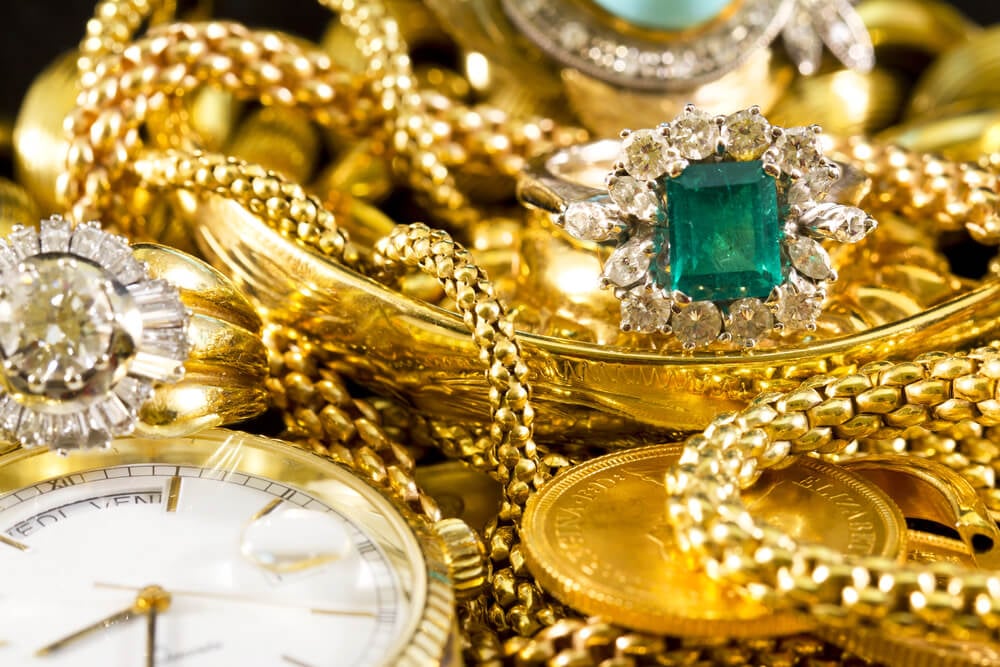
Jeweled regalia of the Order of St. Patrick vanished from a safe in Dublin Castle in July 1907, days before King Edward VII arrived for a visit. The star and badge, set with Brazilian diamonds, rubies and emeralds, had been kept in the office of Sir Arthur Vicars, the Ulster King of Arms.
A commission blamed Vicars for carelessness but never named a thief. Rumors have pointed at members of his staff and at a cover-up to avoid a scandal.
The jewels were worth about 50,000 pounds at the time. Nothing has surfaced in more than a century, and the case remains Ireland’s most famous unsolved theft.
Patiala Necklace and Its Lost Stones

Cartier completed the Patiala Necklace in 1928 for Maharaja Bhupinder Singh, setting nearly 3,000 diamonds around a 234-carat yellow De Beers diamond. Around 1948 the piece vanished from the Patiala treasury.
The De Beers diamond reappeared at a Sotheby’s auction in 1982, and in 1998 a Cartier associate found the stripped skeleton of the necklace in a secondhand shop in London.
Cartier restored the mount with replica stones. The original large diamonds and rubies removed from it have never been traced. The missing stones alone would be worth many millions of dollars, with the recut risk meaning some may now be unrecognizable.
Peking Man Fossils

Between 1927 and 1937, excavations at Zhoukoudian near Beijing produced bones of Homo erectus roughly 500,000 years old. With war approaching in late 1941, the fossils were packed into crates for transfer to the United States by U.S. Marines.
They vanished in the chaos after Pearl Harbor, possibly at the port of Qinhuangdao or on a ship. Only plaster casts made by Franz Weidenreich survive, which are now the basis for all study of the specimens.
China has run several appeals for information. The fossils have no market price in any legal sense, but their scientific worth makes them one of the most hunted lost objects in paleontology.
Library of Ivan the Terrible

Sophia Palaiologina, niece of the last Byzantine emperor, married Ivan III of Moscow in 1472 and reportedly brought with her a collection of Greek and Latin manuscripts rescued from Constantinople. Her grandson Ivan the Terrible is said to have hidden the library in vaults beneath the Kremlin.
Searches in the 19th and 20th centuries explored cellars and tunnels without finding it. Some scholars doubt the collection ever existed on the scale described. Others argue the books burned in one of Moscow’s many fires.
If a vault of lost classical texts did survive, its cultural value would be beyond any auction estimate.
Mosby’s Treasure Near Haymarket
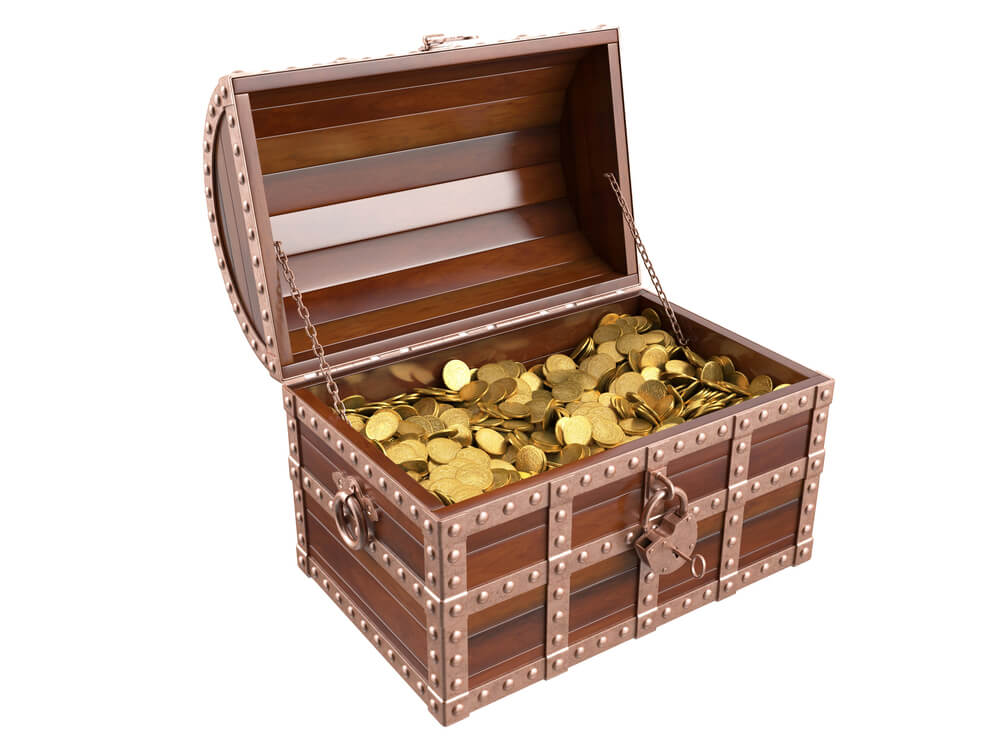
Confederate ranger John Mosby raided Fairfax Court House in Virginia in March 1863 and captured a Union general along with a sack of valuables taken from local homes. Pursued by Union troops, Mosby is said to have buried the sack between two pine trees and marked the spot with his knife.
He sent men back for it later, and they were captured and hanged. The spot, somewhere near Haymarket, Virginia, has never been identified.
The haul reportedly included gold coins, jewelry and silverware worth perhaps a few hundred thousand dollars today, a figure that depends on an account Mosby’s own men told years afterward.
Victorio Peak in New Mexico
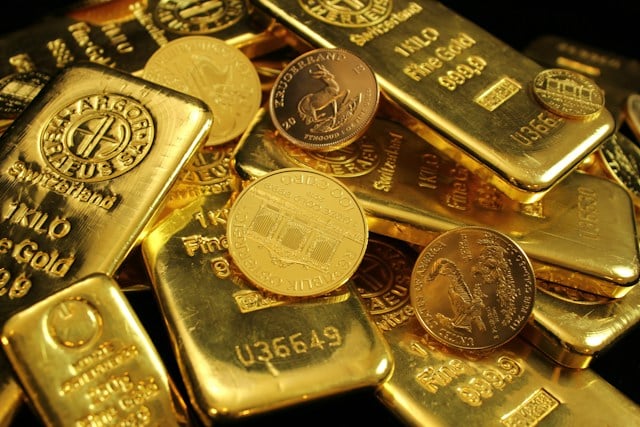
A part-time prospector called Doc Noss claimed in 1937 to have found a cavern inside Victorio Peak, in the San Andres Mountains of New Mexico, stacked with gold bars and skeletons. He reportedly removed some bars before blasting the entrance shut, which collapsed the shaft.
Noss was shot dead in 1949 in a dispute with a business partner. The peak now sits inside White Sands Missile Range, and the Army permitted a brief search in 1977 that found nothing.
Noss’s heirs have pressed for access for decades. Claims about the hoard run into the billions of dollars, resting entirely on a man who never showed the cavern to anyone.
Dutch Schultz’s Catskills Safe

The New York mobster Dutch Schultz was shot in a Newark restaurant in October 1935 and died the next day after hours of feverish, rambling talk recorded by police. Before his death, he reportedly packed cash and bonds into a safe and buried it in the Catskill Mountains near Phoenicia, New York, with the help of a bodyguard who died in the same shooting.
Searchers have worked the woods along the Esopus Creek for decades. Nothing has been found. The amount is usually given as several million dollars in 1930s money, which would be many times that today if the paper survived in the ground.
Leon Trabuco’s Gold in the Four Corners
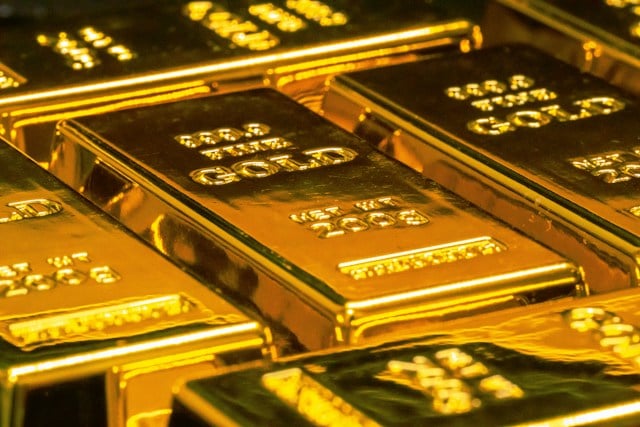
A Mexican millionaire named Leon Trabuco reportedly smuggled around 16 tons of gold into New Mexico in the early 1930s, betting that the United States would devalue the dollar and the metal would soar. He and partners buried it in the desert near Farmington.
The Gold Reserve Act of 1934 then made private hoarding illegal, trapping the gold in the ground. Trabuco and his partners died within a few years, the story goes, and the location died with them.
Modern treasure hunters have scoured the Four Corners area with detectors. At current prices, 16 tons of gold would be worth well over a billion dollars.
Just Judges Panel of the Ghent Altarpiece
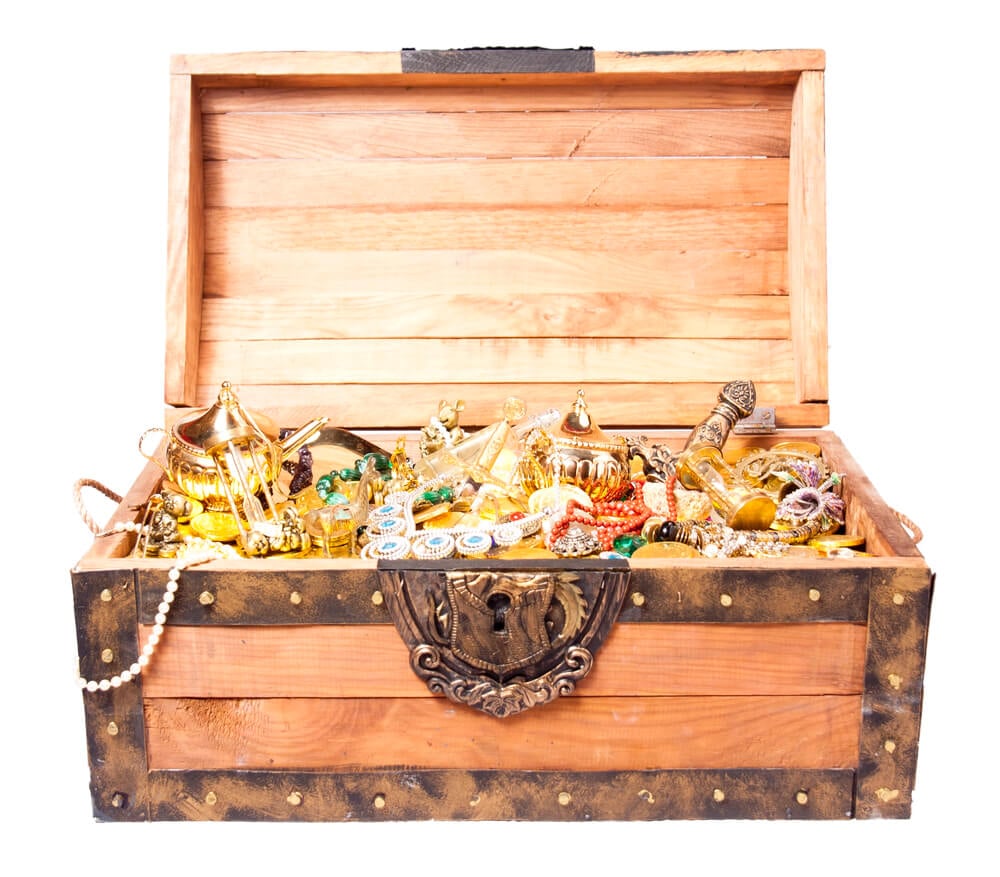
On an April night in 1934, thieves removed the lower left panel of Jan van Eyck’s Ghent Altarpiece from St. Bavo’s Cathedral in Belgium. Ransom notes followed, and one of the two sections was returned as a show of good faith.
Later that year a stockbroker named Arsene Goedertier reportedly said on his deathbed that he alone knew where the panel was, then died without saying. The Just Judges has been missing ever since, and a 1945 copy by Jef Van der Veken fills its slot.
Belgian police still take tips. Its value as a van Eyck fragment would be enormous, though no sale could ever be legal.
Captain Kidd’s Unrecovered Loot

Before his arrest in 1699, the privateer William Kidd buried gold, silver and jewels on Gardiners Island off Long Island, and that cache was recovered and used as evidence at his trial. He was hanged in London in 1701.
Kidd hinted that more was hidden elsewhere, hoping to bargain for his life, and the claim planted a legend that has never died.
Searches have targeted the Thimble Islands in Connecticut, Oak Island, and the coast of Madagascar. In 2015 a silver bar found off Madagascar was briefly attributed to Kidd before experts identified it as lead.
Any remaining Kidd treasure would be worth millions of dollars to collectors.
Nazi Gold Train of Walbrzych
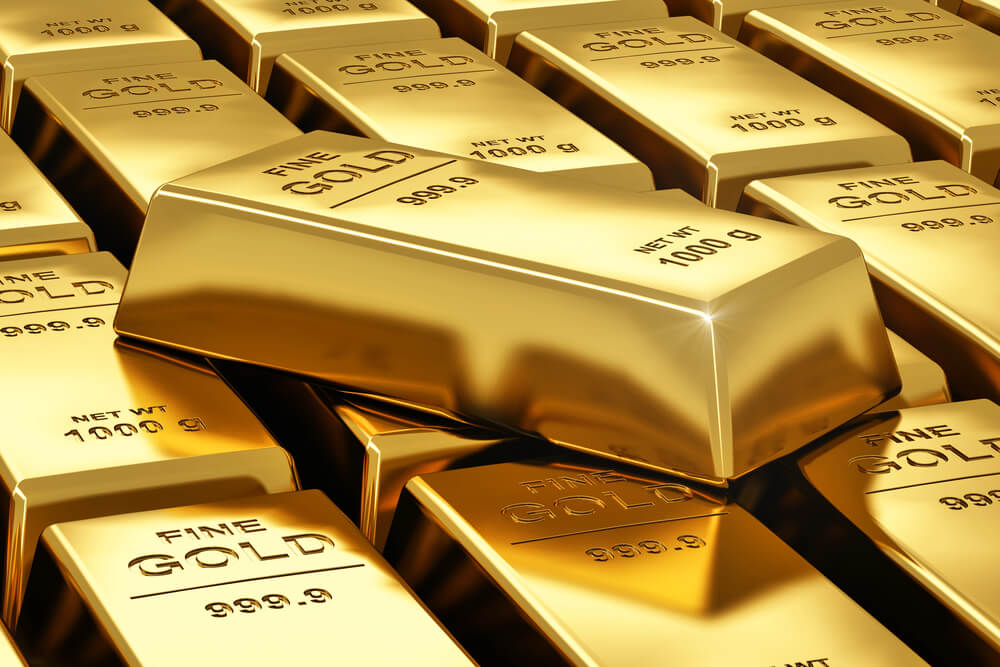
In 2015 two men, Piotr Koper and Andreas Richter, announced they had used ground-penetrating radar to locate an armored German train buried in a railway embankment near Walbrzych in southwestern Poland. Local legend says the train left Breslau in 1945 loaded with gold and valuables and vanished into tunnels under the Owl Mountains.
The claim drew television crews from around the world. A dig in 2016 found natural ice formations and no train. Koper has continued to search nearby, including around Ksiaz Castle.
Nothing confirms the train existed, yet the rumored cargo of gold and art would be worth hundreds of millions of dollars.
San Jose Galleon Off Cartagena
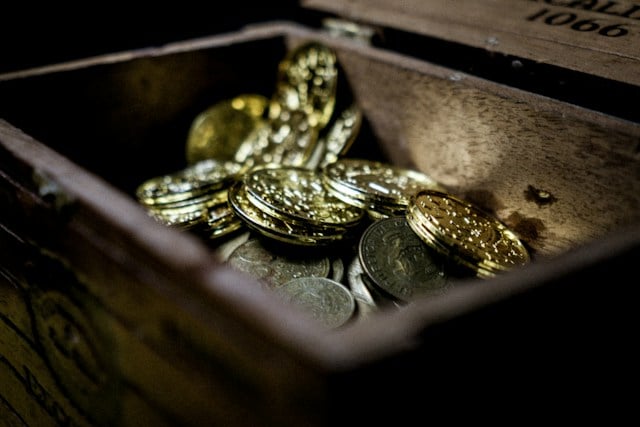
The Spanish galleon San Jose exploded and sank in 1708 during a battle with British ships near Cartagena, Colombia, carrying gold, silver and emeralds from Peru. Colombia announced in 2015 that the wreck had been located in deep water, and underwater robots have since photographed cannons and scattered coins. Spain, Colombia, a Bolivian indigenous group and an American salvage company all claim a share.
Colombia has moved toward a recovery operation, but as of 2026 the cargo remains on the seabed. Press estimates place its worth between 4 and 20 billion dollars, a wide range that reflects how little of the hull has been examined.
Copper Scroll Hoard of Qumran
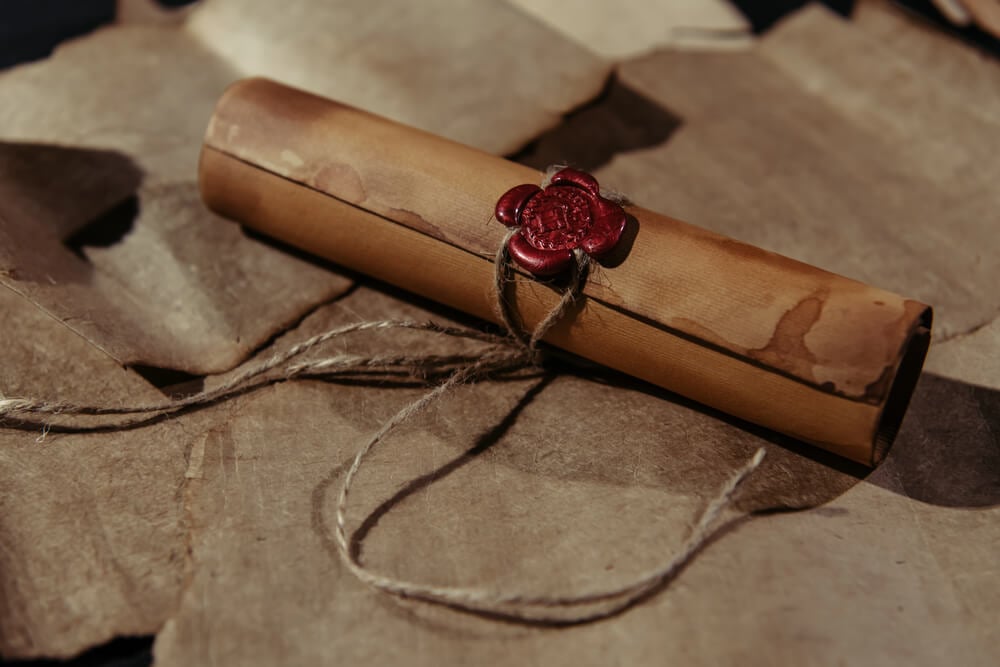
Archaeologists found a scroll made of copper in Cave 3 at Qumran in 1952, among the Dead Sea Scrolls. Cut open in Manchester in 1955 and 1956, it proved to be a list of 64 hiding places for gold and silver, with weights that would total many tons.
The text names landmarks around Jerusalem and the Judean desert that no longer exist or cannot be identified. Scholars argue over whether it records Temple wealth hidden before the Roman siege of 70 AD or is a folkloric inventory.
No listed cache has ever been found. The scroll itself is displayed in Jordan, while its treasure remains purely theoretical.
Blackbeard’s Missing Hoard
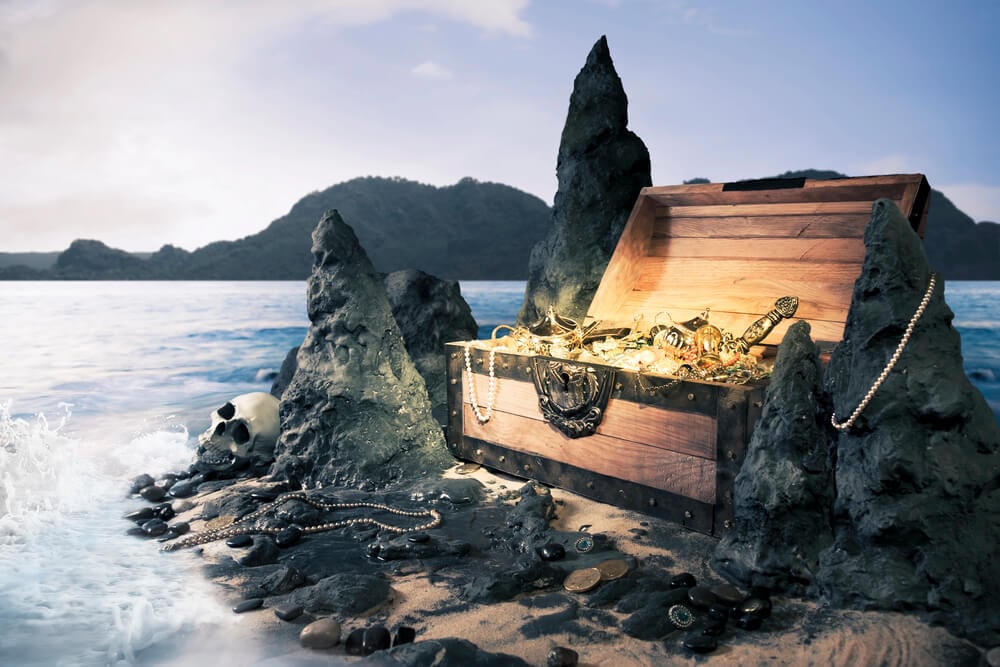
Edward Teach, known as Blackbeard, died in a fight with Royal Navy sailors at Ocracoke Inlet, North Carolina, in November 1718. His flagship, the Queen Anne’s Revenge, had run aground near Beaufort earlier that year, and its wreck was identified in 1996.
Archaeologists have raised cannons, anchors and everyday gear from it, but no chest of coins. Legend holds that Blackbeard hid his wealth somewhere along the Carolina or Virginia coast and took the secret to his death.
Searchers have dug on Ocracoke, in the Chesapeake marshes and on islands off New Hampshire. Whatever he actually kept would be worth several million dollars to collectors today, if it ever existed in one place.
Maps That Lead Only to More Maps
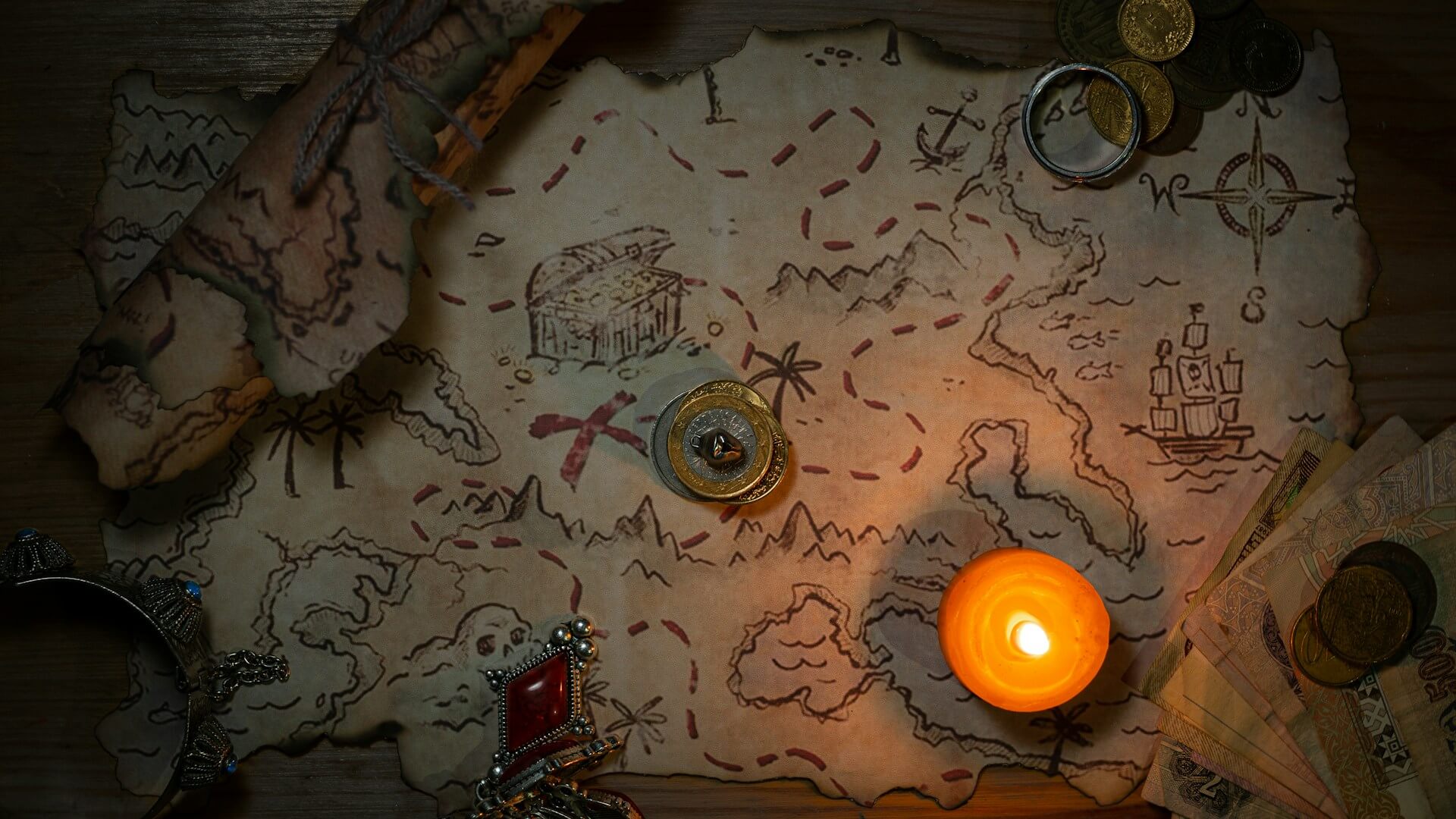
Maps are the common thread running through every one of these stories. A chart drawn by a dying captain, a petroglyph read as directions, a radar scan interpreted as a train, a cipher that opens with a key and then refuses to open further.
Each promises a route to the spot and each has so far delivered only another generation of searchers. The treasure that survives longest is the one that keeps producing new maps.
That is not entirely a loss. Searches for these hoards have mapped coastlines, cataloged shipwrecks, pushed submersibles into deep lakes and sent historians back into archives nobody had opened in decades.
The gold may stay buried, but the looking has turned up plenty. A legend that funds a sonar survey has earned at least part of its keep.
More from Go2Tutors!

- The Romanov Crown Jewels and Their Tragic Fate
- 13 Historical Mysteries That Science Still Can’t Solve
- Famous Hoaxes That Fooled the World for Years
- 15 Child Stars with Tragic Adult Lives
- 16 Famous Jewelry Pieces in History
Like Go2Tutors’s content? Follow us on MSN.