30 Postage Stamps Collectors Chase
A postage stamp is a receipt for a service, which makes it an unlikely object for a bidding war. Then a single scrap of magenta paper from British Guiana sold for $8.3 million in 2021, and the idea of “just a stamp” fell apart.
The stamps below earned their reputations through accident, scarcity, or sheer timing. A few are priced like mansions, a few are priced like dinner, and all of them have a story that keeps collectors checking old albums and estate boxes.
British Guiana 1c Magenta
When supplies from London ran short in 1856, the local postmaster had a Georgetown printer produce an emergency issue, and one result was a small magenta octagon worth one cent. Only a single copy is known, discovered in 1873 by a young Scottish schoolboy named Vernon Vaughan, and it carries the initials of a postal clerk on its face.
Sotheby’s sold it in New York in June 2021 for $8.3 million, a record for any single stamp. Even a unique stamp is judged on condition, and the cancellation and long history of handling were part of what bidders weighed.
Inverted Jenny
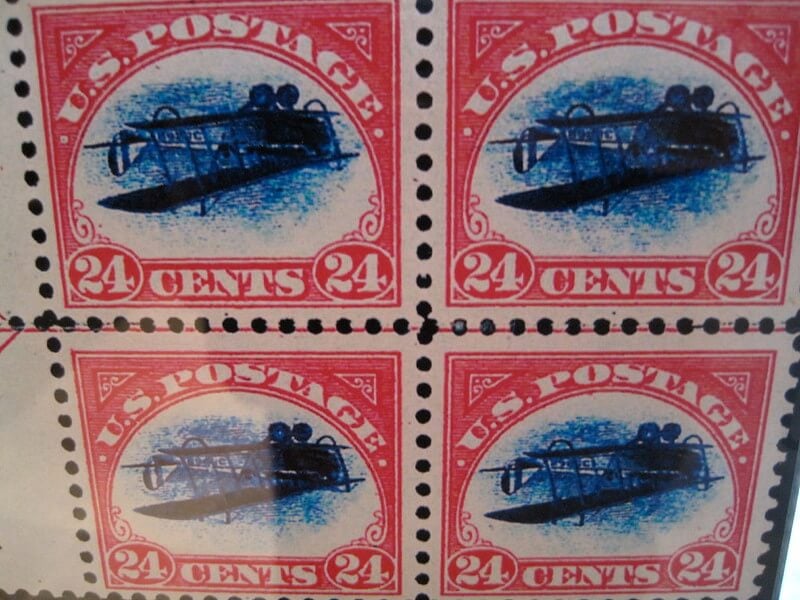
In May 1918, a Washington post office clerk sold collector William Robey a sheet of 100 new 24-cent airmail stamps, each showing a Curtiss JN-4 biplane flying upside down. Robey paid the $24 face value and soon sold the sheet to dealer Eugene Klein for $15,000.
That one sheet is the only one of the error ever to reach the public, so every Inverted Jenny traces back to the same 100 stamps. Single copies have sold for more than $1 million at auction, though price swings widely with centering, gum, and the position the stamp held on the sheet.
Treskilling Yellow
Sweden’s three skilling banco stamp of 1855 was supposed to be blue-green, yet one turned up printed in yellow, the color assigned to the eight skilling. It surfaced in 1886 in the hands of a young collector named Georg Backman and remains the only copy known. Its sale prices have reached seven figures.
As with any classic rarity, centering, margins, and the condition of the paper decide where it lands in value.
Hawaiian Missionaries
Hawaii issued its first stamps in Honolulu in 1851, in values of 2, 5, and 13 cents, printed locally under the direction of postmaster Henry Whitney. They earned their nickname because most of the survivors turned up on letters written by missionaries and their families.
Only a handful of each value remain, and the 2-cent is the scarcest of the group. Value depends heavily on whether a copy is on cover, how clean its cancellation is, and how much of the original margin survives.
Mauritius Post Office Stamps
In 1847, the island colony of Mauritius issued an orange-red one penny and a blue twopence engraved by a local watchmaker named Joseph Barnard. Both stamps read “Post Office” where “Post Paid” was the usual wording, and roughly 500 of each were printed.
They are widely believed to have been used on invitations to a party at Government House. The most famous example is the Bordeaux cover, named for the French city where it surfaced, which carries both values, and prices for any copy rise or fall with the sharpness of the impression and the state of the paper.
1868 1c Z Grill
Between 1867 and 1868, the US Post Office pressed tiny embossed grids into stamps to help the ink soak in and discourage reuse of canceled copies. The Z grill, one of the rarest of the grill types, appears on the 1-cent Franklin, and only two examples are known.
One belongs to the New York Public Library, while the other has surfaced at auction only rarely, and each sale has made headlines. Even a stamp this scarce is judged on the quality of the particular copy, including its centering and the freshness of its color.
Basel Dove
Switzerland’s canton of Basel issued the 2½ rappen Basel Dove in 1845, and it is often called the first three-color stamp. The design was embossed, with a white dove in relief, and was drawn by the architect Melchior Berri.
Collectors prize copies where the dove stands out sharply and the printed colors are bright. Price depends on the depth of the embossing, the width of the margins, and any creases or thin spots.
Penny Black
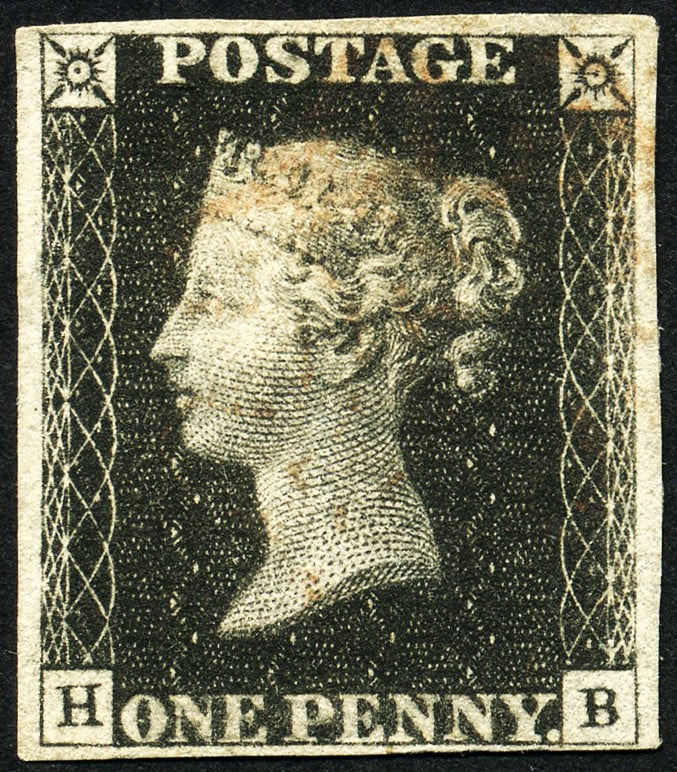
The Penny Black went on sale in Britain on May 1, 1840, and became valid for postage on May 6, making it the first adhesive postage stamp in the world. Its portrait of Queen Victoria came from a medal by William Wyon, and the letters in the bottom corners identified each stamp’s position in a sheet of 240.
It was canceled in red ink that proved easy to remove, which is why the Penny Red replaced it the following year with black cancellations. Millions were printed, so value turns on condition: clear margins, a light cancel, and the plate number all matter.
Baden 9 Kreuzer Error
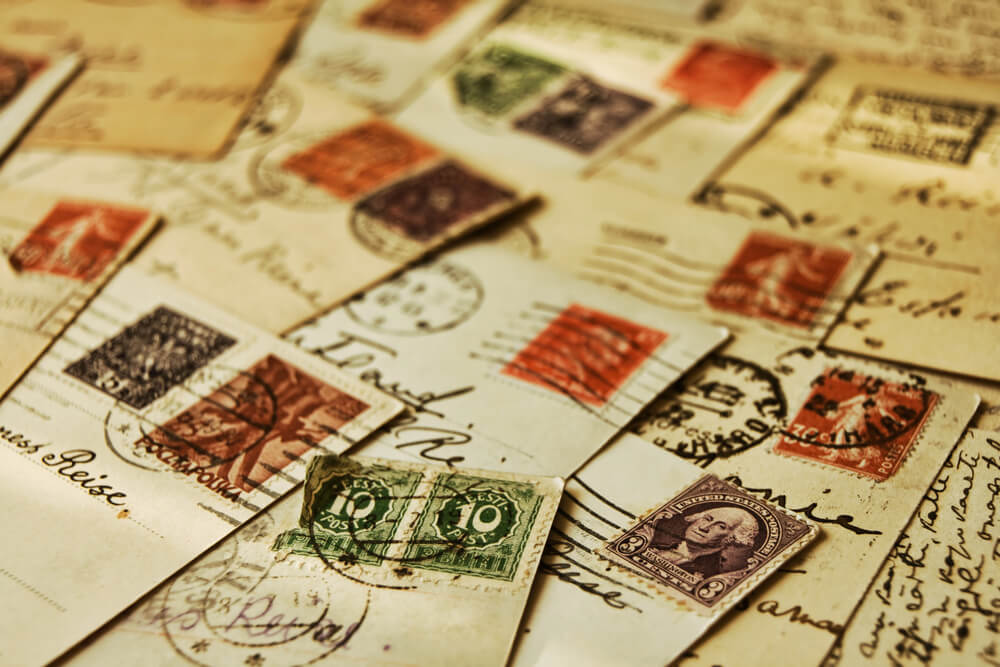
When the German state of Baden issued stamps in 1851, the 9 kreuzer value was supposed to appear on rose paper. A 9 kreuzer stamp printed in green, the color of the 6 kreuzer, slipped through and entered circulation.
Only four examples are known. Because so few exist, the condition of each copy, including its cancellation and margins, is closely documented by specialists.
Cape of Good Hope Woodblock Errors
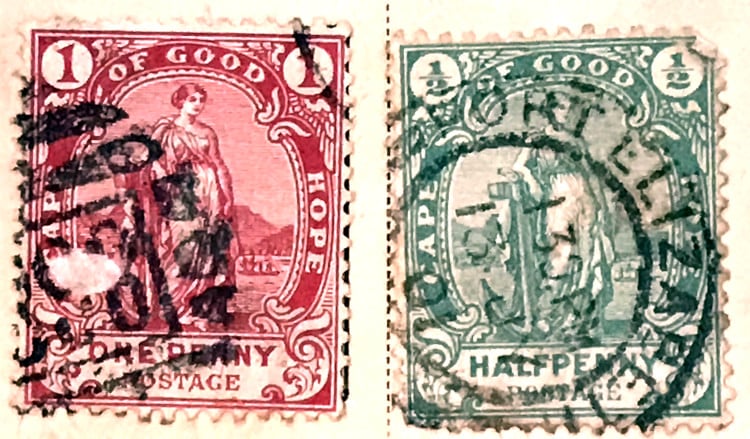
Cape of Good Hope ran short of its triangular stamps in 1861, and a printer in Cape Town carved woodblocks to produce emergency replacements. The blocks were crude, and a few stamps appeared in the wrong color, including a one penny in blue and a fourpence in red.
These color errors are among the most sought-after items in Cape philately. Prices vary sharply with the quality of the impression and whether the stamp has been cut into or repaired.
Western Australia Inverted Swan
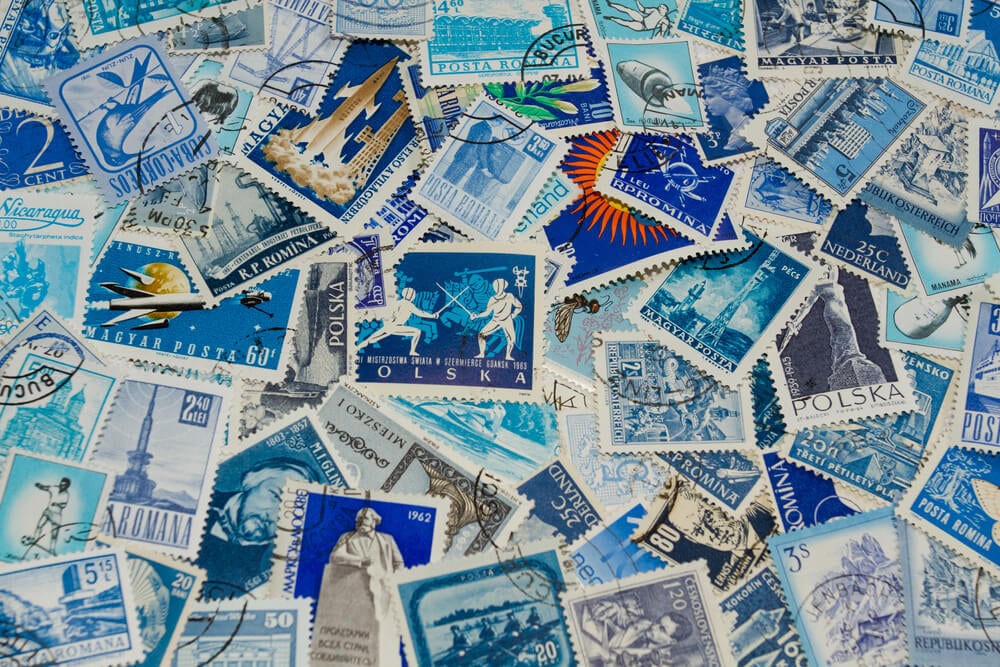
Western Australia’s first stamps appeared in 1854, and the 4 penny blue carried a black swan, the colony’s emblem, inside a decorative frame. Some of those stamps were printed with the swan upside down, creating the Inverted Swan, one of the great rarities of Australian philately.
Because the stamps were lithographed in two stages, the condition and sharpness of each impression are critical to value.
India Inverted Head 4 Annas
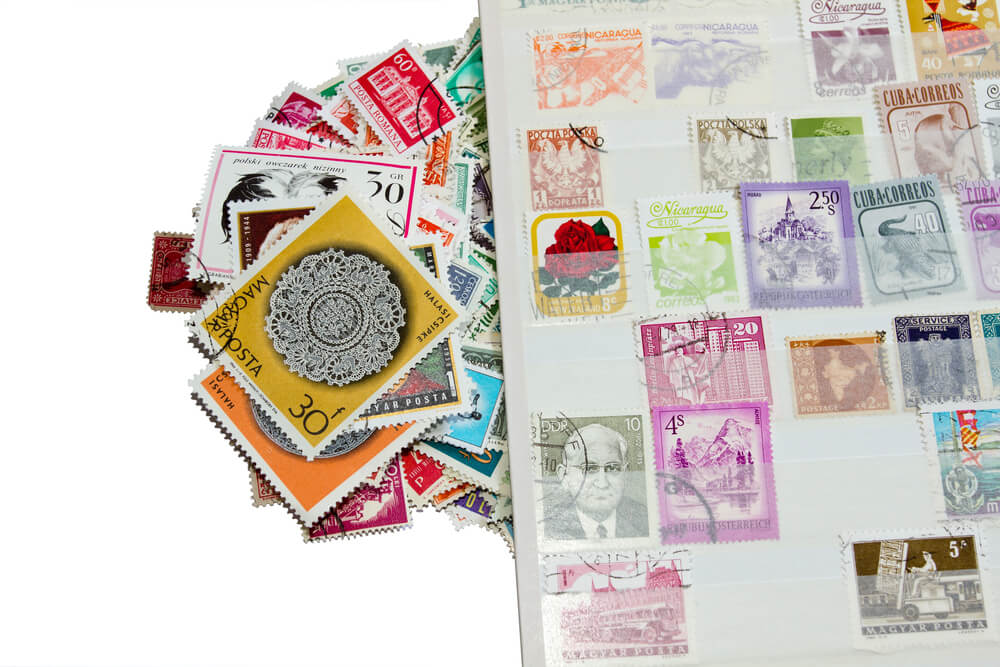
India’s 4 annas stamp of 1854 was printed in two stages, the red frame first and the blue head of Queen Victoria second. On some sheets, the paper was turned the wrong way for the second pass, and the result is the Inverted Head, a stamp with the Queen’s portrait upside down.
Few survive, and they appear at auction rarely enough that each sale draws attention. Prices depend on margins, cancellation, and whether the stamp is on cover.
1901 Pan-American Invert
The Pan-American Exposition of 1901 in Buffalo produced a set of six commemorative stamps, and some printings placed the central picture upside down. The 2-cent Fast Express, with its locomotive, is among the best-known of these inverts.
The same exposition is remembered for another reason: President William McKinley was shot there in September 1901. Prices for the inverts depend on centering, gum, and whether the stamp has been hinged or damaged.
1869 24c Declaration of Independence Invert
The 1869 Pictorial series was the first US set printed in two colors, and the 24-cent value reproduced John Trumbull’s painting of the Declaration of Independence. A small number of sheets were printed with the center upside down, and these inverts are among the most coveted 19th-century US stamps.
The Post Office replaced the series with new designs in 1870. Today, value depends on centering, the state of the gum, and the margins around the design.
1847 5c Franklin
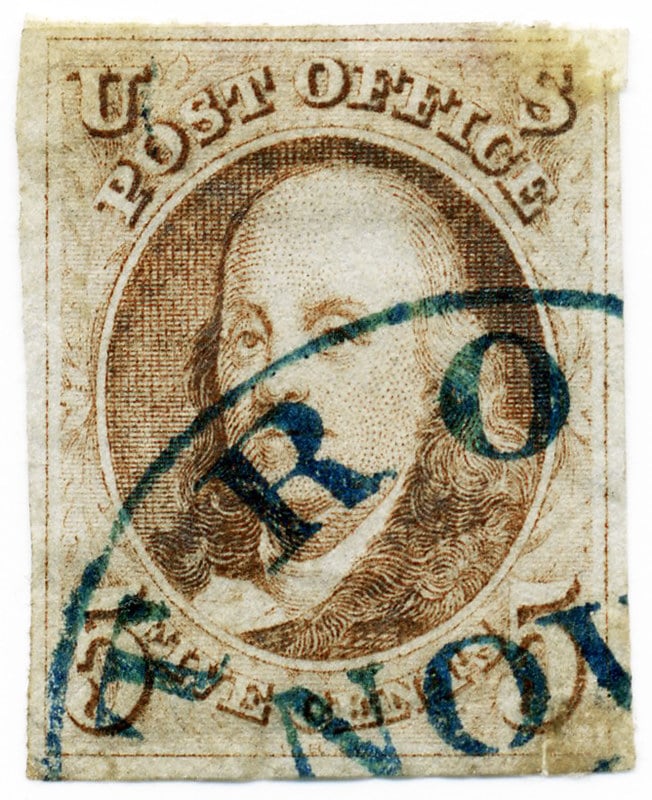
The United States issued its first postage stamps on July 1, 1847, a 5-cent Benjamin Franklin and a 10-cent George Washington. They were printed in New York and remained valid for postage until July 1, 1851, when the Post Office invalidated them in favor of a new series.
Because they were a single-use item for a short window, genuine used copies on cover are far more collectible than many assume. Prices depend on margins, the clarity of the red cancel, and whether the stamp has been regummed or repaired.
1962 Dag Hammarskjold Yellow Invert
The 4-cent Dag Hammarskjold stamp was issued in October 1962 to honor the United Nations Secretary-General, who died in a plane crash in 1961. Some copies were printed with the yellow background inverted, and the Post Office responded by printing more inverted stamps to deflate the market.
That decision turned the error into an unusual case of an invert that was easy to obtain but still draws collectors. Value depends on centering and whether the stamp is mint or used.
Trans-Mississippi $1 Western Cattle in Storm
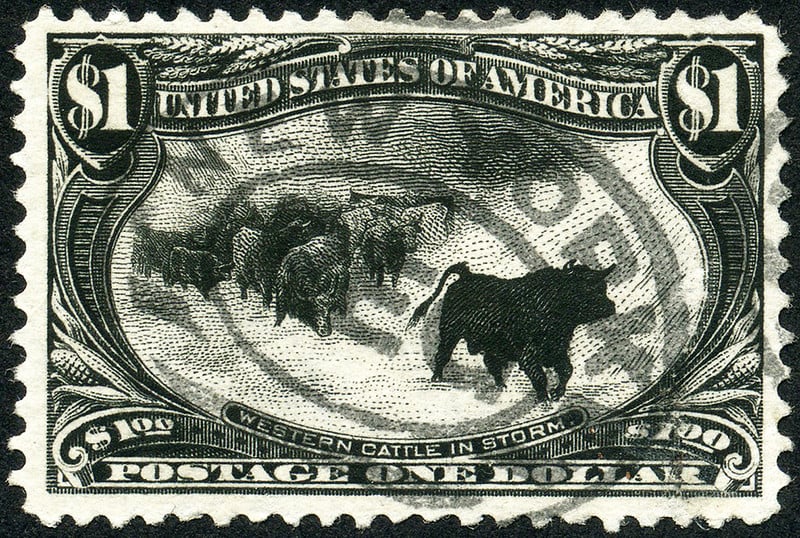
The Trans-Mississippi issue of 1898 marked an exposition in Omaha, and its $2 value was the highest face value in the set. The stamp shows cattle facing a storm, a design drawn from a painting by John A. MacWhirter.
At a time when a dollar was a significant sum, few people spent it on a stamp, which helps explain why fine copies are valued today. Prices rise sharply with centering, gum quality, and freedom from creases.
Zurich 4 and 6
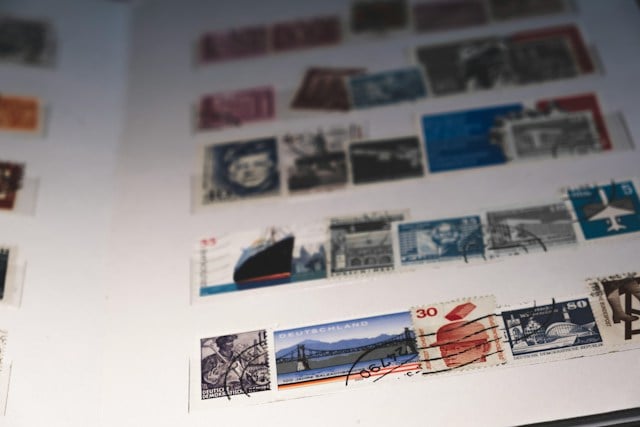
The canton of Zurich issued its 4 and 6 rappen stamps in 1843, making them among the earliest postage stamps on the European continent. The design printed a pattern of lines in the background, and the numeral showed the rate in the center.
Specialists separate the stamps into types by small differences in the lines. Prices depend on margins, cancellation, and whether the paper has any thin spots.
Bermuda Perot Provisional
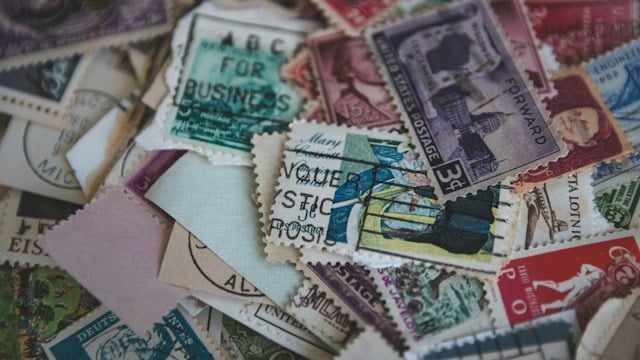
In 1848, Hamilton postmaster William Bennett Perot made his own stamps using a handstamp to impress a circular design and dated them by hand. He signed each stamp with his initials, which means every surviving copy is unique in small ways.
Few are known, and each surviving example is closely tracked by specialists. Value depends on the quality of the strike, the paper, and the state of the cover.
Brazil Bull’s Eyes
Brazil issued its first stamps in 1843, three values of 30, 60, and 90 reis. The Bull’s Eyes, named for their concentric oval designs, were the first postage stamps in the Americas.
They were printed by the national mint and not perforated, so margins are a key measure of quality. Prices depend on margins, cancellation, and the clarity of the impression.
Bavaria Black One Kreuzer
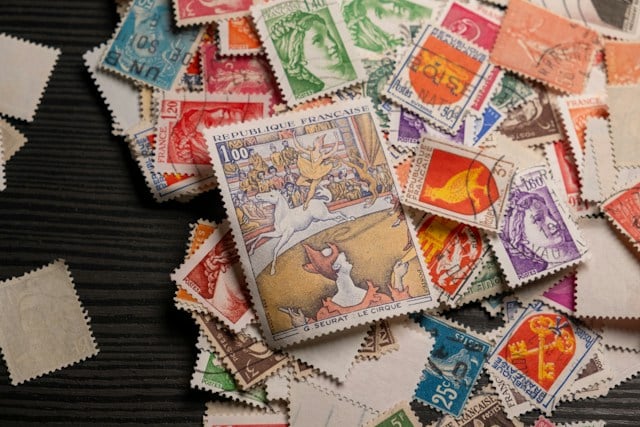
The Bavarian one kreuzer black, known in German as the Schwarzer Einser, was issued on November 1, 1849, and was the first postage stamp in the German states. It was canceled with numbered millwheel marks identifying the post office that handled each letter.
Because the numbers vary by town, collectors chase specific cancellations. Value depends on margins, the clarity of the cancel, and the condition of the paper.
Penny Red Plate 77
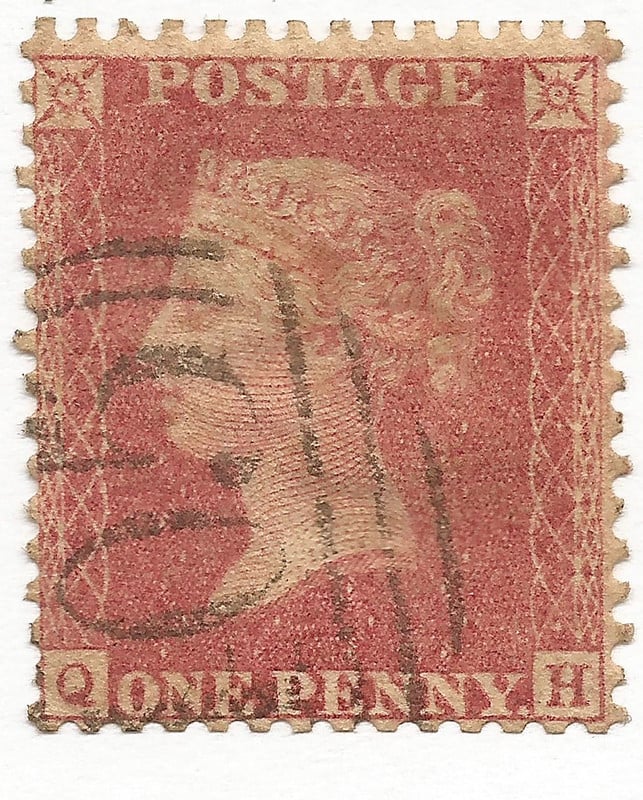
Britain’s Penny Red was printed from many numbered plates, but Plate 77 was rejected because of flaws and was never meant to be used. A small number of stamps from it escaped into circulation in 1864, making it the rarest of the series.
Condition still matters, and a clean copy with a light postmark commands more than one that has been damaged.
Trinidad Lady McLeod
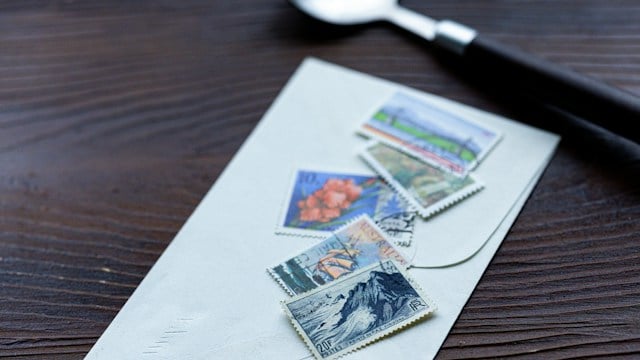
In 1847, David Bryce, owner of a small steamship named the Lady McLeod, issued a 5-cent blue stamp to prepay letters carried between Port of Spain and San Fernando. The design shows the vessel, and examples on a complete letter are especially prized.
Value depends on margins and the state of the cancellation.
Canada Twelve Pence Black
Canada’s 12 pence black of 1851 showed Queen Victoria and carried a high value, so few were sold at the post office. Most of the printing was never used, and surviving copies are scarce.
Prices depend on margins, cancellation, and any thin spots.
China 1980 Year of the Monkey
China’s Year of the Monkey stamp of 1980, designed by Huang Yongyu, was the first zodiac stamp issued by the People’s Republic and carried a face value of 8 fen. It became the center of a collecting boom, and sheets of it have commanded far higher prices than their face value.
Counterfeits exist, so authentication matters. Value depends on gum condition, centering, and whether the sheet remains intact.
Double Geneva
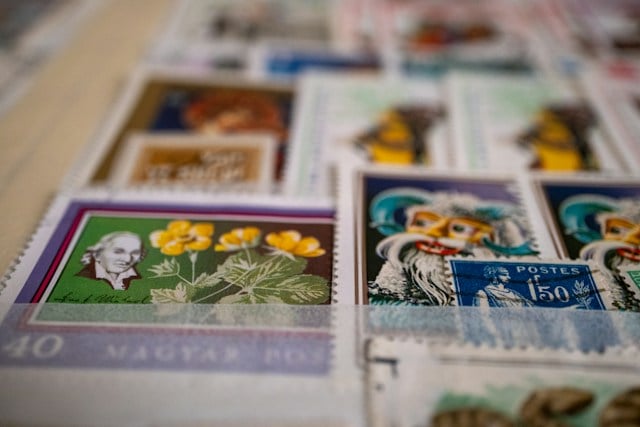
In 1843, the canton of Geneva issued the Double Geneva, a stamp made of two 5 centime halves joined together. The double stamp was intended for letters sent outside the city, while a single half covered local mail.
Each half carried the city’s coat of arms. Value depends on whether both halves are intact, the margins, and the state of the paper.
1934 Federal Duck Stamp
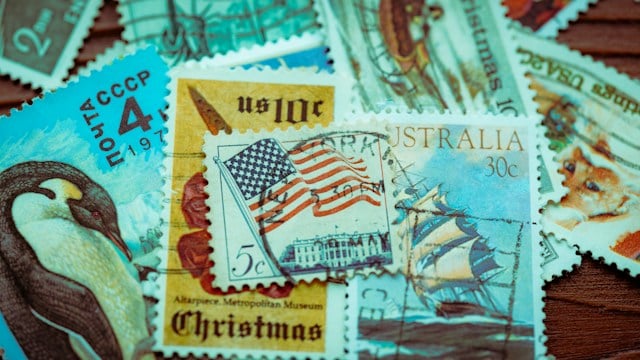
The first Federal Duck Stamp went on sale in 1934 for $1, designed by cartoonist J.N. “Ding” Darling, who headed the Biological Survey at the time. It showed a pair of mallards landing and was required for waterfowl hunters, who signed the stamp themselves.
Because early copies were signed and used, unsigned mint examples draw premiums. Prices depend on gum condition, centering, and whether the stamp has been hinged.
1930 Graf Zeppelin Airmail Set
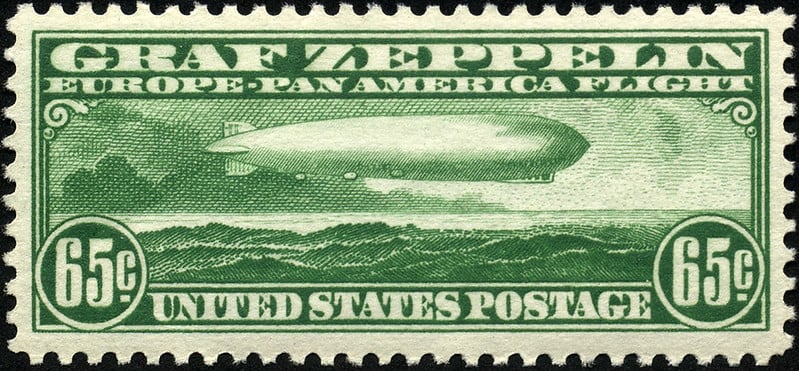
In April 1930, the US Post Office issued three airmail stamps for the Graf Zeppelin’s flight, valued at 65 cents, $1.30, and $2.60. Together the set cost $4.55 in face value, a hefty sum at the time.
The stamps were withdrawn shortly after, and the high values were bought by relatively few people. Prices depend on centering, gum condition, and the quality of the original color.
1893 Columbian Issue
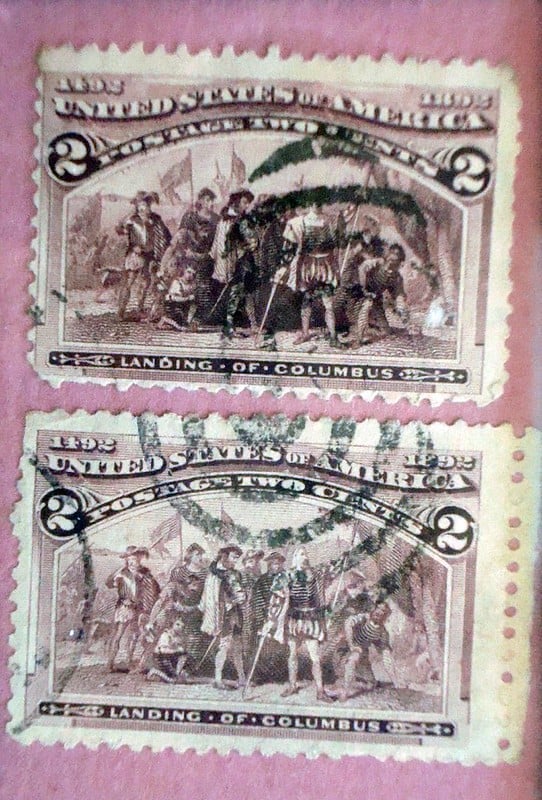
The Columbian Exposition issue of 1893 was the first US set of commemorative stamps, sixteen values ranging from 1 cent to $5.
The full set carried a face value of $16.34, a large amount when most people used only the lowest values. The high values are especially valuable in fine condition.
Prices depend on centering, gum, and the sharpness of the engraving.
1913 Kangaroo and Map
Australia’s first stamps as a unified nation appeared in 1913, showing a kangaroo on a map of the continent, a design by Blamire Young. The series ran through several watermark changes and printing varieties, and specialists collect them in great depth.
The higher values, including the pound denominations, are the most difficult to find in fine condition. Prices depend on the watermark, centering, and the state of the gum.
The Value of a Mistake

Look across these thirty stamps and a pattern emerges: the most prized are rarely the best-made. They are the ones that went wrong, ran short, arrived early, or were never supposed to leave the print shop.
A flipped center, a wrong color, or a hastily carved woodblock turned ordinary postage into an object people argue over.
That is also why condition keeps coming up in every price. Two stamps from the same printing can sit decades apart in value because of a crease, a heavy cancel, or a trimmed margin.
For collectors, the chase is part hunt for the rare and part education in telling the difference between a stamp and a great one.
More from Go2Tutors!

- The Romanov Crown Jewels and Their Tragic Fate
- 13 Historical Mysteries That Science Still Can’t Solve
- Famous Hoaxes That Fooled the World for Years
- 15 Child Stars with Tragic Adult Lives
- 16 Famous Jewelry Pieces in History
Like Go2Tutors’s content? Follow us on MSN.