31 Natural Events So Rare Most People Will Never Witness One
The planet performs constantly, but most of its most spectacular shows happen at the edges of habitability—in polar skies, high above thunderstorms, deep underwater, or for exactly the length of time it takes to blink. A person can live an entire life surrounded by nature and never see half of these events, even if they spent decades searching.
The rarity isn’t a matter of luck alone. Many of these phenomena require specific atmospheric conditions, precise locations, and exact timing to become visible.
What follows are events that science has documented and that humans have photographed, yet remain so difficult to witness that each sighting counts as a genuine achievement. Some require travel to remote latitudes.
Others last milliseconds. A few demand you simply be awake at the exact moment, looking at the exact spot in the sky.
Aurora Borealis (Northern Lights)
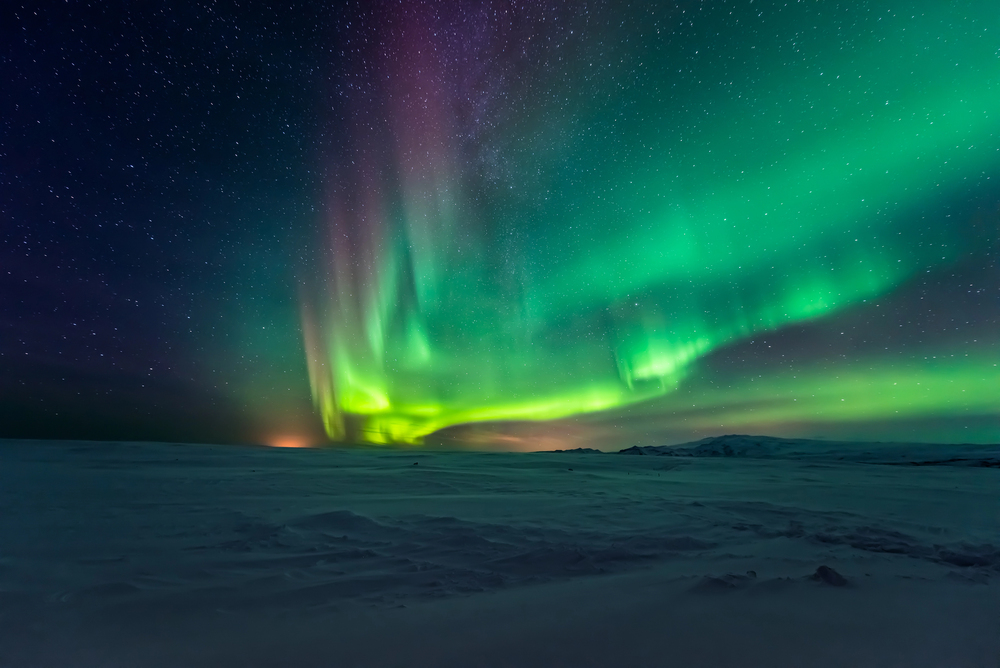
The collision of solar particles with Earth’s magnetic field creates ribbons of light that dance across polar skies, most commonly in shades of green. This is the northern version of a phenomenon that occurs at both poles, and despite being well-documented, the vast majority of humans have never seen it in person.
The effect depends on geomagnetic storms, clear skies, and being in the right latitude during winter months. Even dedicated aurora chasers go years between truly spectacular displays.
Aurora Australis (Southern Lights)
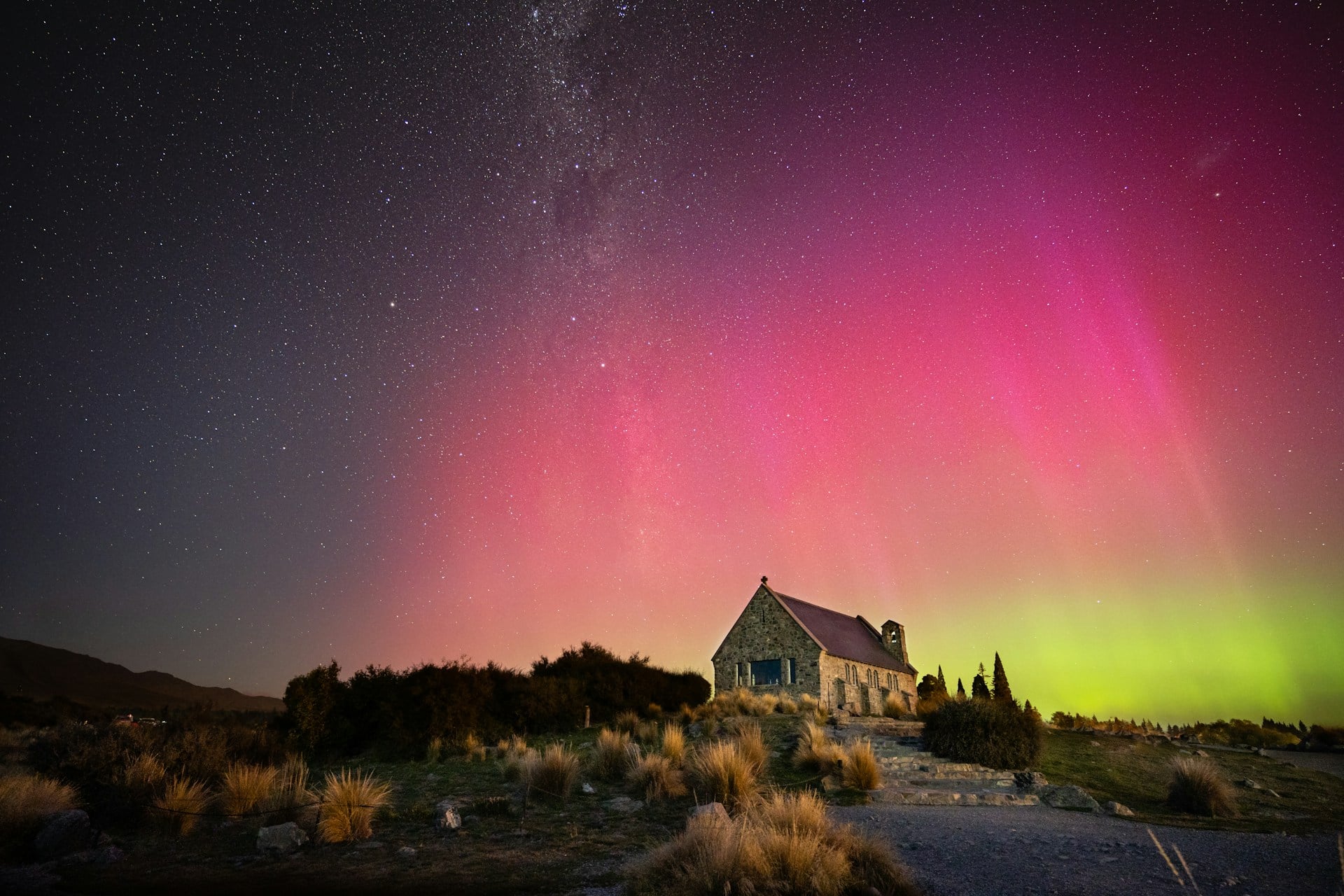
The southern hemisphere’s counterpart to the northern lights occurs far less frequently in accessible locations. While the Aurora Borealis can be viewed from populated areas of Alaska, Canada, and Iceland, the Aurora Australis requires travel to southern New Zealand, Tasmania, or the tip of Argentina.
The relative scarcity of observers and viewing locations means fewer people have ever witnessed this phenomenon than its northern cousin.
Green Flash
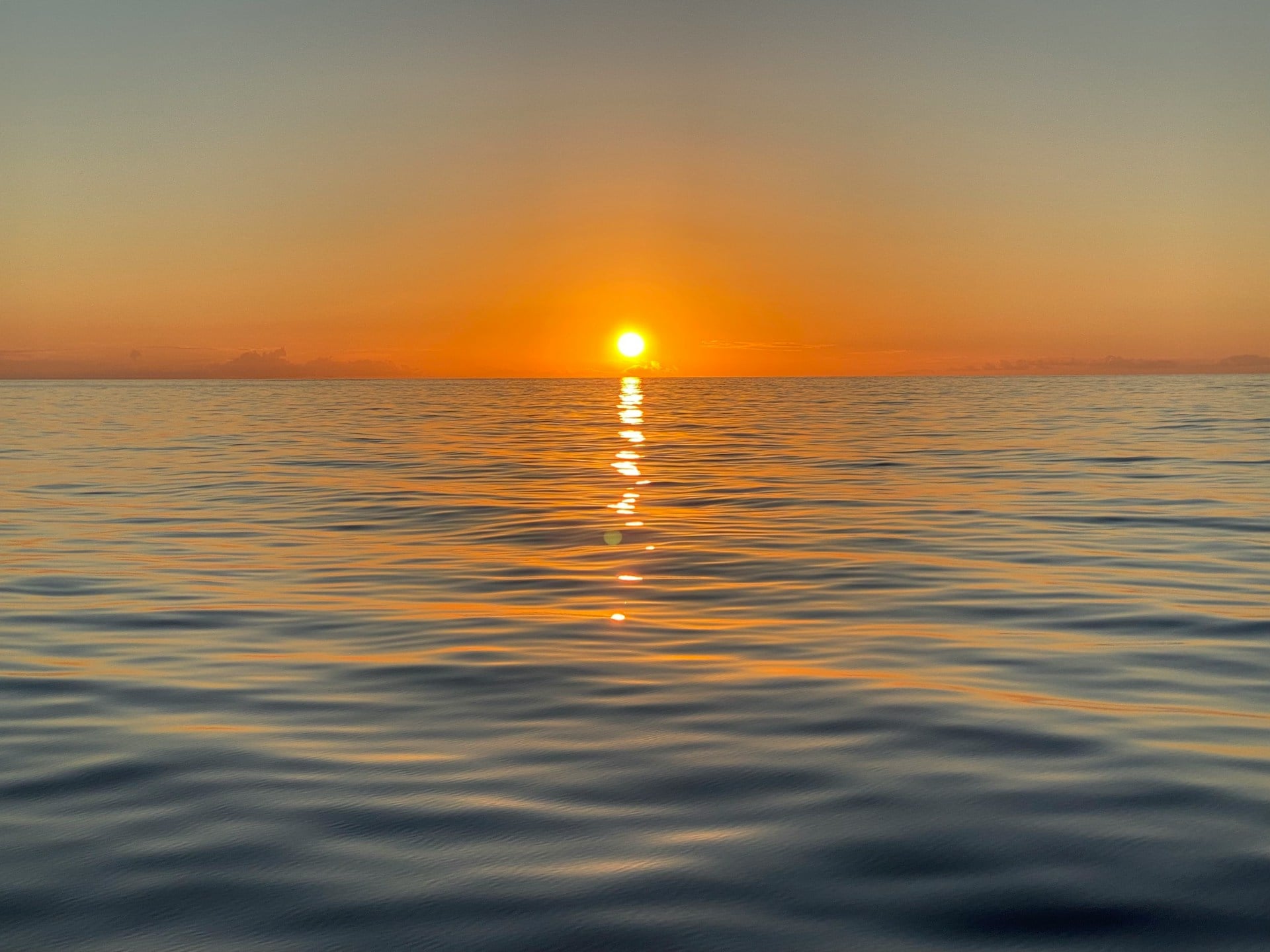
This phenomenon lasts about two seconds and occurs only at sunset or sunrise when conditions are exactly right. The sun’s light refracts through the atmosphere, separating into its spectrum, and the green wavelengths become briefly visible above the horizon before disappearing entirely.
Observers must be positioned at sea level or near water with a clear, unobstructed horizon and clear atmospheric conditions. The window is so narrow that many people search their entire lives without seeing it.
Moonbow (Lunar Rainbow)
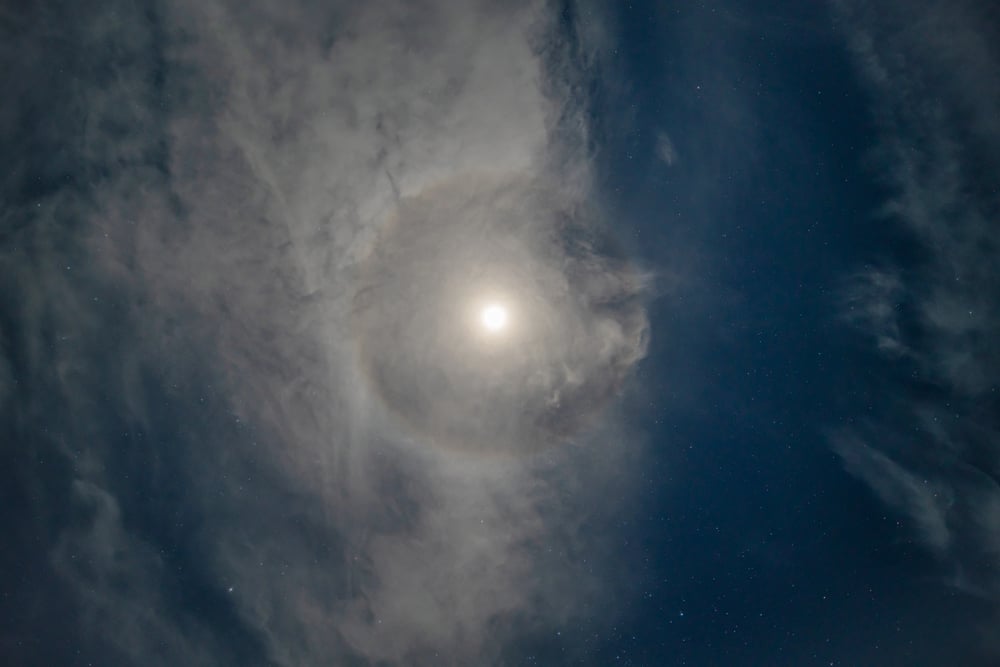
A rainbow created by the light of a full moon rather than the sun appears impossibly faint, often so dim that the human eye perceives it as colorless. The phenomenon requires moonlight bright enough to refract through water droplets, which means a full moon, falling rain or mist, and clear conditions during night hours.
The rarity is compounded by the fact that most people simply aren’t outside watching the sky during the necessary weather conditions at night.
Circumhorizontal Arc (Fire Rainbow)
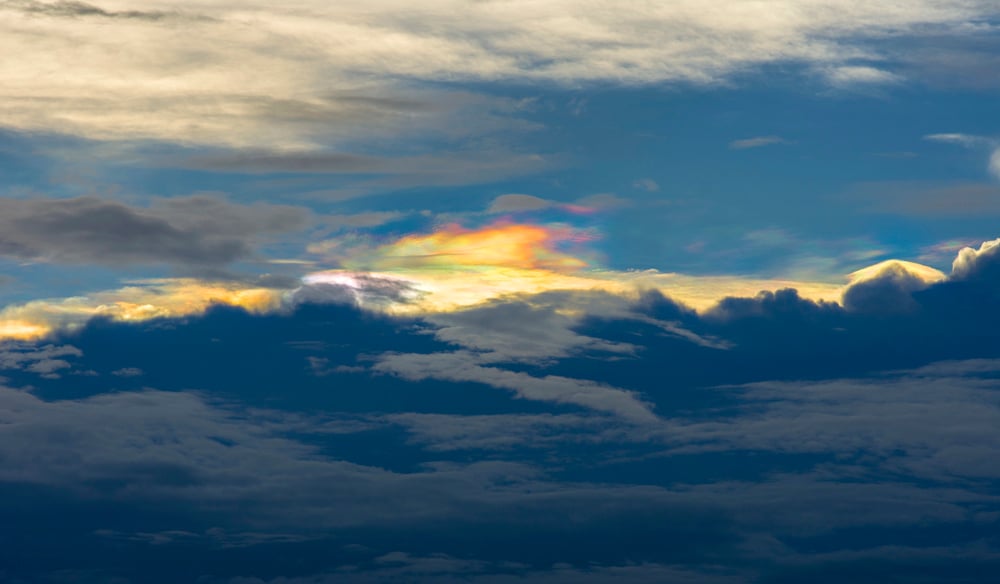
When ice crystals in high-altitude cirrus clouds refract sunlight at a particular angle, a brilliant multicolored arc parallel to the horizon becomes visible, resembling a flame or inverted rainbow. The phenomenon can only occur when the sun is above 58 degrees in the sky, which limits it to specific latitudes and times of day.
The crystal orientation must be precise, making this one of nature’s most geometrically demanding displays.
Ball Lightning
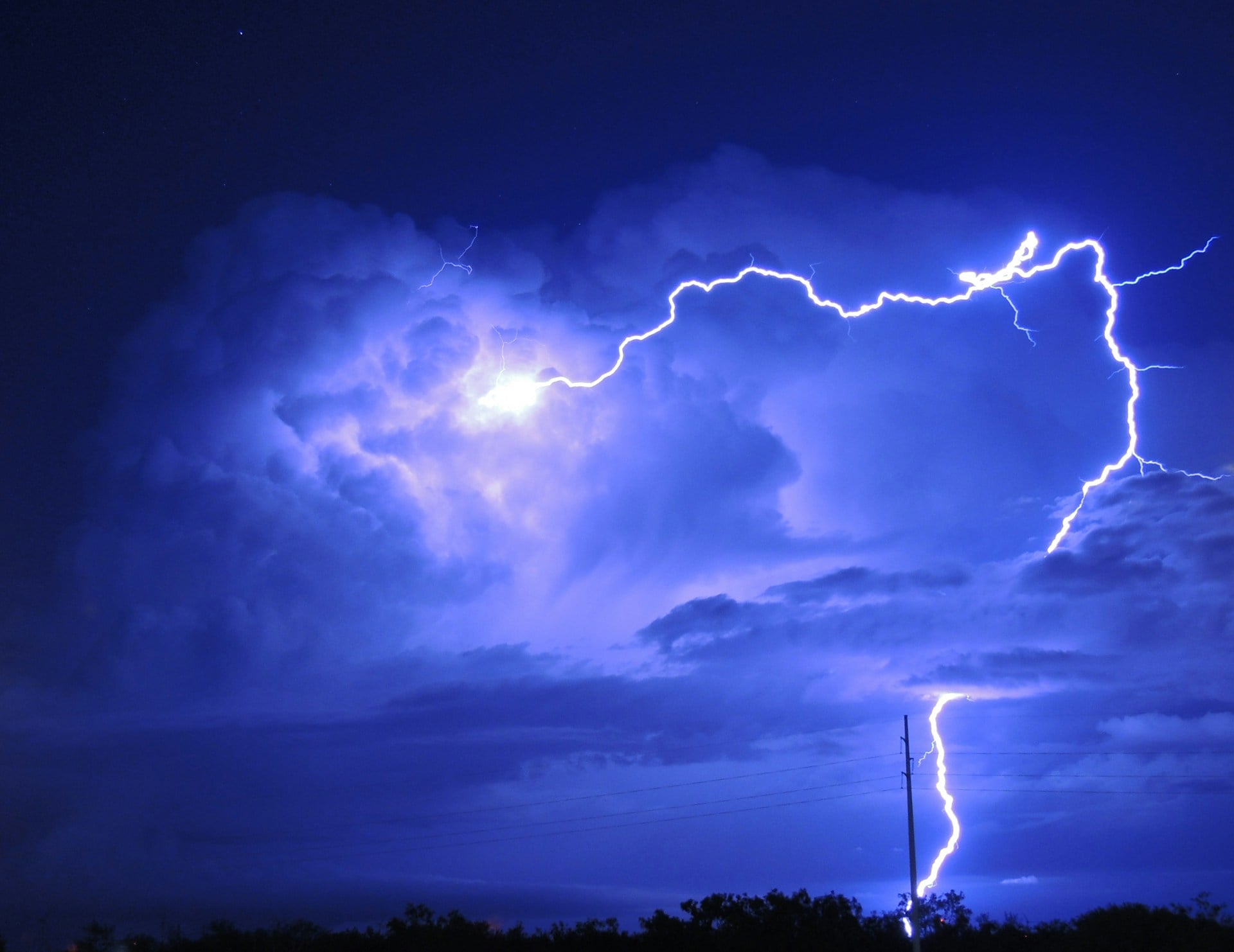
This phenomenon appears as a glowing sphere during thunderstorms, sometimes lasting several seconds—dramatically longer than a normal lightning strike. The spheres float, move unpredictably, and have been reported to pass through solid objects.
Scientists don’t fully understand the mechanism creating ball lightning, and the rarity of documented cases means most storm observers never encounter one, despite spending hours in severe weather.
Red Sprites
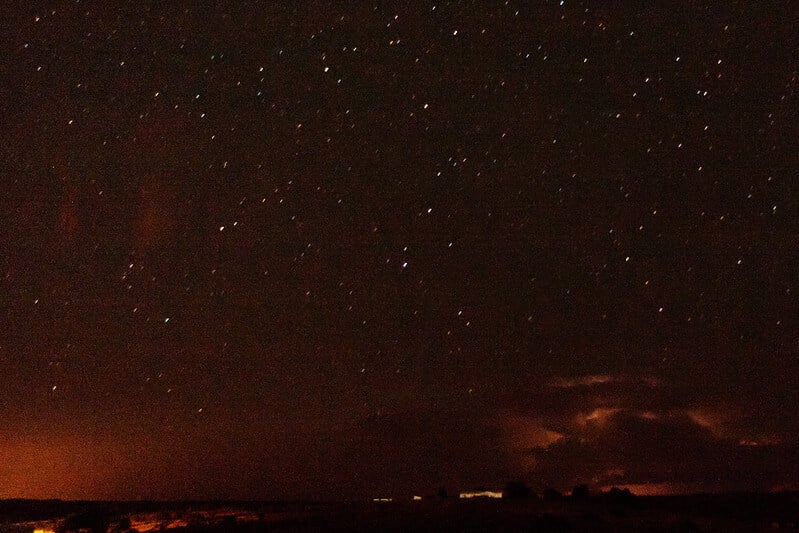
These massive electrical discharges occur high above thunderstorms, reaching heights of 50 miles or more. The red color and jellyfish-like tentacles are visible only in the darkness of night, and they last only milliseconds.
They’re triggered by specific types of lightning strikes and require perfect atmospheric conditions. An astronaut aboard the International Space Station photographed a sprite in 2024, demonstrating how rare they are even from orbit.
Blue Jets
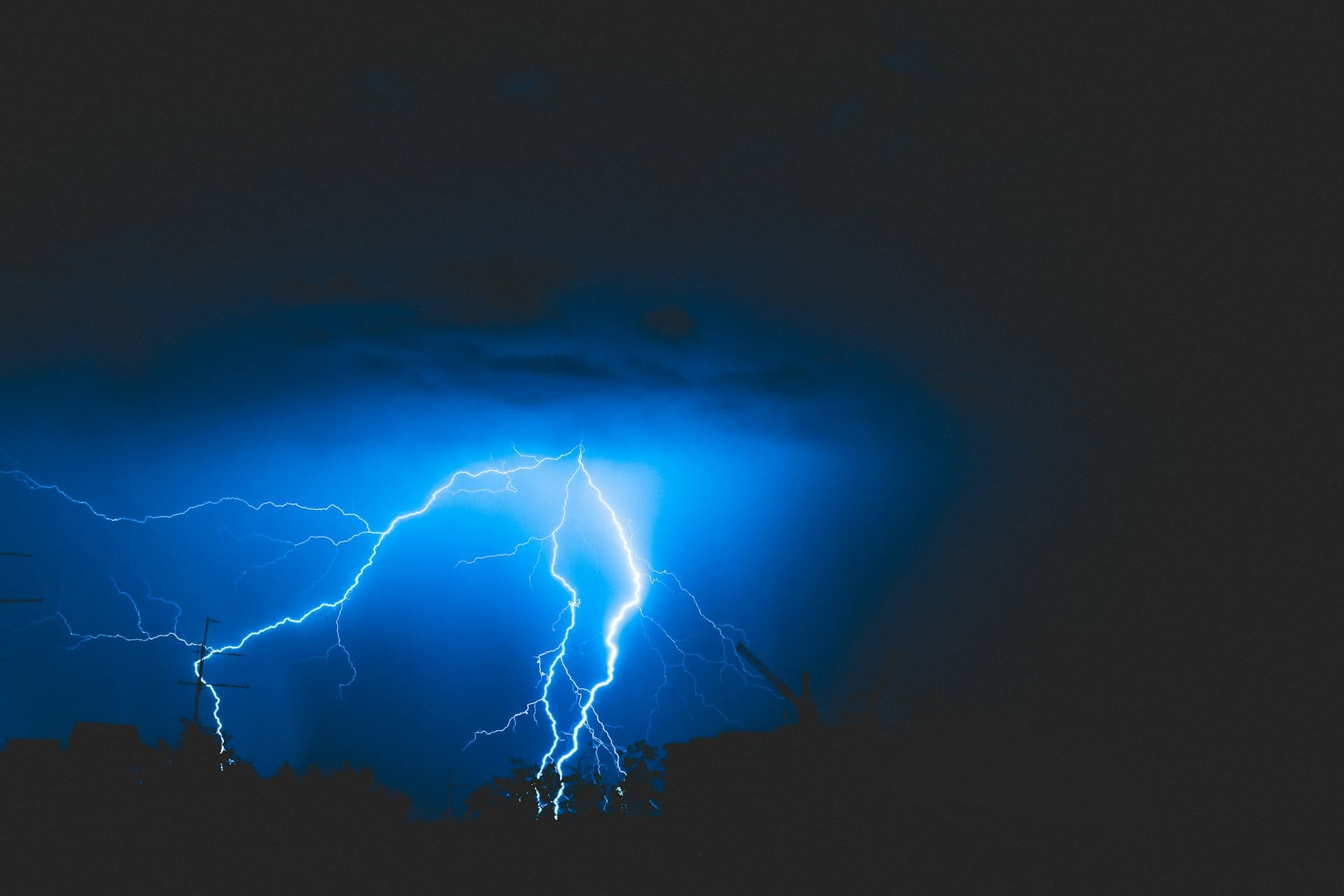
Unlike sprites, blue jets emerge from the top of storm clouds without requiring a lightning strike to trigger them. They appear as columns of blue light shooting upward into the stratosphere.
The phenomenon was not documented until 1994, and even today they remain difficult to photograph. Most people have never witnessed one despite living through countless thunderstorms.
ELVES (Expanding Light Emission from Very Energetic Sources)
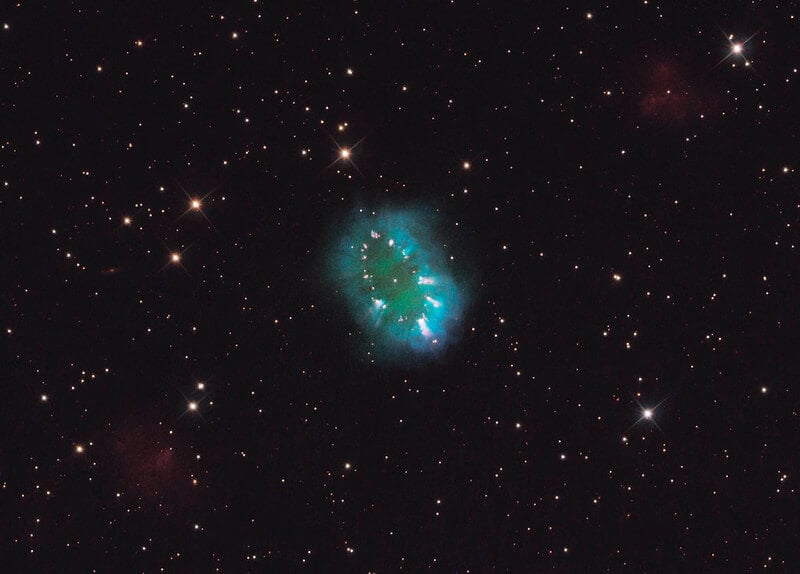
These are expanding rings of light that form at the base of the ionosphere, sometimes reaching 400 kilometers in diameter. The phenomenon lasts only a fraction of a millisecond—so briefly that it cannot be seen with the naked eye.
They can only be documented through high-speed cameras, making this one of Earth’s most visually striking phenomena that humans cannot directly witness without technological assistance.
Noctilucent Clouds
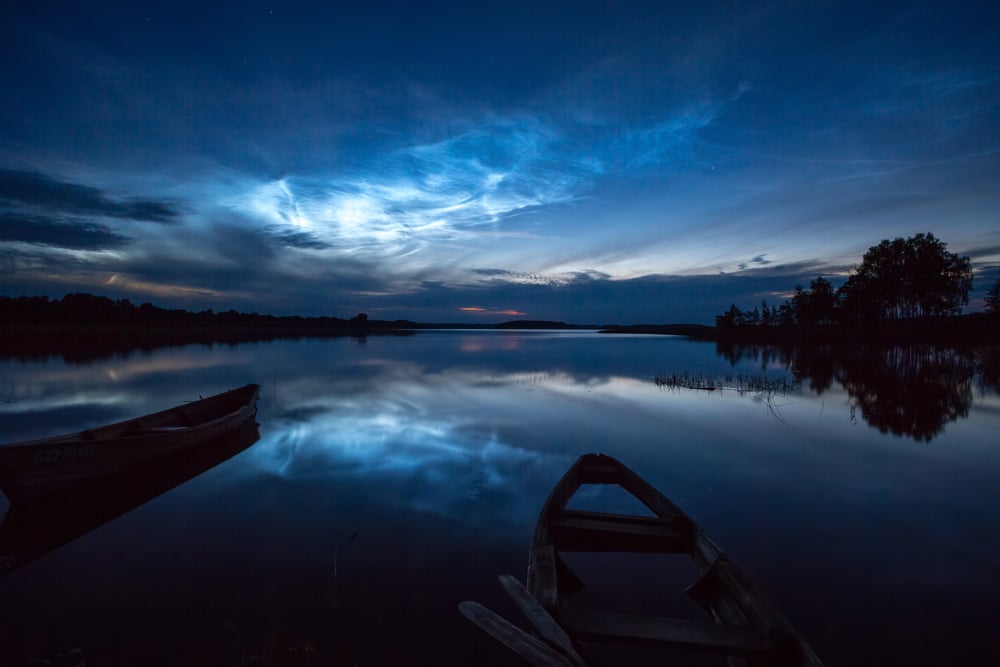
These ice crystal clouds form at 80 kilometers altitude, making them the highest clouds in Earth’s atmosphere. They glow with an ethereal silver-blue light during the deep twilight hours in summer months and can only be observed from latitudes between 50 and 70 degrees north or south.
The phenomenon is becoming slightly more common due to climate change, but most people will never be at the right place, time of year, and at the right hour of twilight to see them.
Fallstreak Holes (Hole Punch Clouds)
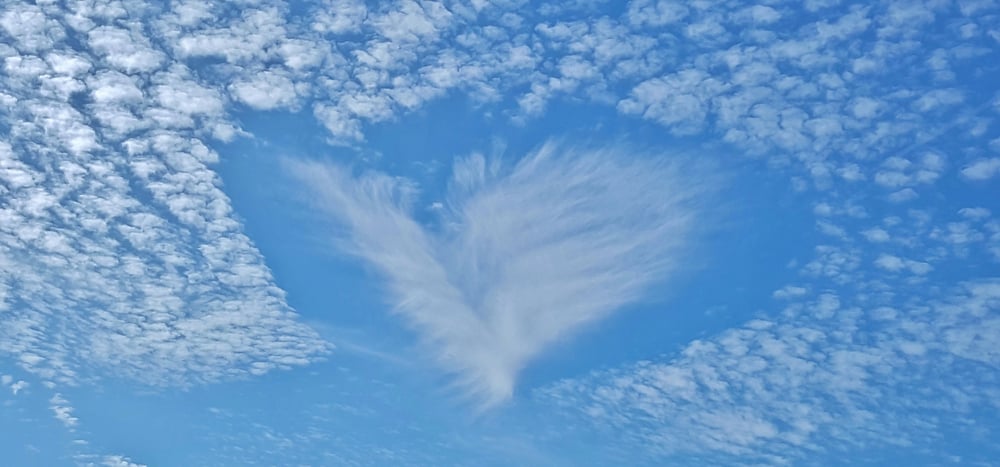
A perfectly circular gap appears suddenly in a layer of clouds when supercooled water droplets freeze in a chain reaction. The phenomenon can be triggered by aircraft passing through the cloud, but it can also occur naturally.
The appearance is striking enough that observers often assume it’s artificial or something ominous, but the actual cause is beautiful cloud physics. Most people witness fewer than five of these in a lifetime.
Volcanic Lightning
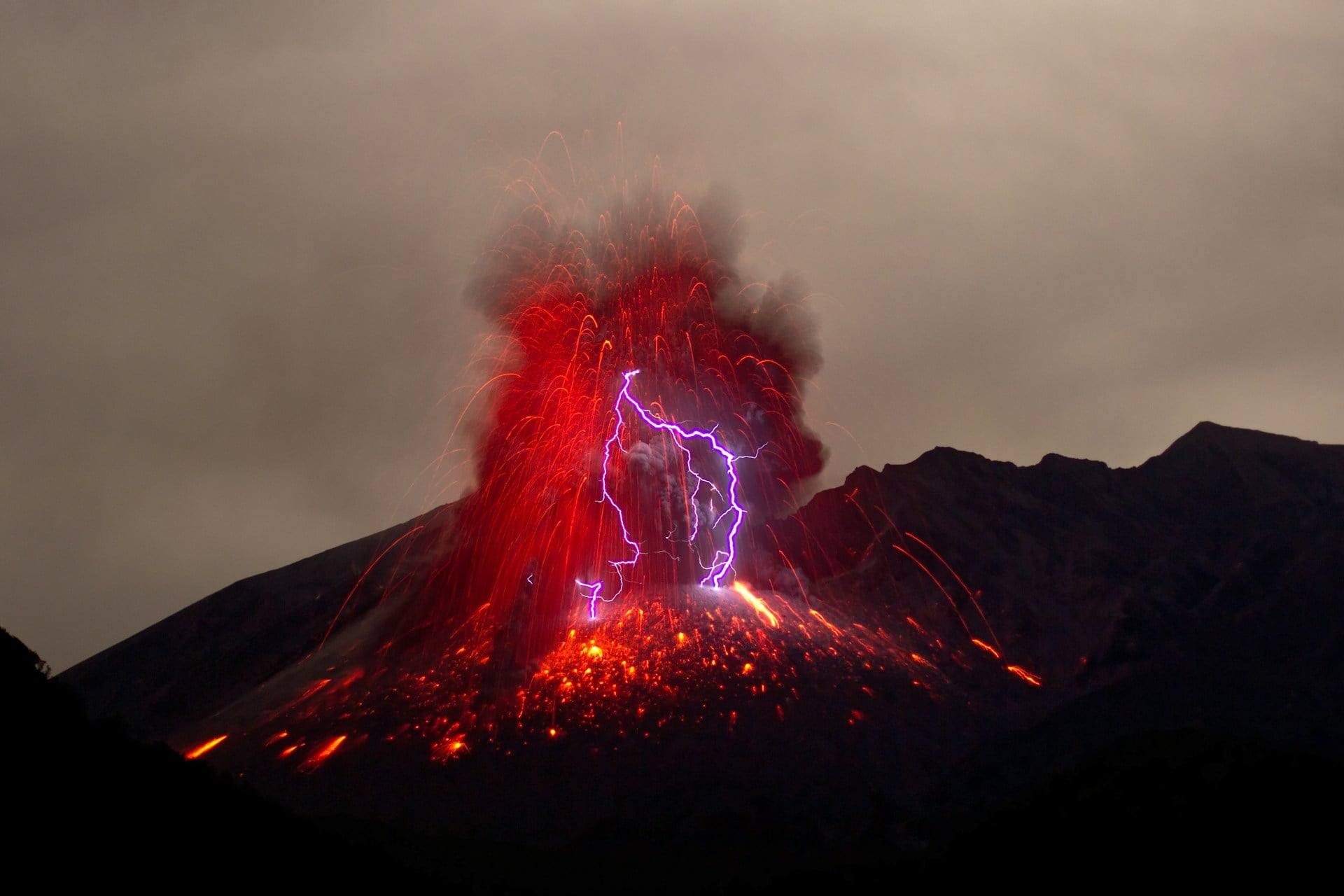
During a volcanic eruption, lightning crackles through the ash plume—particles colliding in the rising column of superheated gases create static electricity on a massive scale. The phenomenon is both rare and dangerous to photograph, requiring proximity to active volcanic eruptions.
The few people who have documented this have done so at considerable risk.
Brocken Spectre
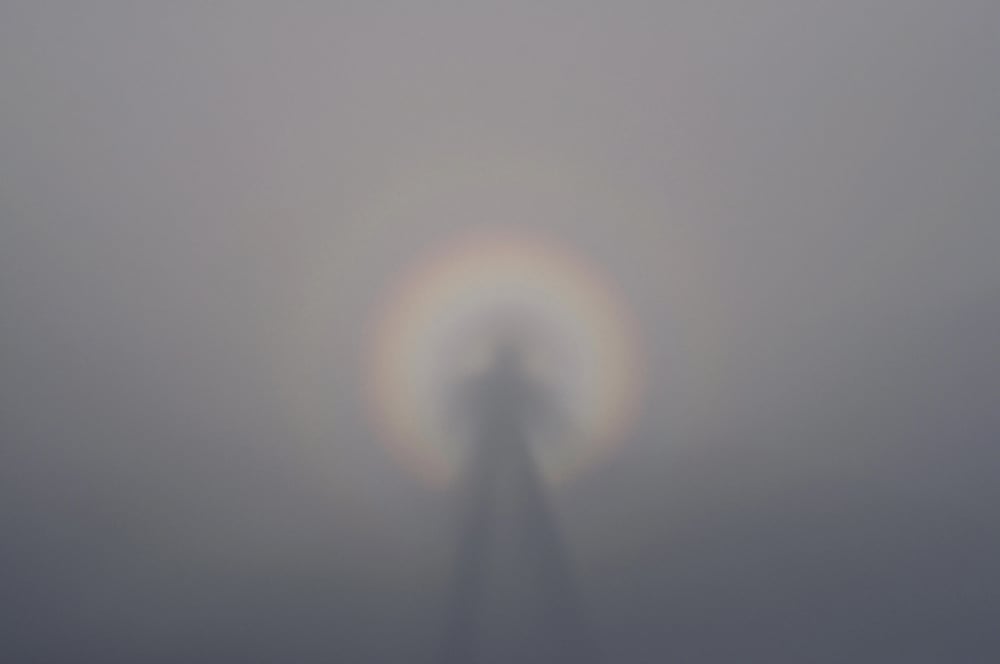
When a mountaineer stands on a peak with the sun directly behind them and a cloud or fog layer below, their shadow projects onto the clouds below, often magnified enormously. The phenomenon sometimes creates the illusion of a ghostly giant figure floating in the mist.
Hikers occasionally witness this accidentally, but most climbers never position themselves correctly to see it even if they spend decades in mountains.
Sun Dogs (Parhelia)
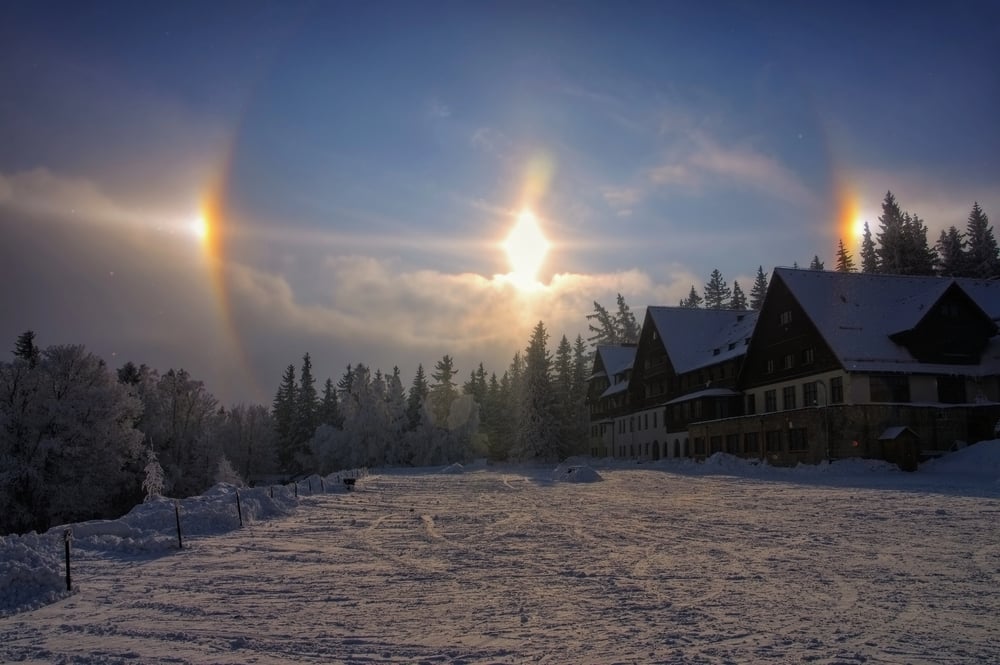
When ice crystals in the atmosphere refract sunlight, bright spots appear on either side of the sun, often accompanied by a luminous halo. The phenomenon occurs worldwide but requires specific atmospheric conditions and the correct sun angle.
Most people who see sun dogs don’t recognize the phenomenon and assume they’re seeing something else, so even sightings often go unappreciated.
Light Pillars
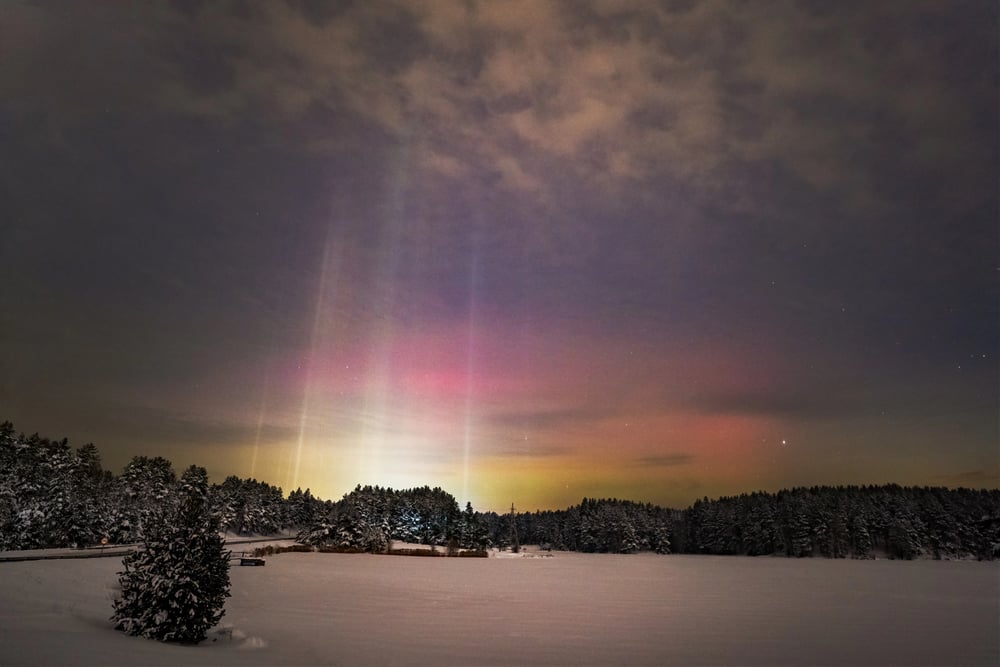
On extremely cold nights, ice crystals in the air just above the ground reflect and refract light from streetlights, car headlights, or even the sun or moon upward, creating the illusion of vertical beams shooting into the sky. The effect is most dramatic in cities during harsh winter temperatures.
In rural areas or during milder winters, most people never encounter the atmospheric conditions required for this display.
Brinicles (Underwater Icicles)
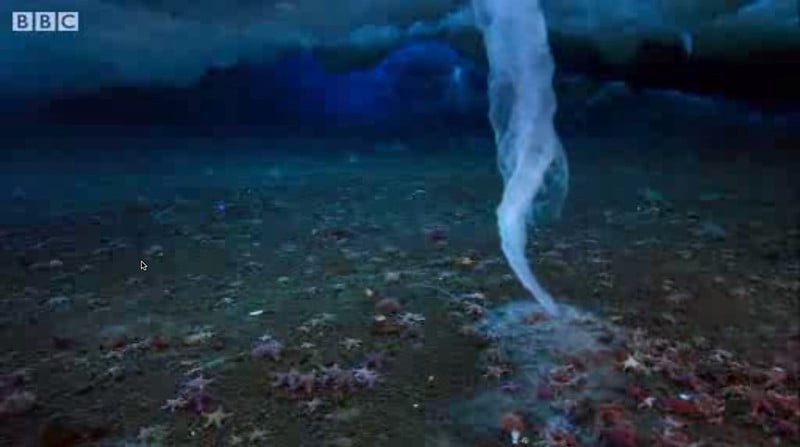
These hollow stalactites form when frigid salt water freezes as it sinks through warmer ocean water, creating icy columns that extend downward and can eventually freeze slow-moving creatures on the ocean floor. The phenomenon occurs in polar oceans and is rarely observed by humans.
Most people have no idea these exist, and the few who know about them have never seen one.
Catatumbo Lightning
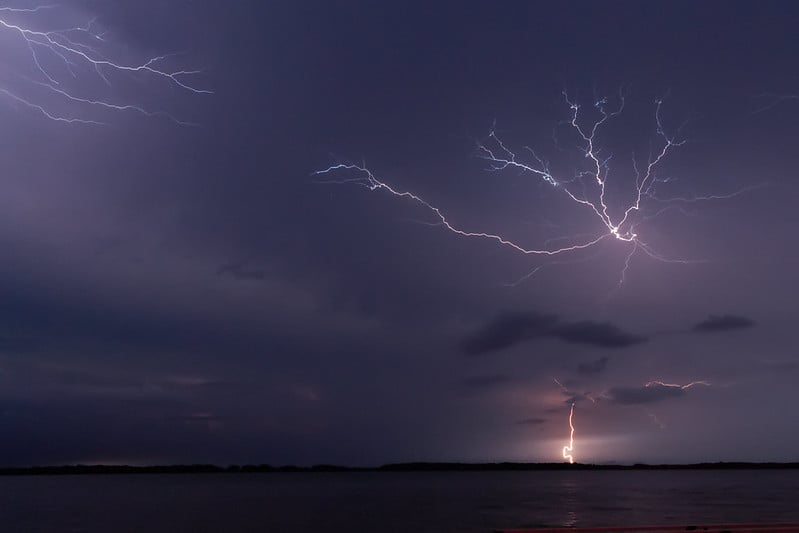
Over Lake Maracaibo in Venezuela, lightning strikes occur with extraordinary frequency—140 to 160 nights per year, up to 280 times per hour, persisting for 10 hours at a time. The phenomenon is so consistent that indigenous people used it for navigation before compasses.
Yet very few people have traveled to this remote location to witness what local residents consider routine. It’s rare not because it’s uncommon but because so few locations allow humans to reliably observe it.
Lenticular Clouds
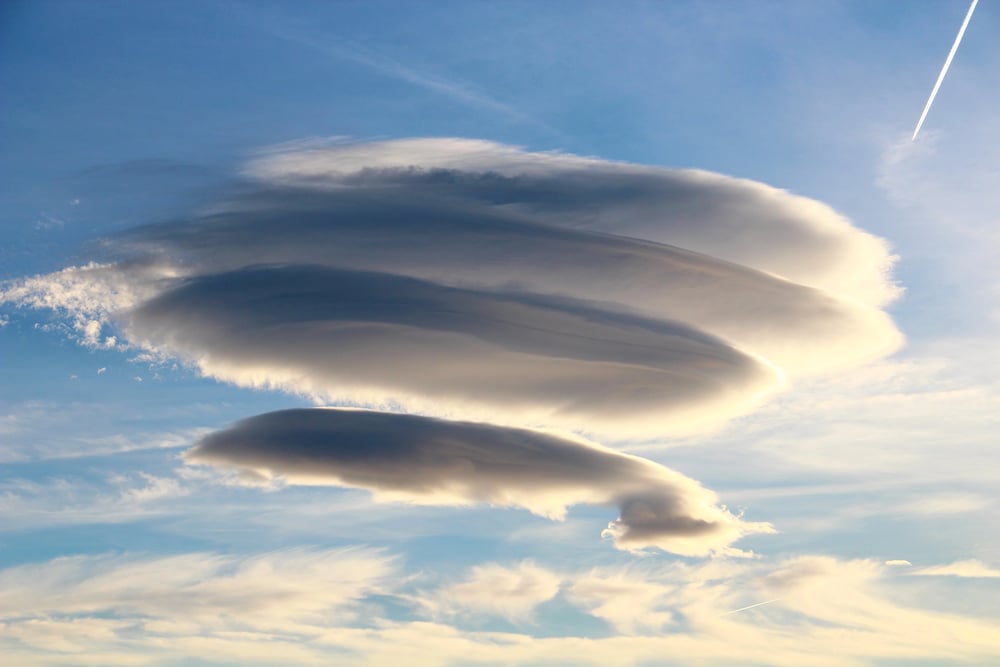
These lens-shaped clouds form on the downwind side of mountains when air flows over peaks. The clouds remain stationary even while wind passes through them, creating formations that resemble UFOs hovering in place.
The phenomenon is common in certain mountain ranges but rarely observed by most people who encounter them, since the clouds must be viewed from particular angles and distances.
Mammatus Clouds
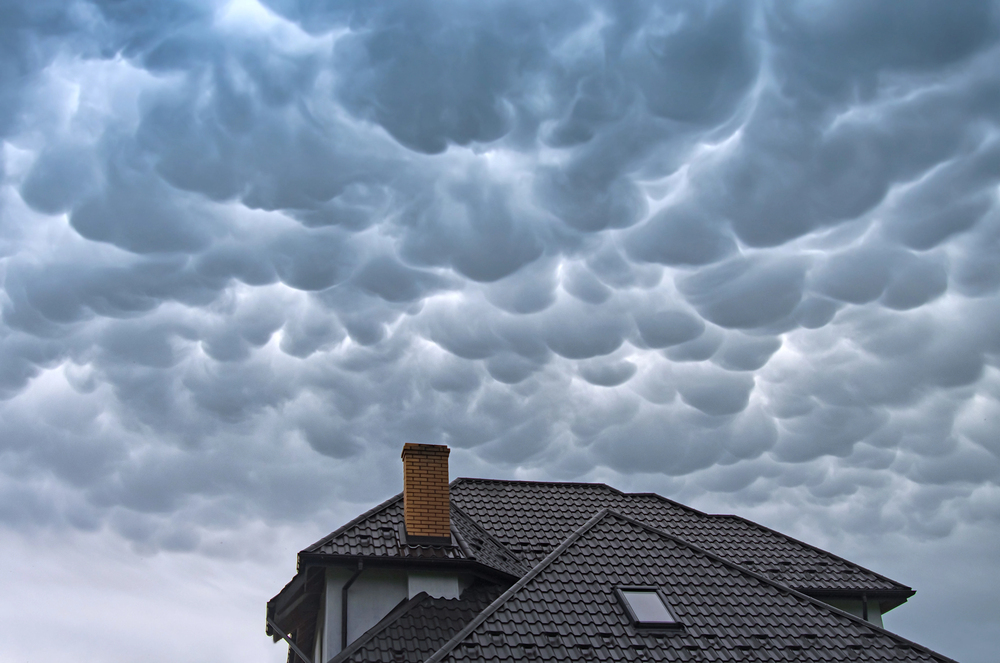
These dramatic pouch-like formations hang below storm clouds, creating a textured, almost reptilian appearance to the sky. The clouds are associated with strong updrafts and downdrafts in severe weather.
While the phenomenon is not particularly rare, most people spend so little time actively observing clouds that the vast majority never notice one, even if they pass beneath mammatus clouds multiple times in their lives.
Shelf Clouds
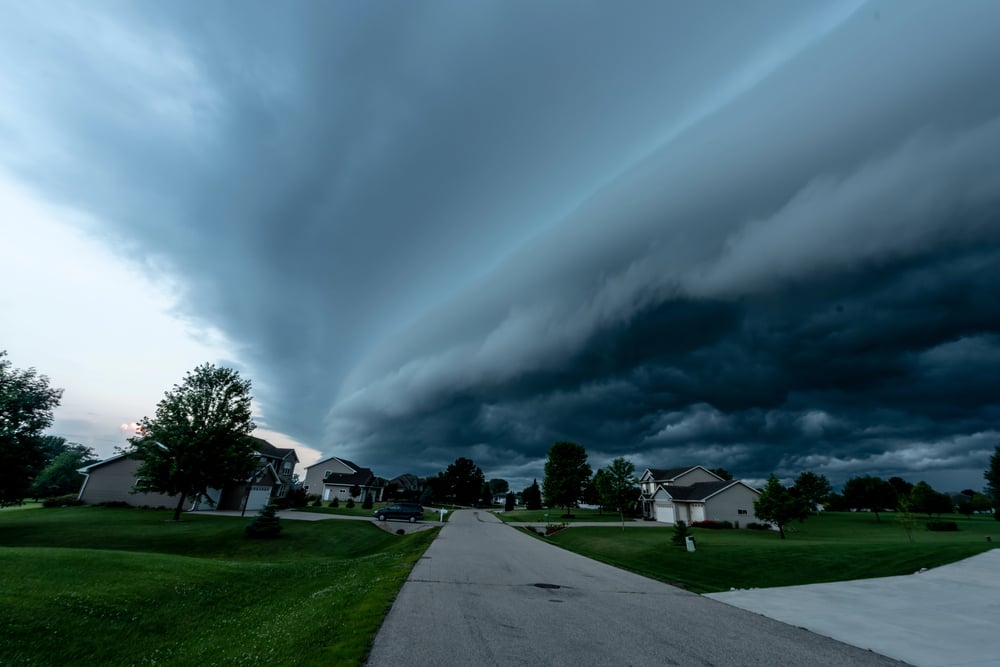
These smooth, horizontal formations mark the leading edge of a severe thunderstorm’s outflow boundary. The clouds can be spectacular, resembling a massive shelf extending across the horizon.
The phenomenon is common in strong storms across North America but requires being outside at the moment the shelf cloud approaches, and oriented in the right direction to see it clearly.
Glory (Optical Halo)
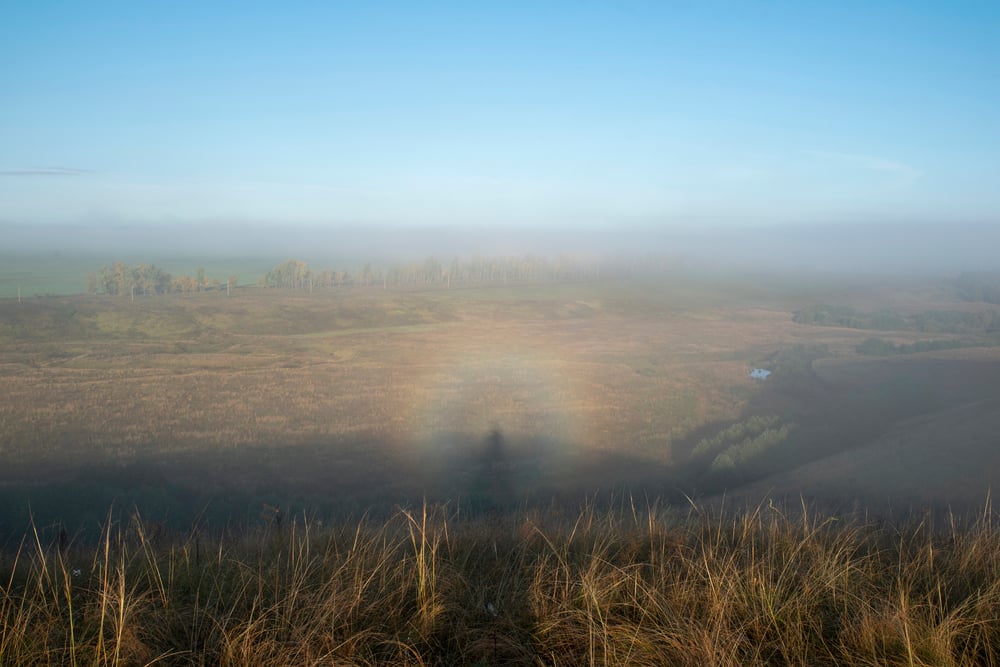
When an observer stands with the sun directly behind them on a mountain or in an aircraft above clouds, a rainbow-like halo appears around their shadow. The phenomenon is caused by light scattering off water droplets and is geometrically constrained to appear only at a specific angle.
Pilots see glories regularly, but most other people never achieve the required positioning.
Fogbow
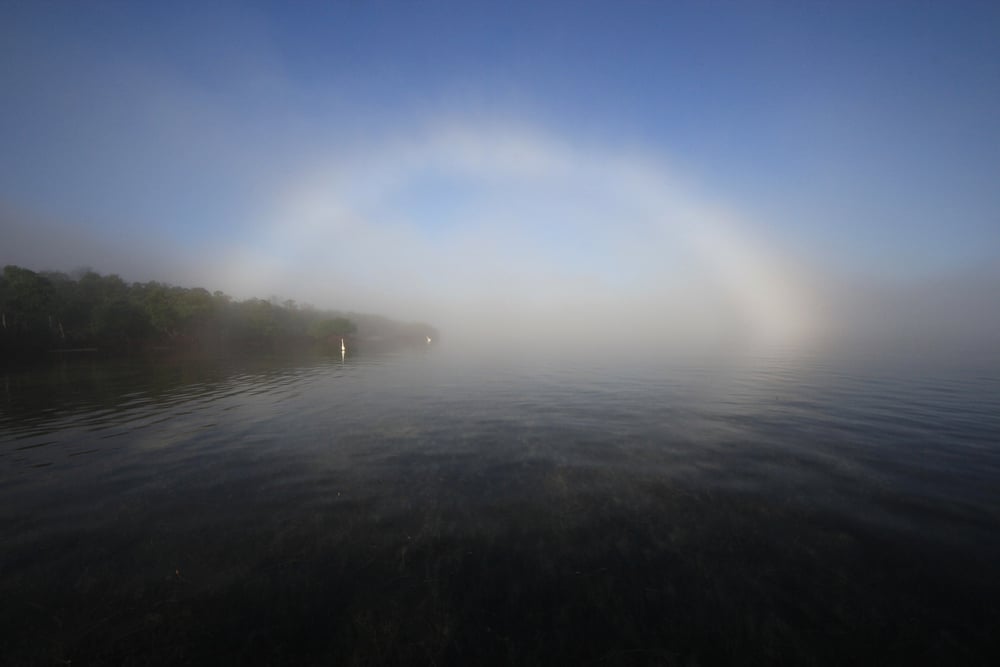
Similar to a rainbow but occurring in fog rather than rain, a fogbow appears as a white or pale colored arc in fog when the sun is positioned correctly behind the observer. The phenomenon is less vivid than a rainbow because fog droplets are smaller than raindrops, producing less colorful refraction.
Most fogbows go unnoticed because observers assume they’re looking at fog, not a distinct optical phenomenon.
Earthquake Lights
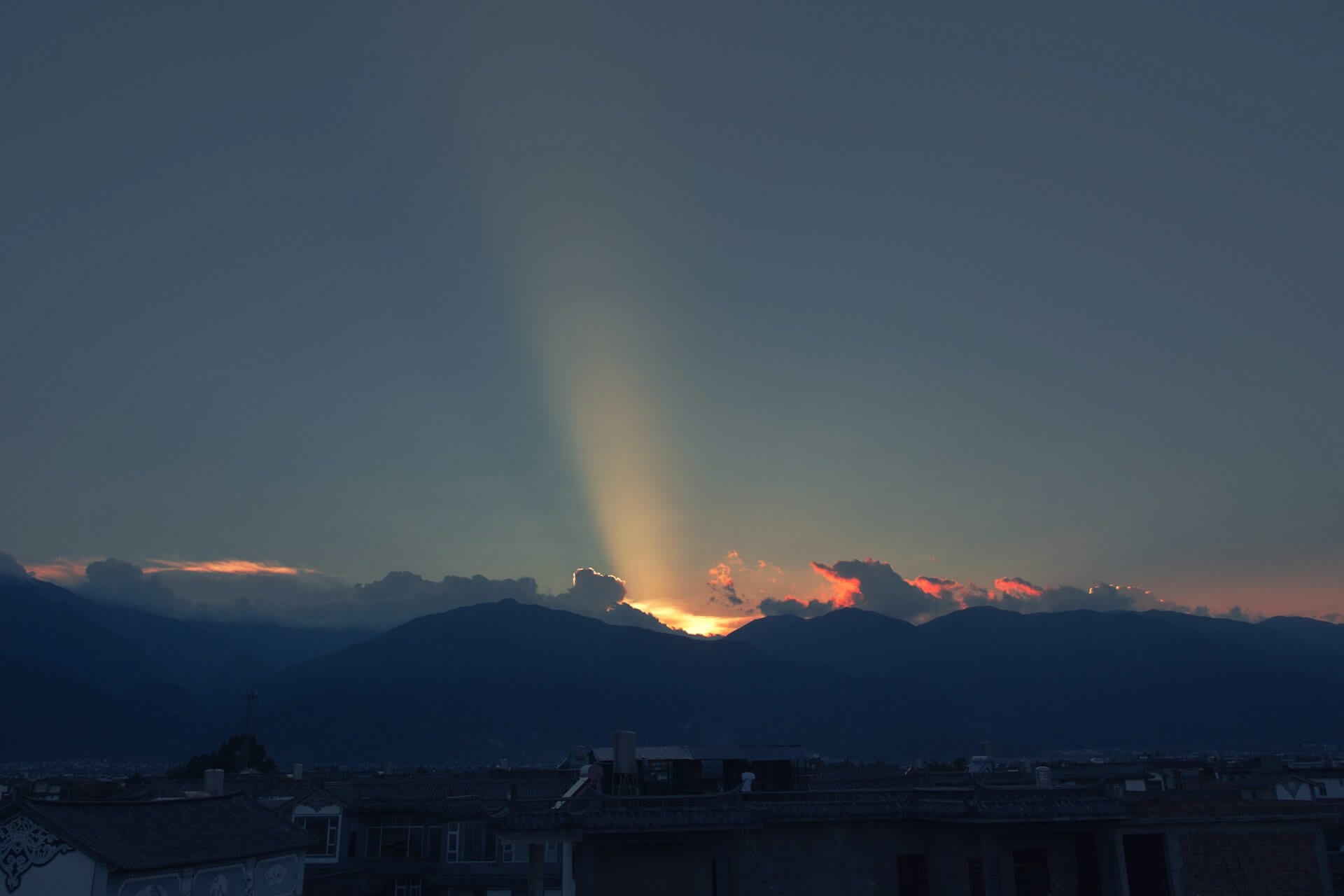
During some earthquakes, unusual luminescence appears in the sky—flashes of light or glowing phenomena that occur during or immediately after seismic activity. The cause remains debated among scientists, but the phenomenon has been documented multiple times by reliable observers.
Witnessing earthquake lights requires being outdoors during an earthquake in the correct conditions, and most earthquakes occur at night when the lights might not be visible.
Pulsating Aurora
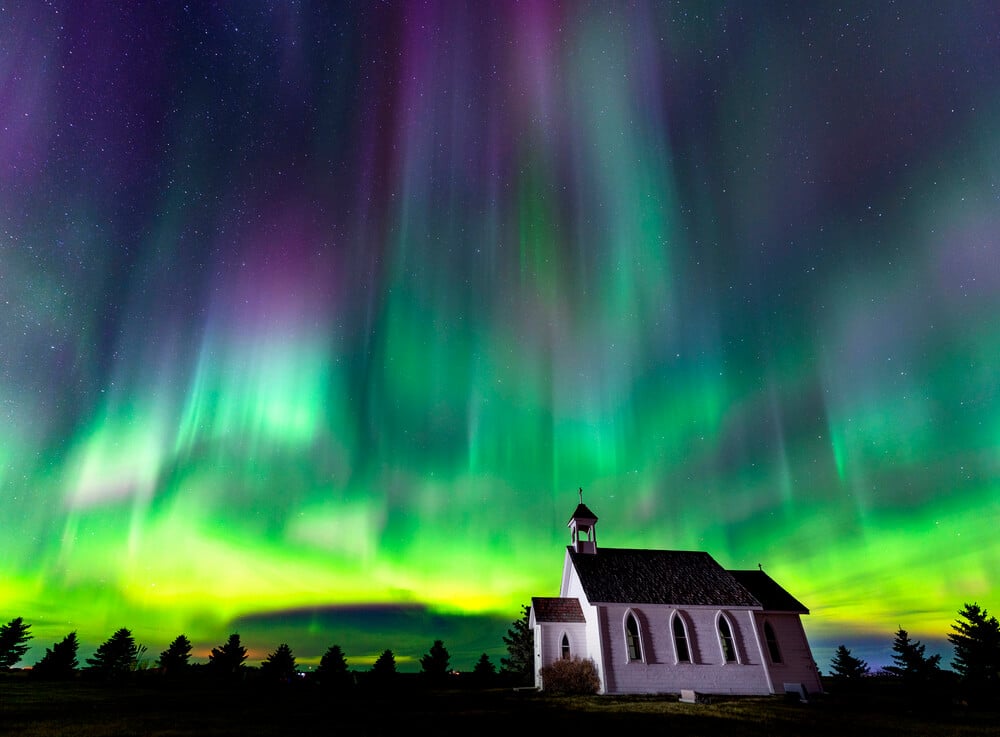
Unlike the steady ribbons of the typical aurora, pulsating auroras appear as waves of light that brighten and fade rhythmically. The phenomenon occurs during different geomagnetic storm conditions than standard auroras and requires specific atmospheric conditions to become visible.
Aurora chasers who see the Northern Lights regularly still wait years between pulsating aurora sightings.
STEVE and SAR Arcs
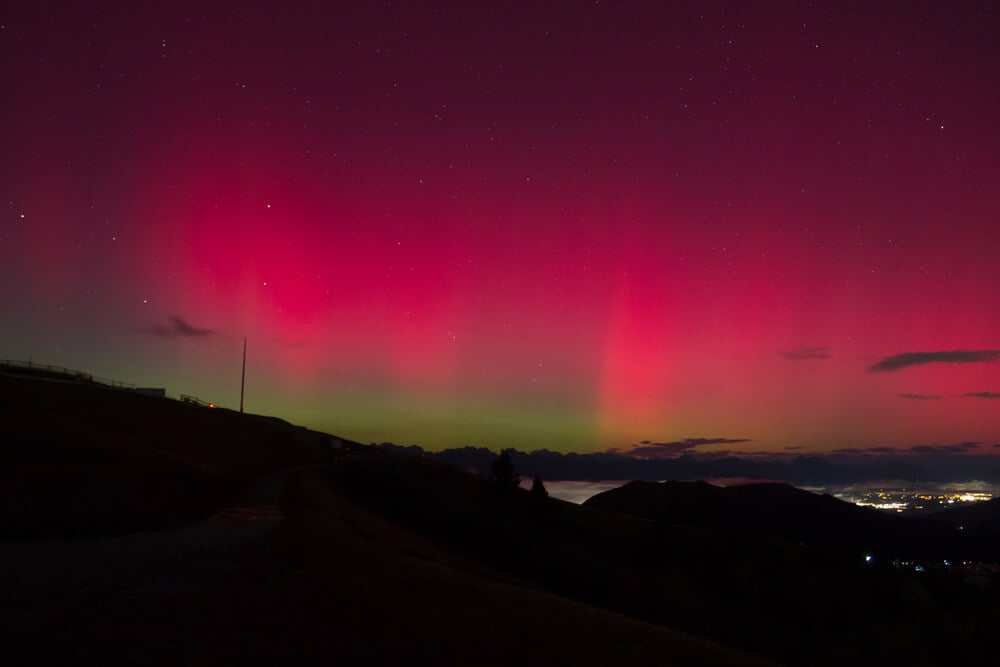
These rare auroral phenomena appear as pink or purple ribbons and diffuse arcs in the sky, sometimes accompanying major geomagnetic storms. STEVE (Strong Thermal Emission Velocity Enhancement) and SAR (Sub-Auroral Red Arc) arcs appear at lower latitudes than typical auroras, making them visible from areas where aurora sightings are already rare.
Observing one is considered exceptional even among aurora chasers.
22-Degree Halo
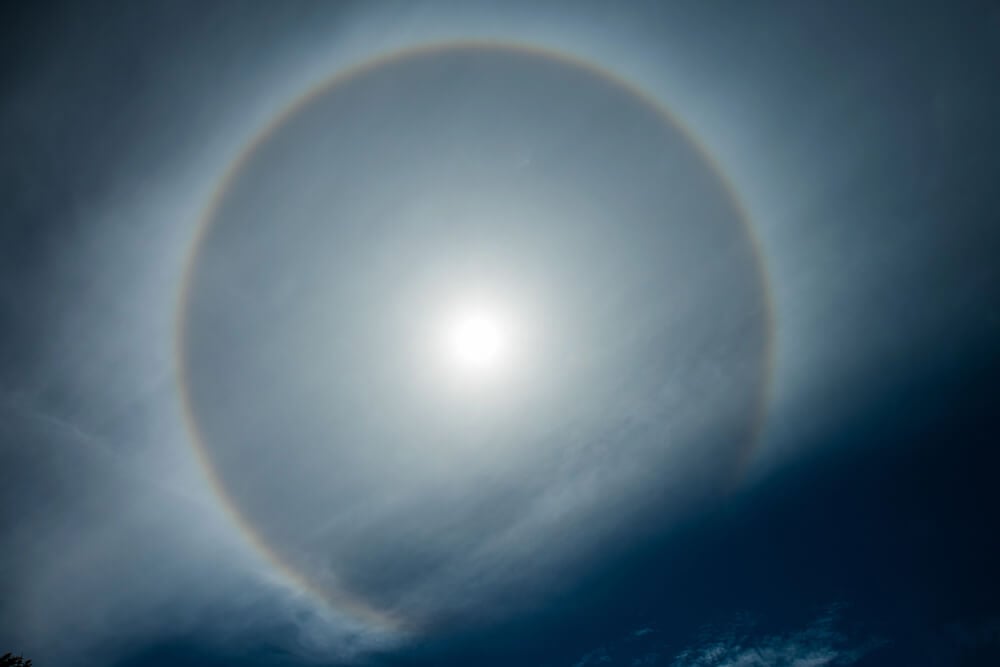
When ice crystals in the atmosphere refract sunlight at a specific 22-degree angle, a perfect circular halo appears around the sun. While the phenomenon is more common than many others on this list, most people never notice it, assuming they’re looking at ordinary cloudy sky.
The halo can appear several times per year in most locations, yet the vast majority of sightings go unappreciated by people who never learned to recognize it.
Multiple Rainbows
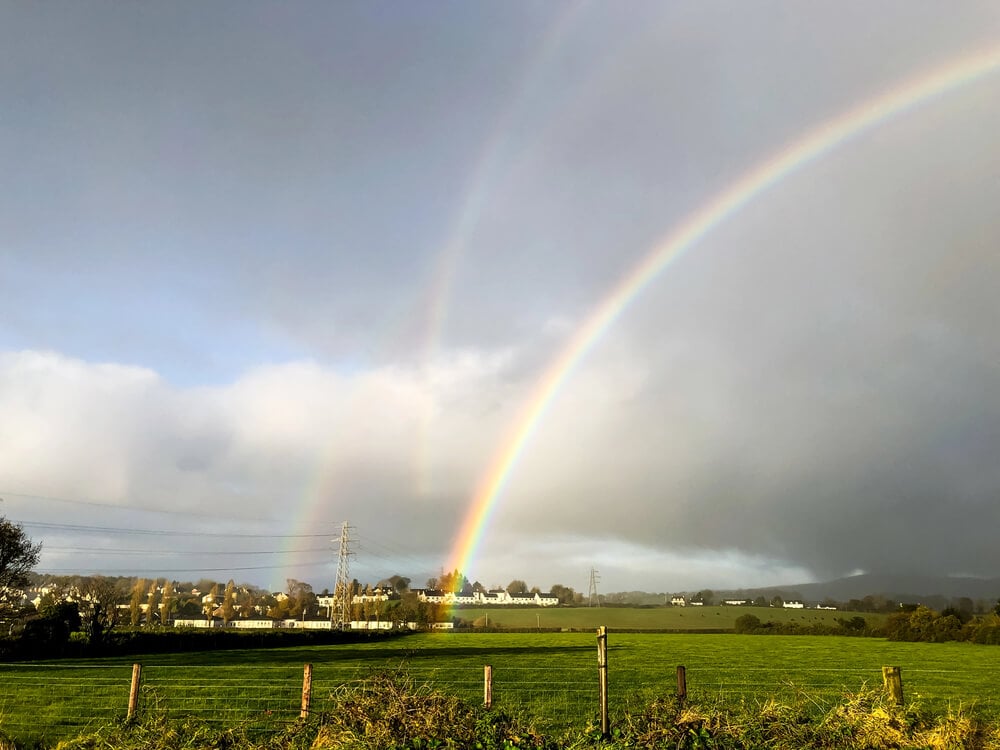
While regular rainbows are reasonably common, observing a full primary rainbow and secondary rainbow simultaneously is far rarer. Seeing a tertiary rainbow—a third, fainter arc on the opposite side of the sky—is exceedingly rare and requires extremely specific atmospheric geometry.
Most people who encounter rainbow conditions don’t remain positioned to watch long enough for subsequent arcs to become visible.
Circumscribed Halo
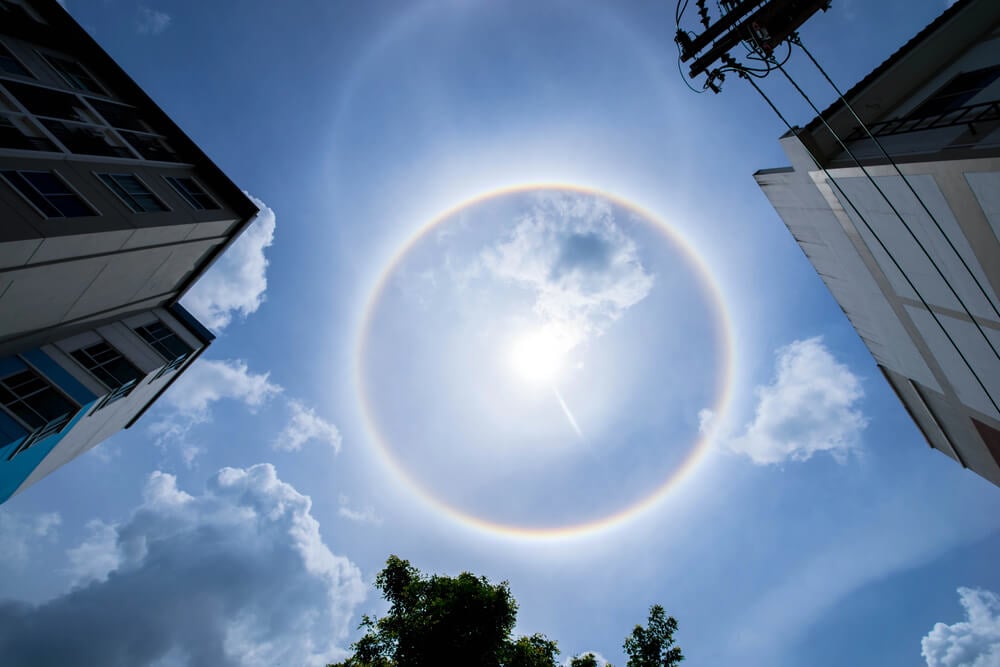
When ice crystals in the atmosphere refract light at multiple angles, a halo with flat sides appears around the sun or moon, resembling a tilted square or diamond. The phenomenon combines multiple optical effects and requires precisely oriented ice crystals.
Most people mistake this for a simple halo and never realize they’ve witnessed a more complex atmospheric phenomenon.
Asperitas Clouds
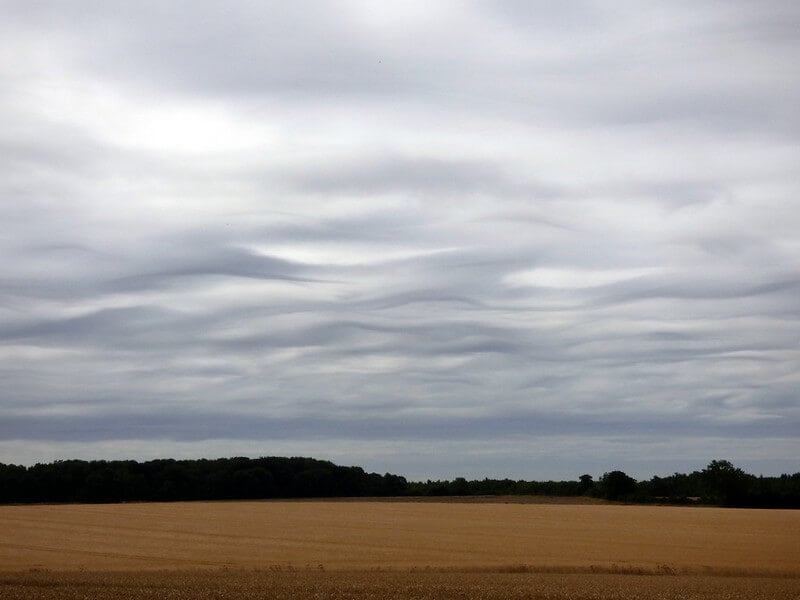
These dramatic undulating clouds resemble waves frozen in the sky, appearing chaotic and turbulent beneath calm sky above. The formation is caused by wind shear at cloud level and usually precedes severe weather.
While beautiful, most people mistake these for ordinary storm clouds and don’t recognize the specific pattern that defines asperitas. The phenomenon was officially named and added to the cloud classification system in 2017.
Nacreous Clouds (Mother-of-Pearl Clouds)
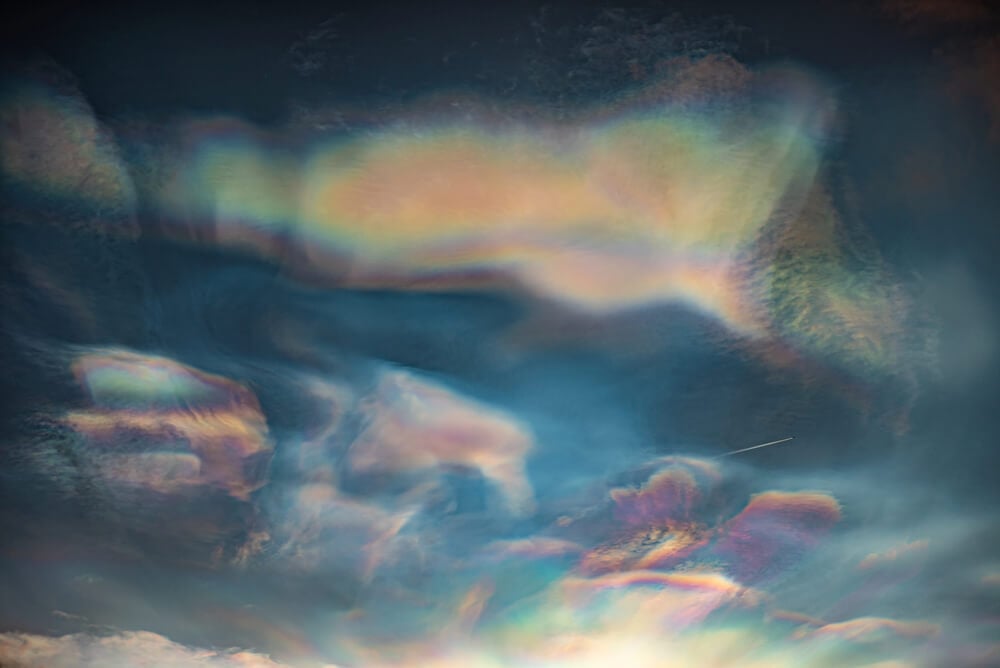
These high-altitude polar stratospheric clouds form only at extremely cold temperatures in polar regions, appearing iridescent with mother-of-pearl-like colors. The phenomenon is most common in Antarctica and the Arctic and is becoming increasingly rare due to changing polar temperatures.
Most people will never see these even if they travel to the poles, since they form in specific atmospheric conditions and require clear viewing angles.
Red Rainbow (from Sunset or Sunrise)
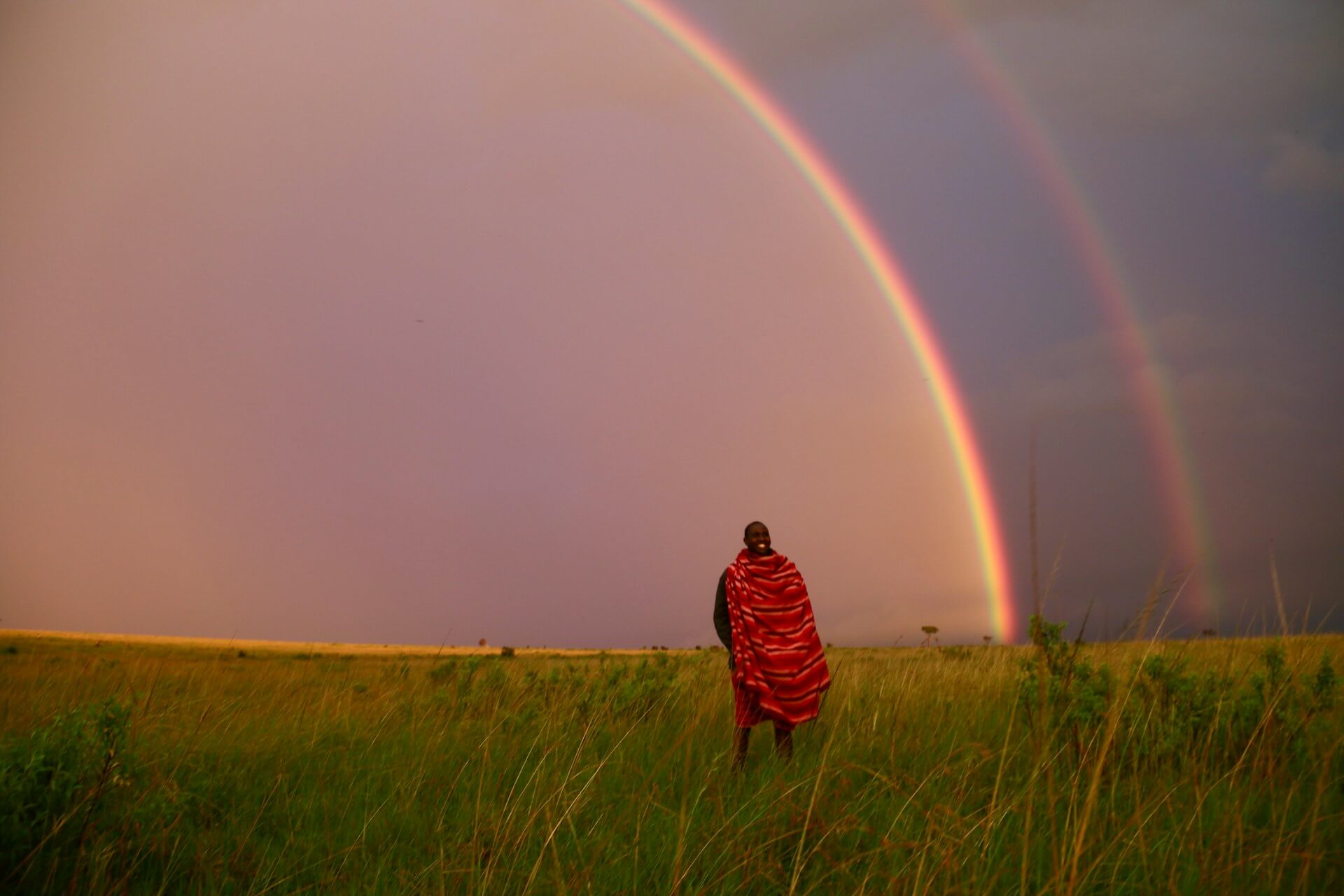
When a rainbow forms at sunrise or sunset, the light is reddened by passing through more atmosphere, creating a rainbow that appears predominantly red and orange rather than the full spectrum. This phenomenon requires the observer to be positioned between the sun and a rain shower at the precise moment of sunrise or sunset.
The timing window is exceptionally narrow, making complete red rainbows rarer than standard rainbows.
The Achievement of Witnessing
These 31 phenomena represent Earth’s rarest visual performances. Some demand travel to extreme latitudes or altitudes; others require being outdoors at precisely the right moment, looking in the exact right direction, with perfect atmospheric conditions aligning by chance.
Most people will live entire lives without witnessing even half of these, not because they’re searching poorly, but because the planet rarely performs all these tricks where humans are positioned to see them. Each sighting becomes a genuine achievement—a moment when nature aligned perfectly, and someone was paying attention.
More from Go2Tutors!

- The Romanov Crown Jewels and Their Tragic Fate
- 13 Historical Mysteries That Science Still Can’t Solve
- Famous Hoaxes That Fooled the World for Years
- 15 Child Stars with Tragic Adult Lives
- 16 Famous Jewelry Pieces in History
Like Go2Tutors’s content? Follow us on MSN.