Longest Prison Sentences Given
A typical prison sentence lasts a few years. Maybe five. Perhaps ten.
But some criminals receive sentences that stretch far beyond any human lifespan. Courts hand down centuries, even millennia, behind bars.
These numbers become symbolic rather than practical. Nobody serves 30,000 years.
The point isn’t serving time anymore. The point is ensuring someone never walks free again.
These extreme sentences raise questions about justice, punishment, and what courts are really trying to accomplish. When life imprisonment achieves the same result, why sentence someone to 10,000 years?
The answer reveals how legal systems handle the most horrific crimes when simple life sentences don’t feel adequate.
The Postman Who Never Delivered

Gabriel March Granados started working as a postman in Palma de Mallorca, Spain, in January 1968. He was 18 years old.
Over the next two years, something went terribly wrong with his mail delivery. Complaints started pouring in.
People weren’t receiving their letters. An investigation uncovered the scope of the problem. Granados had failed to deliver 42,768 letters.
He’d opened 35,718 of them and stolen contents worth roughly 50,000 euros. Instead of doing his job, he’d been rifling through mail and taking whatever looked valuable.
Prosecutors in 1972 requested something unprecedented: 384,912 years in prison. They calculated nine years for each undelivered letter.
The judge ultimately sentenced Granados to just 14 years and two months. The massive requested sentence made headlines worldwide, though the actual time served proved far more reasonable.
Granados completed his sentence and disappeared from public view. His case remains the longest prison sentence ever requested in recorded history.
Robinson’s 30,000 Years in Oklahoma

Charles Scott Robinson received the longest actual sentence given to a single person on multiple counts in United States history. An Oklahoma court convicted him in December 1994 of six counts relating to the rape and molestation of a three-year-old girl.
The crimes included rape by instrumentation, forcible oral sodomy, and lewd acts with a child under 16. The jury recommended 5,000 years for each count.
The judge ordered these sentences to run consecutively, not concurrently. Robinson received 30,000 years total.
Oklahoma has a reputation for tough sentencing, and this case exemplified that approach. Life without parole wasn’t a legally appropriate option for his specific crimes under Oklahoma law at the time.
The massive sentence served as an alternative way to ensure Robinson would never leave prison. Robinson remains incarcerated.
His sentence holds the Guinness World Record for the longest jail term given to a single criminal on multiple counts.
Colorado Theater Shooter Gets 3,318 Years

James Holmes walked into a movie theater in Aurora, Colorado, in July 2012 and opened fire. He killed 12 people and injured 70 others during a midnight screening.
The attack stunned the nation. Holmes avoided the death penalty.
Instead, he received 12 life terms for the murders plus 3,318 additional years for attempted assassinanation charges, one count of possessing an illegal explosive device, and a sentence enhancement for a crime of violence. The combined sentence totaled over 3,000 years on top of multiple life terms.
The lengthy sentence reflected the massive number of victims. Each attempted murder charge added years.
The court wanted to acknowledge every person Holmes harmed, not just those who died. The result was a sentence that would take multiple lifetimes to complete.
Lopez Gets 1,503 Years for Abusing His Daughter
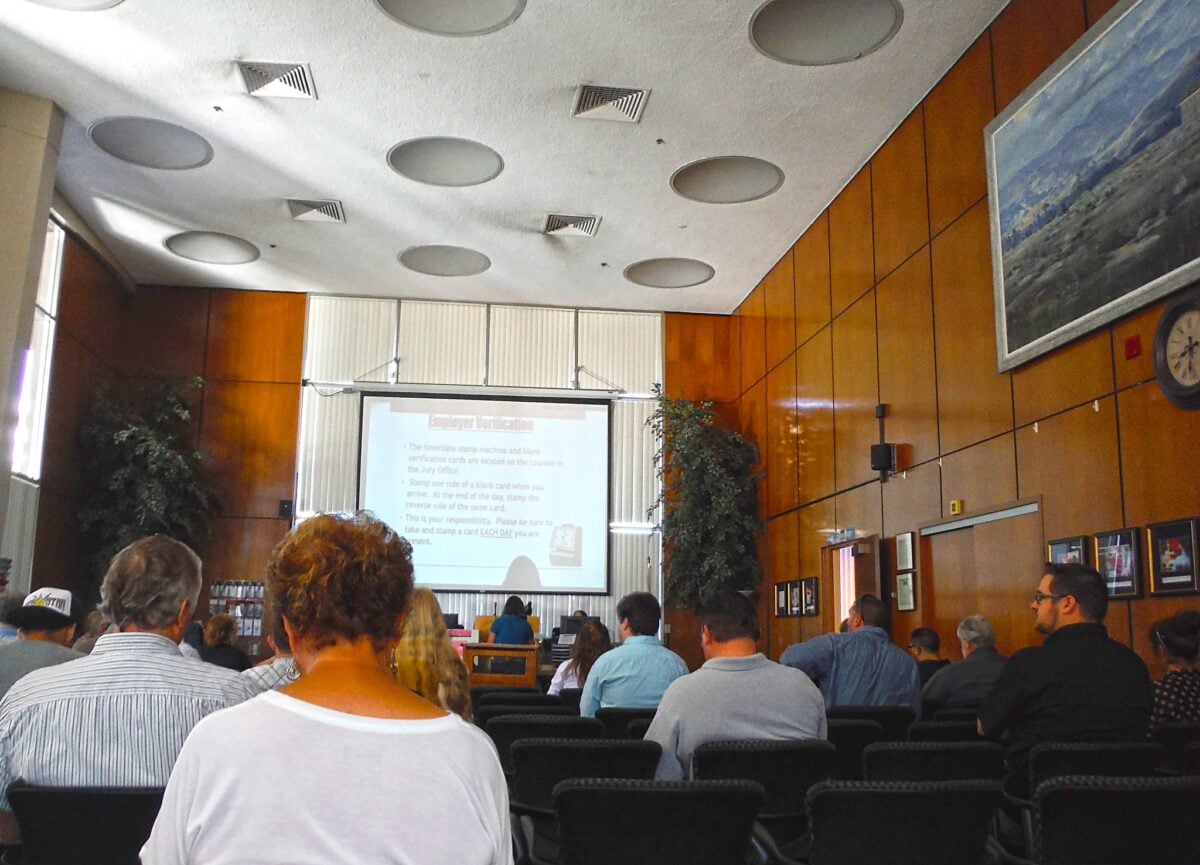
Rene Lopez received the longest prison sentence in Fresno Superior Court history in 2017. He’d committed four years of continuous abuse against his daughter.
The abuse started after one of Lopez’s friends assaulted her first. Instead of protecting his child, Lopez added to her trauma. During the trial, Lopez showed no remorse.
He blamed his daughter for what happened. Judge Edward Sarkisian Jr. called him a serious danger to society and sentenced him to 1,503 years. The judge wanted to send a message about child abuse and parental betrayal.
Lopez’s daughter came forward in October 2014. Her courage in testifying led to her father’s conviction.
The extreme sentence reflected both the duration and severity of the abuse, plus Lopez’s complete lack of accountability.
Long’s 28 Life Sentences Plus Death

Bobby Joe Long terrorized the Tampa Bay area in Florida during the 1980s. He became known as the “Classified Ad Rapist” because he responded to newspaper ads about small appliances.
If he found a woman alone, he raped her. Police believe he raped about 50 women. Long also executed at least nine women, though investigators suspect more.
He confessed to nine assassinations but likely killed additional victims whose cases remain unsolved. The courts convicted him of multiple murders and gave him 28 life sentences, plus four 99-year terms, plus one five-year term, plus the death penalty.
The multiple life sentences didn’t matter much practically since Long also received a death sentence. But the court wanted each victim acknowledged separately.
Every life sentence represented a destroyed life, a family devastated, a future stolen.
Godfrey’s Abuse Gets 54 Life Sentences

Billy Joe Godfrey committed heinous acts against two children between 1995 and 1999. The victims were between 8 and 13 years old.
When the case came to light in October 2014, prosecutor Brendon Fox called it one of the worst he’d ever seen. Godfrey pleaded guilty. He asked for the opportunity to die outside prison.
The court denied his request. Judge Ronald White delivered the sentence: 54 life terms. White stated that Godfrey would never take another breath of free air.
The staggering number of life sentences reflected the prolonged nature of the abuse and the number of incidents. Each separate act of abuse earned its own life sentence.
Courts use this approach to ensure parole boards can’t reduce the sentence or grant early release.
Nichols Holds the Life Sentence Record

Terry Nichols helped Timothy McVeigh bomb the Oklahoma City federal building in 1995. The explosion killed 168 people, including 19 children in a daycare center.
It remains one of the deadliest terrorist attacks on American soil. Nichols was convicted of 161 counts of first-degree killings at the state level, plus first-degree arson and conspiracy.
Federal courts also convicted him of terrorism and eight counts of involuntary manslaughter. The combined convictions resulted in 161 consecutive life sentences.
Nichols holds the record for the most consecutive life sentences ever given to a single individual. Each life sentence represents one victim.
The court wanted to honor every person who died by giving each their own life sentence. Nichols will die in prison.
There’s no possibility of parole, appeal, or release.
Why Courts Give Impossible Sentences

These astronomical sentences seem absurd at first glance. Nobody lives 10,000 years.
Why not just say life without parole and be done with it? The reasons are both practical and symbolic.
Multiple convictions allow sentence stacking. When someone commits 20 separate crimes, they can receive 20 separate sentences.
Courts run these consecutively rather than concurrently. Each crime gets punished individually. The total quickly exceeds any human lifespan.
Severity matters too. Courts use extreme sentences to reflect extreme crimes.
When someone murders dozens of people or abuses children for years, a simple life sentence feels inadequate. The massive numbers communicate moral outrage.
Deterrence plays a role. These sentences send a message.
Anyone contemplating similar crimes sees the potential punishment. The harshness might discourage some would-be criminals.
Victim acknowledgment drives many extreme sentences. Each victim deserves recognition.
Giving one life sentence per executed victim honors each lost life separately. The numbers pile up quickly when mass executions occur.
The Difference Between Given and Served

Most countries have maximum actual time served regardless of sentence length. Spain limits imprisonment to 40 years maximum.
Other European nations have similar caps. Even in the United States, most states eventually offer parole hearings.
This creates a disconnect. Someone sentenced to 30,000 years might serve 40 under local law.
The symbolic sentence matters more than the actual time served. Courts know convicted criminals won’t serve millennia.
They’re making a statement. Some prisoners actually prefer extreme sentences to life without parole.
Multiple centuries leave room for appeals and legal arguments. Life without parole closes doors.
The finality can be worse than an impossible number.
When Numbers Stop Meaning Anything

At a certain point, prison sentences become mathematical abstractions. Is 30,000 years really worse than 10,000? Does 384,912 years carry more weight than 100,000?
Once you exceed a human lifetime by orders of magnitude, additional zeros lose significance. Courts understand this.
They’re not expecting anyone to serve these sentences. They’re creating a permanent record. When someone researches these cases decades later, the sentence length communicates the severity of the crime.
Numbers become shorthand for horror. Defense attorneys sometimes argue these sentences are cruel and unusual punishment.
Courts generally disagree. The symbolic nature makes them acceptable.
Nobody actually serves 30,000 years. The punishment is life imprisonment.
The number is just an emphasis.
The Psychology of Extreme Sentencing

Judges face impossible decisions in extreme cases. How do you properly punish someone who murders 12 people?
Or sexually abuses dozens of children over years? Standard sentencing guidelines don’t capture the scope of the harm.
Extreme sentences offer psychological relief. The judge can feel they’ve matched punishment to crime, even if the math is absurd.
The victims’ families see massive numbers and feel justice was done. Society sees harsh consequences and feels protected.
Critics argue these sentences represent failures of imagination. If life imprisonment accomplishes the goal, why create impossible numbers?
The spectacle doesn’t serve justice. It serves emotion.
Multiple Lifetimes Behind Bars

Prisoners serving these extreme sentences know they’ll die in prison. The specific number doesn’t matter to their daily reality.
Whether sentenced to 100 years or 10,000 years, they wake up in the same cell. They eat the same food.
They follow the same routine. Some find ways to make prison life meaningful.
They read, study, and work prison jobs. Others deteriorate mentally from hopelessness.
Knowing you’ll never leave changes how you experience time. Days blur together.
Years become meaningless. The sentence might as well be infinite.
Prison staff treat these inmates like anyone else serving life. The 30,000-year sentence doesn’t make someone more dangerous than someone with life without parole.
The number is for the outside world. Inside, everyone’s just doing time.
Measuring Justice by the Numbers

Justice sometimes stretches longer than a lifetime. Frustration shapes these extreme terms, revealing discomfort with usual penalties.
Terrible acts leave judges searching beyond standard time behind bars. So they stack years into figures too large to imagine.
Some lines show unevenness. In Oklahoma, a person got thirty thousand years just for raping a child.
Elsewhere, similar acts bring sentences of twenty-five years up to life. Prosecutors in Spain asked for three hundred eighty-four thousand nine hundred twelve years over stolen mail.
Funny thing – over in America, they’d chuckle at asking for leniency on such an offense. Where you do the crime shapes how many hundred years you’ll serve.
What feels right in one place might seem harsh somewhere else. Could identical offenses deserve the same outcome everywhere?
Maybe community beliefs shape how penalties are set. Harsh time behind bars brings those conflicts into view.
Few will ever come across a person sentenced to ten thousand years. Locked up they stay, mostly erased from public memory.
Over time their extreme terms vanish from attention. Still the figures linger in archives, marking forever our ongoing challenge with penalties too vast to truly fit any crime.
More from Go2Tutors!

- 16 Historical Figures Who Were Nothing Like You Think
- 12 Things Sold in the 80s That Are Now Illegal
- 15 VHS Tapes That Could Be Worth Thousands
- 17 Historical “What Ifs” That Would Have Changed Everything
- 18 TV Shows That Vanished Without a Finale
Like Go2Tutors’s content? Follow us on MSN.


