Trains That Go Through Buildings
Most city planners try to keep trains and buildings completely separate from each other. Tracks run alongside streets or underground in tunnels, while buildings sit firmly on solid ground away from the rails.
But in a few remarkable places around the world, engineers decided that the best solution was to send trains directly through the middle of occupied buildings. These architectural oddities prove that sometimes the wildest idea turns out to be the most practical one.
Osaka’s train station inside a skyscraper
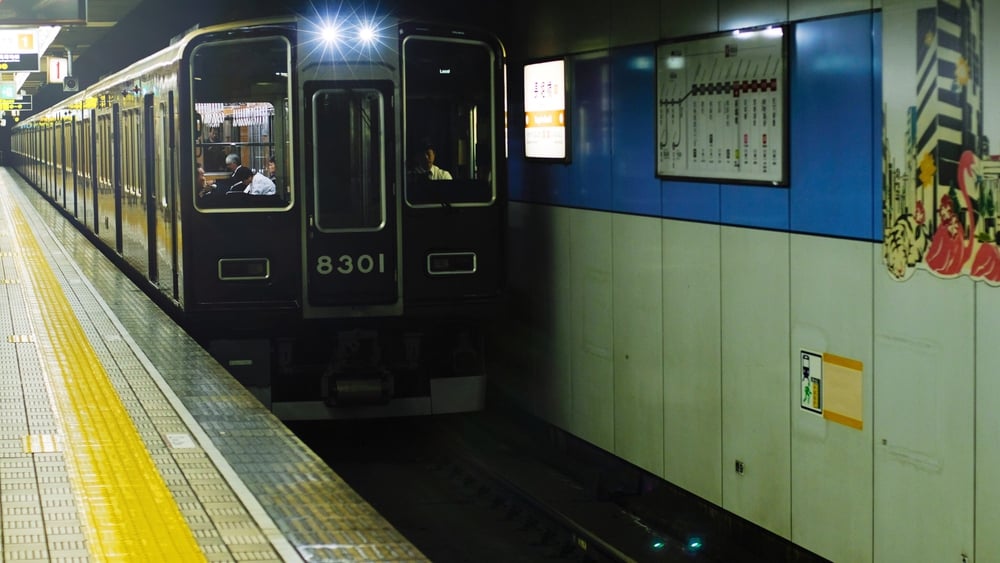
The Gate Tower Building in Osaka, Japan, has an elevated highway running through its fifth, sixth, and seventh floors. The Hanshin Expressway passes right through the middle of this 16-story office building without actually touching it.
Engineers designed a special support structure that keeps the building and highway completely separate, even though they occupy the same space. The highway section inside the building has walls, ceiling, and soundproofing to protect office workers from noise.
Tenants work just feet away from cars zooming past at highway speeds on the other side of thick barriers.
Chongqing’s apartment block transit station
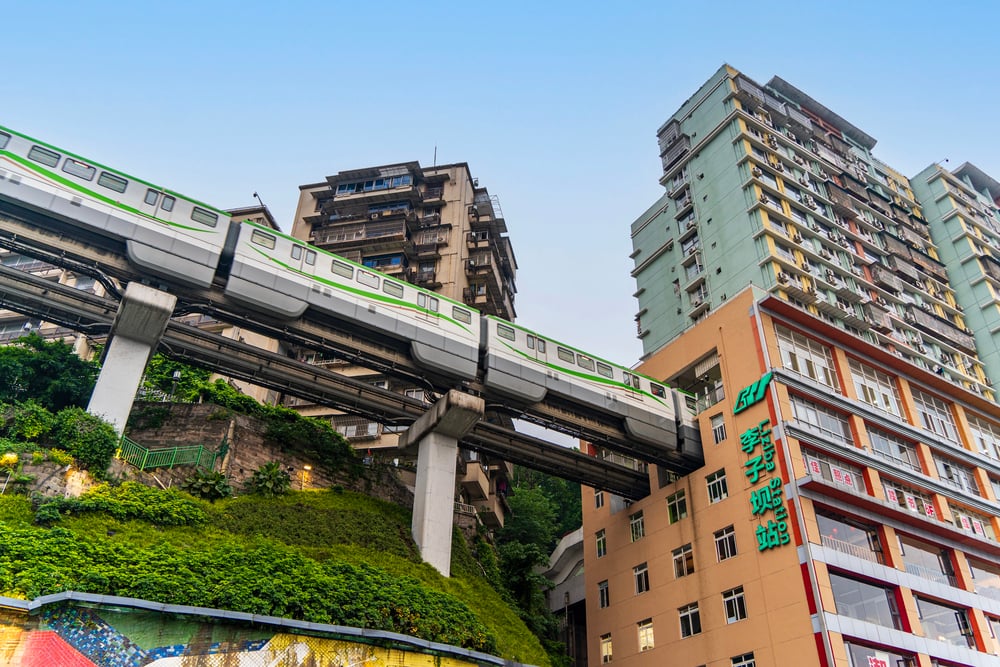
A light rail station in Chongqing, China, operates on the sixth through eighth floors of a 19-story residential building. Trains arrive and depart every few minutes while people live in apartments directly above and below the station.
The building designers incorporated the transit line from the very beginning rather than adding it later. Special vibration dampening systems and soundproofing keep the noise from disturbing residents trying to sleep or watch television.
Videos of trains emerging from the apartment building regularly go viral because the sight looks completely impossible.
Berlin’s U-Bahn through a department store
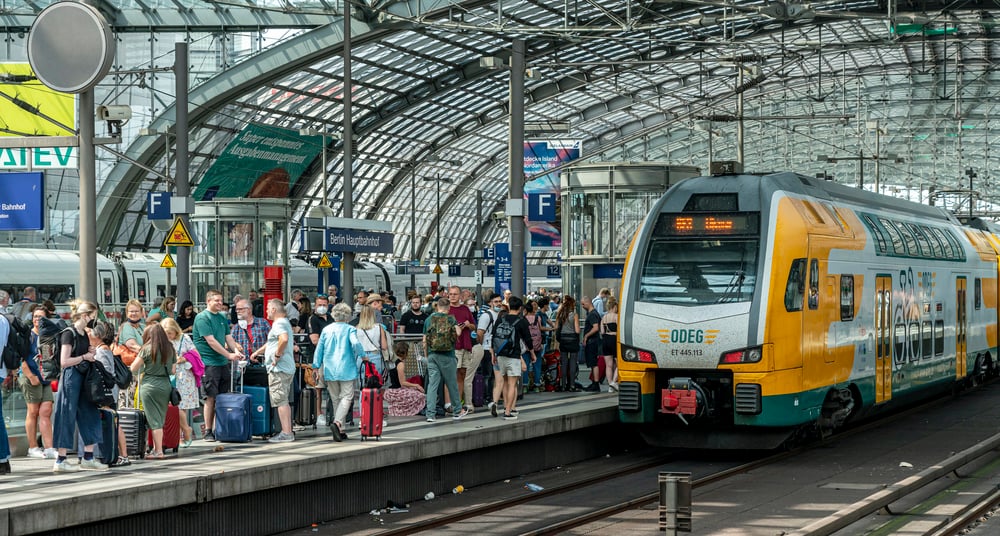
The U2 line in Berlin runs directly beneath the famous KaDeWe department store, with the station integrated into the building’s lower levels. Shoppers buying luxury goods upstairs share the same structure with commuters rushing to catch trains below.
The station opened in 1902 and has served passengers for over a century. The arrangement gives shoppers instant access to public transit without stepping outside.
This practical design became common in European cities trying to maximize limited urban space.
New York’s Grand Central Terminal building complex
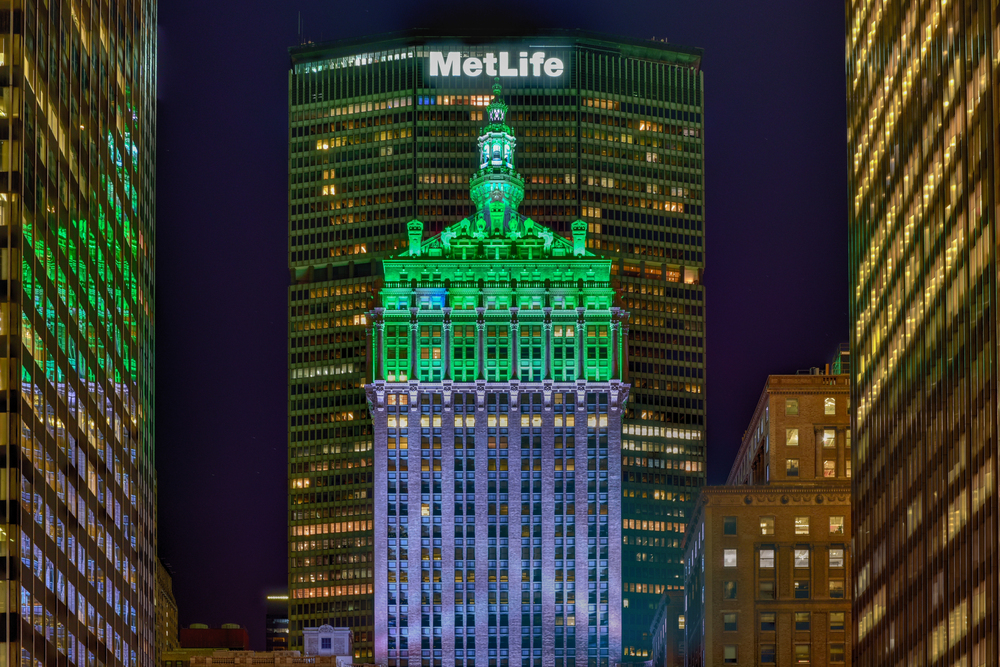
Grand Central Terminal in New York City isn’t just a train station but an entire complex with buildings constructed above and around the tracks. The MetLife Building sits directly on top of the terminal, and trains run beneath it constantly.
Office workers in the tower above can take elevators down to catch their commuter trains home. The design made efficient use of extremely valuable Manhattan real estate.
Separating the tracks and buildings would have required far more space than the cramped island had available.
Mumbai’s train through a warehouse
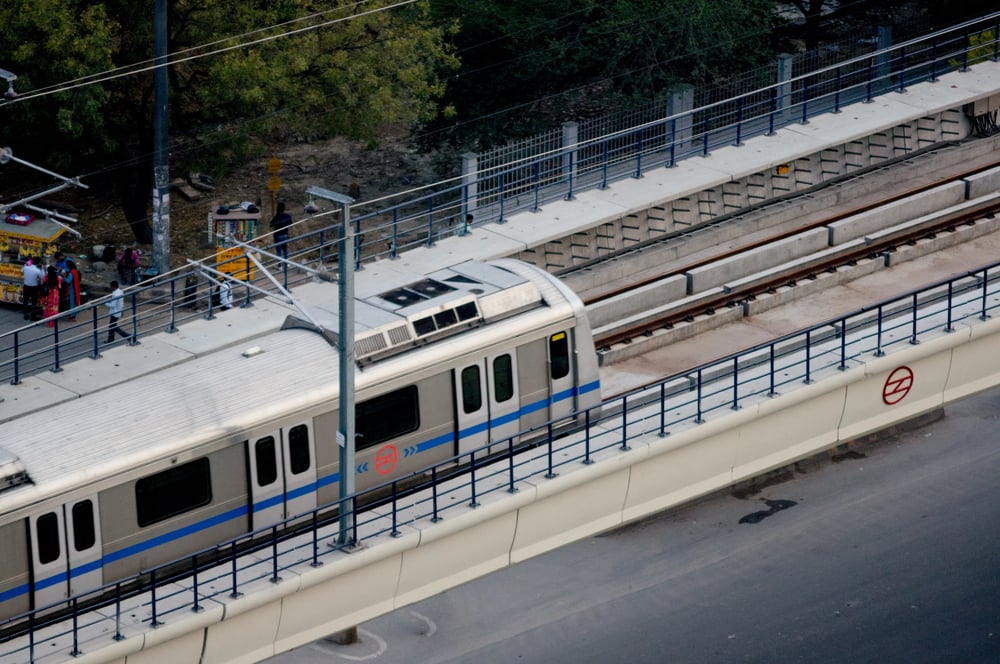
A suburban railway line in Mumbai passes through the ground floor of a multi-story warehouse building. The structure was built around the existing railway rather than forcing the tracks to move.
Trains thunder through the building dozens of times per day while business continues on the floors above. The warehouse owners gained valuable floor space above the tracks that would have otherwise gone unused.
This creative solution reflected India’s practical approach to urban development challenges.
Chicago’s Loop elevated tracks
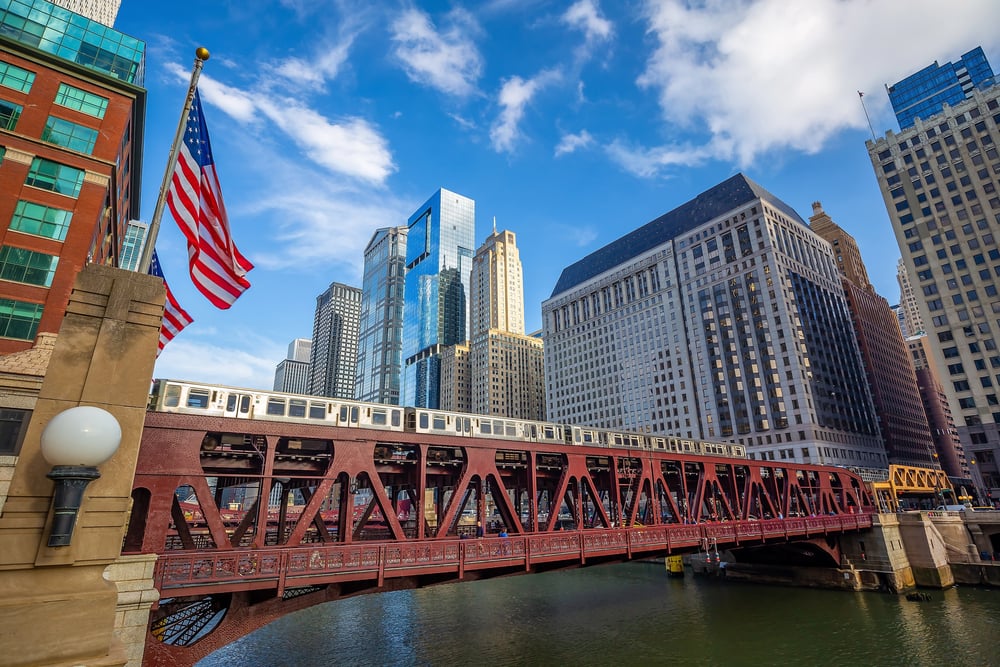
Chicago’s famous Loop elevated train system has multiple buildings constructed right up against and even partially around the tracks. Some buildings have train tracks passing within inches of their windows.
Office workers got so used to trains rattling past that many don’t even notice them anymore. The Loop defines downtown Chicago’s character and shows how a city can embrace rather than hide its transit infrastructure.
Later developments even incorporated the tracks as design features rather than treating them as problems to solve.
Bangkok’s Skytrain through shopping malls
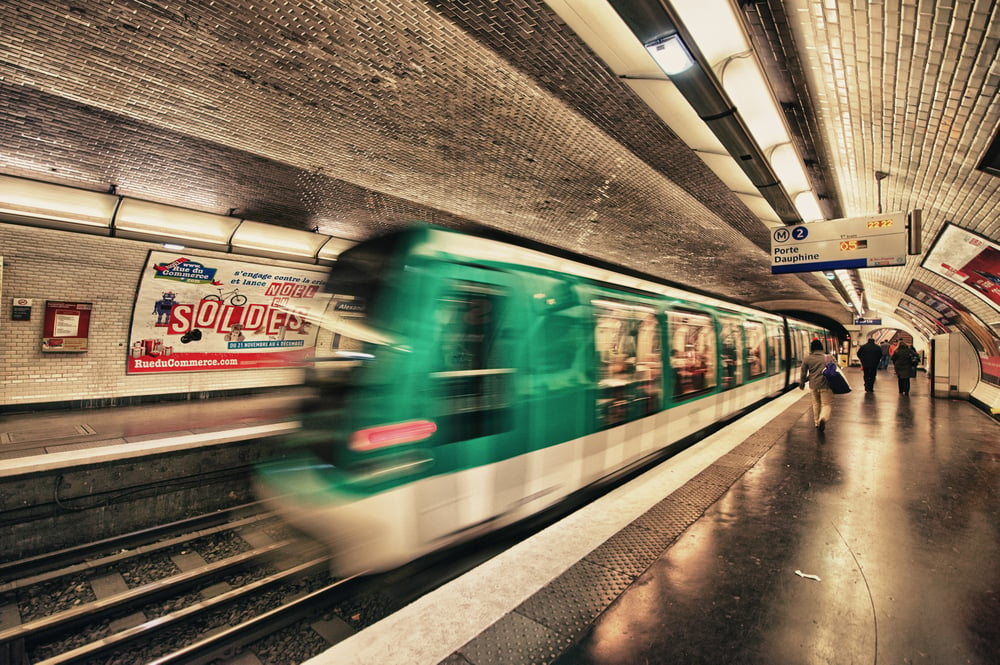
Several stations on Bangkok’s BTS Skytrain system connect directly to major shopping centers, with trains entering the buildings. Siam Station links to multiple enormous malls where shoppers can transfer between shopping and trains without going outside.
Thailand’s intense heat makes these connections incredibly valuable for comfort. The malls and transit system grew together rather than fighting for separate space.
Developers realized that easy access to trains brought more customers to their stores.
Paris Metro under apartment buildings
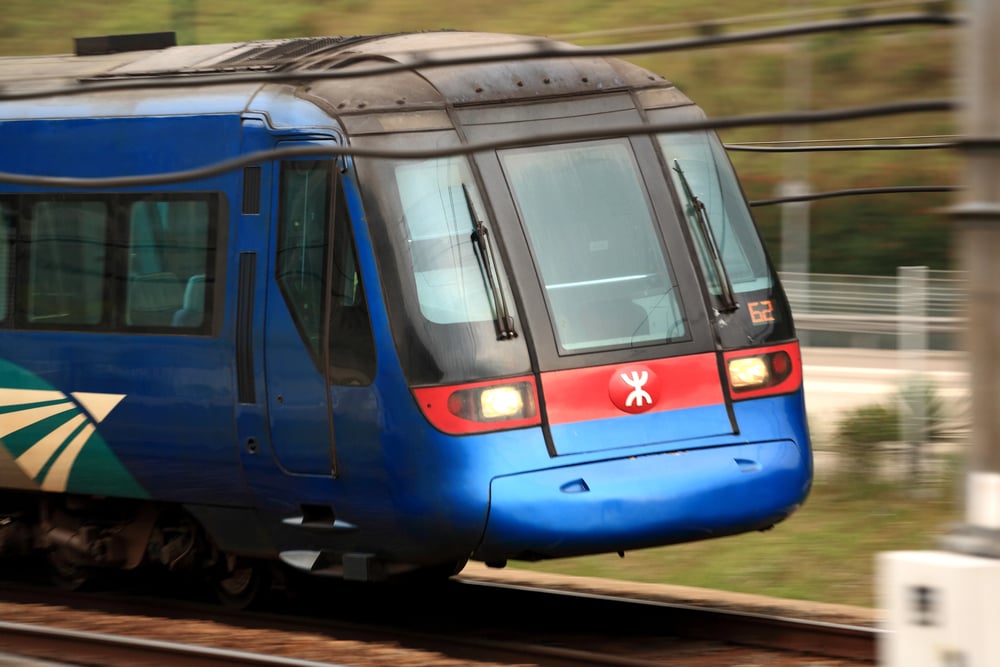
Numerous Paris Metro lines run directly beneath residential apartment buildings throughout the city. Parisians live, sleep, and cook meals while metro trains rumble through tunnels just meters below their floors.
The extensive subway system made this arrangement unavoidable in such a densely packed historic city. Engineers designed the tunnels to minimize vibration and noise transmission to apartments above.
Most residents adjusted to the constant rumbling and consider it just another part of Parisian life.
Hong Kong’s through-building MTR stations
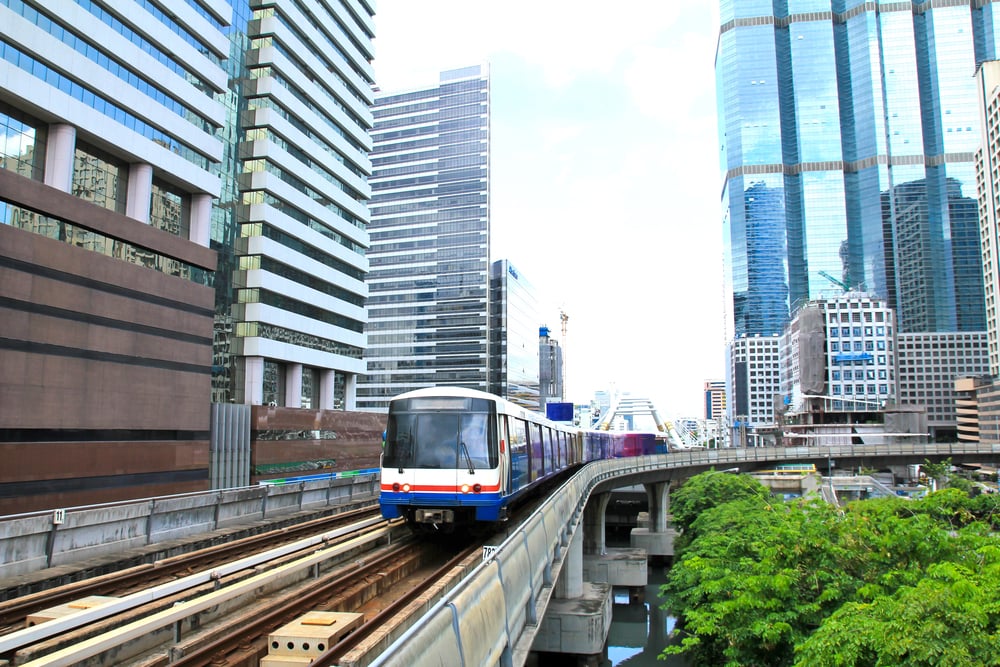
Hong Kong’s Mass Transit Railway integrates numerous stations into the bases of enormous residential and commercial towers. Trains arrive at platforms inside buildings where thousands of people live and work.
Property developers build these mega-structures with transit stations included from the initial design phase. The integration allows Hong Kong to pack more people into its limited land area.
Residents can literally roll out of bed, take an elevator down, and board a train without stepping outside.
London’s train viaducts with shops beneath
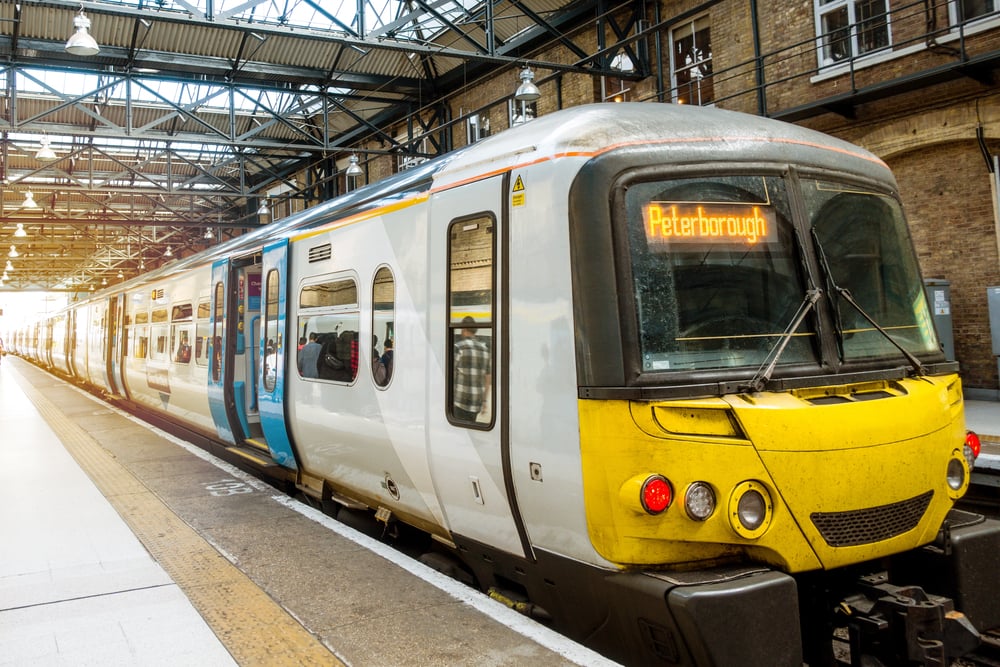
London has dozens of railway viaducts with arches converted into shops, restaurants, and businesses. Trains run overhead while customers browse vintage clothes or grab coffee beneath the tracks.
The arches sat empty and unused for decades before creative entrepreneurs saw their potential. Now these spaces under the railways contribute vibrant commercial activity to London neighborhoods.
The arrangement puts infrastructure to double duty instead of letting it consume space wastefully.
Taiwan’s apartments built over rail yards
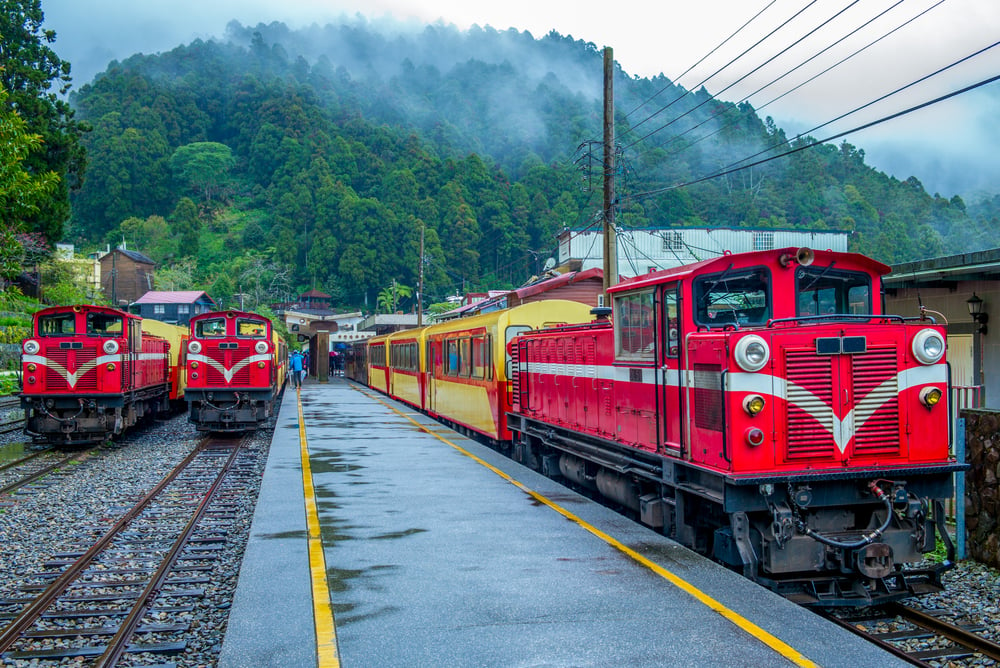
Several apartment complexes in Taiwan sit on platforms constructed above active rail yards and maintenance facilities. Residents live normal lives while trains get serviced and stored directly below their homes.
The platforms include parks and playgrounds so children can play outside despite living above industrial rail operations. Sound insulation technology keeps the noise from disrupting family dinners and bedtime routines.
This vertical stacking of uses maximizes Taiwan’s scarce flat land.
Seattle’s monorail through the EMP Museum
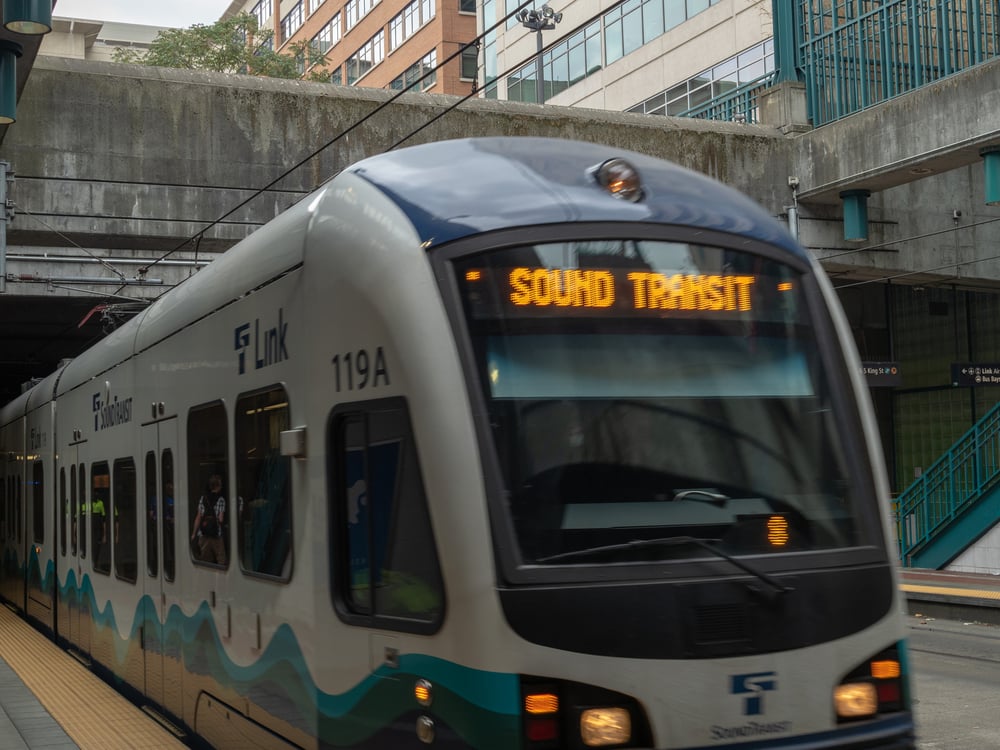
The Seattle Center Monorail passes directly through a carefully designed opening in the Museum of Pop Culture building. Architect Frank Gehry incorporated the monorail path into his design for the distinctive curved structure.
The train slides through the building’s metallic exterior several times per hour. Tourists love photographing the surreal sight of public transit penetrating modern architecture.
The building and monorail coexist as complementary parts of Seattle’s identity rather than competing elements.
Mexico City’s elevated metro through markets
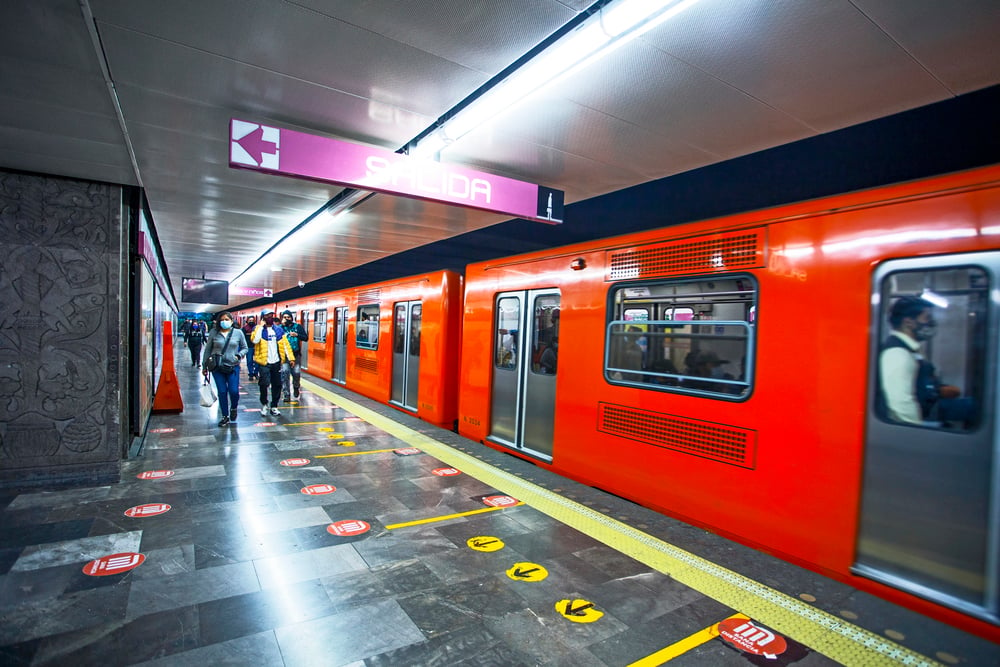
Parts of Mexico City’s elevated metro system pass directly above and through covered market buildings. Vendors sell produce and goods on the ground level while trains rumble on elevated tracks overhead.
The markets existed first, and the metro builders worked around them rather than displacing thousands of vendors. Support columns for the tracks rise through the market spaces like metal trees.
Shoppers and commuters share the same footprint in one of the world’s most crowded cities.
Singapore’s stations inside shopping centers
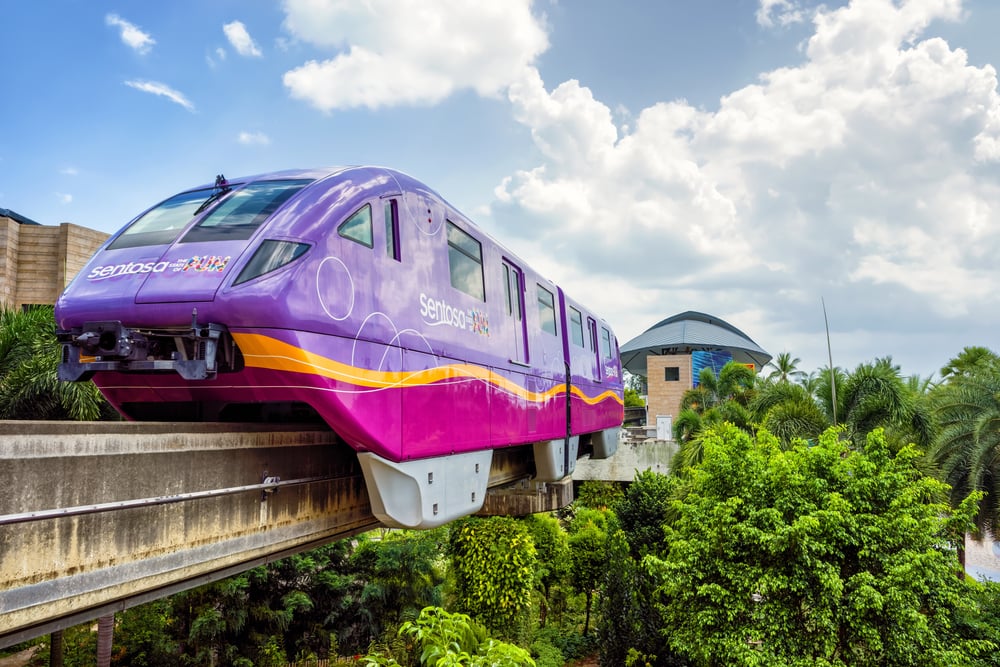
Few places link trains and shops like Singapore does. Right from the start, planners tucked MRT stops into big commercial buildings across the city.
At Orchard Road, you step off the train straight into one mall after another – no need to brave sticky weather outside. Being indoors helps bring people through store entrances, at the same time easing commutes for regular riders.
Property builders now push hard to tie their projects to upcoming rail access. What could have been tension between business owners and transport needs instead grew into quiet cooperation.
Boston Green Line Runs Near Prudential Center
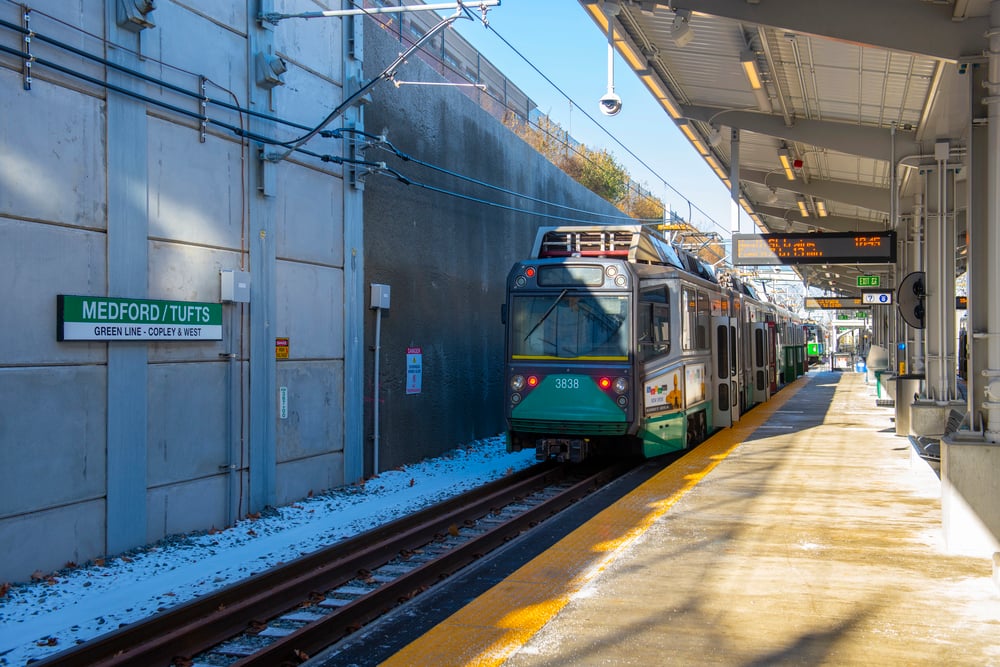
Under the Prudential Center flows Boston’s MBTA Green Line. People heading to jobs, hotels, or stores mix with those catching a train below.
This stop came online in 1965 during a push to upgrade the city’s public transport. Above the rails stands the Prudential Tower, stacking offices high where land is tight.
Linking trains to shopping and workspaces was once seen as a way to boost ridership downtown.
Built upward once there’s no ground left to use. Stacked rooms fill what empty lots cannot
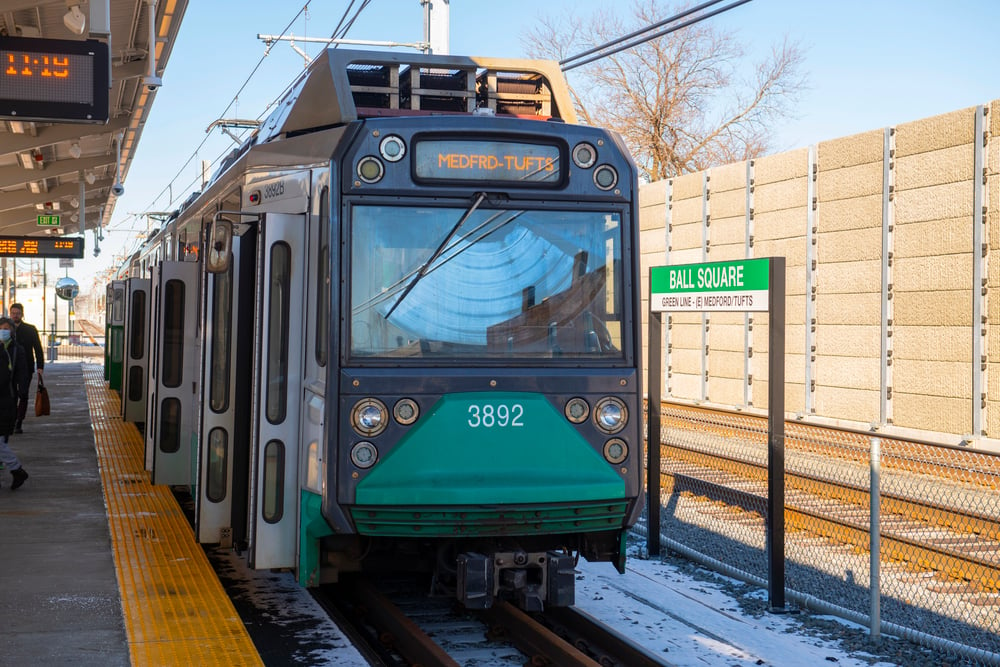
When space runs short, cities must rethink old habits. Trains moving through buildings mark a shift – planners stop dividing things strictly.
Such designs show travel and living can share the same place. Great city spaces mix functions in ways that surprise at first yet make sense later.
A rail cutting through architecture reveals how reimagining boundaries leads to solutions.
More from Go2Tutors!

- The Romanov Crown Jewels and Their Tragic Fate
- 13 Historical Mysteries That Science Still Can’t Solve
- Famous Hoaxes That Fooled the World for Years
- 15 Child Stars with Tragic Adult Lives
- 16 Famous Jewelry Pieces in History
Like Go2Tutors’s content? Follow us on MSN.