Objects Older Than the First Known Civilizations
Most people picture human history starting with Egypt or Mesopotamia — pyramids, cuneiform tablets, city walls rising from the desert. But civilization, as we define it, is actually a very recent chapter.
The oldest known cities are maybe 6,000 years old. And yet, people were making, using, and leaving behind objects tens of thousands of years before any of that.
Some of what they made has survived. Here are some of the oldest human-made and naturally remarkable objects known to exist, each one predating the earliest cities by a staggering margin.
The Löwenmensch Figurine

Carved from mammoth ivory, the Lion-Man of Hohlenstein-Stadel is at least 40,000 years old. Found in a German cave in 1939, it shows a human body with a lion’s head — not a rough scratch in the dirt, but a carefully sculpted, finished figure.
Someone spent hours, probably days, making this. That tells you something about the people who made it: they had time to create art, and they had the imagination to picture creatures that didn’t exist.
The Venus of Hohle Fels
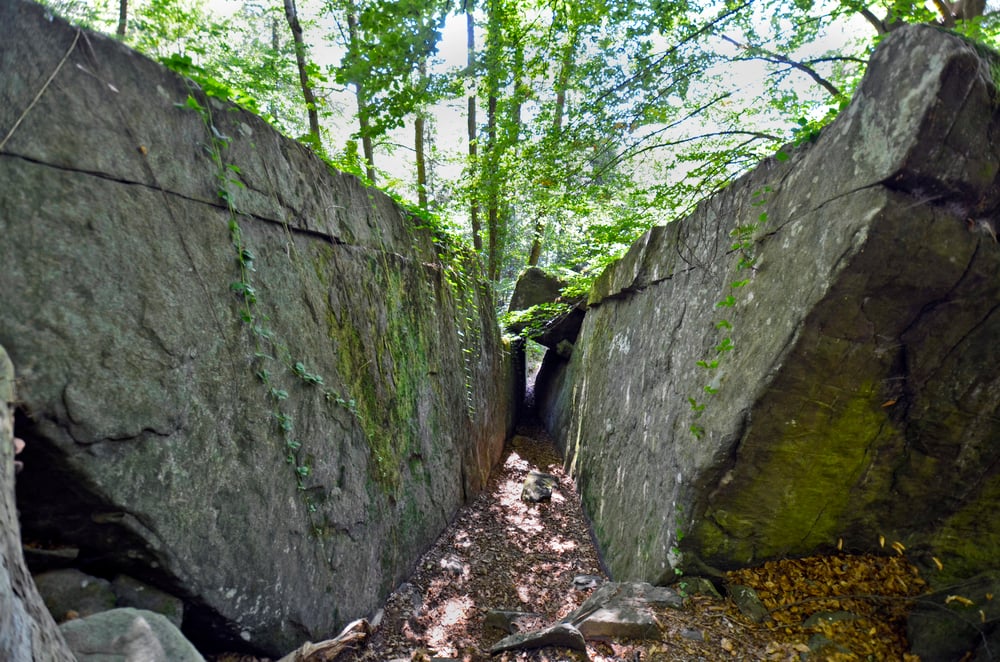
Around the same age as the Lion-Man, this small ivory figurine of a female form was discovered in a cave in southwestern Germany. It’s roughly 35,000 to 40,000 years old, making it one of the oldest known representations of the human body.
No face, no feet — but unmistakably human in intent. Whoever carved it was communicating something, even if we can never know exactly what.
The Blombos Cave Ochre

South Africa’s Blombos Cave held a surprise: pieces of ochre etched with geometric patterns, dated to roughly 75,000 years ago. These aren’t accidental marks. They’re deliberate, repeated lines arranged in a crosshatch pattern.
Abstract thinking — the ability to make a symbol that means something — is considered a hallmark of modern human cognition. These pieces suggest that capacity existed far earlier than previously thought.
The Skhul Cave Shells

Also from around 100,000 to 135,000 years ago, pierced shells found at sites in Israel and North Africa appear to have been strung as beads. They’re tiny, each one with a deliberate pit worn at the lip.
These are ornaments — personal decoration. The people wearing them cared about how they looked, or what the beads signified to others.
The Wonderwerk Cave Tools

In South Africa’s Northern Cape province, a cave called Wonderwerk has yielded stone tools dating back roughly 1.8 million years. These weren’t made by Homo sapiens — our species didn’t exist yet.
They were likely made by Homo habilis or early Homo erectus. And alongside the tools, researchers found evidence of controlled fire use dating to about 1 million years ago, some of the oldest known.
The Acheulean Hand Axes
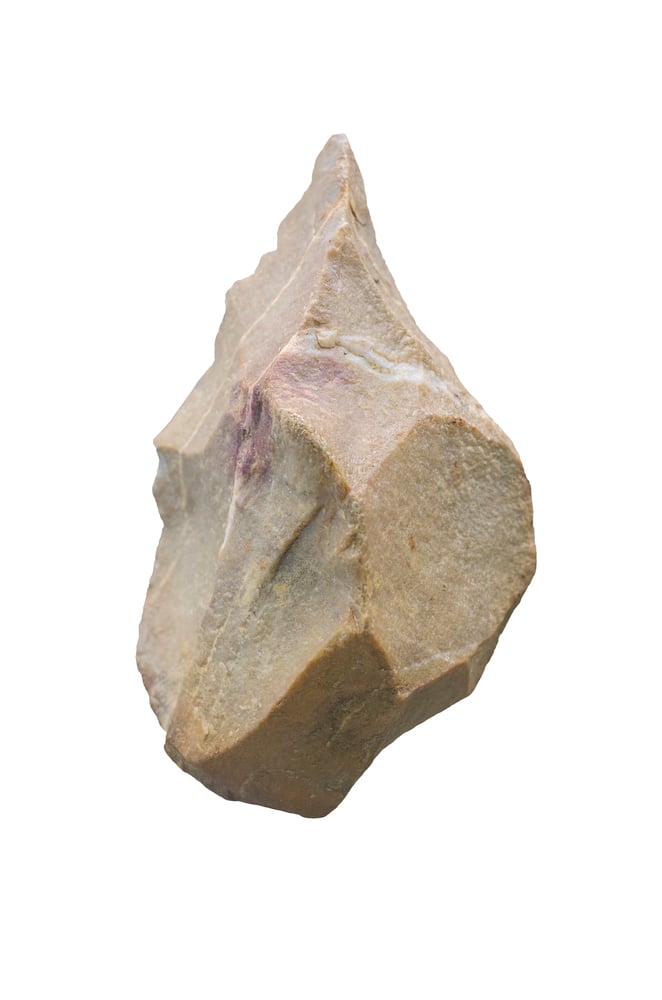
Found across Africa, Europe, and Asia, Acheulean hand axes are teardrop-shaped stone tools made by Homo erectus. The oldest ones date back about 1.76 million years.
What’s striking is how consistent they are across such vast distances and time spans — the same basic design, refined over hundreds of thousands of years. Some archaeologists have noticed that many are far more symmetrical than they needed to be for practical use.
A few have even speculated this reflects an early aesthetic sense: a preference for beauty.
The Nahal Hemar Mask
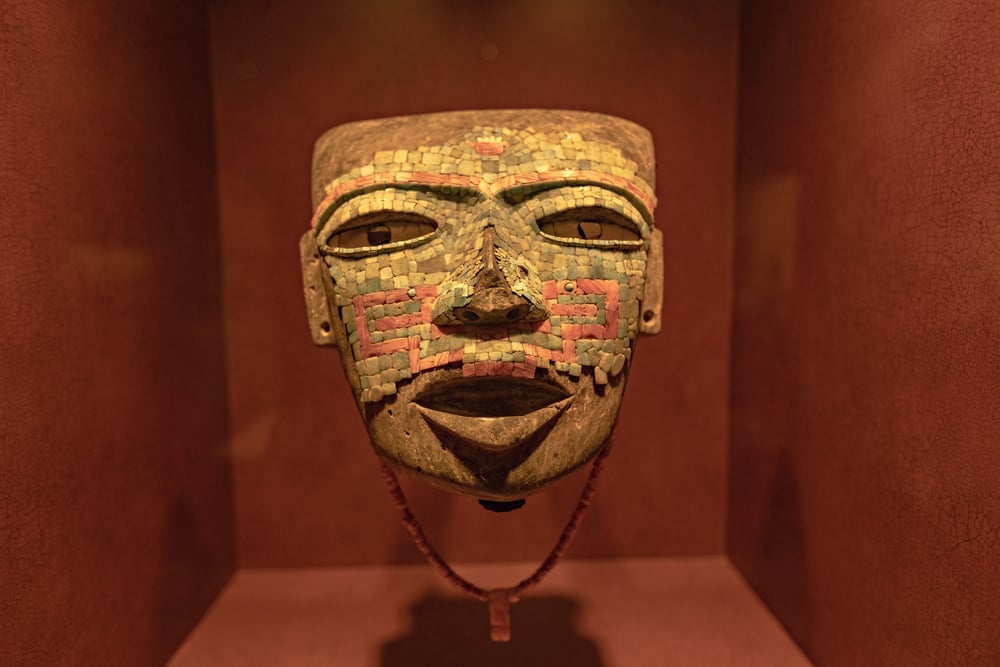
Jumping forward to about 9,000 years ago — still 3,000 years before Mesopotamian cities — a stone mask found in Israel’s Judean Desert is one of the oldest known face masks in existence. It’s carved from limestone with pits possibly for attaching hair or fiber, and its stare is unsettling in a way that feels intentional.
Ritual objects like this suggest organized belief systems long before anyone built a temple.
The Göbekli Tepe Pillars
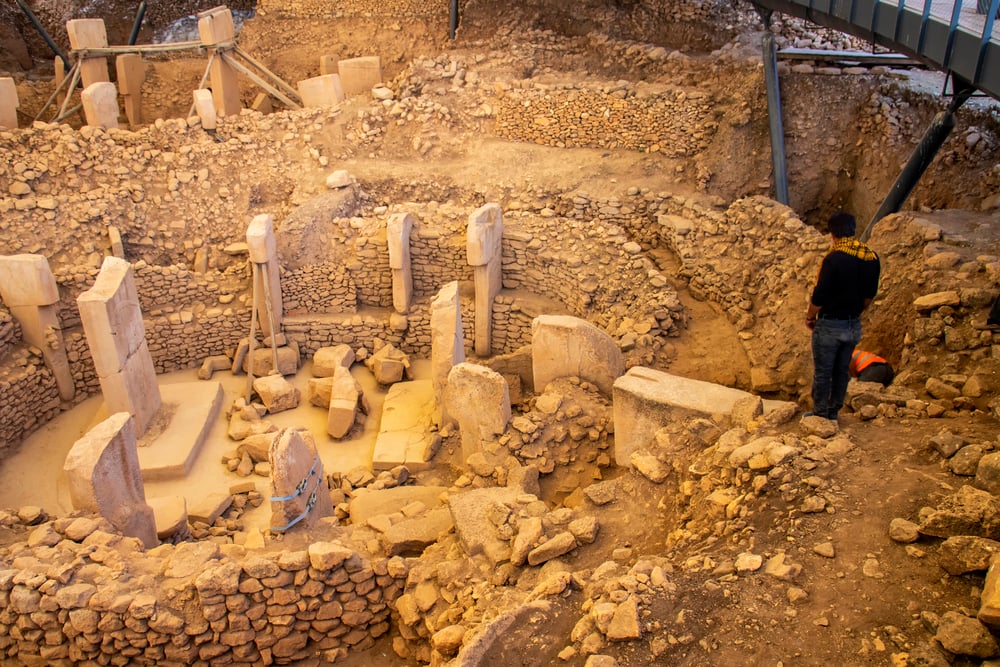
At roughly 11,500 years old, Göbekli Tepe in southeastern Turkey is the oldest known monumental stone structure. The massive T-shaped pillars, some weighing up to 20 tons, are carved with animals — foxes, vultures, scorpions, cranes.
And here’s what makes it so remarkable: the people who built it were hunter-gatherers. No farming, no permanent settlements, no centralized government.
They organized themselves to move and carve enormous stones for what appears to be a ritual site. It flipped the old assumption that civilization had to come before monuments.
The Ain Ghazal Statues

From around 7,000 to 9,000 years ago, a site in modern-day Jordan produced two-foot-tall plaster statues of human figures with haunting inlaid eyes made from bitumen and shells. Some have multiple heads.
They were found buried in pits, deliberately placed. These are among the oldest large-scale human statues ever found — and they predate Egyptian sculpture by thousands of years.
The Jiahu Flutes

In China, bones from red-crowned cranes were drilled with carefully spaced pits to create playable flutes around 9,000 years ago. Some of them still work.
Researchers have played them, and they produce a full tonal range. Music — structured, melodic music with a specific scale — was happening millennia before anyone thought to write it down.
The Franchthi Cave Obsidian
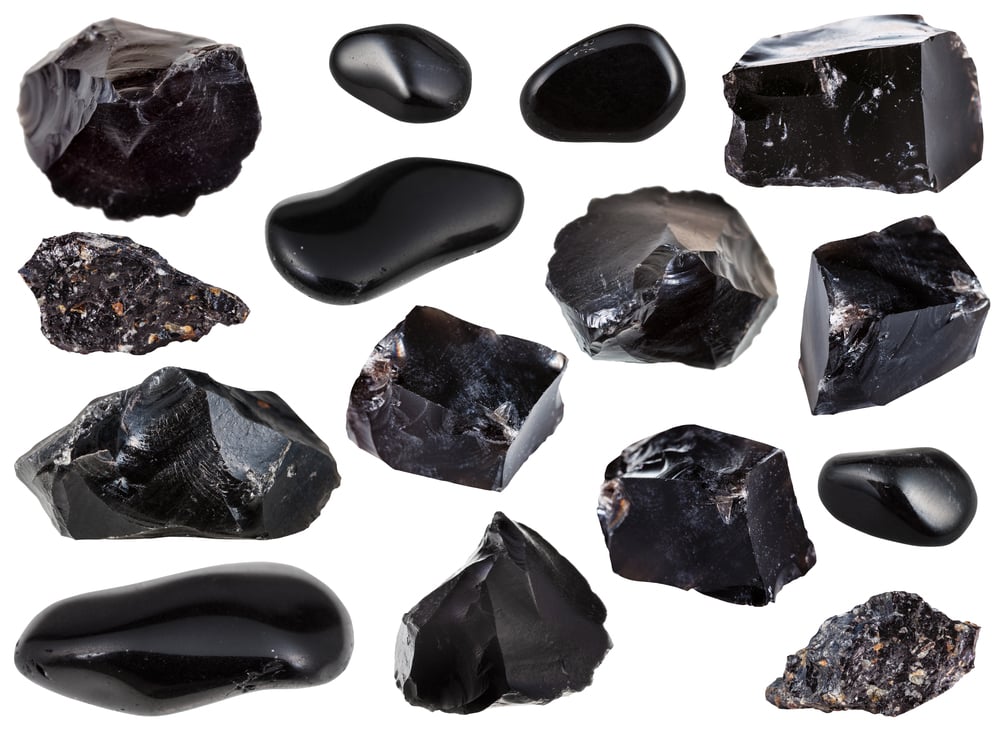
Around 13,000 years ago, obsidian from the island of Melos was being used by people on the Greek mainland. Melos is an island in the Aegean Sea.
The only way to get obsidian from there is by boat. This is evidence of seafaring trade networks operating thousands of years before the Bronze Age civilizations that usually get credit for Mediterranean commerce.
The Chauvet Cave Paintings
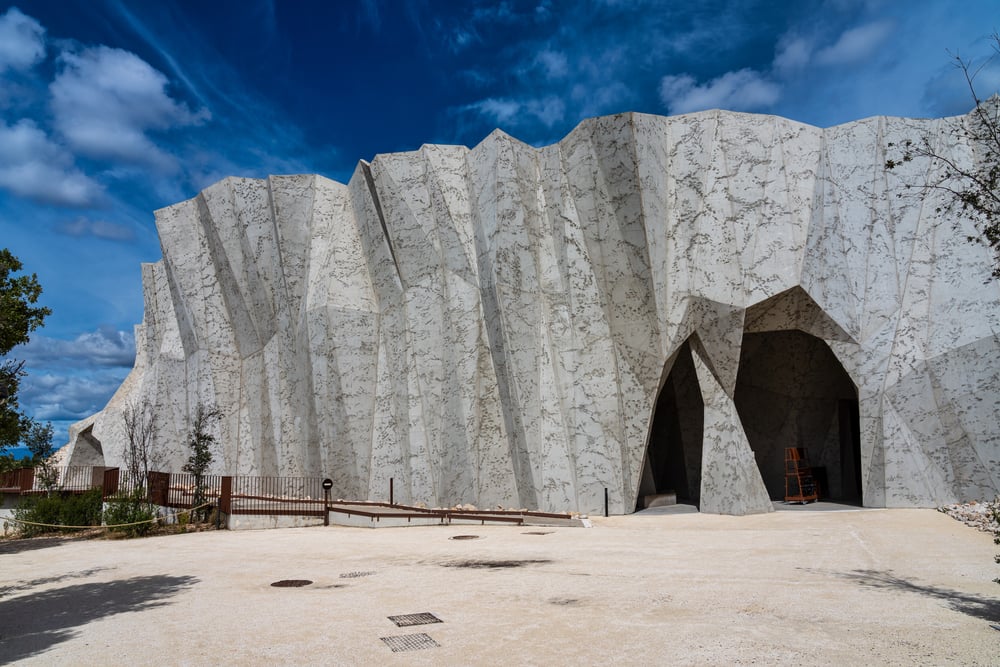
The paintings inside France’s Chauvet Cave date to around 36,000 years ago. Lions, rhinos, horses, bears — drawn with a confidence and skill that’s hard to square with the idea of “primitive” humans.
Some figures show motion, with multiple legs suggesting movement. The artists understood perspective and shading.
These aren’t crude marks. They’re art, in any sense of the word that matters.
The Zircon Crystals of Jack Hills

Here’s where things get geological. Not a human-made object, but an object found and studied by humans: tiny zircon crystals from Western Australia’s Jack Hills date to 4.4 billion years ago.
They’re the oldest known material of Earth origin. The planet itself is 4.5 billion years old.
These crystals formed within the first 100 million years of Earth’s existence, long before any life, any ocean in its current form, any continent as we’d recognize it. Holding one — even in concept — means holding something that existed before the Moon fully settled into orbit.
What Survives When Everything Else Is Gone
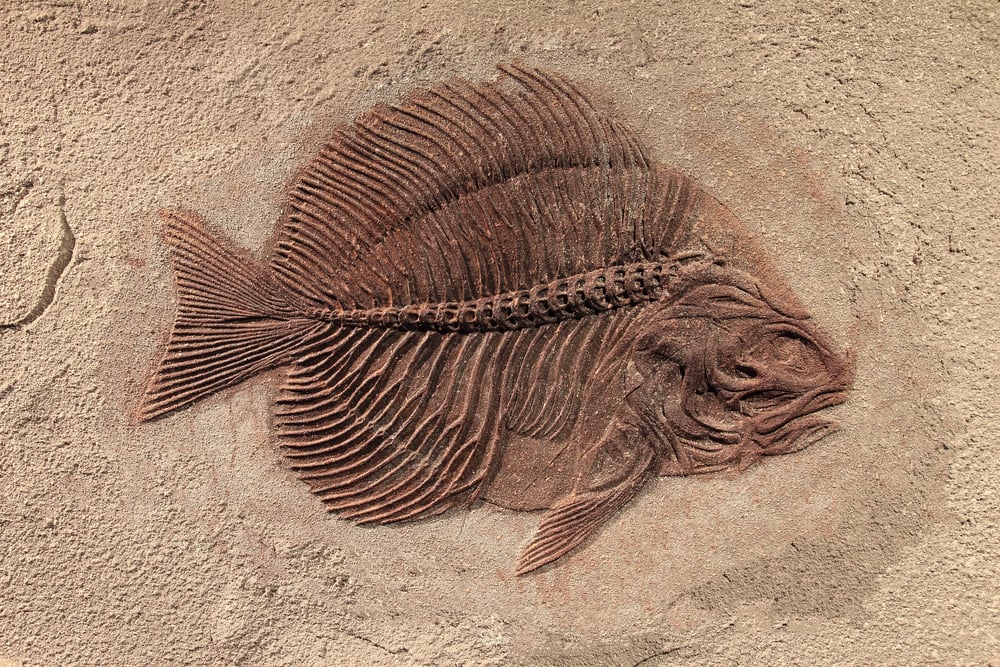
The objects on this list didn’t survive by accident. Stone endures. Bone, under the right conditions, can too.
What’s gone forever is everything else — the wood, the fiber, the leather, the words spoken around fires, the songs, the arguments, the names people called themselves and each other.
What you’re looking at when you see a 40,000-year-old carving isn’t the full picture of who made it. It’s just what survived the wait.
And that’s worth sitting with. Every civilization you’ve ever heard of — Rome, Egypt, Greece, Babylon — fits inside the last 5,000 years or so.
The objects above stretch back ten, twenty, even a hundred times further. The people who made them were as human as anyone alive today, navigating the same basic existence: cold, hunger, loss, curiosity, the desire to make something that lasts.
Some of it did.
More from Go2Tutors!

- The Romanov Crown Jewels and Their Tragic Fate
- 13 Historical Mysteries That Science Still Can’t Solve
- Famous Hoaxes That Fooled the World for Years
- 15 Child Stars with Tragic Adult Lives
- 16 Famous Jewelry Pieces in History
Like Go2Tutors’s content? Follow us on MSN.