16 Modern Architectural Marvels Built This Century
The 21st century has redefined what buildings can be. Where previous generations built upward and outward, today’s architects bend steel into impossible curves, suspend glass in mid-air, and create spaces that seem to defy the basic rules of construction.
These aren’t just larger versions of what came before — they’re entirely new ways of thinking about how humans occupy space.
Some of these buildings have become as recognizable as the cities that house them. Others remain hidden gems, known primarily to architecture enthusiasts and the communities they serve.
What connects them all is ambition that refuses to accept limitations, whether those limitations involve materials, physics, or conventional wisdom about what buildings should look like.
Burj Khalifa
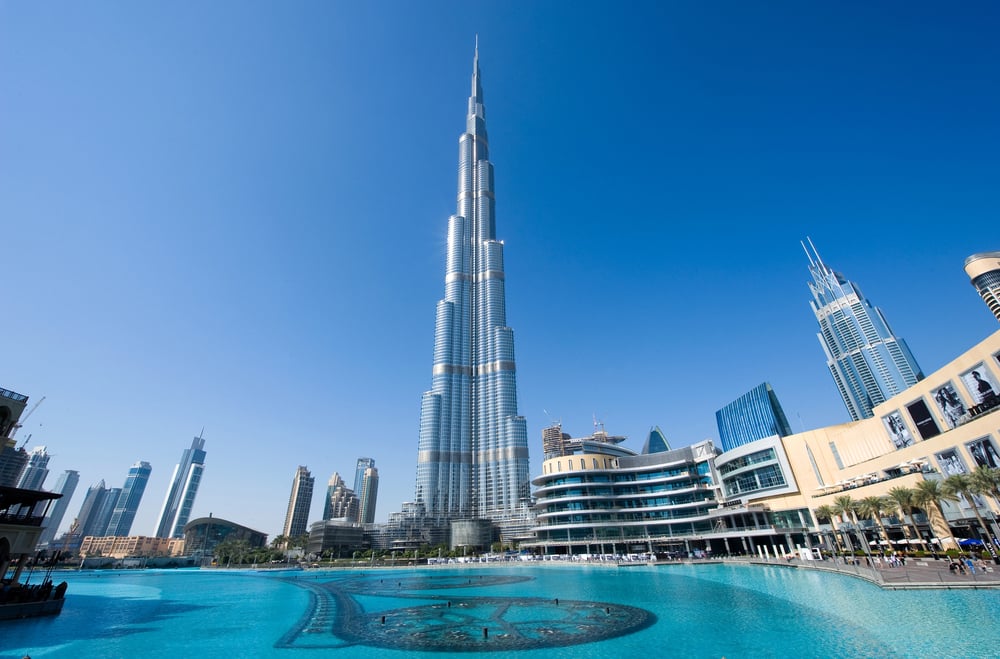
The numbers are absurd and everyone knows them. 2,717 feet tall. 163 floors above ground. Construction cost that exceeded $1.5 billion.
But standing at the base of the Burj Khalifa in Dubai, the statistics become irrelevant.
This isn’t just the world’s tallest building — it’s a structure that had to invent new engineering solutions as it rose. The wind load at that height required a design inspired by the Hymenocallis flower, with setbacks that confuse the air currents trying to knock it down.
They had to pump concrete higher than it had ever been pumped before, and the elevators move fast enough to make your ears pop.
One World Trade Center
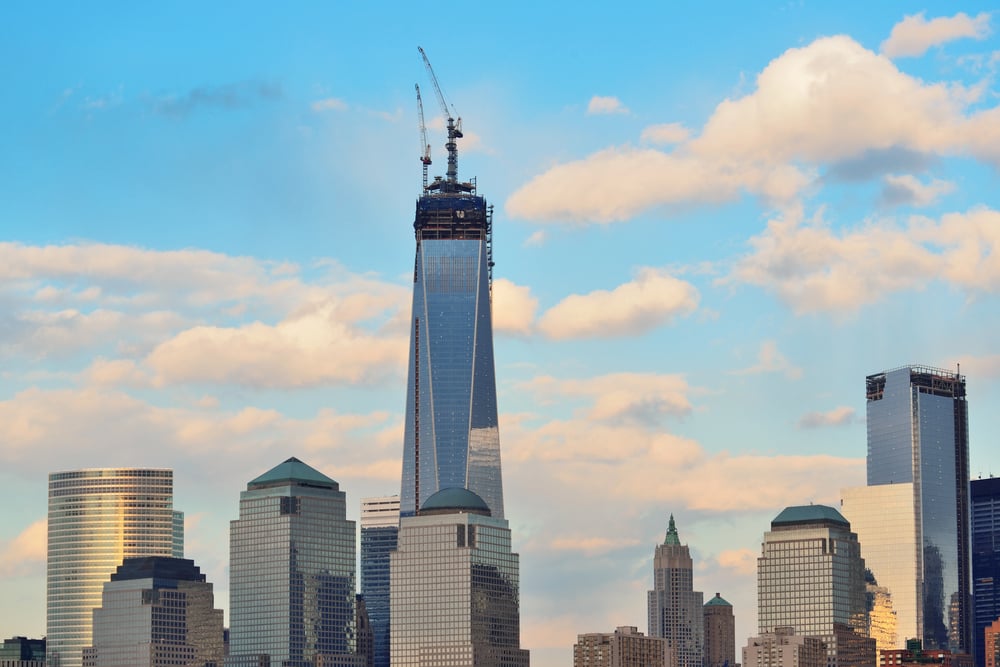
There’s something about grief that demands permanence (and this building carries decades of it in every line of its design), but One World Trade Center refuses to be defined entirely by loss — it reaches upward with the kind of stubborn optimism that characterizes New York at its best. The base is a fortress, clad in prismatic glass that shifts from square to octagon as it climbs, and by the time you reach the spire, the building has transformed into something that catches light and throws it back in directions that change throughout the day.
And yet the mathematics feel deliberate rather than accidental.
So the building rises exactly 1,776 feet. But here’s what matters more: it anchors the rebuilt World Trade Center complex without trying to replicate what was lost, which turns out to be the most respectful approach possible.
Marina Bay Sands
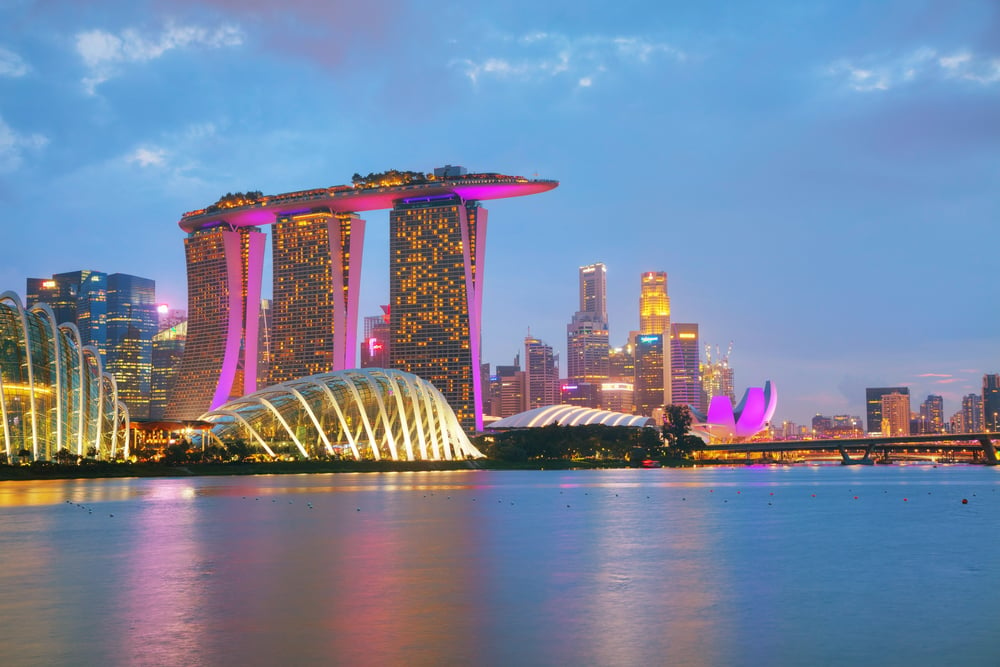
Marina Bay Sands looks like three towers decided to balance a cruise ship on their heads. The engineering required to suspend a 1.2-hectare sky park 200 meters above Singapore should have been impossible — the cantilever alone extends 65 meters beyond the north tower’s edge.
But impossible has a way of becoming inevitable when enough money and ambition converge.
The infinity pool that seems to spill over the building’s edge has become one of the most photographed architectural features on Earth. Swimming there feels like floating above an entire city, which is exactly what you’re doing.
Beijing National Stadium
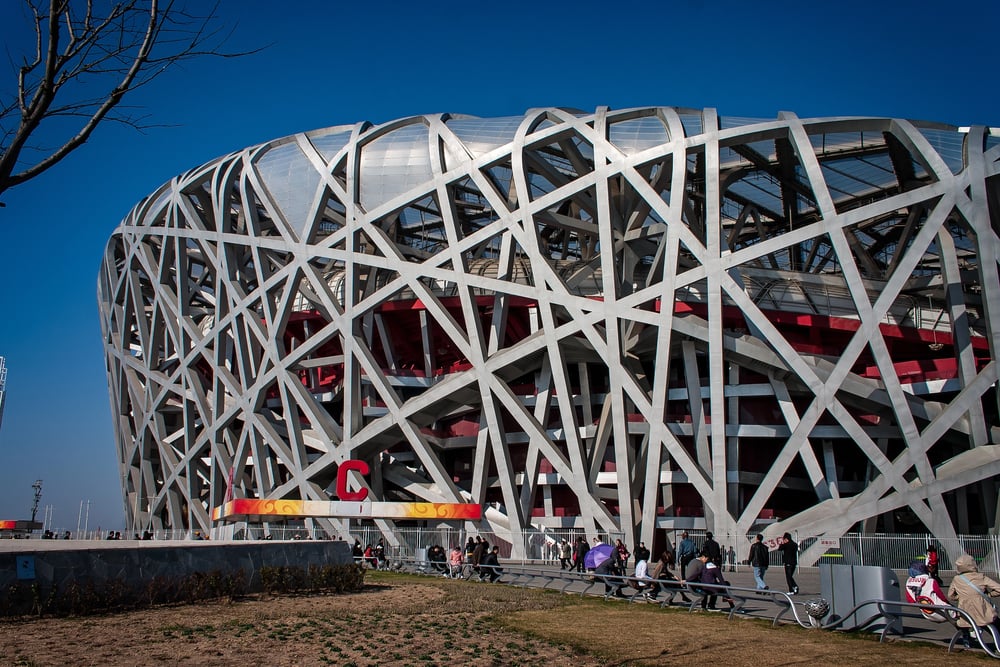
Olympic architecture typically gets forgotten after the closing ceremony. Beijing’s Bird’s Nest refuses to disappear quietly.
The steel lattice that wraps around the stadium creates shadows that shift throughout the day like a living thing.
No two views of the building look the same — walk around it once and the interwoven beams seem to rearrange themselves. The structure supports itself without a single internal column, leaving the interior completely unobstructed.
Swiss architects Herzog & de Meuron designed something that feels more grown than built.
Sagrada Família
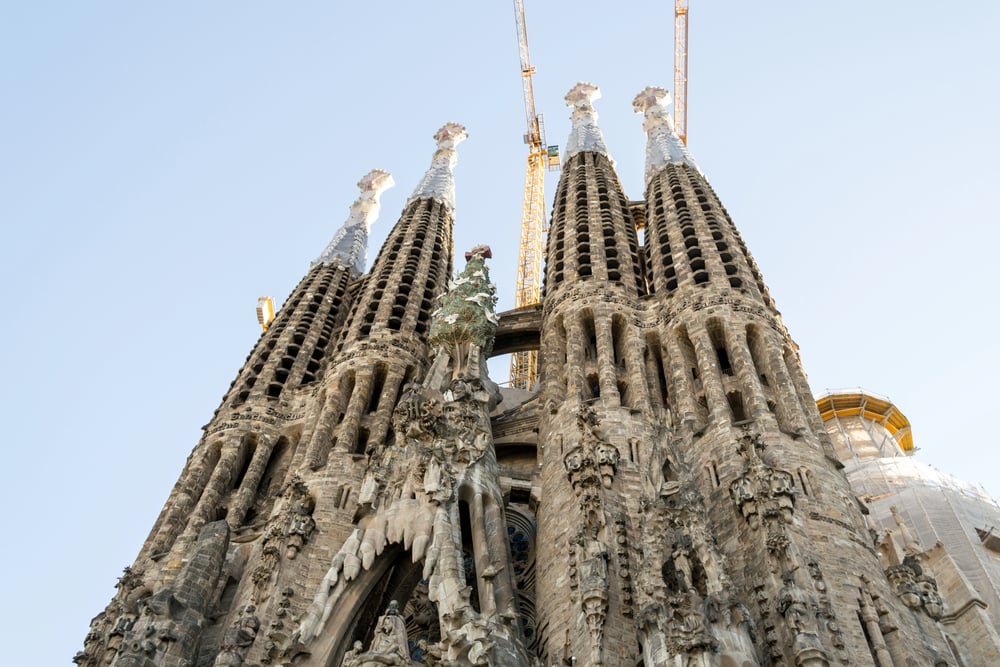
Technically, construction began in 1882. But the Sagrada Família that tourists visit today is almost entirely a 21st-century creation. Antoni Gaudí’s original vision required construction techniques that didn’t exist during his lifetime.
Computer modeling finally made the impossible geometry possible.
The columns branch like trees, supporting vaults that bloom like flowers. The stone facade tells the story of Christ’s birth and death in sculptures that seem to move in changing light.
When it’s finally completed around 2030, it will be both the world’s oldest and newest architectural marvel.
Gaudí knew he wouldn’t live to see it finished. He built it anyway.
Zaha Hadid’s Heydar Aliyev Center
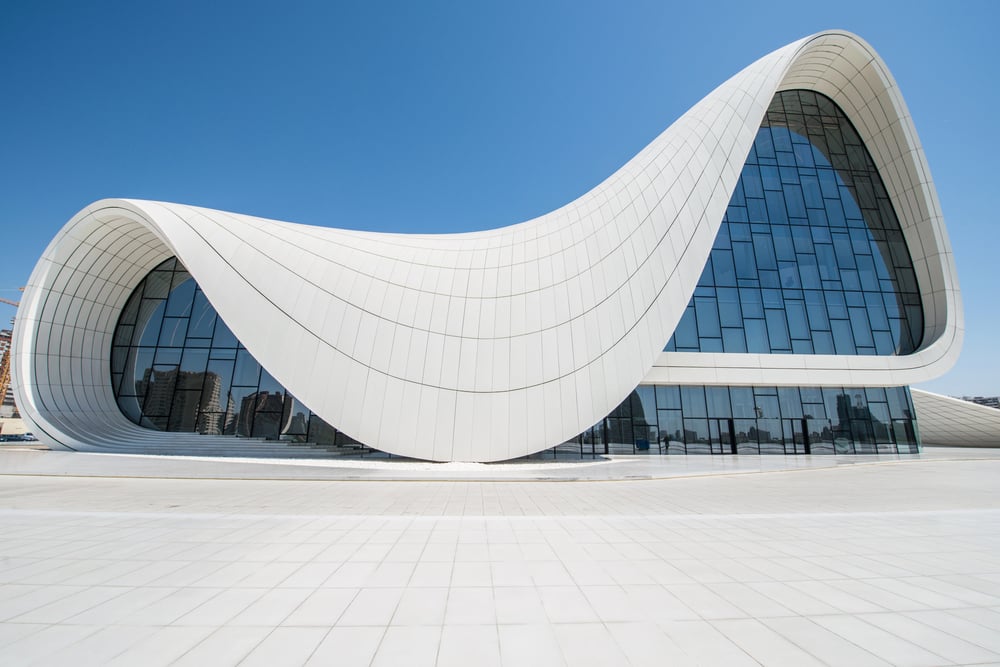
Buildings aren’t supposed to flow like water (but Hadid’s Heydar Aliyev Center in Baku, Azerbaijan, manages to look both solid and liquid at the same time), with its white exterior surface rolling and folding without a single sharp angle to interrupt the movement. The building seems to emerge from the ground like architecture made of silk, and walking around its perimeter creates the unsettling sensation that the structure is somehow breathing.
The interior continues the theme: spaces flow into each other without clear boundaries, and the ceiling undulates overhead like frozen waves.
Hadid spent her career proving that buildings didn’t have to be boxes, and this cultural center stands as perhaps her most convincing argument. So it flows.
And it works.
Sydney Opera House Renovation
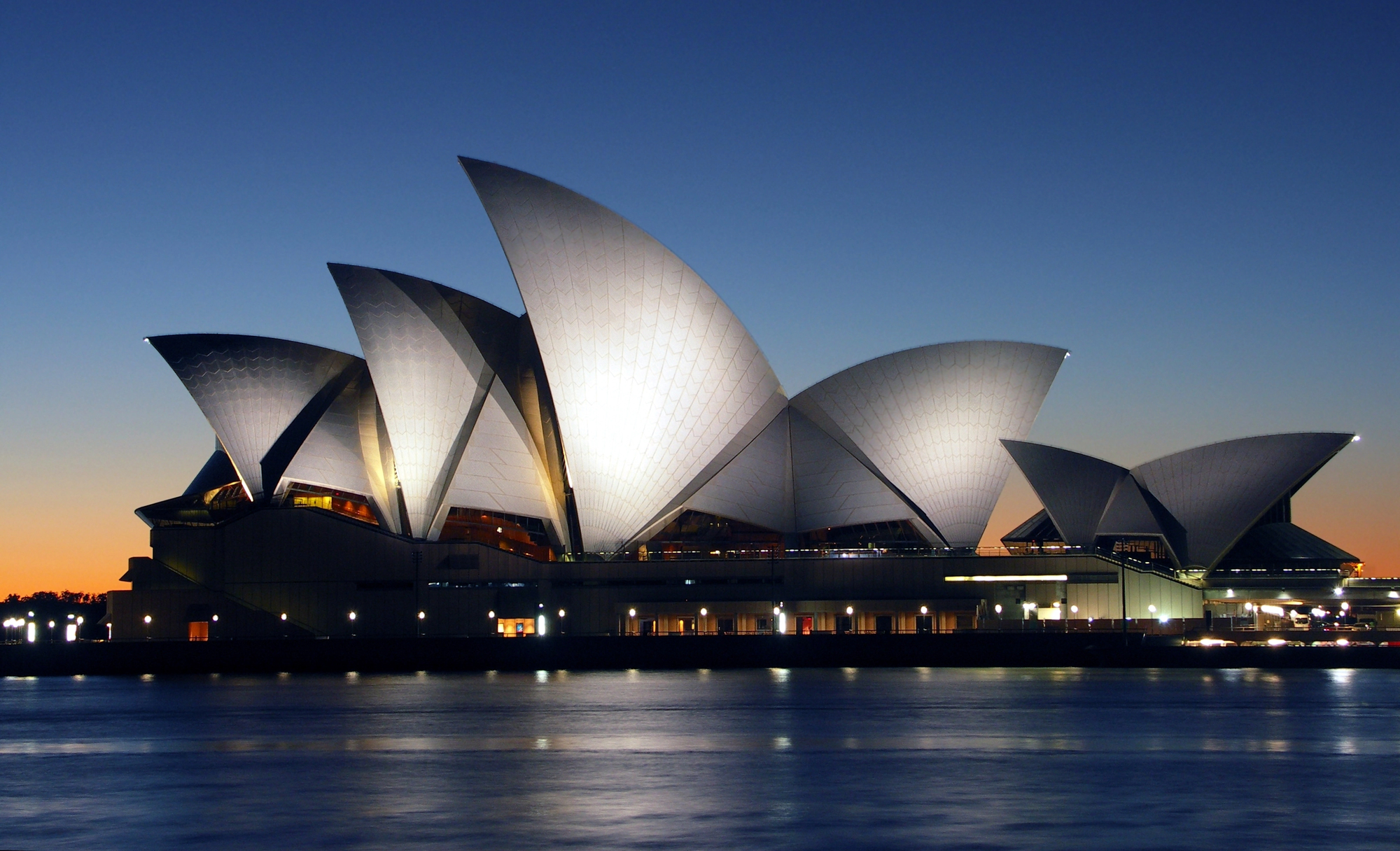
The Sydney Opera House opened in 1973, but its 21st-century renovation transformed it into something its original architect could barely recognize inside. The building’s iconic shells remained untouched, but everything beneath them was gutted and rebuilt with modern materials and acoustics.
The new concert hall achieves acoustic perfection that the original design never managed.
Sound engineers spent years analyzing how music moves through the space, then redesigned the interior to complement rather than fight the building’s sculptural exterior. Sometimes the most radical architectural move is leaving the outside alone and completely reimagining what happens within.
The Shard
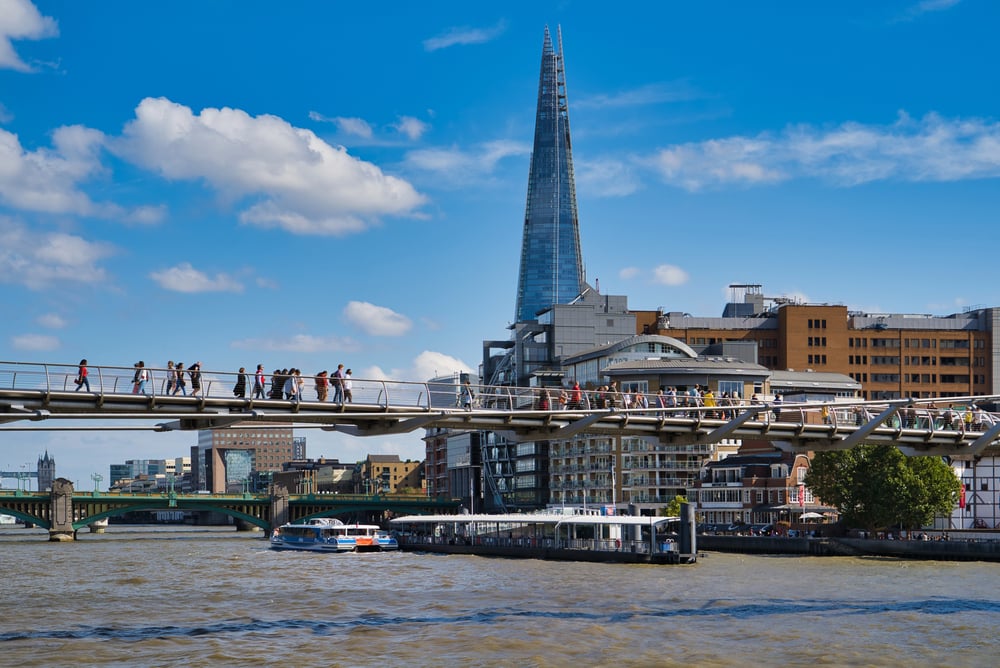
London’s skyline remained stubbornly horizontal for centuries. The Shard changed that overnight.
Renzo Piano designed a building that tapers to a point 310 meters above the Thames, wrapped in glass that reflects the city’s constantly changing weather.
On clear days, it disappears into the sky. During London’s frequent overcast periods, the top floors vanish into the clouds entirely.
The building seems designed specifically for British weather — which turns out to be exactly what Piano intended.
Taipei 101
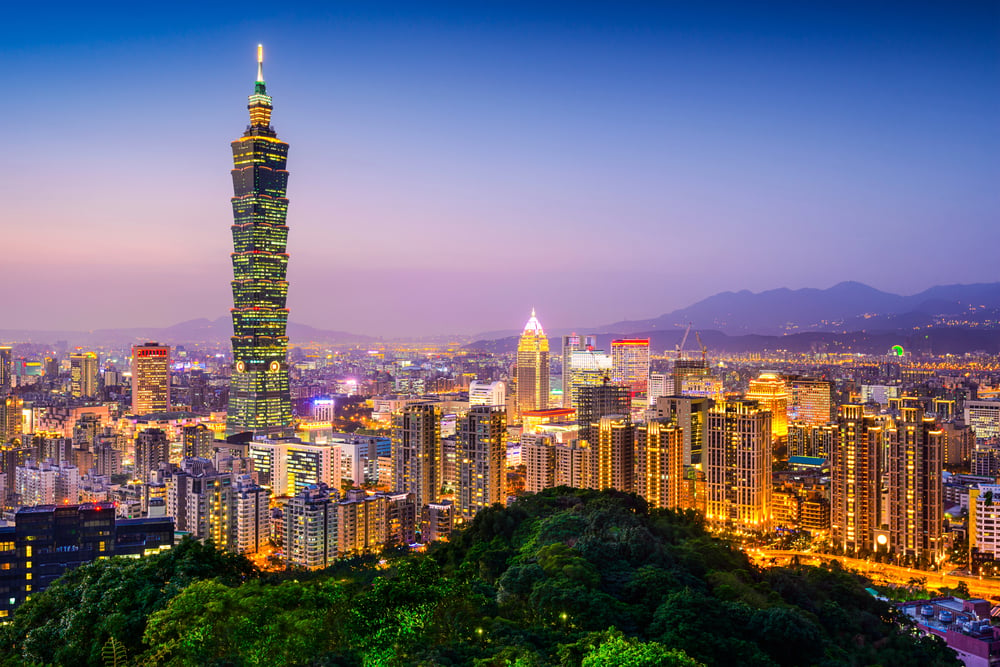
Taipei sits in an earthquake zone that regularly reminds buildings they shouldn’t be too proud of their height. Taipei 101 responded by installing a 660-ton steel sphere that hangs between the 87th and 92nd floors.
This tuned mass damper swings in opposition to the building’s movement during earthquakes and typhoons, keeping the structure stable when nature tries to knock it down.
Visitors can watch the 18-foot sphere respond to wind that they can’t even feel. It’s both a feat of engineering and a meditation on the forces constantly acting on everything humans build.
The building sways, the sphere swings back, and everyone inside continues their day unaware of the constant negotiation happening above their heads.
Millau Bridge
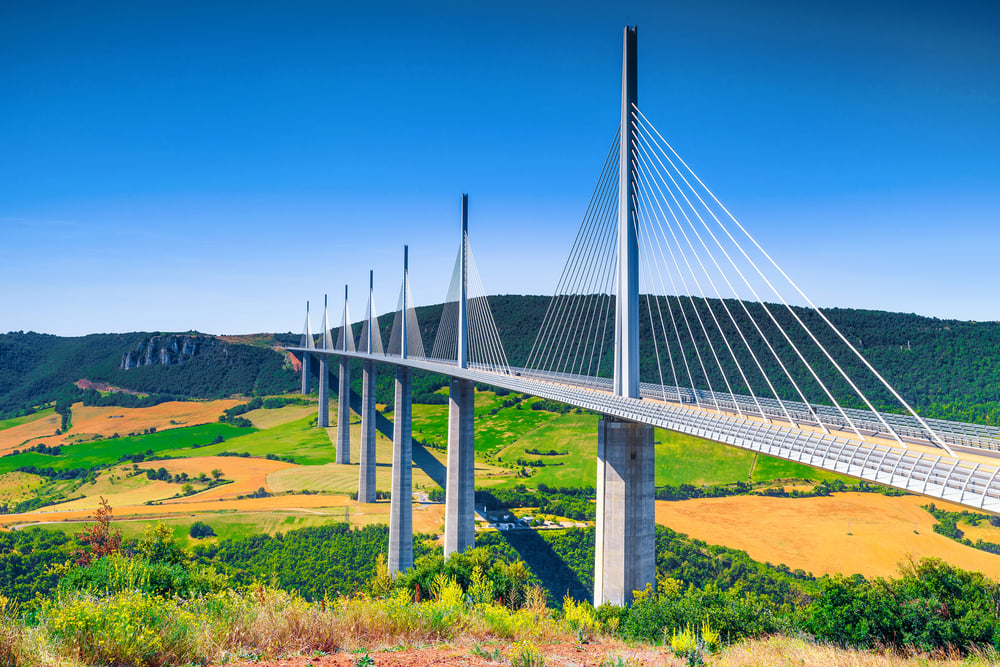
The Millau Bridge in southern France carries cars across a valley so deep that fog often obscures the bottom (and driving across it feels more like flying than driving, which was exactly the intention). The bridge deck sits 270 meters above the River Tarn at its highest point, supported by cable stays that stretch from towers taller than the Eiffel Tower.
But here’s what makes it architectural rather than just engineering: Norman Foster designed the bridge to be beautiful first and functional second, with a deck so thin it seems to float between the valley walls.
The result looks like someone drew a single line across the landscape, then convinced physics to make it real.
Apple Park
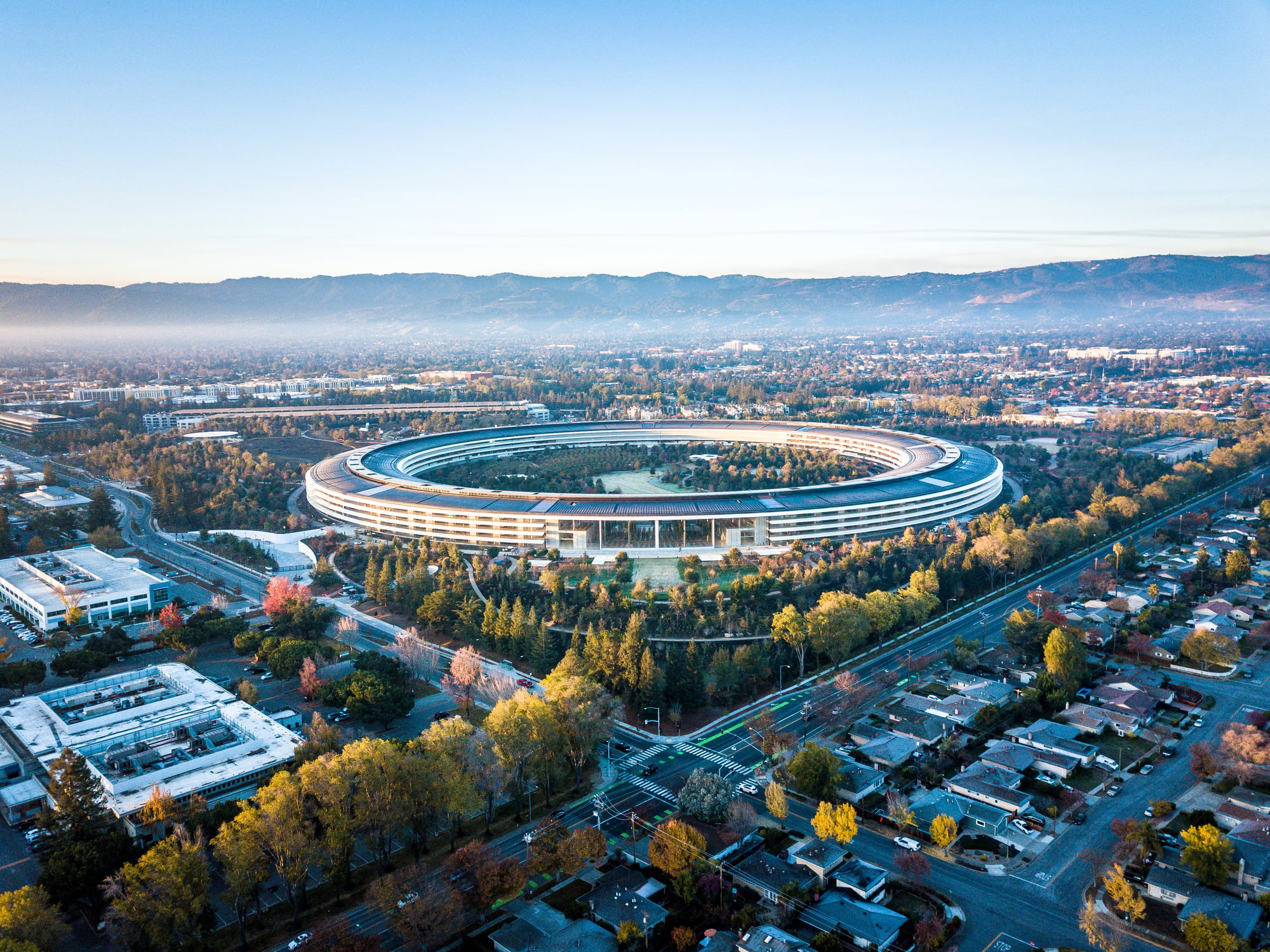
Corporate headquarters typically announce their importance through height or size. Apple Park whispers its significance through curves.
The main building forms a perfect ring nearly a mile in circumference, wrapped in the world’s largest panels of curved glass.
No office sits more than seven minutes’ walk from the central courtyard, which contains 9,000 trees native to California. The building breathes naturally — mechanical heating and cooling systems run only during the most extreme weather.
Steve Jobs insisted on curved glass everywhere, even though it cost exponentially more than flat panels.
The result feels more like a spaceship that landed gently in Cupertino than a building that was constructed there.
National Museum Of African American History And Culture
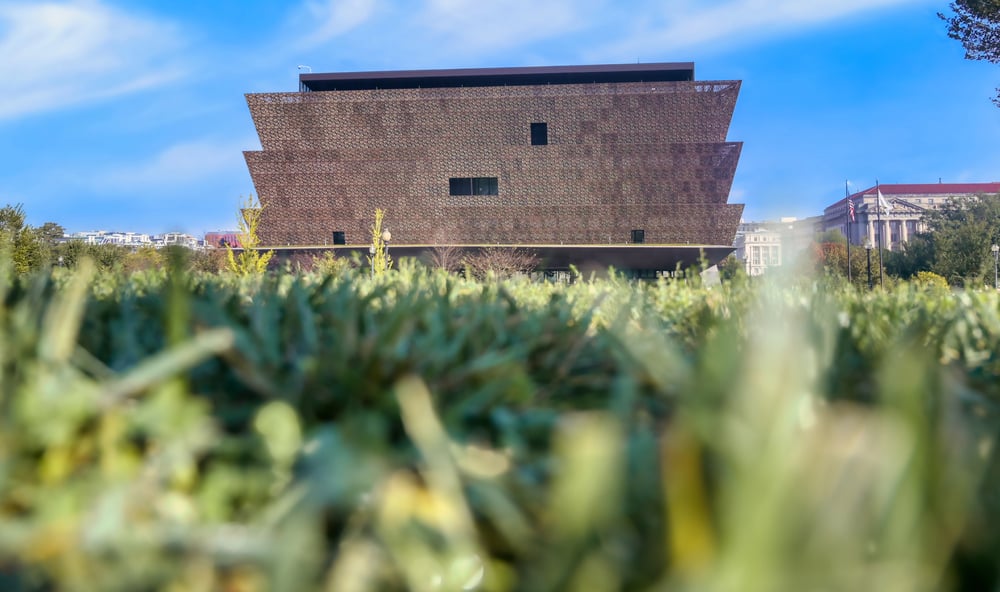
The bronze-colored lattice that wraps this Washington, D.C. museum references both African art and American craftsmanship (the patterns echo traditional Yoruban art, but they’re cast in bronze panels that required techniques borrowed from aerospace manufacturing). The building’s profile sits comfortably among the classical structures surrounding the National Mall, but its materials and methods announce something entirely different.
Inside, the museum’s galleries descend underground, beginning with the most difficult periods of African American history and rising toward celebration and achievement.
Visitors literally climb toward hope as they move through the exhibits. The architecture reinforces the narrative without announcing itself.
Pérez Art Museum Miami
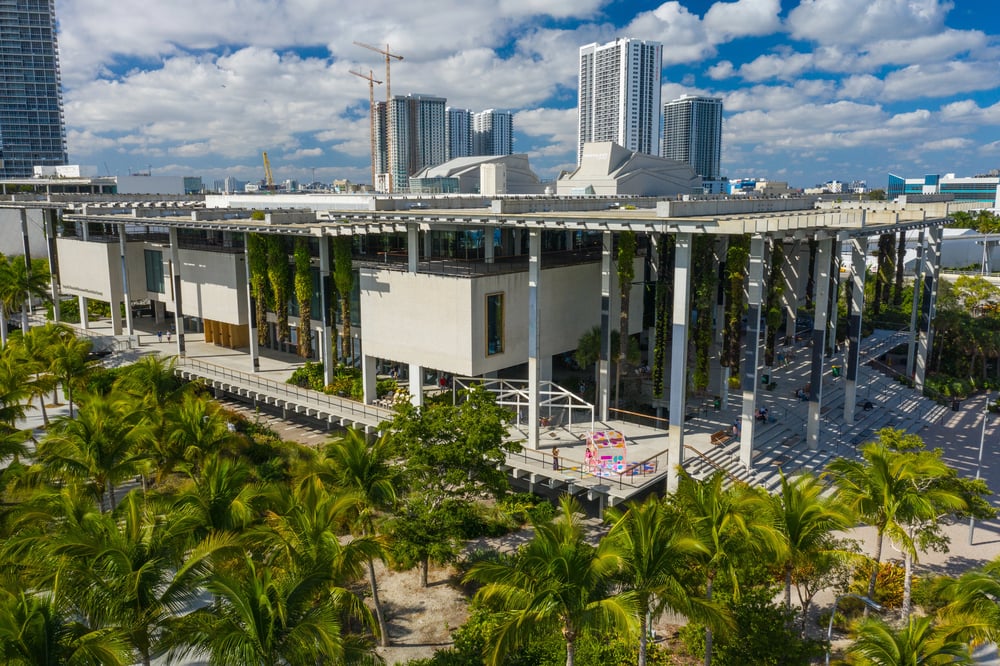
Miami’s climate destroys buildings that don’t know how to handle heat and humidity. The Pérez Art Museum Miami embraces both.
The structure sits on stilts above Biscayne Bay, allowing air to flow beneath the galleries.
Hanging gardens cascade from every level, creating natural cooling and humidity control. The building breathes with the tropical environment instead of fighting it.
Hurricane-rated glass and reinforced concrete ensure the structure will survive the storms that periodically test South Florida architecture.
This is what adaptation looks like when architects stop trying to impose Northern building strategies on Southern climates.
Gando School Library
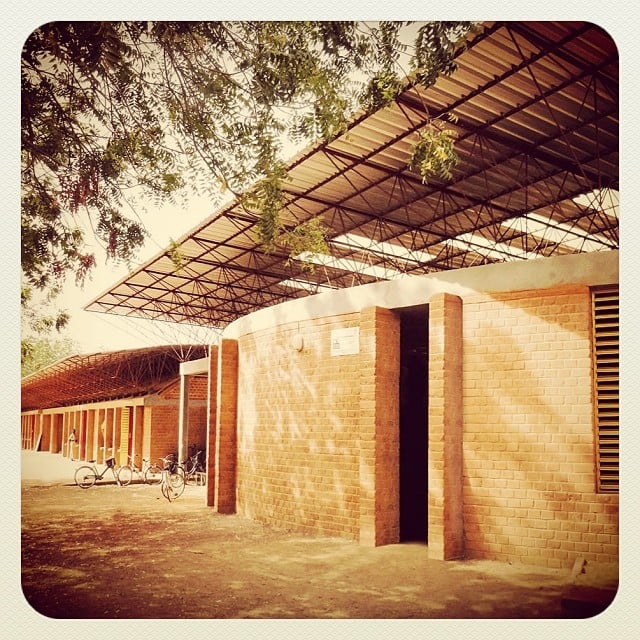
Francis Kéré’s library addition to a primary school in Gando, Burkina Faso, solves problems with solutions so elegant they feel obvious in retrospect (the double roof creates shade while allowing air to flow between the layers, keeping the interior cool without mechanical systems, and locally-sourced clay bricks provide thermal mass that moderates temperature swings throughout the day). Colored glass windows cast rainbow light across reading tables, transforming education into something that feels magical rather than institutional.
The project cost less than most American homes, but its impact on the community measures in generations.
This is architecture that remembers buildings are supposed to serve people, not impress critics. And it does both.
Absolute World Towers
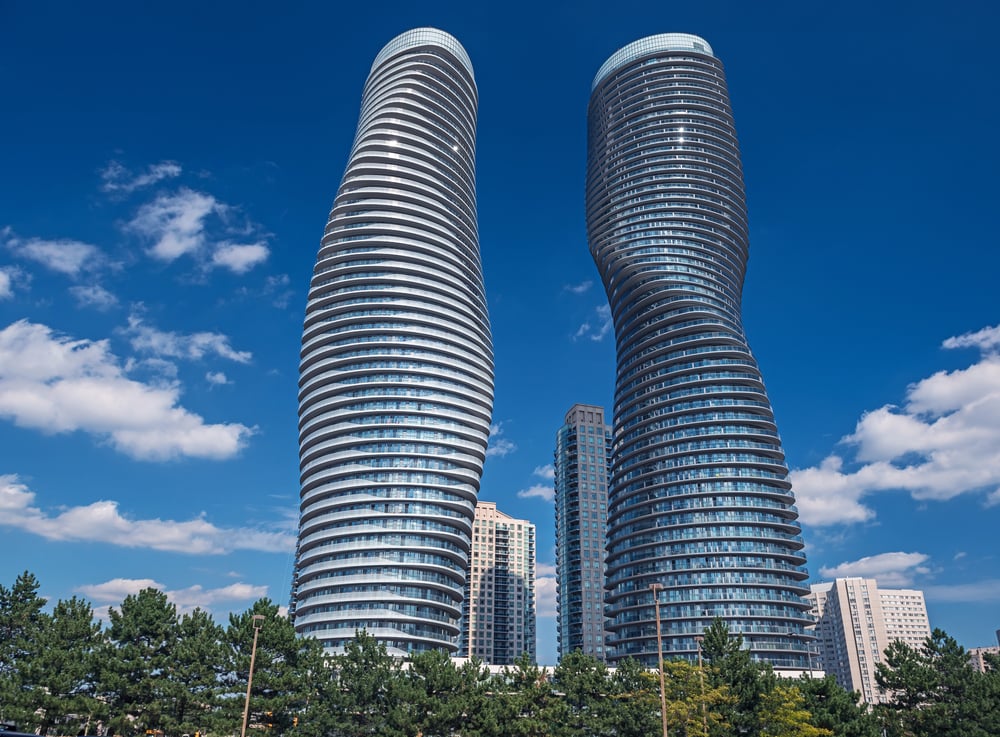
The Absolute World Towers in Mississauga, Ontario, rotate as they rise, twisting 209 degrees from base to top. Each floor turns slightly from the one below, creating balconies that spiral around the buildings like ribbons.
The engineering required computer modeling that didn’t exist a decade earlier — every floor plan is unique, and the structural loads shift constantly as the buildings twist.
The result earned the nickname “Marilyn Monroe Towers” for their curvaceous silhouettes. Sometimes the most sophisticated engineering produces the most sensual architecture.
These towers prove that residential buildings don’t have to be boring just because people live in them.
Via 57 West
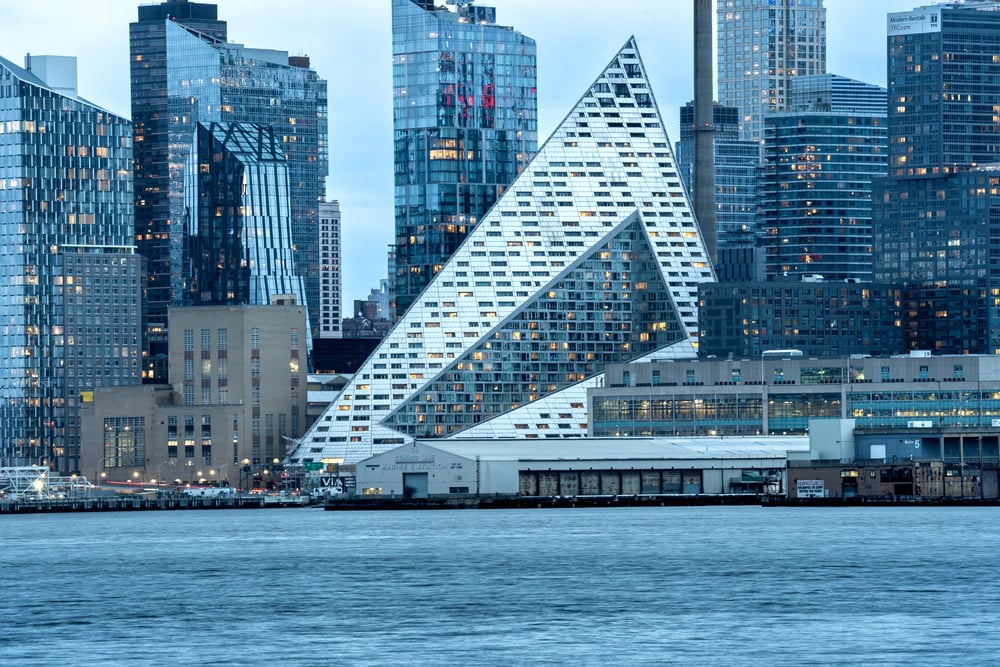
Bjarke Ingels took the traditional courtyard building and stood it up on end. Via 57 West in Manhattan rises 35 stories in a pyramid that creates a courtyard in the sky, complete with landscaping and walking paths 300 feet above the street.
The building’s profile allows natural light to reach every apartment while maximizing views of the Hudson River.
Lower floors open directly onto the elevated courtyard, while upper floors look out over Manhattan. It’s a solution that gives residents both urban density and suburban amenities — something New York apartment dwellers rarely experience simultaneously.
Looking Up

These buildings don’t just occupy space; they reimagine what space can be. They’ve pushed concrete and steel into shapes that previous generations would have considered impossible, created environments that respond to climate rather than fighting it, and proven that architecture can be both functionally brilliant and emotionally stirring.
What connects them isn’t a shared style or philosophy, but a willingness to solve problems in ways that hadn’t been tried before.
They remind us that the built environment doesn’t have to accept limitations — it can transcend them. And in transcending them, these structures become more than buildings. They become possibilities made visible.
More from Go2Tutors!

- The Romanov Crown Jewels and Their Tragic Fate
- 13 Historical Mysteries That Science Still Can’t Solve
- Famous Hoaxes That Fooled the World for Years
- 15 Child Stars with Tragic Adult Lives
- 16 Famous Jewelry Pieces in History
Like Go2Tutors’s content? Follow us on MSN.