Ancient Engineering Marvels That Defy Old World Limits
When you walk through modern cities filled with steel skyscrapers and concrete highways, it’s easy to assume that impressive engineering is a recent invention. But scattered across the globe are structures so ambitious, so precisely crafted, and so enduring that they make contemporary construction look almost timid by comparison.
These aren’t just old buildings that happened to survive—they’re monuments to human ingenuity that pushed past every reasonable limitation of their time. Built with tools we’d consider primitive, using techniques that still puzzle experts today, they stand as proof that innovation has always found a way to exceed what anyone thought possible.
Great Pyramid of Giza
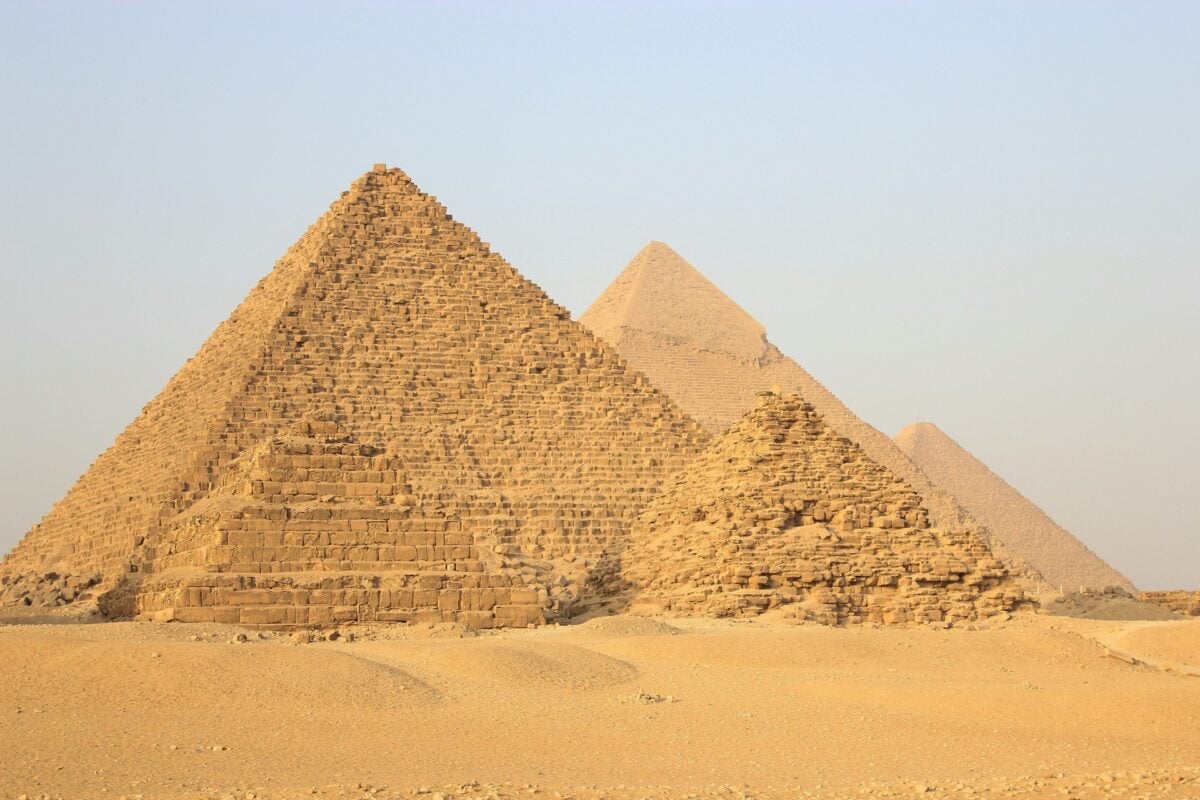
The Great Pyramid doesn’t just break the rules of ancient construction. It rewrites them entirely.
Built around 2580 BCE, this limestone monument contains roughly 2.3 million stone blocks, each weighing between 2.5 and 15 tons. The precision is unsettling.
For over 3,800 years, it remained the tallest human-made structure on Earth. The base is level to within just 2.1 centimeters.
Go figure.
Petra
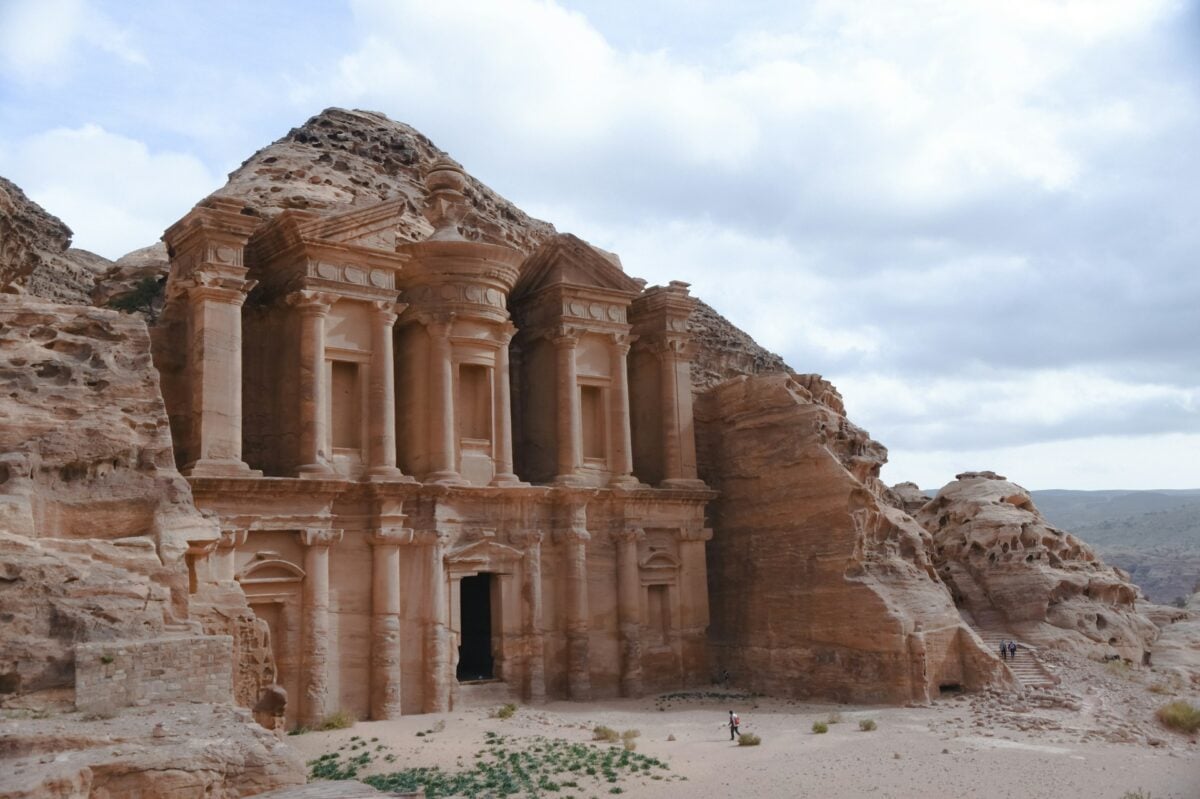
There’s something almost defiant about carving an entire city into cliff faces, and the Nabataeans who built Petra around the 4th century BCE seemed to understand this perfectly (they were, after all, a people who made their fortune controlling trade routes through some of the most unforgiving desert terrain on the planet). The Treasury facade alone—that impossibly ornate entrance that greets you after walking through the narrow Siq canyon—stands 130 feet tall and was carved directly from the rose-colored sandstone, which means every column, every decorative flourish, every architectural detail had to be chiseled away from the living rock with no room for error.
But here’s the thing that gets overlooked: Petra wasn’t just about impressive facades. The Nabataeans engineered an elaborate water management system throughout the city, with channels, cisterns, and dams that collected and stored rainwater in a region that receives less than six inches of precipitation annually—and this system was so effective that it supported a population of over 20,000 people.
So when you’re marveling at the carved temples, remember you’re also looking at one of history’s most sophisticated urban planning achievements.
Machu Picchu
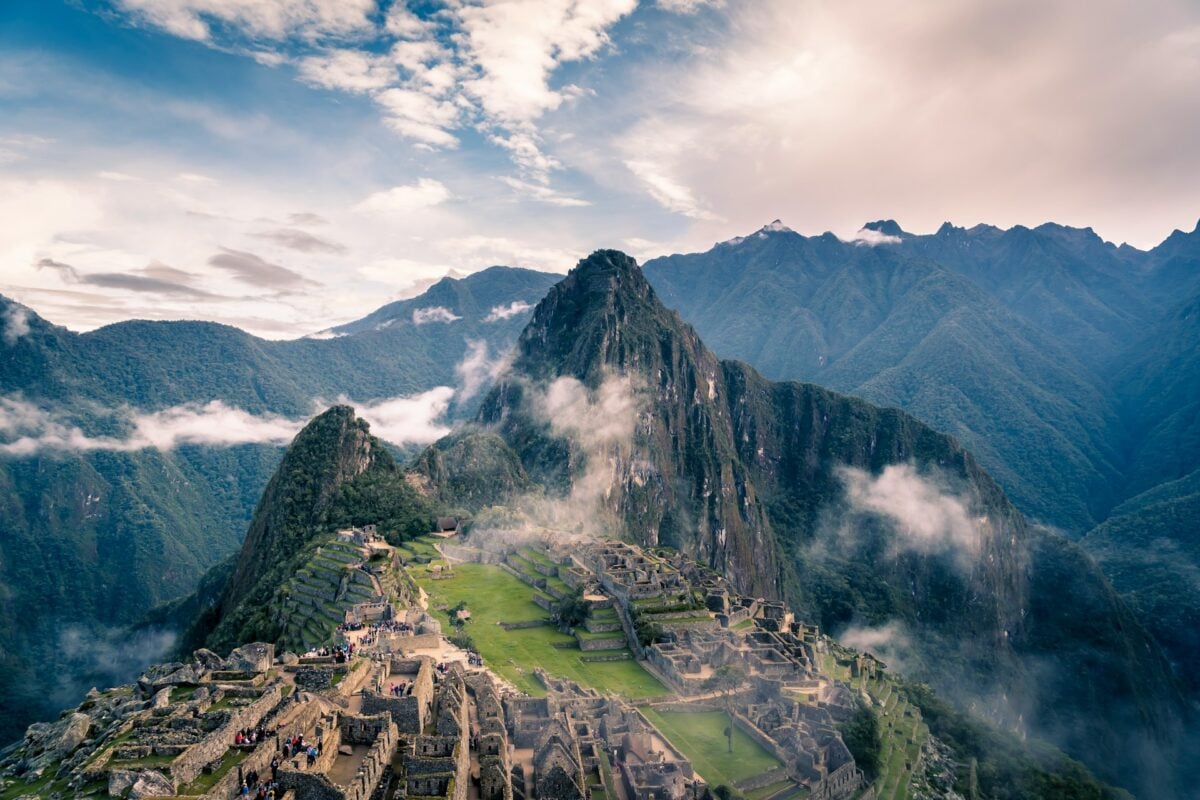
Like a secret whispered between mountains, Machu Picchu sits at 7,970 feet above sea level, cradled by peaks that seem to guard it from the world below. The Inca built this citadel around 1450 CE using stones so precisely cut that you cannot slide a knife blade between them—no mortar, no cement, just stone meeting stone with the kind of intimacy that suggests the builders understood something about permanence that we’ve forgotten.
Walking through its terraces feels like discovering a conversation between human ambition and geological patience. Every wall leans slightly inward, a technique that helps the structures flex during earthquakes rather than shatter.
The builders carved water channels directly into bedrock, creating fountains that still flow today, five centuries later. And perhaps most remarkably, they did all of this without wheels, without iron tools, without written language as we understand it—just an understanding of physics that spoke in stone rather than equations.
Antikythera Mechanism
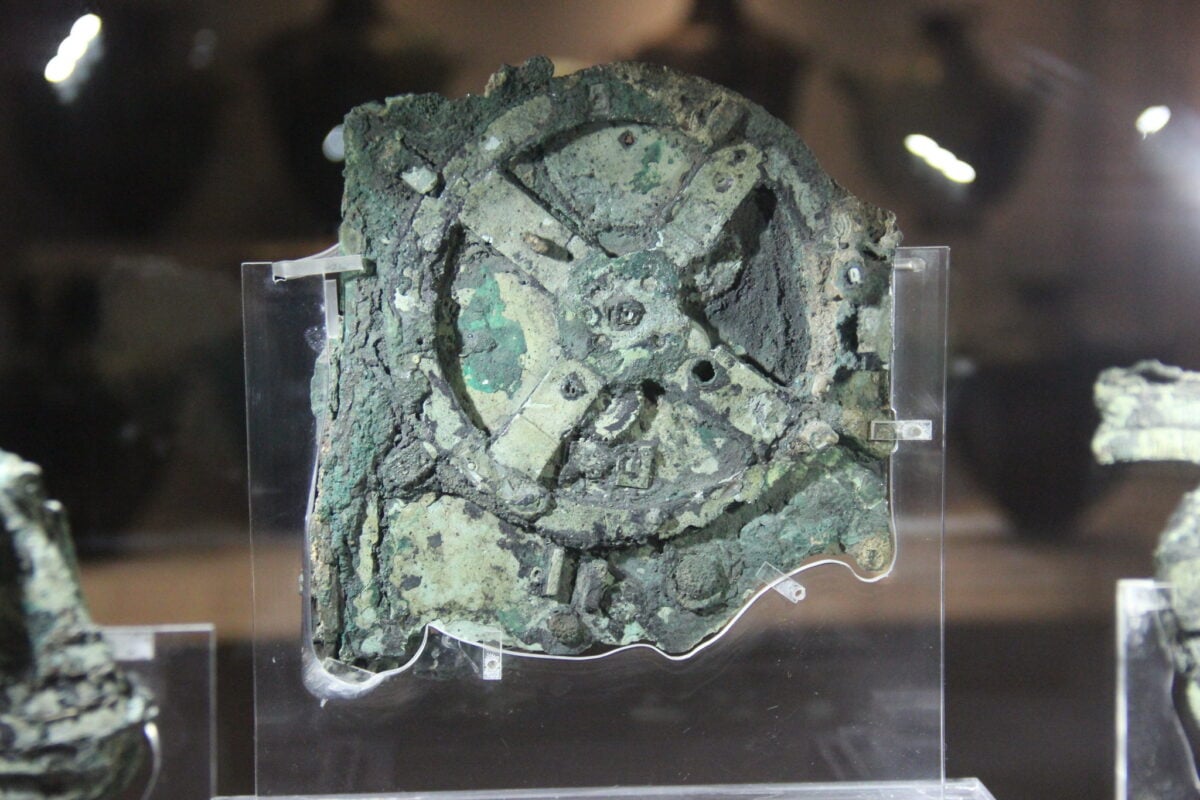
The Antikythera Mechanism is the ancient world’s most inconvenient artifact. Built around 100 BCE, this bronze device contains over 30 meshing gears that could predict eclipses, track the positions of planets, and calculate the dates of Olympic Games decades in advance.
For technology that shouldn’t have existed for another 1,500 years, it’s remarkably casual about rewriting everything historians thought they knew about ancient Greek capabilities. The mechanism tracks the 19-year Metonic cycle with precision that rivals modern calculations.
It accounts for the irregular orbit of the moon. And it does all of this with hand-forged bronze gears no bigger than a shoebox.
Calling it a computer feels almost inadequate—it’s more like finding a smartphone in a Viking burial mound.
Hagia Sophia
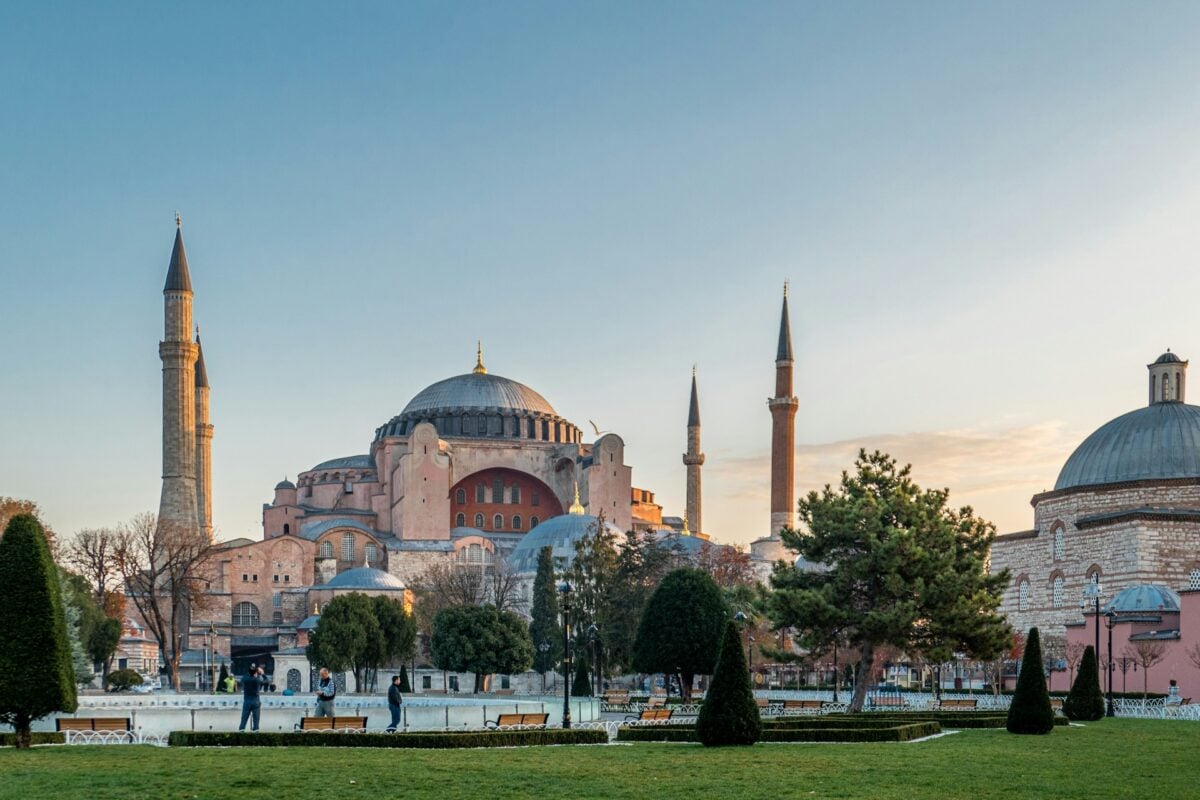
When Justinian I commissioned the Hagia Sophia in 532 CE, he essentially asked his architects to build the impossible: a dome that would float on light itself, suspended above a space so vast it could hold the heavens (or at least give that impression to anyone standing beneath its 102-foot span). Anthemius of Tralles and Isidore of Miletus—a mathematician and a physicist, not traditional architects—approached this challenge by developing engineering techniques that wouldn’t be fully understood for centuries afterward, including the use of pendentives to transfer the weight of the massive dome to the supporting pillars below.
The dome itself weighs an estimated 20,000 tons, yet appears to hover weightlessly above the interior space—an effect achieved through the placement of 40 windows around its base that flood the structure with light and create the optical illusion that the dome is somehow detached from its supports. And here’s what makes it even more remarkable: this building has survived earthquakes, wars, political upheavals, and conversion from church to mosque to museum and back to mosque again; it has been standing for nearly 1,500 years, which means the Hagia Sophia is older than most entire civilizations.
Pantheon
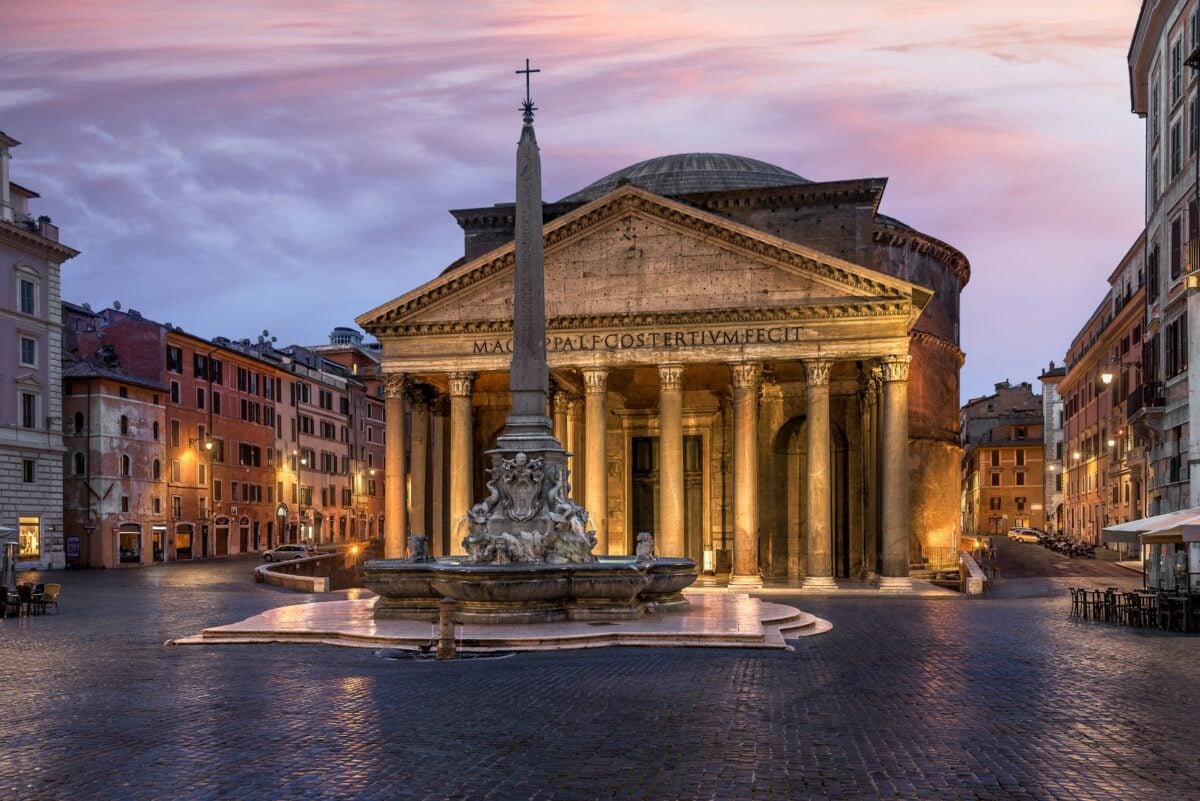
The Pantheon’s dome remains the largest unreinforced concrete dome ever built. Completed around 126 CE, it spans 142 feet across and weighs approximately 5,000 tons.
The Romans mixed volcanic ash into their concrete, creating a material that has actually grown stronger over the centuries. The oculus—that perfect circle of open sky at the dome’s peak—is both an engineering necessity and an architectural masterpiece.
It reduces the dome’s weight while creating a moving spotlight that travels across the interior walls throughout the day. Rain falls directly through it onto the marble floor, which slopes subtly toward hidden drains.
Eighteen hundred years later, it still works exactly as designed.
Angkor Wat
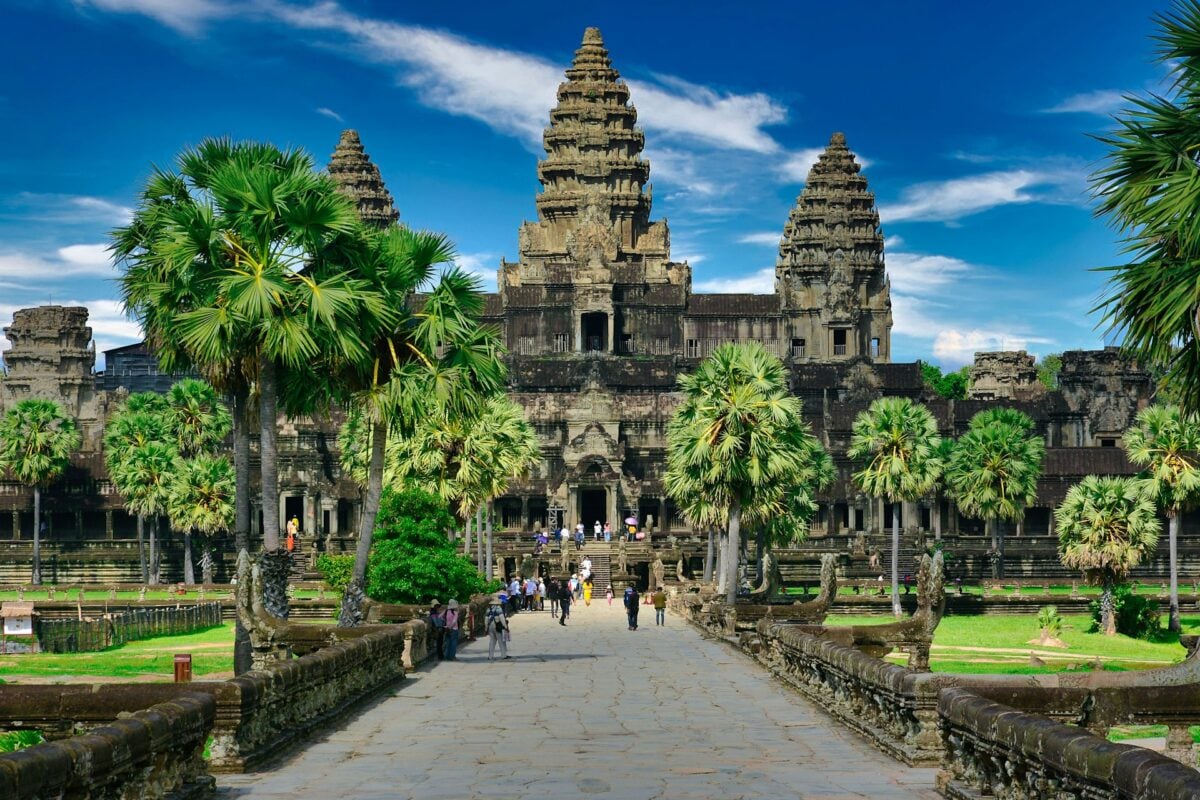
There’s a peculiar mathematics to Angkor Wat that reveals itself slowly, like a secret the Khmer builders embedded in stone and waited for someone patient enough to discover—the temple’s dimensions mirror the Hindu cosmology so precisely that the central tower represents Mount Meru (the center of the universe in Hindu belief), while the surrounding walls and moats correspond to the mountain ranges and oceans that encircle the world. Built in the early 12th century, this temple complex covers 402 acres and required an estimated 300,000 workers and 6,000 elephants to complete, but those numbers barely capture the ambition involved.
The entire structure was built without mortar, using a technique called “dry stone construction” where stones are cut so precisely that friction and weight hold everything in place—imagine assembling a building-sized jigsaw puzzle where every piece weighs several tons and has to fit perfectly or the whole thing collapses. But perhaps most impressive is the hydraulic engineering: Angkor Wat sits at the center of a water management system that spans over 1,000 square kilometers, with canals, reservoirs, and channels that controlled flooding, supported agriculture, and supplied fresh water to over one million residents—making it the largest pre-industrial city in the world.
Roman Aqueducts
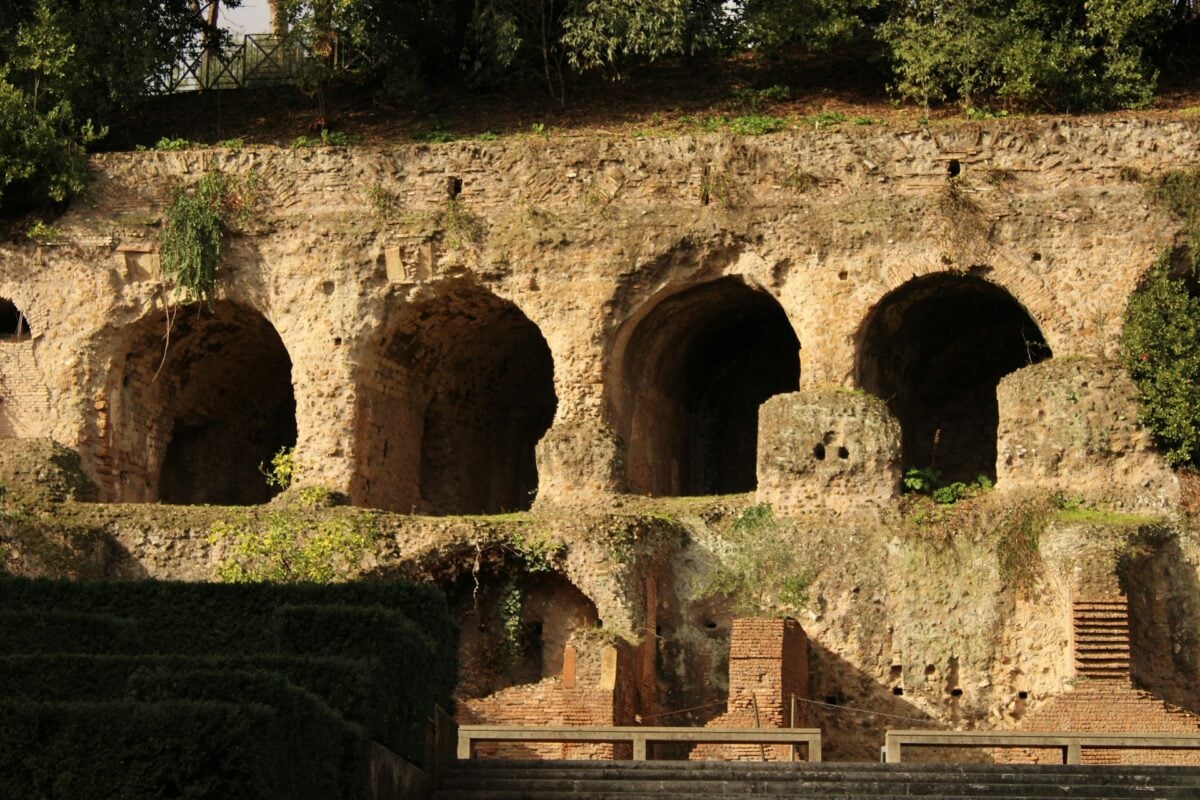
Roman aqueducts represent engineering stubbornness at its finest. The Romans decided that Rome deserved fresh mountain water, so they built channels that carried it across hundreds of miles of varied terrain.
The Pont du Gard in France stands 160 feet tall and spans 900 feet across the Gardon River valley. It’s held together entirely by precisely cut stones that lock into place without mortar.
These weren’t just impressive structures—they were precision instruments. The aqueducts maintained a gradient of just 0.5 percent over their entire length.
Too steep and the water would erode the channels. Too flat and it wouldn’t flow at all.
The Romans split that difference across dozens of miles and delivered 50 million gallons of fresh water daily to Rome’s citizens.
Easter Island Moai

The moai scattered across Easter Island seem like monuments to impossibility itself, nearly 900 stone figures averaging 13 feet tall and weighing 14 tons each—some reaching heights of 30 feet and weights approaching 80 tons—carved from volcanic rock using only stone tools by the Rapa Nui people between 1250 and 1500 CE. What makes them particularly haunting is how they were moved from the quarry at Rano Raraku to their final positions around the island’s perimeter, some traveling over 10 miles across rough terrain, and for centuries archaeologists couldn’t figure out how a society without wheels, without large animals, without pulleys or cranes, could have transported these massive figures.
Recent experiments suggest the statues may have been “walked” upright to their destinations using a coordinated rocking motion with ropes—a technique that transforms each moai from dead weight into something approaching a dance partner. The precision required for this method borders on the absurd: one wrong move and 14 tons of carved stone becomes 14 tons of expensive rubble.
And yet hundreds of these figures stand exactly where the Rapa Nui intended, facing inland to watch over their descendants, their backs to the endless Pacific.
Chartres Cathedral
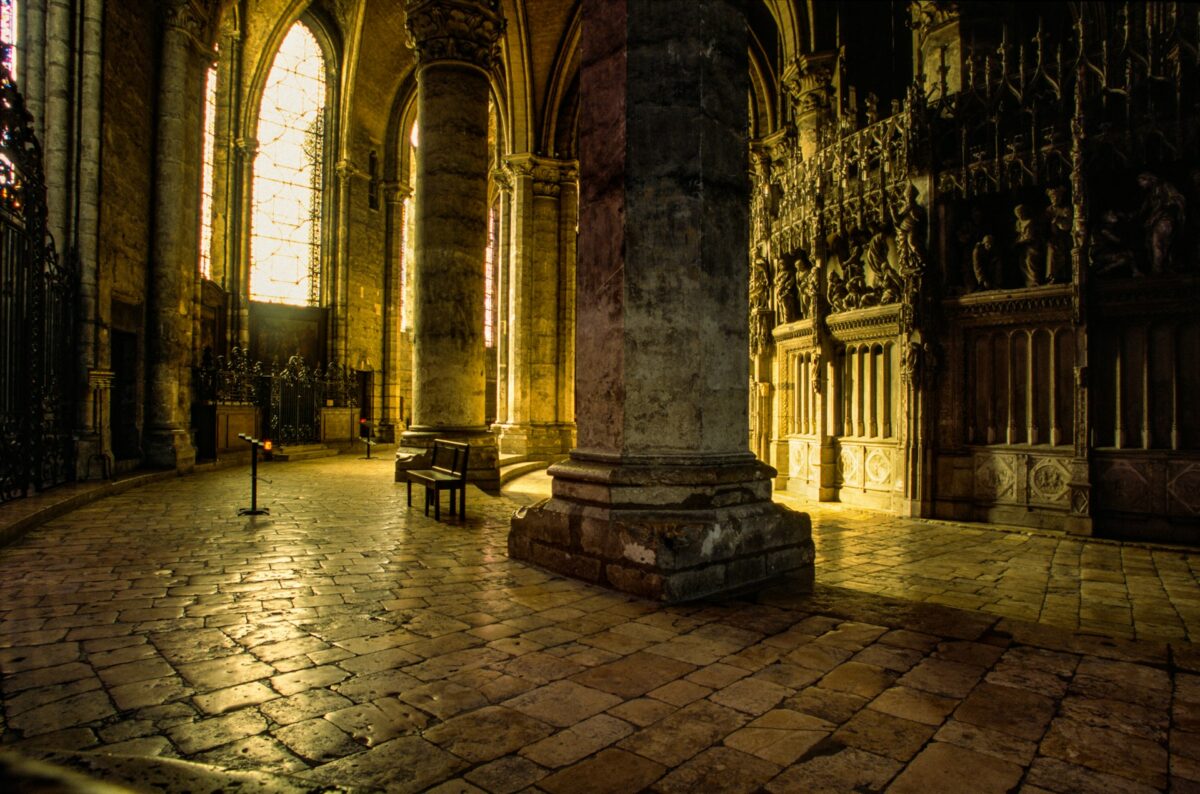
Chartres Cathedral is medieval engineering that borders on the reckless. Built primarily between 1194 and 1220, it soars 121 feet to its vaulted ceiling using flying buttresses that transfer the roof’s massive weight to external supports.
The result is interior walls that seem impossibly thin, filled almost entirely with stained glass. The cathedral’s windows contain over 2,600 square meters of glass, much of it original 13th-century work.
The blue glass in particular uses a formula that died with its creators. Modern chemists have analyzed the composition but cannot replicate the exact color.
Seven hundred years later, Chartres blue remains unique. The labyrinth set into the nave floor spans 42 feet across and contains a path 858 feet long.
Medieval pilgrims would walk this pattern on their knees as a form of prayer—a journey that takes roughly 45 minutes to complete.
Borobudur
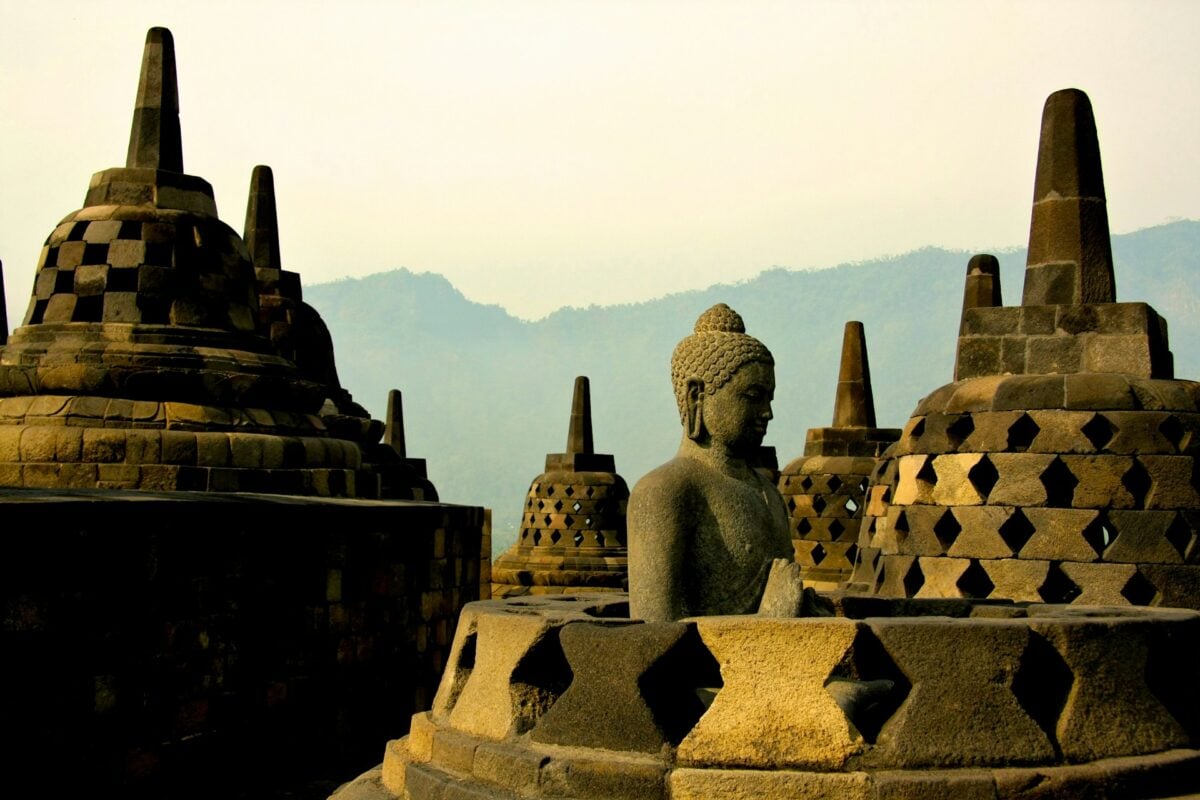
Like a stone mandala that spilled over from the realm of ideas into physical space, Borobudur rises from the plains of Java in nine terraced levels, each representing a stage in the Buddhist path to enlightenment—pilgrims begin their journey at the base among reliefs depicting earthly desires and karmic law, then spiral upward through increasingly abstract levels until they reach the three circular terraces at the top, where 72 perforated stone stupas contain seated Buddha figures that peer out through diamond-shaped openings like meditation made manifest. Built around 800 CE, this temple required roughly 60,000 cubic meters of stone and incorporates over 2,600 relief panels and 500 Buddha statues, but what’s remarkable isn’t just the scale—it’s how the entire structure functions as a three-dimensional textbook of Buddhist philosophy.
The temple’s builders understood something profound about the relationship between architecture and consciousness: as you ascend through Borobudur’s levels, the design gradually removes visual distractions until you reach the uppermost level, where the elaborate carvings disappear entirely and you’re left with nothing but sky, stupas, and stone—a physical representation of the mind’s journey from complexity to clarity. And they achieved this effect using volcanic stone and human labor, without cranes or modern tools, creating a structure so precisely aligned with cardinal directions that it serves as both temple and compass.
Newgrange
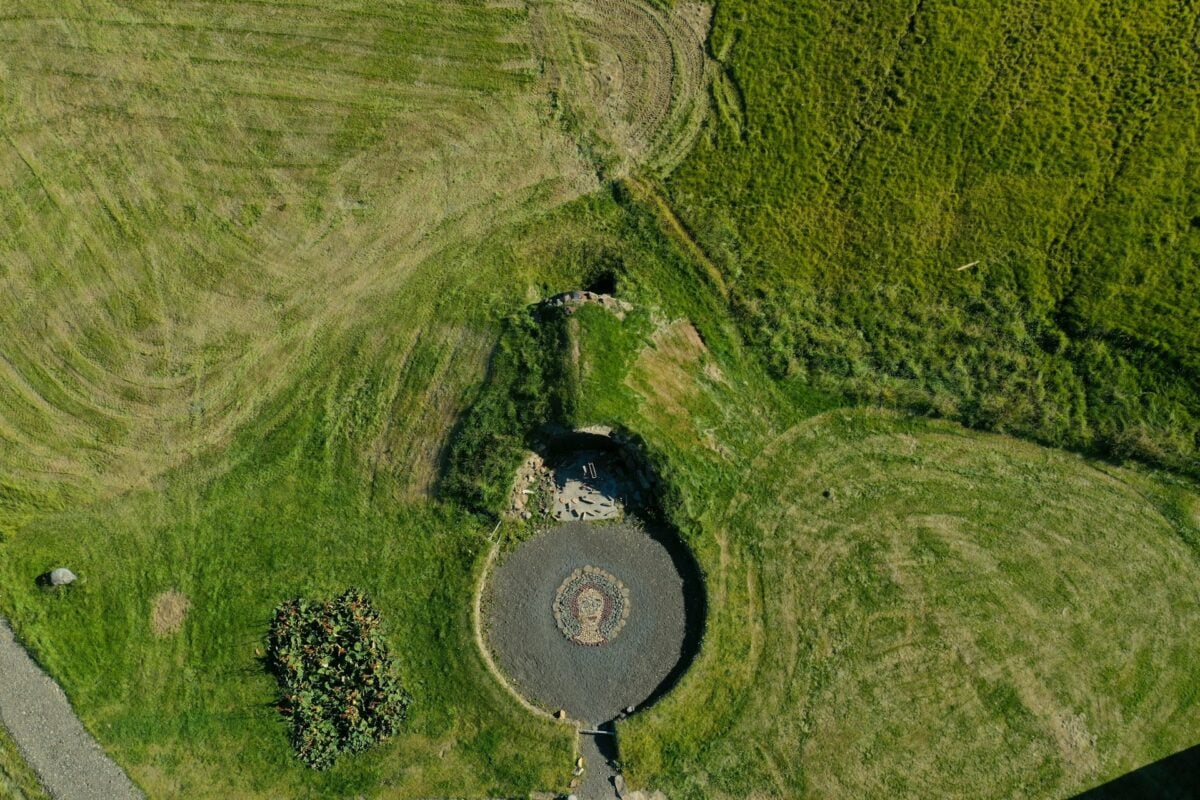
Newgrange is older than Stonehenge, older than the pyramids, older than writing itself. Built around 3200 BCE, this Neolithic passage tomb in Ireland contains a chamber aligned so precisely with the winter solstice that sunlight penetrates the structure for exactly 17 minutes each December 21st, illuminating the inner chamber with a shaft of light that travels across ancient stone carvings.
The builders accomplished this feat using nothing but stone, earth, and an understanding of astronomy that required generations of careful observation. The tomb’s roof box—a small opening above the entrance—is positioned to catch the sun’s rays at the precise angle needed for the solstice alignment.
Miss by even a few degrees and the light show fails entirely. They got it right on the first try.
The structure has remained watertight for over 5,000 years. Modern engineers study its drainage system to understand how Stone Age builders created such effective waterproofing using only available materials.
Great Wall of China
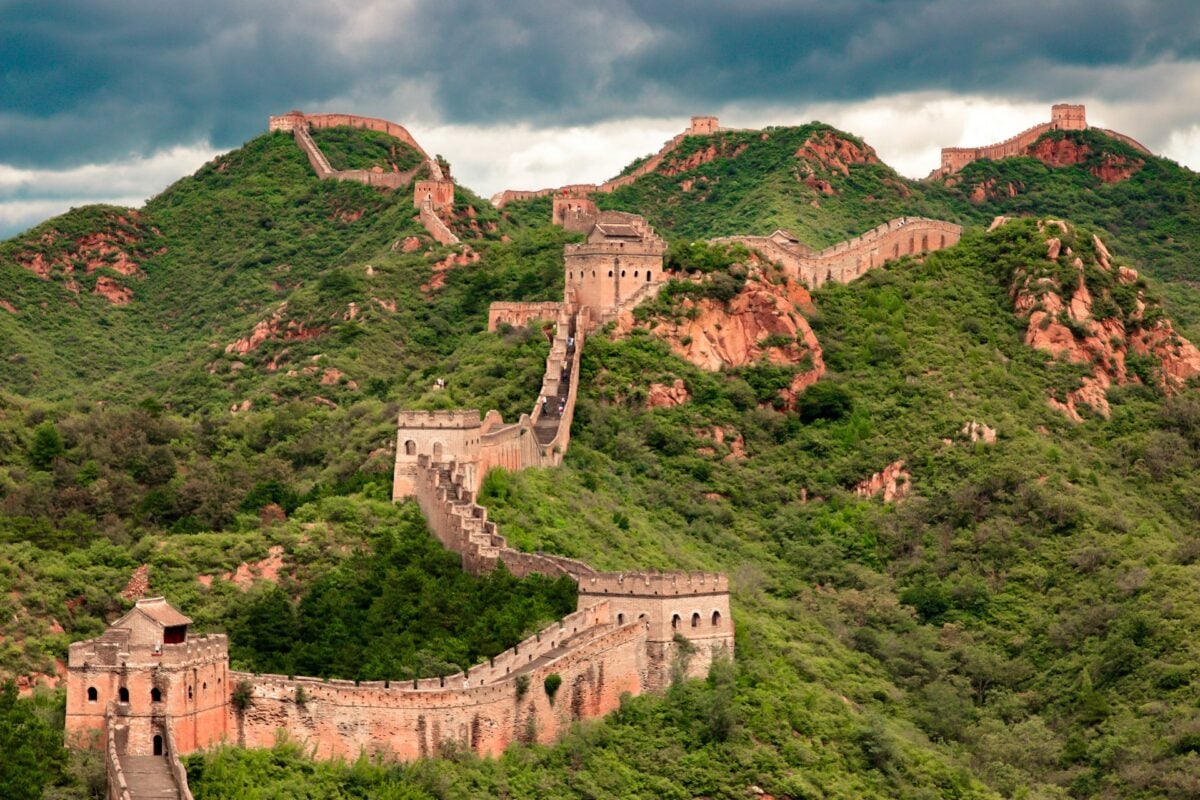
The Great Wall represents the kind of engineering ambition that makes modern infrastructure projects look modest by comparison—built and rebuilt over more than 2,000 years by various Chinese dynasties, the wall stretches over 13,000 miles when all its branches and reconstructions are included, winding through mountains, deserts, and grasslands with a persistence that borders on the obsessive. The wall you see in photographs near Beijing represents just the most recent version, built primarily during the Ming Dynasty (1368-1644), but the engineering challenges it solved remain staggering.
Consider the logistics alone: construction required coordination across impossible distances, moving materials to some of the most remote and mountainous terrain on Earth, and maintaining supply lines for workers who were building in places where no roads existed. The wall follows ridgelines so steep that modern hikers need cables and railings to navigate safely, yet Ming engineers built watchtowers, barracks, and defensive positions along these routes using stones that had to be carried up by hand.
Some sections rise at gradients approaching 70 degrees—more ladder than walkway—yet they’ve remained stable for centuries. And the wall isn’t just a barrier; it’s a communication system, with signal towers positioned for optimal sight lines that allowed messages to travel from one end to the other using smoke and fire signals.
A Testament Written in Stone
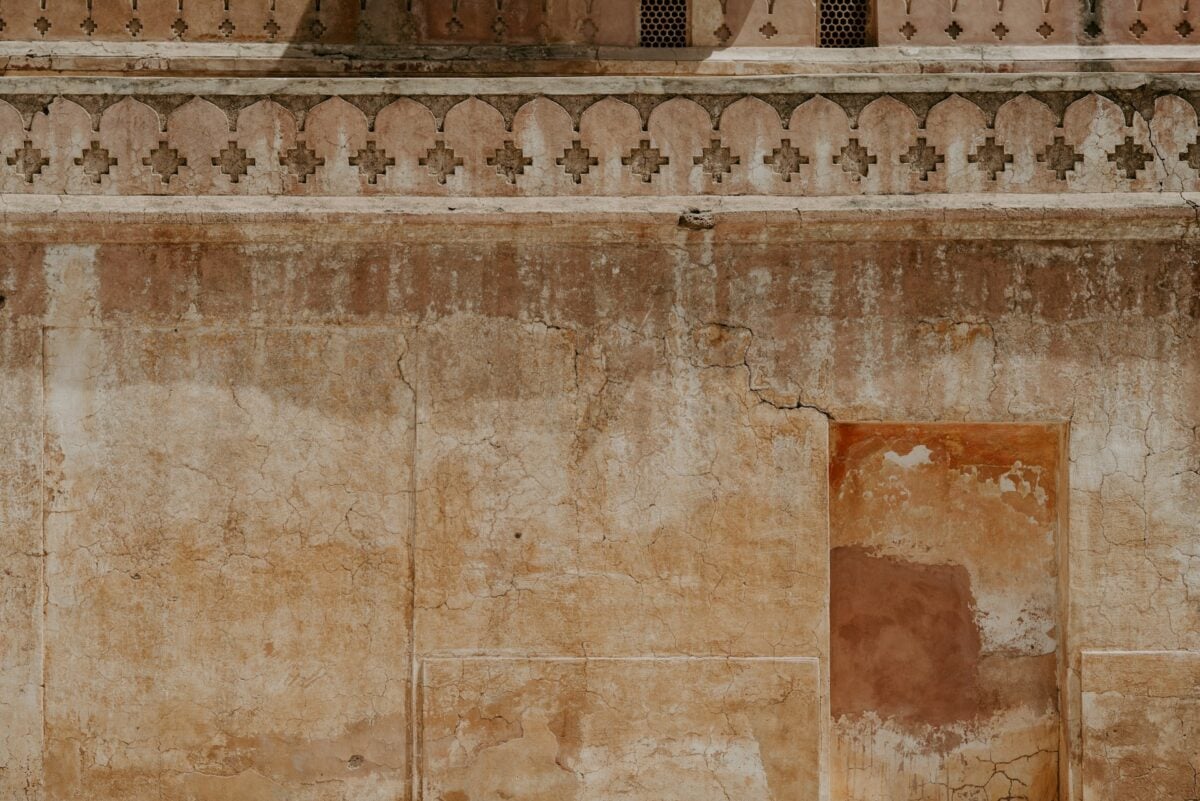
Standing before these ancient marvels, it becomes clear that the limits we imagine for past civilizations exist mainly in our own assumptions. These builders worked without the safety nets of modern technology, yet they created structures that have outlasted empires, survived natural disasters, and continue to puzzle engineers who have every advantage of contemporary knowledge.
They understood that true innovation isn’t about having the best tools—it’s about seeing possibilities where others see only obstacles, and then finding ways to make those possibilities real, one precisely placed stone at a time.
More from Go2Tutors!

- The Romanov Crown Jewels and Their Tragic Fate
- 13 Historical Mysteries That Science Still Can’t Solve
- Famous Hoaxes That Fooled the World for Years
- 15 Child Stars with Tragic Adult Lives
- 16 Famous Jewelry Pieces in History
Like Go2Tutors’s content? Follow us on MSN.