26 Abandoned Places Around The World That Nature Has Completely Reclaimed
There’s something both haunting and beautiful about watching nature take back what was once hers. Abandoned buildings, forgotten cities, and discarded structures become canvases for ivy, moss, and trees that seem determined to erase human traces entirely.
These places tell stories of ambition, failure, and the quiet persistence of the natural world. Around the globe, remnants of human civilization sit slowly dissolving under layers of green.
Some were abandoned after disasters, others simply outlived their purpose. What they share is a common fate: surrender to forces far more patient and persistent than any human plan.
Pripyat, Ukraine
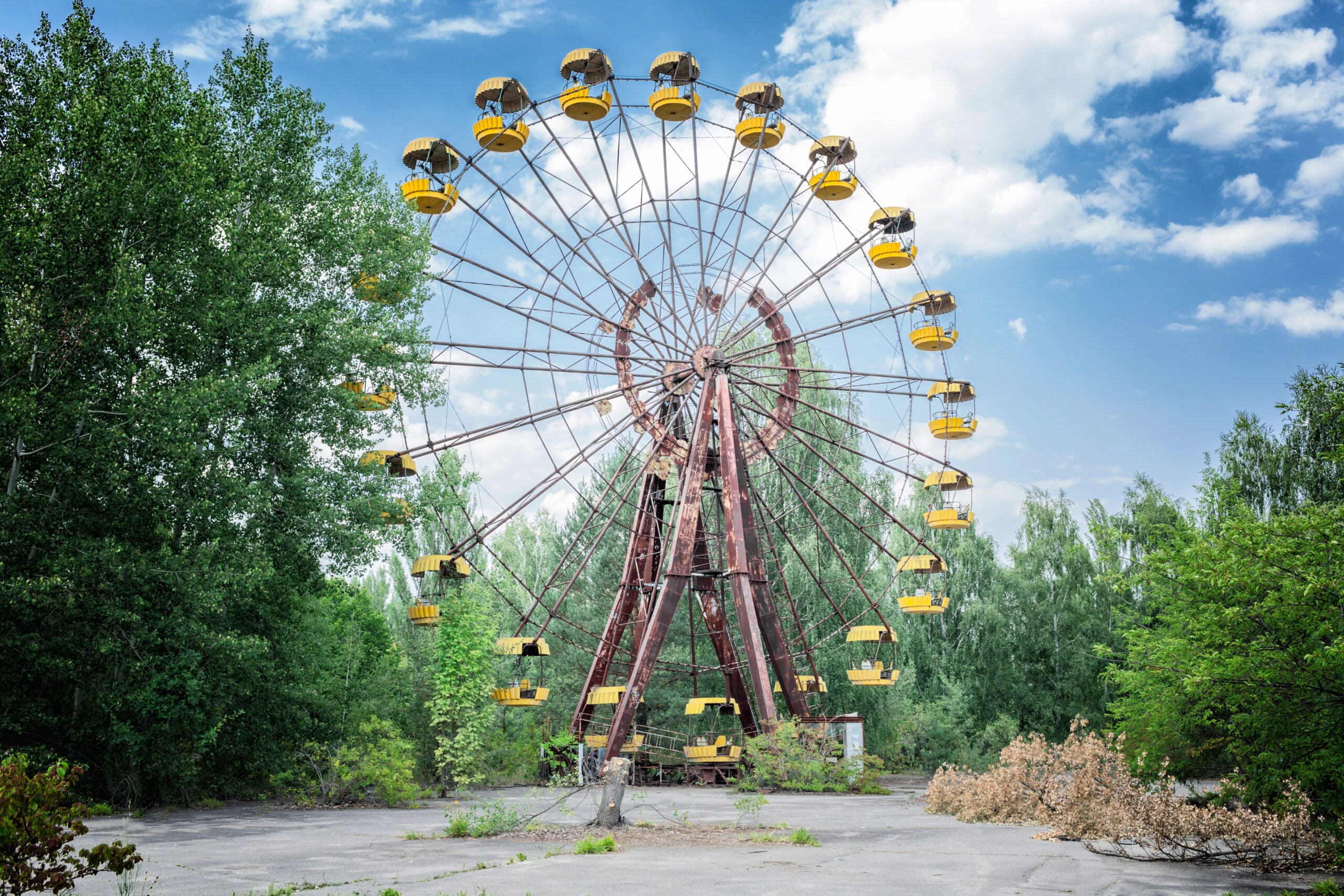
The Chernobyl Exclusion Zone stands as nature’s most famous reclamation project. Wolves roam the empty streets now, and bears have returned to forests that haven’t seen them in decades.
Trees push through apartment windows in Pripyat. Moss carpets the abandoned amusement park.
The radiation that drove humans away doesn’t seem to bother the wildlife much. They’ve made the ghost city their own.
Angkor, Cambodia
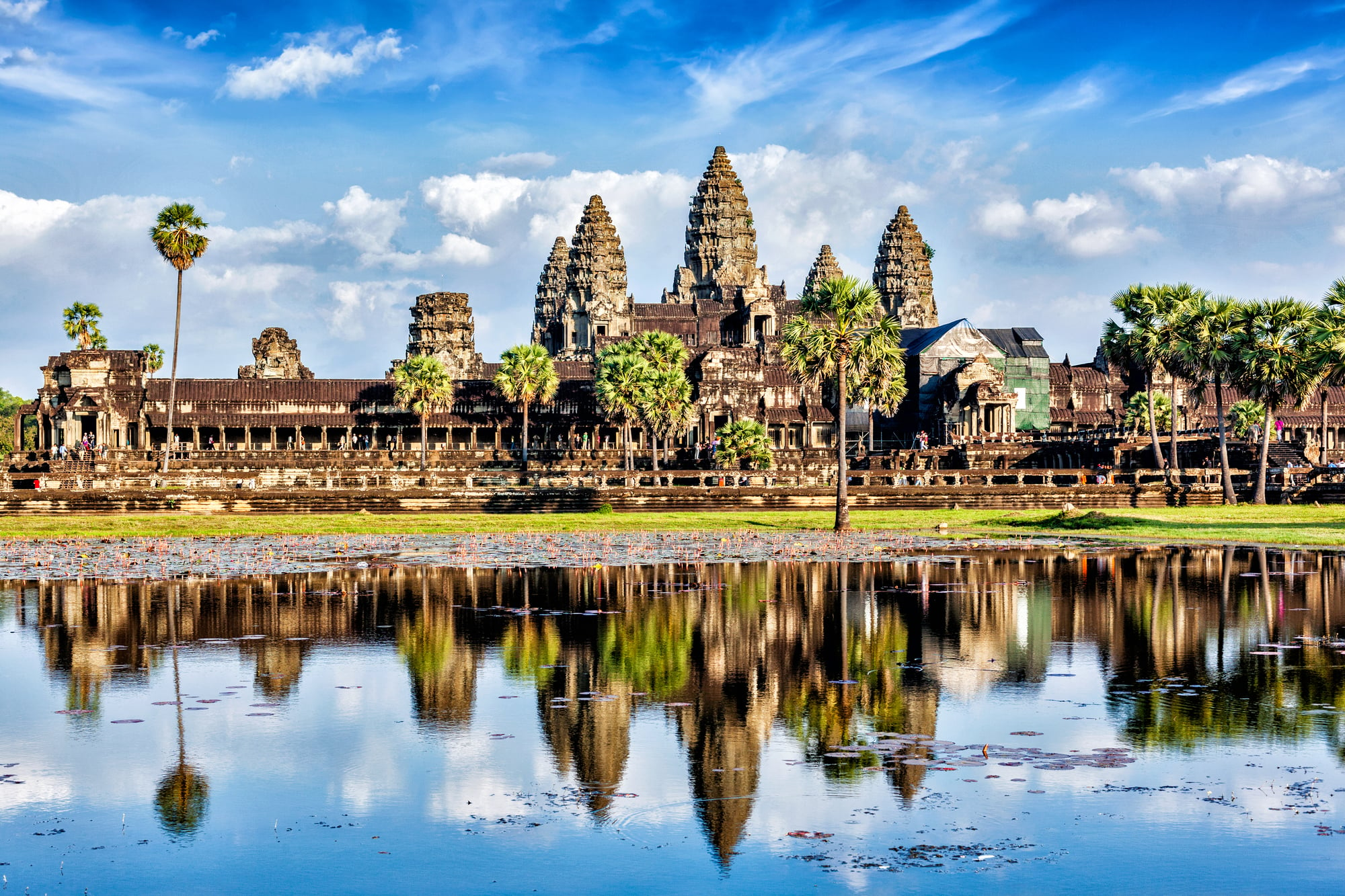
Angkor wasn’t exactly abandoned (though close to it for centuries), but the jungle certainly had opinions about these massive stone temples. The trees here don’t just grow around the ruins — they become part of them, their roots threading through ancient stones like they’re claiming ownership.
Ta Prohm temple looks like something from a fever dream, with massive tree roots cascading over doorways and wrapping around carved figures. The trees and the temple have become so intertwined that removing one would destroy the other.
Hashima Island, Japan
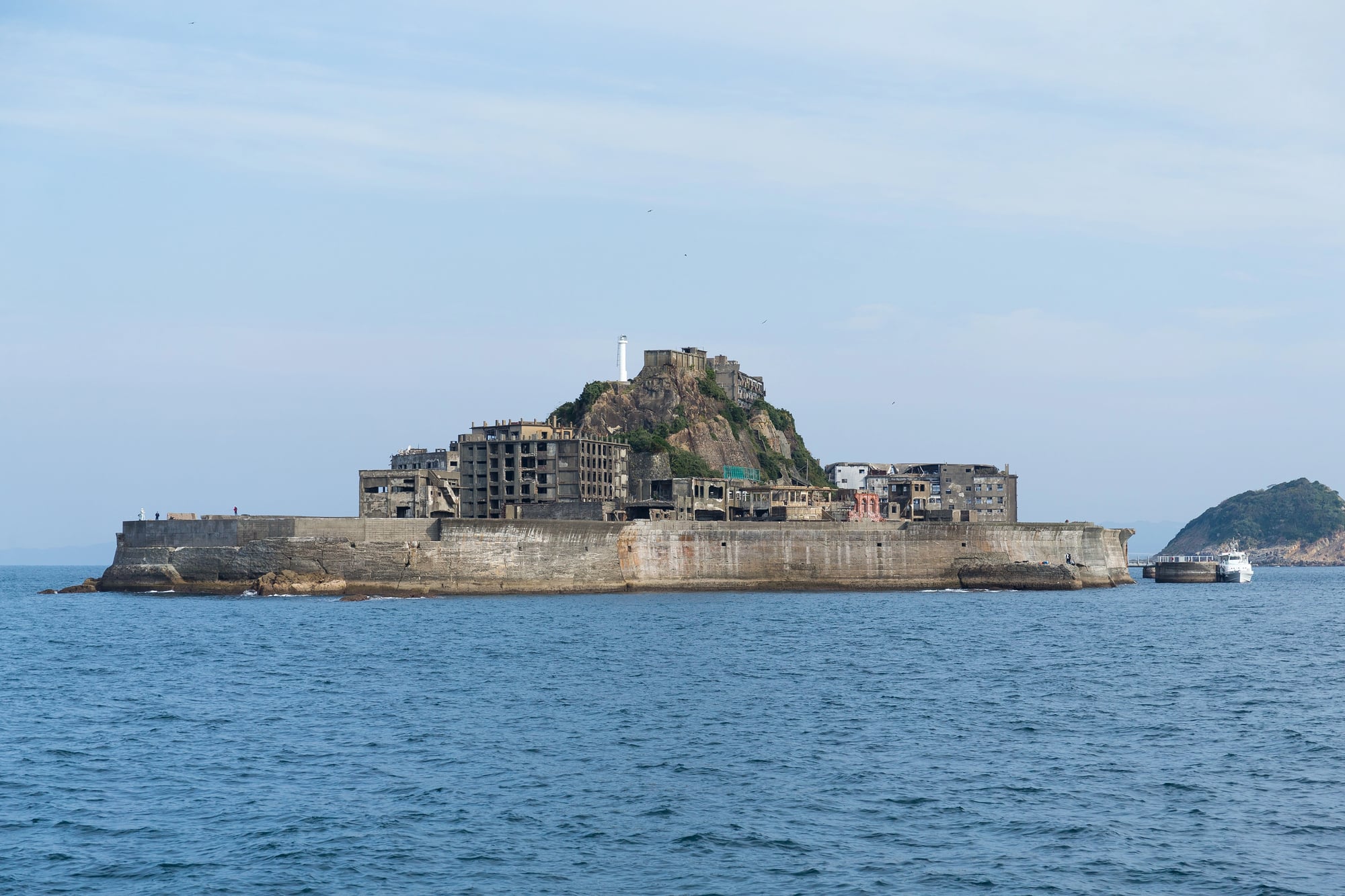
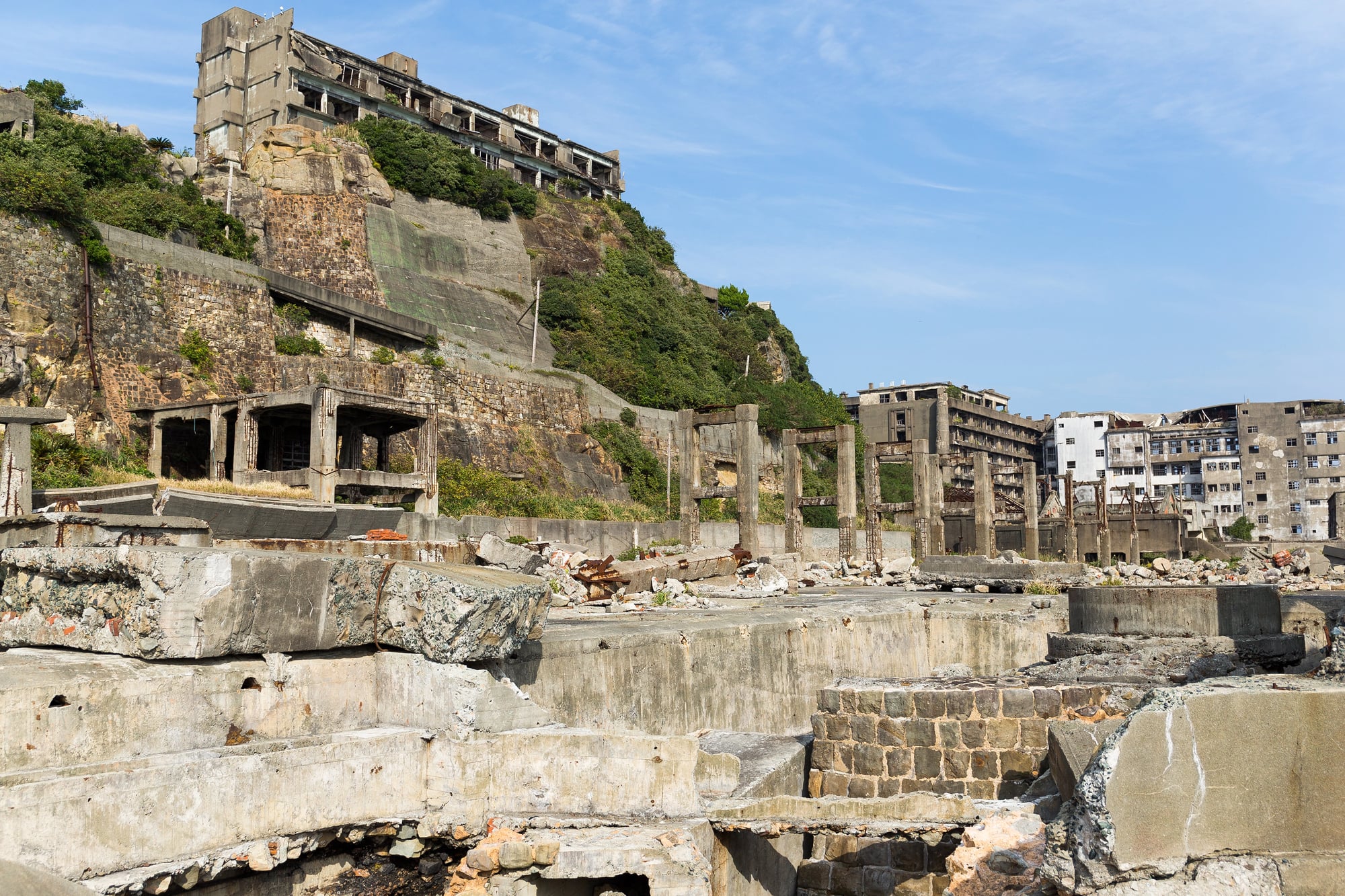
This concrete island was once home to 5,000 coal miners packed into the most densely populated place on Earth. When the coal ran out in 1974, everyone left within months, and the sea air immediately began its slow work of destruction.
Now the apartment buildings crumble while seabirds nest in the broken windows, and salt spray continues its patient demolition (though you have to wonder if the concrete ever really stood a chance against the ocean). The island earned the nickname “Battleship Island” for its shape, but these days it looks more like a sinking ship than a floating fortress.
And the irony is that what once symbolized Japan’s rapid industrialization now serves as a monument to impermanence — which, when you think about it, might be the most Japanese thing of all.
Château Miranda, Belgium
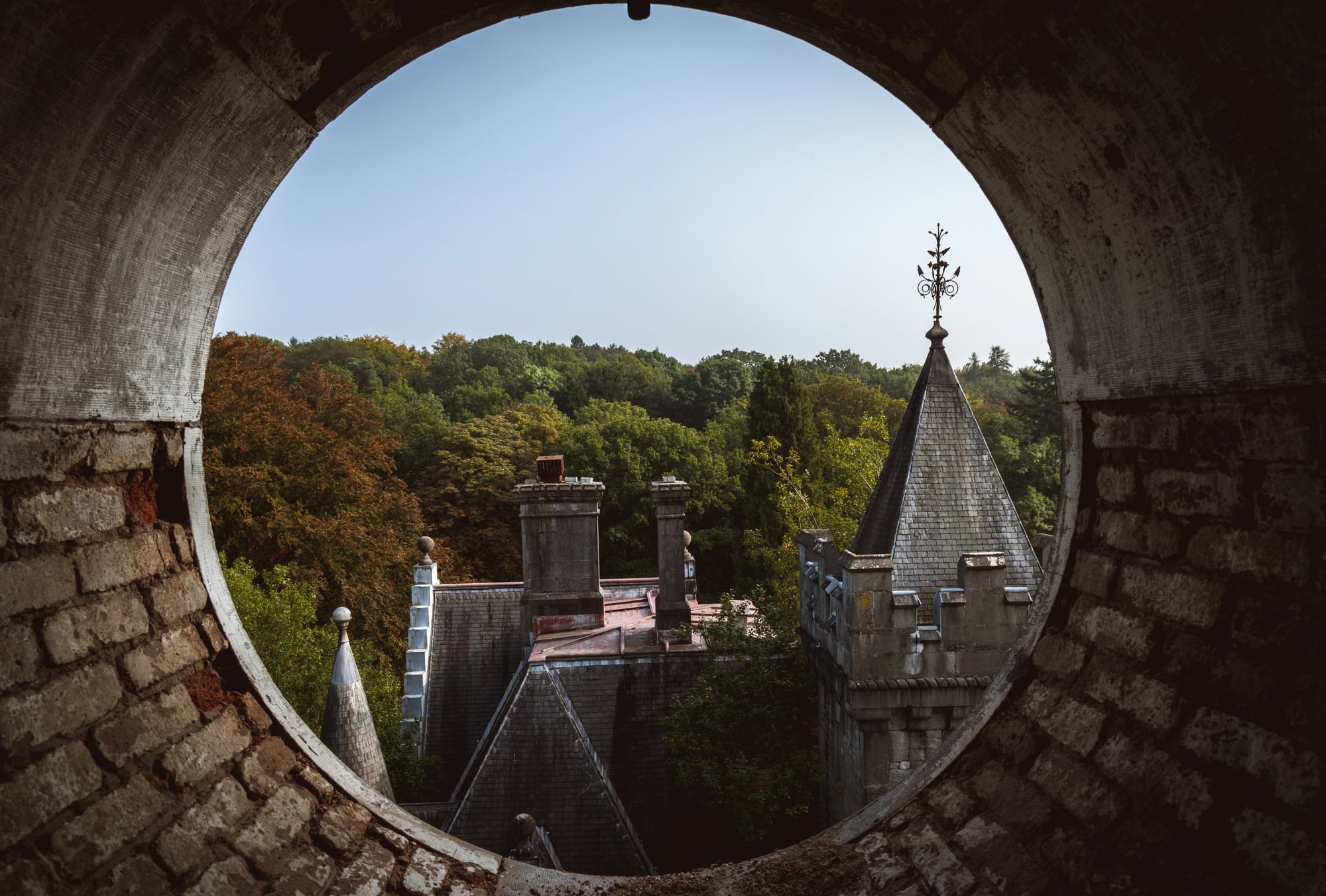
Château Miranda was abandoned after World War II, and the Belgian forest has been steadily claiming it ever since. Ivy climbs the Gothic towers like it’s trying to pull the whole structure back into the earth, while saplings push through broken roof tiles and moss softens every stone edge.
The château sits in its overgrown grounds like a sleeping giant wrapped in green blankets. Each year, the boundary between building and forest becomes a little less clear.
Eventually, there might not be a boundary at all — just trees where a castle used to stand.
Eastern State Penitentiary, Philadelphia
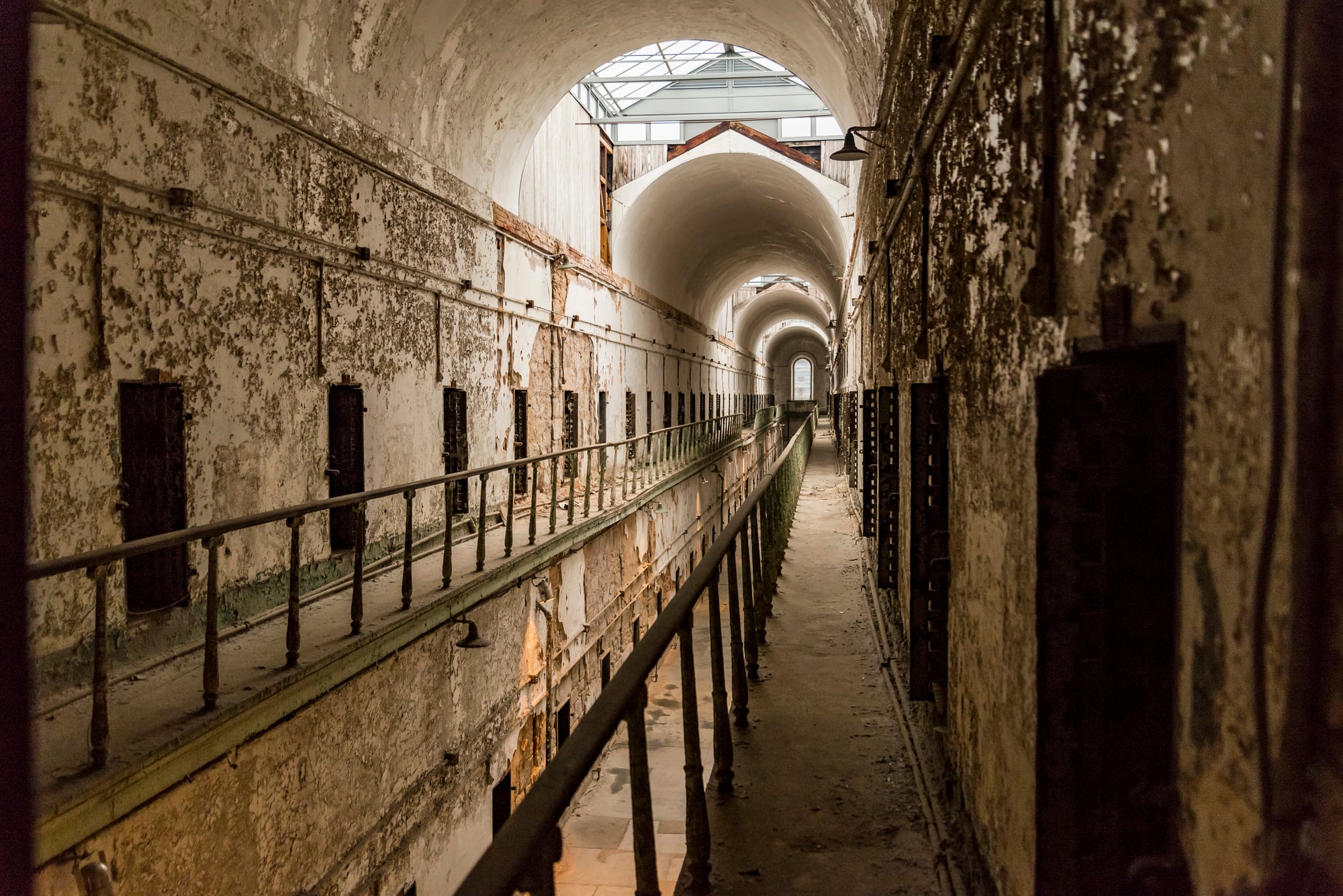
Eastern State Penitentiary was revolutionary when it opened in 1829. Individual cells, rehabilitation instead of punishment, natural light streaming through skylights.
Revolutionary ideas often don’t last. The prison closed in 1971, and nature moved in immediately.
Trees grow through cell blocks now. Grass carpets the exercise yards.
The building still stands, but it belongs to the sparrows and raccoons.
Kolmanskop, Namibia
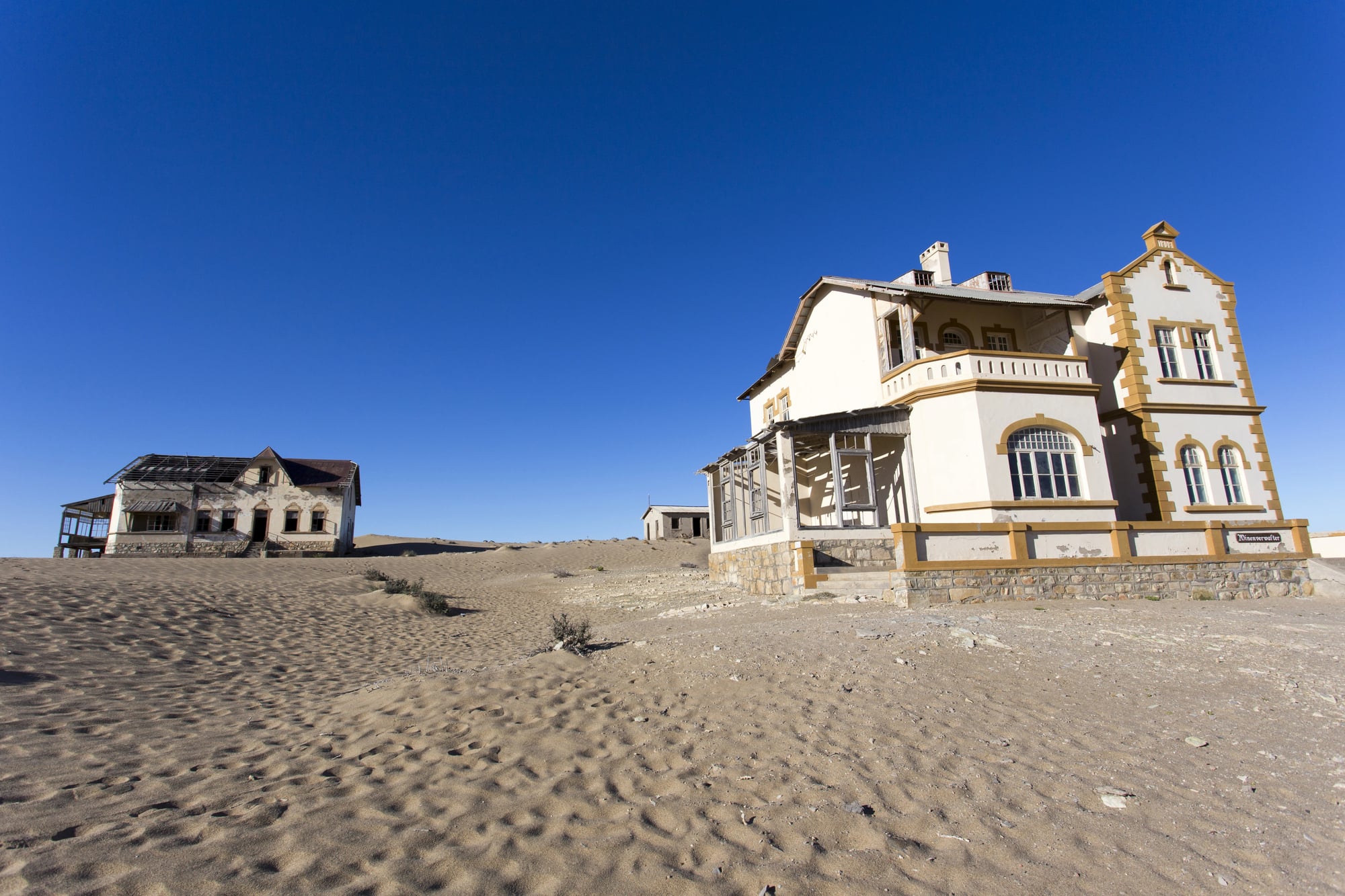
Kolmanskop was built around diamond mining in the early 1900s, complete with a hospital, ballroom, and ice factory (because apparently even diamond miners in the Namibian desert deserved ice). When the diamonds moved south, so did the people, leaving behind a perfectly functional German town in the middle of nowhere.
The desert doesn’t mess around when it comes to reclamation. Sand fills the houses now, sometimes reaching the second-floor windows, creating these surreal indoor dunes that look like someone dropped a beach inside a living room.
The buildings themselves remain largely intact — it’s just that they’ve been completely buried by the very landscape they were built to exploit. Sand, as it turns out, is far more patient than humans and infinitely more persistent.
Bodie, California
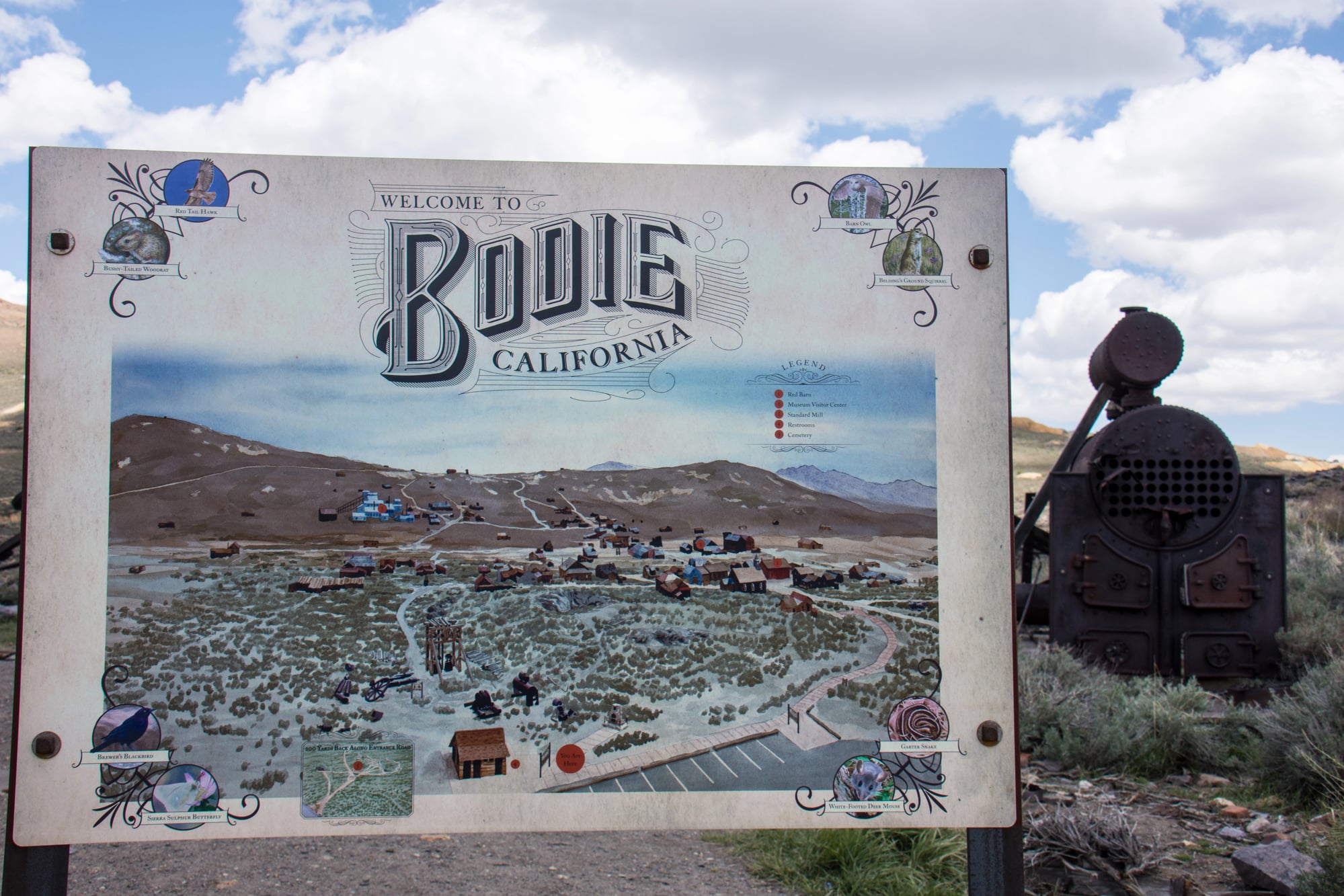
Gold rush towns have a particular melancholy when the gold runs out. Bodie was a booming mining town with 10,000 residents, saloons, and the kind of lawlessness that made for good stories and short lives.
When the mining stopped, people left their belongings and simply walked away. The high desert climate preserved everything almost perfectly.
Now sagebrush grows between the buildings, and the Sierra winds blow through broken windows. It’s less “nature reclaimed” and more “nature moved in as a caretaker.”
Beelitz-Heilstätten, Germany
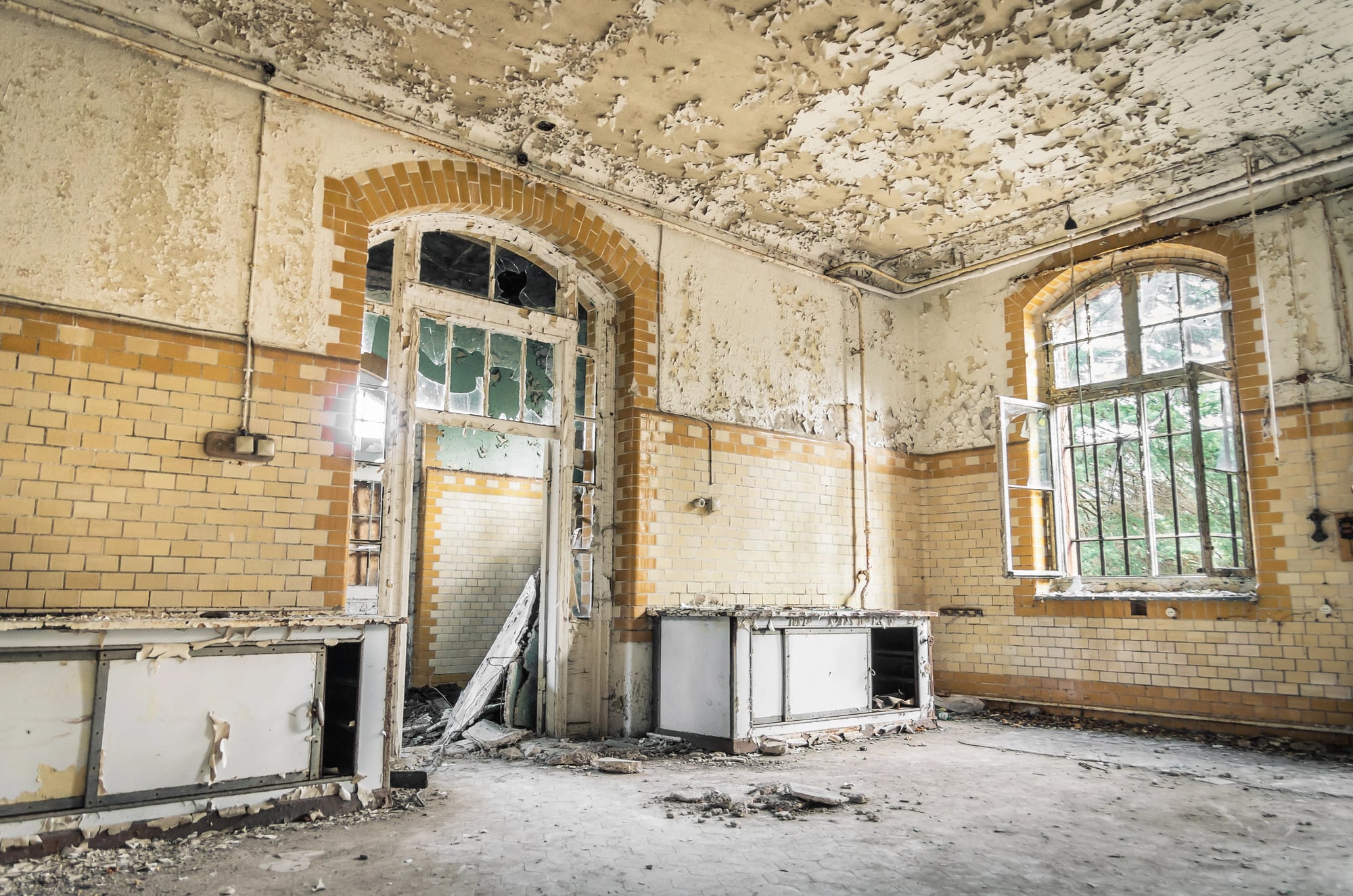
This sprawling hospital complex treated tuberculosis patients from 1898 until the 1990s. The buildings are massive — 60 structures spread across 500 acres — and when they were finally abandoned, the forest was ready.
Trees grow through the operating theaters now. Ivy covers the sanatorium windows.
The place where people came to breathe clean air and heal their lungs has become a green maze where the only sounds are wind and settling timber. Nature has turned a place of sterile medical precision into something wild and untamed.
Hashima Island Might Be Famous, But Gunkanjima’s Concrete Brutalism Being Slowly Dissolved By Salt Air Feels Like Watching Time Itself Work
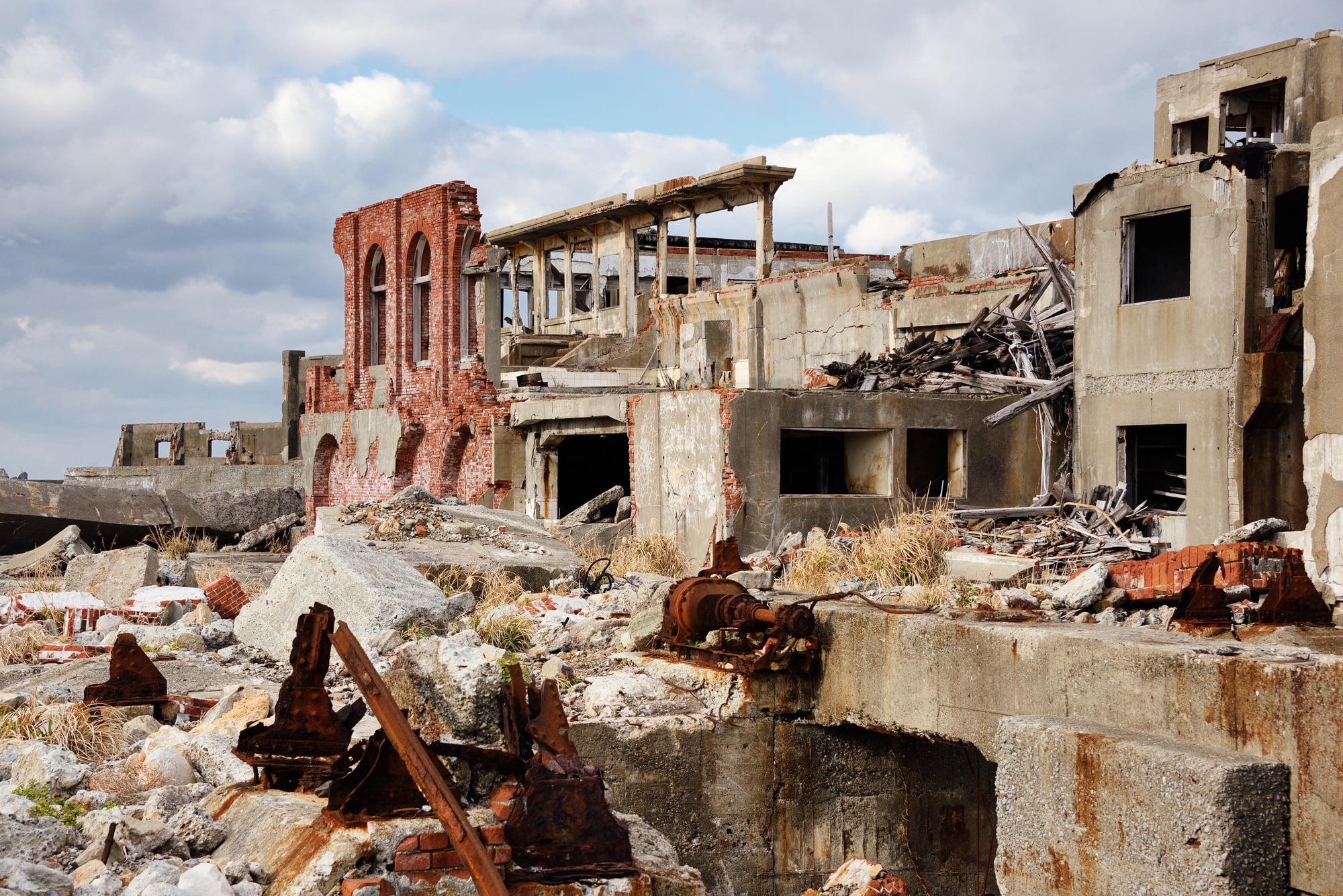
The buildings weren’t designed to be beautiful — they were designed to be functional, efficient, practical. But decay, oddly enough, has made them beautiful in a way their architects never intended.
The apartments are honeycombed with marks now, and seabirds nest where families once slept. Rust stains streak down the concrete like tears, and every typhoon season strips away another layer of human intention.
What remains isn’t exactly ruins — it’s more like a preview of what all our concrete cities might look like given enough time and weather.
Ta Prohm, Cambodia
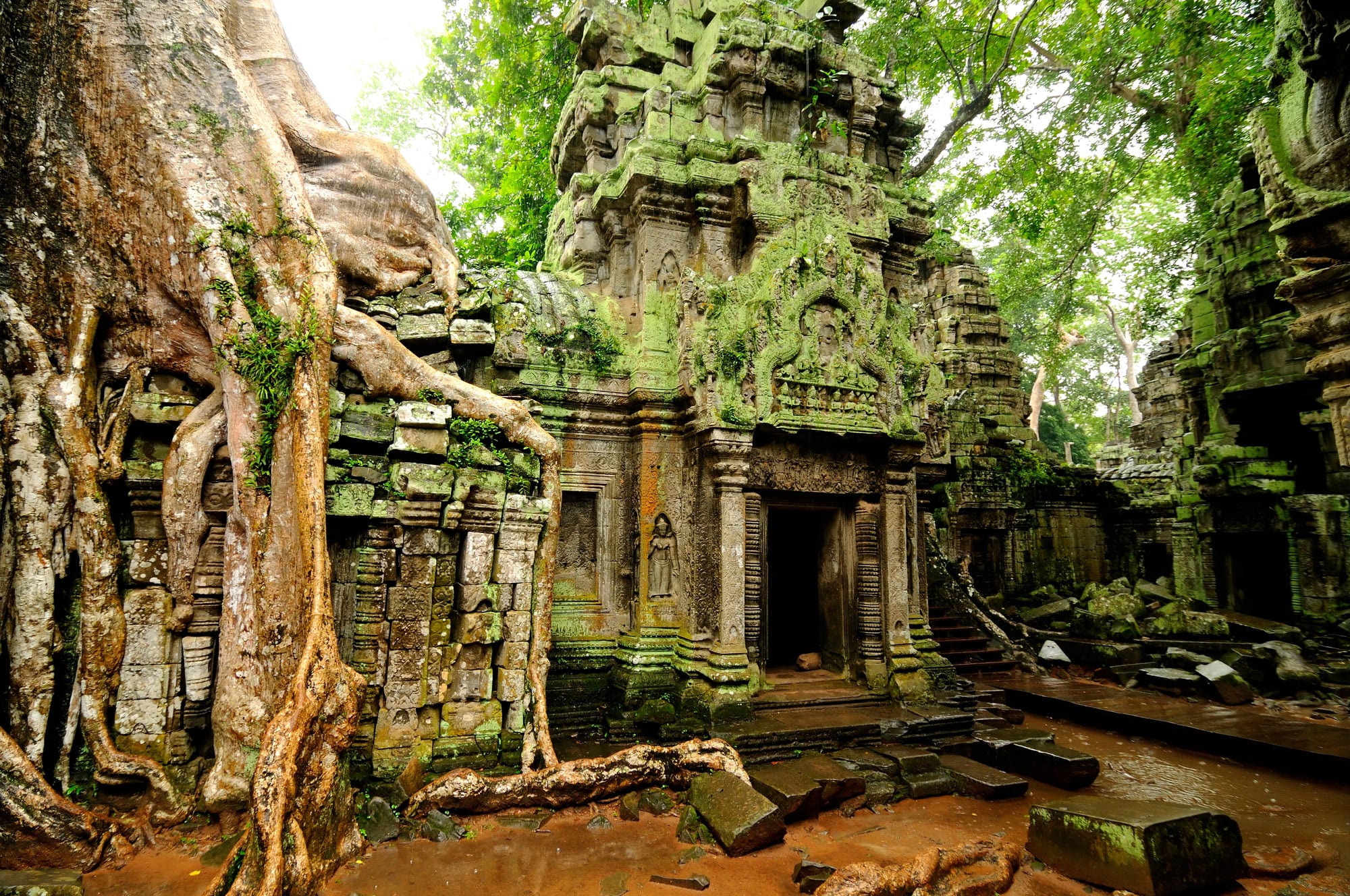
Ta Prohm represents the most dramatic merger between human architecture and natural reclamation anywhere in the world. The temple complex was built in the 12th century, and while other Angkor temples were maintained, Ta Prohm was left to the jungle — and the jungle accepted the invitation enthusiastically.
Silk-cotton trees and strangler figs don’t just grow on the temple; they’ve become structural elements. Their roots cascade over doorways like water frozen in stone, and their trunks have grown so large they now support sections of wall that would otherwise collapse.
Removing the trees would bring down the temple, and removing the temple would kill the trees. They’ve achieved something like symbiosis — human ambition and natural persistence locked in an embrace that benefits both.
Villa Epecuén, Argentina
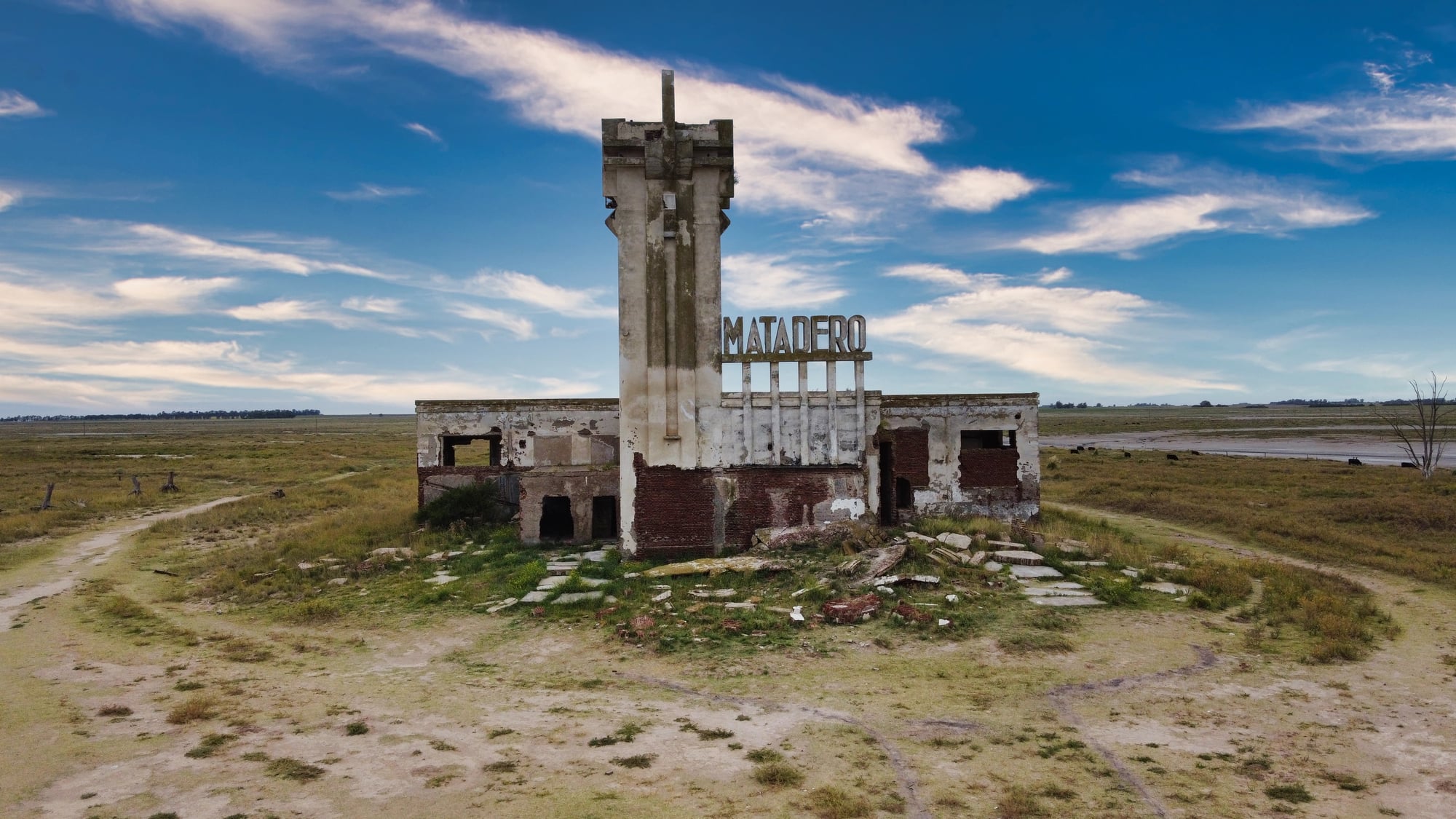
Villa Epecuén was a lakeside resort town until 1985, when the lake decided to reclaim it. The town spent 25 years underwater before the water receded, revealing a landscape that looked like the set of a post-apocalyptic film.
But nature doesn’t just destroy — it also heals. Grass grows through the twisted remains of cars now.
Salt-resistant plants have colonized the ruins. Birds nest in the skeletal remains of hotels where tourists once vacationed.
The town that was destroyed by water is now being rebuilt by life.
Centralia, Pennsylvania
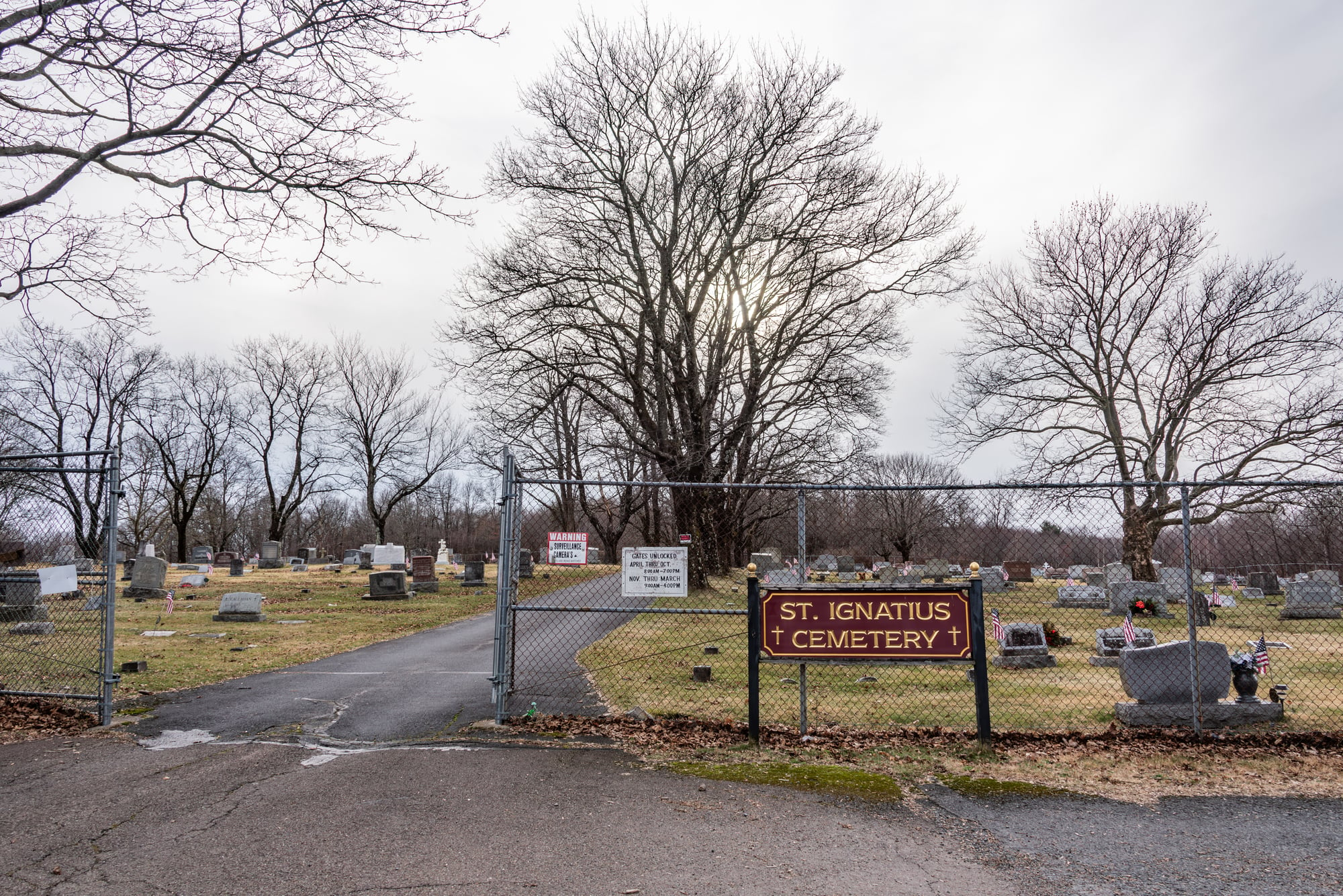
Centralia burns underground and has been burning since 1962. The coal seam fire that started accidentally shows no signs of stopping — estimates suggest it could burn for another 250 years.
Most people left when the ground started cracking and poisonous gases began seeping through basement floors. Nature has moved in despite the fire below.
Trees grow over the abandoned streets. Wildflowers bloom in yards where houses once stood.
The few remaining structures are draped in vines that seem indifferent to the fact that the ground beneath them is literally on fire. It’s a strange kind of reclamation — life flourishing on top of an ongoing disaster.
Varosha, Cyprus
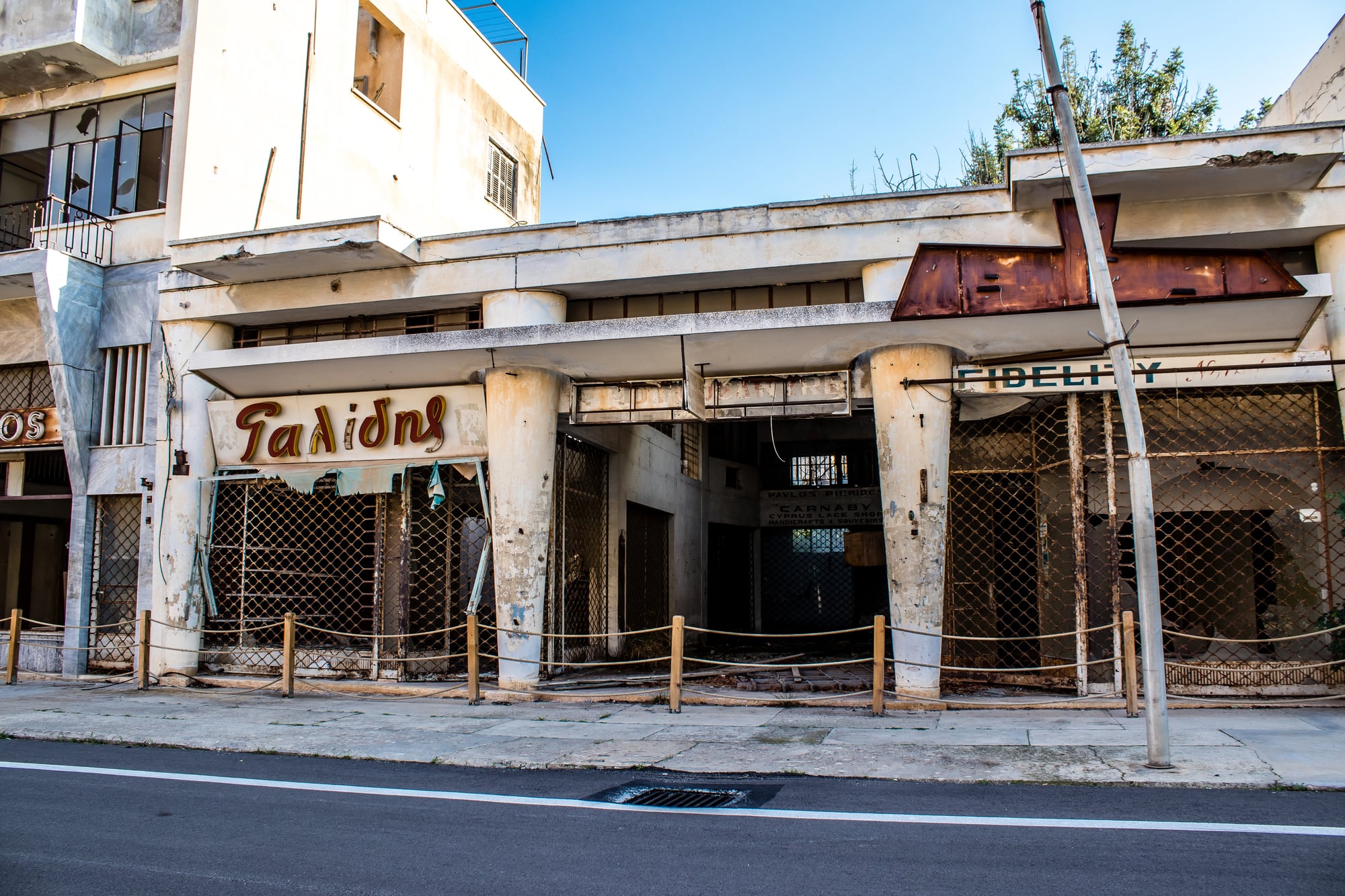
Varosha was a glamorous beach resort until 1974, when political conflict turned it into a ghost town overnight. The Turkish military fenced it off, and for nearly 50 years, nature has been the only resident allowed inside.
Sand dunes have buried the beachfront hotels. Wild plants grow through the lobbies where tourists once checked in.
Sea turtles nest on beaches that were once crowded with sunbathers. The Mediterranean coast has reclaimed one of its most developed stretches, turning luxury resorts back into wild coastline.
Maunsell Army Forts, England
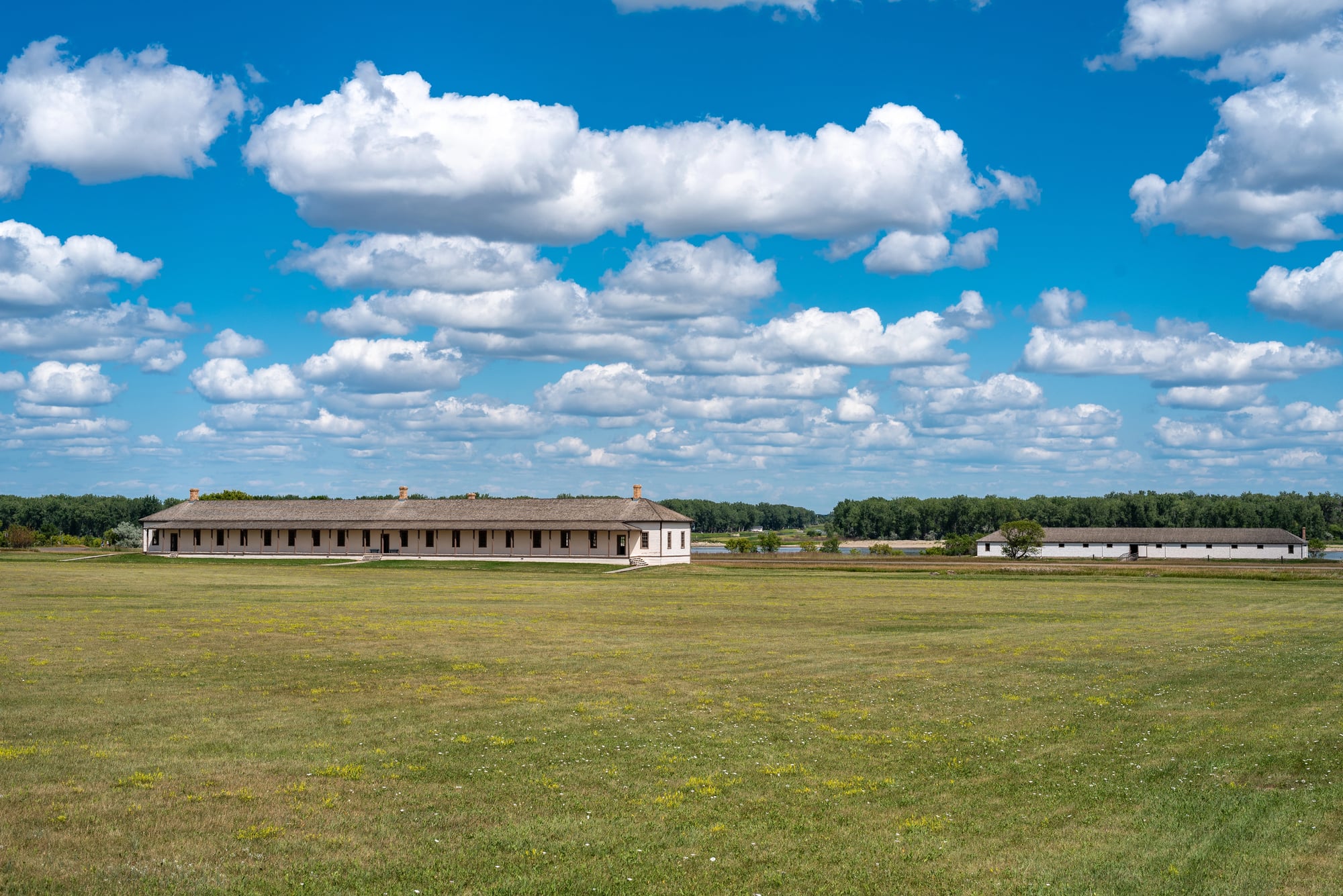
These concrete and steel towers were built in the Thames Estuary during World War II to defend against German aircraft. When the war ended, they were abandoned to the sea, rust, and whatever birds were brave enough to nest on platforms surrounded by nothing but water.
The forts look like alien tripods rising from the waves, but they’ve become accidental nature preserves. Seabirds nest in the gun turrets.
Seals haul out on the platforms. Marine life has colonized the legs that anchor the structures to the sea floor.
The military installations have become artificial reefs, supporting more life now than they ever protected during the war.
Wonderland Amusement Park, China
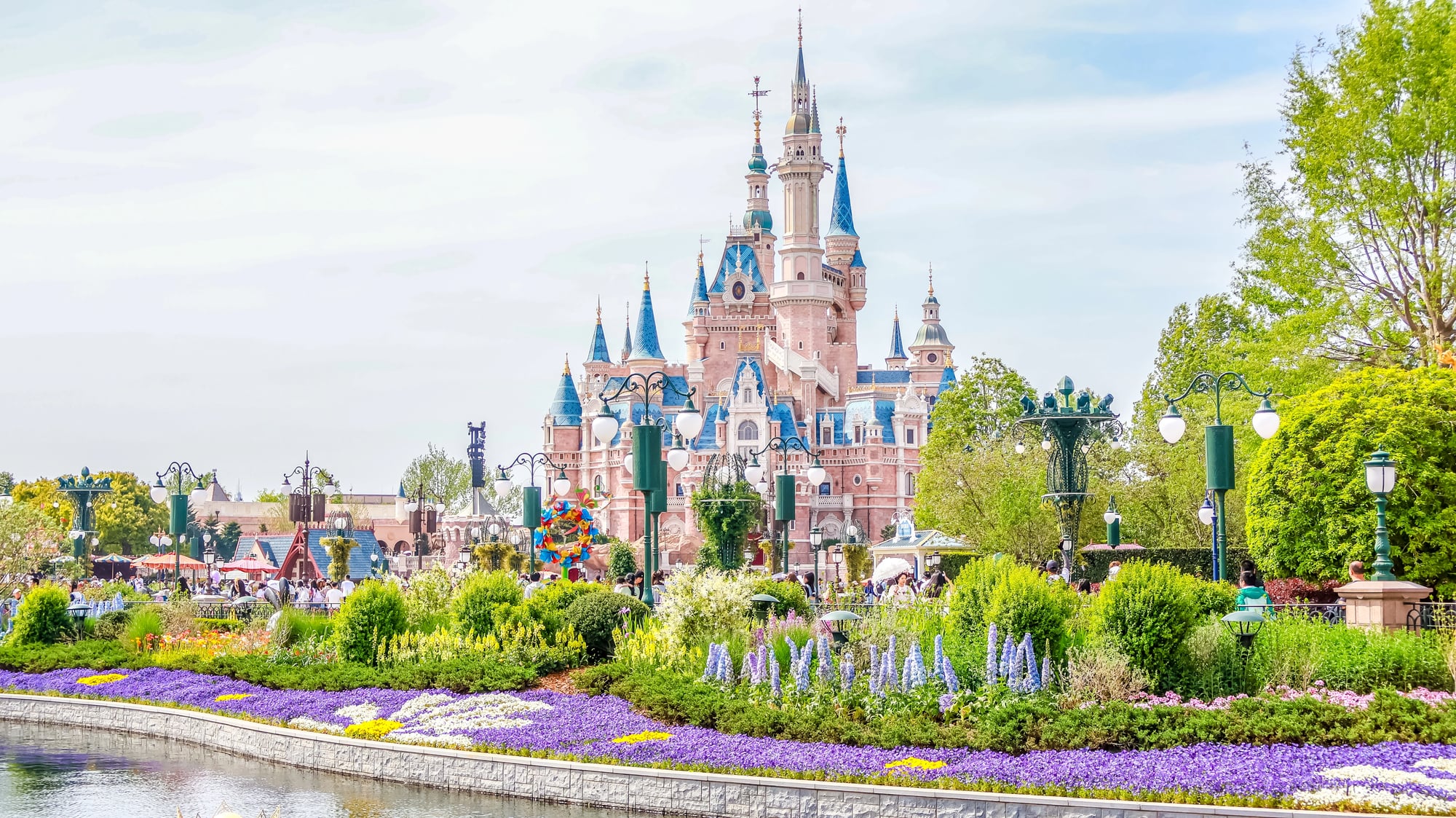
Beijing’s Wonderland Amusement Park was supposed to be the largest theme park in Asia. Construction stopped in 1998 due to financial problems, leaving behind a half-built fairy tale castle, incomplete roller coaster tracks, and the kind of dystopian playground that makes for haunting photographs.
Farmers moved in and planted corn between the would-be attractions. Weeds grew over the construction equipment.
The place intended to be filled with children’s laughter became a quiet agricultural area where the only sounds were wind through corn stalks and the occasional bird settling on rusted ride infrastructure. The park was finally demolished in 2013, but for 15 years it served as a monument to agricultural pragmatism triumphing over entertainment industry ambition.
Kejonuma Leisure Land, Japan
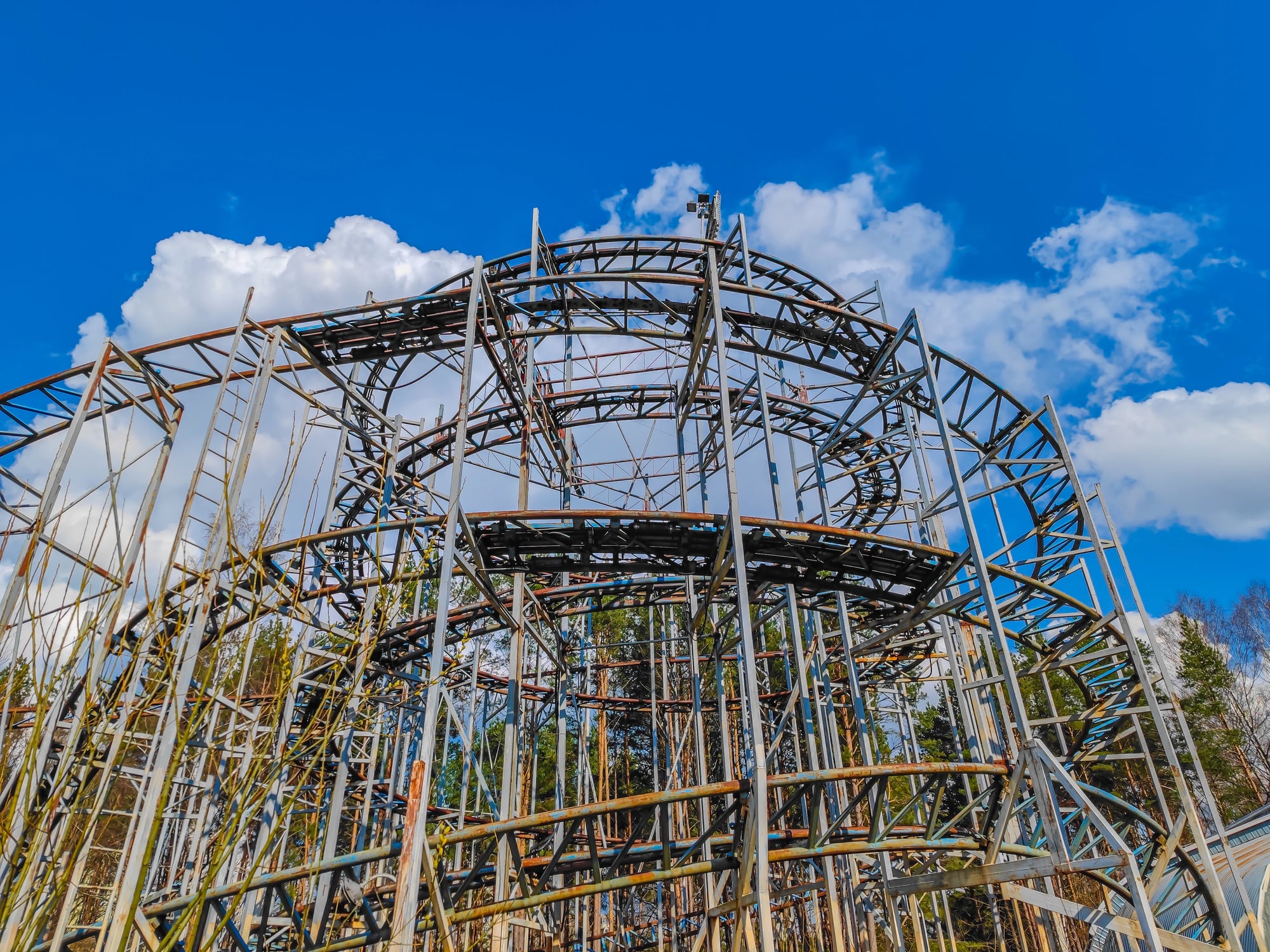
This small amusement park closed in 2000, and the forest wasted no time moving in. Roller coaster tracks disappear into tunnels of green leaves now.
The Ferris wheel is wrapped in vines like a giant garden trellis. Trees grow through the gift shop.
Moss covers the bumper cars. The place designed to be bright and loud and full of screaming children has become almost cathedral-quiet, with shafts of sunlight filtering through leaves that have grown over what used to be open sky.
Ross Island, India
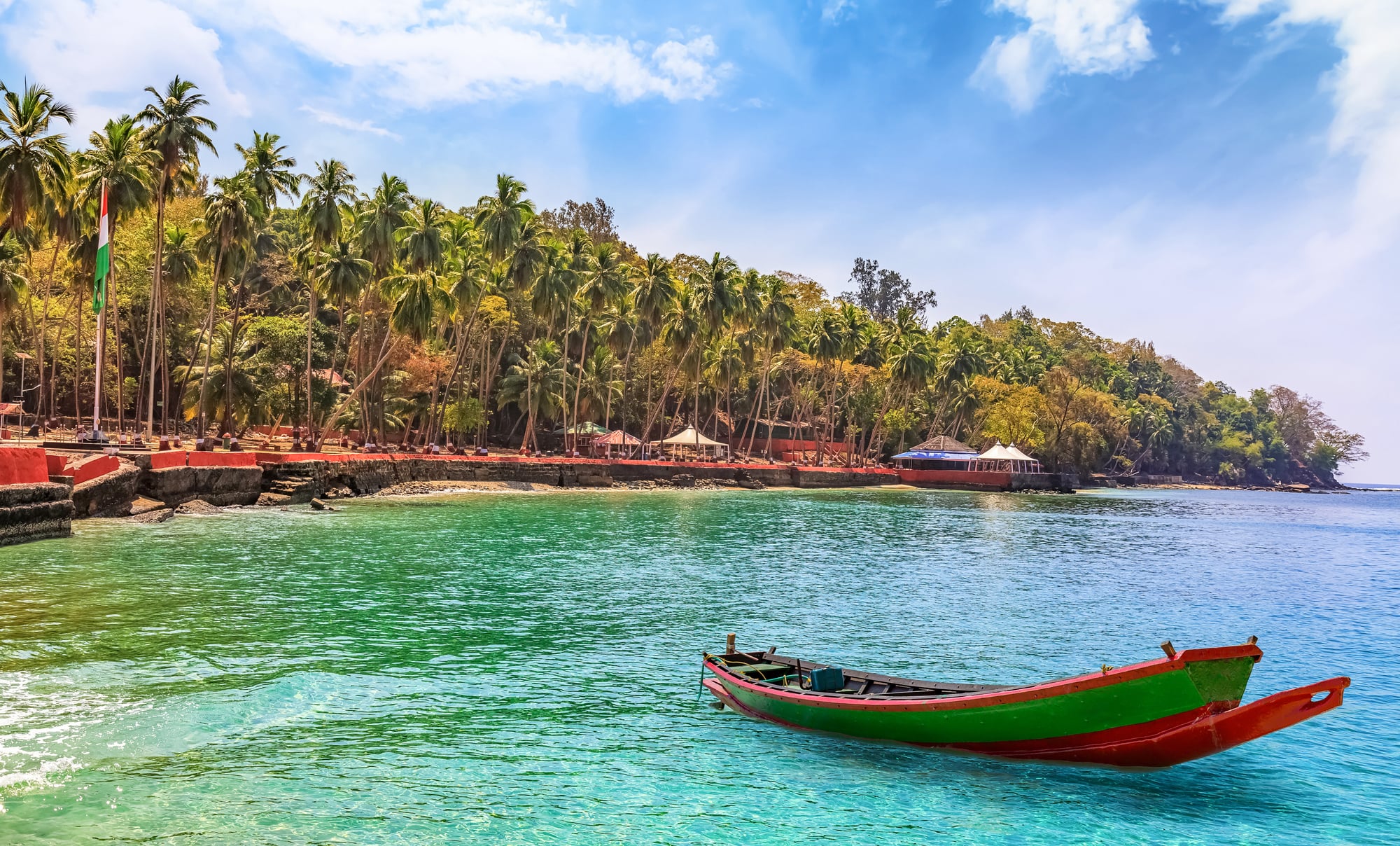
Ross Island was the British administrative headquarters for the Andaman Islands until an earthquake in 1941 convinced everyone to relocate. The jungle, which had been carefully kept at bay during colonial occupation, moved back in immediately.
Banyan trees grow through the chief commissioner’s house now. Roots cascade through windows like green waterfalls.
The island’s deer population has flourished without human interference, and peacocks roam freely through what were once formal gardens. The British built Ross Island to be a “Paris of the East,” but the jungle has turned it into something far more interesting.
Six Flags Jazzland, New Orleans
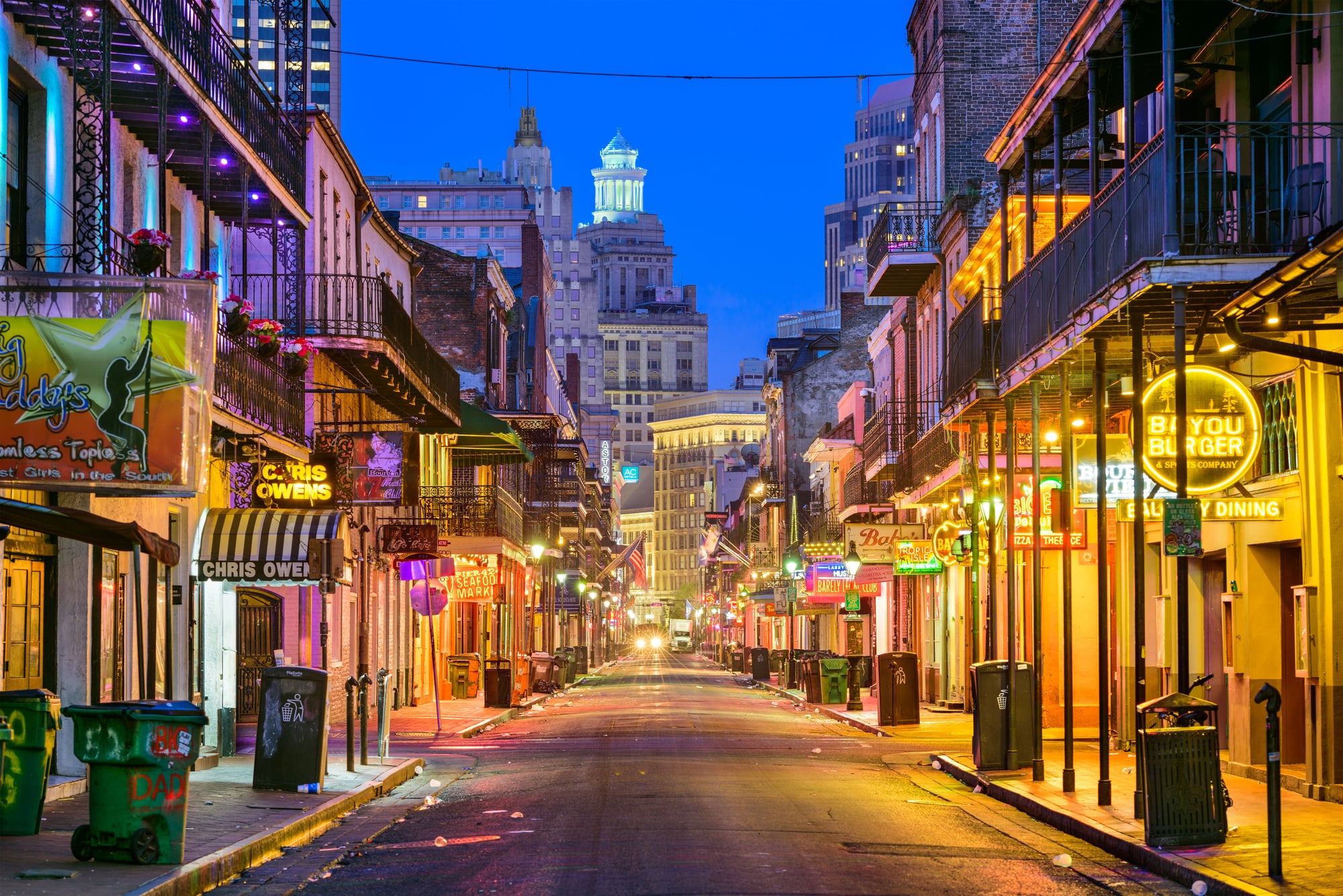
Hurricane Katrina shut down Jazzland in 2005, and the Louisiana wetlands began their reclamation immediately. The park sits in several feet of water part of the year, and when the water recedes, it leaves behind layers of silt and seeds that turn the midway into a swamp garden.
Alligators sun themselves on the log flume tracks. Water birds nest in the Ferris wheel.
Cypress trees push through the asphalt, and Spanish moss drapes the roller coaster like party decorations left over from a celebration that ended decades ago. The park that was built on wetlands has returned to being wetlands — just wetlands with some interesting metal sculptures rising from the marsh.
Michigan Central Station, Detroit
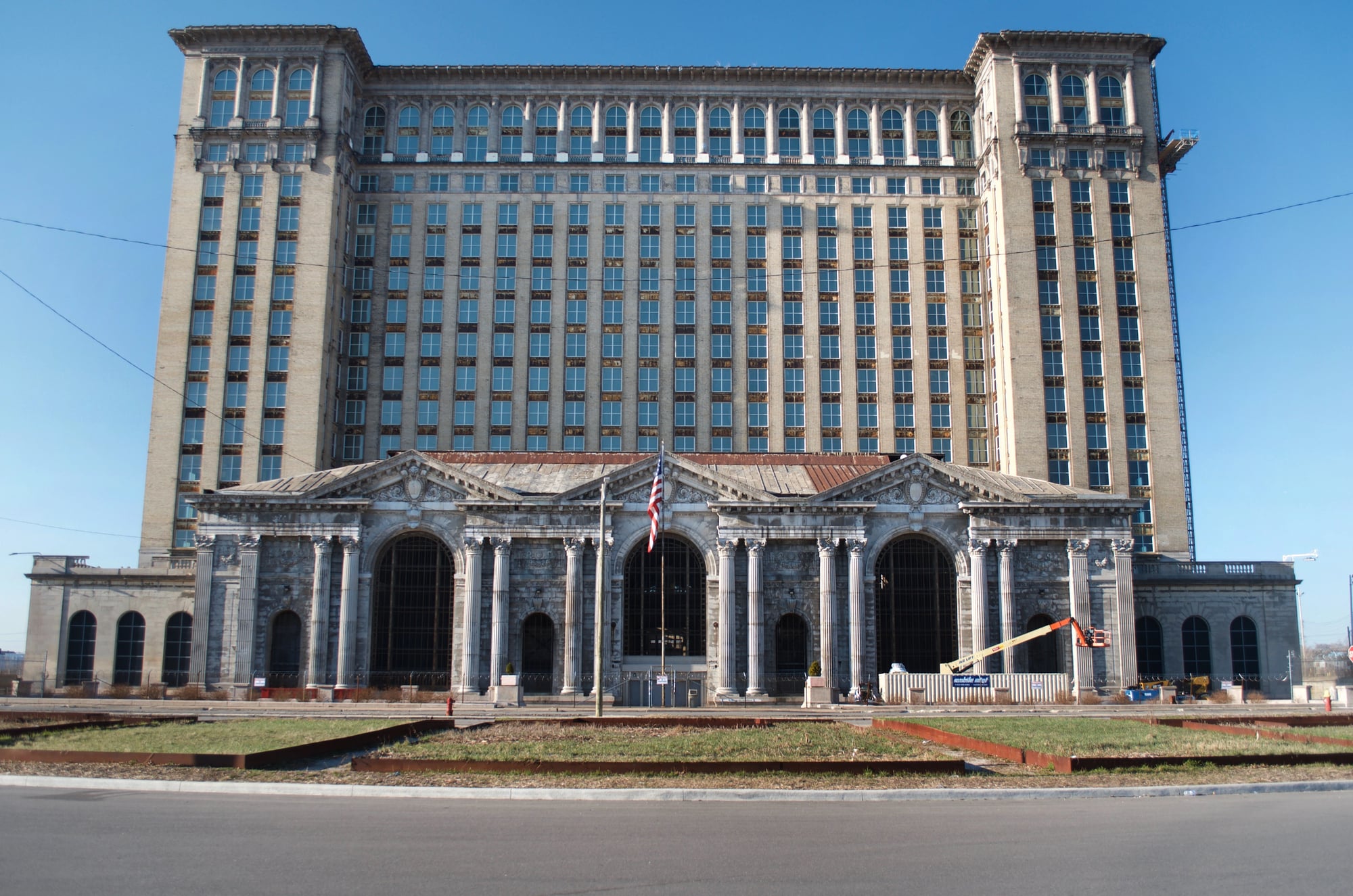
Detroit’s train station was once a cathedral to American mobility — 18 stories of marble and granite designed to handle 200 trains daily. When train travel declined, so did the station, until it was finally abandoned in 1988.
Trees grew on the upper floors. Pigeons nested in the grand waiting room.
Graffiti artists turned the vast empty spaces into an underground gallery, but nature provided the frame — ivy climbing the marble columns, grass growing through cracks in the terrazzo floors, rain washing through broken windows to create pools that reflected light like the station’s original chandeliers never did.
Oradour-Sur-Glane, France
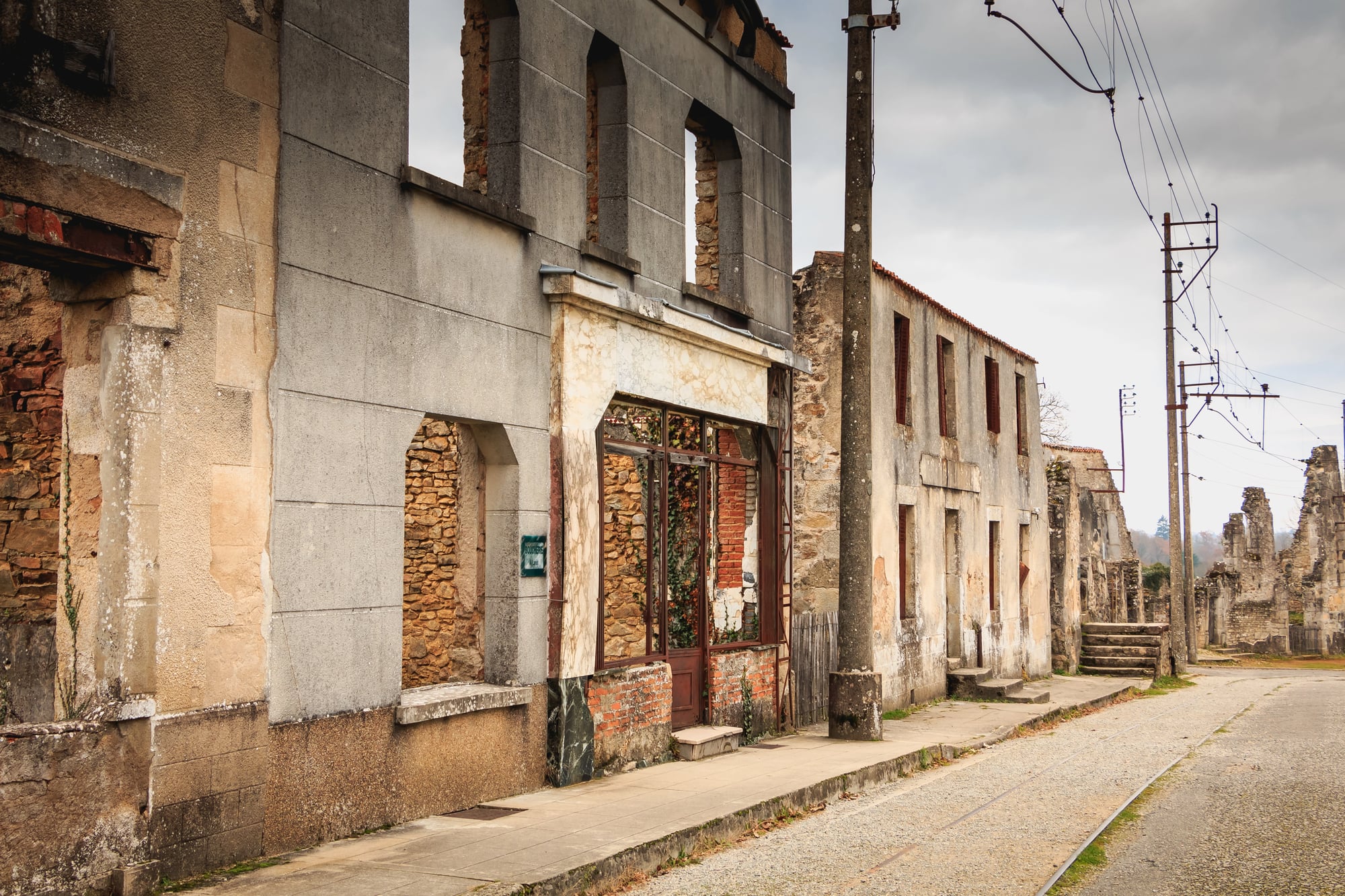
Oradour-sur-Glane was destroyed during World War II and left as a memorial. The French government decided the ruins should remain exactly as they were found — a decision that meant nature would become part of the memorial.
Moss grows on the stone walls now. Wildflowers bloom in what were once family gardens.
Trees shade the empty streets where people once walked to market or school or church. The village has become a place where history and nature coexist quietly, where the weight of human tragedy is softened, but not erased, by the patient work of grass and time.
Humberstone, Chile
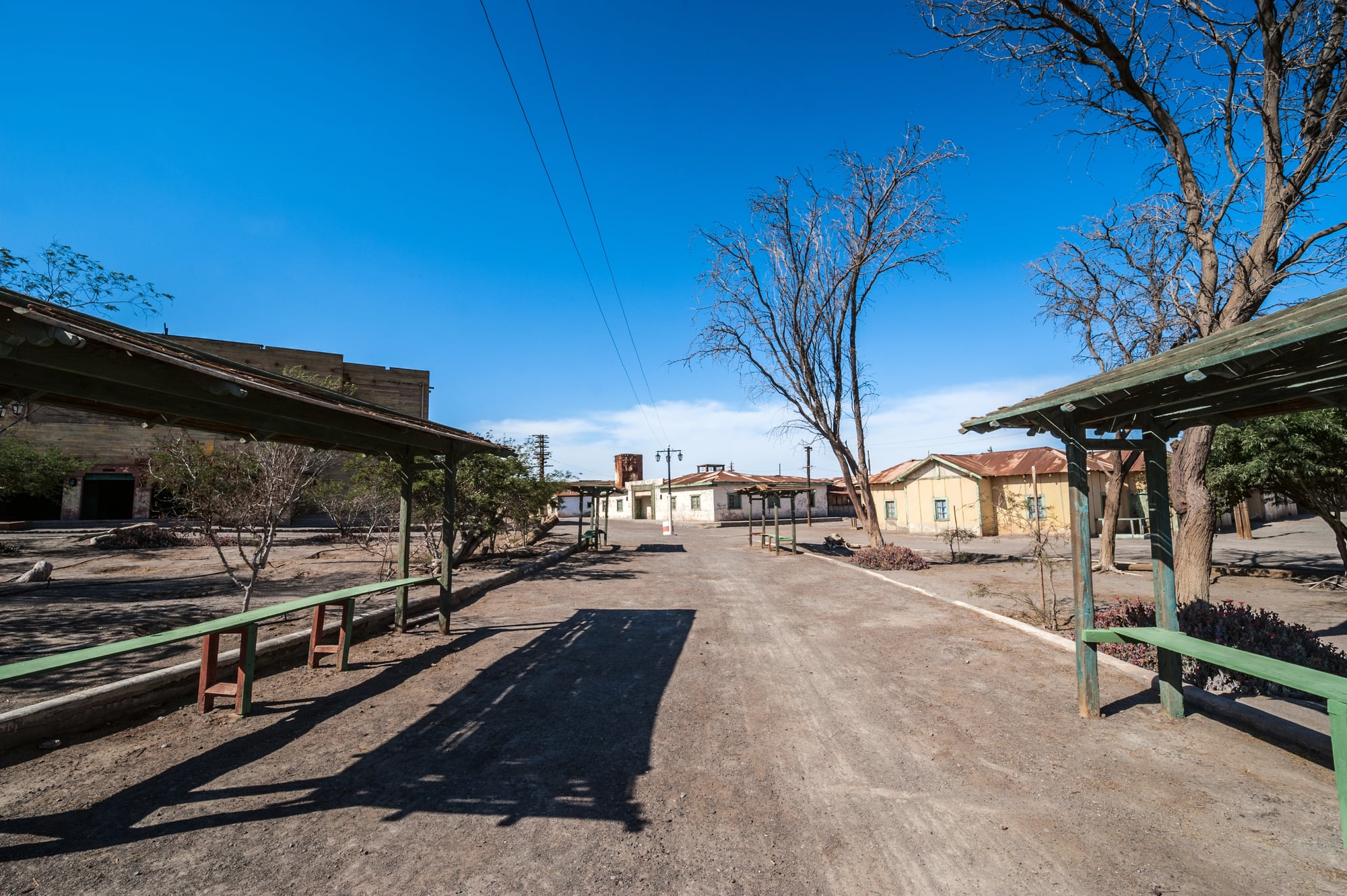
Humberstone was a saltpeter mining town in the Atacama Desert until synthetic fertilizers made natural saltpeter obsolete. The town was abandoned in 1960, and you might think the desert would be harsh on the remaining buildings — but desert preservation is surprisingly gentle.
The wooden structures remain largely intact, but they’re slowly being buried by sand and claimed by the few hardy plants that can survive in the Atacama. It’s a different kind of reclamation — less dramatic than jungle vines, more like the land simply accepting the buildings back into itself, grain by grain.
Spreepark, Germany
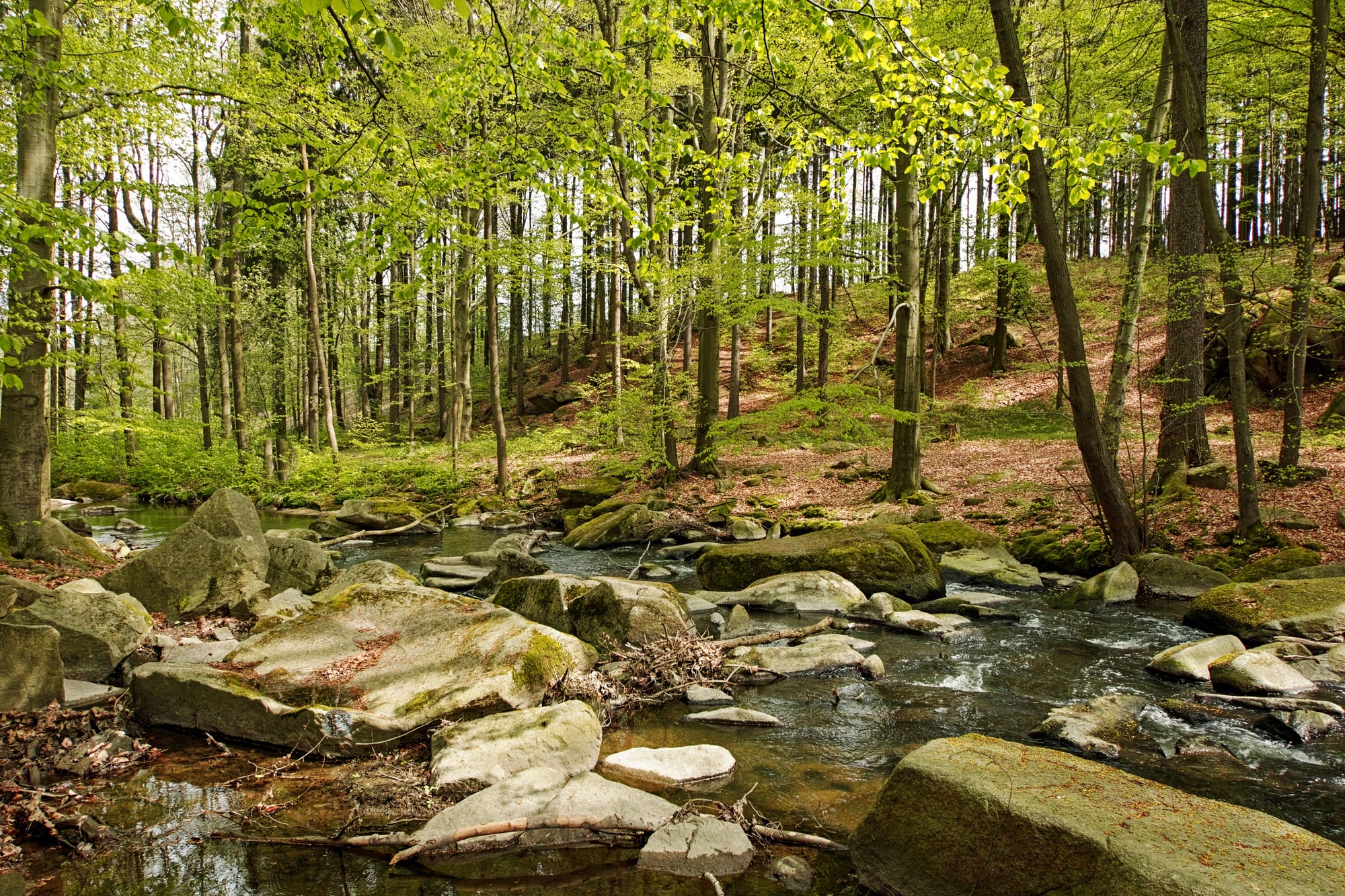
Spreepark was East Germany’s only amusement park, and after reunification, it struggled to find its place in the new economic reality. The park closed in 2001, and the Spree Forest moved in.
Deer graze where children once rode carousel horses. The Ferris wheel is wrapped in vines.
Trees grow through the roller coaster tracks, and wild boar root through what used to be the food court. The park that was built to provide joy and escape has become a place of actual escape — for wildlife that’s turned the abandoned attractions into an accidental nature preserve.
Garnet Ghost Town, Montana
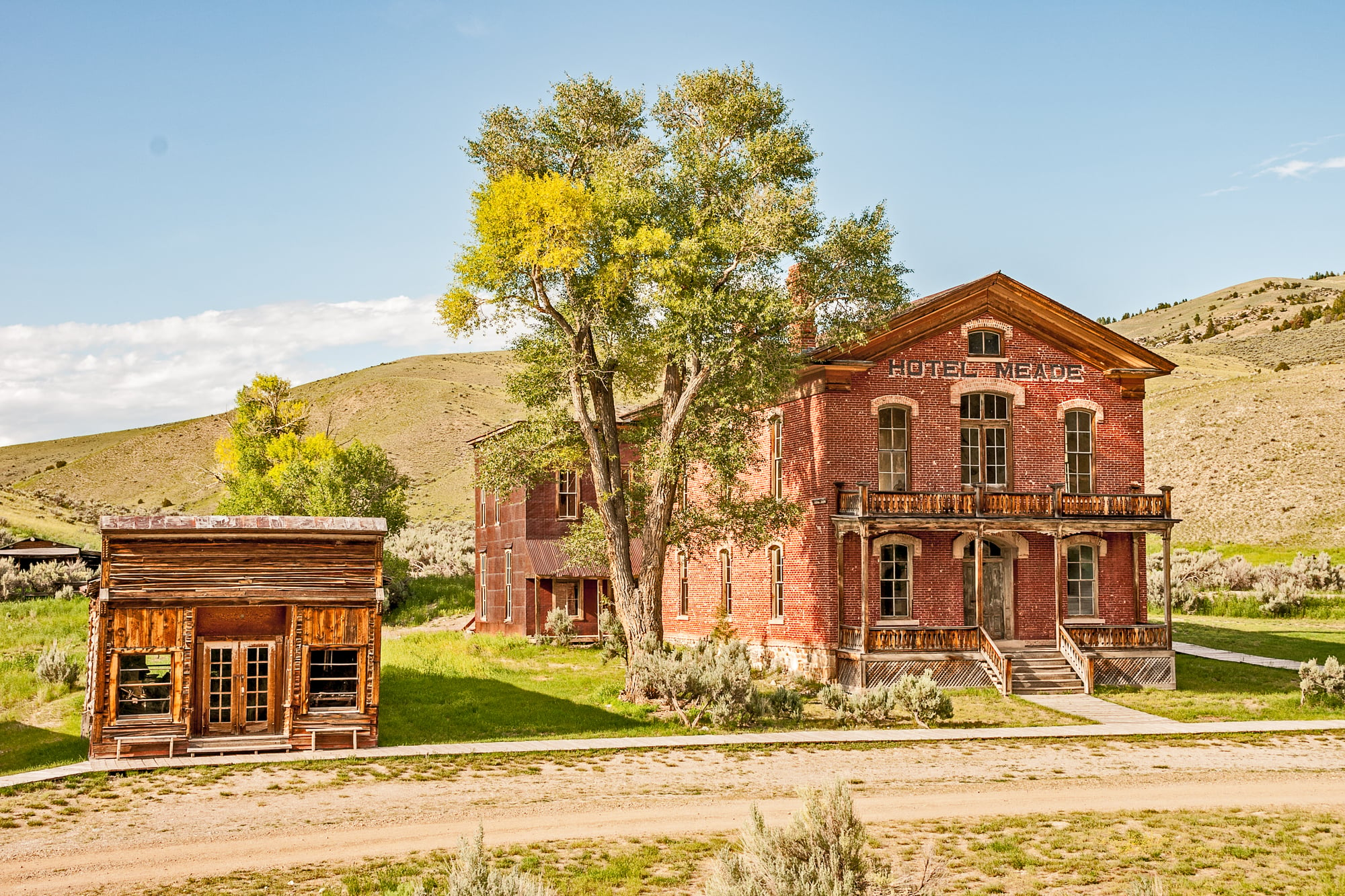
Garnet was a gold mining town until the gold ran out in the 1940s. The Montana wilderness has been patient in its reclamation — winters here are long and hard, so the work of taking back the town happens slowly, mostly during the brief summers.
Pine trees grow through cabin floors. Bears have taken over some of the buildings as winter dens.
The main street is carpeted with pine needles, and elk trails cross where wagon ruts once marked the path to the general store. The town built to extract wealth from the mountains has returned to being simply part of the mountains.
Fort De La Chartreuse, Belgium
This 19th-century fortress was abandoned after World War I, and the Ardennes Forest has spent the last century transforming it from a military installation into something that looks more like a fairy tale castle — if fairy tale castles were designed by military engineers and then decorated by moss, ivy, and hundred-year-old trees.
The gun emplacements are filled with ferns now. Owls nest in the ammunition storage rooms.
Tree roots push through the thick fortress walls, proving that given enough time, even the most solid military engineering is no match for the slow, persistent work of growing things.
Craco, Italy
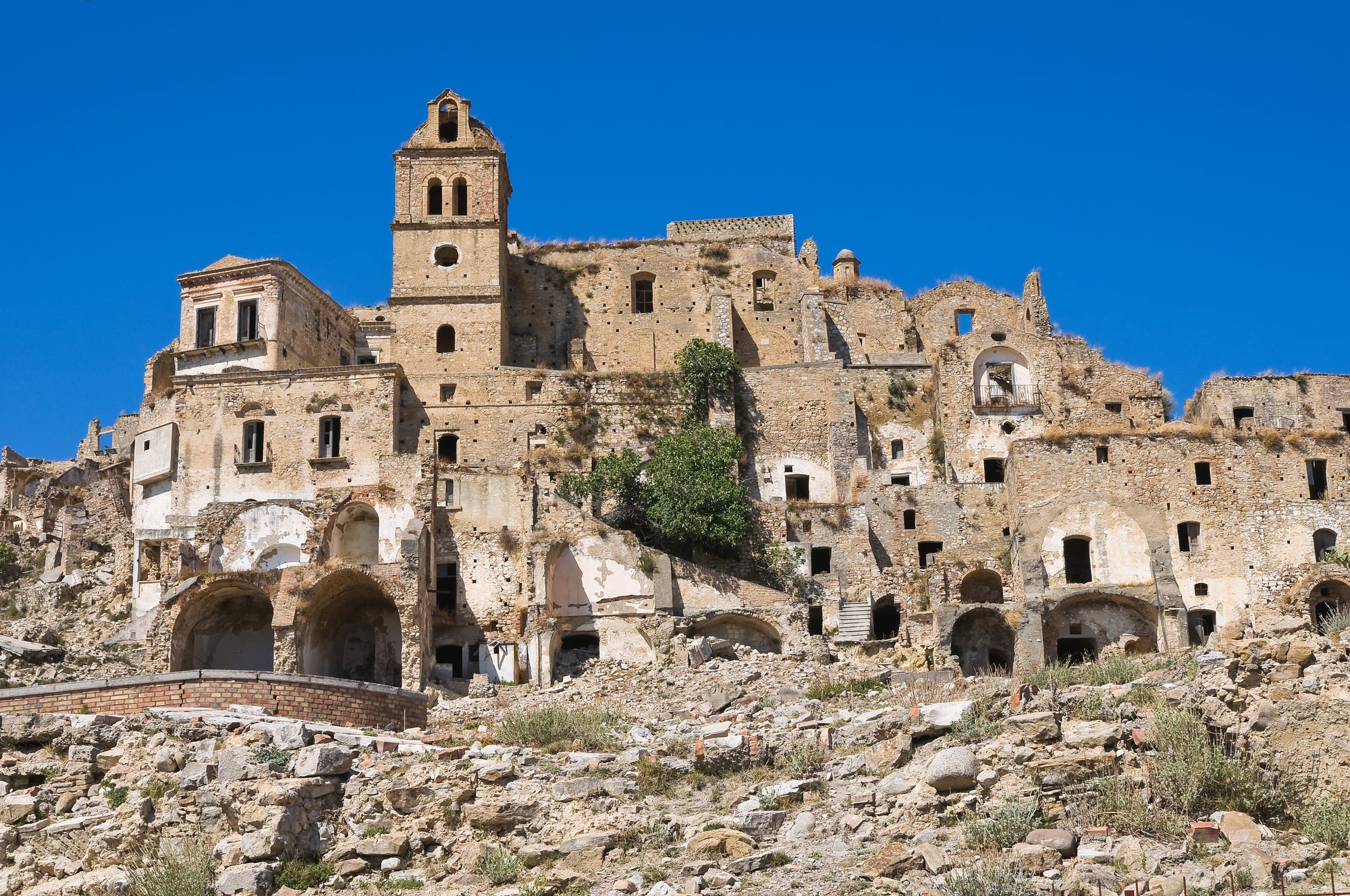
Craco sits on a hilltop in southern Italy, a medieval town that was gradually abandoned due to earthquakes, landslides, and the general human tendency to move somewhere more stable when the ground keeps shifting under your feet.
The empty stone buildings blend into the rocky landscape now, softened by wild herbs and grasses that grow between the ancient stones. Lizards sun themselves on walls that once sheltered families, and birds nest in houses where children once played.
The town hasn’t been destroyed so much as absorbed back into the hillside it was built on.
Kayaköy, Turkey
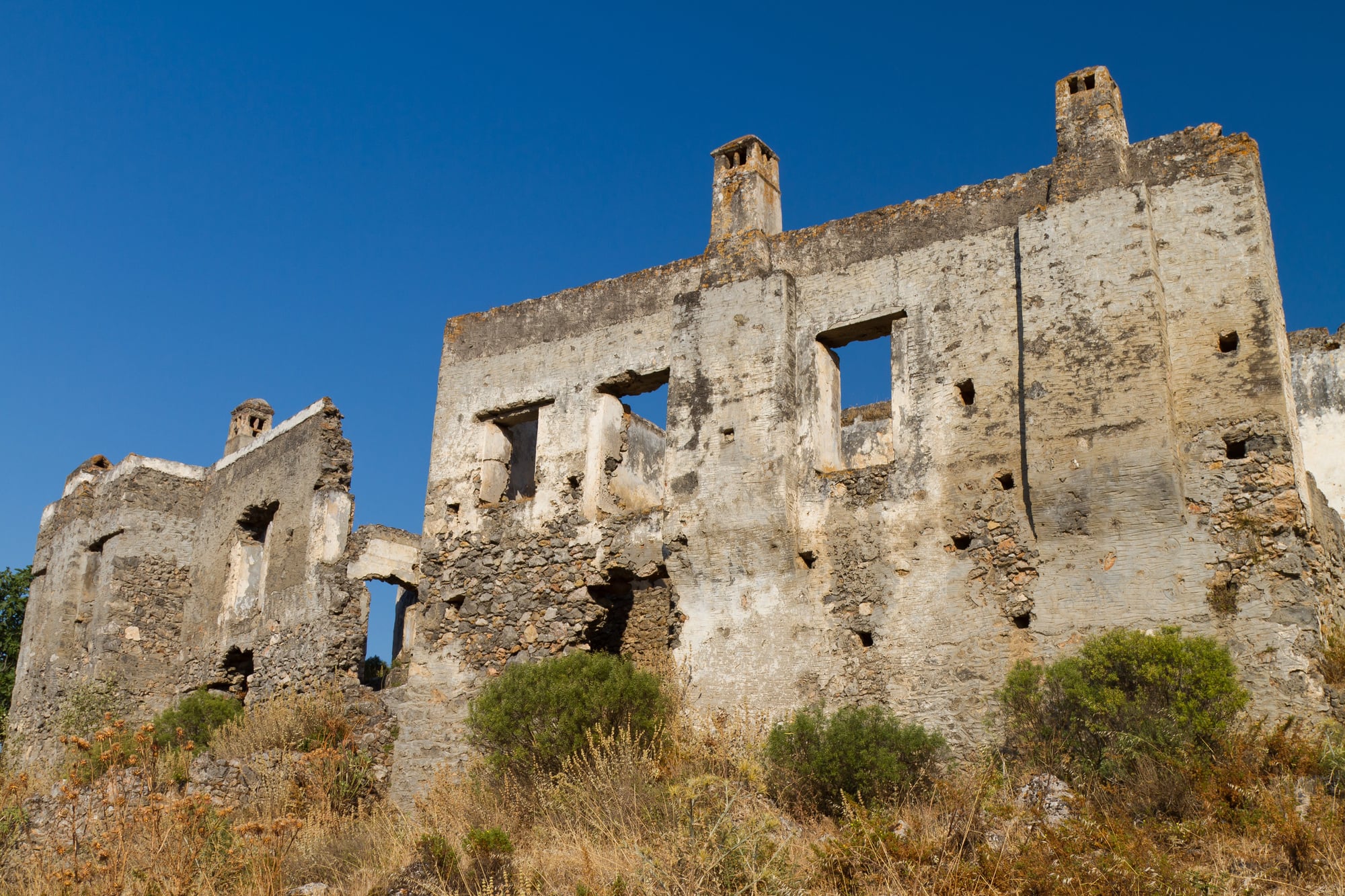
Kayaköy was a thriving Greek Orthodox town until 1923, when population exchanges left it suddenly empty. The stone houses remain, but they’ve been slowly softened by Mediterranean vegetation and the kind of gentle decay that happens when humans stop fighting entropy.
Wild fig trees grow through kitchen windows. Grapevines climb church walls.
The terraced fields that once fed the town’s 2,000 residents have returned to wild meadow, and the only sounds are wind through olive trees and the bells of goats that wander freely through houses where families once gathered for dinner.
Bokor Hill Station, Cambodia
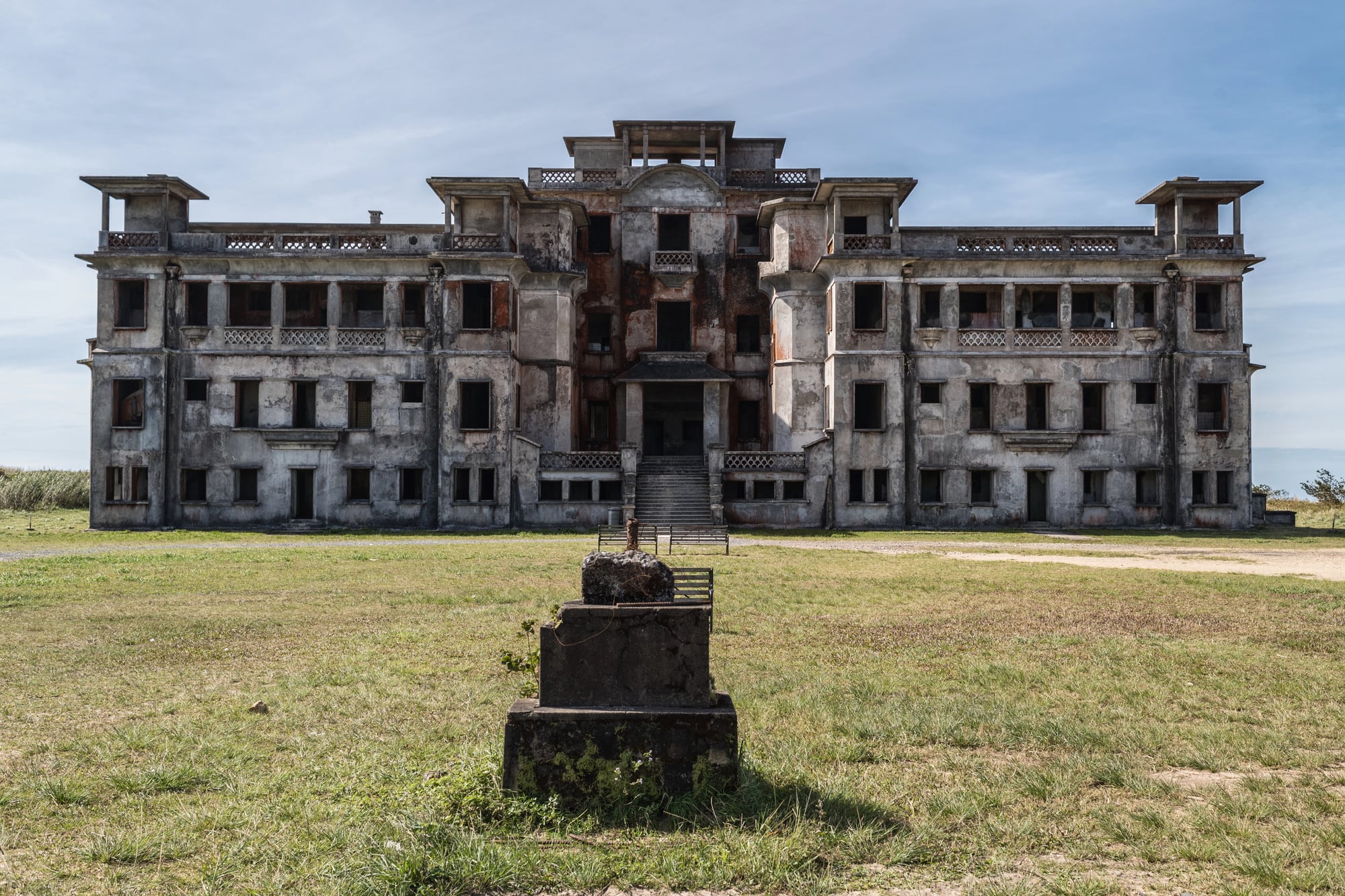
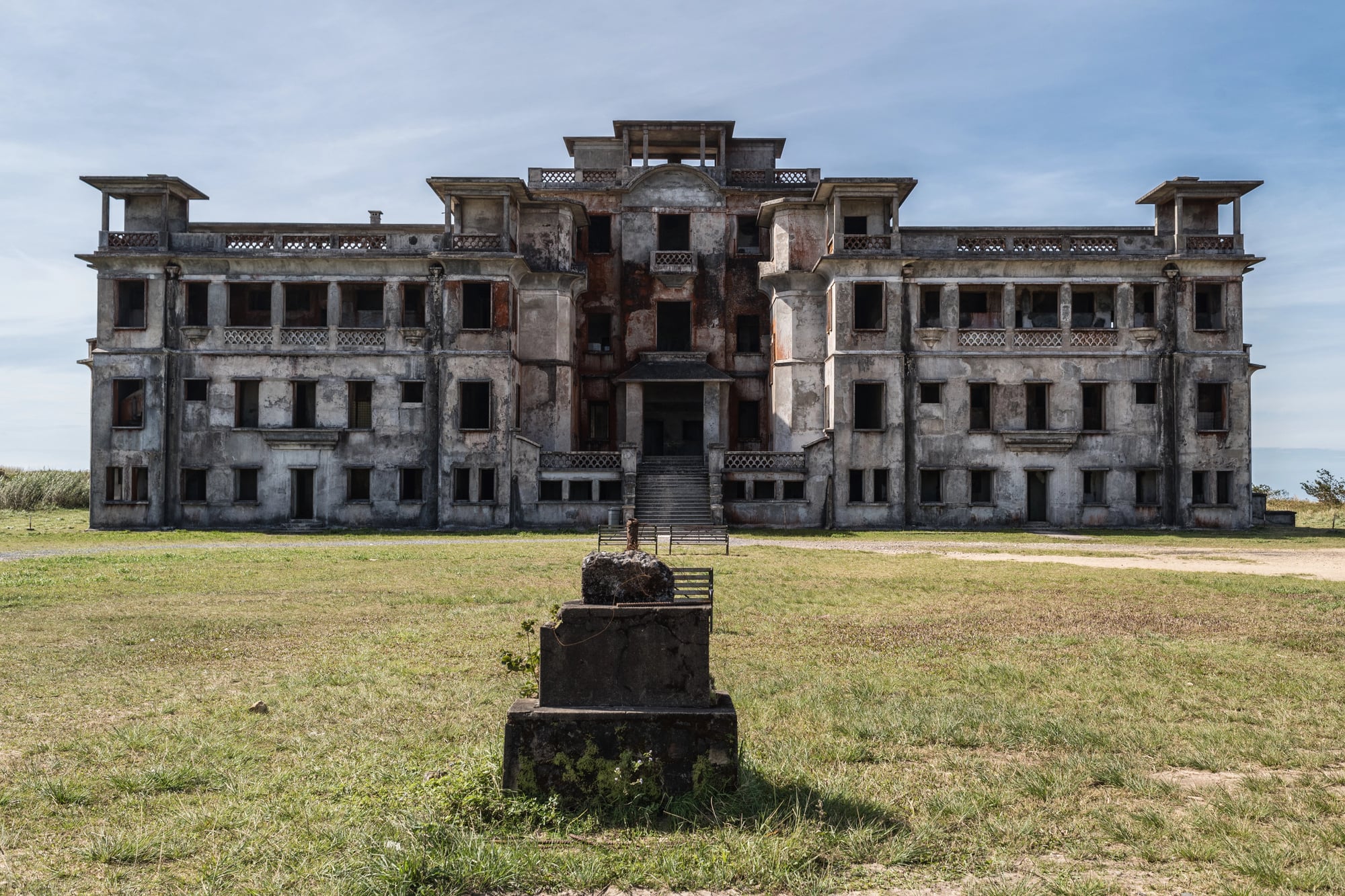
Built by the French as a mountain retreat in the 1920s, Bokor was abandoned during various conflicts and left to the Cambodian jungle. The tropical climate is particularly aggressive in its reclamation work — everything here grows fast and thick and with the kind of enthusiasm that can swallow a building in a decade.
The old casino looks like a temple now, its art deco lines softened by cascading vines and trees that have grown through the roof. Monkeys play where French colonists once gambled, and the mountain mists that were once a selling point for the resort now add an appropriately mysterious atmosphere to the ruins.
When Silence Returns
These abandoned places share something beyond their surrender to natural forces. They represent a kind of peace treaty between human ambition and the patience of the living world.
The vines that climb through windows and the trees that push through roofs aren’t acts of destruction — they’re acts of integration, folding human creations back into the larger story that was interrupted, but never really stopped.
Walking through these places, you realize how temporary our mark on the world actually is, and how quickly nature can erase what seemed permanent. But there’s comfort in that knowledge, too.
Long after our cities crumble and our most ambitious projects are forgotten, life will continue its quiet, persistent work of growing, blooming, and finding new ways to thrive in whatever landscape we leave behind.
More from Go2Tutors!

- The Romanov Crown Jewels and Their Tragic Fate
- 13 Historical Mysteries That Science Still Can’t Solve
- Famous Hoaxes That Fooled the World for Years
- 15 Child Stars with Tragic Adult Lives
- 16 Famous Jewelry Pieces in History
Like Go2Tutors’s content? Follow us on MSN.



