22 Vintage Slide Rules That Science Collectors Actually Chase
There’s something magnetic about the precision of analog calculation. Before calculators shrunk mathematics into plastic shells, slide rules demanded that their users understand the underlying logic of every computation.
These instruments weren’t just tools—they were extensions of the mind, requiring an intimate knowledge of logarithms and mathematical relationships that modern devices hide behind digital screens. The hunt for vintage slide rules has transformed from casual antiquing into serious collecting.
Engineers who learned their craft on these instruments seek them out for nostalgia, while younger collectors appreciate the mechanical poetry of computation made visible. The rarest examples command prices that would have shocked the engineers who once carried them to work every day.
Keuffel & Esser Compensated Duplex Decitrig

This represents the pinnacle of American slide rule manufacturing. K&E’s compensated models addressed the expansion issues that plagued other makers, using brass backing strips to maintain accuracy across temperature changes.
The Duplex Decitrig configuration places scales on both sides of the slide, effectively doubling the instrument’s calculating power while maintaining the familiar 10-inch format.
Faber-Castell 2/83N
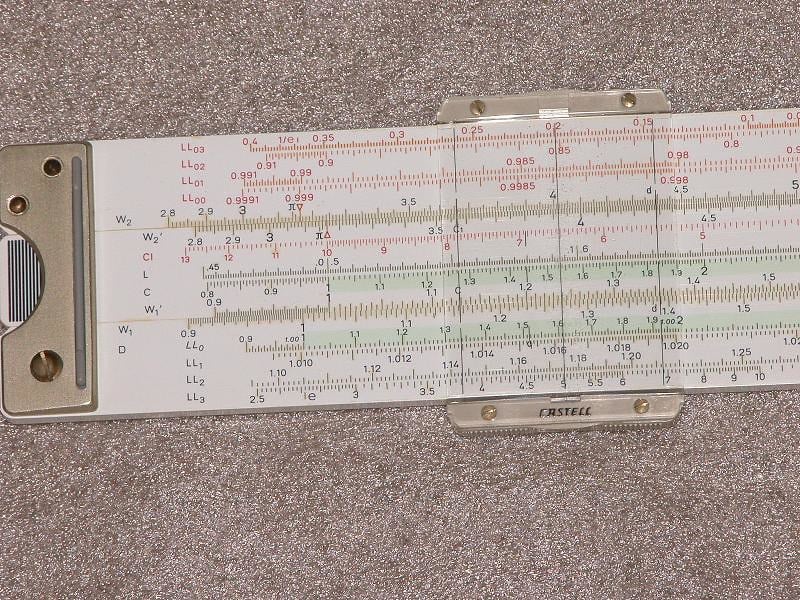
German engineering meets practical elegance in what many consider the finest general-purpose slide rule ever manufactured. The 2/83N (where the “N” indicates the later Novo-Biplex scales) combines Faber-Castell’s legendary build quality with a scale arrangement that handles everything from basic multiplication to complex trigonometric functions.
Collectors prize the smooth action of the cursor and the crisp printing that remains legible decades after manufacture.
Pickett N4-ES Yellow
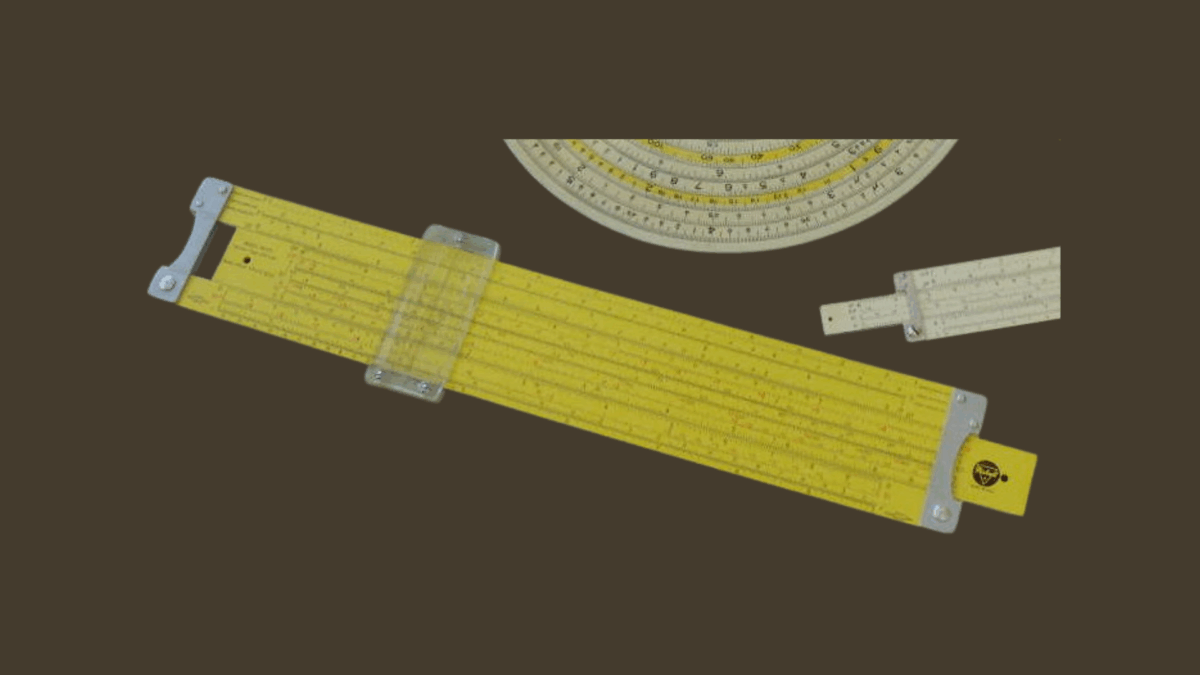
The space program’s calculating companion, and everyone knows it—which is exactly why serious collectors get excited when one surfaces in decent condition (because most got used hard, as they should have). NASA issued these aluminum beauties to engineers working on projects where precision mattered more than convenience, and the distinctive yellow color scheme became synonymous with aerospace calculation.
But here’s the thing about Pickett: they built them to last through rocket launches and office coffee spills alike.
Hemmi 153
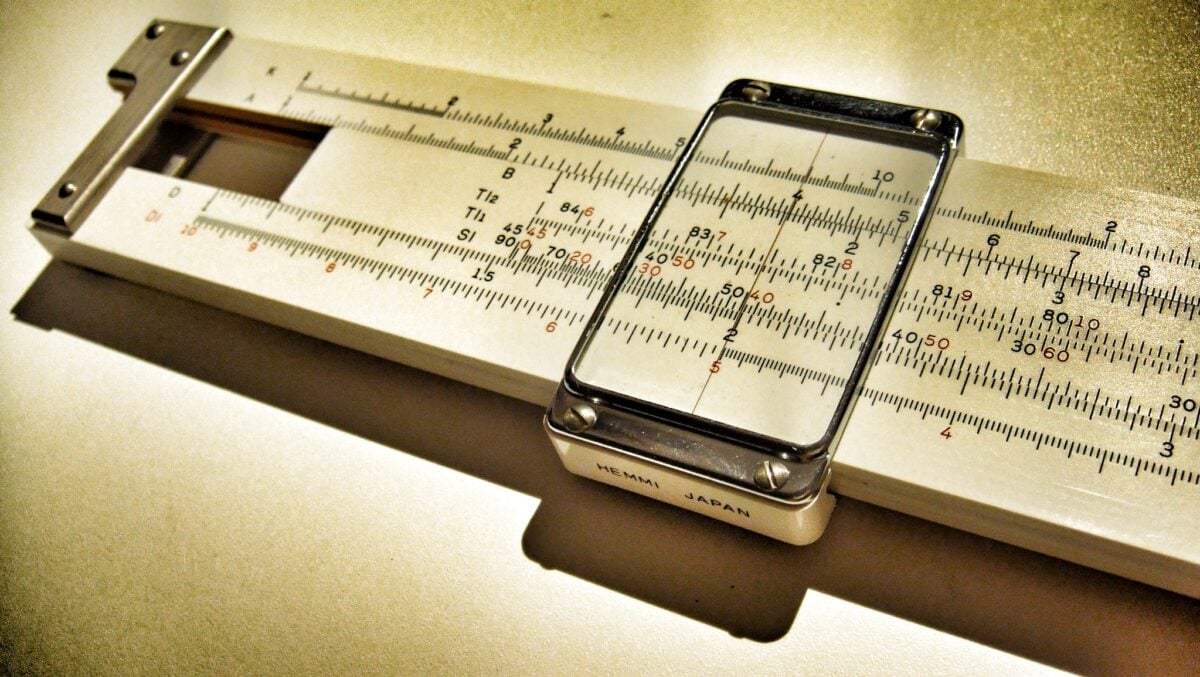
Japanese craftsmanship elevated the bamboo slide rule to an art form. Hemmi’s 153 model features scales printed with extraordinary precision on laminated bamboo that remain dimensionally stable across decades.
The cursor moves with a silky smoothness that plastic and metal manufacturers never quite matched, and the scale resolution allows calculations accurate to four significant figures.
Aristo 968
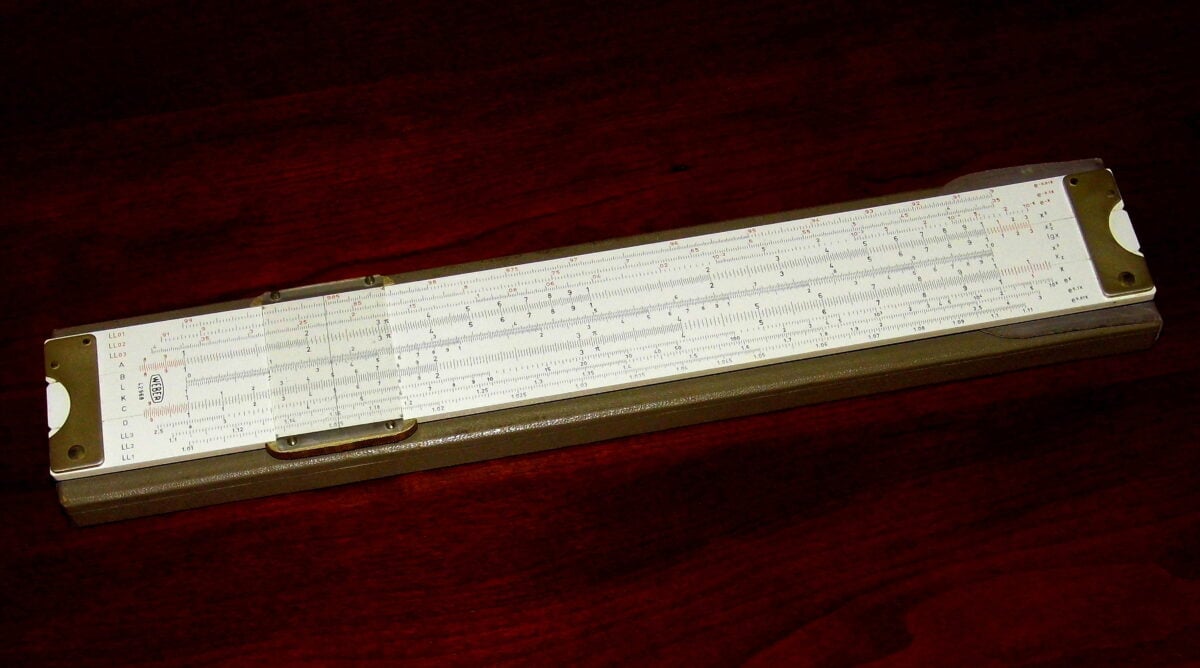
Austrian precision engineering in a compact package that somehow manages to feel substantial rather than cramped. The 968’s unusual scale arrangement reflects European mathematical traditions that prioritized certain calculation types over others, creating an instrument that feels foreign to American-trained engineers but reveals its logic through use.
And the leather case—when it survives—represents European craftsmanship from an era when even tool cases were built to outlast their owners.
Keuffel & Esser 4181-3 Log Log Duplex
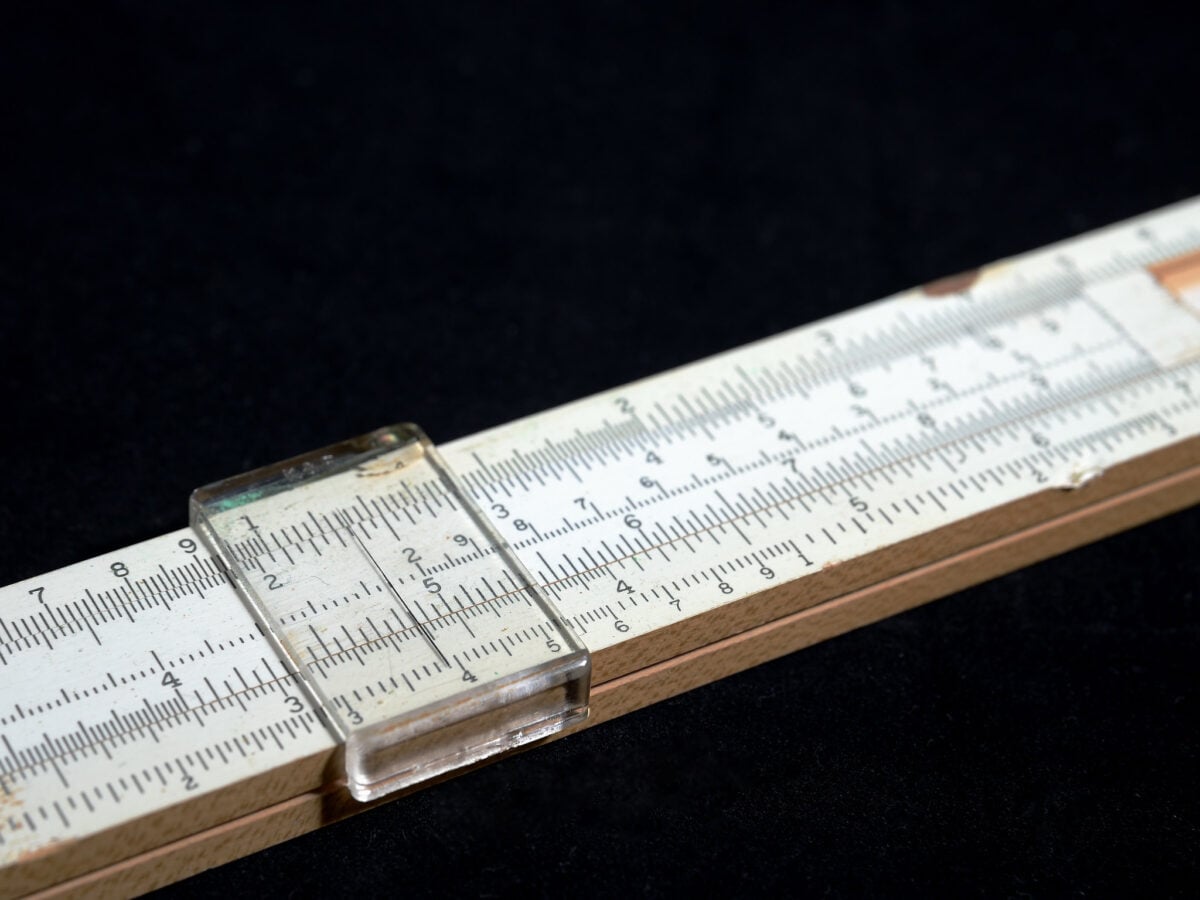
The logarithmic scales transform this from a multiplication machine into something approaching a mechanical computer. K&E’s 4181-3 handles exponential and power calculations with an elegance that makes modern calculators seem almost crude by comparison.
The duplex configuration doubles the available scales while maintaining the standard 10-inch length, creating an instrument dense with mathematical possibility.
Thornton P221
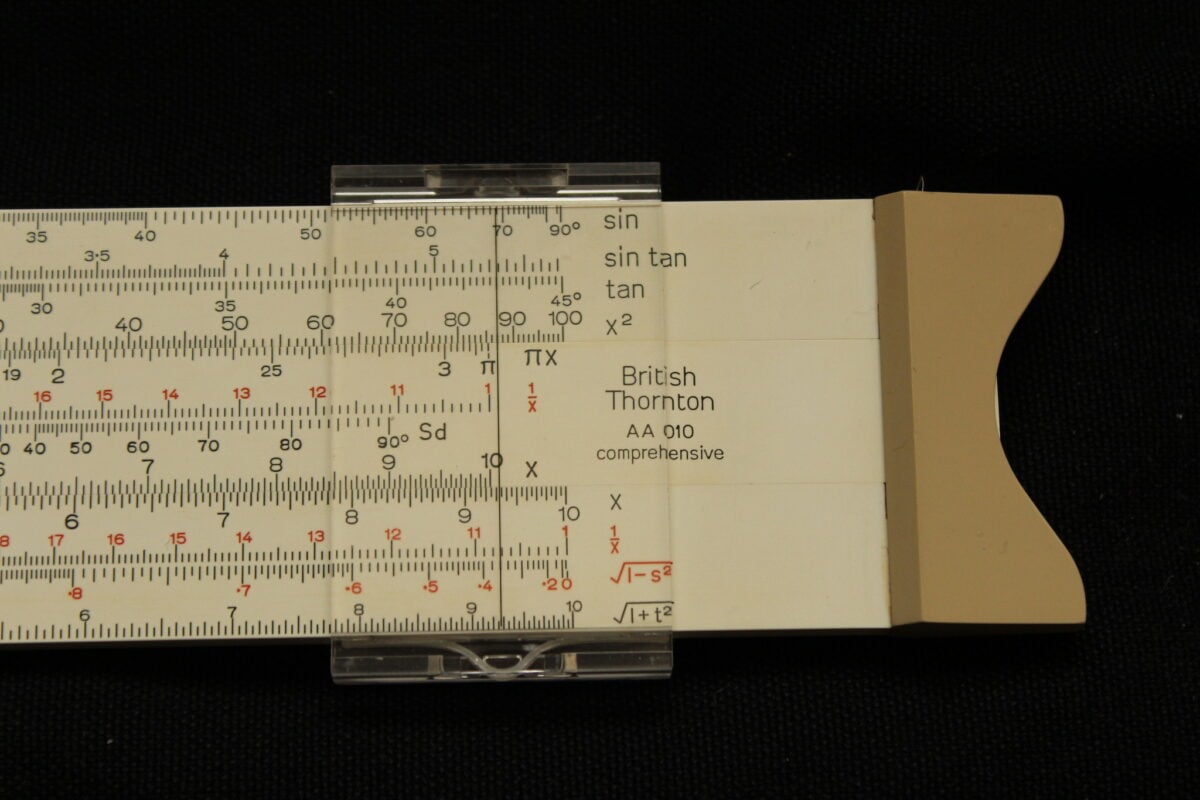
British slide rule manufacturing reached its zenith with instruments like the P221. Thornton’s approach emphasized durability over decoration, resulting in slide rules that survived decades of engineering use while maintaining their accuracy.
The scale selection reflects British engineering priorities of the mid-20th century, with particular attention to calculations common in mechanical and civil engineering.
Staedtler 544
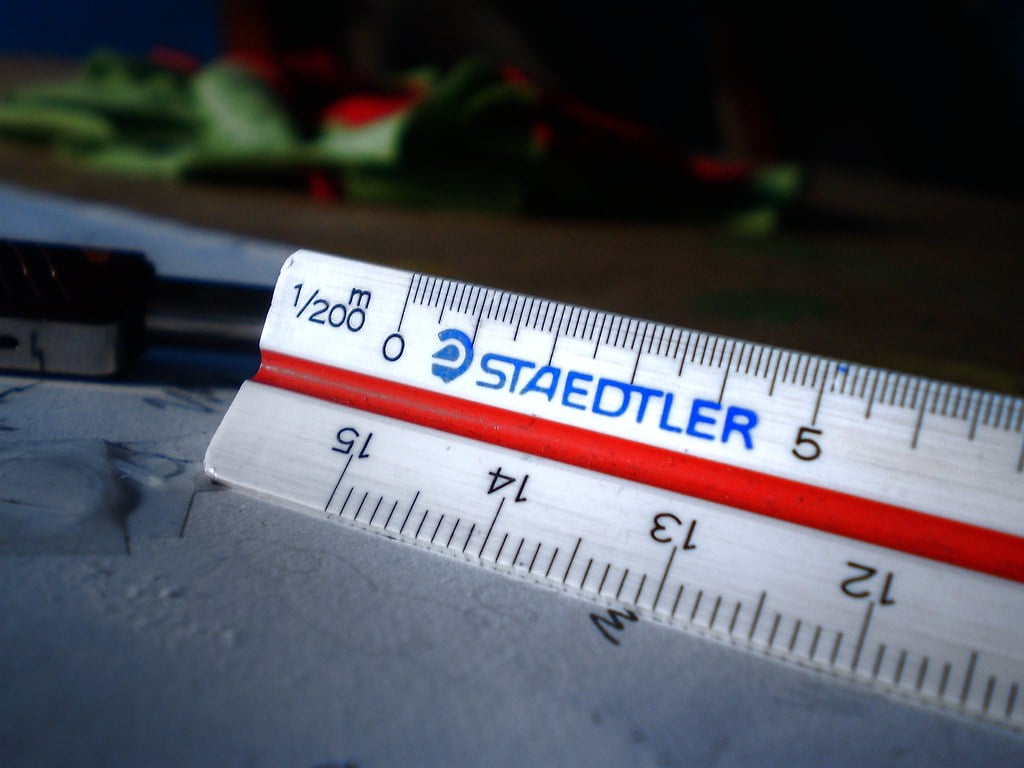
Plastic construction gets dismissed too quickly—Staedtler proved that modern materials could match traditional ones when properly executed. The 544’s scales are printed with laser-like precision on dimensionally stable plastic that won’t warp with humidity or crack with age.
It feels almost weightless compared to wooden models, but the calculation accuracy matches anything produced in bamboo or wood.
Dietzgen 1767
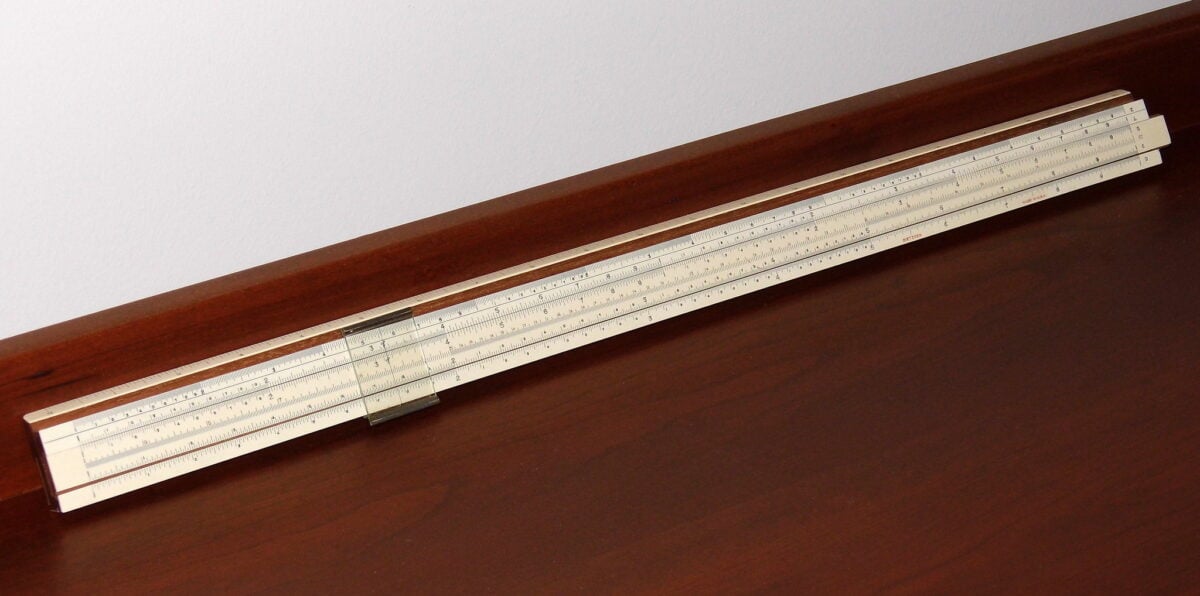
This American manufacturer competed directly with K&E for the professional market and often won on specific features. The 1767’s cursor design allows more precise alignment than most competitors, while the scale arrangement prioritizes the calculations most common in surveying and civil engineering.
Dietzgen’s withdrawal from the market as calculators displaced slide rules makes these instruments increasingly scarce, driving collector interest higher each year.
Concise Circular Rule No. 28
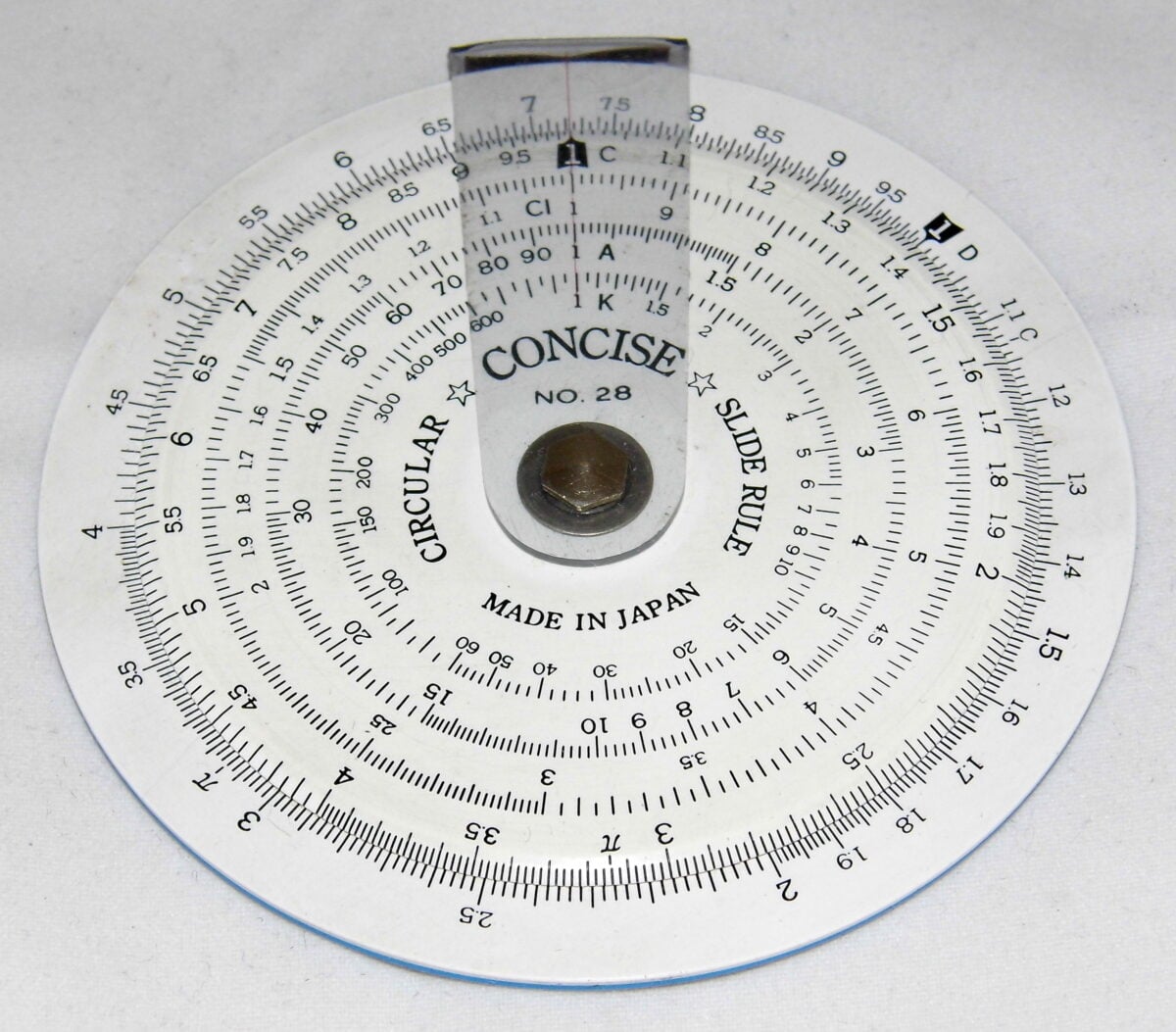
Circular slide rules pack impressive calculating power into a surprisingly compact form—though “compact” here means relative to linear rules of equivalent capability, not absolute portability (these things have presence). The No. 28’s spiral scales create calculation lengths equivalent to linear rules several feet long, all contained within an 8-inch diameter.
So the mathematics work beautifully, but the learning curve is steep enough that most engineers are stuck with linear formats.
Sun Hemmi 250
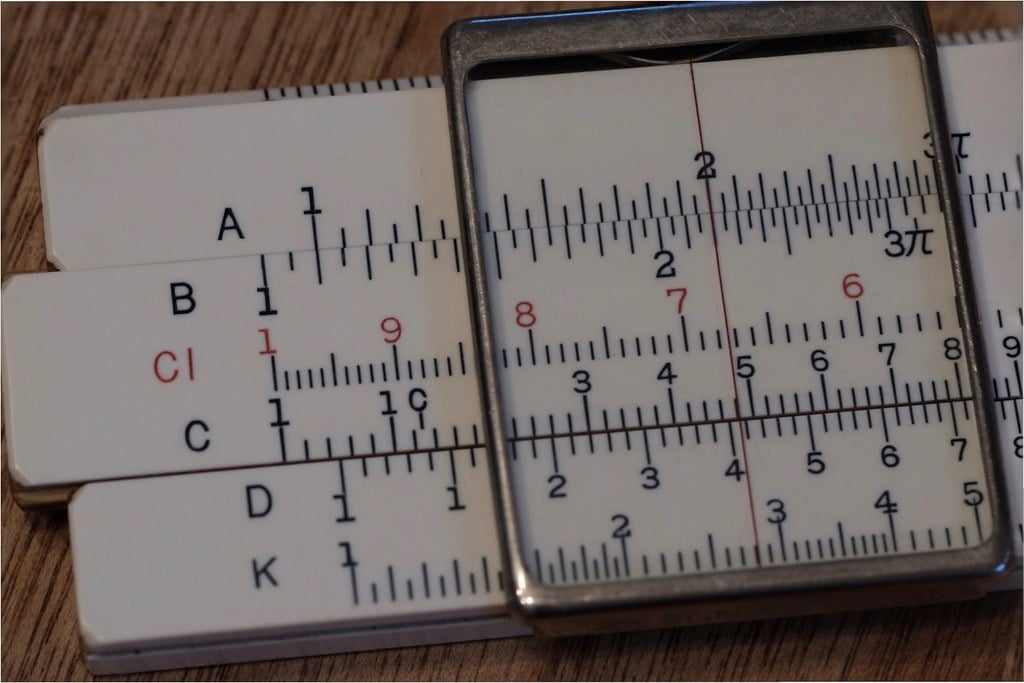
Post-war Japanese manufacturing at its most ambitious. The 250 represents Hemmi’s attempt to create a universal calculating instrument, with scales for standard arithmetic, trigonometry, and specialized engineering functions.
The bamboo construction maintains dimensional stability across temperature and humidity changes that would render metal rules inaccurate.
Nestler 23R
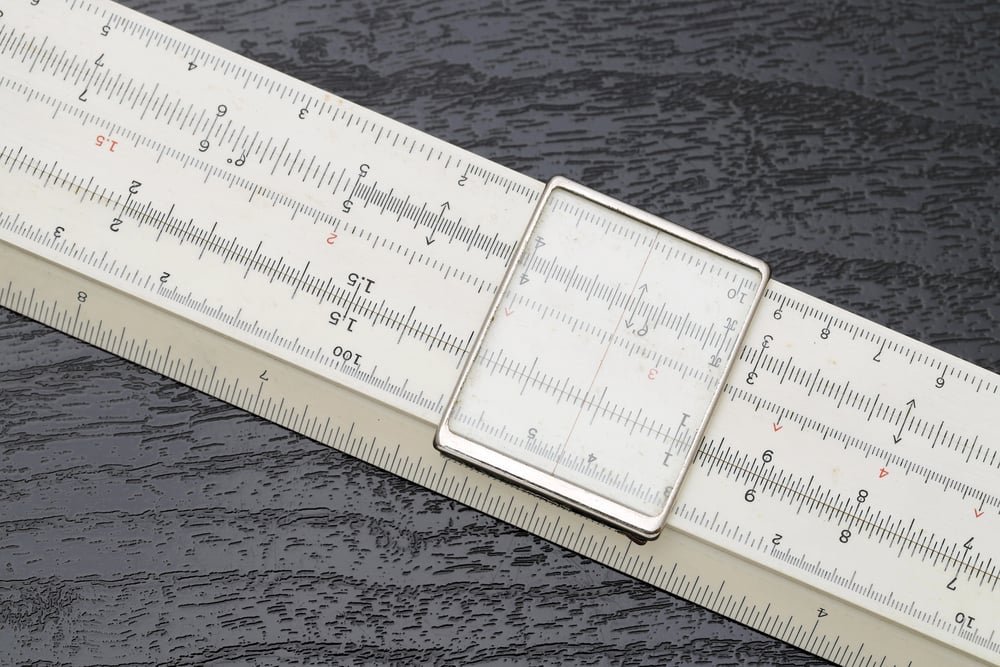
German slide rule tradition continued through multiple generations at Nestler. The 23R reflects decades of refinement in scale placement and cursor design, resulting in an instrument that feels perfectly balanced in use.
The printing quality allows calculations accurate to the limits of the slide rule format, while the construction ensures accuracy that persists across decades of use.
A.W. Faber 1/54
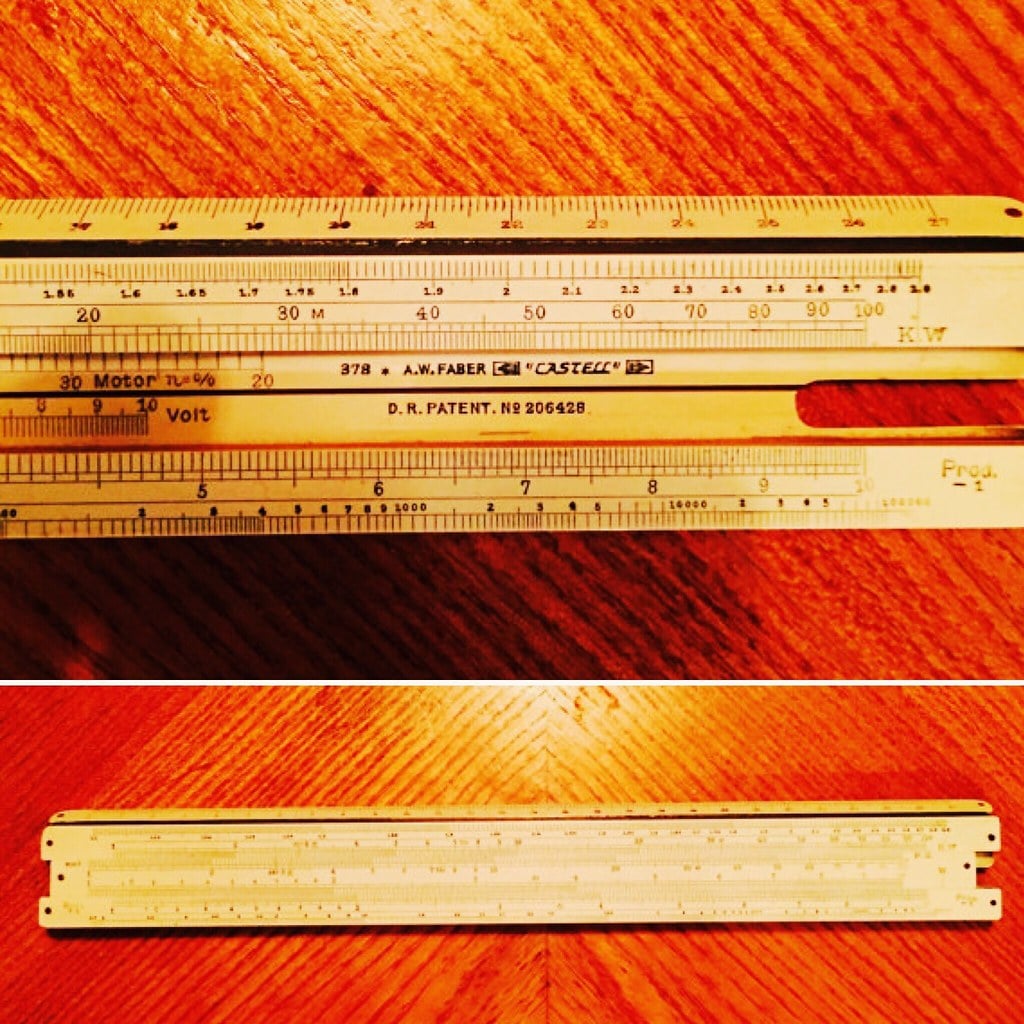
Before becoming Faber-Castell, A.W. Faber produced slide rules that competed with the finest German manufacturers. The 1/54 represents the company’s approach to professional-grade instruments, with scale selection optimized for engineering calculations and construction quality that ensures lasting accuracy.
The celluloid scales resist wear and maintain their precision printing across decades of use.
Keuffel & Esser 4053-3 Polyphase
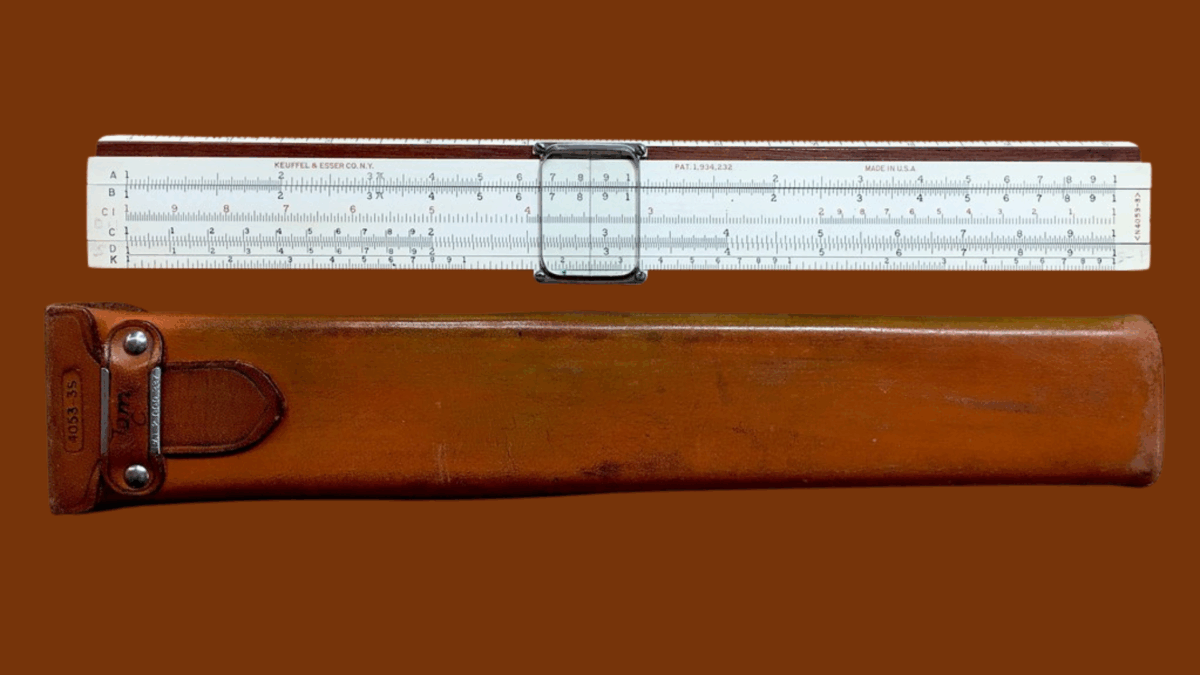
Electrical engineering demanded specialized calculations that general-purpose slide rules handled awkwardly. K&E’s Polyphase series addressed this with scales specifically designed for power calculations, impedance matching, and other electrical engineering functions.
The 4053-3 represents the most complete implementation of this approach, creating an instrument tailored to the electrical age.
Pickett N3-ES
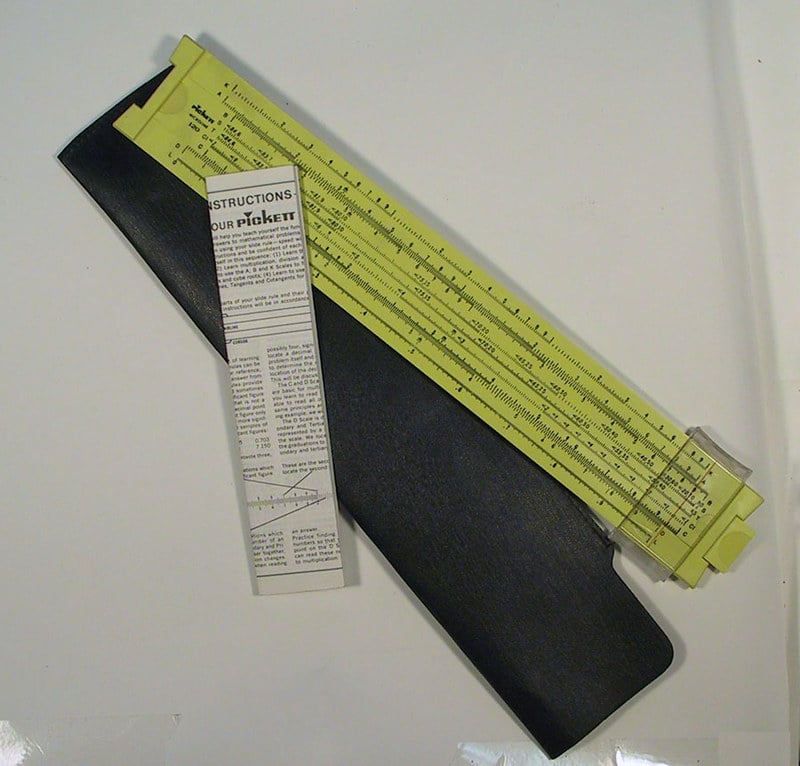
The aluminum construction makes this nearly indestructible while maintaining the precision required for engineering calculations. Pickett’s eye-wateringly bright color schemes served a practical purpose—these instruments remained visible in cluttered workshops and job sites where wooden rules might disappear into visual noise.
But the real story is the printing quality: scales that remain crisp and readable decades after manufacture.
Hemmi 259W
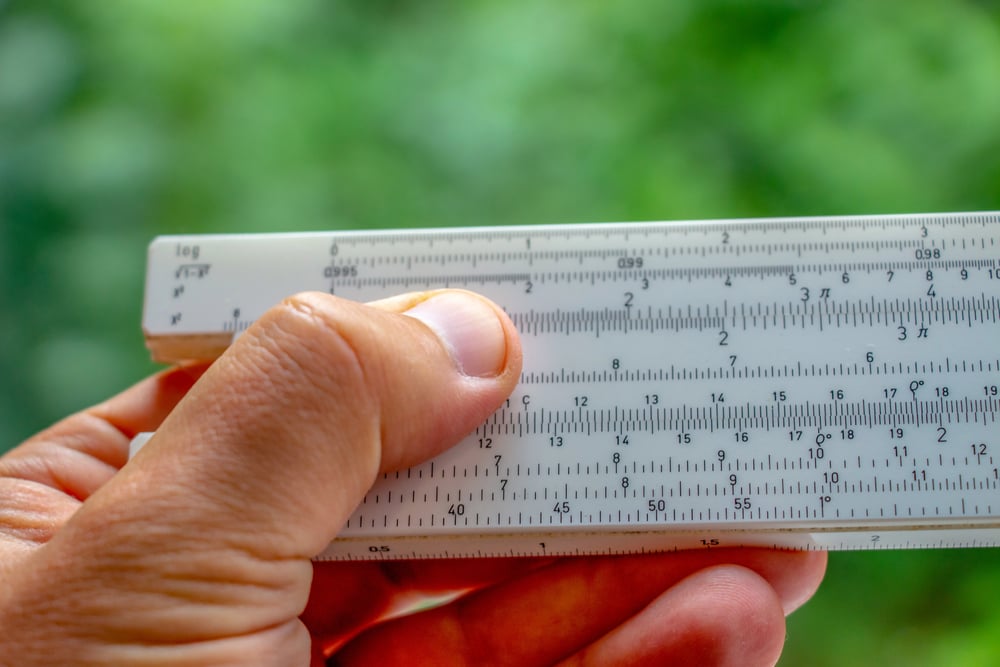
Wide-body construction allows larger scale divisions and correspondingly greater precision. The 259W represents Hemmi’s response to engineers demanding maximum accuracy from the slide rule format, resulting in an instrument that pushes the boundaries of what analog calculation can achieve.
The bamboo construction maintains dimensional stability while the increased size allows scale divisions fine enough to support four-digit precision.
Aristo-Scholar 0903LL
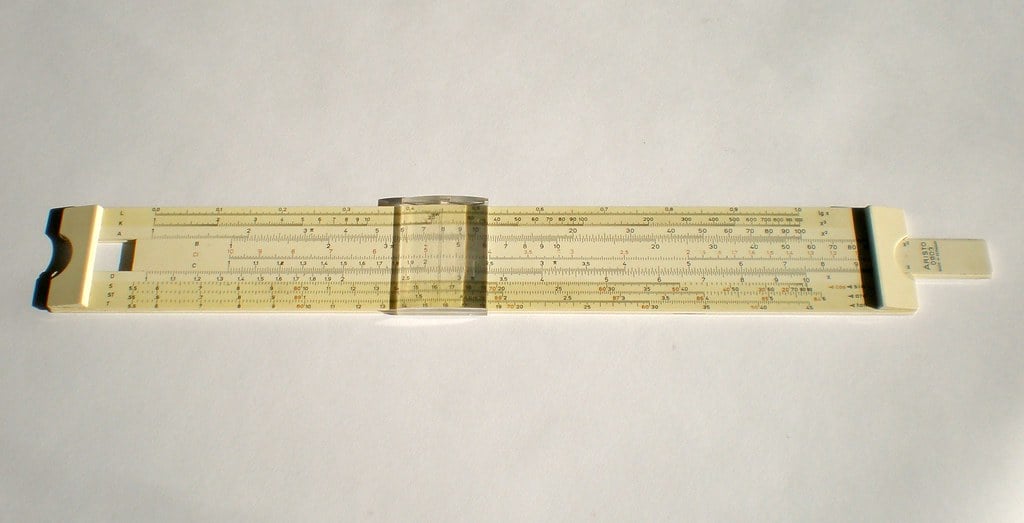
This represents the final evolution of the student slide rule before calculators made the entire category obsolete. Aristo’s Scholar series taught generations of engineering students the mathematical relationships that electronic calculators would later hide.
The 0903LL includes log-log scales that introduce students to exponential calculations, preparing them for advanced engineering mathematics.
Keuffel & Esser N4053-5 Deci-Lon
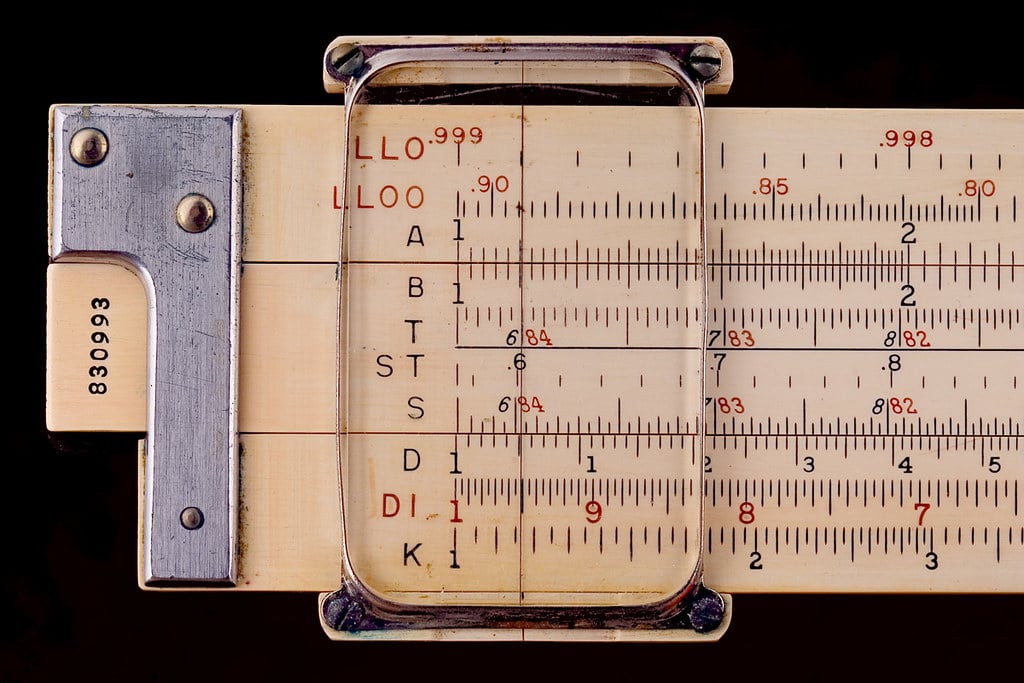
K&E’s response to Pickett’s aluminum construction combined traditional wooden slide construction with modern synthetic materials. The Deci-Lon plastic scales resist wear and maintain precision longer than traditional celluloid, while the wooden body provides the familiar heft and feel that engineers expected.
The scale selection emphasizes decimal calculations over traditional fractional approaches.
Post Versalog 1460
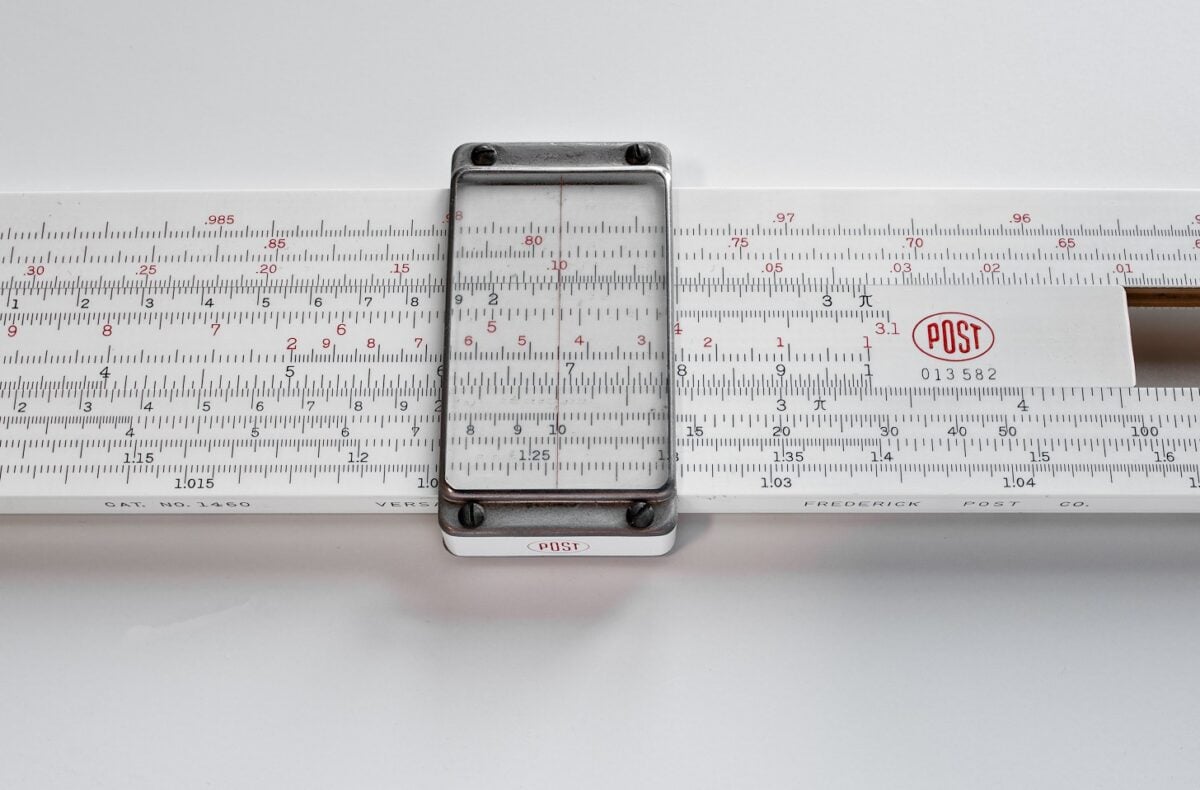
American slide rule manufacturing’s final flowering produced instruments like the Versalog that incorporated decades of refinement. The 1460’s scale arrangement reflects Post’s analysis of which calculations engineers performed most frequently, optimizing the instrument for practical use rather than theoretical completeness.
The construction quality equals anything produced before or since.
Otis King Patent Calculator
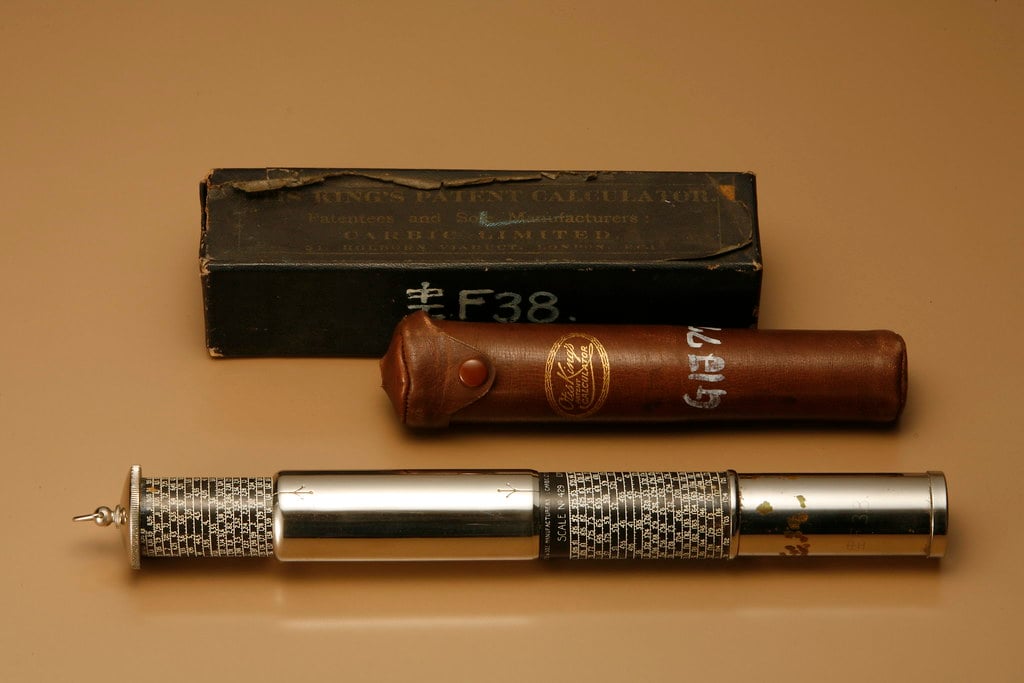
This cylindrical design represents the most radical departure from traditional slide rule layout. The helical scales wind around the cylinder’s surface, creating calculation lengths equivalent to linear rules several feet long within a package small enough for a coat pocket.
The mathematics work perfectly, but the interface requires learning an entirely different approach to analog calculation.
Relay Model 505
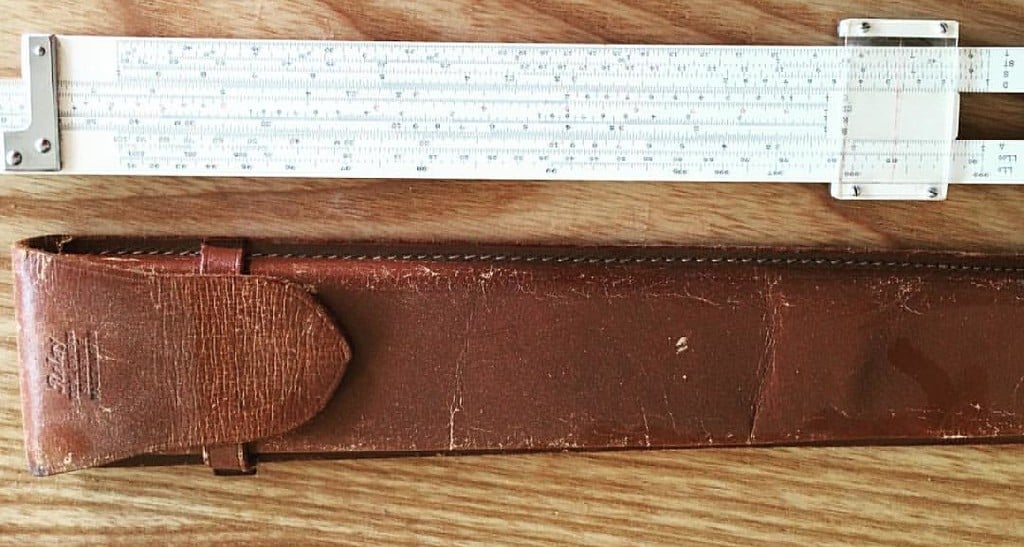
Japanese manufacturers challenged established German and American companies with instruments that matched traditional quality while introducing manufacturing innovations. The 505’s synthetic construction eliminates the dimensional instability that affects wooden and bamboo rules, while the scale printing achieves precision that rivals the finest European manufacturers.
The cursor mechanism operates with mechanical precision that improves rather than degrades with use.
Gilson Binary Rule
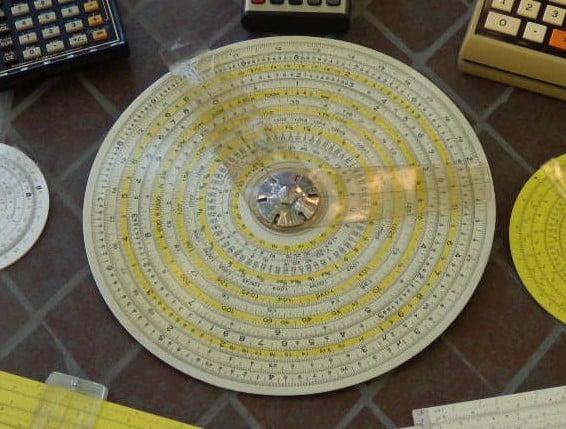
This specialized instrument handles binary and octal calculations that became important as digital systems developed. The unusual scale arrangement reflects the mathematical operations common in early computer programming, creating an analog calculator for the digital age.
Few were manufactured, making surviving examples particularly valuable to collectors interested in the transition between analog and digital calculation.
The Enduring Appeal of Precision
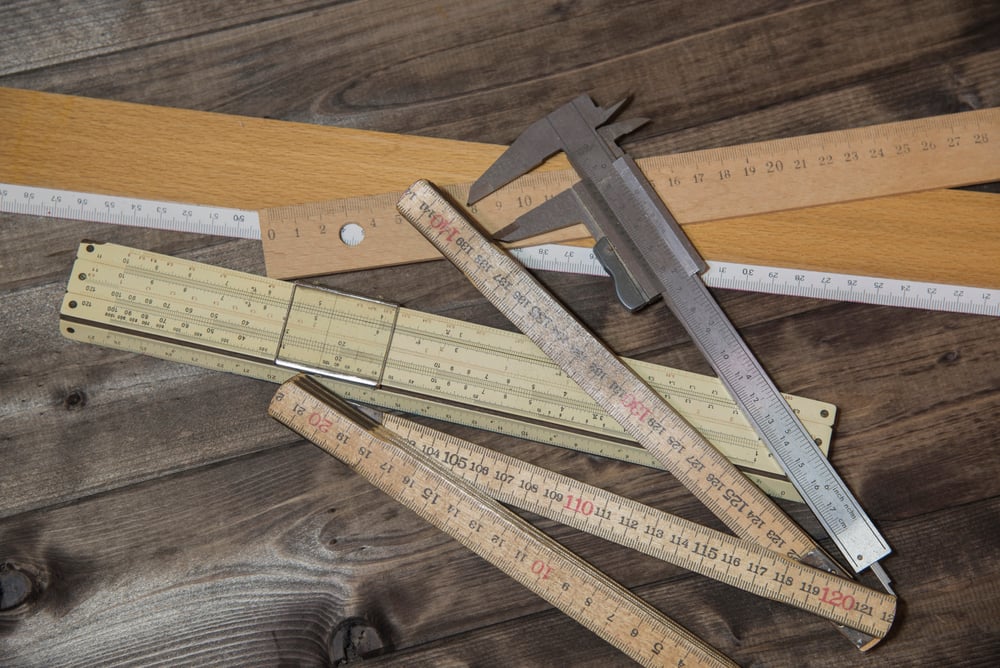
These instruments represent more than obsolete technology—they embody an approach to calculation that requires users to understand the mathematical relationships underlying every operation. Modern calculators provide answers without insight, while slide rules demand comprehension as the price of accuracy.
Collectors pursue these instruments not from nostalgia alone, but from appreciation for the marriage of mathematical theory and mechanical precision that they represent. The finest examples continue to perform their intended functions with an accuracy that honors both their makers and the engineers who relied on them.
More from Go2Tutors!

- The Romanov Crown Jewels and Their Tragic Fate
- 13 Historical Mysteries That Science Still Can’t Solve
- Famous Hoaxes That Fooled the World for Years
- 15 Child Stars with Tragic Adult Lives
- 16 Famous Jewelry Pieces in History
Like Go2Tutors’s content? Follow us on MSN.



