Old Pyrex Patterns That Quietly Became Worth Hundreds
There’s something disorienting about opening a box at an estate sale, finding a stack of mixing bowls your grandmother used for Sunday pancakes, and realizing the person selling them has no idea what they’re holding. Pyrex has been a kitchen fixture since the early twentieth century — practical, colorful, built to last — and for decades it lived in that comfortable middle space between useful and invisible.
Nobody thought much about it. Then collectors started paying attention, prices started climbing, and certain patterns crossed into territory that would genuinely surprise the people who once used them to store leftovers.
Some of these bowls are fetching two, three, even four hundred dollars today. A few rare pieces push past that considerably.
Here’s a look at the patterns that made the quiet leap from thrift store shelf to serious collectible.
Butterprint
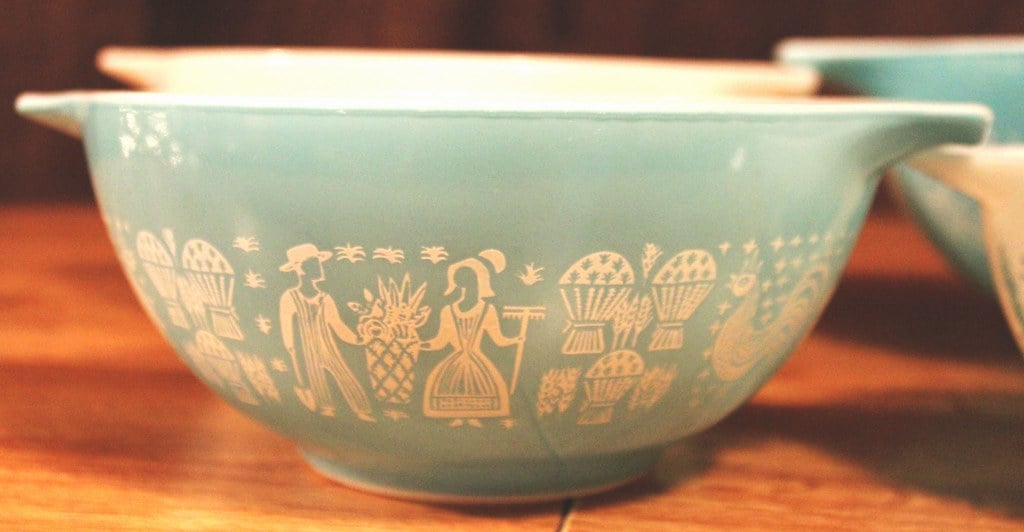
Butterprint is the pattern that tends to convert skeptics. The design — a repeating motif of roosters and wheat sheaves on a turquoise or brown background — landed in the 1950s and somehow never stopped looking right.
Complete sets of four nesting bowls in turquoise Butterprint regularly sell in the $150 to $300 range, and pristine pieces push higher without much resistance.
Pink Gooseberry
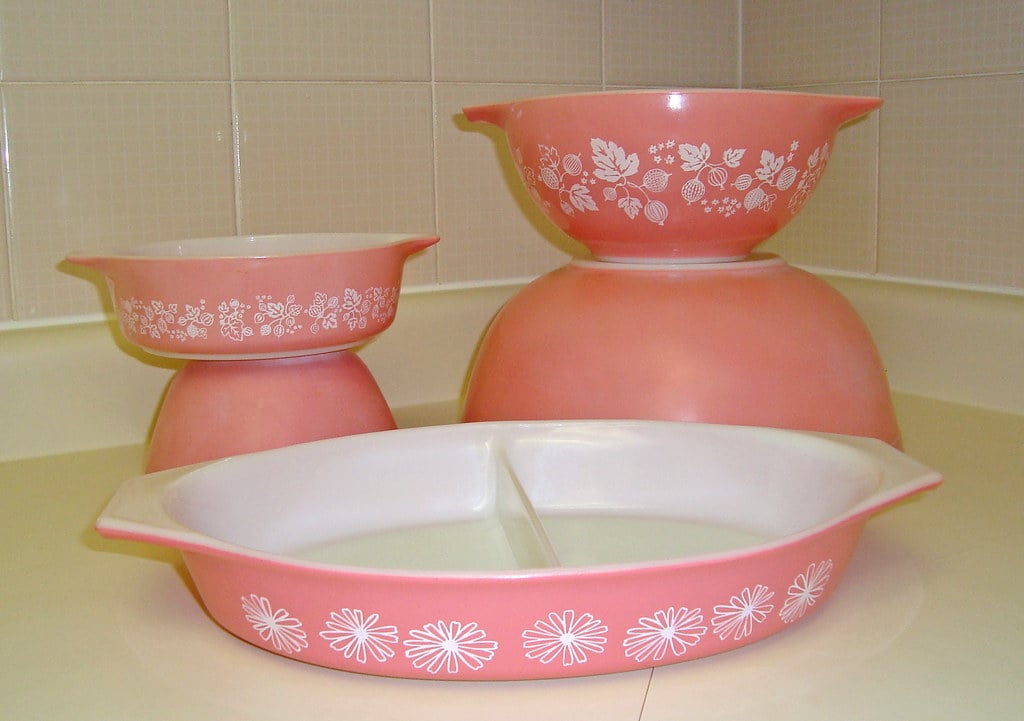
The Pink Gooseberry pattern has a specific kind of appeal: it’s rare enough that most people have never seen it in person, but recognizable enough in collector circles to generate immediate interest. The gooseberry motif itself — a looping, organic print — appeared across several colorways, but the pink version commands the strongest prices.
A single casserole dish in good condition can clear $100 without much effort, and full sets are genuinely hard to find.
Friendship
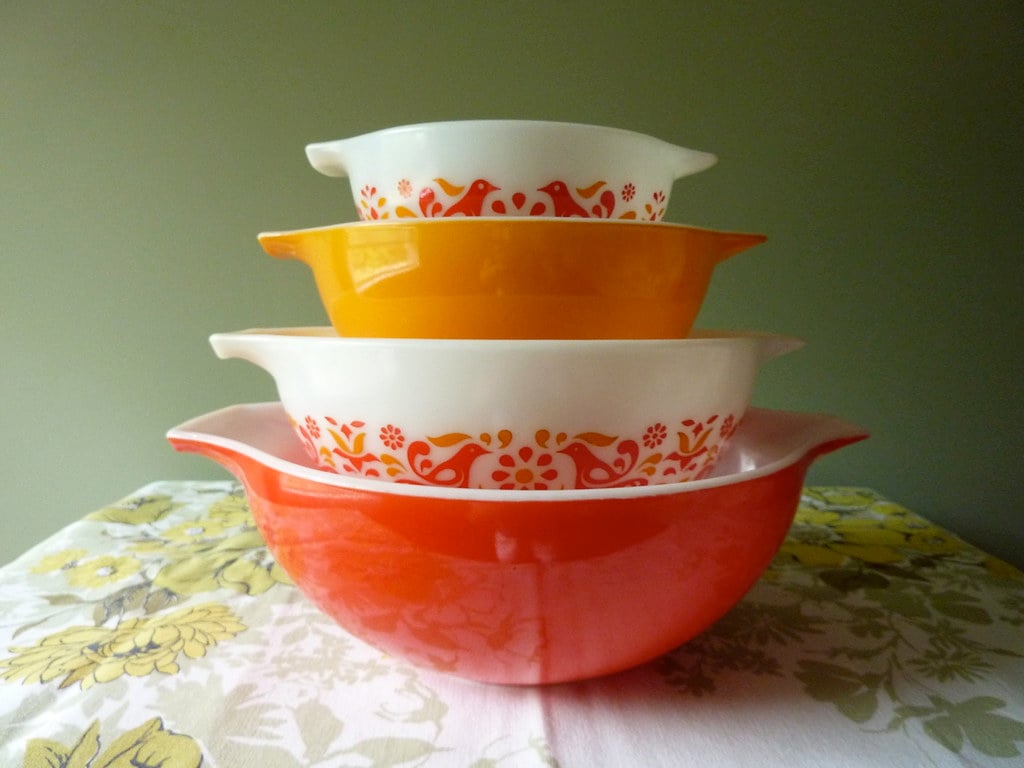
Friendship is one of those patterns that rewards patience more than luck — the design features birds perched on branches, earthy and quiet, printed on a warm brown background that somehow manages to feel both vintage and timeless without trying. The pattern was produced for a relatively short window, which is the kind of thing collectors notice even when the pattern itself doesn’t announce its own scarcity.
So you find Friendship pieces at flea markets occasionally, usually priced low by someone who didn’t do the research.
Lucky in Love
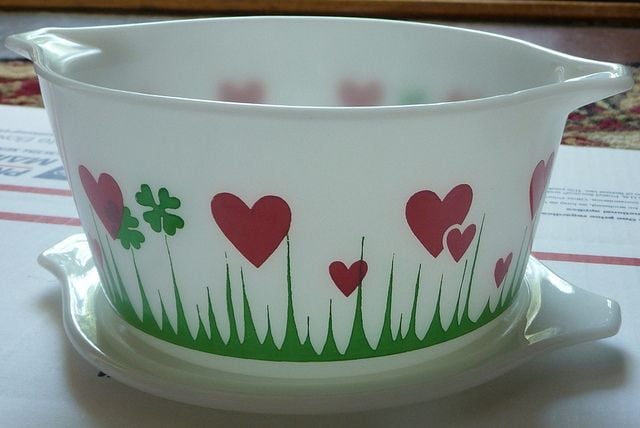
Lucky in Love is the one that makes people do a double take at the price tag. The pattern — clovers and hearts on a white background — looks cheerful and simple, almost like something you’d find at any garage sale.
Turns out it’s one of the most sought-after promotional patterns Pyrex ever produced, and a complete set can run several hundred dollars.
Balloons
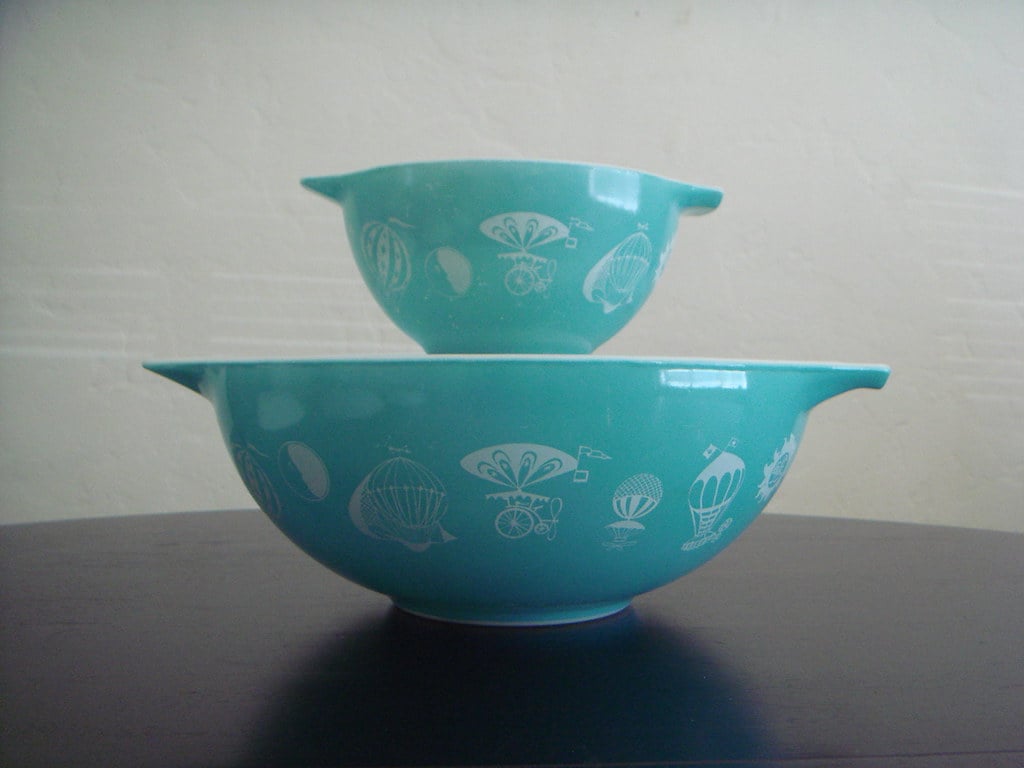
Balloons — the pattern, not the object — sits in a peculiar place in Pyrex collecting, somewhere between underdog and quiet heavyweight, with its bright primary-colored circles floating against a cream background in a way that feels more graphic design than kitchen utility. The pattern ran in the 1950s and didn’t get much serious collector attention for a long time (which is exactly the kind of delay that lets prices accumulate without warning).
And then something shifted: auction records started appearing, social media posts started circulating, and suddenly a four-piece mixing bowl set in good condition was selling north of $200.
Snowflake Blue
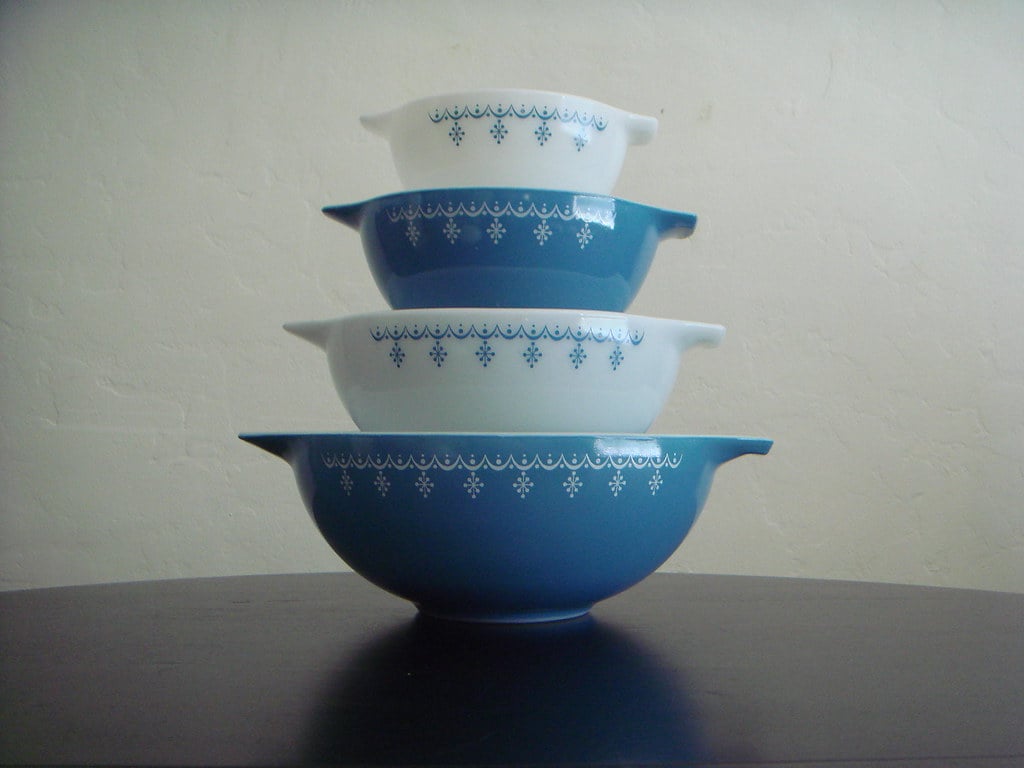
Snowflake Blue is, to be blunt, everywhere — and yet certain configurations of it still command real money. The delicate snowflake pattern on a blue background was produced in significant quantities, which means common pieces stay affordable.
But the promotional items, the refrigerator sets, and the pieces in less common sizes are a different story entirely.
Old Orchard
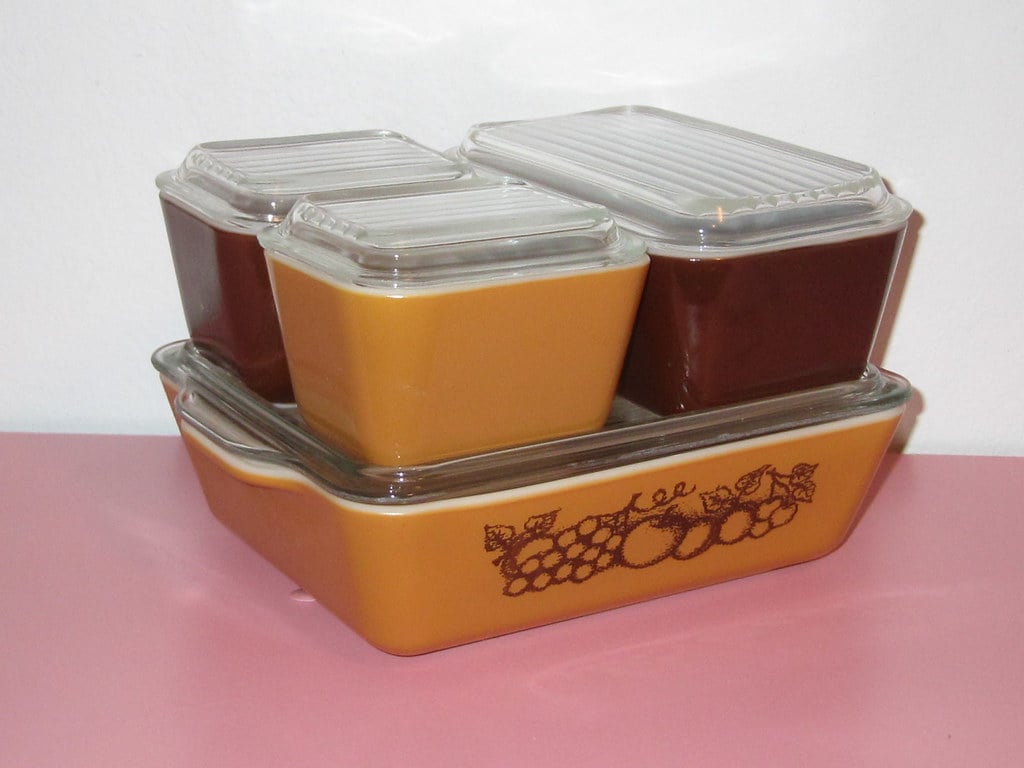
Old Orchard carries the kind of unhurried visual confidence that makes you wonder why it was ever considered ordinary. The pattern — fruit and foliage in soft browns and greens — appeared in the late 1970s and early 1980s, which put it squarely in an era collectors spent years ignoring before realizing they’d been sleeping on something good.
A complete four-bowl nesting set in clean condition now fetches $150 or more.
Dot
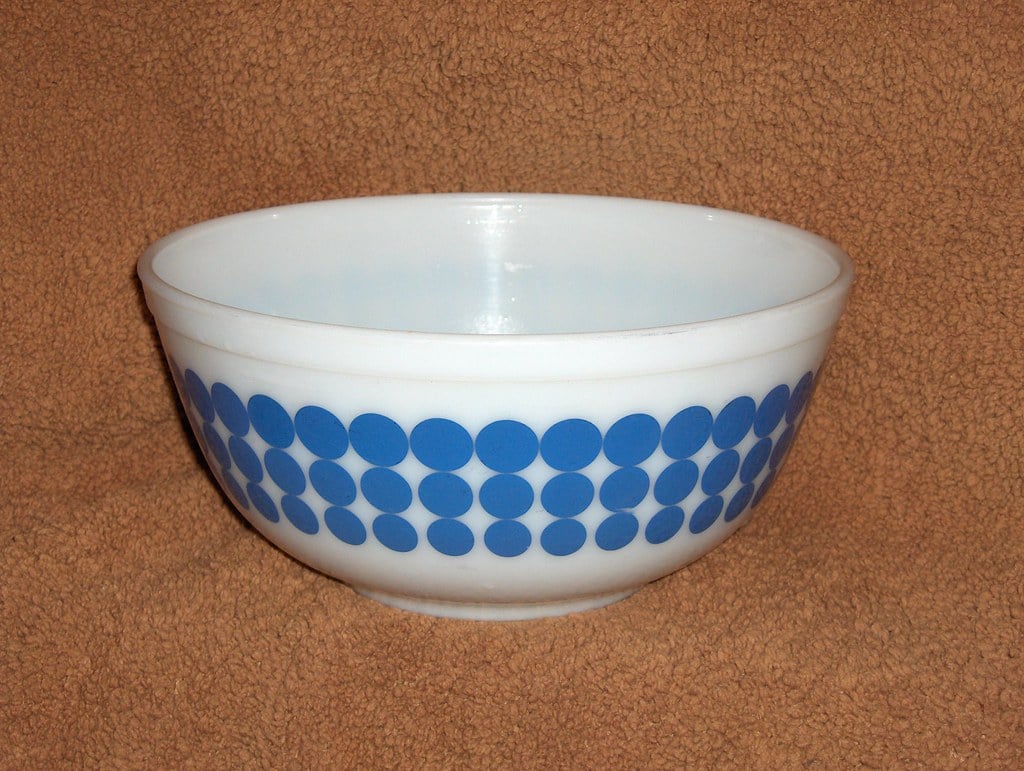
The Dot pattern is exactly what it sounds like, and that simplicity is precisely what makes it interesting to collectors. Small repeated dots in teal or brown against a cream background — nothing ornate, nothing complicated.
And yet the refrigerator sets in particular have developed a strong following, with complete sets in teal selling comfortably in the $200 range.
Early American
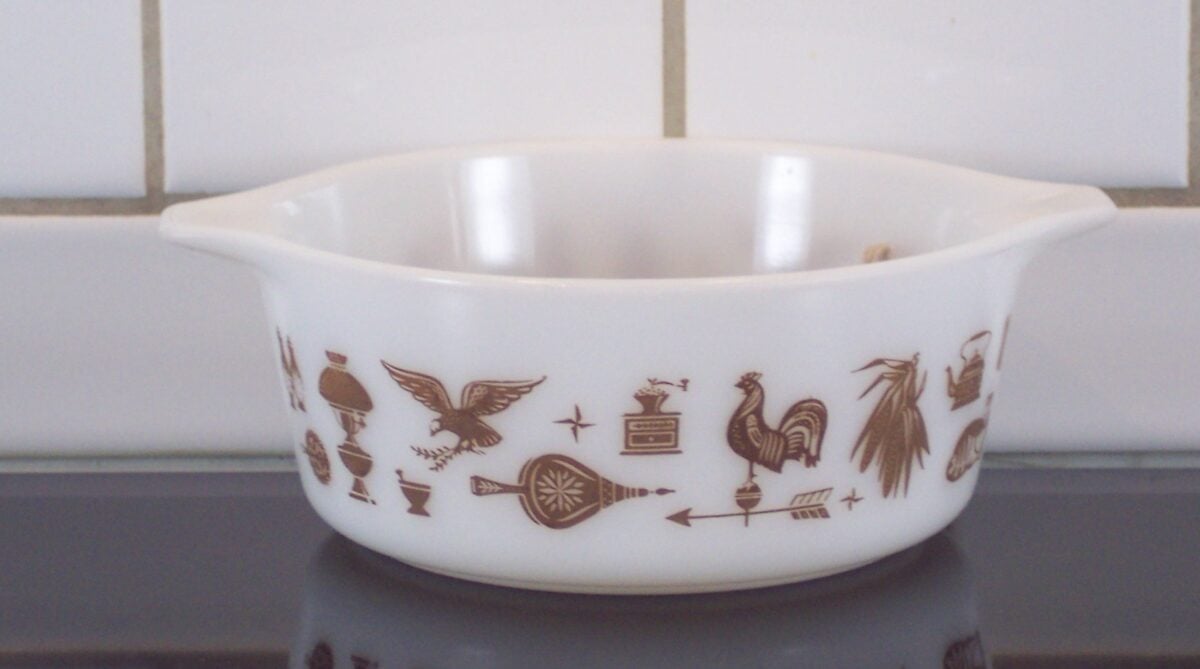
Early American is a pattern that refused to be forgotten even when most people stopped looking. The design — roosters, flowers, and decorative motifs in a warm harvest gold — appeared throughout the 1960s and 1970s and has a specific nostalgic gravity that pulls collectors back toward it reliably.
Complete promotional sets and full casserole collections in this pattern move quickly when they surface, often fetching $100 to $200 depending on condition and completeness.
Amish Butterprint
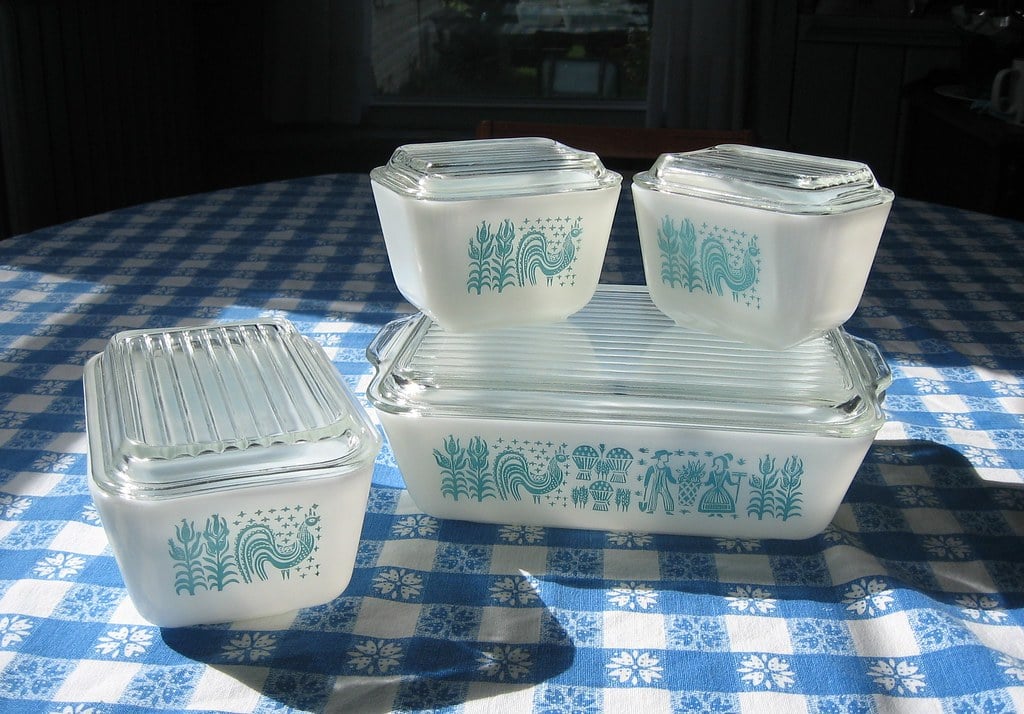
Amish Butterprint and its more famous turquoise cousin share a design ancestry, but the color difference — a warm, almost caramel tone — creates its own collector lane. Pieces in this colorway are less common than the standard turquoise, and serious collectors know it.
A single large mixing bowl in pristine condition can clear $80 to $100 on its own, which adds up fast across a full set.
Daisy
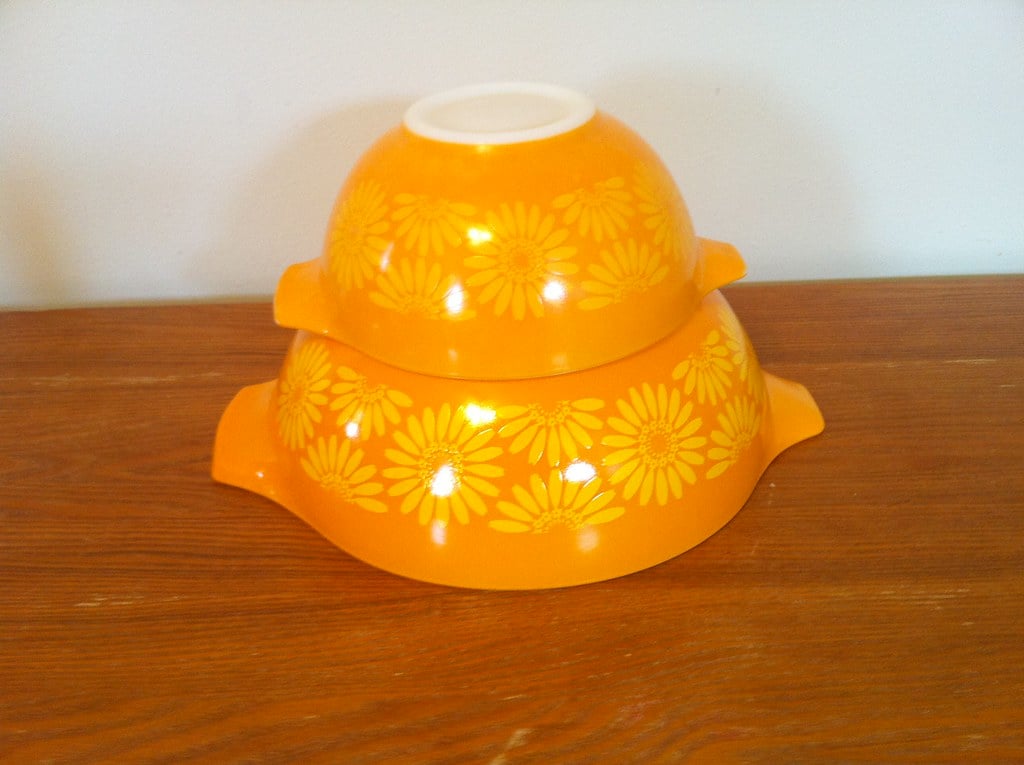
Daisy is the pattern that reminds you prices don’t always follow logic — it’s a cheerful, yellow-and-white floral design that looks like it should be everywhere, and in some ways it is, but condition kills most of the pieces that surface. A clean, unchipped Daisy casserole dish or refrigerator set is harder to find than it seems, and the market reflects that: good examples regularly hit $100 to $150 without any particular fanfare.
Horizon Blue
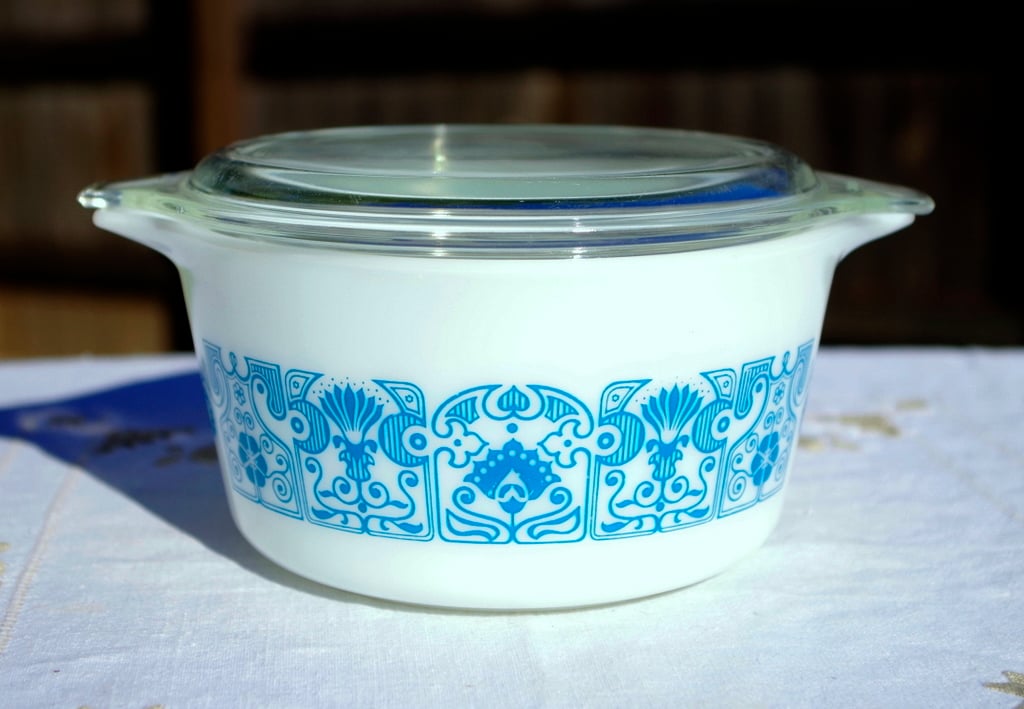
Horizon Blue has the clean, modernist restraint of something designed by someone who knew restraint was going out of style — a simple stripe design in cool blue against white, geometric and quiet, produced during the late 1960s and into the 1970s. It doesn’t shout. It doesn’t try to compete with the busier patterns from earlier decades.
So it sat underpriced for a long time before collectors with an eye for subtlety started bidding it up.
Cinderella Bowls in Solid Colors
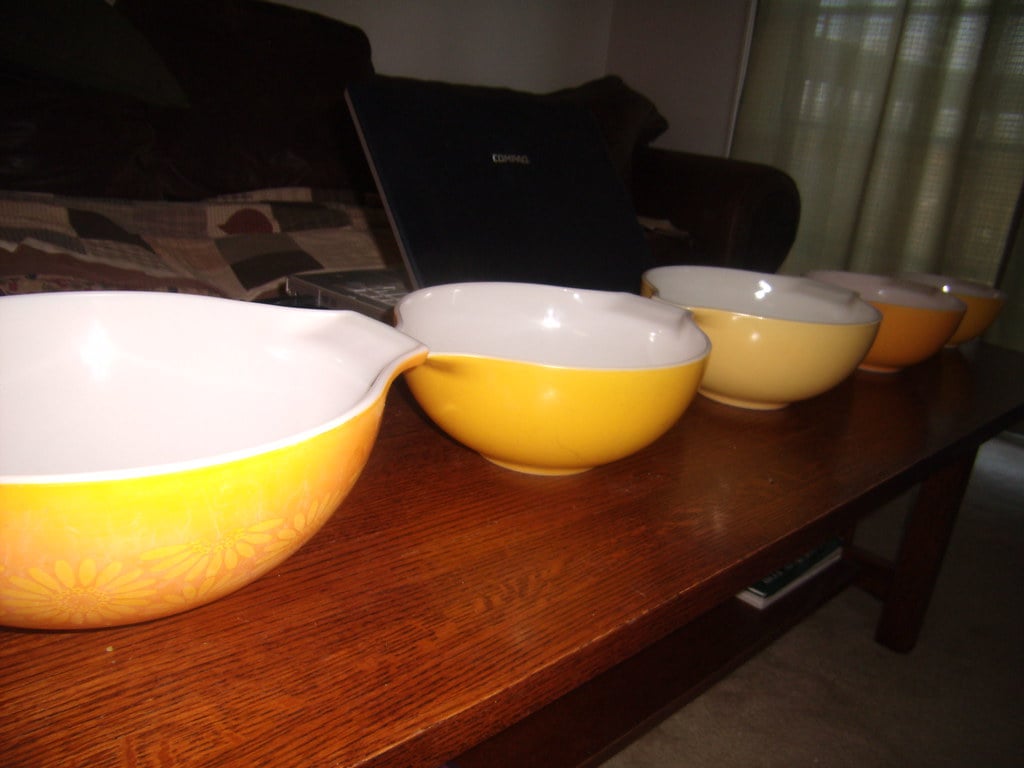
The Cinderella bowl shape — those distinctive pouring lips on opposite sides — is itself a collector’s draw, but when you put that shape together with solid primary colors from the 1950s production runs, the prices climb steadily. A full set of four nesting Cinderella bowls in primary colors — red, yellow, blue, green — is a genuinely difficult thing to assemble in matching condition.
Sets that come together cleanly sell in the $200 to $400 range.
Straw Flowers
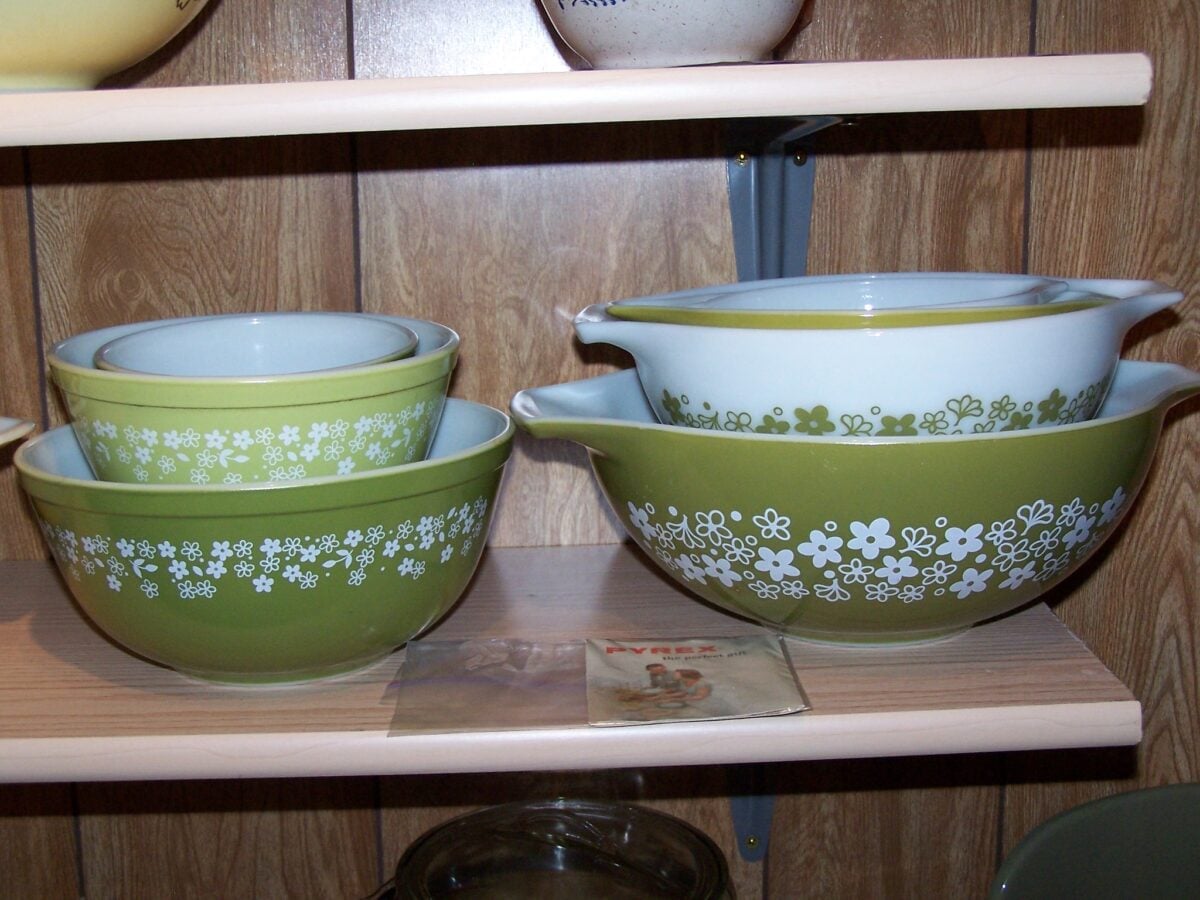
Straw Flowers has the look of something that belongs on a farmhouse table in a late-autumn photograph. The design — stylized flowers in muted golds, greens, and reds — ran on promotional pieces and refrigerator sets through the 1960s, and it never quite got the recognition it deserved during those years.
Full refrigerator sets in good condition now routinely break $150.
Verde
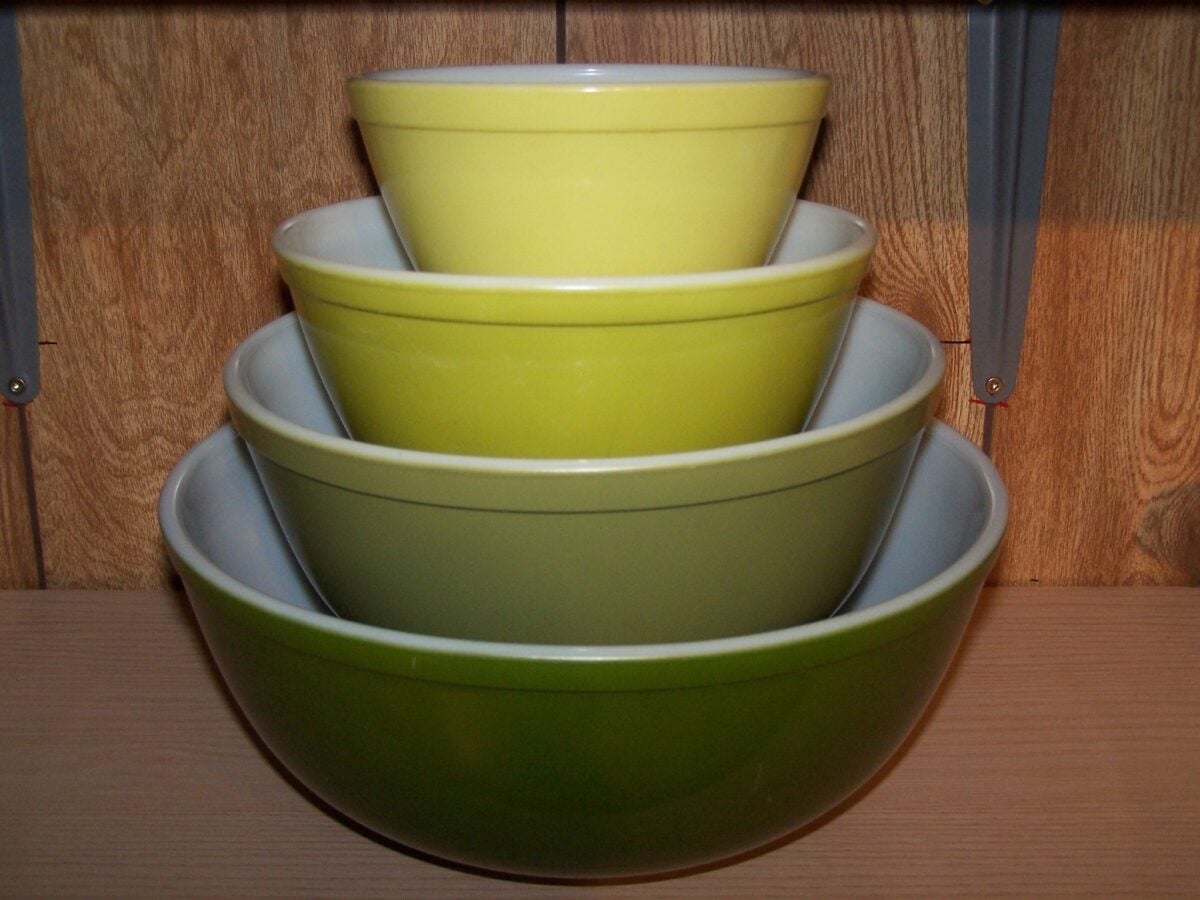
Verde is, objectively, one of the more elegant Pyrex patterns produced during the 1970s — an earthenware-style design in deep brown and cream that looks less like a mass-produced kitchen item and more like something you’d find at a craft market. The pattern ran for a relatively short production window, which keeps supply tight.
Complete casserole sets with lids in excellent condition have been known to approach $200.
The Kind of Thing You Can’t Unsee
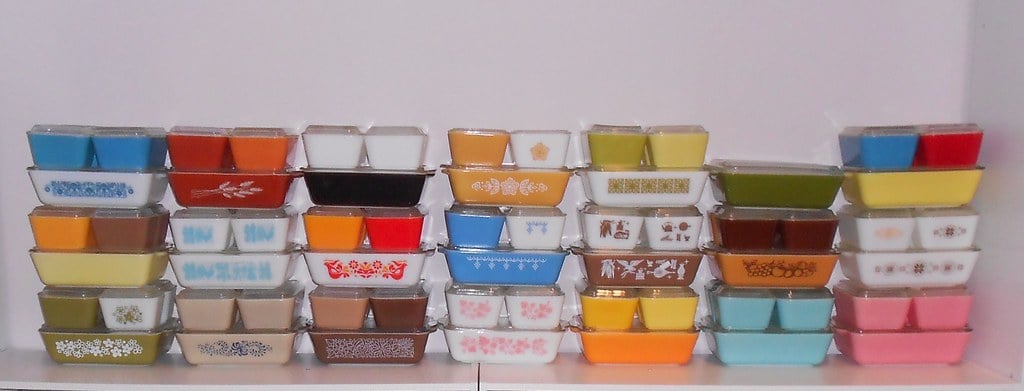
Once you know that a set of mixing bowls in Lucky in Love or Balloons is worth more than a few casual dinners out, thrift stores stop being the same experience. You start reading labels differently, turning pieces over, checking for chips along the rim. It’s the kind of knowledge that sneaks into your peripheral vision and stays there — not obsession exactly, more like a permanently adjusted sense of what ordinary things are quietly worth.
The Pyrex sitting in a cabinet somewhere right now, inherited or forgotten or bought for a dollar, might be worth considerably more than anyone in that household suspects.
More from Go2Tutors!

- The Romanov Crown Jewels and Their Tragic Fate
- 13 Historical Mysteries That Science Still Can’t Solve
- Famous Hoaxes That Fooled the World for Years
- 15 Child Stars with Tragic Adult Lives
- 16 Famous Jewelry Pieces in History
Like Go2Tutors’s content? Follow us on MSN.