27 Escaped Prisoners Whose Stories Read Like Hollywood Scripts
There’s something deeply human about the compulsion to escape. Not the violence, not the chaos — but the sheer stubbornness of people who looked at walls, guards, and razor wire and decided: not today.
Prison break stories have captivated the public for as long as prisons have existed, and it’s not hard to understand why. These aren’t just tales of desperation.
They’re stories of ingenuity, obsession, endurance, and occasionally, breathtaking absurdity. Some of the men and women below were dangerous.
Some were wronged. Some were simply impossible to contain.
All of them did something that most people wouldn’t dare attempt — and a few of them pulled it off so cleanly that the authorities had to quietly admire the craftsmanship, even as they hunted them down.
Frank Morris and the Anglin Brothers

The 1962 Alcatraz escape remains the most debated prison break in American history, and the question of whether Frank Morris and brothers John and Clarence Anglin survived their raft crossing of San Francisco Bay has never been definitively settled. They carved dummy heads from soap and hair clippings, left them in their beds, spent months excavating the walls with sharpened spoons, and vanished into the bay without a trace.
The FBI officially closed the case in 1979, declaring them drowned — but the Anglin family received postcards for years afterward, and a 2013 letter surfaced claiming all three had survived into old age.
Yoshie Shiratori
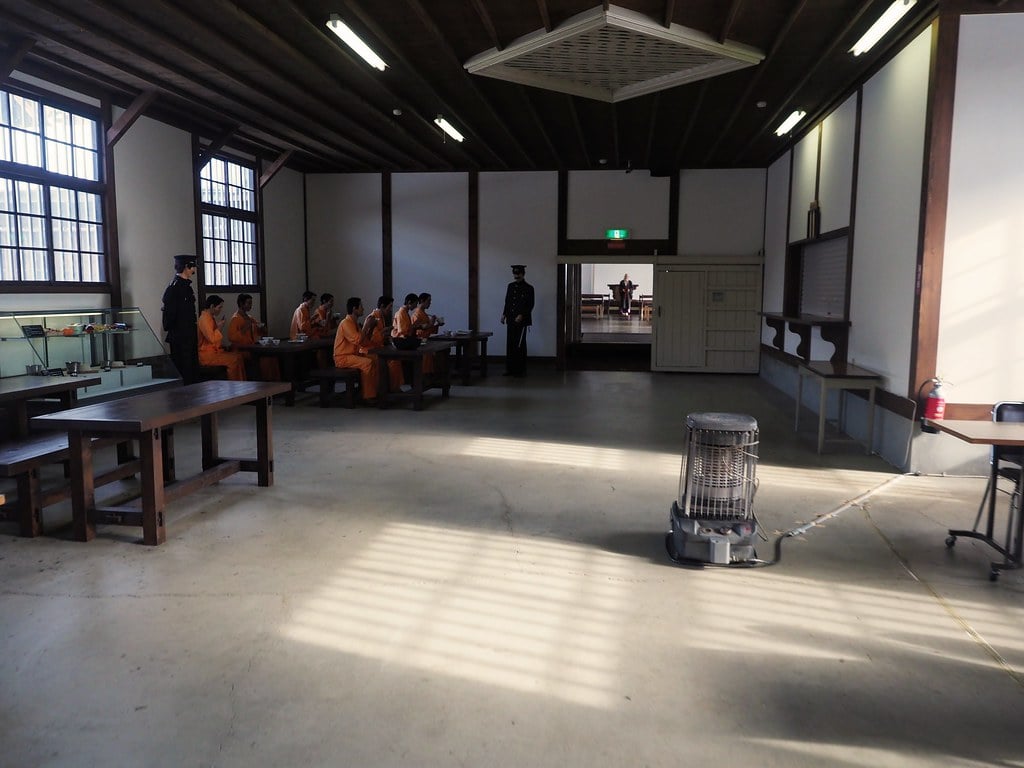
Yoshie Shiratori escaped from Japanese prisons four separate times between 1936 and 1947, and the methods he used made each escape more extraordinary than the last. He picked locks using wire he pulled from his own cell, dislocated his joints to slip through restraints, and in one particularly audacious escape, climbed through a ceiling he had quietly weakened over months by rubbing miso soup into the wood until it rotted.
Shiratori — who maintained throughout that he had been wrongly convicted — was ultimately recaptured, given a death sentence that was later commuted, and eventually released after a judge reviewed his case.
Pascal Payet

Pascal Payet didn’t escape from prison so much as redefine what the word meant, using hijacked helicopters on three separate occasions to either break himself out or return to help others escape. The first time was in 2001, the second in 2003 — when he came back for friends, which is either loyal or reckless depending on your perspective — and the third in 2007, when a group of accomplices landed a helicopter on the roof of Grasse Prison in southern France and lifted him out mid-sentence.
French authorities eventually recaptured him and transferred him between facilities so frequently that finding a stable helicopter landing zone became genuinely difficult.
Richard Lee McNair

Richard Lee McNair escaped from custody three times, and the third — from a federal penitentiary in Louisiana in 2006 — is the one that made him famous, partly because a police officer stopped him shortly after the escape and was completely fooled. McNair had mailed himself out in a shipping crate, crawled through a ventilation system sealed with lip balm he’d used to squeeze through, and when Officer Carl Bordelon pulled him over jogging down a road and ran his name, McNair — cool as a man with nowhere to be — kept the officer talking long enough that the radio came back clear.
The footage of that roadside conversation circulated widely after McNair was recaptured 18 months later in Canada.
El Chapo

Joaquín “El Chapo” Guzmán escaped from Mexican maximum-security prisons twice, and the second time, in 2015, required a tunnel — fully lit, ventilated, and long enough to qualify as an infrastructure project. The tunnel ran nearly a mile from his cell’s shower drain to a half-built house outside the prison perimeter, and it was equipped with a modified motorcycle on rails to speed up the journey.
Guards apparently noticed nothing unusual, which either speaks to the quality of the construction or something altogether less flattering about the supervision.
John Dillinger

John Dillinger walked out of the “escape-proof” Crown Point County Jail in Indiana in 1934 using a fake gun he had carved from a piece of wood and darkened with shoe polish. He bluffed his way past guards with a whittled block of wood, stole two actual guns and the sheriff’s car, and drove across state lines — which, as it happened, turned bank robbery into a federal crime and handed the FBI the jurisdiction they needed to pursue him.
Dillinger was shot dead outside a Chicago theater four months later, but the wooden gun became one of the most famous props in American criminal history.
Billy Hayes
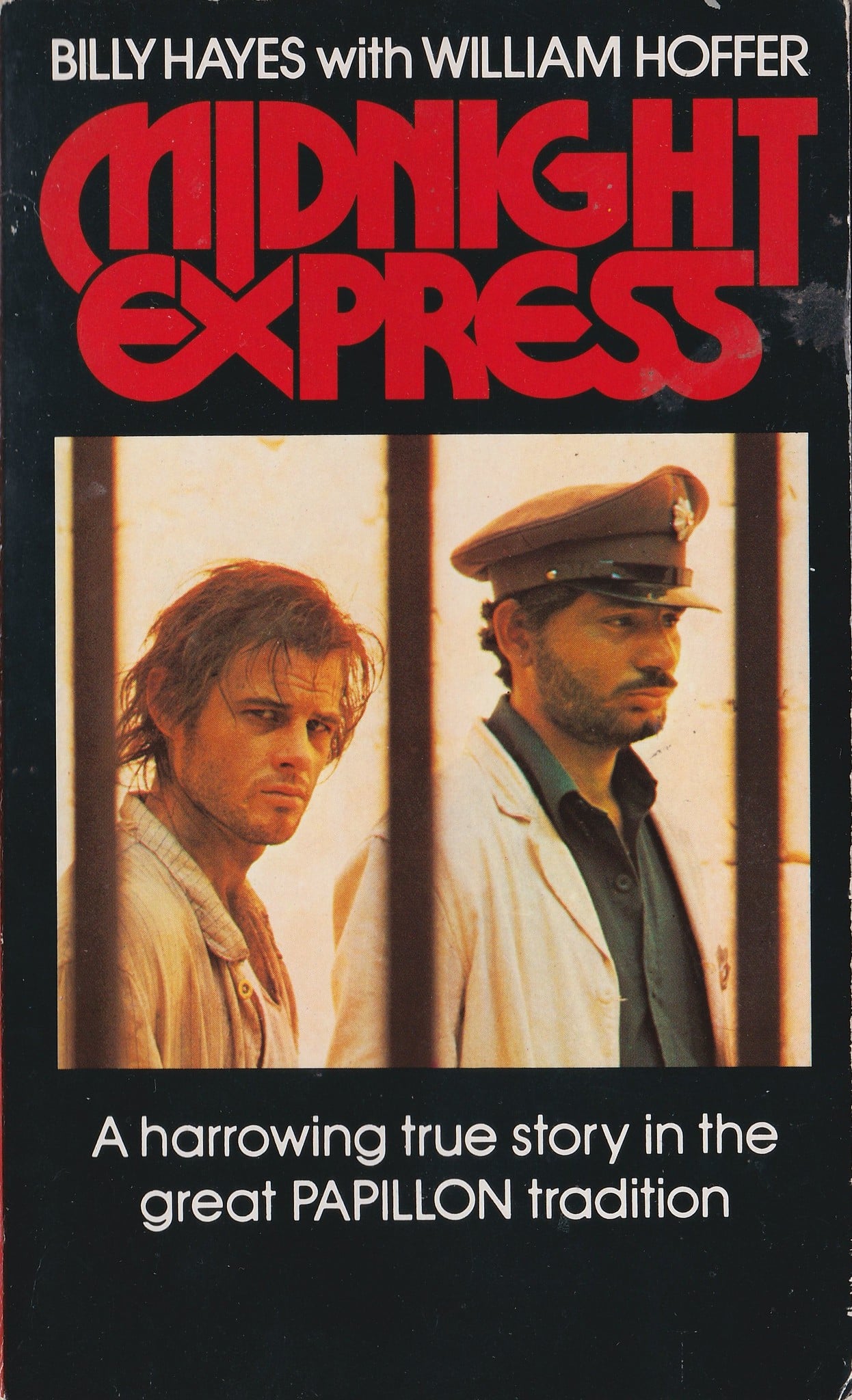
Billy Hayes’s escape from a Turkish prison in 1975 was the kind of desperate, improvised flight that most people wouldn’t survive — crossing the Aegean in a small rowboat, alone, at night, with no clear plan beyond “not here.” His story was adapted into the film Midnight Express in 1978, though Hayes himself has spent years clarifying that the movie exaggerated certain events and misrepresented the Turkish people.
The escape was real; the dramatics around it were Hollywood’s contribution.
The Texas Seven

Seven prisoners escaped from a maximum-security unit near San Antonio, Texas in December 2000, and the scale of what they pulled off in the first hours — overpowering forty-four civilian workers and employees, stealing weapons, uniforms, and vehicles — made it immediately clear this was planned well in advance. They managed to stay free for 38 days, robbing stores across the country before a viewer recognized them from America’s Most Wanted while watching from an RV park in Colorado.
Six were eventually executed; one took his own life before capture.
Blanche Wright

Blanche Wright — who was incarcerated in an Alabama women’s facility in the 1990s — walked away from a work-release program and disappeared so thoroughly that her story reads less like an escape and more like an evaporation. She assumed a new identity, built a quiet life under a different name, and was not found until years later, at which point the person authorities found bore almost no resemblance to the woman who had left.
The mundane patience of her disappearance was arguably more impressive than any tunnel or helicopter.
Alfred Hinds

Alfred Hinds was convicted of robbery in England in 1953 and spent the next decade making British justice look, at minimum, poorly organized. He escaped three times — from Nottingham Prison, from a courthouse (by locking two guards in a bathroom), and from Chelmsford Prison — and used each period of freedom to mount legal challenges arguing his original conviction was unsafe.
He eventually won a libel case against a police superintendent, became a respected member of the British legal community, and died a free man in 1991. Turns out, the law was his best weapon all along.
Dieter Dengler

Dieter Dengler’s escape from a Pathet Lao prison camp in Laos during the Vietnam War was a feat of physical endurance that is almost impossible to hold in your mind as something a human being actually did. He had been shot down, captured, tortured, and kept in conditions that would have ended most people — and he still organized a mass breakout, survived weeks in dense jungle, and was eventually spotted by a rescue aircraft.
Werner Herzog turned his story into the documentary Little Dieter Needs to Fly and later a feature film, Rescue Dawn, and even those couldn’t fully contain the extremity of it.
Ted Bundy
Ted Bundy escaped from custody twice in 1977, and the fact that both escapes were relatively low-tech makes them more unsettling, not less. The first time he jumped from a second-floor courthouse window during a recess and simply ran — he was recaptured eight days later, having lost 30 pounds from walking through the mountains.
The second escape from Garfield County Jail involved months of meticulous preparation: he starved himself to lose weight, and then squeezed through a ceiling panel into a guard’s apartment above the jail while the guard was away for the holidays.
Wojciech Frączek and MariuszÊs

Two Polish inmates escaped from Betonka Prison in Nowy Wiśnicz in 2012 by constructing a rope from bedsheets — a method so old it belongs in a fairy tale — and lowering themselves down a wall in the middle of the night. What elevated their escape into something memorable was the detail that they had spent three months braiding that rope from strips torn so methodically, so quietly, that no one noticed until it was hanging from an empty window.
The rope worked. They were caught within days, but the rope worked.
Steven Utash

The details of Steven Utash’s escape from a Michigan correctional facility work as a study in institutional vulnerability: he was a minimum-security prisoner who simply walked away during a work detail, made contact with people outside, and stayed free for a period long enough to raise uncomfortable questions about supervision at low-security facilities. His case drew attention less for the escape itself than for what it illustrated about the gap between “minimum-security” and “actually monitored.”
Vincenzo Curcio

Vincenzo Curcio escaped from a high-security Italian prison in 1981 in a method so absurd it circulates as an internet legend: his wife took his place. She visited him, they swapped clothes in the visiting area, and he walked out past guards while she waited inside.
The ruse held long enough for him to get clear of the building, which says something about either the disguise, the distraction, or the attention levels of the guards on duty that afternoon. His wife was charged; he was eventually recaptured.
Choi Gap-bok

South Korean Choi Gap-bok escaped from a police detention cell in 2012 by squeezing his body through the food slot at the bottom of his cell door — an opening roughly 5.9 inches tall. He had practiced yoga for years, and the food slot that was presumably installed by someone who did not account for extreme flexibility became his exit.
He was recaptured six days later, but the footage of the food slot and the measurements involved made headlines globally.
John Gerard

John Gerard was an English Jesuit priest imprisoned in the Tower of London in 1597 who escaped by sending a rope across the moat from his tower window to a waiting boat. He had been tortured so severely that his hands were partially disabled — and he still made the crossing, hand over hand, above the water, in the dark.
Gerard went on to live into his seventies, eventually dying in Rome in 1637, and wrote a detailed account of his escape that survived and is still read today.
The Maze Prison Escape

The 1983 breakout from HM Prison Maze in Northern Ireland remains the largest prison escape in British history: 38 IRA prisoners broke out simultaneously using smuggled guns and a hijacked lorry. The planning had taken years, the execution involved taking hostages inside the prison, and the sheer coordination required — 38 people moving in sequence — was the kind of operation that, in any other context, would be studied in logistics courses.
Nineteen were recaptured the same day; the rest scattered across Ireland and beyond.
Phoolan Devi

Phoolan Devi’s escapes from Indian authorities were less about tunnels or ropes and more about the sheer impossibility of finding someone who knew the terrain better than the people searching for it. She evaded capture for years across the Chambal ravines, became one of the most wanted people in India, and eventually negotiated her own surrender on her own terms — in front of a crowd of thousands, with conditions attached.
She later served time, was pardoned, became a Member of Parliament, and was assassinated in 2001. The arc of her life resists simple categorization.
Casey Carrington

Casey Carrington escaped from the Ocala Correctional Institution in Florida in 2004 by hiding in a garbage truck — a method that is both obvious in retrospect and almost completely impossible to plan for in advance. He had timed the truck’s arrival, positioned himself in the right container, and survived the collection process.
What made authorities take it seriously was that it took them nearly a day to determine how he had actually left the facility, because no one initially thought to check the refuse records.
The “Cannonball” Baker

Not to be confused with the famous driver, this particular “Cannonball” — a nickname for a French prisoner in the 1800s — reportedly escaped from a penal colony in French Guiana by constructing a raft from bags filled with coconuts and drifting out to sea. The plan was so minimal, so reliant on ocean currents and luck, that it should not have worked.
It apparently did. The account survives only in partial records, which is either a sign that it was embellished or simply that French colonial prison administration was not meticulous about documenting the ones that got away.
Mamie Cotton

Mamie Cotton was serving time in a Georgia women’s facility in the early 1990s when she disappeared during a supervised outing and did not resurface for years. Her case became a footnote in discussions about the failure of community supervision programs, but the human reality of it was more complicated: she had a family, she had a history, and she had apparently calculated with some precision that the risk of being found was worth the alternative.
She was eventually located, having built a different life under circumstances that the authorities found difficult to prosecute aggressively after so many years.
Charles “Pretty Boy” Floyd

Charles Floyd’s escapes from custody in the early 1930s were less architecturally impressive than some on this list and more reliant on the fact that he was, by most accounts, genuinely difficult to hold — partly because local sheriffs in rural Oklahoma occasionally let him go, and partly because he was fast, resourceful, and had a network of people willing to hide him. His reputation for occasionally robbing banks that held mortgages on struggling farms didn’t hurt public sympathy.
He died in an Ohio field in 1934 after a long chase, but the mythology around him had already outpaced the facts by several miles.
The Sobibor Uprising

The 1943 escape from Sobibor extermination camp in occupied Poland is not a prison break story in any conventional sense — it is a story of roughly 300 people choosing to fight their way out of a death camp knowing full well that most of them would not survive the attempt. They killed eleven SS officers in a coordinated ambush, cut the perimeter wire, and ran.
About 170 made it past the fence; fewer than 60 survived the war. Alexander Pechersky, the Soviet officer who organized the uprising, escaped into the forest and rejoined Soviet partisan forces.
The camp was demolished by the Nazis shortly afterward.
Alfie Hinds’ Courthouse Escape

Worth revisiting on its own terms: the courthouse escape — where Hinds locked two police officers into a bathroom at the Law Courts in London — was not just audacious but strategically brilliant in a narrow, almost academic way. He had been brought in to file legal papers, had memorized the building layout during previous visits, and timed the whole maneuver to coincide with a moment of reduced attention.
He made it to Ireland before being recaptured. The locked bathroom took officers several minutes to figure out.
Henri Charrière

Henri Charrière — known as Papillon — claimed to have escaped from the French penal colony on Devil’s Island off the coast of French Guiana in 1941 using a bag of coconuts as a flotation device to navigate the brutal currents. His 1969 memoir became a global bestseller and the basis for two films, though historians have long debated how much of it was autobiographical and how much was assembled from the stories of other prisoners.
The colony was real, the conditions were real, and the escapes documented there — some of them, at least — almost certainly happened. Whether they all happened to Papillon specifically is a question that was conveniently settled before the publishers finished their paperwork.
Jack Sheppard
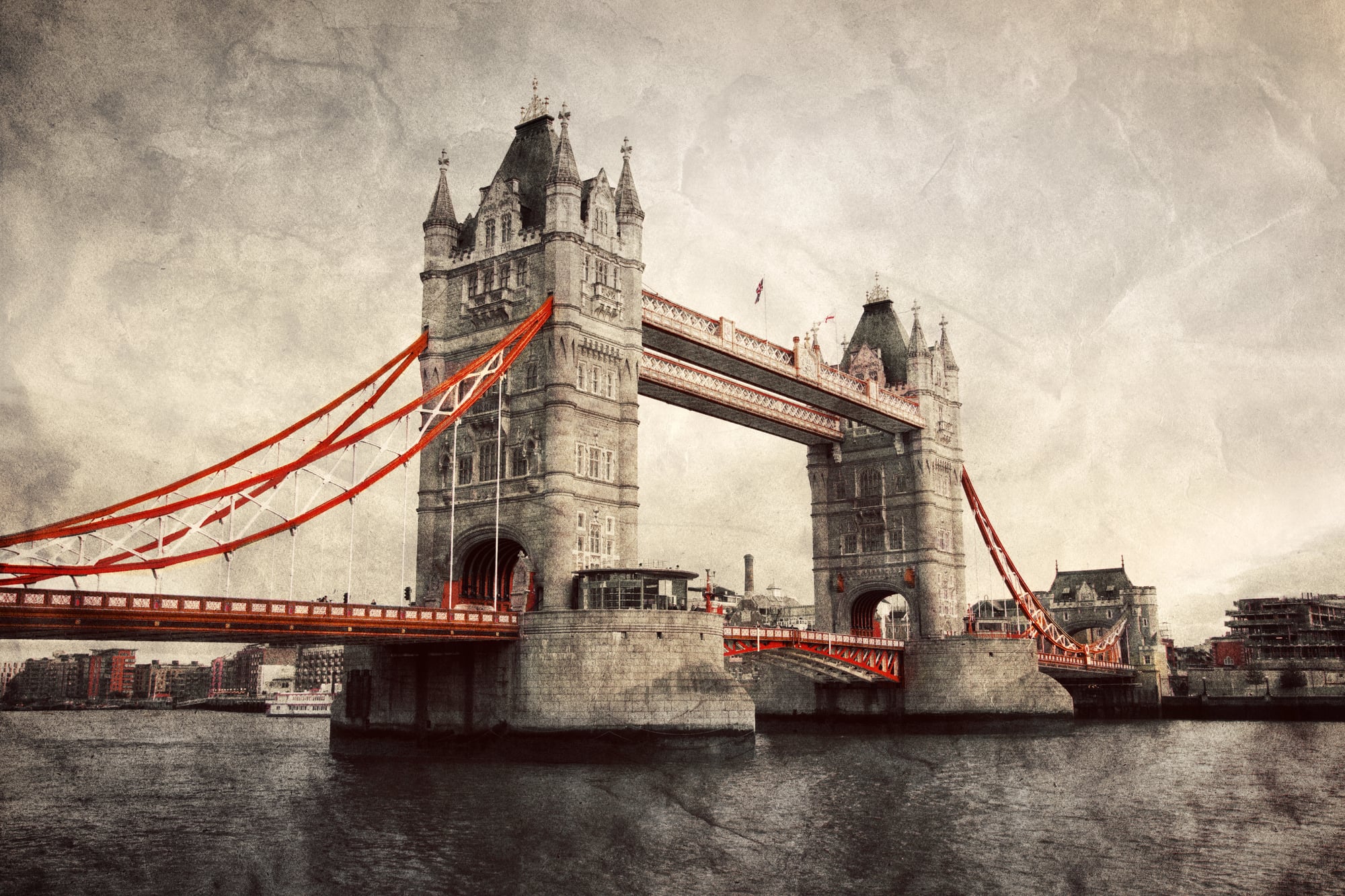
Jack Sheppard was a thief and prison escape artist in early 18th-century London who became so famous during his lifetime that his arrests, escapes, and recaptures were reported in the newspapers like a serialized story. He escaped from custody four times in 1724 alone, once while chained and shackled in a cell considered inescapable, by picking the locks with a small nail and climbing out through multiple locked doors.
Daniel Defoe reportedly visited him in prison; pamphlets about his life sold out across the city. He was hanged at Tyburn in November 1724 at the age of 22, in front of a crowd estimated at 200,000 — which was, at the time, one of the largest public gatherings London had ever seen.
The Thread That Keeps Pulling

What runs through all of these stories — the tunnels, the helicopters, the coconut rafts, the whittled wood — is something harder to name than just “desperation.” It’s the particular stubbornness of people who refused to accept that the walls around them were the final word.
Some of them were dangerous, some were innocent, and some occupied the complicated territory between. But each of them, in their own way, looked at a system built to be permanent and found the one seam it hadn’t thought to reinforce.
Whether that deserves admiration is a question worth sitting with. What’s harder to deny is that it deserves attention — and these stories, unlikely as some of them are, all actually happened.
More from Go2Tutors!

- The Romanov Crown Jewels and Their Tragic Fate
- 13 Historical Mysteries That Science Still Can’t Solve
- Famous Hoaxes That Fooled the World for Years
- 15 Child Stars with Tragic Adult Lives
- 16 Famous Jewelry Pieces in History
Like Go2Tutors’s content? Follow us on MSN.