Forgotten Battles with Lasting Cultural Impact
History textbooks adore their best-selling works. Everyone is aware of D-Day, Gettysburg, and Waterloo.
These great conflicts molded nations and altered the trajectory of wars that we continue to study today. However, many other conflicts went unnoticed even though they had an equally profound impact on the modern world.
Because they took place in isolated locations or involved extinct kingdoms, some conflicts are forgotten. Others were just overshadowed by more well-known fights that took place at the same time.
For whatever reason, these conflicts should receive more attention than they do. They still have an impact on our lives in ways that most people are unaware of.
These are 12 lost conflicts that had unexpectedly significant cultural effects.
Battle of Talas

Back in 751, Chinese and Arab armies clashed along a river in Central Asia, and most people today couldn’t tell you a thing about it. The Tang Dynasty wanted to control the Silk Road trade routes, while the Abbasid Caliphate was pushing eastward.
When the battle ended, the Arabs had won decisively, partly because some of the Chinese allies switched sides mid-fight. Among the prisoners the Arabs captured were possibly Chinese papermakers, and their knowledge may have helped transform how information spread across the Islamic world and eventually Europe.
Before this, most writing in the Middle East happened on expensive parchment or fragile papyrus. Paper revolutionized scholarship during the Islamic Golden Age and later made the printing press possible in Europe.
One afternoon of fighting in a place most people can’t find on a map helped create the foundation for how knowledge travels today.
Battle of Fulford

Three weeks before the famous Battle of Hastings in 1066, another major fight happened near York that barely anyone remembers. Harald Hardrada of Norway and his English ally Tostig defeated the Northern Earls Edwin and Morcar in a brutal clash that devastated the armies of Mercia and Northumbria.
The losses at Fulford meant that when King Harold marched south to face William the Conqueror at Hastings, his army was desperately undermanned. Think about that for a second.
Harold had to force-march his troops 190 miles from London to York within a week of Fulford, defeat the Vikings at Stamford Bridge, then turn around and march back south to meet the Normans. His exhausted, depleted forces never really stood a chance at Hastings. The Norman Conquest happened partly because of a forgotten fight in a Yorkshire marsh.
Like Go2Tutors’s content? Follow us on MSN.
Battle of Hattin

Saladin’s name echoes through history, but the specific battle that made his reputation often gets glossed over. On July 4, 1187, near the Sea of Galilee, Saladin’s forces destroyed the Crusader army by trapping them on an arid plateau without water.
The heat, thirst, and smoke from fires Saladin’s troops set in the dry grass broke the Christian forces before the real fighting even got intense. Within months, Saladin captured Jerusalem and most other Crusader strongholds, breaking Christian control of the Holy Land.
The defeat prompted the Third Crusade and allegedly caused Pope Urban III to die from shock when he heard the news. The battle fundamentally altered how Christians and Muslims viewed each other and their centuries-long struggle for control of sacred territory.
Battle of Ain Jalut

The Mongol Empire seemed unstoppable in the 13th century, rolling over everything from China to Eastern Europe. Then in September 1260, the Mamluks of Egypt met them at Ain Jalut in Palestine and handed the Mongols one of their first major defeats.
The battle halted Mongol expansion westward and prevented them from conquering the last major Islamic power in the region. Had the Mamluks lost, the Mongols might have pushed into Africa and completely reshaped the Islamic world.
Instead, this fight drew a line the Mongol hordes couldn’t cross. The victory preserved Islam as a major force in the Middle East and North Africa, protecting cultural and religious traditions that still define the region today.
Mongol Siege and Sack of Baghdad

Sometimes the most devastating moments aren’t traditional battles at all. In 1258, Mongol forces under Hulagu Khan arrived at Baghdad, capital of the Abbasid Caliphate, and when the Caliph refused their demands, they laid siege and eventually sacked the city.
Nearly the entire population was killed, historical documents and libraries were burned, and the Caliph himself was reportedly rolled in a carpet and trampled to death by horses. Baghdad had been the intellectual heart of the Islamic Golden Age, housing incredible libraries and centers of learning.
The destruction scattered scholars and ended an era of scientific and philosophical advancement that had lasted centuries. The Islamic world never quite recovered its former position as the global leader in mathematics, astronomy, and medicine.
Like Go2Tutors’s content? Follow us on MSN.
Battle of Tsushima

Naval battles don’t usually spark revolutions, but the 1905 clash between Russian and Japanese fleets had consequences nobody saw coming. Japan decisively defeated Russia in barely two days, marking the first modern naval battle involving wireless telegraphy and steel battleships.
In Japan, the victory strengthened militaristic factions within the army that would play major roles in the coming decades. In Russia, the defeat and near-complete destruction of the Baltic fleet sparked mutinies across the country, including the famous Potemkin uprising.
This forgotten naval fight helped set the stage for both World War II in the Pacific and the Russian Revolution of 1917.
Battle of La Forbie
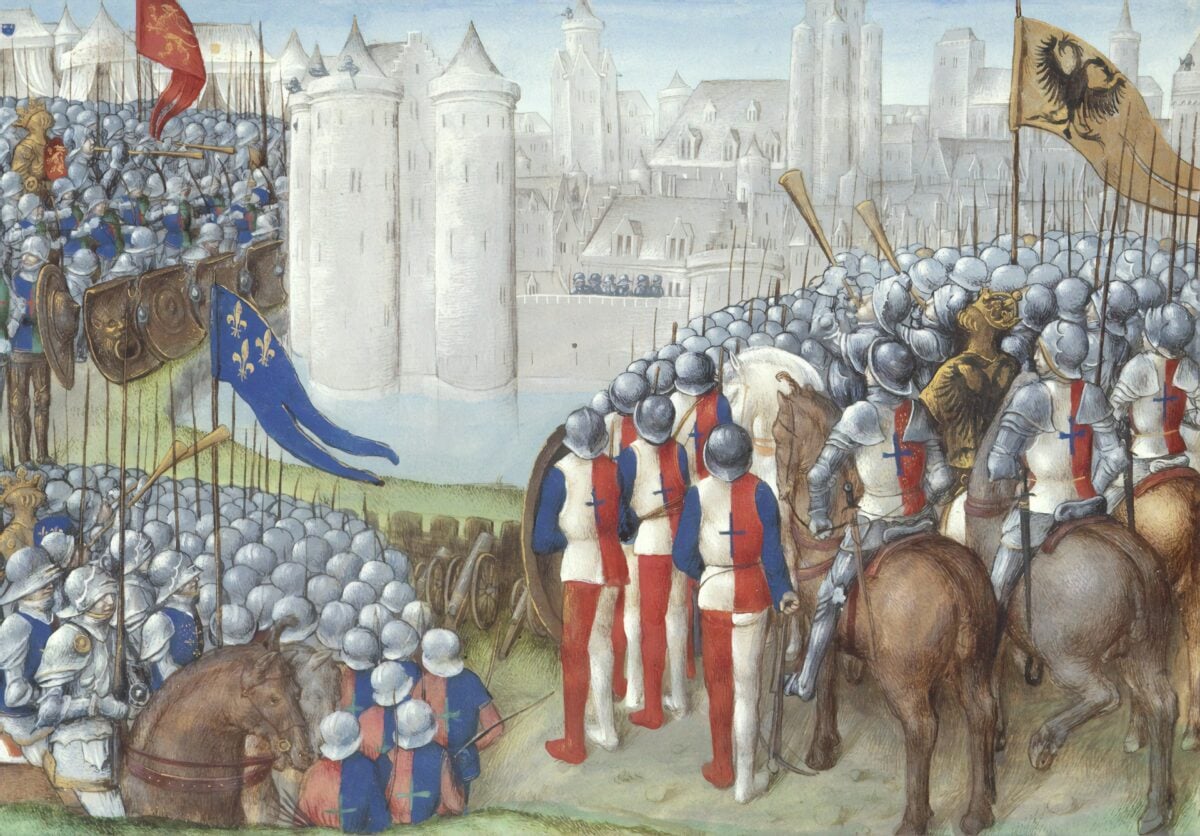
The Crusades get plenty of attention in history classes, but usually the focus lands on the big names like Saladin and Richard the Lionheart. In 1244, a largely forgotten battle at La Forbie saw Egyptian forces completely overwhelm the Crusaders who had retaken Jerusalem.
The Christians were driven out and never returned to control the Holy Land again. While the Battle of Hattin gets remembered as the dramatic loss, La Forbie was actually the final nail in the coffin for the Crusader kingdoms.
It ended any realistic hope that European Christians could permanently control the region, fundamentally shifting the balance of power in the eastern Mediterranean for good.
Battle of Poltava

Sweden used to be a legitimate superpower, which sounds weird now but was absolutely true in the early 1700s. King Charles XII of Sweden laid siege to the fortified city of Poltava in 1709, and when Russian Tsar Peter the Great arrived to defend it, Charles was already wounded and ill.
A disastrous counterattack led by his subordinate resulted in the decimation of a third of the Swedish Army. Sweden never recovered its position as a major European power.
Russia, meanwhile, emerged as the dominant force in Northern Europe, a position it would hold for centuries. This single battle essentially created the geopolitical map of Northern Europe that we recognize today.
Like Go2Tutors’s content? Follow us on MSN.
Battle of Shanhai Pass

The Ming Dynasty ruled China for nearly three centuries before internal rebellions tore it apart in the 1640s. When rebel leader Li Zicheng captured Beijing in 1644, the remaining Ming forces called on the Manchu armies for help against the rebels.
At Shanhai Pass, a strategic gate in the Great Wall, the Manchus defeated Li’s forces and then just kept going, pouring into China to take control themselves. The Manchus established the Qing Dynasty, which ruled for 300 years and was the last dynasty of Imperial China.
One desperate call for military assistance essentially handed China to foreign rulers for the next three centuries.
Battle of Zenta

The Ottoman Empire’s decline didn’t happen overnight, but certain battles accelerated it dramatically. In 1697, the Habsburg Empire led a coalition called the Holy League to stop Ottoman expansion into Europe.
At Zenta, Austrian forces under Prince Eugene of Savoy caught the Ottoman army crossing a river and inflicted catastrophic casualties. The defeat marked a turning point where the Ottomans shifted from expanding into Europe to desperately defending their existing territory.
The battle demonstrated that the Ottoman military was no longer the feared force it had been, emboldening European powers to chip away at Ottoman lands for the next two centuries until the empire finally collapsed after World War I.
Battle of Kapyong
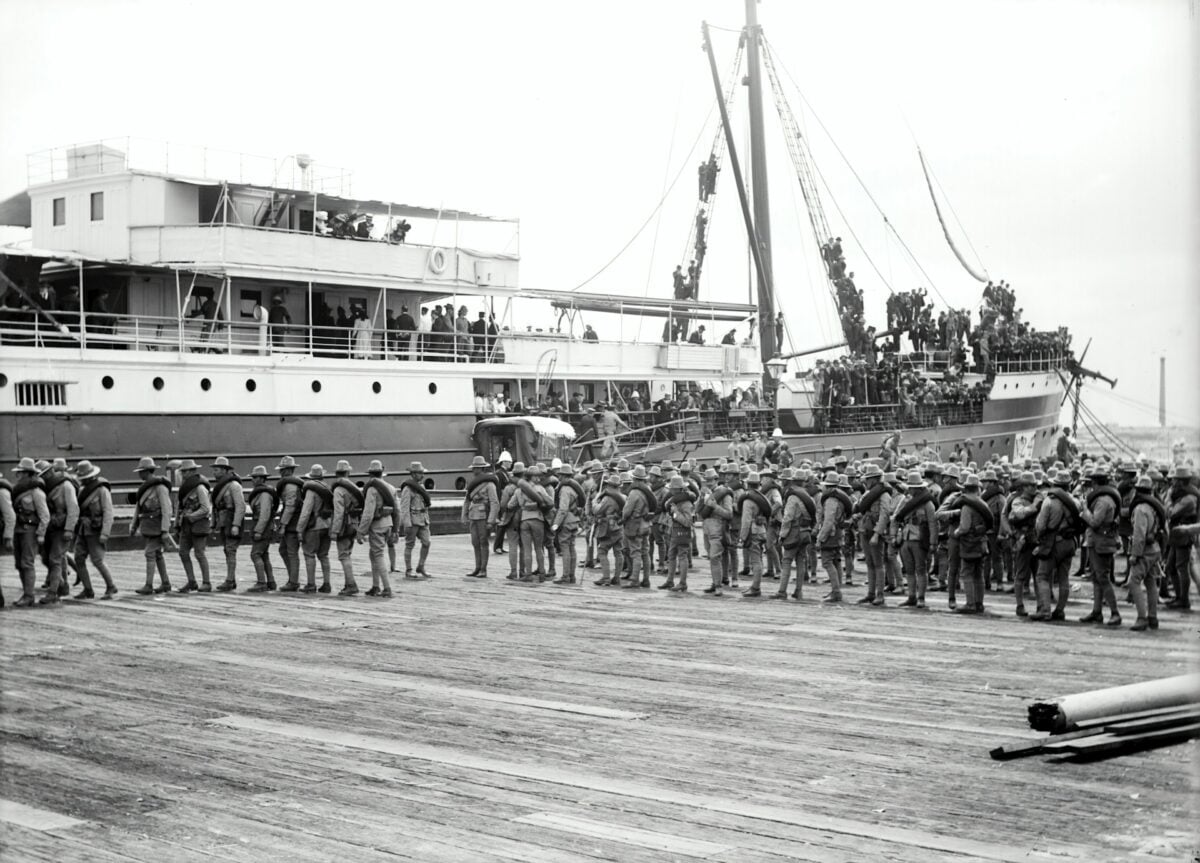
The Korean War earned its nickname “The Forgotten War” honestly, and specific battles within it disappeared even more completely. In April 1951, Canadian, Australian, and New Zealand forces held a strategic position at Kapyong against overwhelming Chinese numbers.
Their successful defense prevented Chinese forces from advancing on Seoul and demonstrated that UN forces could hold ground against human wave attacks. The battle showed that the seesaw conflict between North and South Korea could stabilize rather than ending in total victory for either side.
That stalemate still defines the Korean Peninsula today, with the armistice line from 1953 essentially unchanged and tensions remaining frozen in time.
Like Go2Tutors’s content? Follow us on MSN.
Battle of Manila

Most Americans know about the Spanish-American War but have no clue about what came next in the Philippines. In February 1899, fighting erupted between American forces and Filipino independence fighters in Manila, marking the start of a brutal three-year conflict.
The battle and subsequent war tested America’s role on the world stage, bringing complicated racial and cultural attitudes from home into imperial warfare. The conflict established the United States as a colonial power in Asia and set patterns for American interventions abroad that would continue through the 20th century.
It also created lasting tensions between the U.S. and the Philippines that affected regional politics for generations.
When Forgotten Doesn’t Mean Unimportant

The world was shaped by these battles even though they were not included in most history textbooks. Empires came and went, technology expanded across continents, and these conflicts drew the political lines we now consider to be clear.
Some of the most significant events occurred when no one was looking, so keep that in mind the next time someone acts as though the key turning points in history are all well known. The lost conflicts serve as a reminder that thousands of little events, not just the well-known ones that everyone remembers, shape the course of history.
One forgotten battlefield at a time, comprehending these underappreciated conflicts explains how our contemporary world truly came to be.
More from Go2Tutors!

- 16 Historical Figures Who Were Nothing Like You Think
- 12 Things Sold in the 80s That Are Now Illegal
- 15 VHS Tapes That Could Be Worth Thousands
- 17 Historical “What Ifs” That Would Have Changed Everything
- 18 TV Shows That Vanished Without a Finale
Like Go2Tutors’s content? Follow us on MSN.