27 Corner Store Treats That Cost Pocket Change and Made a Kid’s Entire Week
There was a specific kind of wealth that came from finding a crumpled dollar in an old coat pocket, and it had nothing to do with what that dollar could buy at a real store. It was corner store money.
Gas station money. The kind that got spent standing in front of a candy rack for ten straight minutes, weighing options with the seriousness of someone managing a retirement account.
Every neighborhood had a version of that store, and every kid who grew up near one remembers exactly which treats made the walk home feel like a small victory lap.
Now and Later
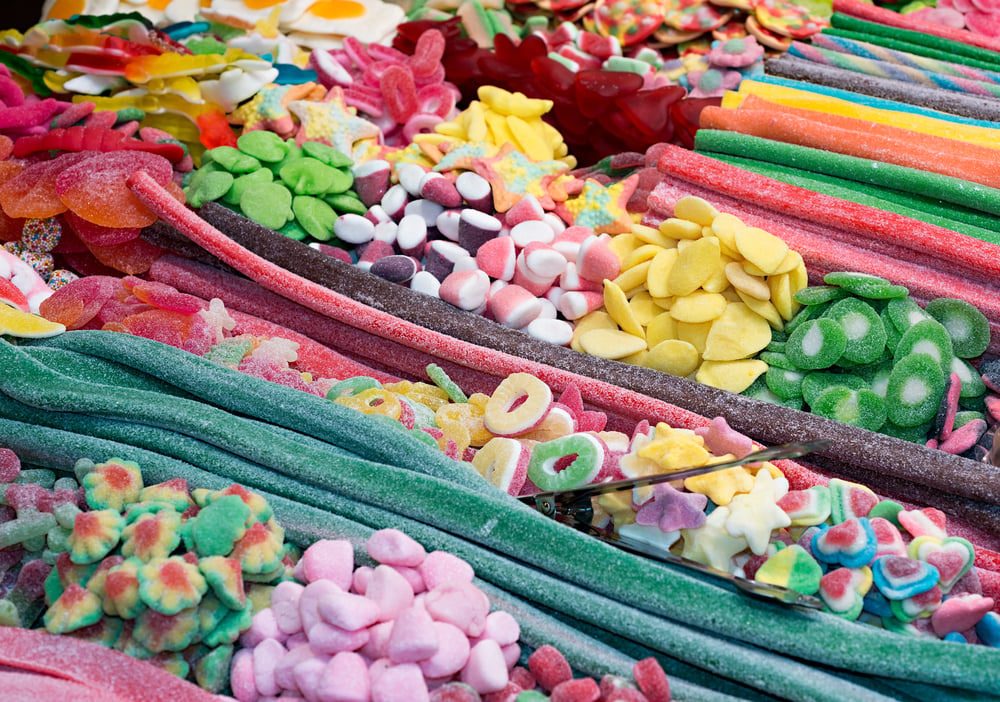
Now and Later bars were built for patience nobody had. You unwrapped one flavor, chewed until your jaw ached, and somehow still wanted more before the wrapper hit the trash.
A quarter bought a stack of them. That’s the whole math of a good childhood.
Blow Pops
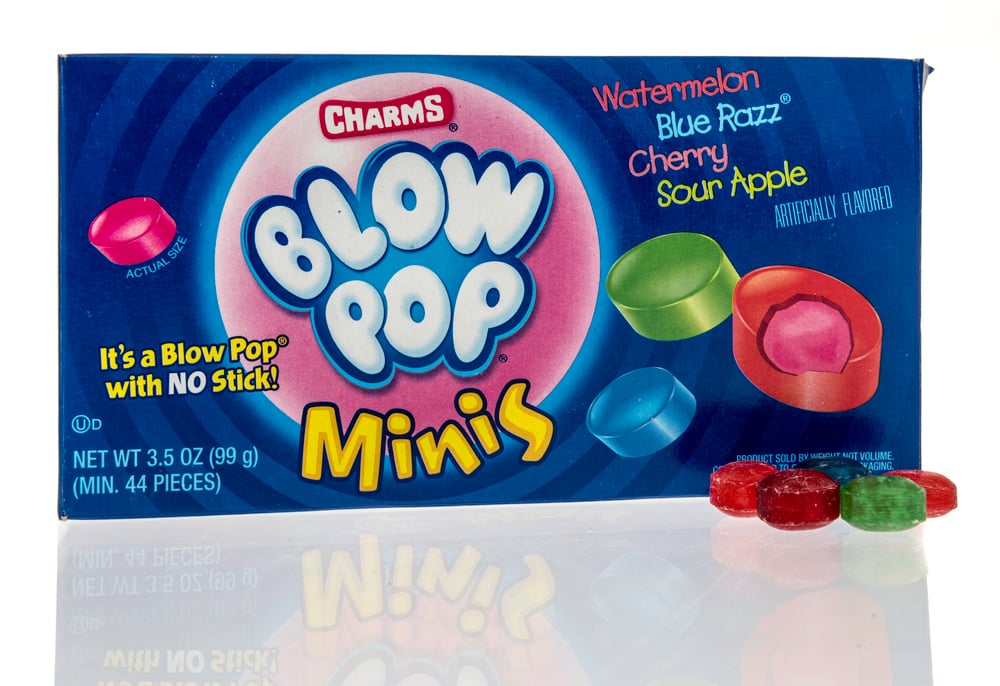
Blow Pops asked for a kind of restraint most eight-year-olds didn’t have — the candy shell demanded patience, the bubble gum center demanded none, and somehow every kid figured out the shortcut of biting straight through anyway (parents hated this, dentists hated this more). And the real trick wasn’t the flavor, it was the math: one lollipop, two treats, zero extra cost.
So you’d trade one Blow Pop for two of something else and somehow still feel like you won. Nobody taught you that logic, you just absorbed it standing at the counter with change sweating in your palm.
Jolly Ranchers
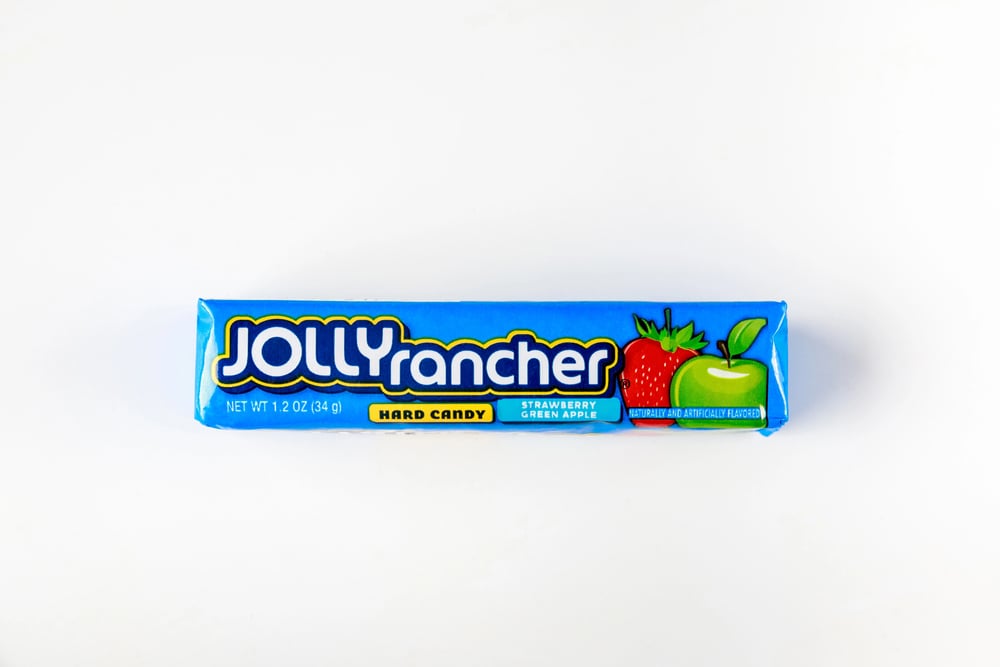
Jolly Ranchers were less candy than architecture — hard-shelled, stubborn, built to outlast an entire recess if you let them. Watermelon was currency among friends, blue raspberry was tolerated, and the cinnamon ones sat at the bottom of the jar like unwanted houseguests nobody claimed.
There’s something almost structural about how long they lasted, dissolving slow enough that a single piece could carry you through math class and halfway into science. That kind of patience is rare in candy now, and rarer still in the kids who used to have it.
Bit-O-Honey
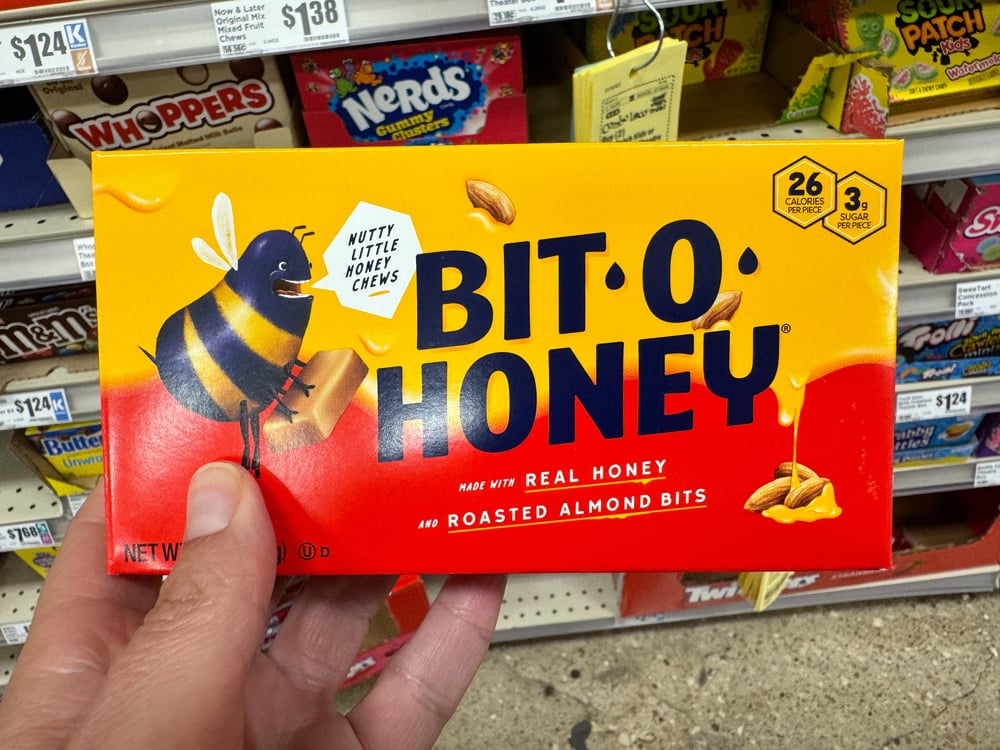
Bit-O-Honey is the most underrated candy bar ever sold near a cash register, full stop. It looks unassuming, wrapped in wax paper like something your grandmother packed for a road trip, and it chews like it’s daring your fillings to survive the encounter.
To be fair, that toughness is the whole point — a candy that fights back a little feels earned. Anyone who dismisses it as old-fashioned has clearly never had one on a day that needed fixing.
Atomic Fireballs

Atomic Fireballs did not care about your comfort. One piece, full mouth, immediate regret, and somehow you’d buy another the very next week.
The burn was the point. Ten cents for a small act of self-inflicted suffering, and every kid on the block understood exactly why.
Swedish Fish
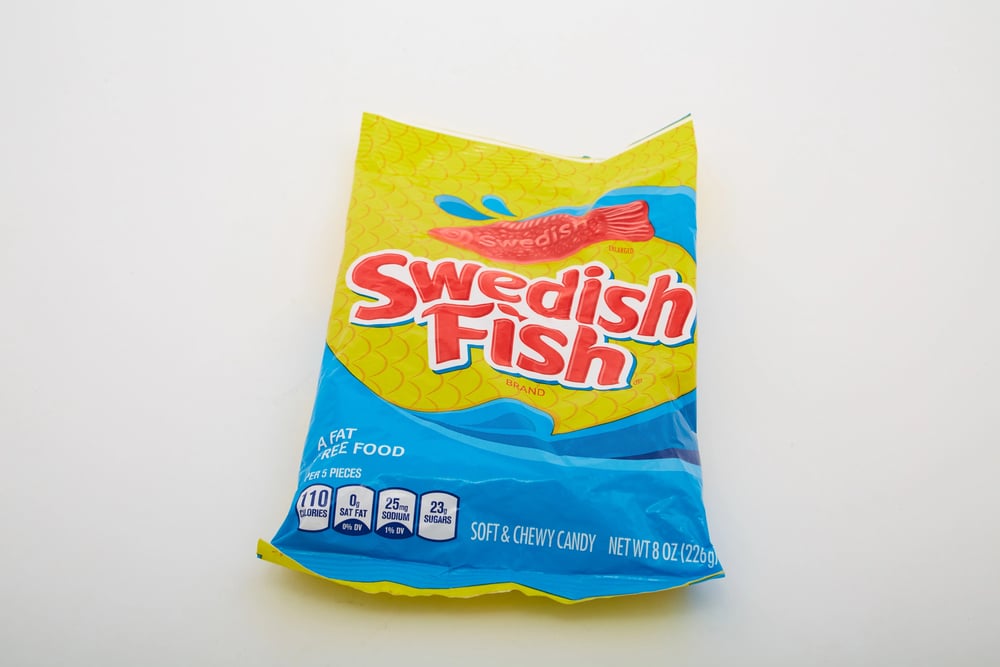
Swedish Fish never made sense as a flavor, nobody could quite name what they tasted like, only that it worked (the soft chew made them outlast the hard candies by a mile). And the bag itself became its own currency — three red fish traded for one green one, even though green and red taste identical, if anyone’s honest about it.
So the whole system ran on nothing but agreed-upon nonsense, the way a lot of childhood economics did: everyone accepted the terms and nobody questioned them. That’s the part adults forget, the trading only worked because nobody dared point out the trick.
Wax Bottle Candy
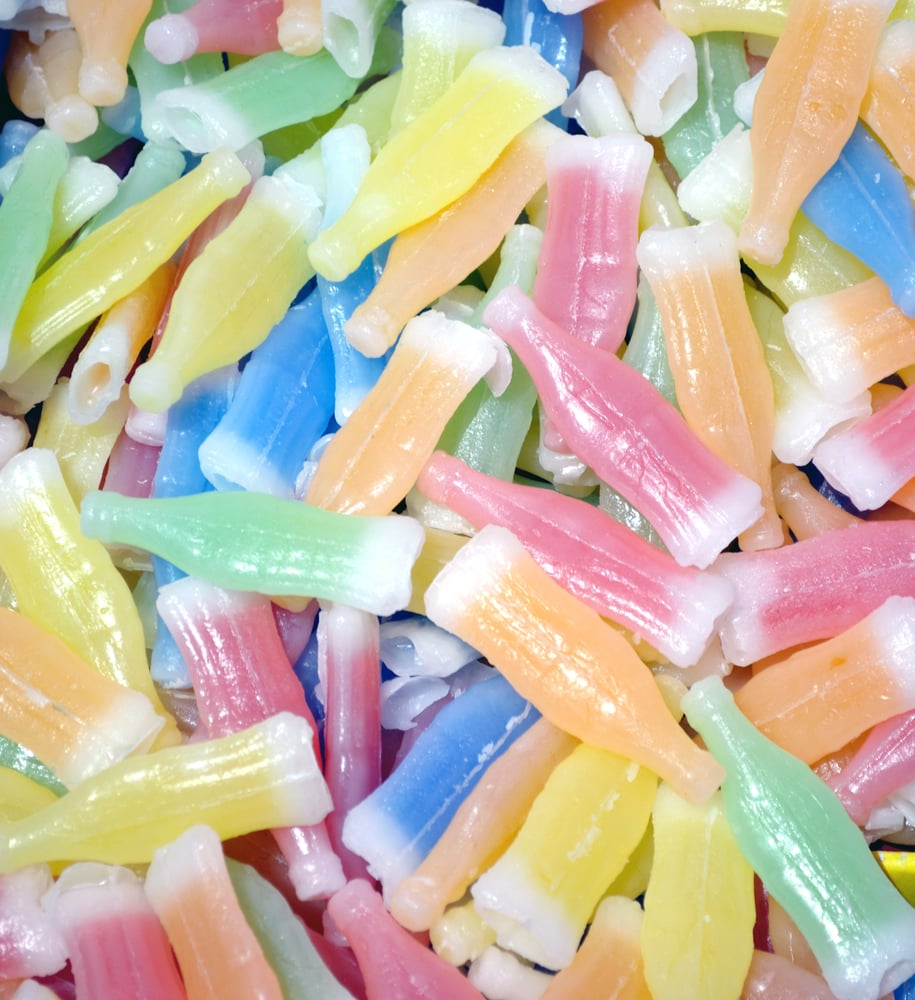
Wax Bottle Candy asked kids to drink flavored syrup out of something shaped like a miniature soda bottle, then chew the wax like gum afterward, which in hindsight is a strange ritual to hand a seven-year-old without question. The bottles came in a net bag, red and yellow and green, glowing like tiny traffic lights against the candy rack.
There was a quiet satisfaction in biting the top off just right, a small victory measured in wax and sugar water. Nobody remembers the flavor exactly, only the ritual, which says something about what candy is actually for.
Pixy Stix
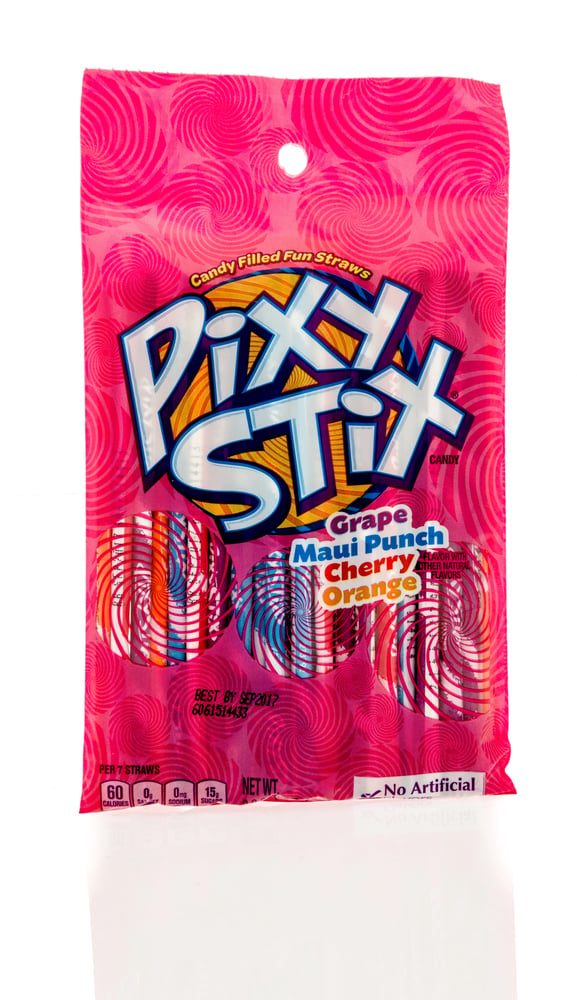
Pixy Stix are just sugar in a straw, and pretending otherwise insults everyone’s intelligence. No chocolate, no chew, no pretense of nutrition — just flavored powder dumped straight down the throat like a kid was topping off a tank.
That bluntness is exactly why it worked, and why parents dreaded the sight of the wrapper on the kitchen counter. Turns out honesty sells, even in candy form.
Bazooka Bubble Gum
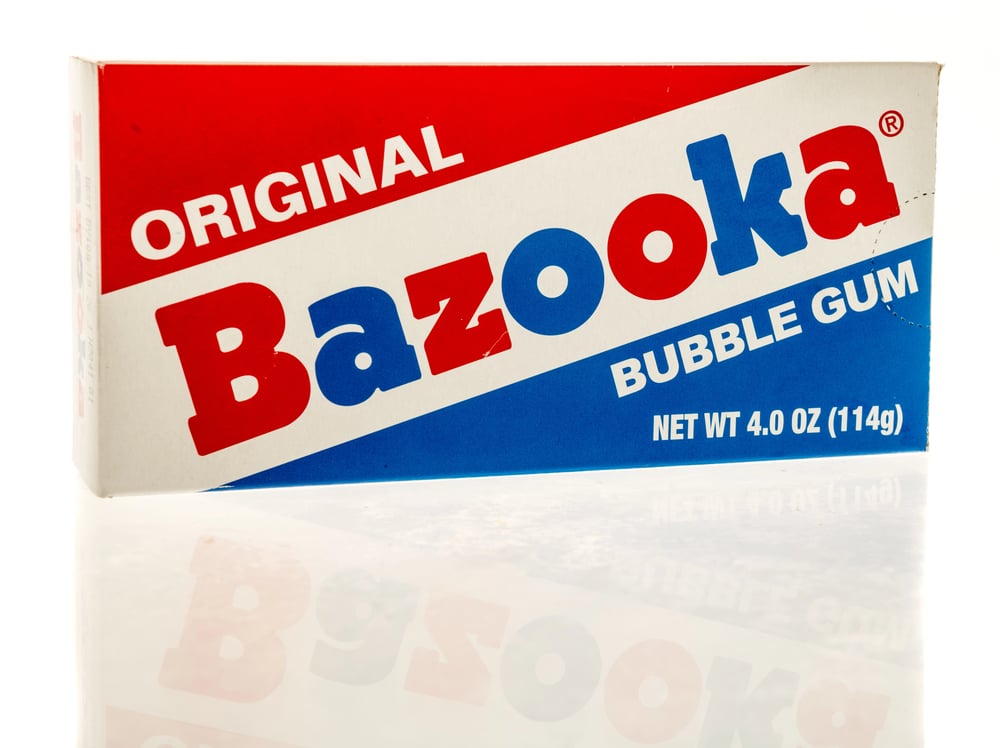
Bazooka gum was never about the gum. It was about the comic wrapped around it, three panels of Bazooka Joe jokes that made no sense but got read anyway.
The gum itself hardened fast and lost flavor faster. Didn’t matter.
You bought it for the comic and the bubble, and the gum was just the excuse.
Ring Pops
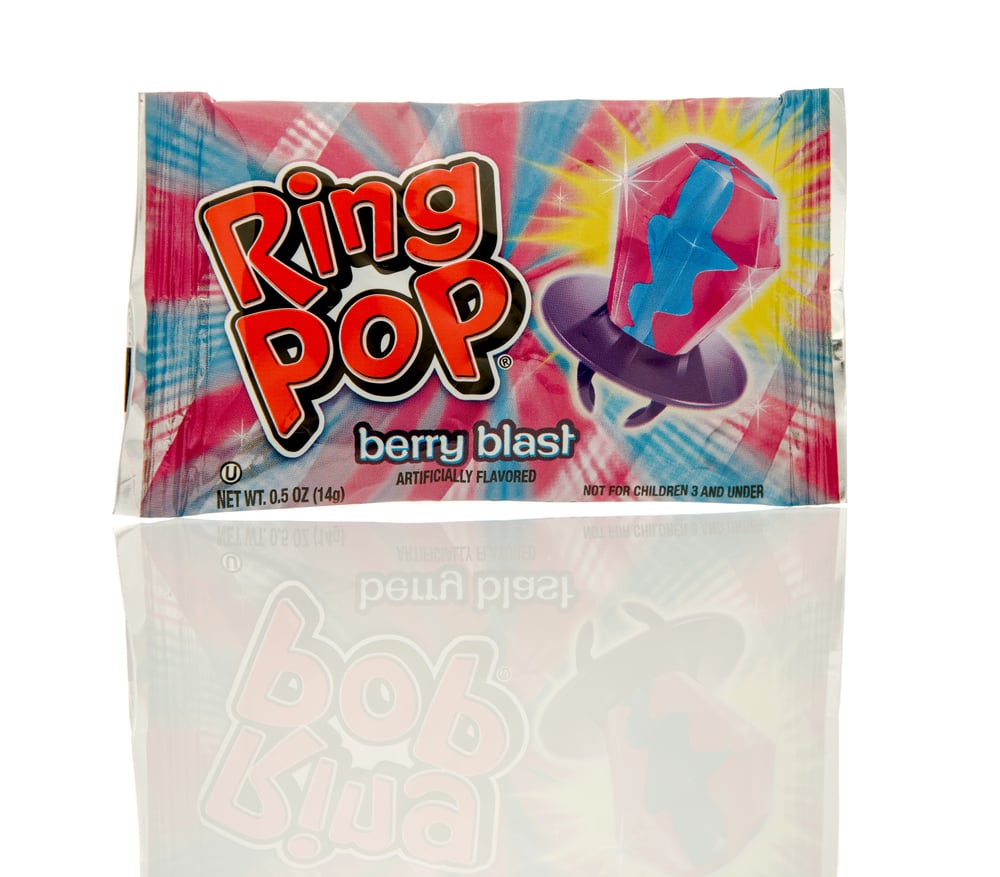
Ring Pops turned candy into a kind of performance — you wore it before you ate it, held your hand up at recess like the ring meant something, and somehow every kid understood the unspoken rule that you licked it slowly to make the show last. And the flavor barely mattered next to the theater of it: cherry, blue raspberry, whatever was in the display box that week, all secondary to the fact that you had a giant plastic jewel on your finger.
So for one lunch period a kid could feel briefly rich, ridiculous as that sounds now. The whole thing cost less than a dollar and still managed to feel like an event, which is more than most actual jewelry can claim.
Airheads
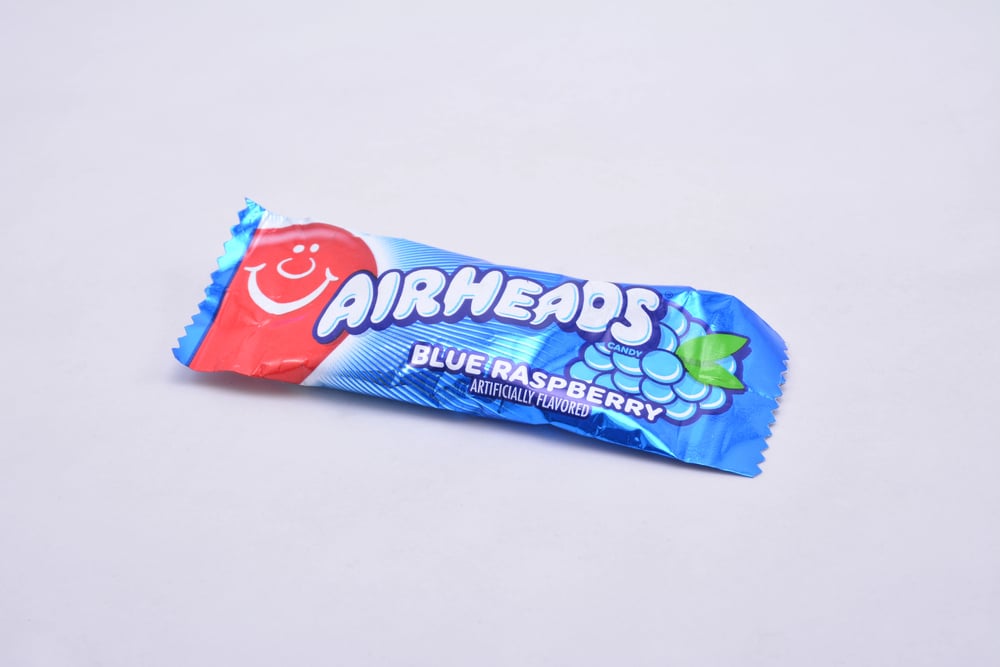
Airheads stretched like a rubber band with better manners — thin, foil-wrapped, easy to underestimate until the first bite pulled tight against your teeth. The blue raspberry flavor tasted like nothing found in nature, and that was the appeal, a flavor invented purely to be loud.
Unwrapping one took longer than eating it, which felt backwards in a way that never bothered anyone at the time. There’s a particular kind of joy in a candy that doesn’t pretend to be anything but candy.
Warheads
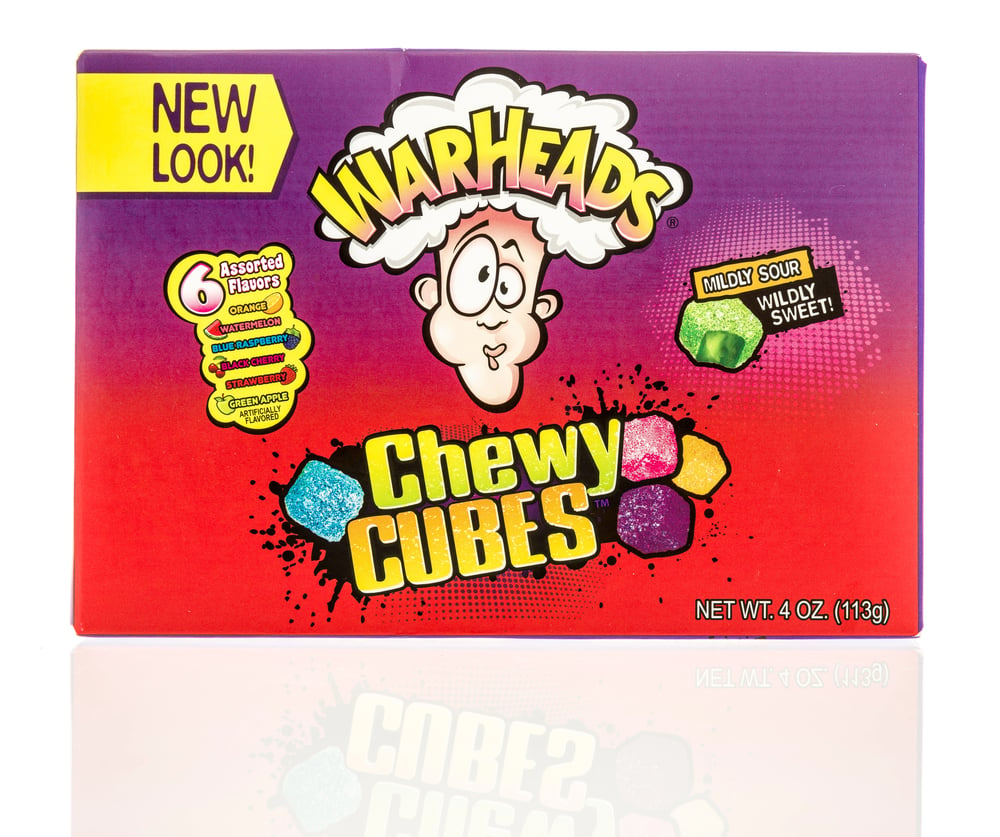
Warheads were a dare disguised as candy, and every kid fell for it anyway. The sour coating hit like a slap, eyes watered, faces twisted, and somehow the whole point was to look ridiculous in front of your friends on purpose.
To be fair, that’s a genius bit of marketing for a candy that costs less than a dollar. Nobody needed convincing twice — the reputation did all the selling.
Nerds
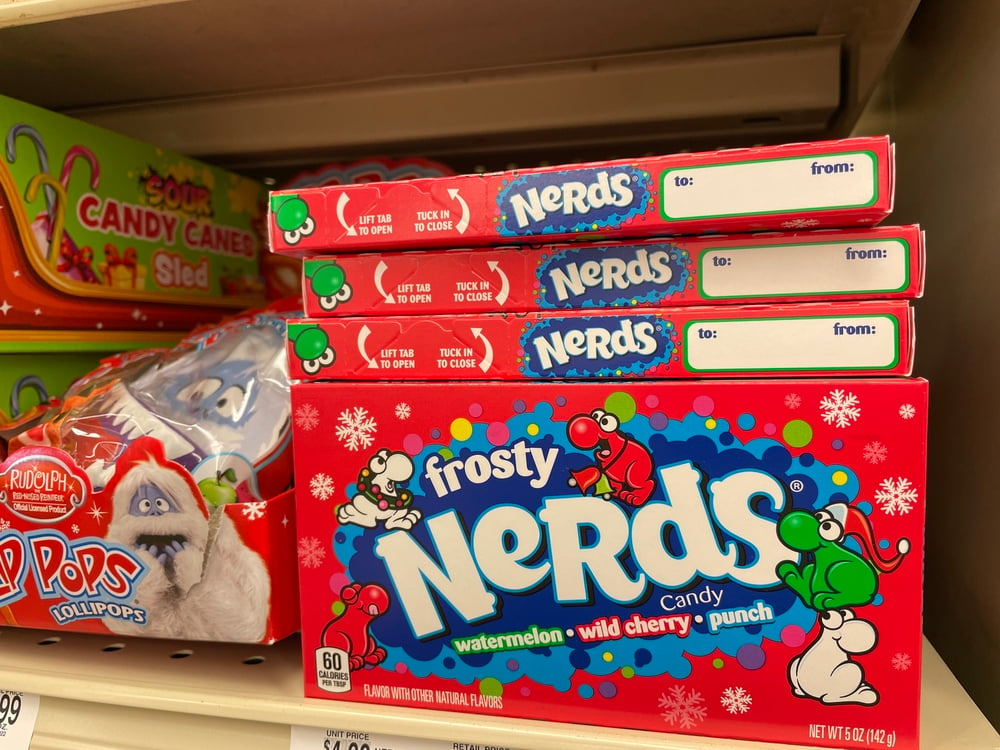
Nerds came two flavors to a box, split down the middle like a tiny truce. Grape and strawberry never touched, never mixed, and somehow that mattered enormously to a kid pouring them straight into their mouth.
The box was awkward to hold and impossible to share cleanly. Bought anyway, every single time.
Sour Patch Kids
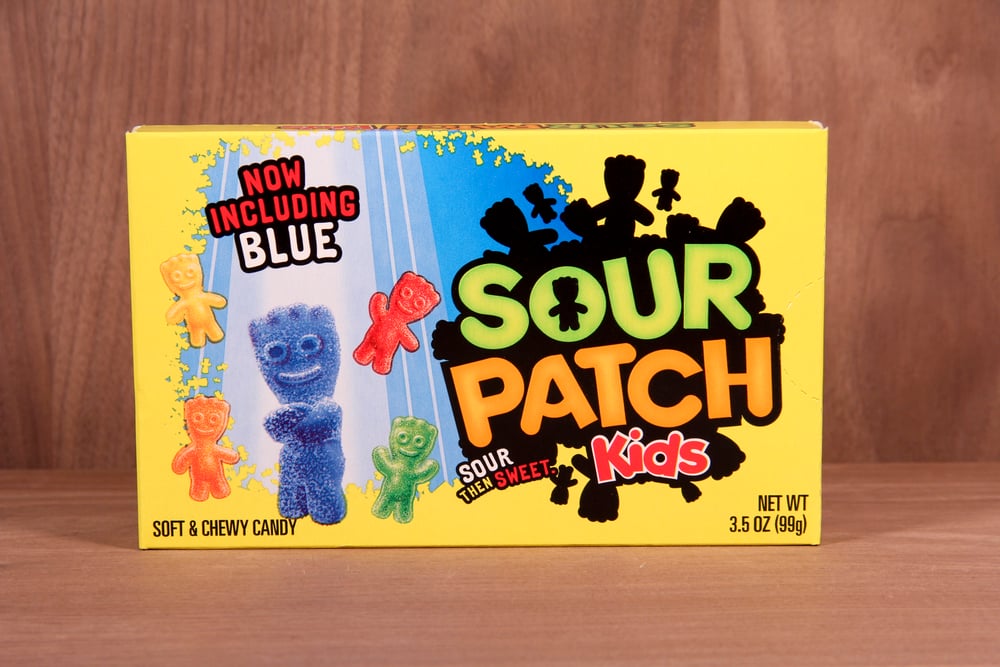
Sour Patch Kids ran on a promise right there in the slogan — sour first, sweet after — and somehow delivered on it every time, which is rarer in candy than anyone admits. And the little gummy shapes, vaguely human, vaguely not, got bitten in a specific order depending on which kid you asked (head first, feet first, whichever limb had the most sour sugar still clinging to it).
So a bag that cost less than a bus fare somehow turned into a small ritual, repeated a thousand times without anyone questioning why. The candy itself hasn’t changed much in decades, and honestly: it didn’t need to.
Big League Chew
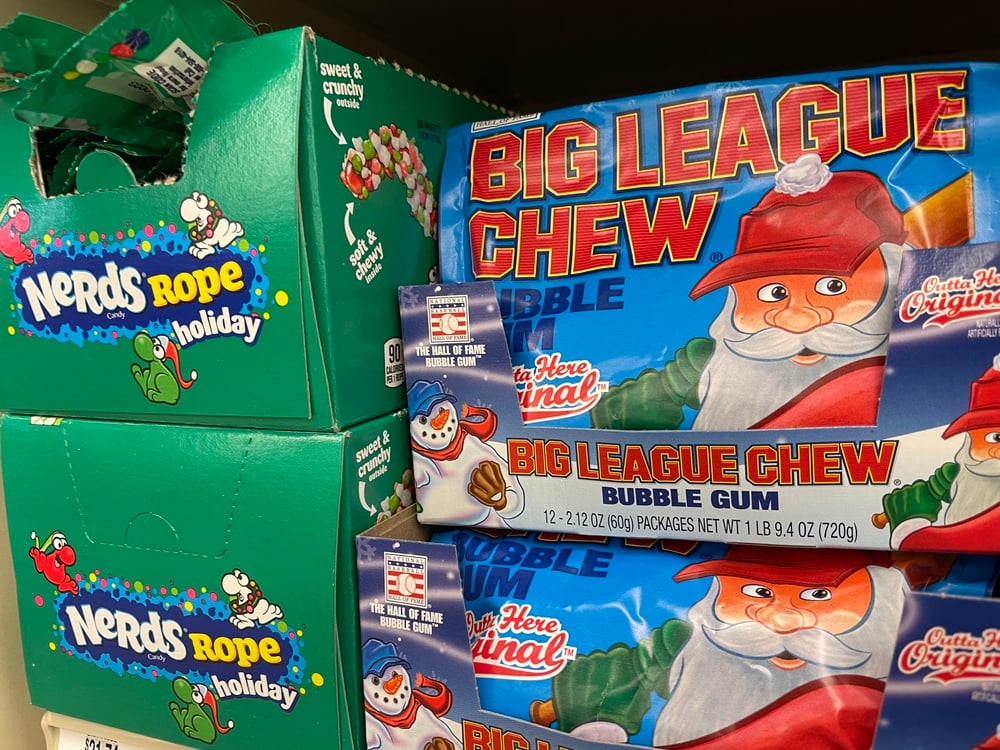
Big League Chew came shredded like pink confetti stuffed into a pouch, built for kids who wanted the ritual of a dugout without any of the actual baseball. Cramming a fistful into your cheek was the whole point, volume over flavor, the same way the sport itself rewards patience over speed.
It left a faint pink stain on the inside of your cheek that lasted long after the flavor faded, a strange little proof that you’d done it right. That’s candy built around imitation, not taste, and somehow that was enough.
Charleston Chew
Charleston Chew only makes sense frozen, and anyone eating it at room temperature is doing it wrong. Freeze it, then smack it against the edge of a table until it shatters into jagged, chewable shards — that’s not a suggestion, that’s the entire method.
It’s a candy bar that requires effort and mild property damage, which honestly makes it more memorable than most bars that ask nothing of you. Vanilla, chocolate, or strawberry, it never mattered which flavor — the ritual was always the same.
Tootsie Rolls
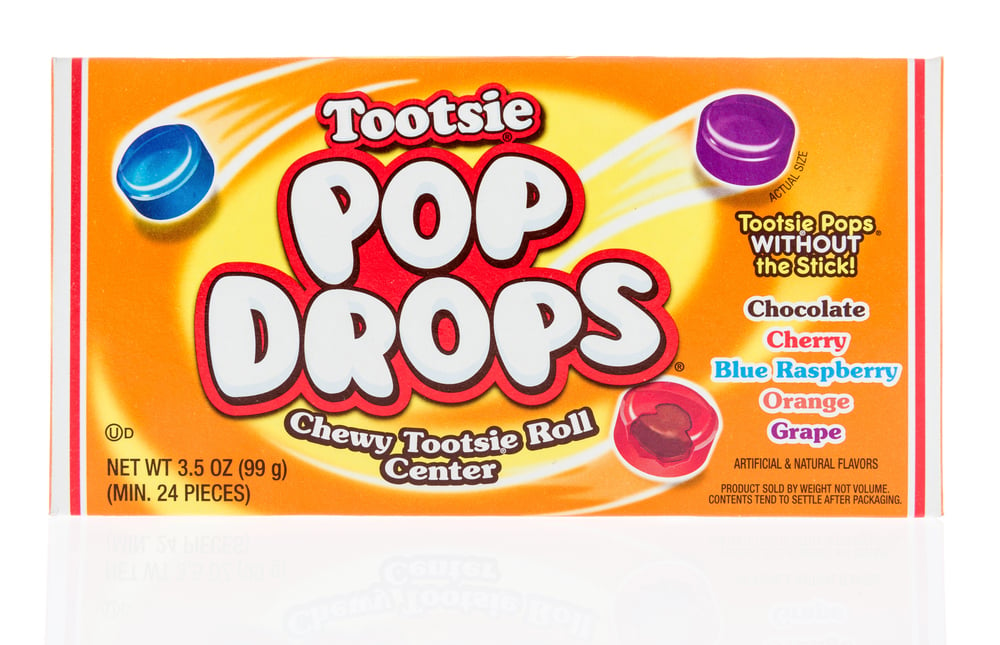
Tootsie Rolls were the fallback candy, the one you got when the good stuff sold out. Chewy, chocolate-adjacent, endlessly available.
Nobody ever picked one first. Everybody ate a hundred of them anyway.
Tootsie Pops
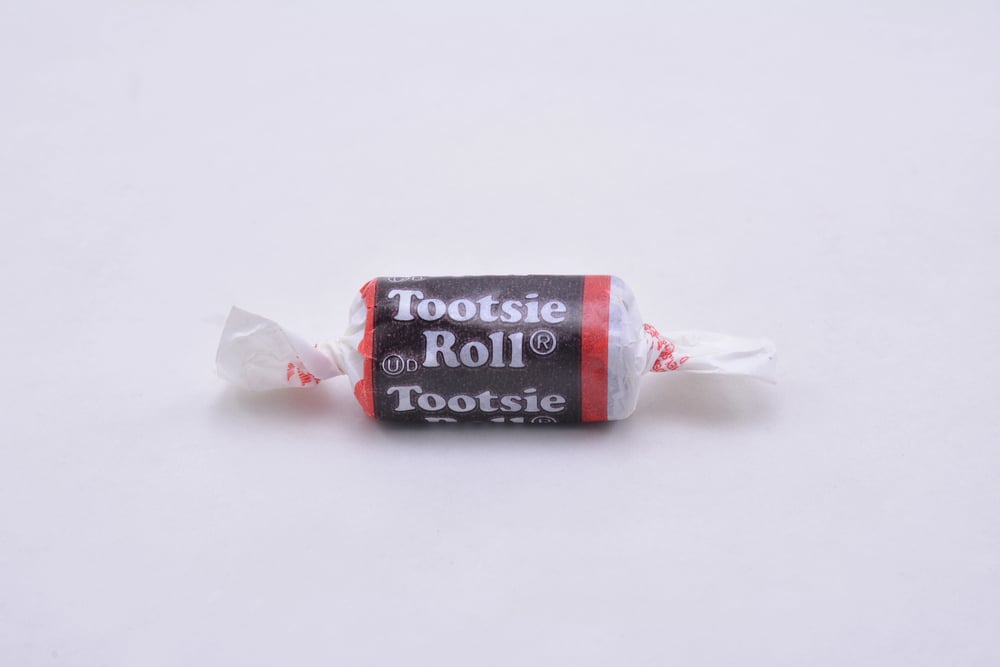
Tootsie Pops carried a mystery inside them that every kid took entirely too seriously — how many licks to the center, a question the wrapper itself posed with that cartoon owl (who, notably, never gave a straight answer), as if childhood needed one more unsolvable riddle. And the answer never mattered nearly as much as the argument about it — kids counting out loud at the bus stop, losing count, starting over, biting through out of pure impatience.
So the actual chocolate center, when you finally reached it, felt almost anticlimactic: a quiet ending to a very loud debate. The lollipop was cheap, but the argument it started was worth more than the candy ever was.
Slim Jims
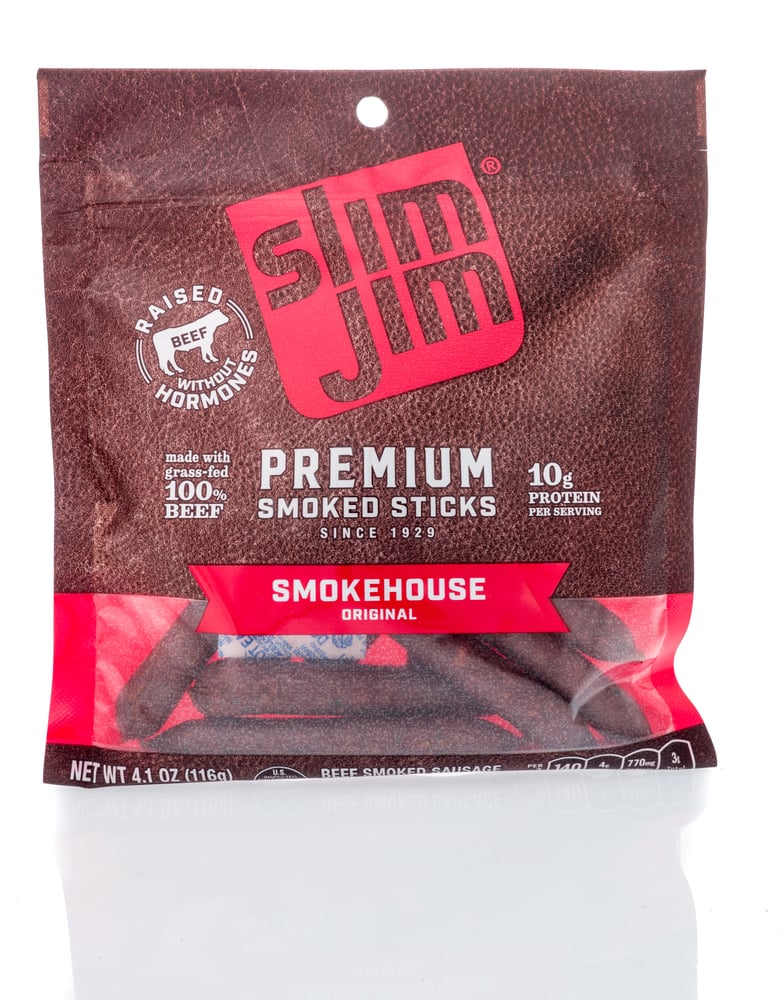
Slim Jims sat by the register like a dare wrapped in plastic, all salt and gristle and a smell that clung to your hands for an hour afterward. Kids bought them less for hunger than for the swagger of it, chewing on something that looked more like a prop from a western than an actual snack.
The texture corrected you fast if you expected anything close to real meat, tough and stubborn against the teeth in a way that felt almost intentional. Underneath the bravado, it was just spiced protein in a wrapper, but nobody bought it for the protein.
Andy Capp’s Hot Fries
Andy Capp’s Hot Fries are the most aggressively orange snack a kid could buy for less than a dollar, and that’s a compliment. They stained fingers, stained tongues, stained anything they touched, and nobody cared because the heat-to-crunch ratio was close to perfect.
To be fair, plenty of snacks have tried the fry-shaped-chip trick since, and none of them hit quite the same. The bag was small, the burn was real, and that combination is exactly why it worked.
Flamin’ Hot Cheetos
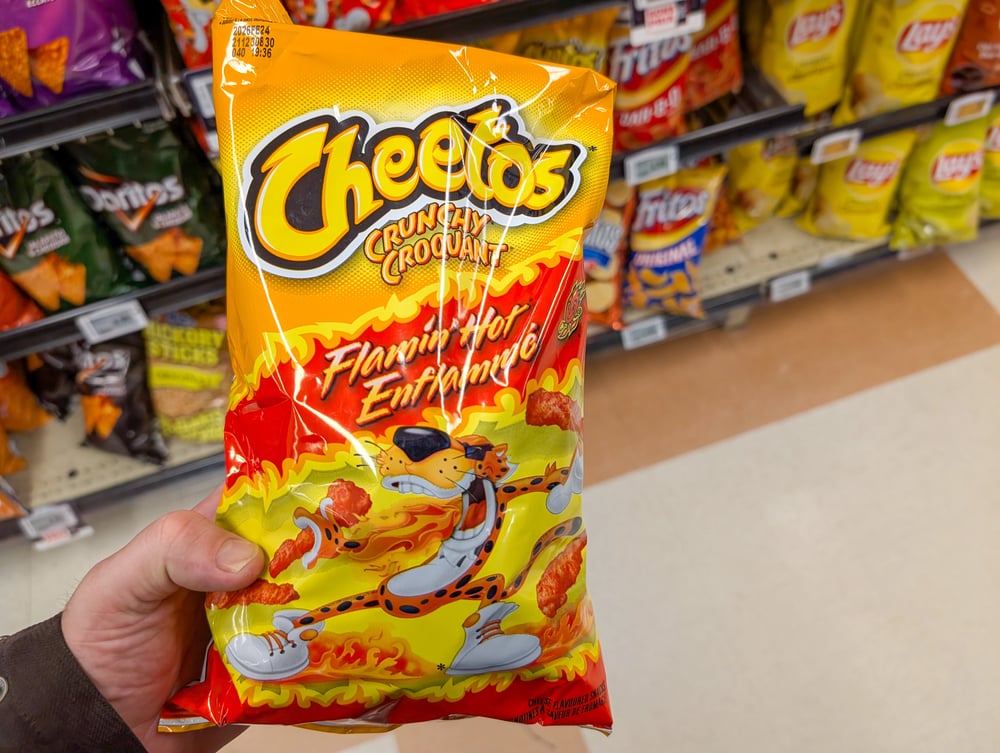
Flamin’ Hot Cheetos changed the entire candy aisle without technically being candy. Kids bought them with birthday money, lunch money, whatever money existed.
The orange dust stayed on your fingers for the rest of the day. Worth it, every single time.
Bugles
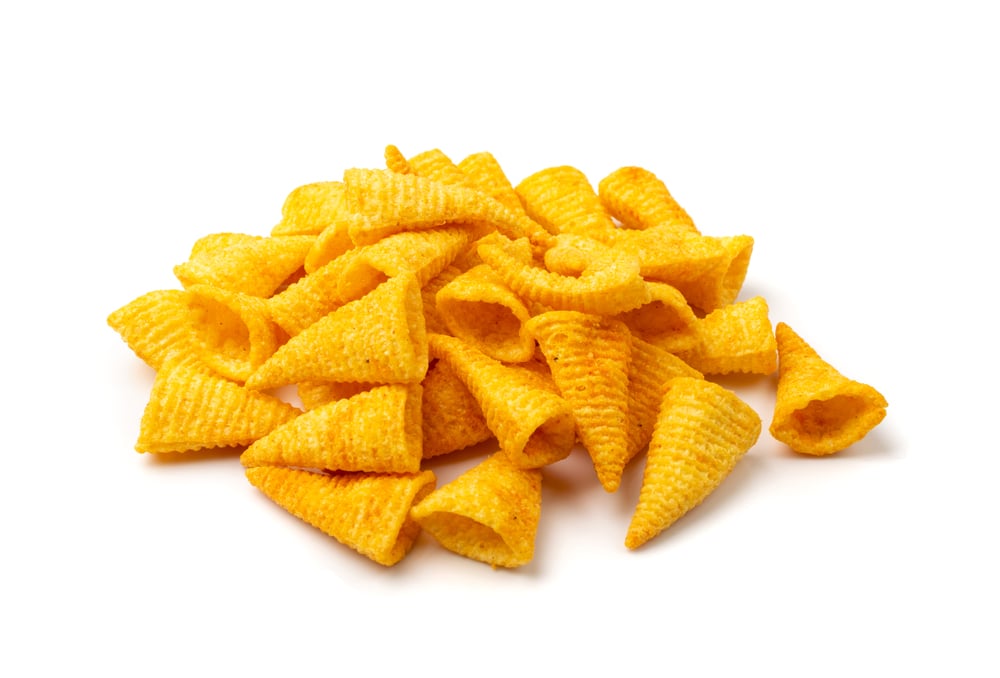
Bugles turned corn chips into finger puppets, and every kid who ever opened a bag knew exactly what to do with them before eating a single one — cone-shaped, hollow, perfectly sized for ten fingers at once, which is a strange design choice for a snack food but a genius one for entertaining a bored kid in a car. And the taste barely registered next to the performance: fangs, tiny horns, a brief puppet show performed entirely with corn chips before the whole cast got eaten.
So Bugles succeeded less as a snack and more as a toy that happened to be edible, which might be the most honest description any junk food has ever earned. That’s a strange kind of genius, the kind nobody at the company probably set out to design on purpose.
Zebra Cakes
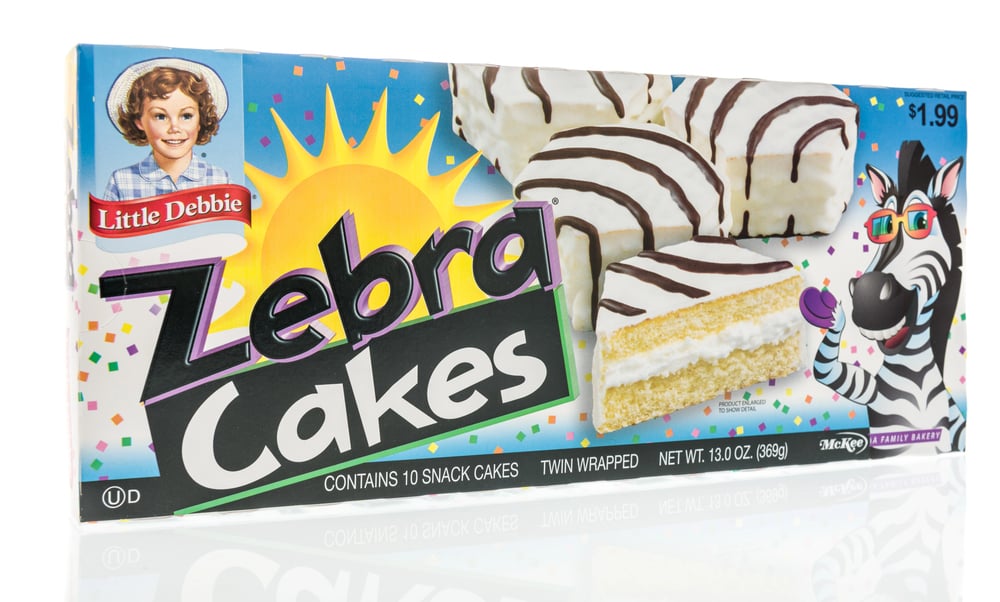
Zebra Cakes looked like something from a bakery that got the stripes wrong, white frosting swirled over chocolate cake in a pattern that never quite matched the box. They were softer than they had any right to be for something wrapped in plastic and sitting on a shelf for weeks, almost suspiciously so.
Splitting one in half revealed the same soft yellow crumb every time, dependable in a way most snack foods only pretend to be. There’s a comfort in something that never surprises you, and Zebra Cakes built an entire identity on exactly that.
Icee Cups
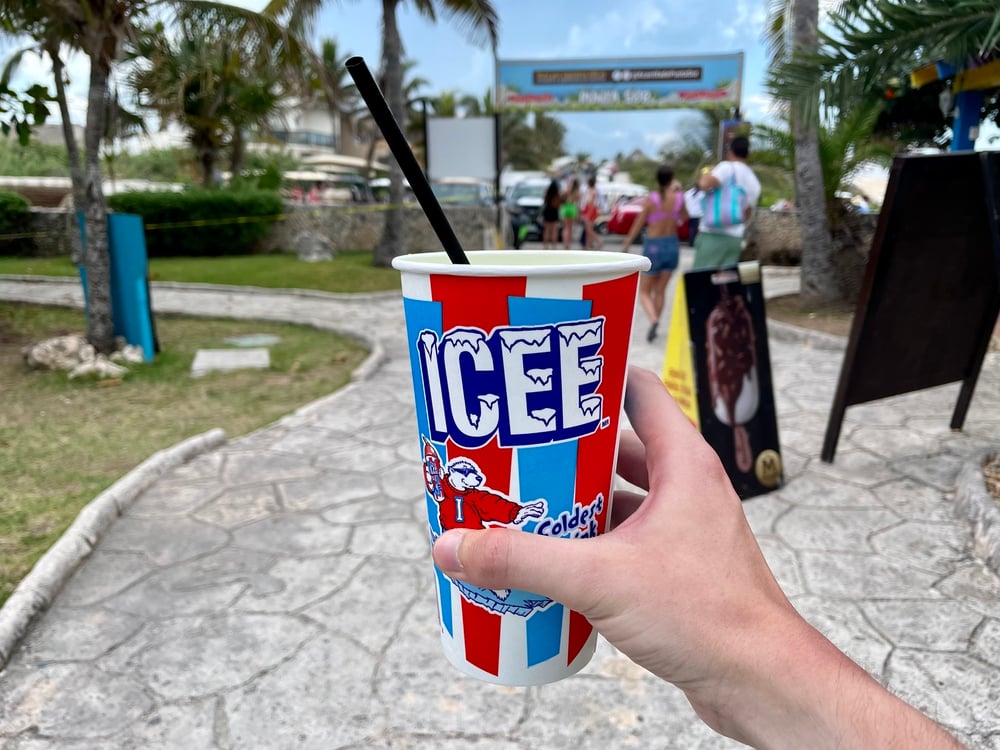
An Icee is not a drink, it’s an event, and treating it like a beverage misses the entire point. The machine at the front of the store, spinning blue and red syrup into slush, turned a simple errand into a small negotiation over which color mattered more that day.
Mixing the flavors was mandatory, not optional — anyone who drank a single-flavor Icee on purpose was playing it safe in a way that didn’t earn respect. It cost less than a dollar and somehow still felt like the best decision made all week.
Big Hunk
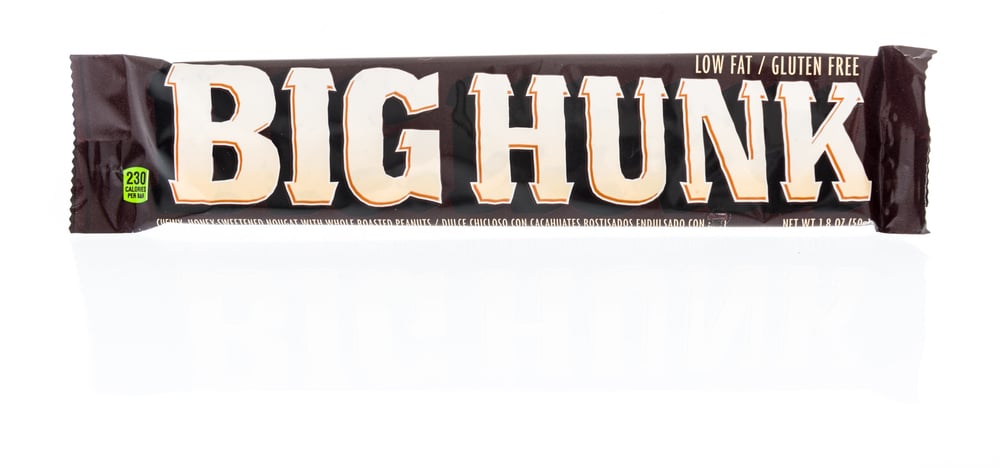
Big Hunk never got the credit it deserved. A nougat bar, dense and chewy, studded with peanuts, sold in a wrapper that looked decades out of date even when it was new.
Nobody chose it first at the counter. Everyone who tried it kept coming back for more.
Chick-O-Stick
Chick-O-Stick looked orange enough to glow in the dark, crumbly and strange, coated in a texture that fell apart before it ever reached the back of your mouth — and somehow that mess was half the appeal, crumbs scattering across a shirt that would need washing later regardless. And the peanut butter flavor underneath tasted almost like a candy bar that had given up on being neat, honest about its own chaos in a way most snacks refuse to be.
So kids kept buying it anyway, drawn less to the taste and more to the strangeness of a candy that behaved like nothing else on the shelf. That’s the whole appeal, really: it never once tried to be tidy.
Mary Janes
Mary Janes sat at the bottom of every trick-or-treat bag like the candy equivalent of a consolation prize, peanut butter and molasses wrapped in wax paper that never quite unwrapped clean. They chewed slow, sticking to back teeth in a way that demanded patience nobody under ten years old actually had.
And yet somebody always ate them, quietly, without complaint, the way people finish vegetables at dinner out of some vague sense of obligation. There’s a strange loyalty kids show old candy, even the kind nobody picks first.
What a Dollar Used to Buy
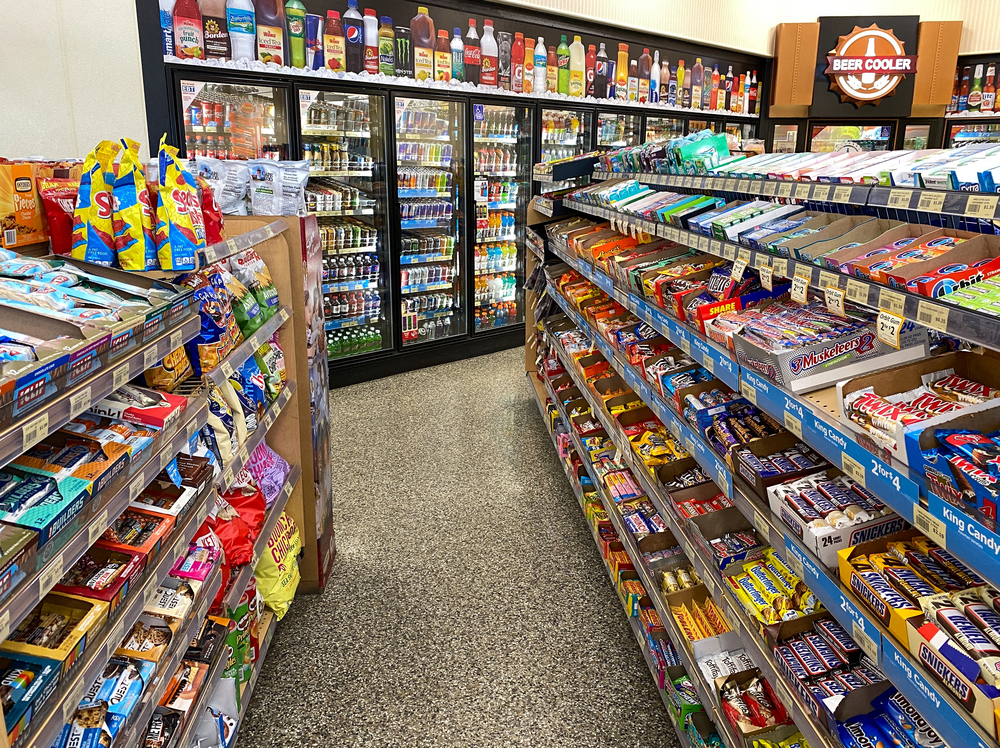
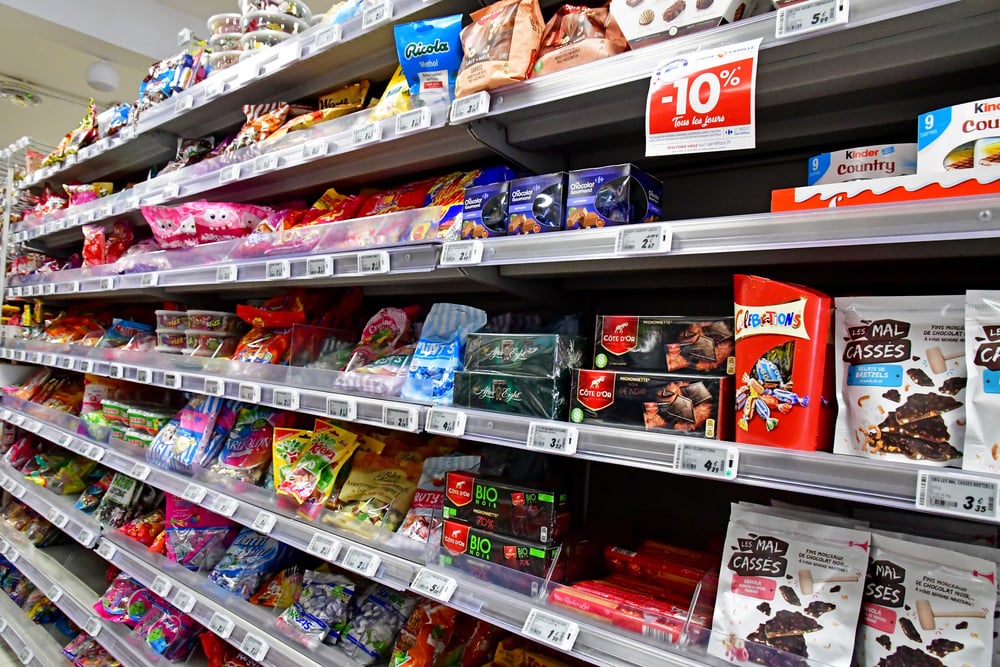
None of these treats were expensive, even by the standards of their own decade, and that was always the quiet magic of the corner store. The value was never really in the candy — it was in the walk there, the count of loose change, the ten minutes spent deciding between two things that cost the same and somehow felt like the biggest decision of the day.
A kid with a dollar and no adult supervision was, for a few minutes, completely in charge of something. That’s a harder thing to buy now, no matter how much change is in the jar.
More from Go2Tutors!

- The Romanov Crown Jewels and Their Tragic Fate
- 13 Historical Mysteries That Science Still Can’t Solve
- Famous Hoaxes That Fooled the World for Years
- 15 Child Stars with Tragic Adult Lives
- 16 Famous Jewelry Pieces in History
Like Go2Tutors’s content? Follow us on MSN.