33 Songs That Played on the Radio During Summer Road Trips and Still Sound Like Freedom
There is something specific that happens when a song comes on the radio while the car is moving and the windows are down and the summer outside is doing exactly what summer is supposed to do. The song stops being just a song.
It absorbs the light, the speed, the particular heat of that afternoon, and it carries all of it forward into every subsequent listen. Decades later, a few opening bars can put you back in the back seat, watching fence posts blur past, somewhere between lunch and wherever you were going.
These are the songs that earned that place. They played on AM and FM radio during summer road trips across thirty years, and they have never quite sounded like anything else since.
“Born to Run” — Bruce Springsteen (1975)

Everything about this song is motion. From the opening guitar to the saxophone breakdown to Springsteen’s specific hunger in the lyric, it is built for a highway at night with no particular destination.
He wrote it about escape, about New Jersey, about the feeling of being twenty-three and needing something to happen. It became the de facto anthem of everyone in a car going somewhere better than where they’d been.
“Life Is a Highway” — Tom Cochrane (1991)
The metaphor is in the title and Tom Cochrane commits to it completely for four and a half minutes. The steady mid-tempo rhythm sits exactly at driving speed, the chorus is designed to be shouted rather than sung, and the overall effect on a highway in July is close to euphoric.
Rascal Flatts covered it for the Cars movie in 2006, which introduced it to an entirely new generation of back-seat passengers who had no idea about the original.
“Fast Car” — Tracy Chapman (1988)
The song is ostensibly about leaving — about a very specific kind of leaving, born from very specific circumstances. But it locked into the collective imagination as a driving song because the guitar figure mimics acceleration and the chorus arrives like a destination you’d been hoping for since the first verse.
Tracy Chapman played it on Saturday Night Live in April 1988 and it became the defining song of that summer’s radio rotation.
“Take It Easy” — The Eagles (1972)

Jackson Browne and Glenn Frey wrote it on a corner in Winslow, Arizona, and it has been living on highways ever since. The song’s tempo is not fast — it is, in fact, very specifically easy — and that relaxed, sun-drenched quality is exactly what makes it work at 65 miles per hour in August with the window cracked.
The Eagles made country-rock sound like a destination in itself.
“Runnin’ Down a Dream” — Tom Petty and the Heartbreakers (1989)

The first ten seconds are a full-throated declaration that something good is about to happen. The riff, the rhythm, Petty’s specific drawl — all of it arrives at once and gives the car a sense of direction even when the road doesn’t particularly.
The music video is Tom Petty driving alone on a highway, which is also what happened to every adult who heard this on the radio and instinctively reached for the volume knob.
“Don’t Stop Believin'” — Journey (1981)

The piano intro alone can turn a gas station parking lot into something cinematic. Journey wrote what is probably the most persistently popular rock song of its decade, and it appears on more road trip playlists than any statistical analysis would predict.
The characters in the lyric are on a train, but nobody holds that against it. The feeling it produces is unmistakably automobile.
“Go Your Own Way” — Fleetwood Mac (1977)

Rumours came out in February 1977 and spent thirty-one weeks on the Billboard 200, which means it was playing everywhere summer arrived that year. “Go Your Own Way” is the most kinetic song on the album — Lindsey Buckingham’s guitar pushes the whole thing forward with a controlled urgency that feels like leaving, which was exactly what the people who made it were doing in various complicated directions.
“Walking on Sunshine” — Katrina and the Waves (1985)
There is no ironic distance available when listening to this song in a moving vehicle in July. The brass arrangement and Katrina Leskanich’s delivery operate at a frequency that bypasses critical evaluation entirely.
It was a hit in 1985, returned for every summer for the next forty years, and remains the only recorded piece of music that can make a rest stop feel like an occasion.
“Here I Go Again” — Whitesnake (1987)

The lyric is about solitude and the open road, and Whitesnake plays it with the kind of melodramatic conviction that makes melodrama feel entirely appropriate. The song peaked at number one in the United States in 1987, arrived on every summer radio rotation that decade, and despite being technically a breakup song, functions perfectly as a driving anthem.
The power ballad tempo turns out to work very well at highway speed.
“I Can See Clearly Now” — Johnny Nash (1972)

The song is about recovery and clarity, and Nash delivers it with a reggae-inflected lightness that feels like a literal lifting of pressure. Summer AM radio in the early 1970s played it constantly, and the line about bright sunshine became one of the first lyrics an entire generation of children could sing from beginning to end without knowing what any of it referred to.
It still sounds like a clear morning and a long road ahead.
“Summer of ’69” — Bryan Adams (1985)
It is not, despite the title, a song about 1969. Bryan Adams has confirmed it was never meant literally.
But it captures the feeling of a summer that mattered — guitars bought from second-hand stores, a band that almost made it, a girl in a summer dress — with enough specific detail to function as a stand-in for anyone’s best summer. It entered radio rotation in 1985 and never really left.
“Africa” — Toto (1982)
The synthesizer intro alone triggers something chemical in people who heard it on car radios in the early 1980s. Toto wrote a song about a place they’d never been, with lyrics that describe memory more than geography, and it somehow became the definitive sound of long-distance travel in the decade that produced it.
Its unexpected resurgence in the 2010s proved that its appeal had never been about the moment — it was always about the feeling.
“Eye of the Tiger” — Survivor (1982)
Written for Rocky III and played approximately forty billion times over the next forty years, “Eye of the Tiger” earned its road trip status through sheer relentlessness. The opening riff arrives like a declaration of purpose.
Everything that follows confirms it. It works in a parking lot at 7 AM when you’re loading the car before a ten-hour drive, and it works equally well at hour eight when the purpose has become harder to sustain.
“Mr. Jones” — Counting Crows (1993)
August and Everything After was released in September 1993, which meant “Mr. Jones” spent the summer of 1994 playing on radio stations across North America while people drove with the windows down. The song is about wanting to be famous, about friendship and ambition and a specific kind of young discontent, and it arrived at exactly the moment a generation was old enough to feel that particular combination of feelings.
It still sounds like being young and not quite satisfied.
“Sweet Home Alabama” — Lynyrd Skynyrd (1974)

A guitar riff that has probably been played through more car speakers than any other single piece of music in American history. Lynyrd Skynyrd wrote it partly as a response to Neil Young’s “Southern Man,” but it outlasted that context entirely to become simply one of the great American road songs — specific about place in a way that somehow works regardless of where you actually are.
“Take Me Home, Country Roads” — John Denver (1971)

The tension in this song — wanting to return home while knowing you can’t quite yet — makes it feel perpetually in transit. It has been covered hundreds of times, adopted as an unofficial state anthem by West Virginia, and played at the end of countless family vacations as the car pointed homeward.
John Denver’s specific warmth in the delivery turns nostalgia into something that feels almost physical.
“Free Fallin'” — Tom Petty (1989)

Petty is well-represented on any honest road trip list because he wrote songs about motion the way other people write about states of mind. “Free Fallin'” has the specific quality of a highway at dusk — something moving fast and then letting go.
It peaked at number seven in 1989, though anyone who drove that summer remembers it as if it were number one.
“Bohemian Rhapsody” — Queen (1975)

The rule in every car this has ever played in is the same: you do not skip it, you do not talk over it, and when the operatic section arrives, everyone performs their part. This is not negotiable.
Queen made a six-minute song with no recognizable verse-chorus structure and turned it into the most reliably participatory piece of music in the history of the automobile. Its return to cultural prominence after Wayne’s World in 1992 only confirmed what people already knew.
“Kokomo” — The Beach Boys (1988)

The Beach Boys had effectively retired from the charts by 1988, which made it genuinely surprising when “Kokomo” — recorded for the Cocktail soundtrack — became their first number one single since 1966. It played everywhere that summer and the one after.
The island names in the lyric are mostly invented. The feeling of being on the way to somewhere warm is entirely real.
“500 Miles” — The Proclaimers (1988)

Craig and Charlie Reid wrote about the specific distance they would walk to be where they needed to be, and the song’s anthemic quality made every car ride feel shorter than it was. The walking claim is obviously not literal; the devotion behind it reads as completely sincere.
It appeared on the Benny and Joon soundtrack in 1993 and found a second audience that made it a fixture of 1990s summer radio.
“Roam” — The B-52s (1989)

Cosmic Thing came out in July 1989 and spent the better part of two years on the charts. “Roam” arrived as a single in late 1989 and defined the turn from one decade to the next for radio listeners who’d grown up with the B-52s as the oddest-sounding band on the airwaves.
It is an explicit song about motion, about the freedom of having no fixed destination, and it plays beautifully through a car speaker at any speed.
“Dreams” — Fleetwood Mac (1977)

The bass line is the road, Stevie Nicks is the weather, and the whole production moves at exactly the right pace for watching landscapes change. “Dreams” is quieter than most of the songs on this list, but it occupies the car more completely than almost any of them.
It reached number one in 1977 and, thanks to a viral moment involving a skateboard and a man drinking cranberry juice in 2020, found a new generation of listeners who understood immediately why their parents had loved it.
“Girls Just Want to Have Fun” — Cyndi Lauper (1983)

It is inaccurate to describe this as a pure summer road trip song, but it played on summer radio so consistently through the 1980s that the distinction feels academic. Cyndi Lauper produced an object of pure effervescence — the synth-pop arrangement, the yelping delivery, the complete absence of self-consciousness — that works equally well at rest stops, in car parks, and at three minutes past midnight on an empty freeway.
“Blaze of Glory” — Jon Bon Jovi (1990)

Written for Young Guns II and performed over images of the American Southwest, “Blaze of Glory” is the most cinematic song on this list in the most deliberate way. It was designed to sound like open country and long horizons, and it does.
It reached number one in the summer of 1990 and became the defining sound of that particular summer’s western-facing road trips.
“Margaritaville” — Jimmy Buffett (1977)

Jimmy Buffett invented a genre — Trop Rock, sometimes called beach bum country — and “Margaritaville” was its first and most enduring anthem. The song reached number eight in 1977 and became a permanent fixture of summer radio thereafter.
It is a song about being somewhere warm and being responsible for nothing, which made it the ideal companion for a car pointed toward the coast.
“Old Time Rock and Roll” — Bob Seger (1978)

Bob Seger wrote about his musical taste and accidentally produced the most durable bar-and-car classic of the late 1970s. It plays at American sporting events, summer barbecues, and on classic rock radio with a frequency that suggests it was somehow chosen by committee to represent something unkillable about American driving culture.
Tom Cruise in socks did not hurt its legacy.
“Brown Eyed Girl” — Van Morrison (1967)
The oldest song on this list, and one of the most instantly recognizable. Van Morrison wrote it in 1967 and it has appeared on summer radio every single year since — a persistence that has nothing to do with nostalgia and everything to do with the arrangement, which sounds like a clear afternoon and goes nowhere slowly.
“I Love Rock ‘n Roll” — Joan Jett and the Blackhearts (1982)

Joan Jett delivered this song with the kind of unambiguous authority that made it sound like a statement about something much larger than music preference. It reached number one in March 1982 and stayed there for seven weeks.
Summer radio in 1982 could not escape it, and it had the specific quality of making any car feel like a vehicle in a better movie than the one you were actually living.
“9 to 5” — Dolly Parton (1980)

The typewriter keys in the percussion arrangement are the joke and the genius simultaneously. Dolly Parton wrote a country pop song about hating Monday morning and it became one of the great driving songs of the early 1980s, partly because the rhythm is propulsive and partly because the lyrical resentment of the workweek plays very differently on a Friday afternoon with a full tank of gas.
“Wouldn’t It Be Good” — Nik Kershaw (1984)

Nik Kershaw’s most recognized song played on both sides of the Atlantic in 1984 with a synthesizer hook that was equally at home in a beach town or on a motorway. It is a song about wanting to trade lives with someone else, about the specific dissatisfaction of watching other people enjoy the summer you haven’t had yet.
In a car going somewhere better, the lyric reads as solved.
“Jump” — Van Halen (1984)

The synthesizer that opens “Jump” is Eddie Van Halen signaling a departure from everything the band had done before. David Lee Roth’s delivery is the most exuberant thing on any rock radio station in 1984.
The song reached number one and stayed there for five weeks, which meant it played constantly during a summer when a lot of people drove with it turned up very loud and pretended they’d figured something out.
“Summer Nights” — John Travolta and Olivia Newton-John (1978)

From Grease, and therefore a song about memory performed as enthusiasm — two people on opposite sides of the same story comparing notes about a summer that meant something different to each of them. It became the defining song of the summer of 1978 and returned to radio rotation every summer for decades after, its specific energy unchanged by repetition.
“The Boys of Summer” — Don Henley (1984)
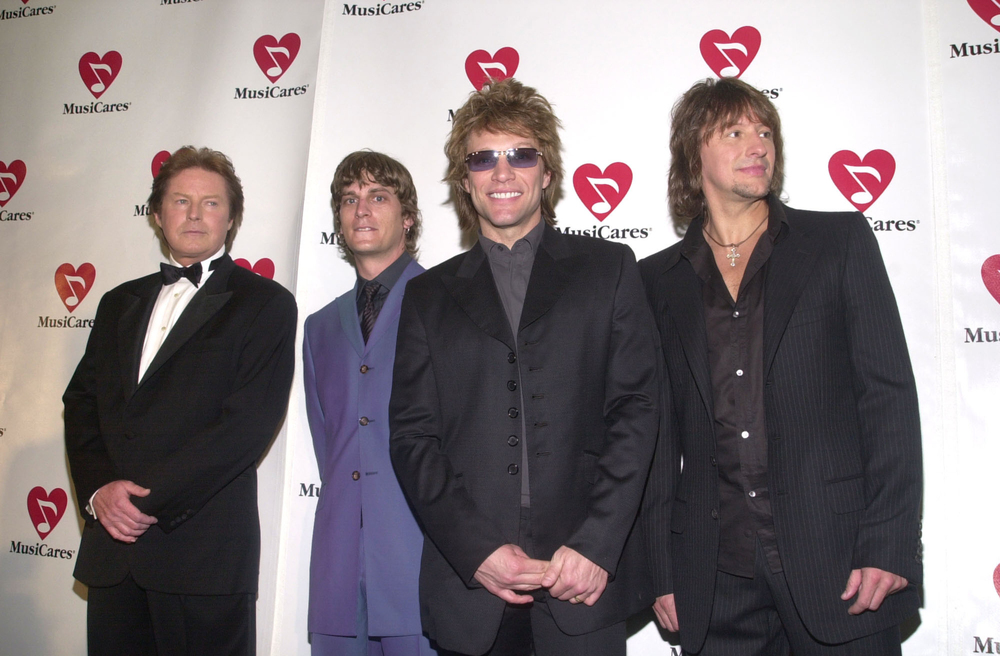
— Photo by s_bukley
Don Henley’s most lasting solo song looks backward at summer from after summer has ended, and the tension in that backward glance is what makes it feel so alive. Mike Campbell’s guitar does something specific in this song — it sounds like wind off the Pacific.
The song peaked at number five in 1985 and won a Grammy for Best Rock Vocal Performance, but its real achievement is how accurately it captures the bittersweet tail end of something good.
What the Station Picked

The specific power of all of these songs comes from the same source: none of them were chosen. They arrived.
Someone else’s hand was on the dial, or the radio was already set to the station, or the song started just as the car hit the on-ramp, and that particular combination of circumstances locked the music to the moment permanently. You can build a road trip playlist now and include every song on this list, and it will be good. But the experience that made these songs mean something was always the one you didn’t plan — the one that came through the speaker uninvited and stayed for the rest of the drive, and then stayed much longer than that.
More from Go2Tutors!

- The Romanov Crown Jewels and Their Tragic Fate
- 13 Historical Mysteries That Science Still Can’t Solve
- Famous Hoaxes That Fooled the World for Years
- 15 Child Stars with Tragic Adult Lives
- 16 Famous Jewelry Pieces in History
Like Go2Tutors’s content? Follow us on MSN.