29 Psychological Tricks Used Throughout History to Sway Entire Populations
Influencing a single person takes some skill. Influencing millions requires a system — and that system has existed, in recognizable form, for far longer than most people assume.
From ancient generals scattering forged letters ahead of their armies to digital platforms engineering news feeds to maximize outrage, the mechanics are surprisingly consistent. What changes is the speed and reach. The psychology underneath stays the same.
The techniques that follow have been deployed by governments, religious institutions, corporations, and revolutionaries at different points in history. Understanding them isn’t an exercise in cynicism — it’s the minimum requirement for not being moved around by them without knowing it.
The Big Lie
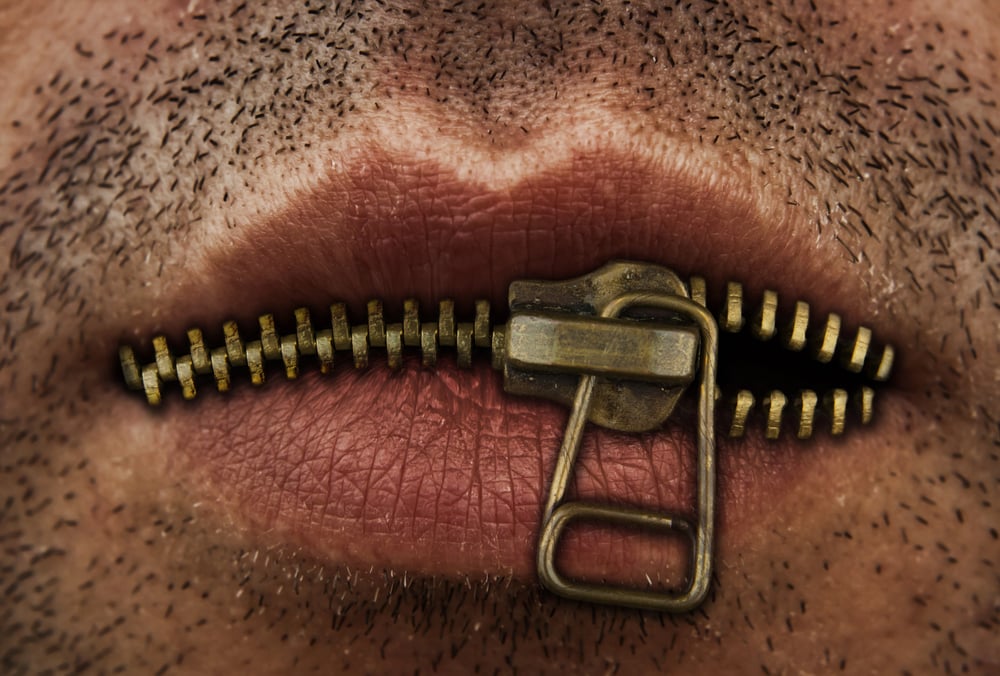
Adolf Hitler described the technique in Mein Kampf before Joseph Goebbels perfected it in practice: a falsehood so large, so confidently stated, and so relentlessly repeated that the audience struggles to believe anyone could fabricate it. Smaller lies feel credible — people tell them all the time.
A lie told at massive scale, with the full apparatus of state confidence behind it, triggers a different response. The mind reaches for an explanation other than fraud, because fraud at that scale seems improbable.
Repetition as Truth

Goebbels understood what psychologists later confirmed: repeated exposure to a statement increases the likelihood that people will accept it as true, regardless of whether any evidence accompanies it. The “illusory truth effect,” documented by researchers Hasher, Goldstein, and Toppino in 1977, shows that familiarity breeds credibility.
Goebbels’ approach — slogans hammered into public consciousness through every available channel — was not propaganda theory so much as applied cognitive science, decades before the science formally existed.
Manufactured Enemy

Populations unite around shared threats more reliably than around shared aspirations. Ancient rulers, medieval church authorities, and modern political movements have all used variations of the same move: identify or create an external enemy, attribute disasters and anxieties to them, and make your own leadership the only available protection.
The enemy doesn’t need to be fabricated outright — it needs to be amplified, exaggerated, and made to feel omnipresent.
Scarcity and Urgency

Persuaders across history learned early that people act more decisively when they believe something is running out or that time is almost up. Medieval indulgence sellers in the Catholic Church used urgency — confess now, before death, or face eternal consequence.
Modern political movements use it in the form of existential deadlines. The psychological principle is identical: scarcity makes people bypass careful deliberation and reach for immediate action.
Appeal to Authority

The Roman Catholic Church understood that if God — or someone widely believed to speak for God — endorsed your position, the argument was effectively over. Bernays, the 20th-century public relations strategist, applied the same logic to commerce: rather than arguing for the merits of a product, recruit a doctor to endorse it.
Authority bypasses the analytical mind. People delegate judgment to sources they’ve been conditioned to trust.
Spectacle and Mass Ritual

The Nuremberg rallies were not merely political events — they were designed experiences. Albert Speer’s “Cathedral of Light,” achieved with 130 anti-aircraft searchlights pointed skyward, created an atmosphere of awe and transcendence that overwhelmed individual judgment.
Ancient Roman emperors used triumphal processions for the same purpose. Crowd emotion, once generated at scale, produces a sense of shared reality that is temporarily resistant to fact and reason.
The Bandwagon Effect

Tell people that everyone else is already doing something, and many of them will follow — not out of logic but out of the ancient social instinct to remain aligned with the group. Propagandists have used this in everything from wartime recruitment posters (“Your country needs YOU — and your neighbors have already signed up”) to electoral messaging designed to make a candidate’s victory seem inevitable before votes are counted.
Glittering Generalities

Attach emotionally resonant but operationally empty words to a cause — “freedom,” “honor,” “the homeland,” “our way of life” — and the cause inherits their glow without needing to justify what those words concretely mean. The technique makes it almost impossible to argue against the cause, because any objection sounds like an objection to the concept itself.
The Institute for Propaganda Analysis named and catalogued this technique in 1937, precisely because it had already become so routine.
Transfer

Associating a political figure or cause with an already-beloved symbol transfers that symbol’s emotional weight. Cold War American propaganda routinely placed politicians alongside the flag, the family, and the church — not because the connection was substantive, but because the proximity triggered a cognitive chain reaction.
The reverse also works: Goebbels paired Jewish people in Nazi propaganda imagery with disease, rats, and contamination — transfer working through revulsion rather than aspiration.
Name-Calling

Attaching a powerful negative label to an opponent is faster and more effective than rebutting their arguments. “Traitor,” “heretic,” “enemy of the people,” “communist,” “extremist” — these labels function as thought-stoppers.
Once someone has been successfully named, audiences begin filtering everything that person says through the label, often without realizing it. The Institute for Propaganda Analysis identified name-calling as a primary technique in 1937, though rulers had been practicing it without needing to name it for millennia.
Card Stacking

Present only the facts that support your position and leave the rest unmentioned. This is distinct from lying — every individual claim may be accurate — but the selection is so carefully curated that the overall impression is false.
Wartime reporting in both World Wars was governed by exactly this principle: governments controlled correspondents, shaped what the press could publish, and constructed a picture of conflict that was technically factual but deeply incomplete.
Engineered Consent

Edward Bernays, Sigmund Freud’s nephew, argued in his 1928 book Propaganda that mass society required an “invisible governing class” to manage public opinion on behalf of order and stability. He wasn’t writing fiction — he was describing his own career.
Bernays had run wartime messaging for the U.S. Committee on Public Information during World War I. He then applied the same techniques to corporate clients: positioning a product among women as liberation, selling bacon and eggs as the all-American breakfast with the endorsement of physicians.
Goebbels reportedly kept a copy of Bernays’ work in his library, which Bernays learned from a reporter in 1933.
Emotional Flooding

Facts are processed slowly. Emotions are processed immediately, and they crowd out deliberation.
Skilled propagandists have always understood this, which is why wartime imagery led with dying children and burning villages rather than casualty statistics. Modern advertising uses the same circuit.
Once an audience is emotionally flooded — with grief, fear, pride, or anger — their capacity to evaluate logic is temporarily suspended, and messages land differently than they would under calm conditions.
Cult of Personality

Joseph Goebbels built a “Führer cult” around Hitler, presenting him not as a politician with a platform but as an almost messianic figure whose judgment was infallible and whose will was the nation’s will. The technique requires the cult figure to remain slightly distant — the details of ordinary personality break the spell.
Every movement that has used this technique, from ancient pharaohs through 20th-century dictatorships to modern political movements, has relied on the same controlled presentation of a leader too large to be measured against normal human standards.
Dehumanization

Throughout history, groups targeted for persecution, displacement, or genocide have first been subjected to systematic campaigns comparing them to animals, disease vectors, or objects. Nazi propaganda described Jewish people as vermin and rats.
Rwandan Hutu extremist radio in 1994 referred to Tutsi people as “inyenzi” — cockroaches — in the months before the genocide began. Dehumanization doesn’t cause violence on its own, but it removes the psychological inhibition that would otherwise make ordinary people refuse to participate.
Controlled Information Environment

The most durable form of mass influence is one where the audience never encounters a competing narrative. The Nazis required all journalists, writers, film directors, and artists to register with state-controlled chambers, filtering out any voice that might contradict official messaging.
The Soviet Union maintained equivalent structures. Information control doesn’t require censorship to work in full — it only requires making alternative sources difficult, discrediting, or expensive to access.
Pseudo-Event and Staged Reality
Daniel Boorstin introduced the term “pseudo-event” in his 1961 book The Image — an event manufactured primarily to generate media coverage, with no intrinsic meaning beyond its own coverage. But the technique predates the word.
The Roman “triumph” was a staged performance of imperial power. Bernays staged a 1929 “Torches of Freedom” march of women publicly using a product — framing it as spontaneous feminist protest — as a product launch strategy.
Staged reality, once recorded and broadcast, is functionally indistinguishable from organic reality.
Whataboutism

When one side raises a legitimate criticism, redirect immediately to a failing or scandal of the opposing party. The effect is to neutralize the original criticism without addressing it, leaving an audience with a sense of mutual equivalence regardless of whether the original charge and the whatabout are remotely comparable.
The Soviet Union used this technique so consistently throughout the Cold War that Western commentators gave it its name — though the move itself is as old as competitive politics.
Thought-Terminating Clichés

Robert Lifton, in his 1961 study of thought reform, identified this technique in totalitarian settings: a short, emotionally satisfying phrase that shuts down analytical inquiry. “My country, right or wrong.” “God wills it.” “Trust the plan.” “Love it or leave it.”
These phrases don’t engage with objections — they replace the need to engage. Their function is to create a mental full stop.
Once someone has reached for one of these phrases, the conversation has effectively ended.
False Consensus

Create the impression that a view is more widely held than it actually is. In physical settings, this was done through planted audience members who applauded and cheered on cue — a technique used by Napoleon’s theater-going administration as early as the early 19th century, when professional claqueurs were hired to generate the appearance of popular enthusiasm.
Digital environments make this vastly easier, with bot networks manufacturing the appearance of grassroots consensus.
Fear Appeals

Medical, environmental, and political messaging all demonstrate the same pattern: threats perceived as severe and personally relevant produce compliance far more reliably than positive appeals to gain. The technique has been used to sell everything from insurance to ideological alignment.
What matters is not whether the fear is proportionate to the actual threat but whether the audience believes they are genuinely in danger — and that the course of action being recommended will protect them.
Loaded Language

Choosing words whose connotations carry the argument before the argument has been made is one of the oldest tools in persuasion. George Orwell described the mechanism in his 1946 essay “Politics and the English Language” — words like “pacification” covering mass violence, “transfer of population” covering forced displacement.
The difference between calling something a “pro-life” movement and an “anti-abortion” movement, or an “enhanced interrogation” program and a torture program, is not semantic. It restructures the frame before thinking has begun.
Social Proof via Endorsement

Bernays understood that people calibrate their choices against the choices of others they perceive as similar or admirable. His 1929 breakfast campaign for Beech-Nut Packing Company involved recruiting physicians to state that hearty breakfasts were healthful — not to make a medical argument, but to create a chain of social endorsement that filtered down through the public.
Once a behavior is positioned as the educated, respectable, or virtuous choice, adoption becomes self-reinforcing.
Rumors as Weapons

Military commanders have understood for centuries that a well-placed rumor, circulated ahead of an advancing army, could achieve more than an additional regiment. Cyrus the Great reportedly used strategic disinformation to demoralize enemies before engagement.
The British “black propaganda” operations in World War II, run through the Political Warfare Executive, manufactured false German newspapers, forged orders, and invented Allied victories specifically to create confusion and diminish enemy morale from within.
Incremental Normalization

Change that would provoke resistance if introduced all at once can often be achieved without pushback if introduced gradually enough. Each step seems only marginally different from the one before.
The model is documented extensively in studies of how authoritarian governments consolidate power — the erosion of press freedom, judicial independence, and civil society organizations rarely happens overnight. Each increment is small enough to seem tolerable, and by the time the cumulative change becomes visible, the mechanisms for resistance have often already been compromised.
Reward and Punishment Conditioning

Pavlov’s conditioning worked not just on dogs. Societies have long used public reward — titles, land grants, pardons, social status — to cultivate compliant behavior, and public punishment — exile, execution, social shaming — to discourage dissent.
The Soviet internal passport system made geographic movement dependent on political behavior. Colonial systems used access to employment, education, and land as reward structures that incentivized cooperation.
Compliance doesn’t require belief. It only requires that the costs of nonconformity exceed those of going along.
Strawman Arguments

Misrepresent an opponent’s position in a weakened or distorted form, then destroy the misrepresentation — leaving an audience with the impression that the original position has been refuted. This technique is almost universal in political rhetoric because it is so much easier to defeat a caricature than an actual argument.
Its effectiveness depends on the audience not having access to the original position in its genuine form.
Identity Fusion

The most durable propaganda doesn’t merely change opinions — it merges the target’s personal identity with the cause. “You are not someone who supports this policy. You are a patriot, a believer, a member of this group, and this is what members of this group believe.”
Once a position becomes identity rather than opinion, changing it threatens the self. Challenges to the position are experienced as personal attacks, and the standard psychological defenses activate — making further persuasion very difficult.
Algorithmic Amplification

The most recent addition to this list operates on the same psychological circuitry as everything before it, but at a scale no previous system could approach. Social media platforms discovered that emotional content — particularly content that triggers outrage, disgust, or fear — generates more engagement than neutral content.
Algorithms optimized for engagement therefore amplified emotionally activating material, regardless of its accuracy. The result was not a new form of propaganda but the largest distribution system for existing propaganda techniques ever built, running continuously, invisibly, and without any central directing intelligence.
What Makes the Techniques Stick

The reason these methods have persisted across such different historical contexts — ancient empires, medieval theocracies, industrial-age democracies, digital platforms — is that they exploit features of human cognition that don’t change. The tendency to trust repetition, defer to authority, follow the crowd, respond to fear, and protect group identity is not a cultural artifact.
It’s how minds work. Recognizing a technique doesn’t fully immunize anyone against it. But it does create at least a moment of friction — a pause before the automatic response — and that moment is where the work of critical thinking has to happen.
No population has ever been immune, and none ever will be. What varies is whether the people inside it know what to look for.
More from Go2Tutors!

- The Romanov Crown Jewels and Their Tragic Fate
- 13 Historical Mysteries That Science Still Can’t Solve
- Famous Hoaxes That Fooled the World for Years
- 15 Child Stars with Tragic Adult Lives
- 16 Famous Jewelry Pieces in History
Like Go2Tutors’s content? Follow us on MSN.