30 Unwritten Playground Rules That Somehow Applied at Schools Across the Country
No administrator drafted these. No teacher handed them out on the first day.
Yet children who grew up at different schools, in different states, in different decades, knew most of them by instinct — or absorbed them within their first week of recess and never forgot. The playground had its own legal system, with its own precedents, enforcement mechanisms, and appeals process.
Adults were largely not part of it. These were its most consistent provisions.
The Swings Have a Priority Queue

If someone is on a swing and you want it, you wait at a reasonable distance. You don’t hover directly behind them.
You don’t push the swing from in front. You wait until they’re done and leave, at which point the swing is available.
If two people arrive simultaneously, the negotiation happens quickly and usually without drama. The order of arrival is the primary determining factor, and everyone was capable of tracking it.
You Cannot Own a Piece of Equipment You’re Not Using
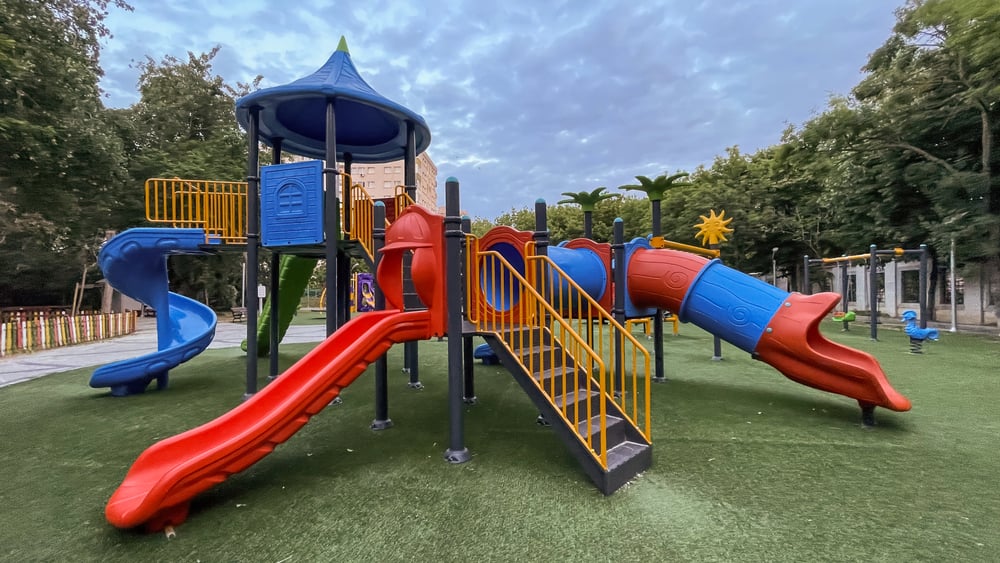
Leaving a ball or jump rope on the ground while going to do something else did not preserve your claim to it. The object was available to whoever picked it up.
The exception was if you had formally asked someone to hold it, in which case the holder had a duty of care and the owner had a right of return. An unattended object was a public object.
This was known.
Tag Requires Clear Rules About Base Before the Game Starts
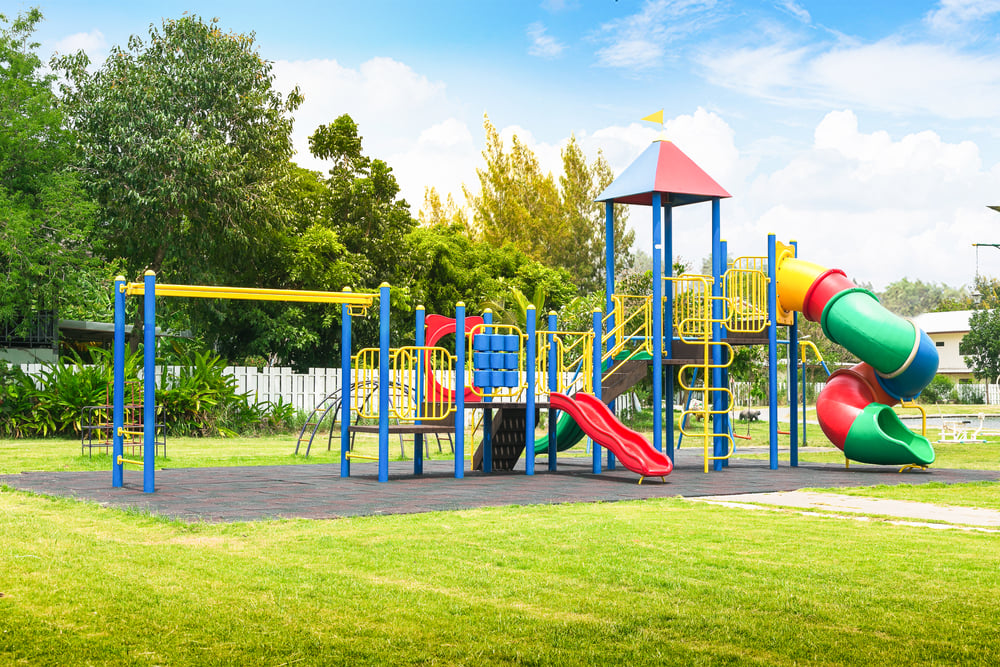
Starting a game of tag without first establishing whether base existed, where it was, and how long you could stay on it was an act of procedural negligence that guaranteed an argument within four minutes. The base rules had to be negotiated before the first “it” was assigned, or the entire game collapsed into a constitutional crisis from which it never recovered.
“It” Is Decided by Counting Out

Eeny meeny miny moe, rock paper scissors, or any other counting-out method was the legitimate way to decide who was it. Self-selection for “it” was unusual and slightly suspicious.
Being selected for “it” by universal agreement because you were the last to yell “not it” was legitimate, provided the yell was genuinely competitive and not a setup. Everyone understood which was which.
The Monkey Bars Have a One-Way Direction
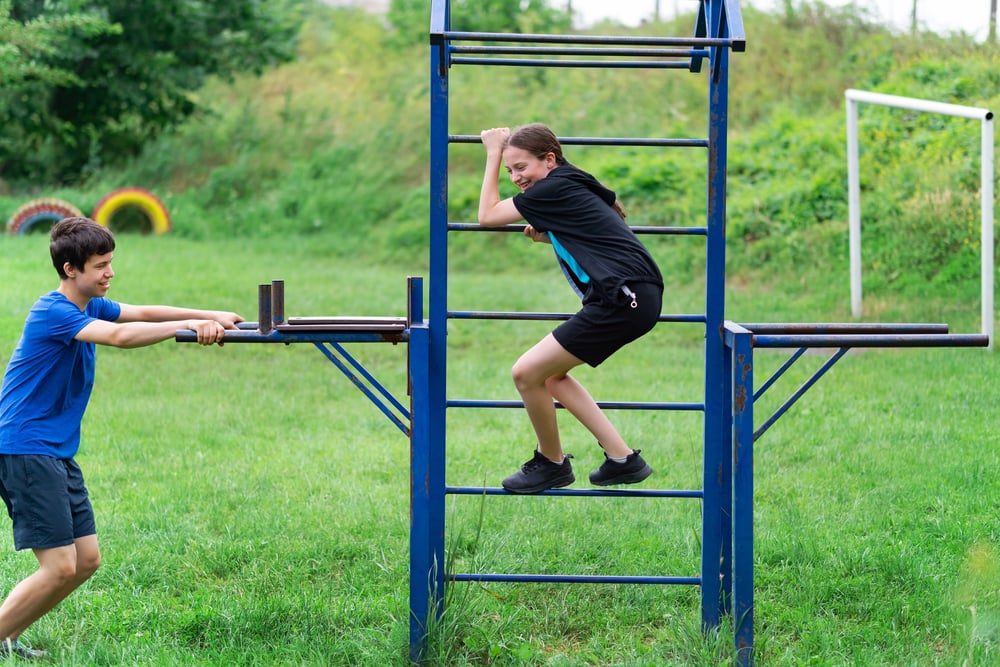
You go across from one end to the other. You don’t go back against the flow.
If the bars are busy, you don’t hang stationary in the middle reading the sky. The monkey bars had traffic protocols that were independent of anything a teacher had said, and violating them produced an immediate and pointed correction from whoever was behind you.
The Slide Goes Up the Ladder, Not the Chute

Going up the slide from the bottom was universally recognized as the wrong direction and universally attempted anyway. The enforcement depended on whether an older child was watching.
When they were, the rule held. When they weren’t, the bottom of the slide became a contested entry point, and whoever was coming down had right of way by virtue of momentum.
Four Square Rules Are Set by the Server
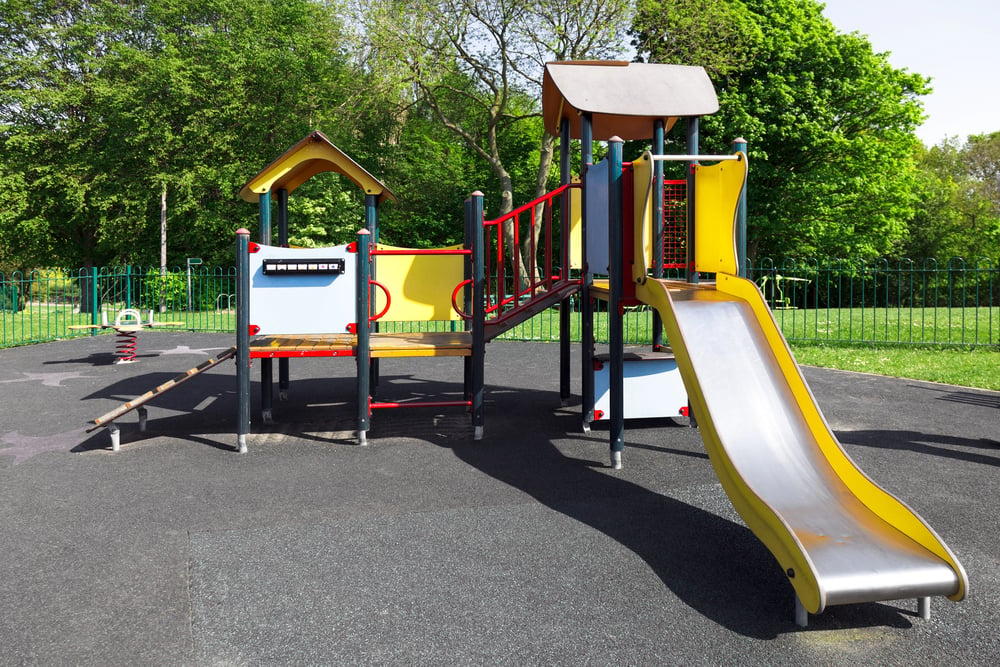
In four square, the child in the service square set the rules for that round — whether bus stop was in play, whether around the world was allowed, whether special serves were permitted. The server’s rule authority was legitimate and accepted, provided they announced the rules before serving.
Retroactive rule-setting after the ball was already in play was not legitimate and produced immediate protest.
You Don’t Take Someone’s Spot When They Get Up for One Minute

If someone left a spot — on a bench, on the edge of the equipment, at a particular position in a game — to get a drink of water or attend to something, their spot was reserved for a reasonable window. What counted as “reasonable” was understood contextually.
A thirty-second absence was different from a five-minute one, and the group calibrated accordingly.
Calling the Rules of a Game When There Is No Rule

When a situation arose that the game’s existing rules didn’t clearly cover, the group had to legislate in real time. The child who spoke most confidently and with the most plausible-sounding rule had an advantage, but so did the child who had played the most games and could cite precedent.
The improvised rule became the rule for the rest of that game, which was how the game’s rules grew over time.
Foursquare Eliminations Are Permanent for That Round
Getting out in four square meant moving to the end of the queue and working your way back in, one round at a time. There were no wildcards, no exemptions, and no re-entry mid-round.
You got out, you went to the back of the line. The line was the waiting.
This was the whole structure.
The Equipment Dispute Escalates in Recognized Steps
First you handled it yourselves. Then you brought in a neutral third party who was respected by both sides.
Then, as a last resort, you found a teacher — but finding a teacher was acknowledged as a nuclear option that everyone understood carried social costs. Children who went to a teacher for disputes that could have been resolved internally were considered to have made a significant error in judgment, and it was remembered.
Dibs Requires Presence or Representation
Calling dibs on equipment, a court, or a playing space required either being physically present or having a designated representative who was. Calling dibs on a basketball court from inside the building while still in math class was not enforceable.
The children who arrived at the court first held it. Prior verbal claims made without physical presence were recognized as a good-faith attempt but not binding.
You Don’t Break Up a Game That’s Already Running

If two teams were in the middle of a game and someone arrived wanting to play, they waited for a natural break — between games, between rounds, or at halftime — before their request was heard. Interrupting an ongoing game to request inclusion was impolite, and the group had the right to finish before acknowledging the request.
This was not hostility. It was respect for the game’s integrity.
The Injured Player Gets a Free Pass on Their Turn

If someone fell, twisted an ankle, or had a collision that required a moment to recover, their turn was preserved. The game paused or their position was held.
Nobody took advantage of a player who was momentarily down. This rule was applied consistently even when the application was inconvenient.
Teaming Up on the Weakest Player Is Against the Spirit

In any elimination game, directing disproportionate collective attention toward the weakest or most vulnerable player — in dodgeball, four square, kickball, or any other competitive format — was universally understood to be against the spirit of the game even when it wasn’t explicitly against the rules. The group had an awareness of this and calibrated competitive behavior accordingly, at least partially.
The Kickball Pitcher Controls the Pace

In kickball, the pitcher rolled the ball at a pace they controlled, and the kicker took what was offered. Demanding a different speed, a different placement, or a re-roll for a roll that had already been thrown was not standard, and the pitcher was not obligated to comply.
The exception was a ball that was clearly beyond the strike zone, which was grounds for a legitimate complaint.
The Team That Was Losing Last Game Gets First Pick Next Time
Fair rotation of advantage was a foundational principle. If your team lost the previous game, some compensation in the next game’s setup — first pick in the draft, first kick, first serve — was considered reasonable.
This wasn’t codified in any game’s official rules. It was a courtesy that the group maintained because everyone understood losing was cyclical and how you were treated in defeat was information about how the group worked.
You Don’t Tattle About Small Stuff

The playground version of this rule was more strictly enforced than its neighborhood equivalent. Going to a teacher about a minor playground dispute was considered, by peers, as an extreme measure that reflected poorly on the person who took it.
The hierarchy of what qualified as small stuff versus serious stuff was understood by all students and applied by them consistently, with notable variation by age — younger students had wider latitude on what they could bring to adults without social penalty.
Rain Rules Depend on How Much Rain

Light drizzle was not grounds for ending a game. Heavy rain was.
The line between them was determined by group consensus and occasionally contested, but the principle — that weather short of a genuine soaking did not interrupt play — was maintained. The child who retreated under shelter at the first drops was noted, gently, as someone with different weather standards than the group.
The Four-Square Court Has Seniority Rights

In schools where a four-square court was painted on the blacktop, certain students were understood to have de facto priority during peak recess periods — not because anyone had said so, but because their daily presence there had been long enough to establish custom. New students learned this quickly.
It wasn’t hostility, just existing social geography.
You Must Give Your Best in a Competition, Even Against a Younger Kid
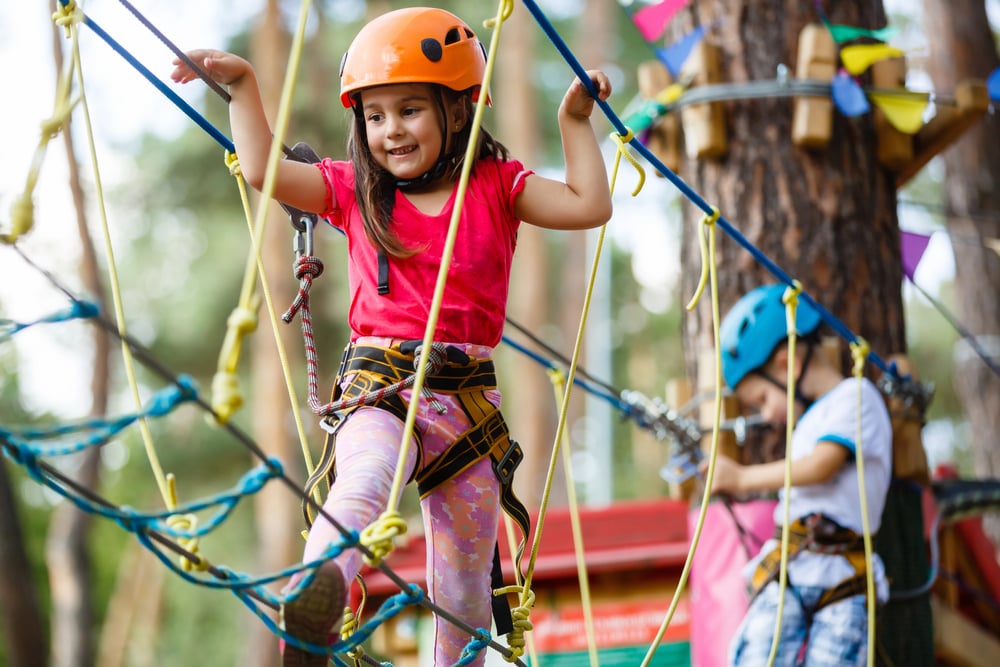
Deliberately playing badly to let a younger child win was considered a different kind of disrespect than beating them. You could calibrate the experience — not destroying someone in the first thirty seconds of dodgeball — but if you were playing, you were playing.
The younger child was not well-served by a fake loss and most of them knew it.
When Someone Says Stop, You Stop

In physical games — wrestling, chasing, any contact activity — if one participant said stop genuinely rather than performatively, the game stopped. The distinction between a playful “stop” within the game and an actual stop was understood and applied.
Getting the distinction wrong was a serious failure. This was the rule that actually mattered most and was enforced most consistently by the group.
The Ball Against the Wall Game Is Open to All

Games played against the gymnasium or school wall — handball, wall tennis — had an implicit open-door policy. If you showed up, you waited for a natural spot to rotate in.
These games were understood as public games in a way that others weren’t, and excluding someone who wanted to play was considered inappropriate behavior without a specific reason.
You Don’t Use the Words “I’m Not Playing Anymore”

Threatening to take your participation away — “fine, I’m not playing” — as a negotiating tactic in a dispute was recognized as a manipulation rather than a genuine exit. If you said it and weren’t serious, you lost credibility.
If you said it and were serious, you left and the game continued without you and without much disruption. The threat was less powerful than it was intended to be.
The Game That Was Playing Before Recess Continues First

If a game had been started and interrupted by the bell — the recess ending, the rain starting — it continued from where it left off at the next available opportunity. The score was remembered.
The positions were remembered. Nobody started a new game until the unfinished one had been either completed or formally abandoned by mutual agreement.
Everyone Gets to Bat
In informal school kickball or baseball, everybody in the batting order batted. You didn’t skip the weak kicker because the game was close.
You didn’t pull the batting order down to the strongest players in the final inning. The order existed as a social contract, and the social contract included the child who hadn’t kicked one fair in three games.
This cost you sometimes. That was the point.
The Older Kids’ Game Takes Priority on the Main Court
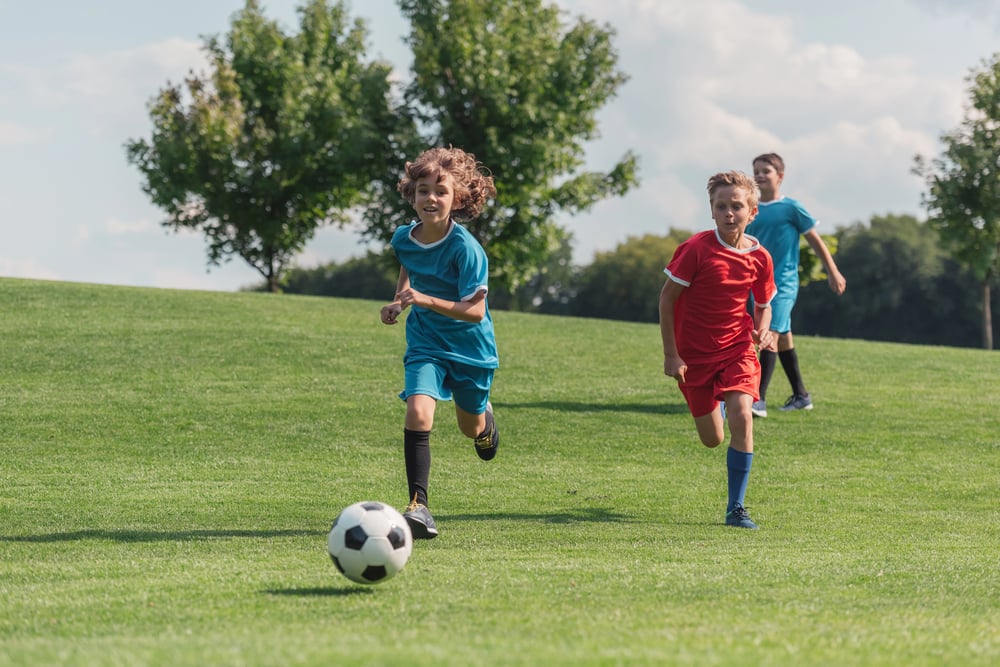
Implicit seniority extended to physical space. Older students had informal priority on the main courts and the most desirable equipment.
This wasn’t voted on or enforced by adults — it was a social fact absorbed by younger students in their first week and maintained throughout. The counterpart was that older students were expected to be more patient with younger ones, more willing to make room, and less volatile in disputes.
The hierarchy had responsibilities attached to it.
Accidents Are Different from Intentional Acts
If someone tripped, collided, or made contact by genuine accident, the appropriate response was a brief acknowledgment and continuation. Treating an accident as if it were intentional — escalating, retaliating, bringing it to an adult — was considered a disproportionate response and read as bad faith.
The distinction between accident and intention was made quickly and was usually accurate. When it wasn’t, the resulting dispute was the day’s main event.
Leaving the Playground Before the Bell Is Noticed

Nobody monitored who came back inside early. But everyone noticed.
The child who left the playground before the bell rang — to get to the bathroom, to speak to a teacher, to avoid a situation — was observed, and the observation was noted in the informal ledger that children maintain without writing anything down. The information was never formally used.
But it was stored.
The Code Outlasted Every Individual Rule
No single rule mattered as much as the overall understanding that the playground operated on a set of shared principles that predated any individual student and would outlast them. When new students arrived, they were absorbed into an existing system.
When older students left, the system continued. The specific rules adapted; the underlying understanding that rules existed, that they were serious, and that the group enforced them on itself did not.
That was what the playground actually was: not a surface, but a system — one that children built and maintained entirely on their own terms.
More from Go2Tutors!

- The Romanov Crown Jewels and Their Tragic Fate
- 13 Historical Mysteries That Science Still Can’t Solve
- Famous Hoaxes That Fooled the World for Years
- 15 Child Stars with Tragic Adult Lives
- 16 Famous Jewelry Pieces in History
Like Go2Tutors’s content? Follow us on MSN.