24 Psychological Experiments That Changed How Scientists Understand Human Behavior
Psychology is one of the few scientific disciplines where the findings regularly disturb the people they describe. The experiments that have mattered most are not just the ones that produced clean data — they’re the ones that revealed something about human nature that most people would have preferred not to know.
That we defer to authority even when it’s dangerous. That we conform to groups even when we know they’re wrong. That our memories are not recordings but reconstructions, quietly rewritten every time we access them.
The studies below changed the field — and in many cases, changed public policy, education, medical practice, and law alongside it. Several could not be ethically conducted today.
Some were more methodologically complicated than their simplified textbook summaries suggest. All of them changed something about what we thought we knew.
The Milgram Obedience Study (1961)

Stanley Milgram’s study at Yale University is one of the most referenced in all of psychology and one of the most troubling. Participants were told they were assisting in a learning experiment, in which they would administer electric shocks to a “learner” — actually an actor — whenever the learner gave an incorrect answer.
The shocks escalated in labeled increments, up to 450 volts. Sixty-five percent of participants administered the maximum shock, even as the actor cried out, demanded to stop, and eventually went silent. The experiment was inspired by the trial of Adolf Eichmann and Milgram’s question of how ordinary people could participate in atrocities by following orders.
The answer, it turned out, was with distressing ease.
Solomon Asch’s Conformity Experiments (1951–1956)

Solomon Asch showed participants a card with a single line on it, then a second card with three lines of varying lengths, and asked them to identify which line on the second card matched the first. The answer was always obvious — but confederates of the experiment would deliberately name a wrong line before the participant answered.
Around 75 percent of participants conformed to the incorrect group answer at least once. The finding reshaped how social psychologists think about the relationship between what people see, what they know, and what they say in the presence of others.
Harry Harlow’s Cloth and Wire Mother Experiments (1957–1963)

Harry Harlow placed infant rhesus monkeys in cages with two surrogate “mothers”: one made of wire that provided food, and one made of soft terrycloth that provided only warmth and texture. The infant monkeys consistently chose the cloth mother for comfort, clinging to it when frightened and returning to it for reassurance.
This finding overturned the dominant psychological theory of the time — that attachment was driven by association with food — and established instead that physical comfort and warmth are primary needs in infant development. The research directly influenced changes in orphanage practices and the understanding of early childhood attachment.
The Stanford Prison Experiment (1971)
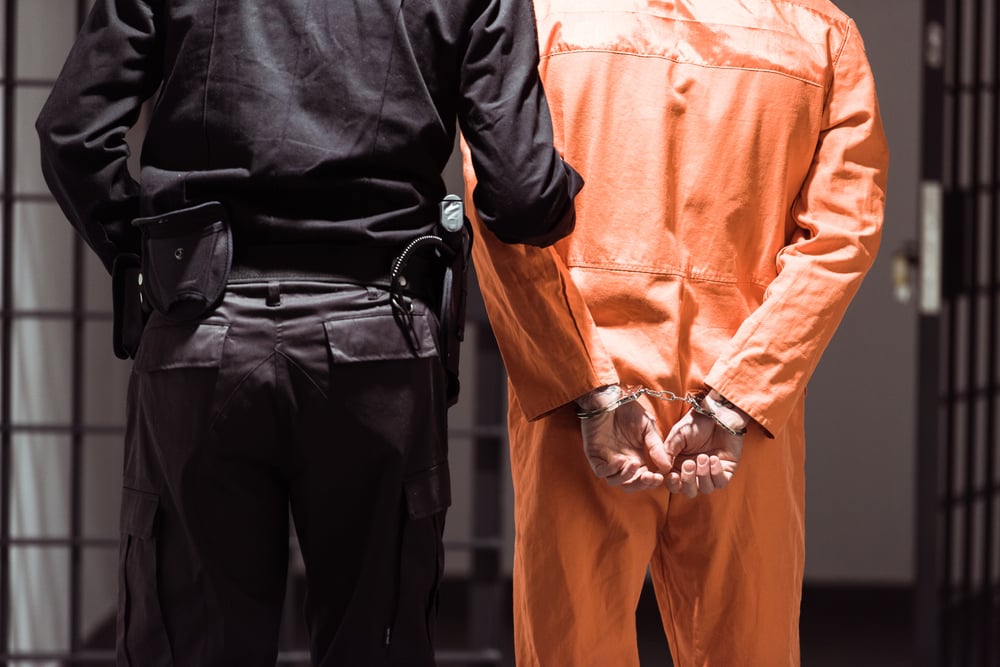
Philip Zimbardo randomly assigned student volunteers to the roles of guards or prisoners in a simulated prison in the basement of Stanford University’s psychology building. The experiment, intended to run for two weeks, was stopped after six days because the guards had become psychologically abusive and several prisoners were showing signs of acute distress.
The study’s core finding — that situational roles can override personal ethics and produce abusive behavior in ordinary people — has been widely cited in discussions of prison reform, military conduct, and institutional behavior. The experiment’s methodology has since been substantially criticized, and some participants later disputed the completeness of the conventional account.
The Rosenhan Experiment (1973)

David Rosenhan and seven research collaborators faked a single psychiatric symptom — reporting hearing voices that said “thud,” “empty,” and “hollow” — and had themselves admitted to twelve different psychiatric hospitals across the United States. Once admitted, all behaved normally.
None were detected as sane by hospital staff, though several were identified as imposters by actual patients. The pseudopatients remained hospitalized for an average of 19 days.
Rosenhan published the results in Science under the title “On Being Sane in Insane Places” and the findings catalyzed significant reform of psychiatric diagnostic practice and contributed to the development of more structured diagnostic criteria.
The Marshmallow Test (1970)

Walter Mischel at Stanford University offered young children a choice: one marshmallow now, or two if they could wait 15 minutes alone with the first marshmallow. Not thinking about the immediate reward — looking away, covering eyes, distracting oneself — predicted longer delay times.
The real impact came in follow-up studies conducted years later, which found that children who had waited longer were subsequently rated by parents as more competent teenagers and performed better on standardized college entrance tests. The findings connected early self-regulation to long-term outcomes in ways that influenced educational policy and research into executive function.
Later replications have complicated some of the original findings, particularly regarding the role of economic background in predicting waiting behavior.
Albert Bandura’s Bobo Doll Experiment (1961)

Albert Bandura showed groups of children a video of an adult aggressively attacking an inflatable Bobo doll — hitting it with a mallet, kicking it, and shouting at it. Children who watched the aggressive model were significantly more likely to reproduce the same aggressive behaviors toward the doll themselves, compared to children who had seen a non-aggressive adult.
The study established observational learning — the acquisition of behaviors through watching others, without direct reward or punishment — as a foundational mechanism of human behavioral development and challenged strictly behaviorist theories of learning through direct reinforcement.
Little Albert (1920)
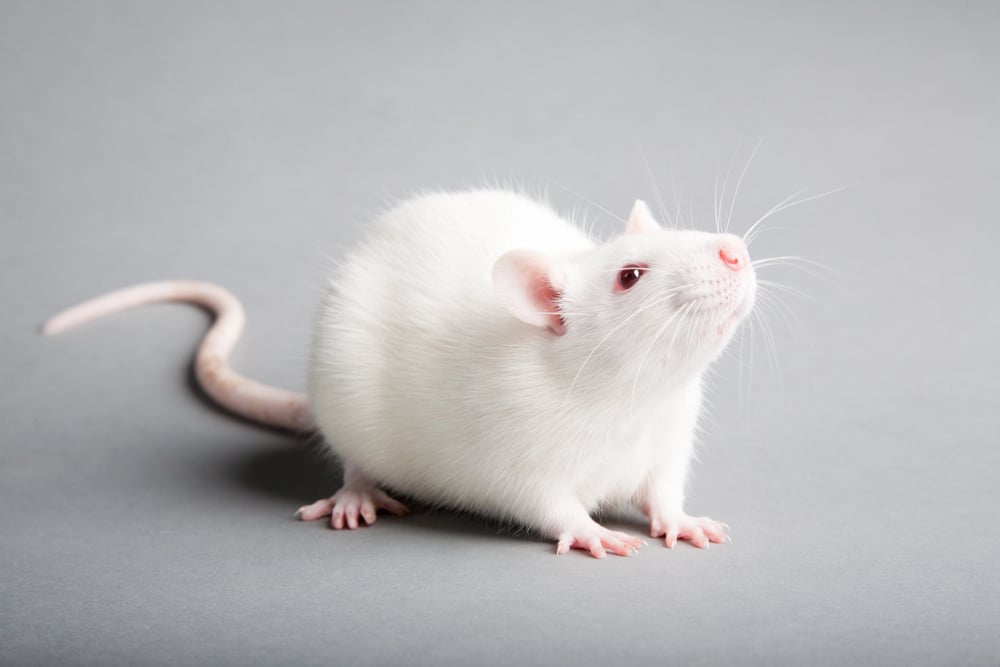
John B. Watson and graduate student Rosalie Rayner at Johns Hopkins University conditioned a nine-month-old boy — known as Little Albert — to fear a white rat by repeatedly pairing the rat’s appearance with a loud, startling noise. Albert developed a fear response not only to the rat but to other white, furry objects including a rabbit, a dog, and a fur coat.
The study demonstrated that conditioned emotional responses could be produced in humans through associative learning, establishing a basis for behavioral theories of phobia development. Watson never deconditioned Albert, which he had promised to do, and the ethical violations of the experiment have been discussed at length in psychological ethics literature ever since.
The Bystander Effect — Darley and Latané (1968)

Following the murder of Kitty Genovese in New York City in 1964, during which neighbors were reported to have witnessed the attack without intervening, John Darley and Bibb Latané designed a series of experiments to test why individuals in groups fail to act in emergencies. In one experiment, a participant in a room heard a confederate apparently experiencing a seizure over an intercom; when the participant believed they were the only listener, 85 percent responded.
When they believed five others were also listening, the response rate dropped to 31 percent. The finding — that the presence of others produces a diffusion of responsibility — directly influenced CPR training protocols, which now explicitly instruct people to assign a specific individual to call for help rather than making a general request.
The original account of Genovese’s murder was later found to have been exaggerated by the press, but the experimental findings on bystander diffusion are independently robust.
The Good Samaritan Experiment (1973)
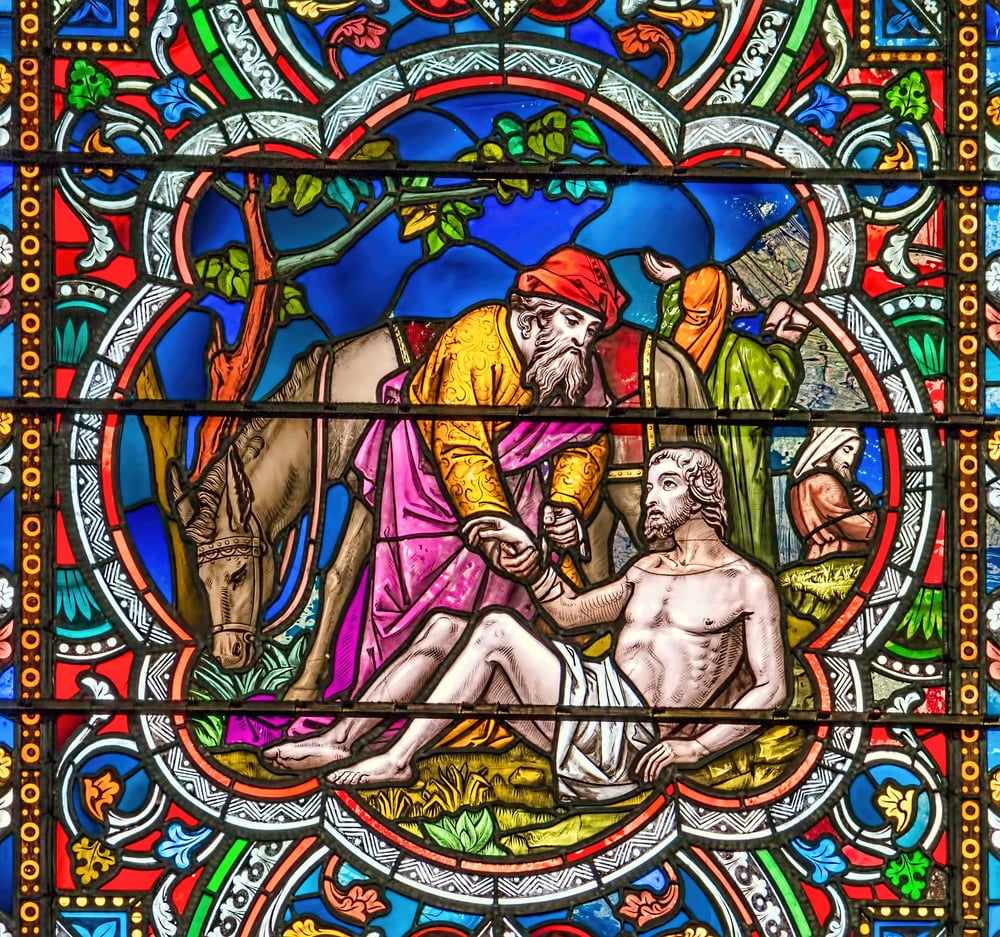
John Darley and Daniel Batson had Princeton theology students prepare a short talk — some on the Good Samaritan parable specifically — and then walk across campus to deliver it. Along the way, each student passed a person slumped in a doorway, apparently in distress.
The single largest predictor of whether the student stopped to help was not their religious belief, their personality type, or what their talk was about — it was whether they had been told they were running late. Students in a hurry were far less likely to stop, even those literally on their way to give a talk about the duty to help strangers.
The experiment is one of the most frequently cited demonstrations of how situational factors override dispositional traits in determining behavior.
The Robbers Cave Experiment (1954)

Muzafer Sherif divided two groups of 11- and 12-year-old boys at a summer camp in Oklahoma into separate teams who didn’t know the other group existed. When the two groups became aware of each other, Sherif introduced competitive activities.
Within days, hostility had escalated to vandalism, theft, and physical confrontations. Sherif then introduced superordinate goals — tasks that required both groups to cooperate to achieve an outcome neither could accomplish alone.
The inter-group hostility diminished as the boys worked together. The experiment became foundational for realistic conflict theory and research on cooperation between competing groups.
The False Memory Experiments — Elizabeth Loftus (1974)

Elizabeth Loftus demonstrated through a series of experiments beginning in the mid-1970s that human memory is not a reliable recording of events but a reconstructive process susceptible to suggestion, framing, and post-event information. In one foundational study, participants who watched videos of car accidents gave higher speed estimates when asked how fast the cars were going when they “smashed” into each other versus when they “contacted” each other — and were more likely to falsely recall seeing broken glass if the word “smashed” had been used.
Loftus’s work eventually contributed to major reforms in how eyewitness testimony is treated in criminal courts and how police conduct witness interviews.
The Learned Helplessness Experiments — Martin Seligman (1965)

Martin Seligman initially exposed dogs to uncontrollable electric shocks in a box with no escape. When later placed in a box where they could escape by jumping over a low barrier, the previously conditioned dogs made no attempt to escape — they had learned that their actions had no effect on their situation.
The finding introduced the concept of learned helplessness and later became the foundation for Seligman’s cognitive theory of depression, which proposed that depression involves a belief that outcomes are beyond one’s control. The model reshaped how depression is understood and treated clinically.
Jane Elliott’s Blue Eyes and Brown Eyes Exercise (1968)
The day after Martin Luther King Jr. was assassinated in April 1968, third-grade teacher Jane Elliott divided her class in Riceville, Iowa by eye color. Blue-eyed children were declared superior and given privileges; brown-eyed children were labeled inferior.
Within hours, the dynamics of the class had inverted: the “superior” group became condescending and performed better on tests, while the “inferior” group became hesitant and performed worse. She reversed the exercise the next day with similar results.
Elliott was not a psychologist but a classroom teacher; her demonstration produced immediate evidence of how easily structural discrimination affects cognitive performance and confidence and has since been replicated in educational settings internationally.
The Monster Study (1939)

Wendell Johnson at the University of Iowa divided 22 orphaned children into two groups: one received positive speech therapy, and the other received relentlessly negative feedback — being told repeatedly that they had speech problems and were stuttering. None of the children developed stutter disorders as a result, but those who received negative feedback developed many of the self-esteem and social withdrawal patterns associated with chronic speech anxiety.
The study was hidden for decades because of its ethical violations. It became publicly known in 2001 and the University of Iowa eventually offered a formal apology to surviving participants.
The Visual Cliff Experiment (1960)

Eleanor Gibson and Richard Walk constructed a glass-covered table that appeared to drop off sharply on one side, creating a visual illusion of a cliff. Infants placed on the shallow side consistently avoided the apparently deep side, even when their mothers encouraged them from the other side. The study suggested that depth perception is functional very early in human development — possibly innate or acquired rapidly after birth — and challenged learning theories that held perception to be entirely environmentally acquired.
It also opened a productive research direction into the relationship between visual and motor development in infants.
The Hawthorne Effect (1924–1932)

Studies conducted at the Hawthorne Works factory near Chicago found that workers’ productivity increased regardless of whether the experimental conditions improved or worsened — what seemed to matter was that the workers were being observed and knew they were part of a study. The “Hawthorne Effect” — the modification of behavior in response to being observed — has become one of the most cited confounds in experimental psychology and behavioral research, and its existence has affected the design of virtually every research study involving human participants conducted since.
More recent analysis of the original data has complicated whether the effect was as large as originally claimed, but the concept itself is firmly established.
The Smoky Room Experiment (1968)

Bibb Latané and John Darley placed participants alone or in groups of three in a room where they were asked to fill out questionnaires. After a short time, smoke began seeping under the door.
When alone, 75 percent of participants left to report the smoke within two minutes. In groups of three — where the other two people were confederates who did nothing — only 38 percent acted.
The experiment demonstrated that the bystander effect extends not only to active emergencies but to ambiguous situations, where the calm behavior of others signals to each individual that the situation may not require action.
Pavlov’s Dogs (Late 1890s)

Ivan Pavlov was studying digestive responses in dogs when he noticed that the animals began to salivate not only when food arrived but when they heard the footsteps of the researcher who brought it. He designed a series of experiments to investigate this response, ultimately demonstrating that a neutral stimulus — a bell — could produce a physiological response when consistently paired with a stimulus that naturally caused that response.
The discovery of classical conditioning became the foundation of behavioral psychology and remains one of the most replicated findings in all of experimental science.
The Halo Effect Experiment — Nisbett and Wilson (1977)

Richard Nisbett and Timothy Wilson showed students two video interviews of the same professor, who spoke in one with a warm and engaged manner, and in the other with a cold and dismissive one. Students who saw the warm version rated his physical appearance, accent, and mannerisms more positively than those who saw the cold version — even though these features were identical.
The experiment formalized the halo effect, demonstrating that a single positive or negative impression of one trait consistently colors the evaluation of unrelated traits. The finding has informed research on job interviews, criminal sentencing, and the evaluation of academic work.
George Miller’s Magical Number Seven (1956)

George Miller published “The Magical Number Seven, Plus or Minus Two,” arguing that human short-term memory can hold approximately seven chunks of information simultaneously — give or take two. The paper was directly practical: it helped explain why phone numbers were seven digits, why memory spans could be extended by “chunking” information, and why some tasks overwhelm working memory while others do not.
It became one of the most cited papers in cognitive psychology and helped launch the field’s shift away from strict behaviorism toward an information-processing model of the mind.
Fantz’s Infant Face Perception (1961)

Robert Fantz showed infants as young as a few days old a series of visual stimuli, measuring how long they spent looking at each one. Infants spent significantly more time looking at face-like patterns than at scrambled or non-face stimuli, suggesting that face preference is either innate or acquired extremely rapidly in postnatal development.
The finding had immediate implications for developmental psychology and the understanding of early social cognition, and contributed to later research on the neural basis of face processing in humans.
Kohlberg’s Moral Development Studies (1958)

Lawrence Kohlberg presented participants — initially male adolescents — with moral dilemmas and analyzed not just what they decided but why. His “Heinz Dilemma” — should a man steal a drug he cannot afford to save his dying wife? — became the most discussed.
Kohlberg identified six stages of moral reasoning organized across three levels, from rule-following to principled ethical thinking. The model was influential and also contested: Carol Gilligan challenged it in the 1980s for systematically underrepresenting women’s moral reasoning, which she argued centered on care and relationships rather than abstract rules.
The Invisible Gorilla (1999)

Christopher Chabris and Daniel Simons asked participants to watch a video of two teams passing basketballs and count the number of passes made by players in white. During the video, a person in a gorilla suit walked through the center of the scene, beat their chest, and walked off.
About half of the participants failed to notice the gorilla entirely. The study demonstrated inattentional blindness — the failure to notice visible, unexpected objects when attention is directed elsewhere — and has since been applied to discussions of driving safety, radiology reading, and air traffic control, as well as to the broader limits of human conscious awareness.
What the Experiments Leave Behind

What runs through almost every study on this list is a version of the same finding: people are far less in control of their own behavior than they believe themselves to be. The Milgram participants thought they would refuse.
The Asch participants thought they would give the correct answer. The Good Samaritan theology students thought their moral convictions would override their schedule.
The experiments didn’t make human beings look worse than they are — they made the actual mechanisms of human behavior visible in ways that self-report never could. And visibility, even when uncomfortable, is the first step toward designing systems, institutions, and practices that account for what people actually do rather than what they intend to do.
That is the legacy that runs through the work of Milgram, Harlow, Loftus, and the rest: not a pessimistic account of human nature, but an honest one.
More from Go2Tutors!

- The Romanov Crown Jewels and Their Tragic Fate
- 13 Historical Mysteries That Science Still Can’t Solve
- Famous Hoaxes That Fooled the World for Years
- 15 Child Stars with Tragic Adult Lives
- 16 Famous Jewelry Pieces in History
Like Go2Tutors’s content? Follow us on MSN.