31 Antique Clocks That Tick Away in Homes Without Owners Knowing Their Real Worth
A clock is one of the few objects that people actively inherit without thinking too carefully about what they’ve received. Grandparents leave them on mantels, and the clocks stay there — ticking, dusting over, keeping time in rooms where nobody particularly thinks of them as valuable.
The problem is that antique clock values are almost entirely dependent on the maker, the movement type, and the originality of parts, and none of these things are visible to someone who simply grew up with the clock on the wall. The difference between a clock worth $200 and one worth $200,000 can be as small as the name engraved on the movement plate.
Here are the clocks most likely to be worth far more than their owners realize.
A Thomas Tompion Longcase or Bracket Clock
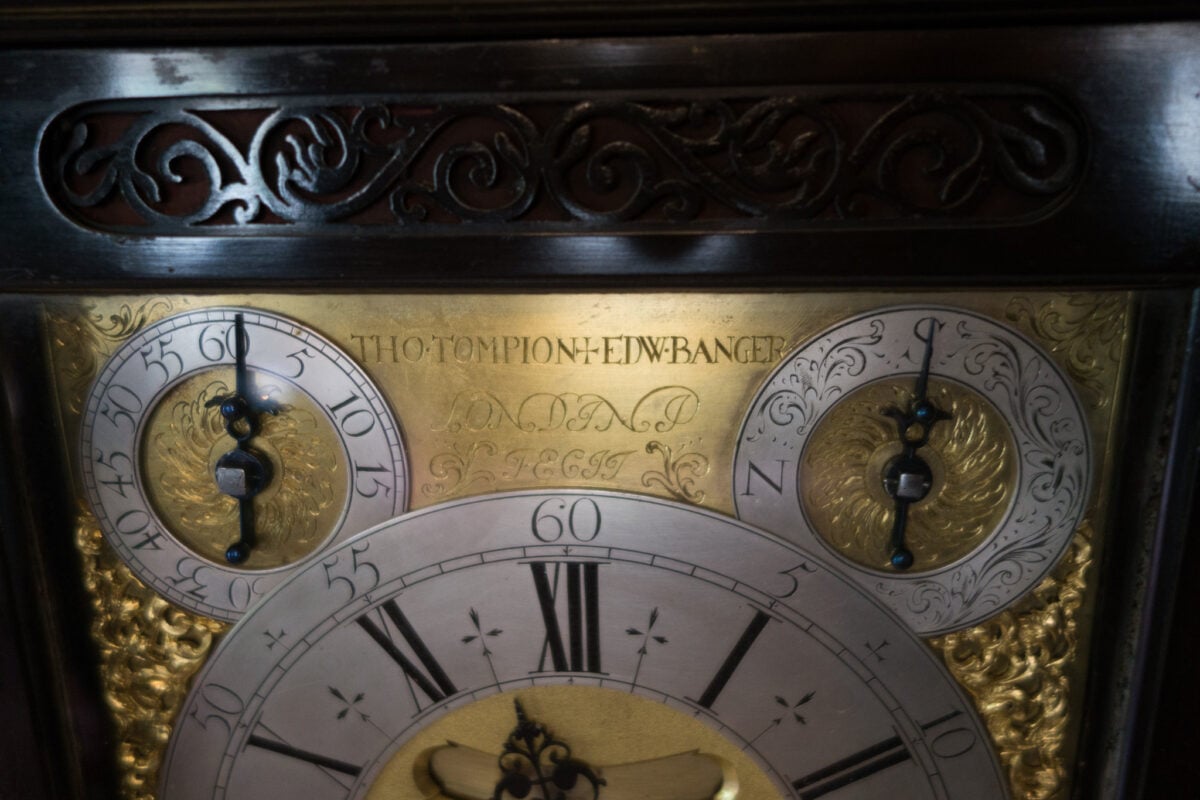
Thomas Tompion is known as the “Father of English Clockmaking,” and his pieces represent the absolute pinnacle of the craft. When a Tompion clock appears at auction, it commands extraordinary prices without exception. A miniature silver-mounted ebony table clock by Tompion — known as the “Q Clock” — sold at Bonhams for over £1.9 million.
Even a longcase clock in a non-original case sold for £68,950. If the name Tompion appears on the movement dial or backplate of a clock in someone’s home, professional appraisal is not optional.
A George Graham Table or Precision Clock
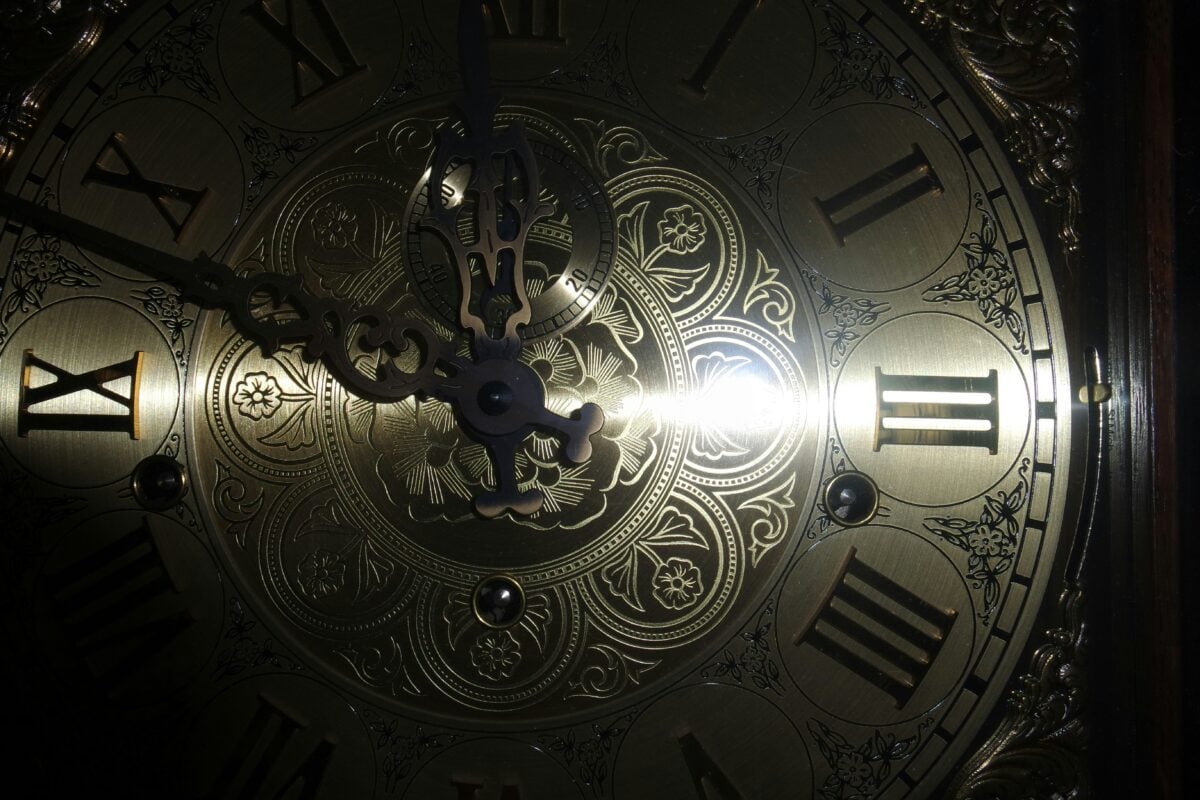
George Graham was Tompion’s most gifted apprentice and successor, responsible for inventing the deadbeat escapement and the mercury pendulum. His clocks are prized by institutions and serious collectors alike. An 18th-century table clock by Graham sold at Bonhams for £82,950, and a George III Graham-era clock by Barkley and Colley — Graham’s successors — carries an estimate of £25,000 to £35,000.
Graham’s work was often signed clearly on the movement, so the name is not difficult to locate once someone looks.
A Joseph Knibb Ebony Bracket Clock
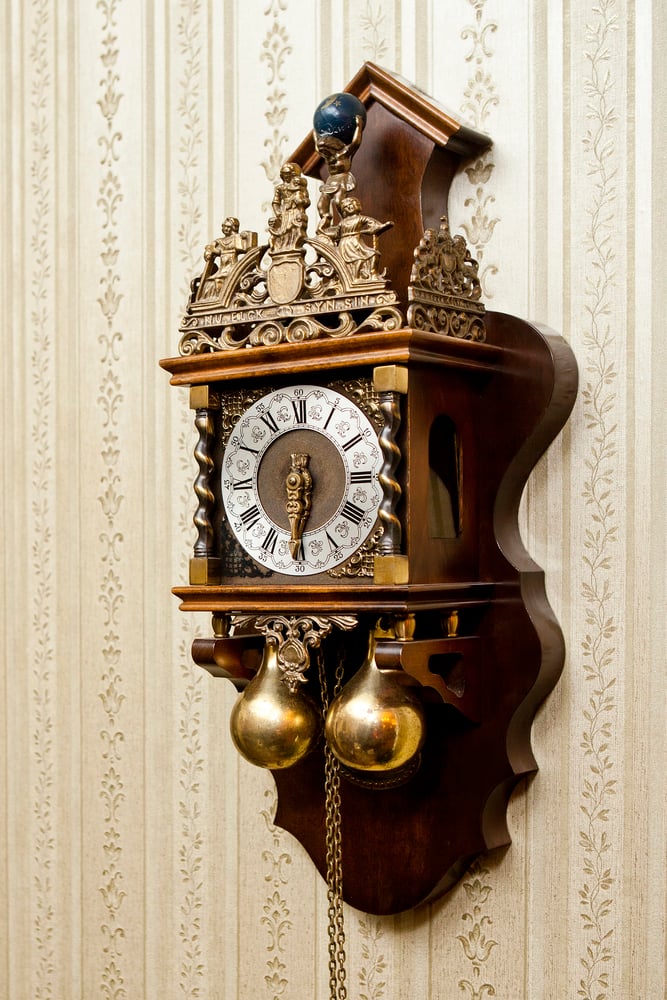
Joseph Knibb was a London clockmaker and a contemporary of Tompion, celebrated for the elegance and precision of his movements. A late 17th-century ebony veneered bracket clock by Knibb sold at Bonhams for £35,063, and his longcase clocks have commanded prices ranging from hundreds of thousands to millions depending on the specific piece.
The Knibb family’s pieces are among the most sought-after in the early English period, and they were produced in small numbers — which is precisely why they are worth searching for when sorting through inherited furnishings.
A Daniel Quare Quarter-Repeating Clock
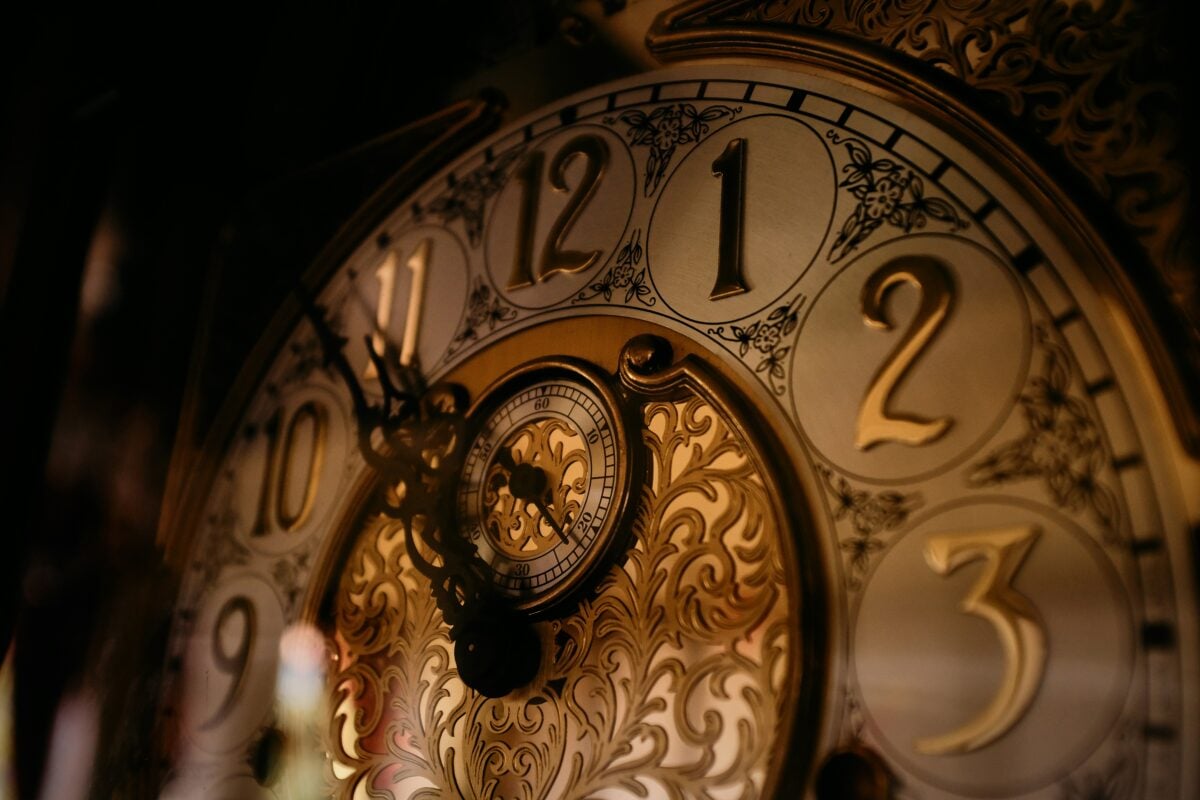
Daniel Quare was one of the foremost London clockmakers of the late 17th and early 18th centuries, most famous for inventing the portable repeating watch. His quarter-repeating table clocks — which strike a sequence of chimes to indicate the nearest quarter hour when a button is pressed — are highly valued.
A William and Mary striking table clock by Quare has sold for £180,000 at Carter Marsh, and an early 18th-century example sold for £27,563 at Bonhams. The quarter-repeat mechanism, combined with Quare’s signature, makes these among the most desirable of the period’s bracket clocks.
A Simon Willard Banjo Clock
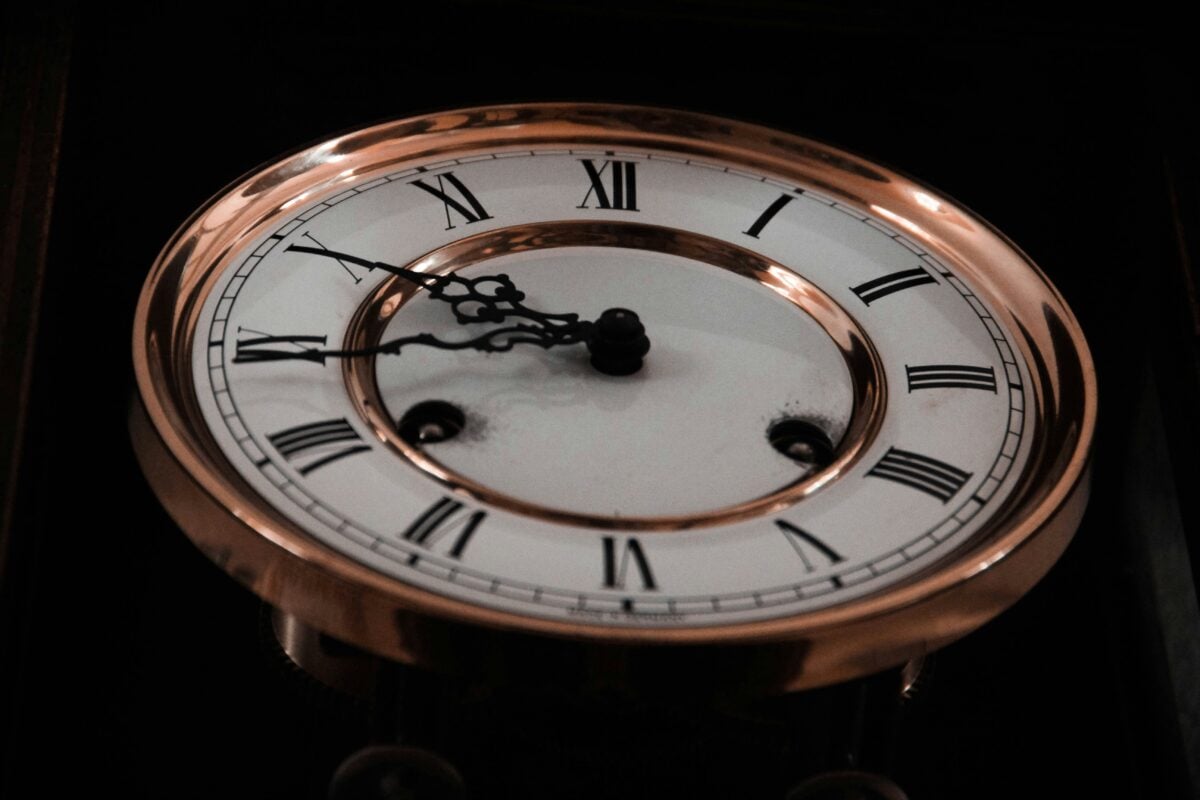
Simon Willard of Grafton, Massachusetts, patented his “Improved Timepiece” — the shape now universally called the banjo clock — in 1802. Original Willard banjo clocks are rare and valuable at $5,000 to $25,000 for genuine examples in good condition.
Later reproductions by Howard, Waltham, and other American makers sell for $300 to $2,000, and the visual similarity between an original and a high-quality copy is enough to fool a casual observer. The key is the movement — an original Willard movement is a specific object with identifiable characteristics that distinguish it from later production.
An Abraham-Louis Breguet Carriage Clock
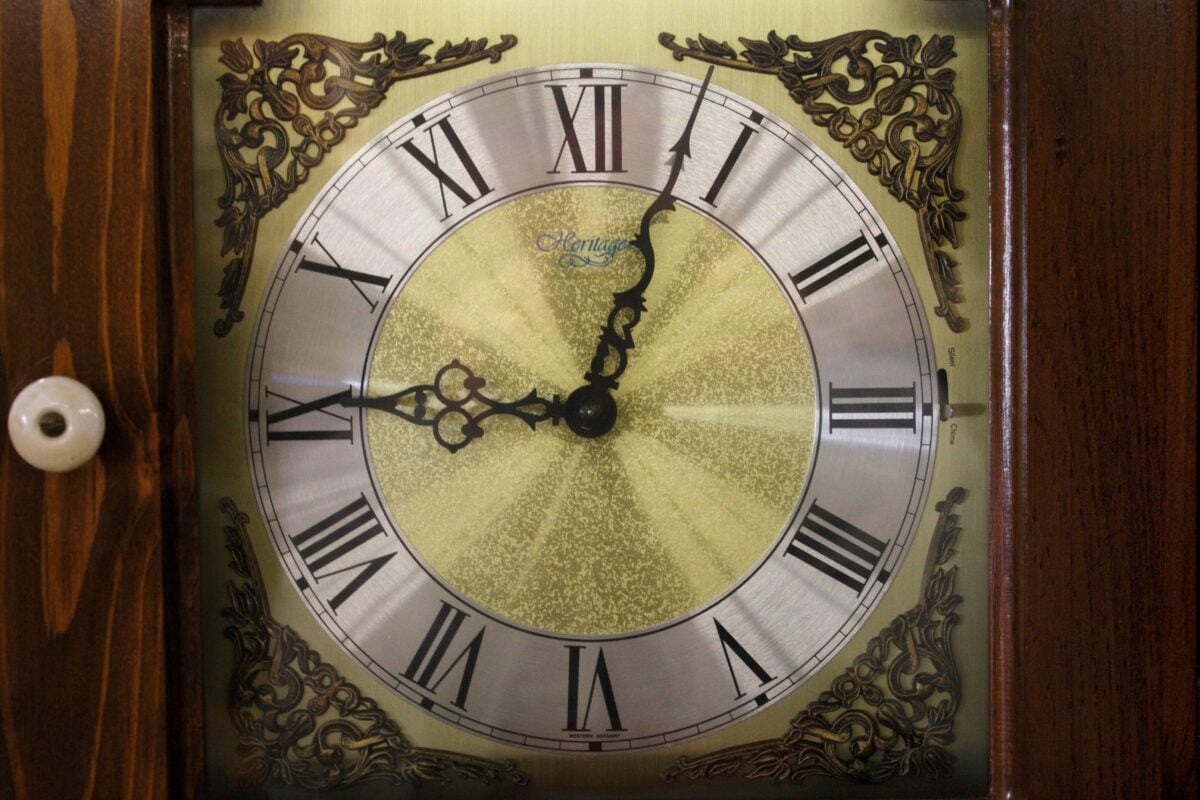
The carriage clock as a form was invented by Abraham-Louis Breguet and sold to Napoleon in the early 19th century. A Breguet Sympathique — the clock that holds the record for the most expensive antique clock ever sold at auction — fetched $6.8 million due to its red tortoiseshell design and its distinguished history of ownership.
More modest Breguet carriage clocks sell for tens of thousands of dollars at specialist auction, and any clock bearing a Breguet signature on the movement warrants immediate professional examination, since the name has also been copied by later manufacturers.
A French Ormolu and Porcelain Mantel Clock
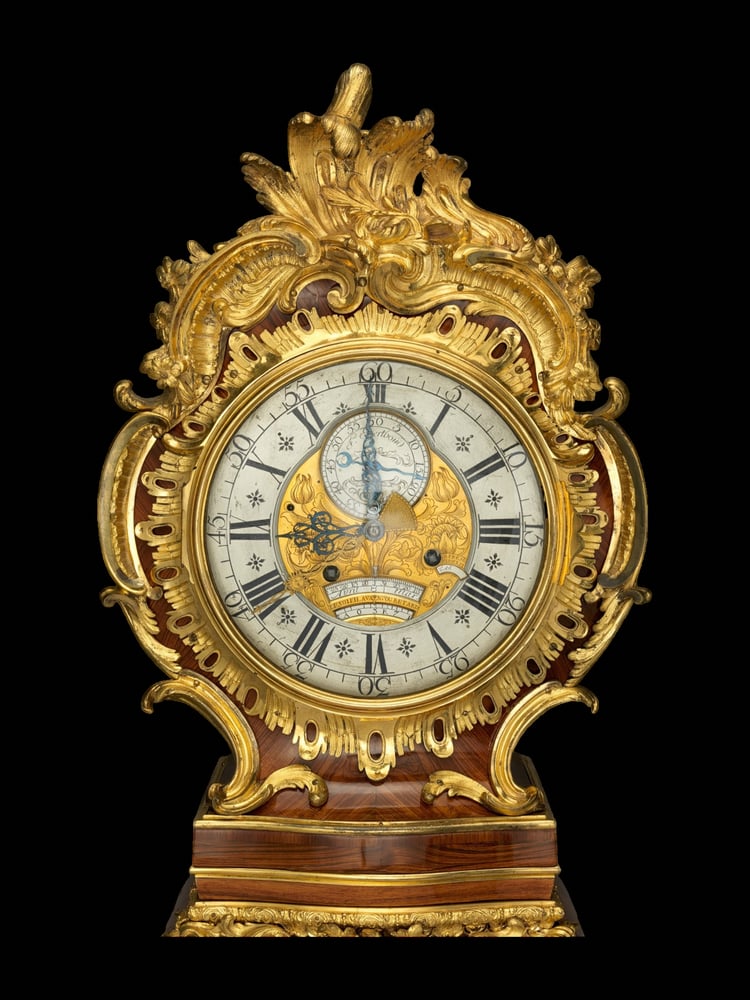
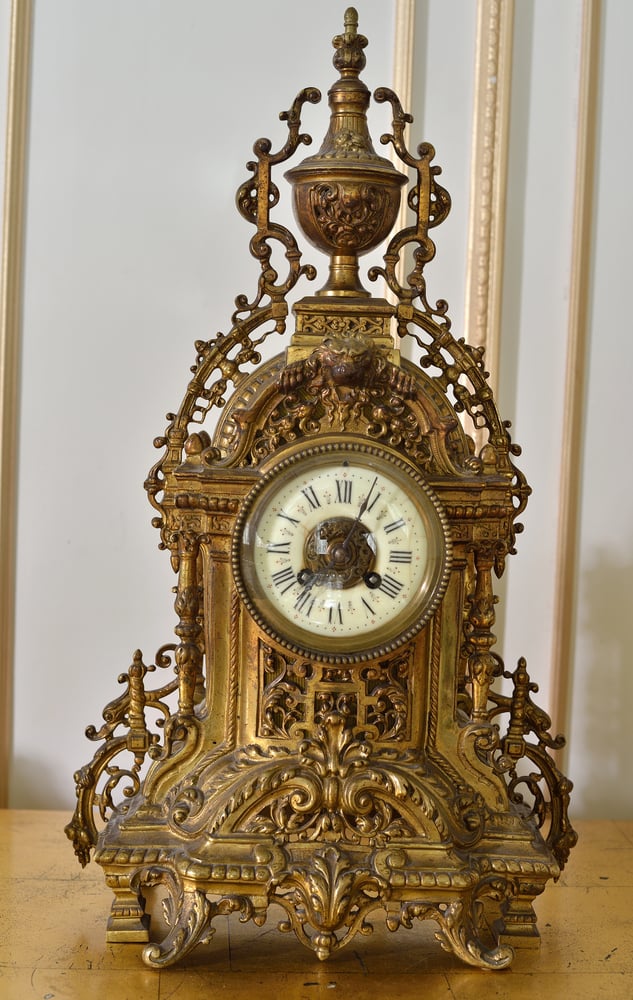
French mantel clocks with ormolu (gilt bronze) cases and porcelain panel inserts were produced throughout the 19th century and represent one of the most consistently valuable categories of clock for the general home collector.
Fine examples sell for $2,000 to $10,000, with exceptional pieces reaching higher depending on the quality of the ormolu casting and the detail of the painted porcelain. A Pierre-Francois Feuchere Empire Ormolu Marble Mantel Clock from approximately 1810 sold for $40,000 at auction.
These clocks were popular wedding gifts and housewarming presents in prosperous French households and migrated across Europe and to America in significant numbers.
A Seth Thomas Weight-Driven Regulator

Among American clock manufacturers, E. Howard of Boston commands the highest consistent prices, followed by Seth Thomas and Eli Terry. A Seth Thomas weight-driven regulator wall clock — the type used in railway stations and public buildings for precision timekeeping — sold on eBay for $4,149 in good condition.
Seth Thomas regulators from the late 19th century that retain their original movements, labels, and weights are significantly more valuable than those with replaced parts, and the difference between an original and a replaced movement can mean a difference of thousands of dollars.
A Vienna Regulator in Original Condition
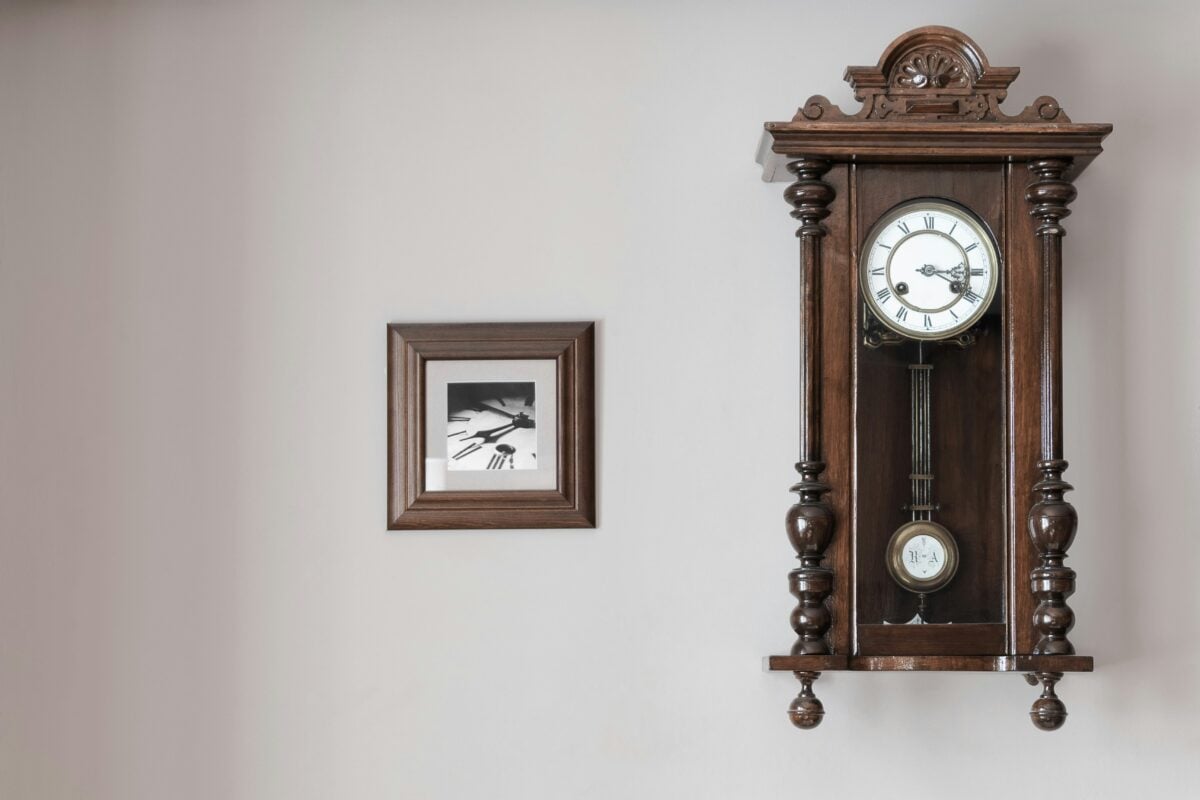
Vienna regulator wall clocks from Austria and Germany — with precision movements, long pendulums, and elegant walnut or ebonized cases — have been consistently collected since the 19th century and typically sell for $500 to $5,000 depending on condition, the complexity of the movement, and whether all original parts remain.
A Vienna Grande Sonnerie quarter-striking example sold for £1,800 at a specialist dealer. The “regulator” designation indicates a clock built for precision rather than ornamentation — the movement is the piece, and the condition of the mechanism is the primary driver of value.
An Early Black Forest Cuckoo Clock With a Fusee Movement
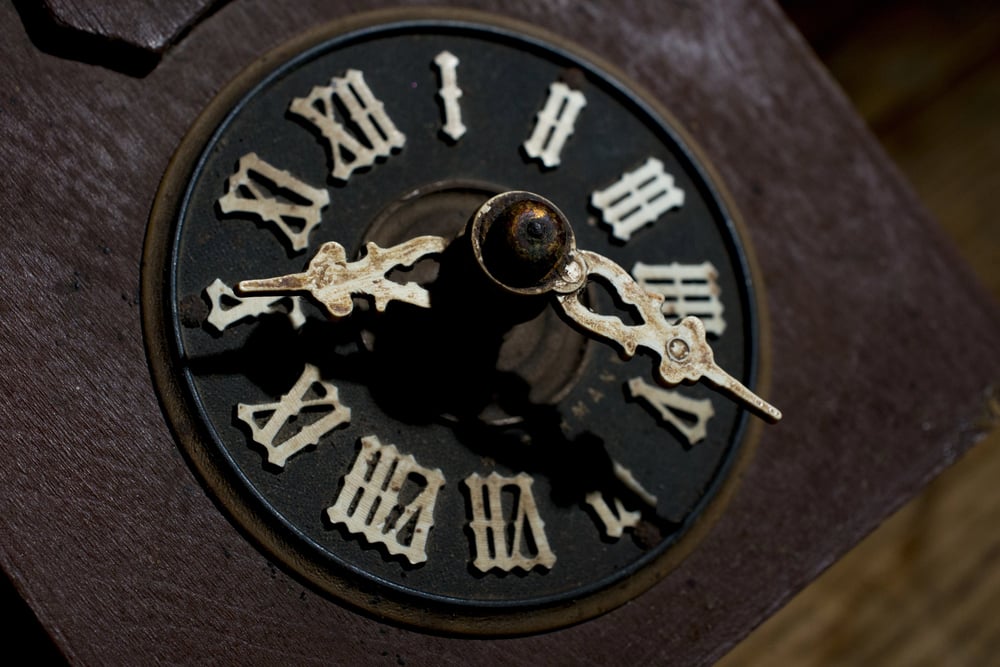
The image of the Black Forest cuckoo clock as a tourist trinket has obscured the market for 18th- and early 19th-century Black Forest examples made with sophisticated fusee movements and hand-carved cases. An early example — a Beha triple fusee wood plate Black Forest cuckoo clock from approximately 1869 — sold for $4,056 on eBay.
Authentic antique Black Forest cuckoo clocks are actively sought by collectors who know to look past the later mass-produced versions; the triple fusee designation in particular indicates a movement of significant complexity and value.
An E. Howard Regulator
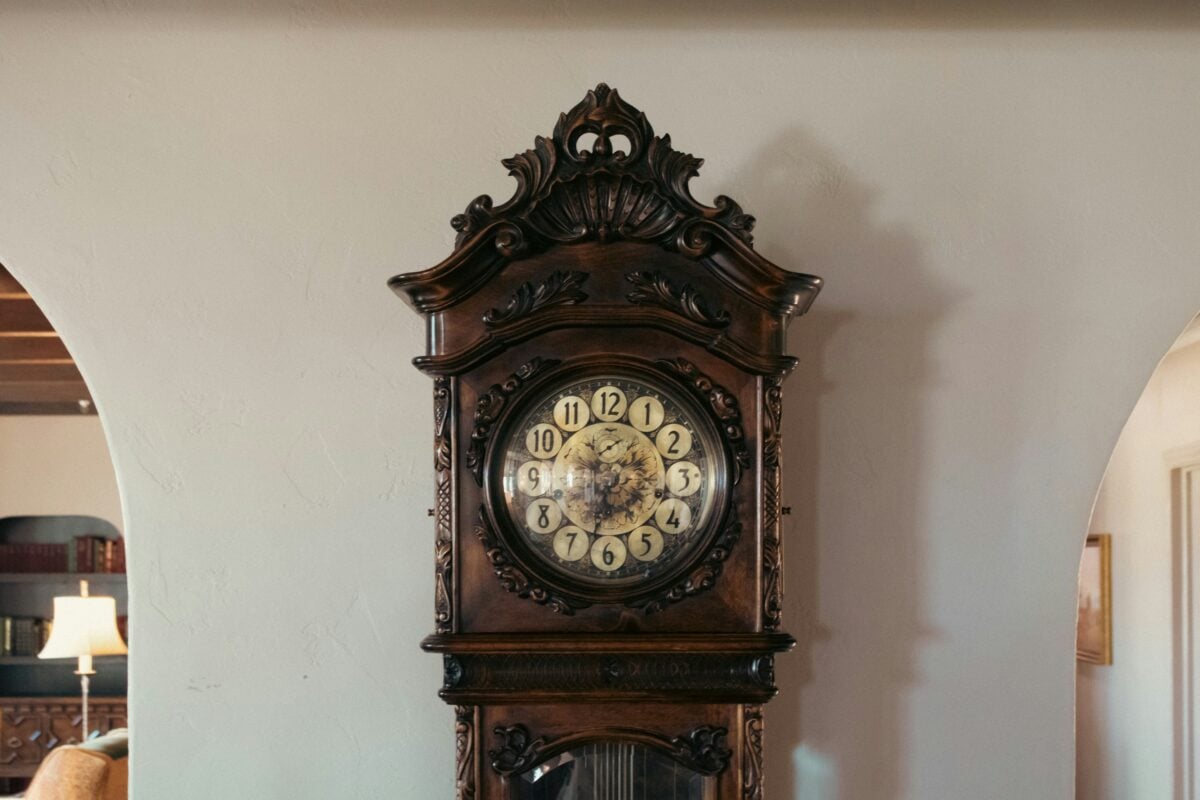
E. Howard & Co. of Boston produced some of the finest American precision clocks of the 19th century and their regulators are the most desirable American-made examples on the collector market. Howard regulators were used in observatories, courthouses, banks, and railway stations to provide authoritative timekeeping for institutions that needed to trust their clocks absolutely.
Original Howard regulators in working condition with original movements and cases command $3,000 to $15,000 or more at specialist auction, and pieces with documented institutional provenance attract additional interest.
An Aaron Willard Shelf Clock
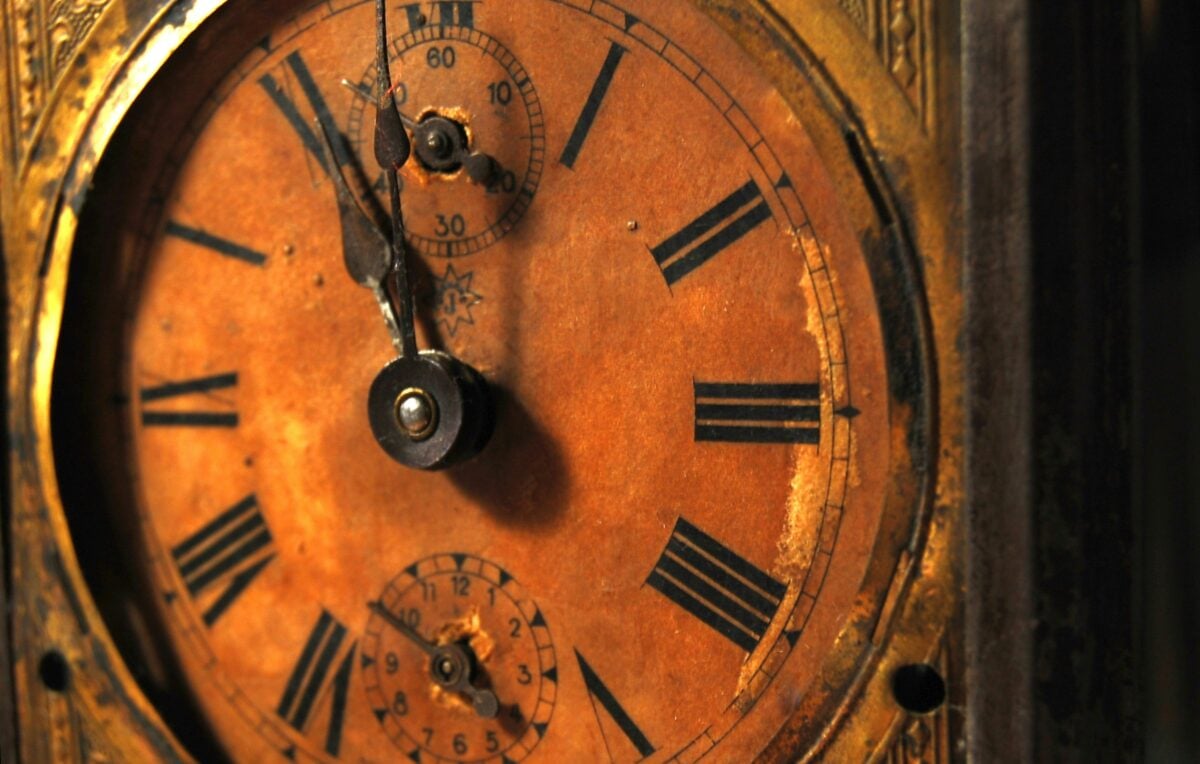
Aaron Willard, younger brother of Simon, produced his own line of shelf and mantel clocks from his Boston shop. A “Fine Federal Inlaid and Figured Mahogany Shelf Clock, Works by Aaron Willard, Boston, Massachusetts, circa 1810” appeared in Sotheby’s catalogue as a clock of significant collector interest.
Federal-period American shelf clocks by either Willard brother — with original movements, painted glass panels, and documented provenance — represent some of the most important early American clockmaking and attract both museum buyers and private collectors.
A Bracket Clock With a Fusee and Pull-Repeat Movement
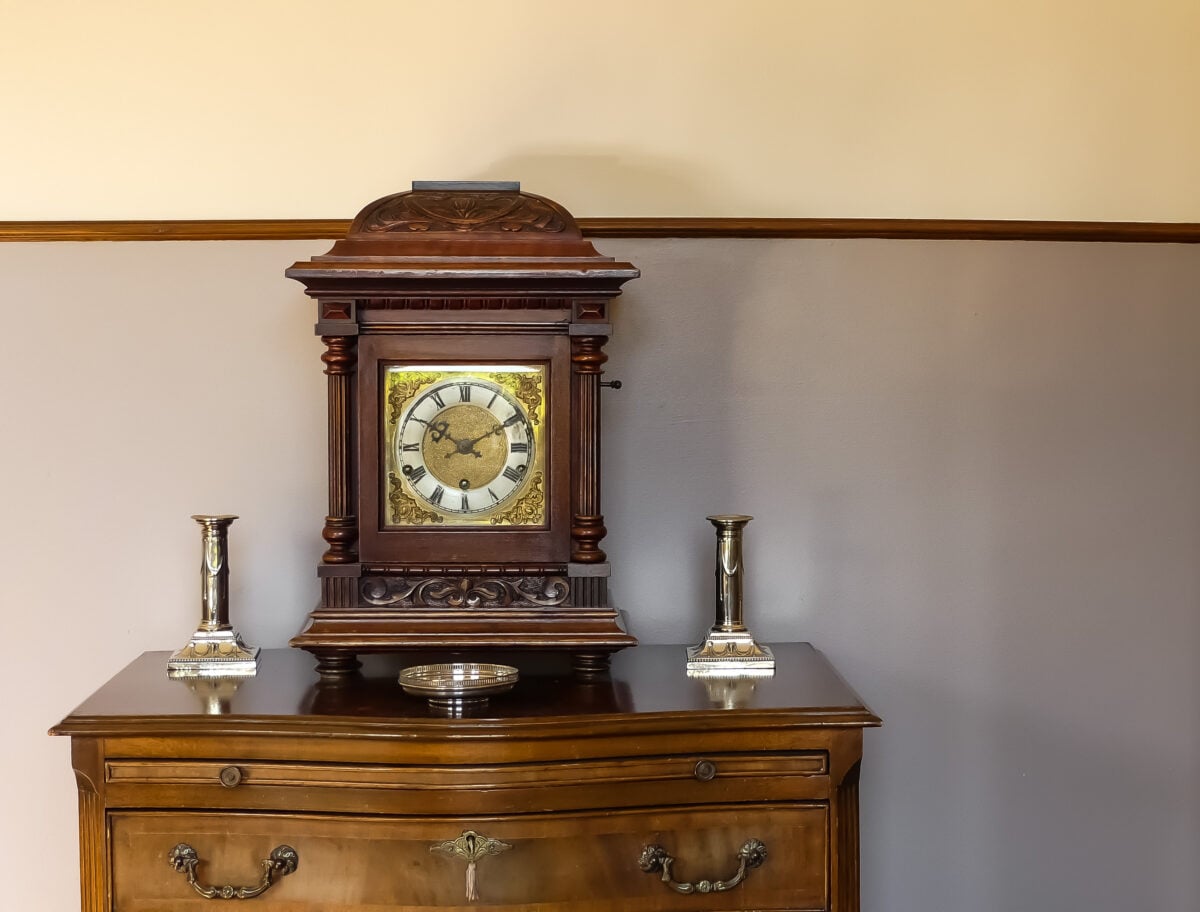
The fusee is a cone-shaped mechanism designed to equalize the power of a mainspring as it unwinds, ensuring consistent timekeeping regardless of how fully wound the clock is. Pull-repeat mechanisms allow the last chime sequence to be replayed on demand by pulling a cord or pressing a button — a luxury feature on 17th- and 18th-century English bracket clocks.
The combination of a fusee movement and a pull-repeat complication significantly increases value. An antique English inlaid rosewood triple fusee four-bell musical bracket clock sold for $4,146 on eBay; more complex examples by named makers sell for tens of thousands.
A French Boulle Bracket Clock
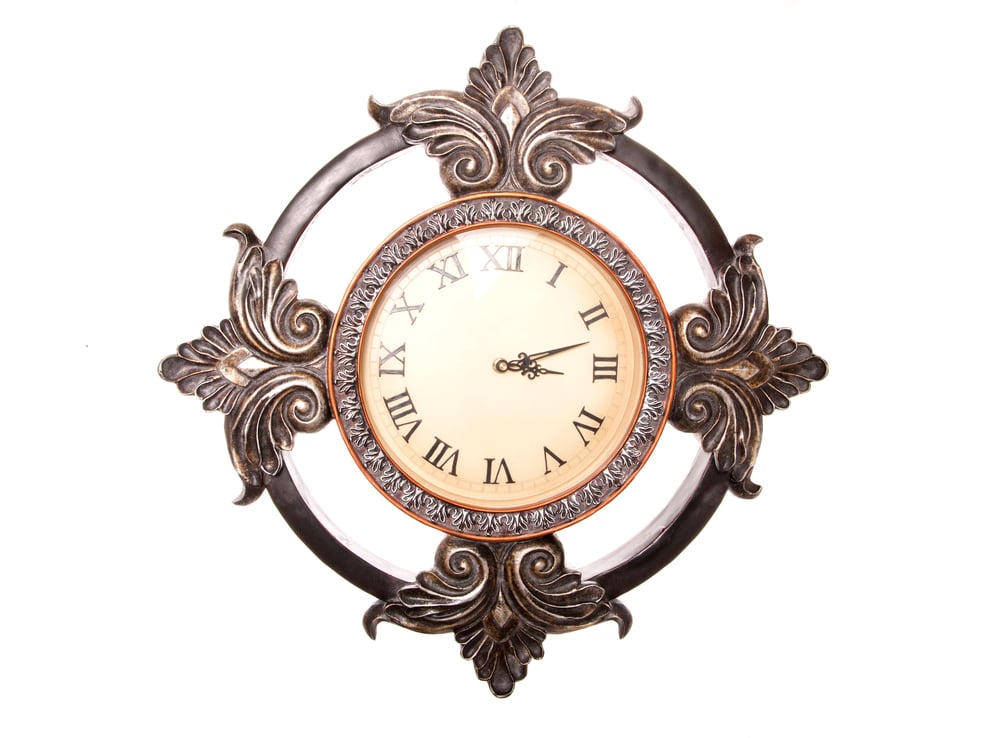
André-Charles Boulle was Louis XIV’s royal cabinetmaker, and the tortoiseshell-and-brass marquetry technique named after him became one of the defining luxury aesthetics of 17th-century French furniture.
Boulle-work bracket clocks and their matching bracket pedestals — produced in matched pairs of “first-part” and “counter-part” — are among the most visually dramatic antique clocks and command prices from a few thousand dollars for later reproductions to tens of thousands for early examples in good condition. A rare huge 18th-century French shell-and-boulle verge bracket clock sold for $4,096 in auction. Condition of the marquetry is critical.
A Chinese Export Clockwork Piece
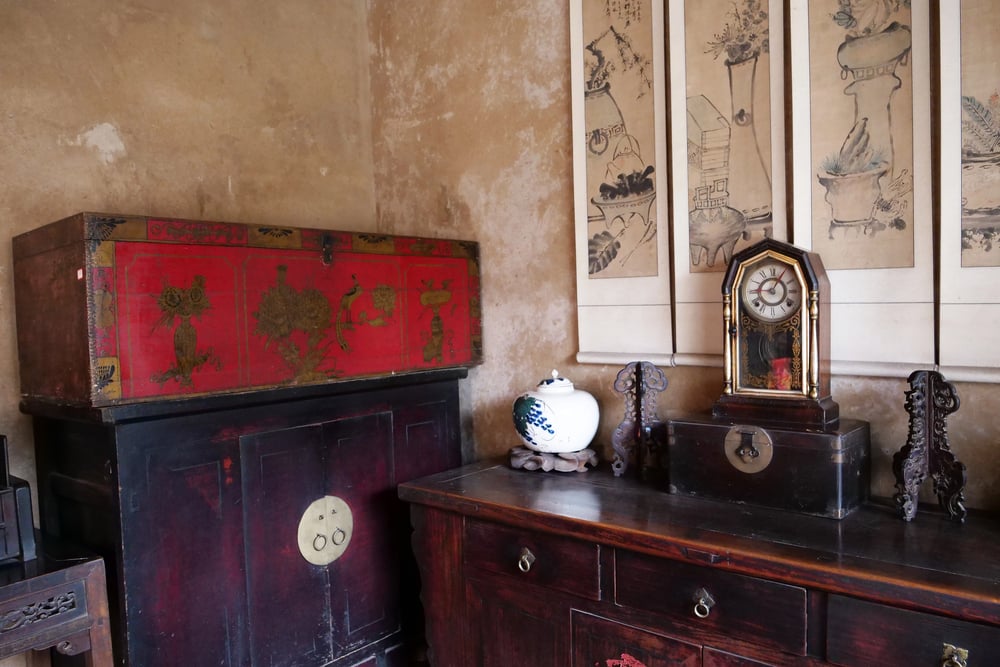
The trade in European mechanical clocks to China — known as “clocks for the emperor” — produced some of the most extraordinarily complex and expensive clockwork pieces ever made, combining precision Western movements with Chinese decorative styles for the imperial court. A “rare late 18th-century Chinese Imperial tribute paste-set ormolu and white marble quarter-striking centre-seconds ‘Double Gourd’ table clock” sold at Bonhams for £229,000.
These pieces traveled in both directions, and European auction houses regularly encountered Chinese export clocks brought back by diplomats and traders and subsequently inherited without any awareness of their category or value.
A Skeleton Clock Under a Glass Dome
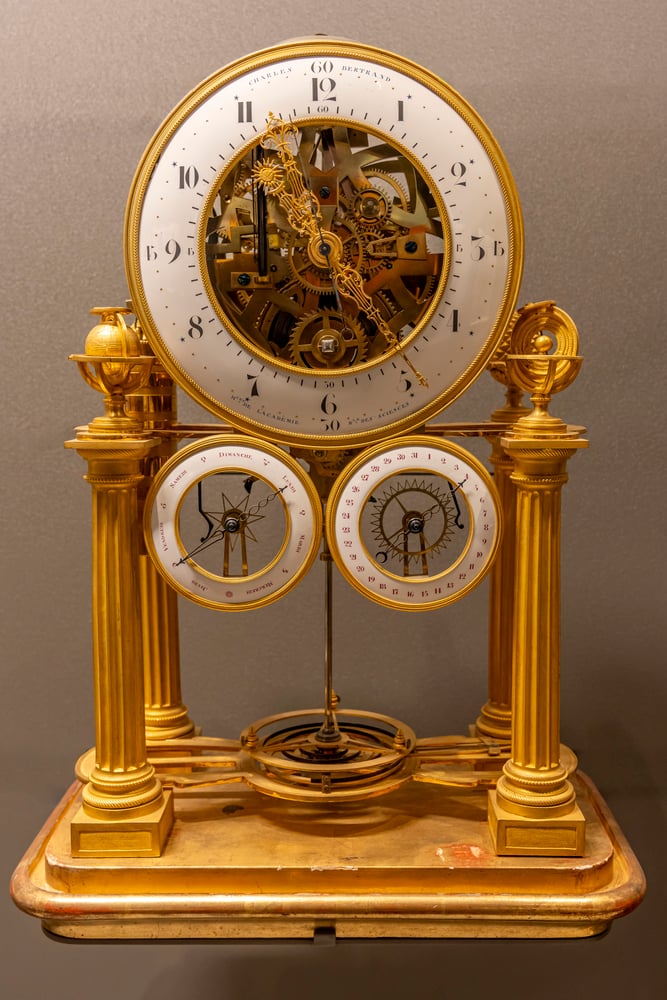
— Photo by frlegros
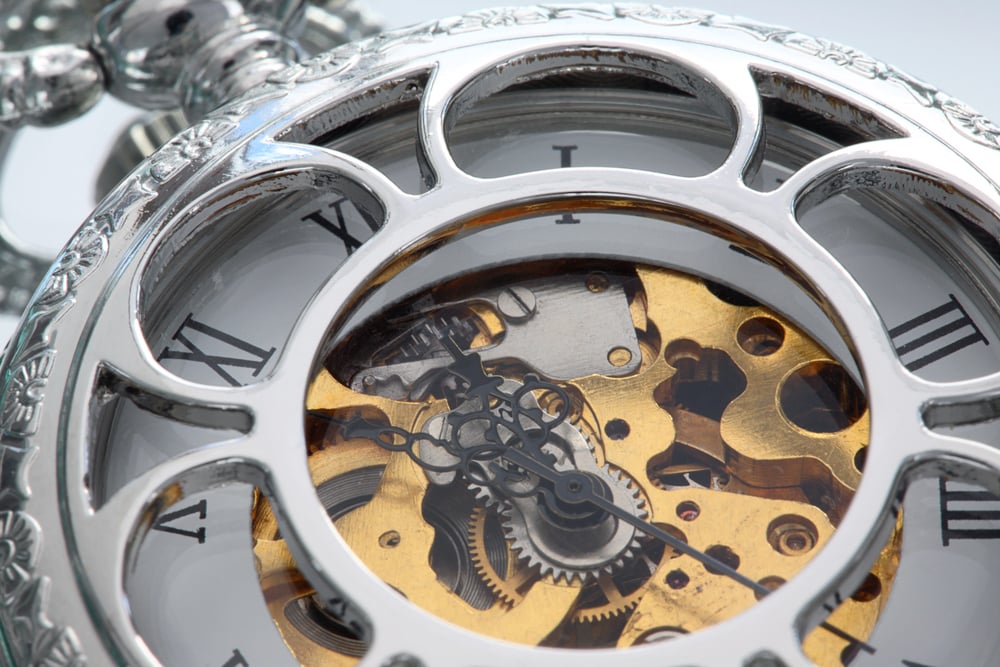
Skeleton clocks — so named because the clock’s frame is cut away to expose the working movement rather than concealing it behind a solid dial — were produced primarily in England and France from the late 18th through the 19th century and are almost always displayed under glass domes.
A historic skeleton clock made for and presented to William Scoresby in 1833 by James Condliff of Liverpool sold at Bonhams for £22,563. The appeal of skeleton clocks is the visible movement, which means the condition of the movement itself is observable and directly affects value.
A Ship’s Marine Chronometer
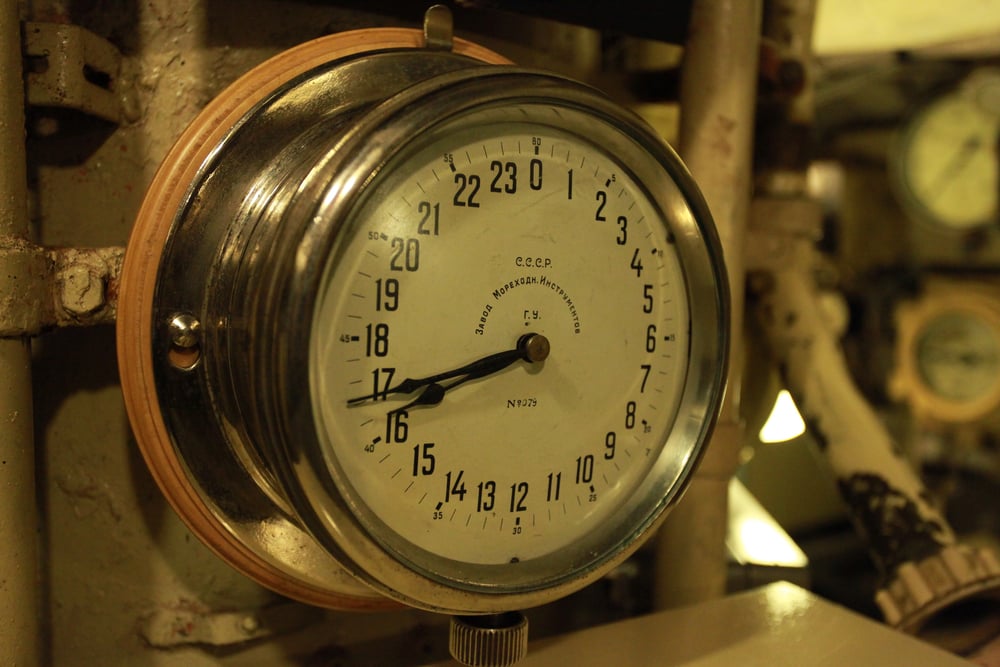
Marine chronometers — precision timekeeping instruments developed to allow accurate longitude calculation at sea — represent some of the finest mechanical engineering of the 18th and 19th centuries. A Margetts marine chronometer sold at auction for $5,210.
Original ship’s chronometers in mahogany box gimbaled cases, with the original glass cover and documentation, are actively collected by both horologists and maritime history enthusiasts. The movement is the piece: box and condition of the going work together determine whether a chronometer is worth a few hundred dollars or several thousand.
A Tiffany Studios Carriage Clock
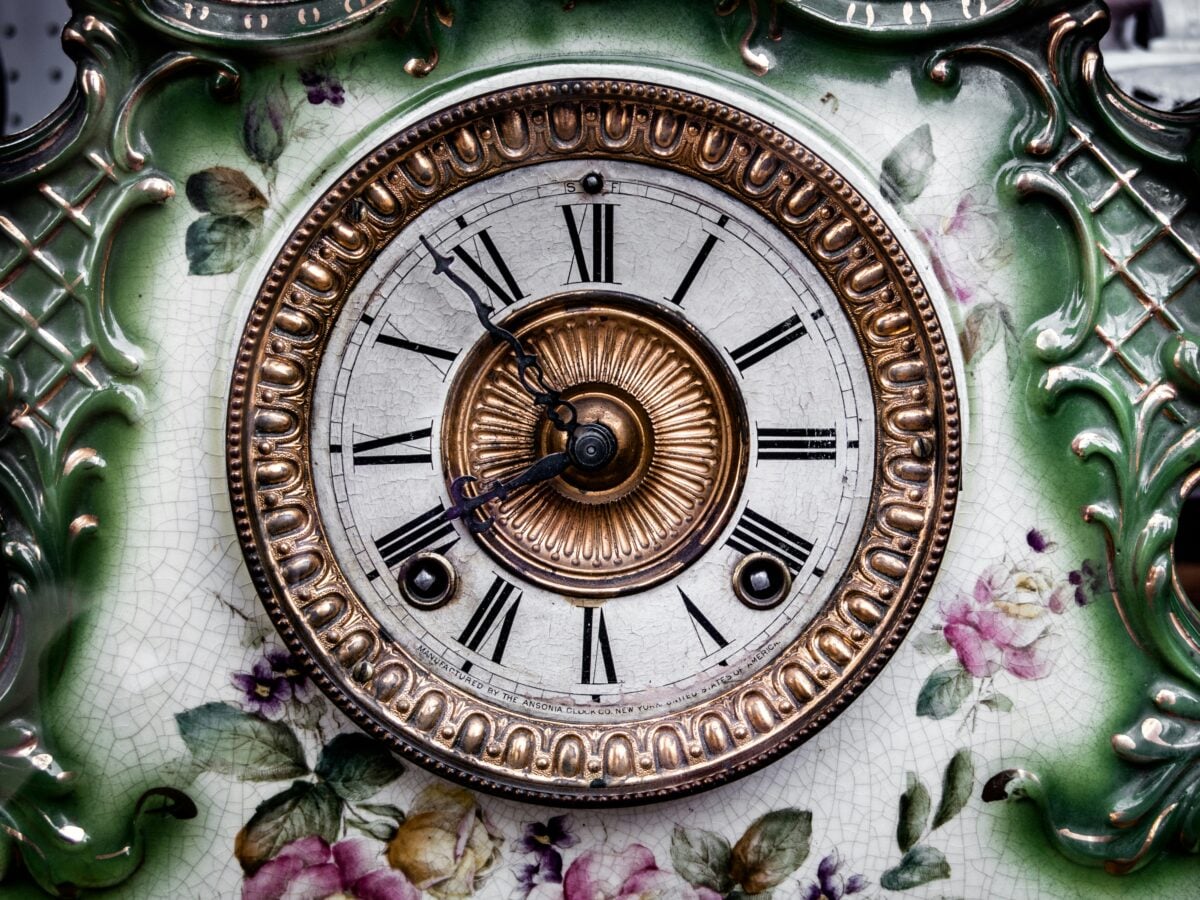
Tiffany Studios produced carriage clocks with decorated cases in their signature styles — including the Pine Needle pattern, applied to bronze screens over art glass — during their active period from approximately 1893 to 1933. A Tiffany Studios Pine Needle carriage clock in mint condition sold at specialist auction for $4,250.
Tiffany Studios clocks are distinct from pieces marked “Tiffany & Co.” — the jewelry firm — and both carry collector interest, though the Studios pieces are specifically sought by Art Nouveau and Arts and Crafts collectors.
A Lantern Clock
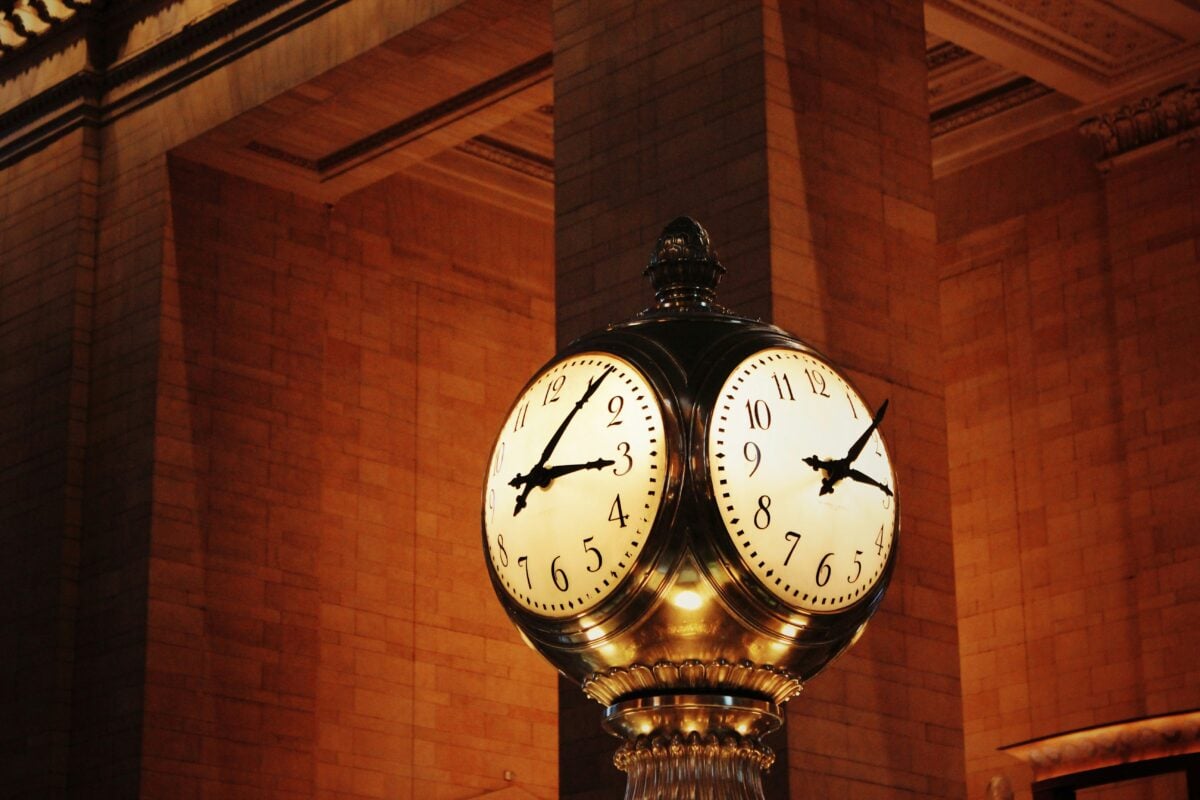
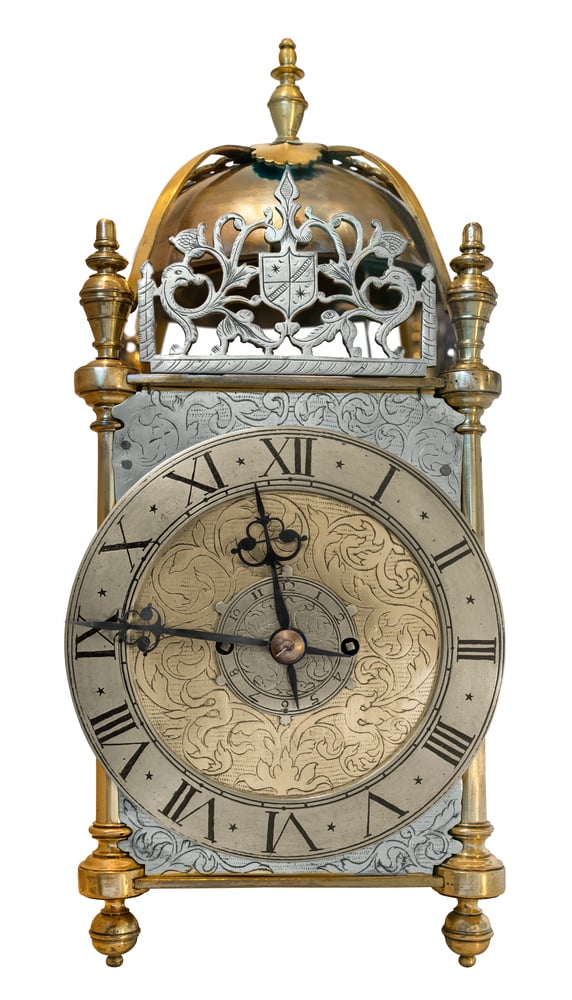
The lantern clock is one of the earliest forms of domestic mechanical clock, produced in England from approximately 1600 through the early 18th century. Named for their resemblance to a hanging lantern, these brass-cased weight-driven clocks with chapter rings and balance wheel or verge escapements represent the first period of English domestic clockmaking.
A Thomas Browne Bristol lantern clock from approximately 1650 was listed by Carter Marsh at £28,000, described as “unique and historically significant.” Surviving lantern clocks in original condition with verge escapements (rather than later conversions to anchor escapements) command the highest prices.
A Japanned or Lacquerwork Longcase Clock
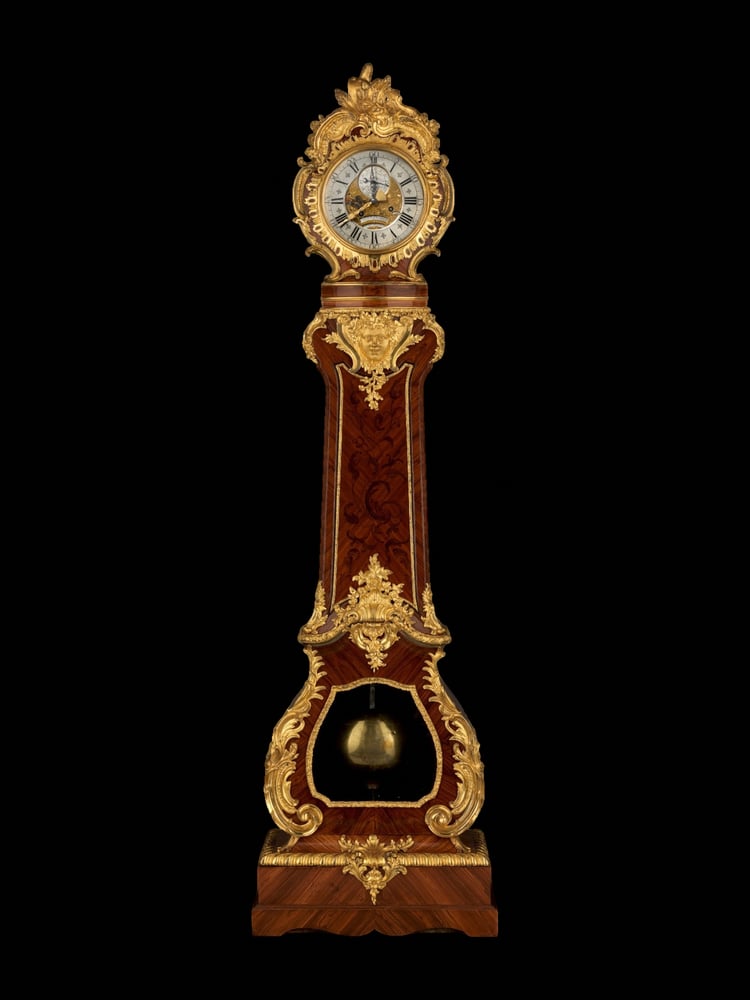
Through the late 17th and early 18th centuries, the European taste for Asian lacquerwork — real and simulated — produced a category of highly decorative longcase and bracket clocks whose cases were painted in black or red japanned finish with gilded chinoiserie decoration. A William Kipling London japanned longcase clock sold at Carter Marsh for £2,900, and more elaborate examples by known makers regularly exceed £5,000 to £15,000. The condition of the japanning itself is a major value driver, as chipped, flaked, or repainted examples lose significant collector appeal.
A Tavern Clock or Act of Parliament Clock
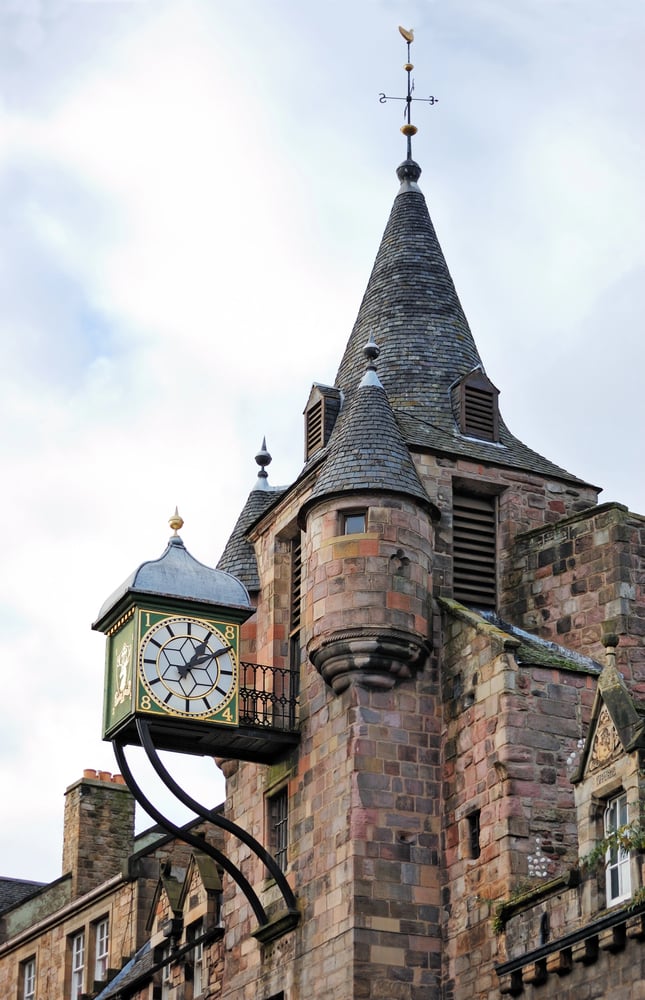
Large-dialed English wall clocks produced after 1797 — often called “Act of Parliament clocks” after a short-lived tax on private clocks that was incorrectly believed to drive demand for public clocks — feature distinctive oversized painted dials without glass covers, designed for reading across the width of a public room.
The Mansion House Clock — described as “an interesting early 18th century longcase clock” — sold for £13,000 at a specialist dealer. These are among the most visually arresting antique clocks and hold consistent value, particularly examples with good painted dials and original movements.
A Meissen or Sevres Porcelain Mantel Clock
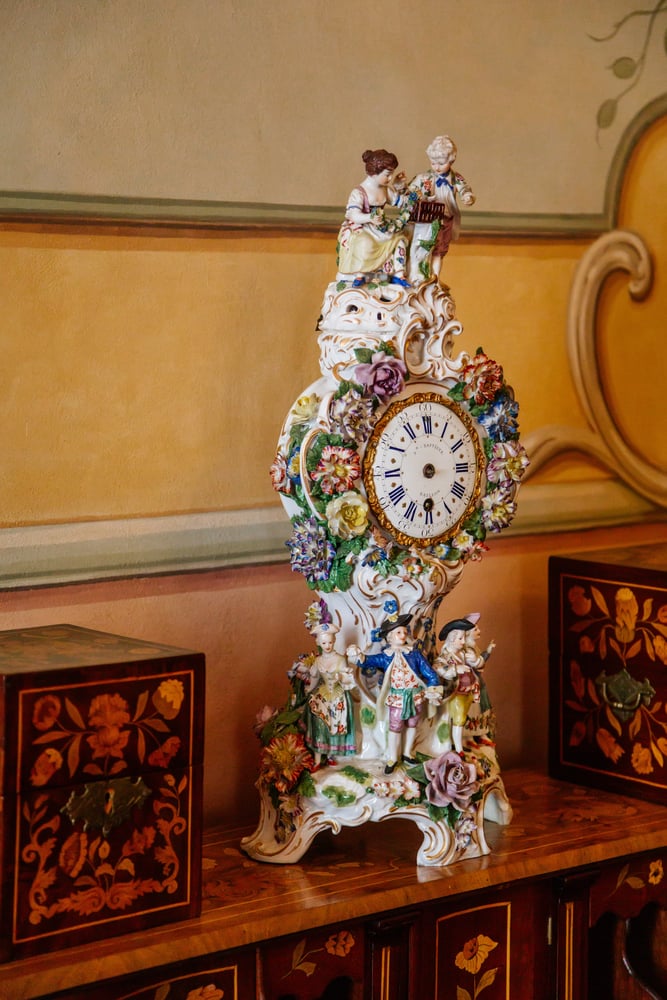
French and German porcelain manufacturers — most notably Meissen and Sèvres — produced clock cases using their finest paste and enamel techniques during the 18th century. These pieces are collected simultaneously for their horological interest and for the quality of the porcelain, and values are determined by the intersection of both markets.
The condition of the porcelain is the primary driver; even small chips or hairline cracks in the case can reduce value substantially. Museum-quality examples with perfect original movements and cases have sold for tens of thousands at Christie’s and Sotheby’s.
An Early Eli Terry Pillar and Scroll Clock
Eli Terry of Plymouth, Connecticut, is credited with industrializing American clockmaking through his invention of interchangeable wooden movement parts. His “Pillar and Scroll” shelf clock, introduced around 1816, was the first widely affordable American shelf clock — and early examples with wooden movements and original painted glass panels are now genuinely collectible.
The wooden movement is the indicator of age and authenticity, as Terry later transitioned to brass movements. Well-documented examples with original tablets sell for $1,000 to $3,000, with exceptional examples reaching higher.
A Bracket Clock With an Ebony Veneer and Brass Fittings
Ebony-veneered bracket clocks with cast brass handles, feet, and escutcheons were the prestige clock format of Restoration-era England — the clockmaker’s equivalent of a modern luxury sports car, designed to be both technically impressive and immediately recognizable as expensive. A late 17th-century ebony veneered quarter-repeating table clock by Daniel Quare sold for £27,563.
The cast-brass fittings are almost always original — replacements are detectable — and their condition strongly affects the overall value of the piece.
A Four-Hundred Day or “Anniversary” Clock
The four-hundred day clock — sometimes called an anniversary clock from the tradition of giving one as a wedding gift and winding it once annually — operates on a slowly rotating torsion pendulum rather than a conventional swinging pendulum, powered by a single winding that lasts about a year.
German manufacturers Jahresuhren-Fabrik, Schatz, and Kundo produced the most collected examples. Early German four-hundred day clocks from the 1880s through 1920s in original condition with dome intact sell for $100 to $600, with rare variations reaching higher. They are frequently inherited and almost as frequently donated to thrift stores without anyone checking the mechanism.
A Gilded French Figural Clock
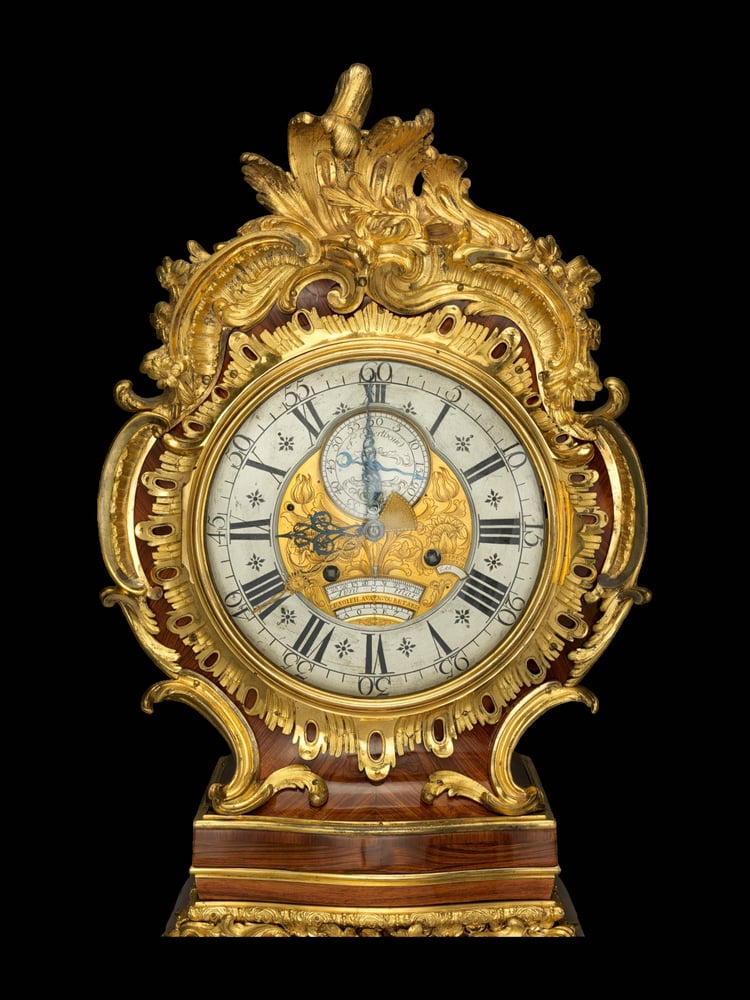
19th-century French clock workshops produced a significant volume of gilt-bronze figural mantel clocks featuring classical, allegorical, or historical subjects as part of the case design — bronze figures of knights, goddesses, explorers, and historical personages posed alongside or supporting the clock dial. These “French figurals” are currently among the better-performing categories in the mid-range antique clock market.
A French gilt metal and cloisonné mantel clock sold for £4,500 at specialist auction, and rare or unusually complex figural groups by known foundries exceed that substantially.
A Longcase Clock With a Painted Arched Dial
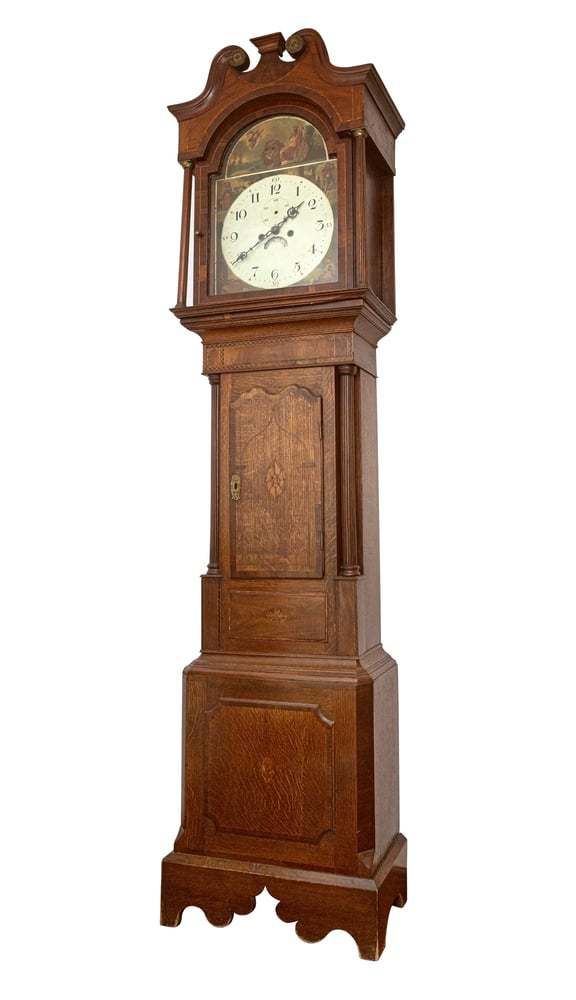
English longcase clocks with painted arched dials — featuring landscape scenes, ships, or mythological subjects in the arch above the clock face — were produced in large numbers throughout the late 18th and early 19th centuries and represent the most accessible category of serious antique clock collecting.
An eight-day mahogany Chippendale musical eight-bell grandfather longcase clock sold for $4,009. At auction, common grandfather clocks from the late 1800s sell for $500 to $3,000, but higher-end examples with original movements, painted dials, and documented provenance regularly bring $5,000 to $15,000, and exceptional pieces by top makers have sold for $50,000 and above.
A Japanese Lantern Clock or Pillar Clock
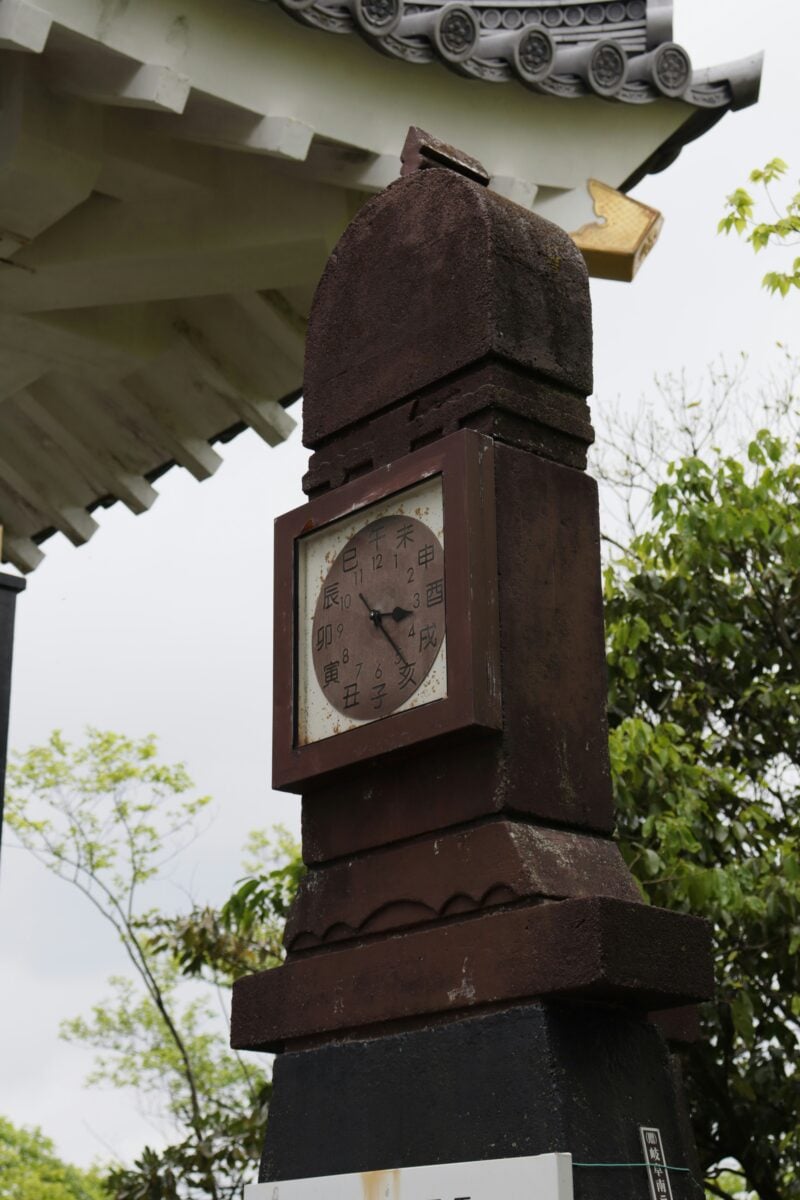
Japan developed its own indigenous clockmaking tradition from the 17th century onward, producing distinctive lantern clocks and pillar clocks calibrated to the Japanese variable-hour time system. A rare and unusual Japanese carved mantel clock sold at a specialist auction for £3,200.
Japanese antique clocks from the Edo period (1603–1868) are collected both within Japan — where they represent a significant part of mechanical heritage — and internationally, and genuine examples with original adjustable foliot escapements are objects of serious historical interest.
A Regency Fusee Bracket Clock With a Brass and Ebonized Case
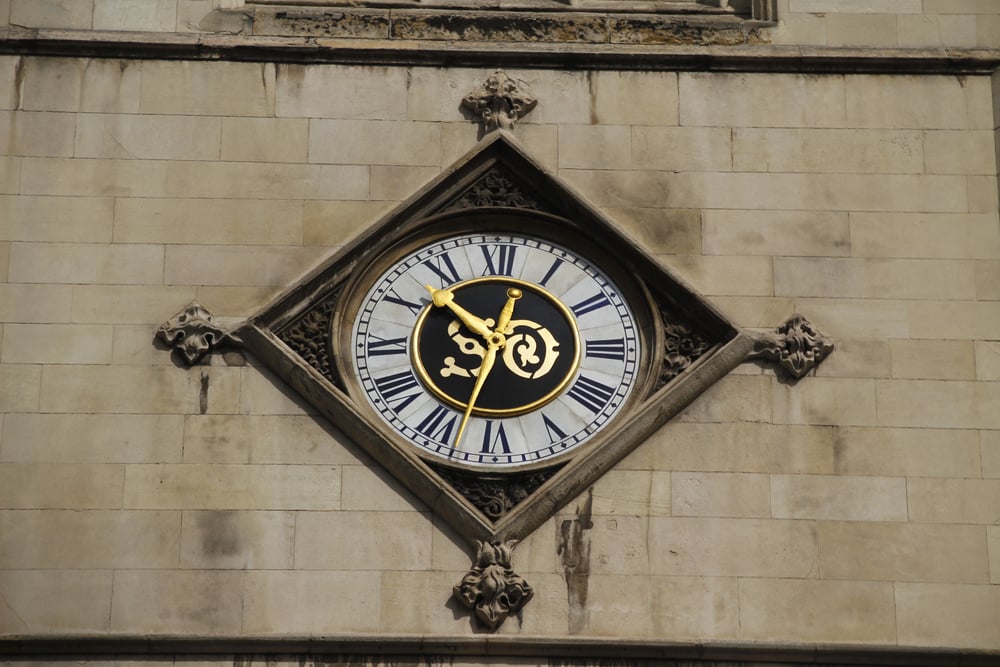
The Regency period (1811–1820) in English clockmaking produced bracket clocks with distinctive brass inlay on ebonized cases — a style that reacted against the elaborate japanning and marquetry of earlier periods with something cleaner and more architectural. These clocks are consistently desirable to interior designers working in period interiors and to clock collectors looking for well-made examples with elegant cases.
A George III ebonized repeating bracket clock sold for approximately £2,200 at a regional specialist; more complex examples with original fusee movements and documented maker attribution reach considerably higher.
A Westminster Chime Mantel or Bracket Clock

Westminster chime clocks — which play the familiar four-note sequence on the quarter hour and count out the full hours — were among the most desirable mantel and bracket clocks from approximately 1875 through 1940. German, English, and American makers all produced Westminster chime movements of varying quality.
Genuine pre-1940 Westminster chime bracket clocks with original fusee or coil-spring movements, in original walnut or mahogany cases, sell for $400 to $2,500 depending on condition and maker. The French versions with more elaborate cases tend toward the higher end of that range.
A Continental Bracket Clock With Bronze Mounts
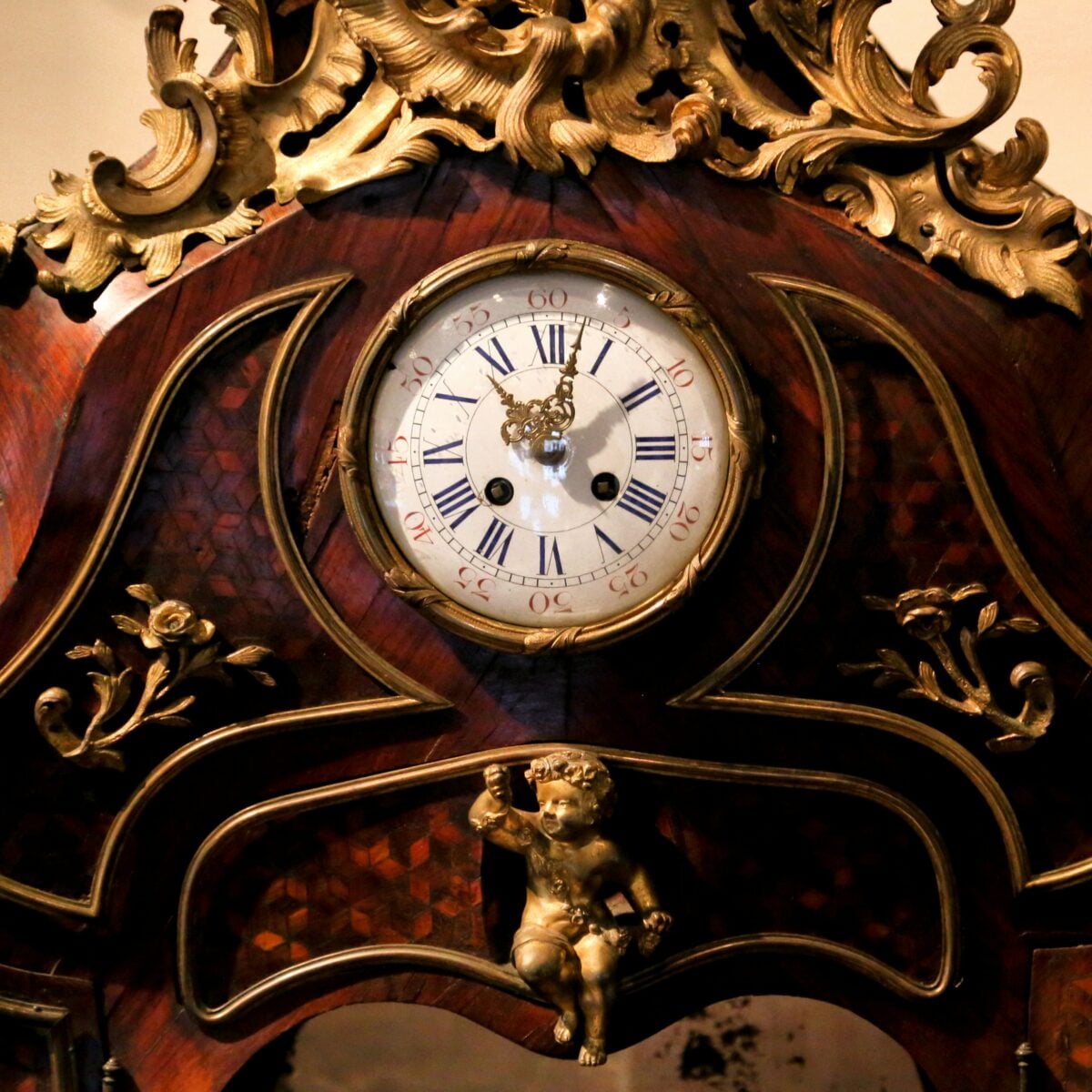
The Continent — France, Germany, and Austria particularly — produced bracket clocks of considerable variety and quality throughout the 18th and 19th centuries. French bracket clocks with elaborate cast and gilded bronze mounts, sometimes paired with their original bracket pedestals, represent the most collected subcategory. An Ansonia “Antique Hanging” wall clock in an oak case sold for $4,103, while a rare French brass and red champlevé enamel Moorish regulator mantel clock sold for $5,696.
The quality of the bronze casting — and whether it’s original or later replacement — is the most significant determinant of value.
What’s on the Movement Tells the Whole Story
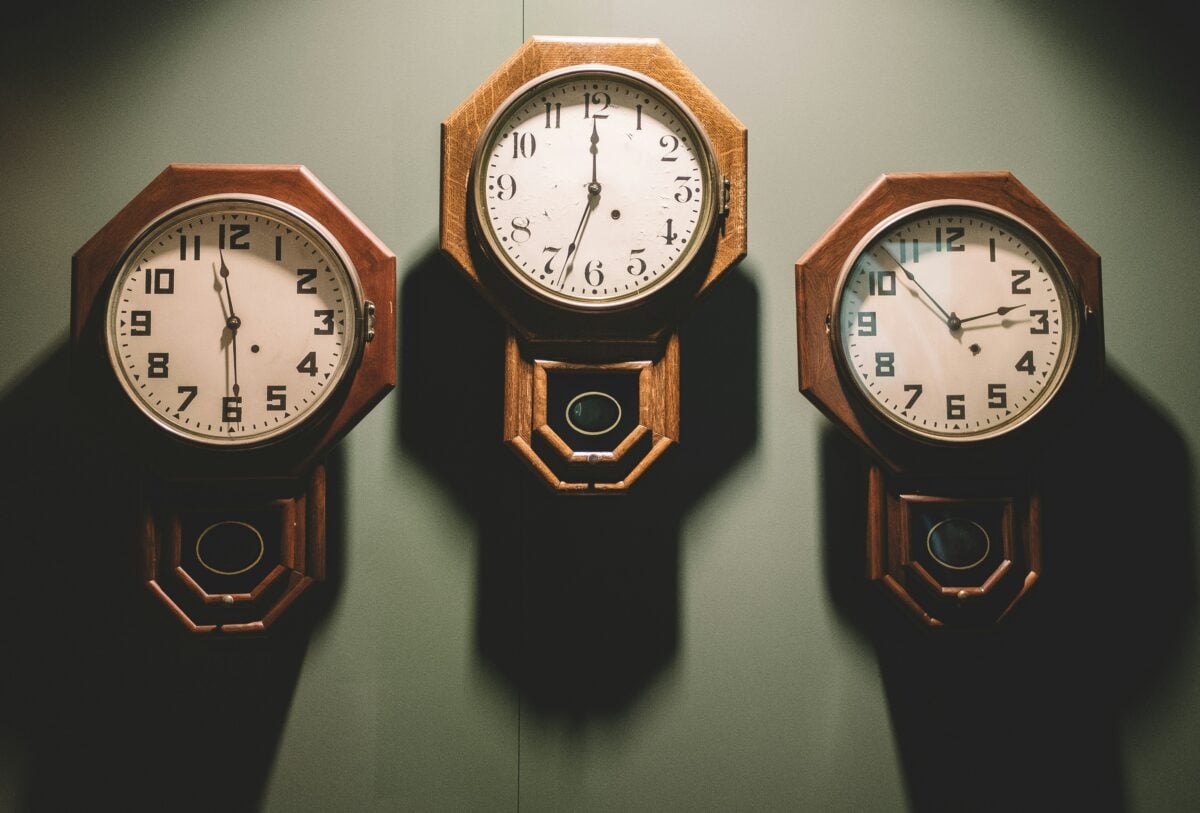
The decisive difference between a clock worth keeping on a mantel and a clock worth getting appraised almost always comes down to one thing: what’s engraved on the movement. The case can be beautiful, the dial can be original, the glass can be intact — and none of that matters if the movement has been replaced.
Equally, a clock with a battered or non-original case can still be extremely valuable if the movement is signed by a recognized maker and is in original condition. Before discarding, donating, or selling any inherited clock, open the back.
The movement backplate typically carries the maker’s name, often the city, and sometimes a serial number. An internet search on those details costs nothing and takes ten minutes.
The alternative — finding out later that the clock sold for twenty dollars at an estate sale when it was worth twenty thousand — tends to be a lesson that stays with people for a long time.
More from Go2Tutors!

- The Romanov Crown Jewels and Their Tragic Fate
- 13 Historical Mysteries That Science Still Can’t Solve
- Famous Hoaxes That Fooled the World for Years
- 15 Child Stars with Tragic Adult Lives
- 16 Famous Jewelry Pieces in History
Like Go2Tutors’s content? Follow us on MSN.