27 Planets and Moons Named After Myths
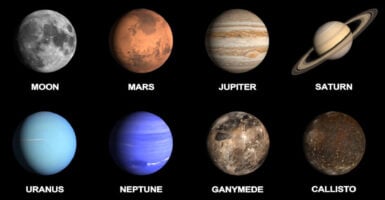
Long before spacecraft ever left Earth, astronomers were already naming the sky. Nearly every planet and major moon in the solar system carries a name borrowed from mythology, chosen for a resemblance in character, story, or role that some long-dead namer thought fit the object being described.
The result is a solar system that doubles as a scattered library of ancient storytelling, filed under different constellations and orbits.
Mercury
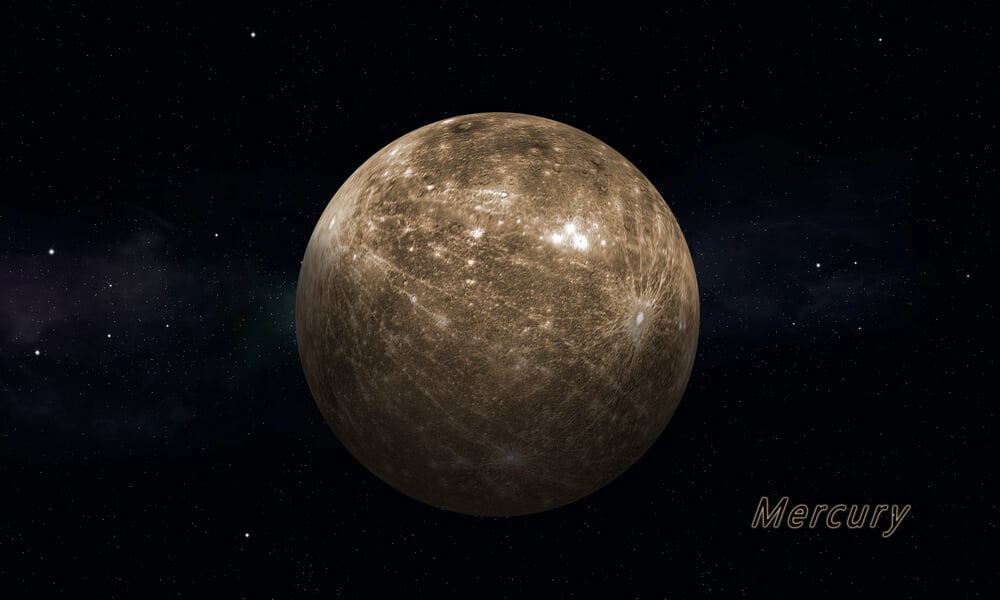
Named for the swift-footed Roman messenger god, Mercury earned its name because it moves faster across the sky than any other visible planet, completing an orbit of the sun in just 88 days. Ancient astronomers tracking its quick, darting path across the horizon connected it naturally to a deity known for speed and communication between gods and mortals.
The name has stuck since antiquity, predating any formal naming convention.
Venus
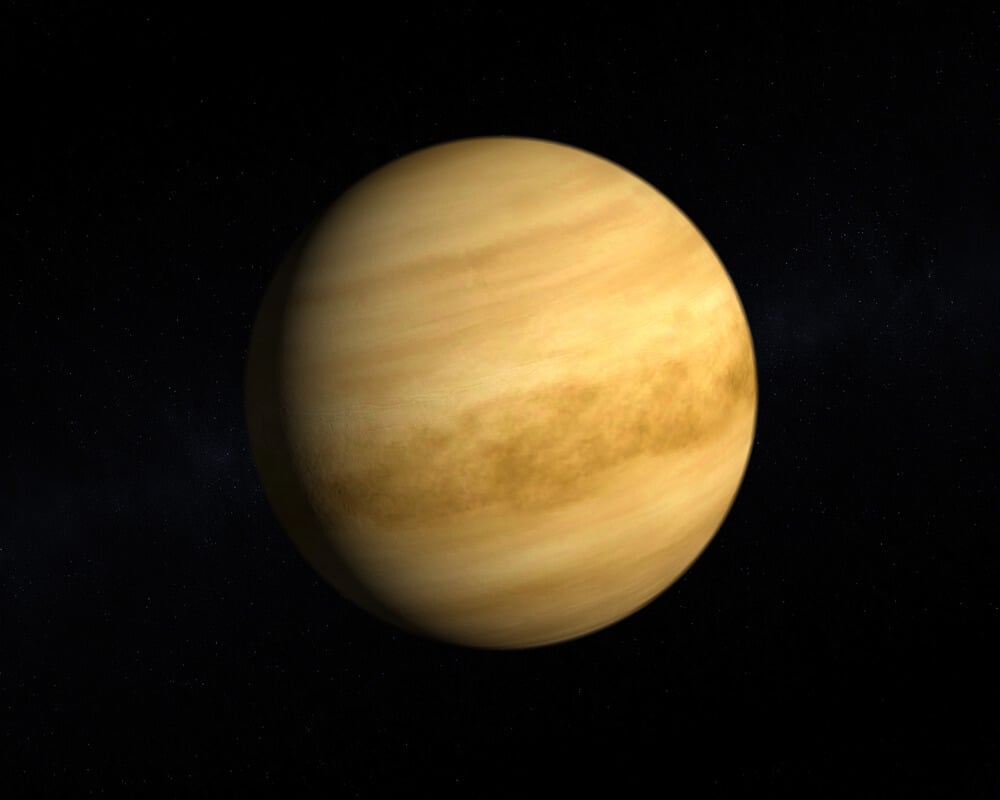
Venus takes its name from the Roman goddess of love and beauty, a fitting choice given that it is the brightest planet visible from Earth after the sun and moon. Its luminous, steady glow in the dawn or dusk sky made it a natural symbol of beauty across many ancient cultures, not only Roman ones.
Ironically, the planet’s actual surface, blanketed in thick sulfuric acid clouds and crushing heat, has nothing gentle about it.
Mars
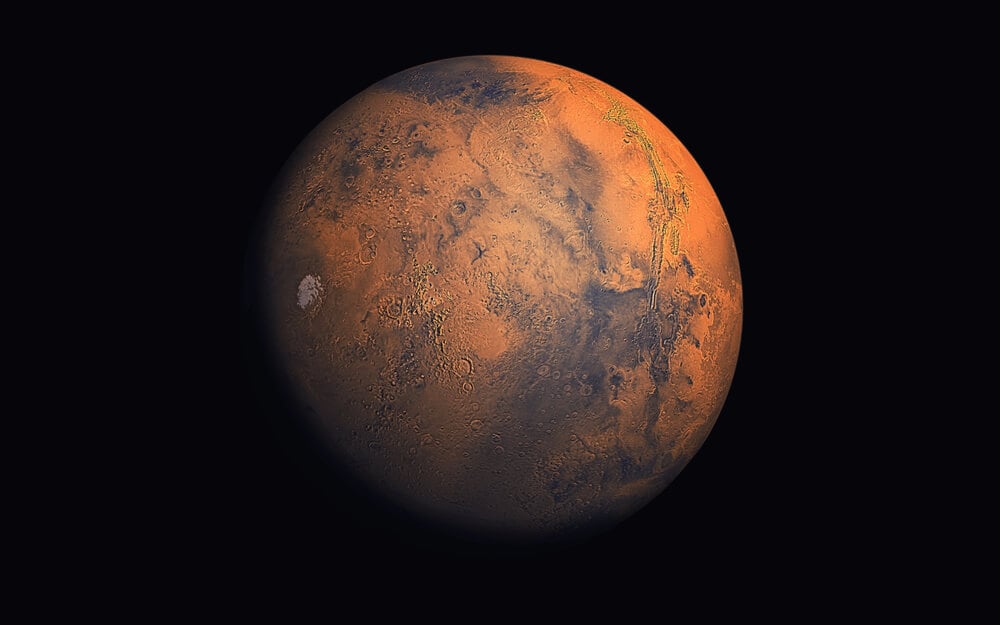
Named for the Roman god of war, Mars owes its title to its reddish color, long associated with blood and conflict in ancient skywatching traditions. The planet’s two small moons continue the martial theme, named Phobos and Deimos after the sons of Ares, the Greek war god, personifying fear and dread.
Together, the naming forms one of the more thematically consistent corners of the solar system.
Jupiter
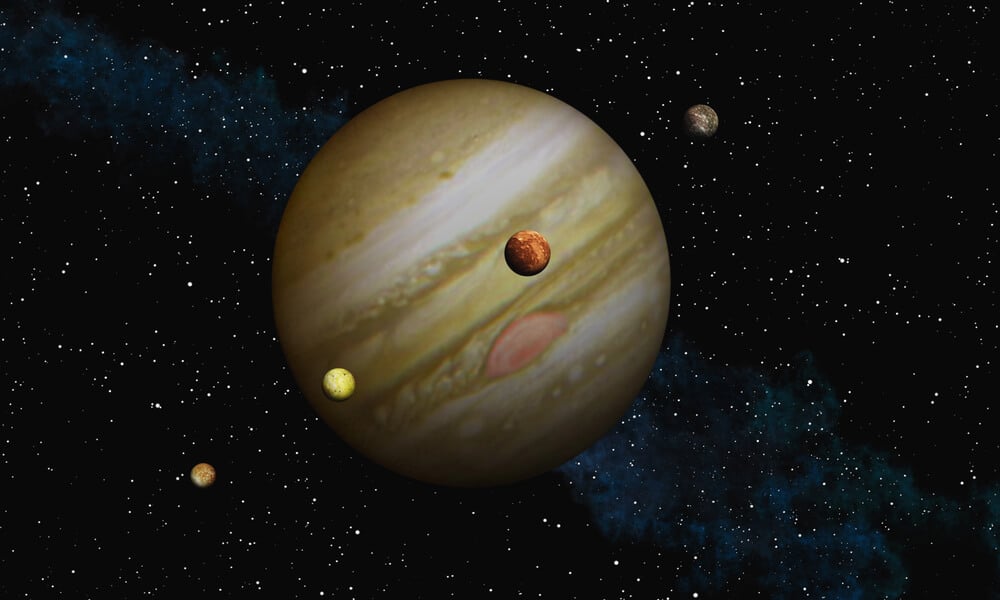
Jupiter is named for the king of the Roman gods, a fitting title for the largest planet in the solar system, more massive than all the other planets combined. Its four largest moons, discovered by Galileo in 1610, are named after mythological figures tied to Jupiter’s Greek counterpart Zeus: Io, Europa, Ganymede, and Callisto, each a lover or favorite of the god in various myths.
Saturn
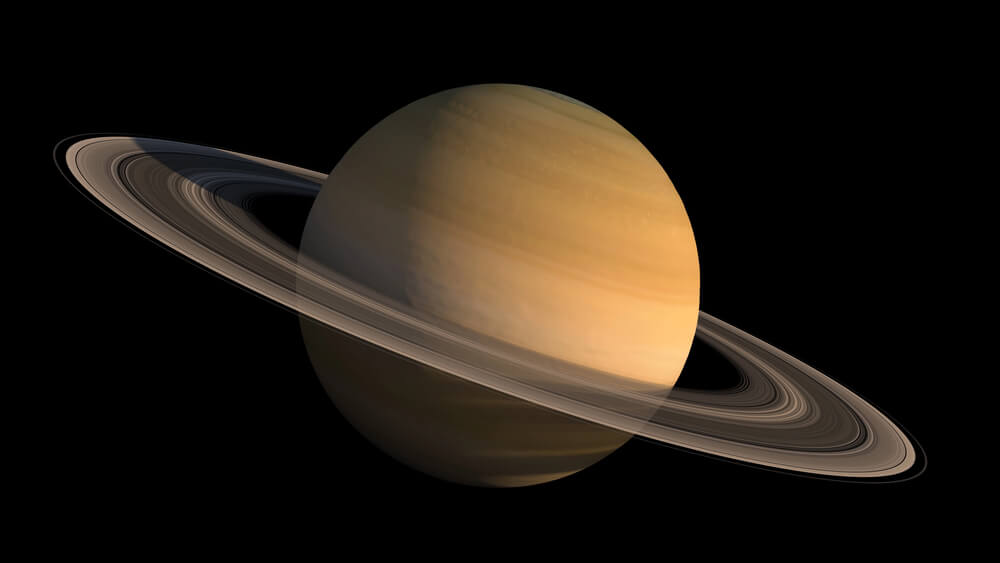
Named for the Roman god of agriculture and time, Saturn was the outermost planet known to ancient astronomers and often associated with slowness, fitting for the planet with the longest visible orbital period of antiquity’s known worlds. Its moon Titan takes its name from the primordial deities who preceded the Olympian gods in Greek myth.
Another moon, Iapetus, is named for a Titan said to be the father of humanity in some tellings.
Uranus
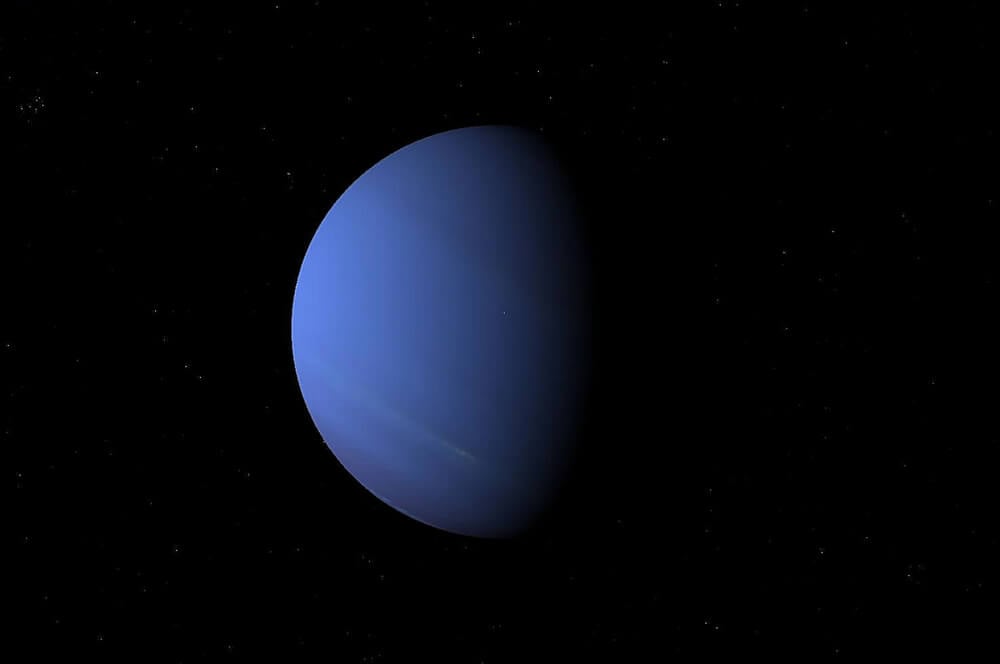
Uranus breaks the Roman naming pattern, taking its name instead from the Greek god of the sky, father of Saturn in mythology. Its moons follow an entirely different tradition, named not after mythological figures but after characters from the works of William Shakespeare and Alexander Pope, including Titania, Oberon, Miranda, and Puck.
The break in convention makes Uranus’s moon system one of the more literary corners of the solar system.
Neptune
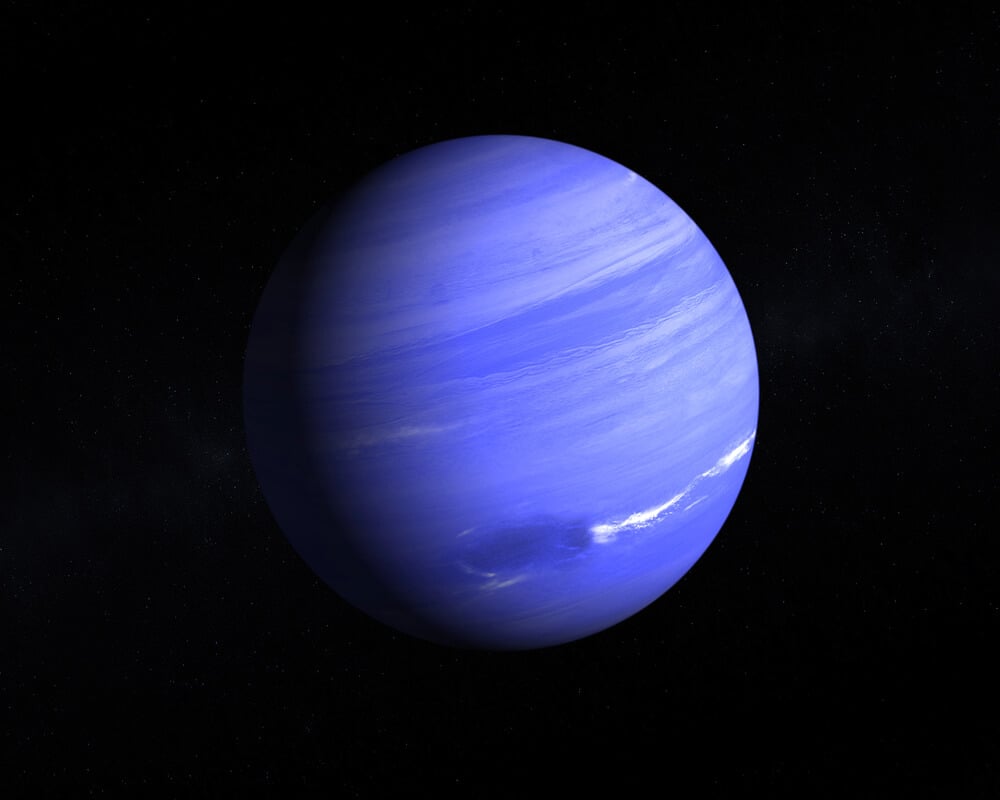
Named for the Roman god of the sea, Neptune’s deep blue coloring, caused by methane in its atmosphere, made the maritime association almost unavoidable once the planet was confirmed in 1846. Its largest moon, Triton, is named for a Greek sea god, son of Poseidon, who could calm ocean storms with his conch shell.
Triton is unusual for orbiting Neptune backward relative to the planet’s rotation.
Pluto
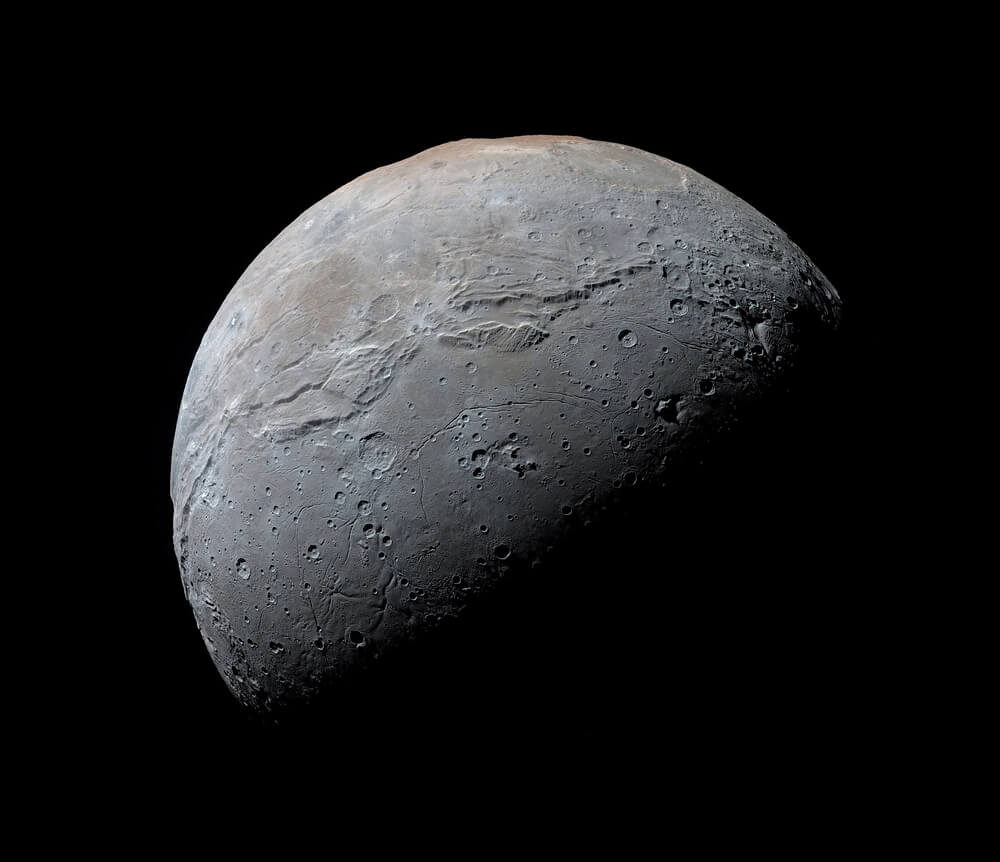
Though reclassified as a dwarf planet in 2006, Pluto retains its name from the Roman god of the underworld, chosen partly because the planet’s distant, dark orbit suited a ruler of the shadowy afterlife. An 11-year-old English schoolgirl, Venetia Burney, is credited with suggesting the name shortly after its 1930 discovery.
Its largest moon, Charon, is named for the ferryman who carried souls across the river Styx into the underworld.
Io
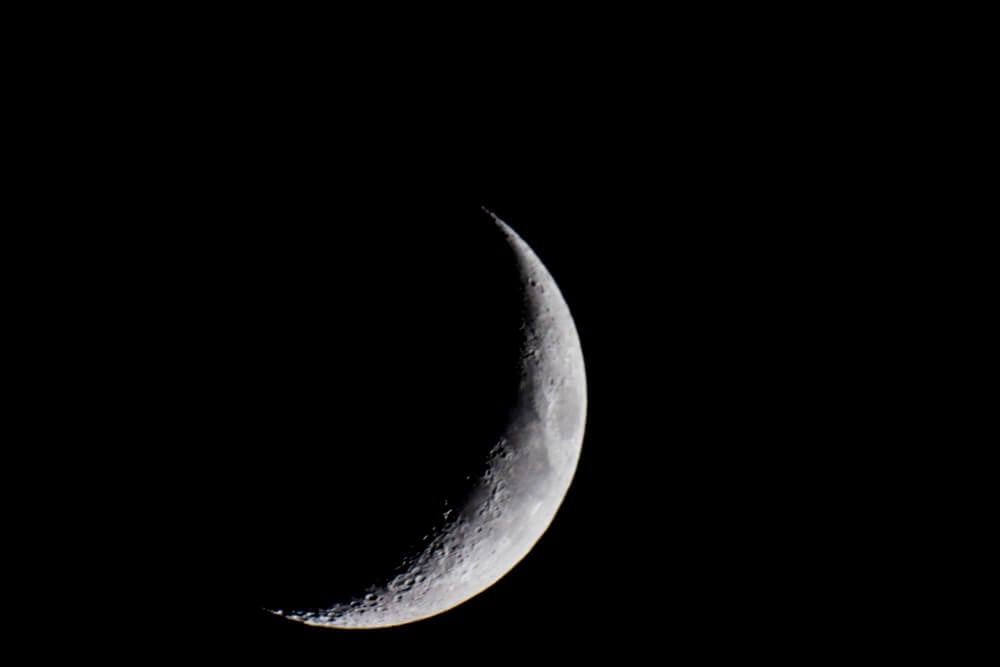
One of Jupiter’s four Galilean moons, Io is named for a mortal priestess in Greek mythology who was transformed into a heifer and pursued relentlessly by the jealous goddess Hera after catching Zeus’s attention. Io holds the distinction of being the most volcanically active body in the solar system, with hundreds of active volcanoes reshaping its surface constantly.
The restless mythological chase seems an apt match for a moon that never sits still geologically.
Europa
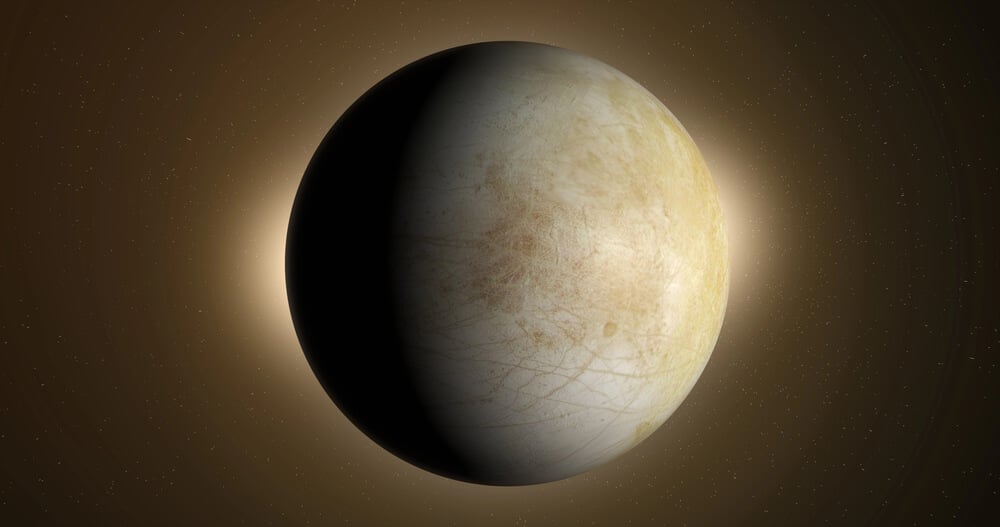
Named for a Phoenician princess abducted by Zeus in the form of a bull, Europa is one of the more scientifically significant moons in the solar system, believed to hide a liquid water ocean beneath its icy shell. That hidden ocean has made Europa a leading target in the search for life beyond Earth.
The continent of Europe also takes its name from the same mythological figure.
Ganymede
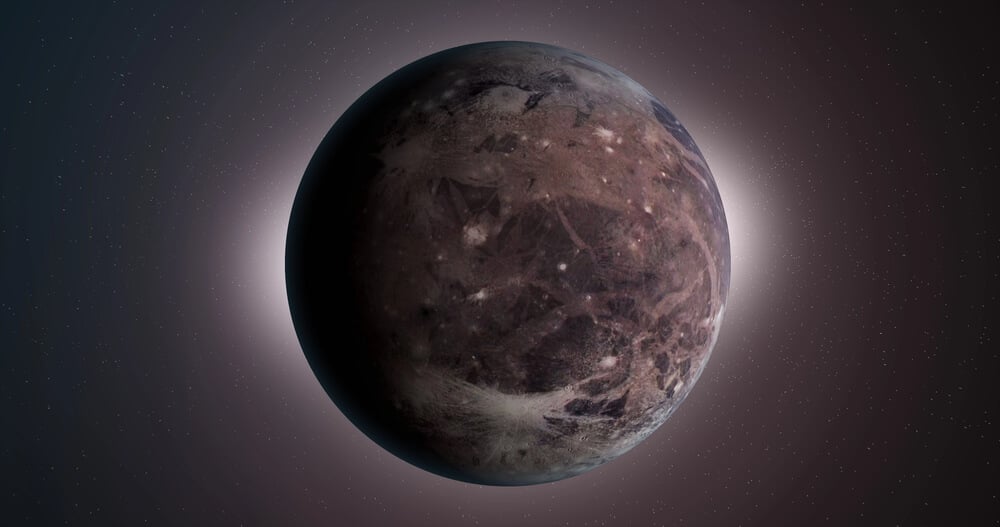
The largest moon in the solar system, larger than the planet Mercury, Ganymede is named for a Trojan prince so beautiful that Zeus, in the form of an eagle, carried him off to Olympus to serve as cupbearer to the gods. Ganymede is also the only moon known to generate its own magnetic field.
The scale of the moon seems to match the outsized role its namesake played in Olympian myth.
Callisto
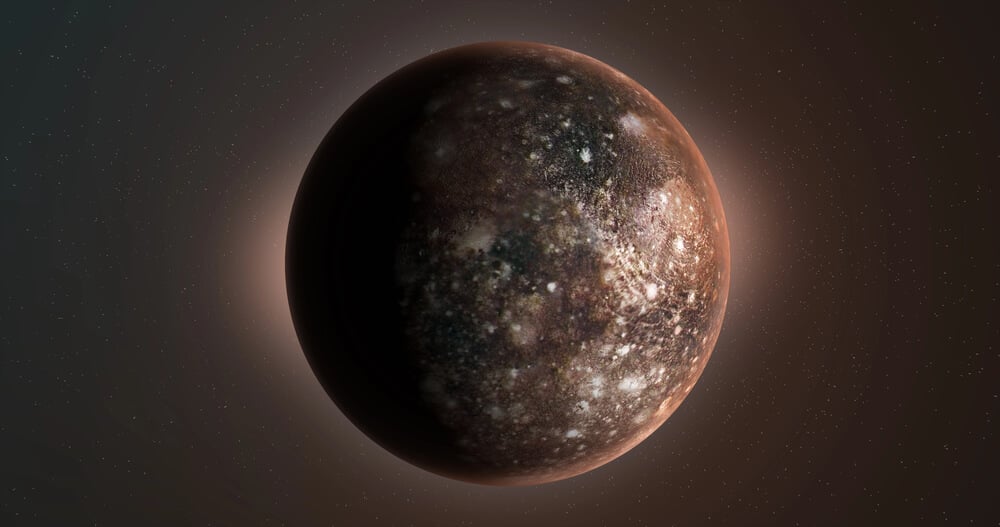
Callisto, Jupiter’s second-largest moon, is named for a nymph who was transformed into a bear by a jealous Hera after Zeus pursued her, and later placed among the stars as the constellation Ursa Major. Heavily cratered and geologically ancient, Callisto’s surface is thought to be one of the oldest and least altered in the solar system.
Few moons carry a naming story as tragic as Callisto’s.
Titan
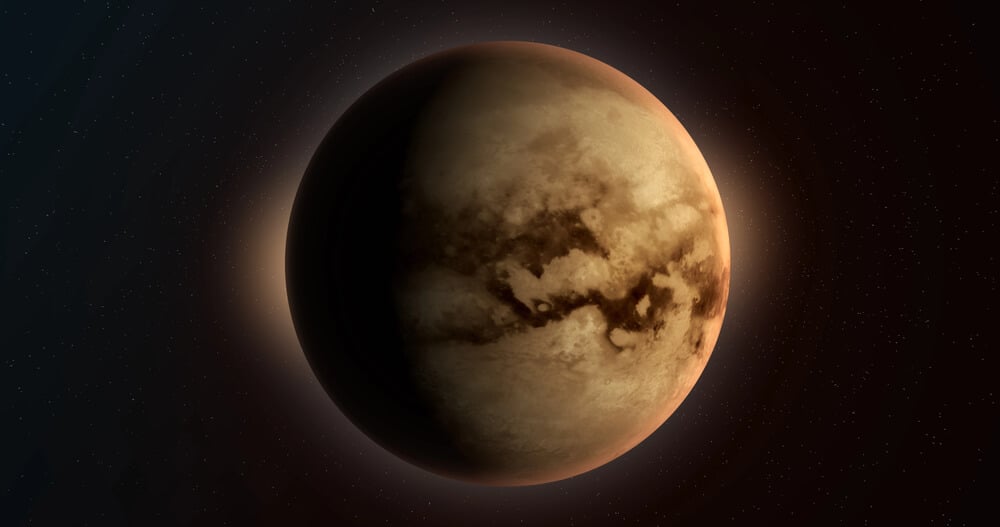
Saturn’s largest moon and the second largest in the solar system, Titan is named simply for the race of primordial deities in Greek myth who ruled before the Olympian gods overthrew them. Titan is the only moon known to have stable liquid lakes and rivers on its surface, though they are made of liquid methane and ethane rather than water.
Its thick, hazy atmosphere makes it one of the most Earth-like bodies in the outer solar system.
Triton
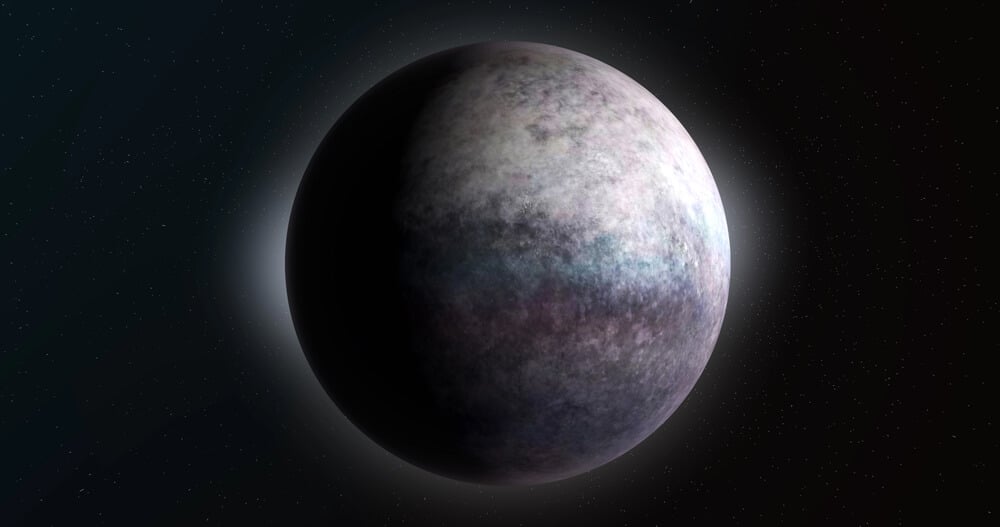
Neptune’s largest moon takes its name from the Greek sea god Triton, son of Poseidon and Amphitrite, often depicted as a merman blowing a conch shell to command the waves. Unlike most large moons, Triton orbits its planet in retrograde, moving opposite to Neptune’s rotation, which suggests it was originally a captured object rather than having formed alongside its planet.
It is also one of the coldest known objects in the solar system.
Miranda
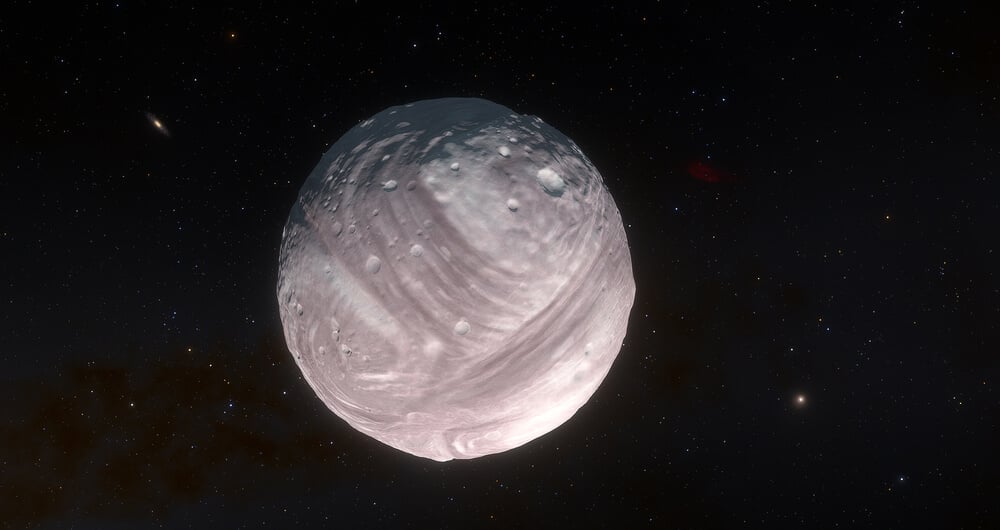
One of Uranus’s moons, Miranda breaks from myth entirely, named instead for Prospero’s daughter in Shakespeare’s “The Tempest.” Its surface is a chaotic patchwork of canyons, ridges, and terraced layers unlike almost anything else observed in the solar system, leading some astronomers to describe it as looking as though it had been shattered and reassembled.
The Shakespearean naming convention for Uranus’s moons was proposed by John Herschel, son of the planet’s discoverer.
Oberon
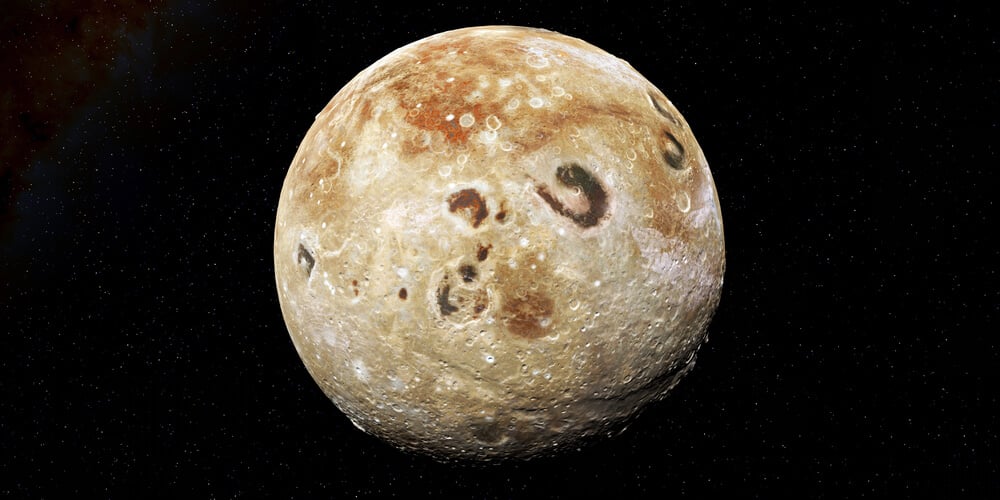
Named for the king of the fairies in Shakespeare’s “A Midsummer Night’s Dream,” Oberon is the outermost of Uranus’s large moons and one of the most heavily cratered bodies in the Uranian system. Its dark, reddish surface features one mountain rising roughly 6 kilometers from the surrounding terrain, among the tallest known peaks on any moon.
The name pairs it thematically with its fellow moon Titania, Oberon’s fairy queen counterpart in the same play.
Titania
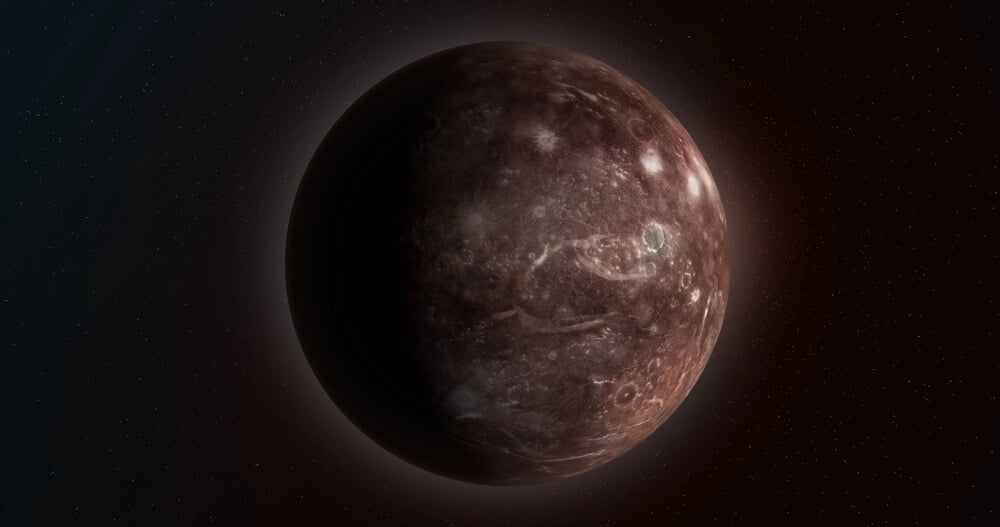
The largest moon of Uranus, Titania is named for the fairy queen in “A Midsummer Night’s Dream,” ruling alongside Oberon in Shakespeare’s fictional forest. Its surface shows evidence of past geological activity, including large canyons that suggest the moon was not always frozen and inert.
Titania and Oberon were both discovered by William Herschel in 1787, just six years after he discovered Uranus itself.
Phobos
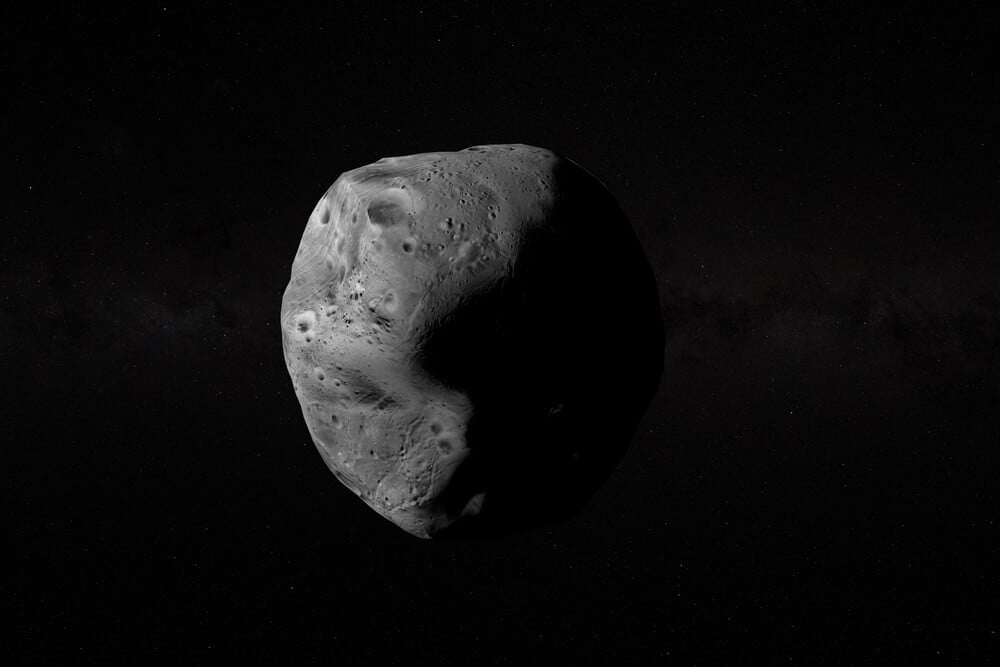
One of Mars’s two small, irregularly shaped moons, Phobos is named for the personification of fear in Greek mythology, one of the sons of Ares, the war god. Phobos orbits closer to its planet than any other moon in the solar system, completing an orbit in less than eight hours.
Its proximity is also its undoing, as tidal forces are slowly dragging it toward an eventual collision with Mars.
Deimos
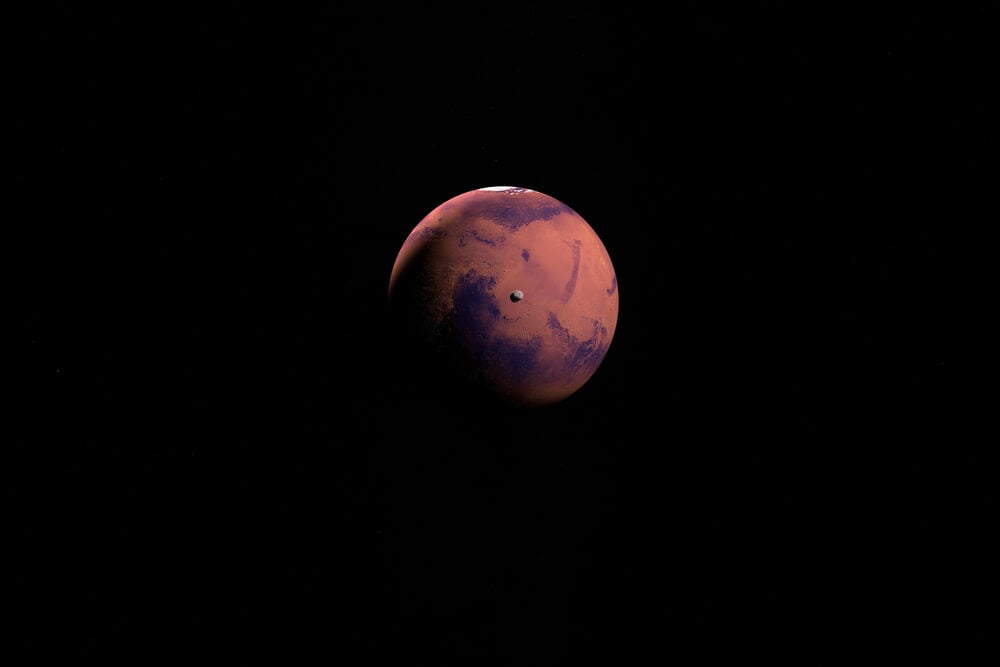
Phobos’s smaller sibling moon is named for Deimos, the personification of dread, the other son of Ares in Greek myth. Deimos is so small and has such a weak gravitational pull that a person standing on its surface could nearly achieve orbital velocity by jumping.
Both Martian moons are thought to be captured asteroids rather than bodies that formed alongside Mars.
Charon
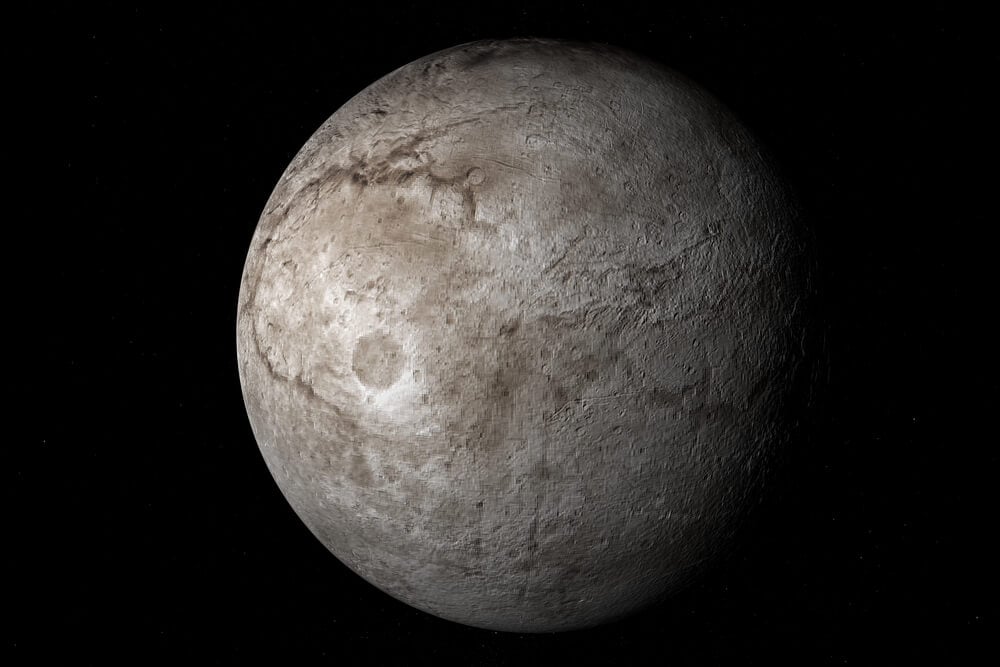
Pluto’s largest moon is named for the ferryman of Greek mythology who transported souls across the river Styx into the underworld, a fitting companion for a dwarf planet already named after the god of that realm. Charon is unusually large relative to its parent body, roughly half of Pluto’s diameter, which causes the two to orbit a shared center of gravity located outside Pluto itself.
This makes the Pluto-Charon system sometimes described as a double dwarf planet.
Enceladus
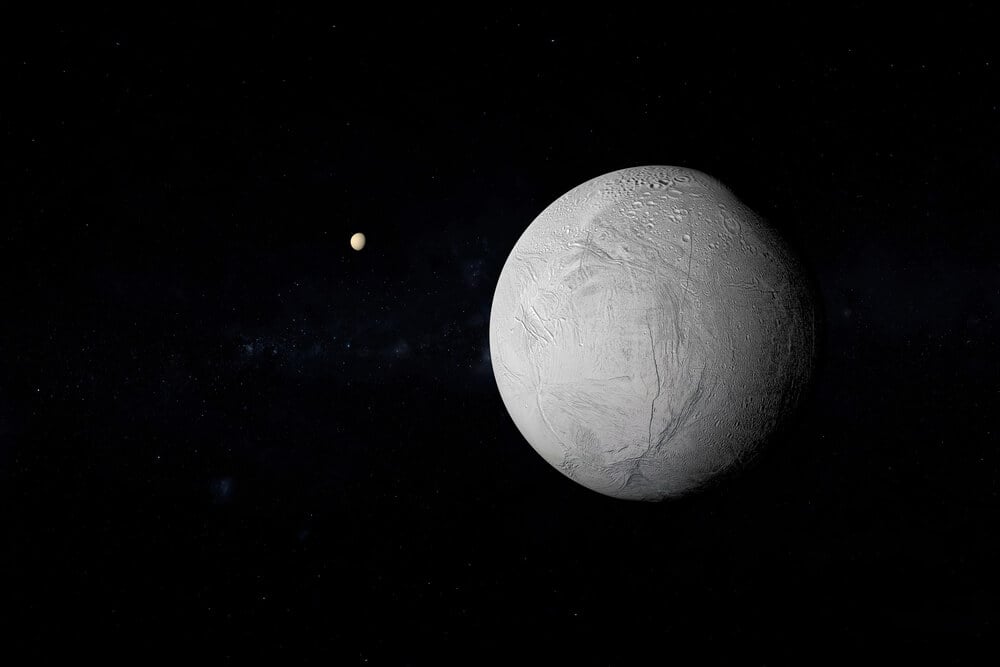
Named for a giant in Greek mythology who was buried beneath Mount Etna after losing a battle with the gods, Enceladus is one of Saturn’s icy moons and a leading candidate in the search for extraterrestrial life due to the subsurface ocean detected beneath its surface. Water plumes erupting from its south pole were an unexpected discovery by the Cassini spacecraft in 2005.
The mythological giant buried under a volcano makes an odd namesake for a moon known instead for icy geysers.
Mimas
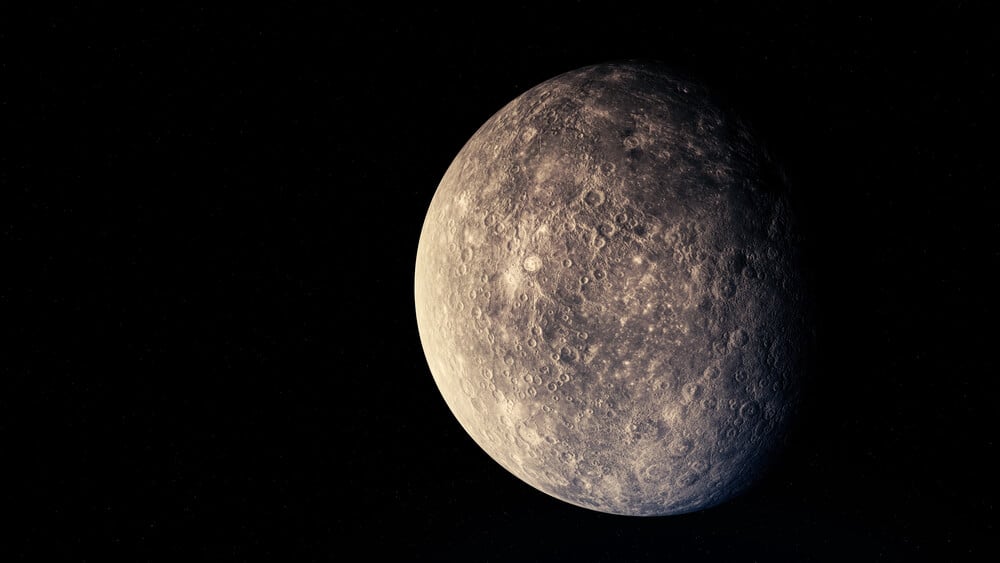
One of Saturn’s smaller moons, Mimas is named for another giant from the same mythological battle as Enceladus, defeated by the god Hephaestus. Mimas is instantly recognizable for a massive impact crater covering roughly a third of its diameter, giving it an appearance frequently compared to the fictional Death Star.
The comparison is coincidental, since the moon was named and imaged well before the pop-culture reference existed.
Iapetus
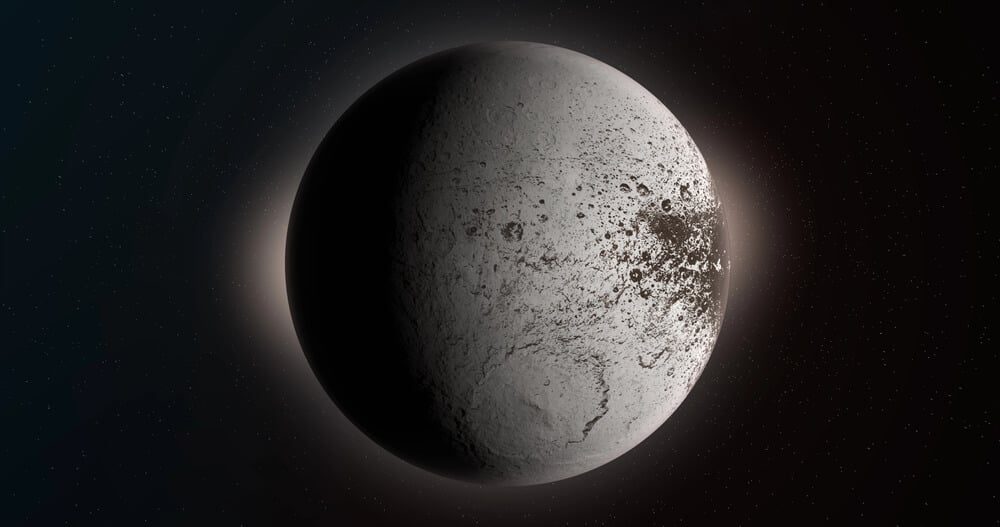
Named for a Titan said in some myths to be an ancestor of humanity, Iapetus is one of Saturn’s moons and among the most visually striking in the solar system, with one hemisphere dramatically darker than the other. The stark divide gives it an almost two-toned appearance unlike anything else orbiting Saturn.
Giovanni Cassini, who discovered the moon in 1671, noted the brightness difference himself using telescopes far weaker than any used today.
Ariel
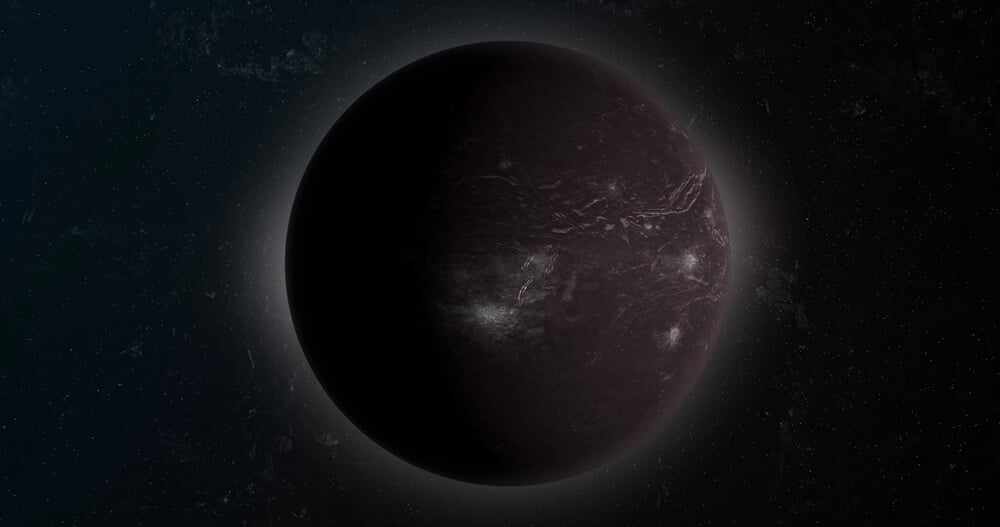
Another of Uranus’s Shakespearean moons, Ariel takes its name from the mischievous spirit who serves Prospero in “The Tempest.” It is considered one of the brightest and geologically youngest of Uranus’s major moons, with a surface showing fewer craters and more evidence of past resurfacing than its neighbors.
Ariel and Umbriel were both discovered in 1851 by William Lassell.
Umbriel
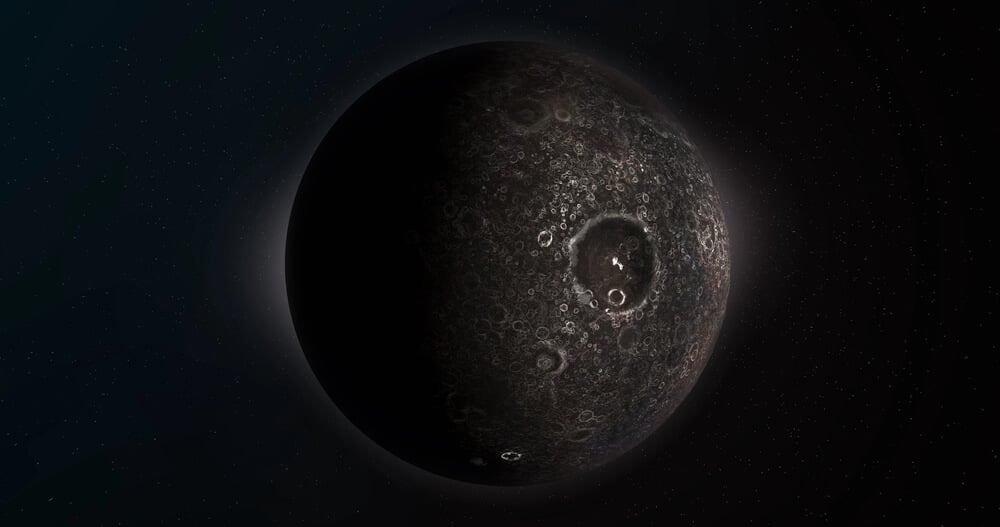
Umbriel, Ariel’s neighboring moon around Uranus, is named for a character in Alexander Pope’s poem “The Rape of the Lock,” described as a dusky, melancholy sprite. Fittingly, Umbriel is the darkest of Uranus’s five major moons, reflecting far less sunlight than its siblings.
Its name breaks slightly from the otherwise Shakespeare-dominated naming scheme of Uranus’s moon system.
Proteus
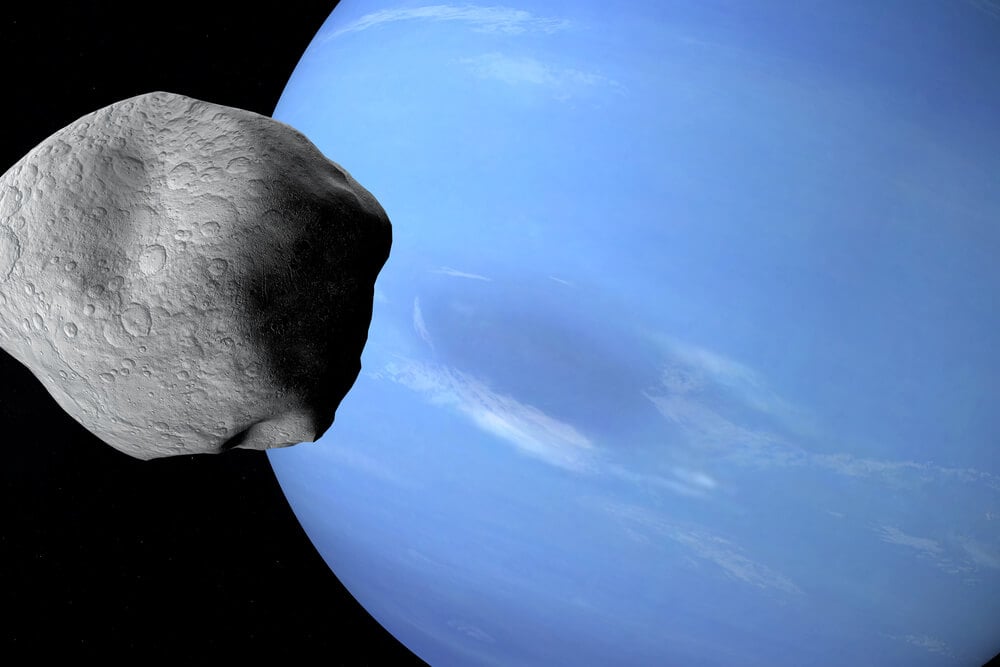
One of Neptune’s moons, Proteus is named for a shape-shifting sea god in Greek mythology known for his ability to change form to avoid answering questions. It is the second-largest moon of Neptune yet was not discovered until 1989, when the Voyager 2 spacecraft flew past, having been too dark to detect from Earth-based telescopes.
Its irregular, almost cube-like shape sets it apart from most other large moons.
Nereid
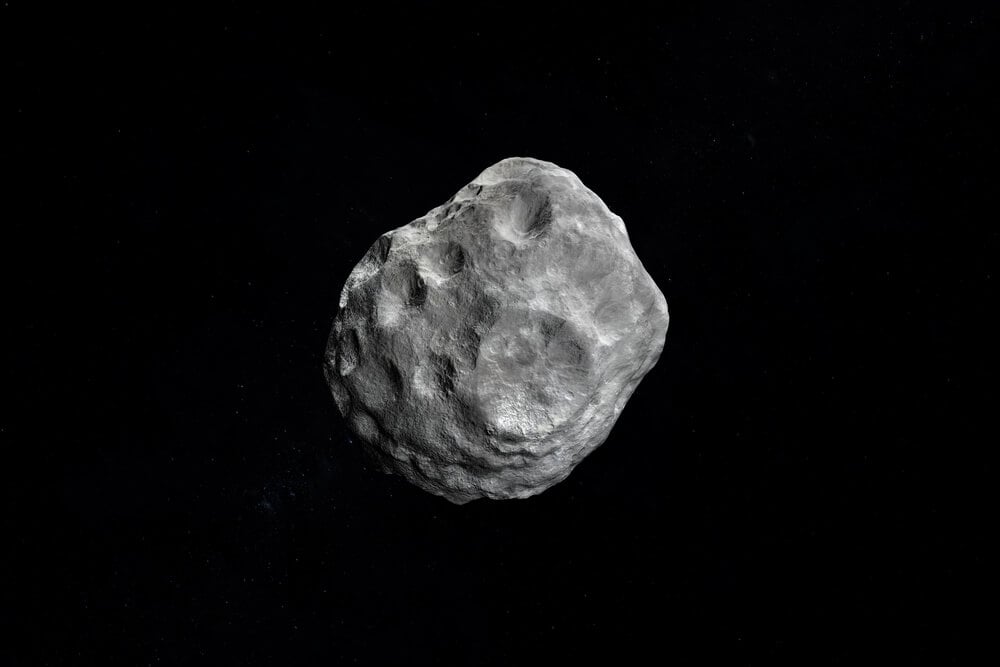
Neptune’s third-largest moon, Nereid, is named for the sea nymphs of Greek mythology, daughters of the sea god Nereus who attended Poseidon. Nereid has one of the most eccentric, elongated orbits of any moon in the solar system, swinging from close to Neptune out to a distance nearly seven times farther.
Astronomers believe its unusual orbit may be the result of a past gravitational disturbance.
Naming a Sky That Was Already Full of Stories
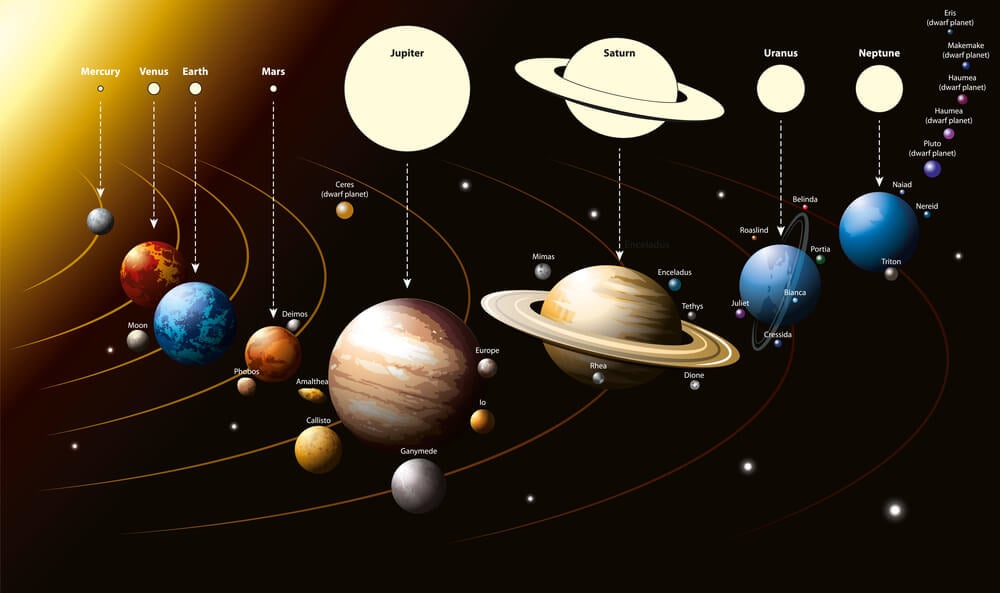
Long before telescopes could resolve a moon’s crater or a planet’s storm, people were already looking up and filling the dark with characters: gods who ruled, monsters who were buried, and lovers who were chased across the sky. Naming the solar system after mythology was never really about accuracy.
It was about finding language large enough for something nobody yet understood. What is strange, looking back, is how often the names still fit.
A moon of fear orbiting a planet of war, an ocean-hiding moon named for an abducted princess, a shape-shifting sea god attached to the planet nobody could pin down for over a century — mythology, it turns out, was decent astronomy after all.
More from Go2Tutors!

- The Romanov Crown Jewels and Their Tragic Fate
- 13 Historical Mysteries That Science Still Can’t Solve
- Famous Hoaxes That Fooled the World for Years
- 15 Child Stars with Tragic Adult Lives
- 16 Famous Jewelry Pieces in History
Like Go2Tutors’s content? Follow us on MSN.