29 Old Farm Signs Buyers Hang
A farm sign was never meant to be decoration. It was nailed to a fence post to tell the neighbors which seed was in the ground, or bolted over a dealership door to tell a farmer where the parts counter was.
Decades of weather later, the same signs hang in kitchens, garages, and restaurants that have never seen a cow.
Prices below are ranges for genuine examples, and every one depends on condition, size, and whether a sign is one-sided or two.
Porcelain and tin farm signs are reproduced constantly, so grommets, weight, and honest wear deserve a close look before money changes hands.
DeKalb Winged Ear
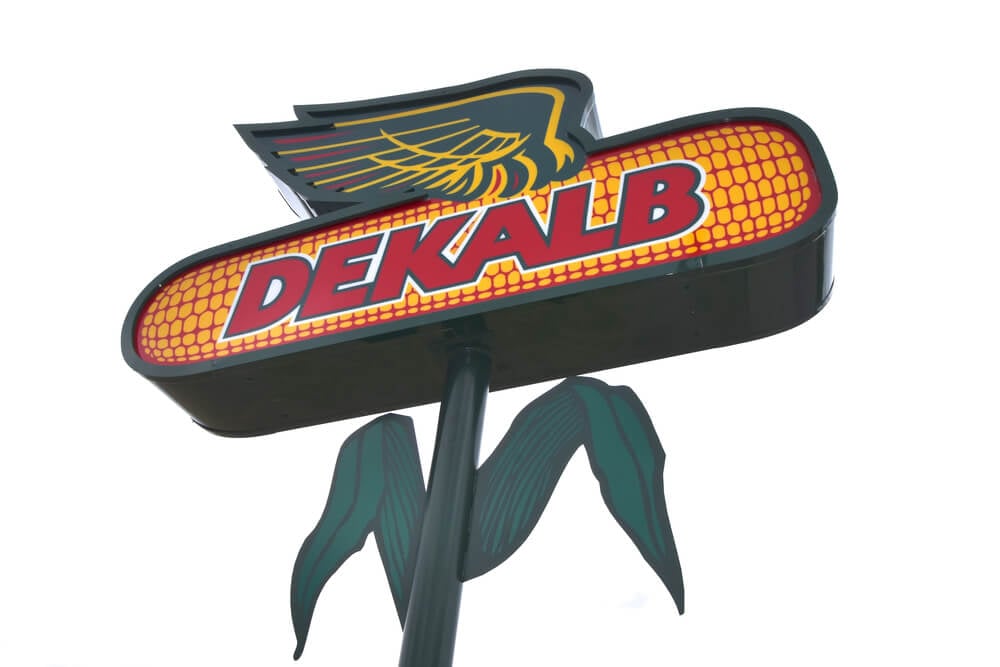
The flying ear of corn was dreamed up in 1935 in DeKalb, Illinois, after company founder Tom Roberts Sr. decided hybrid seed would lift farm mortgages. An employee named Ken Kramer suggested the wings, and the Pegasus at a nearby gas station reportedly helped the idea along.
The trademark was registered in 1936 and the first field signs went up in 1938. Early die-cut metal versions are the prizes, because wartime shortages pushed production to masonite after 1940.
Common later signs bring $75 to $300, while early metal examples with strong paint run well past that.
Pioneer Hi-Bred Field Signs
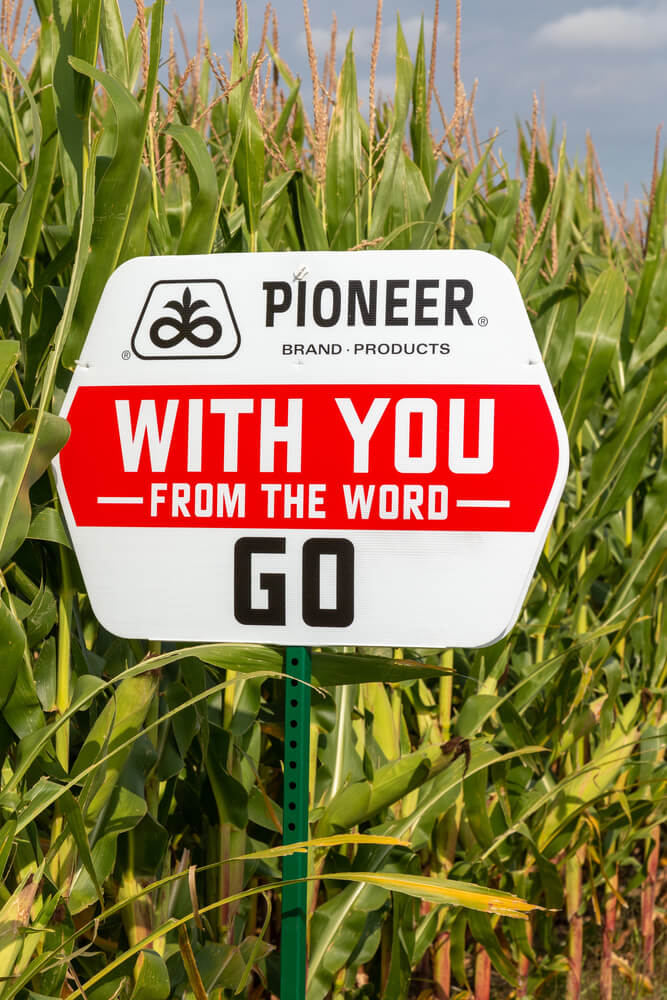
Henry A. Wallace founded the Hi-Bred Corn Company in Des Moines in 1926, years before most farmers trusted seed they could not save from their own crop. The Pioneer name was added in 1935, and Wallace went on to serve as Secretary of Agriculture and then Vice President.
His company’s row-end markers spread across the Corn Belt as hybrids took over. Older embossed metal versions with a specific hybrid number bring $100 to $400 in clean condition.
Buyers from Iowa farm families often pay extra for the number a grandfather actually planted.
Funk’s G Hybrid
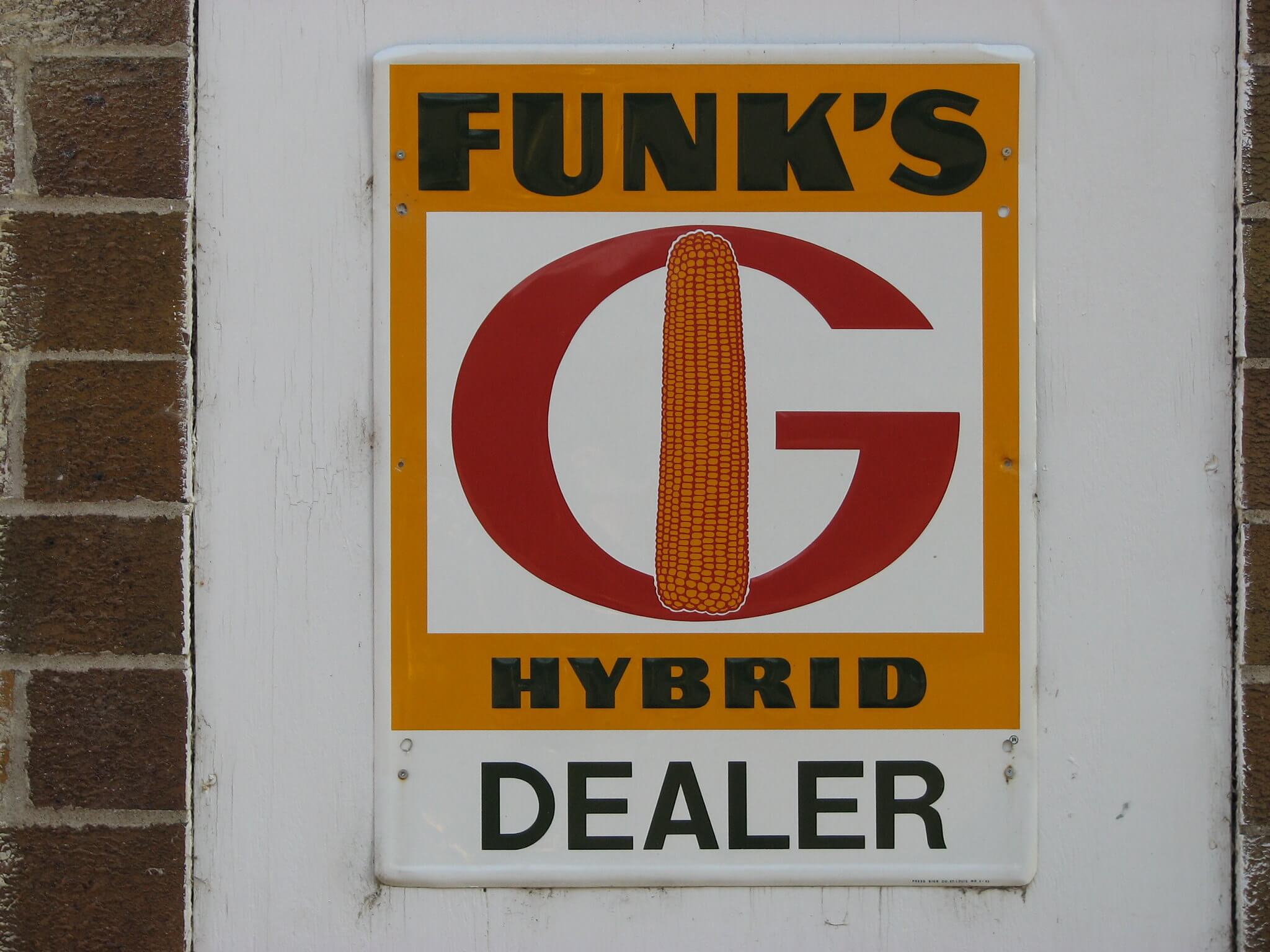
Eugene Funk organized Funk Bros. Seed Company in Bloomington, Illinois, in 1901, on land his family had farmed since the 1820s. The oversized letter G on the company’s signs became one of the most recognizable marks in the seed trade, visible from a moving truck at a quarter mile.
Masonite and metal field signs were handed out by the thousand and most were left to rot on the post. Survivors with bright color bring $100 to $350.
Large dealer signs meant for an elevator wall are scarcer and can double that range.
Pfister Hybrids
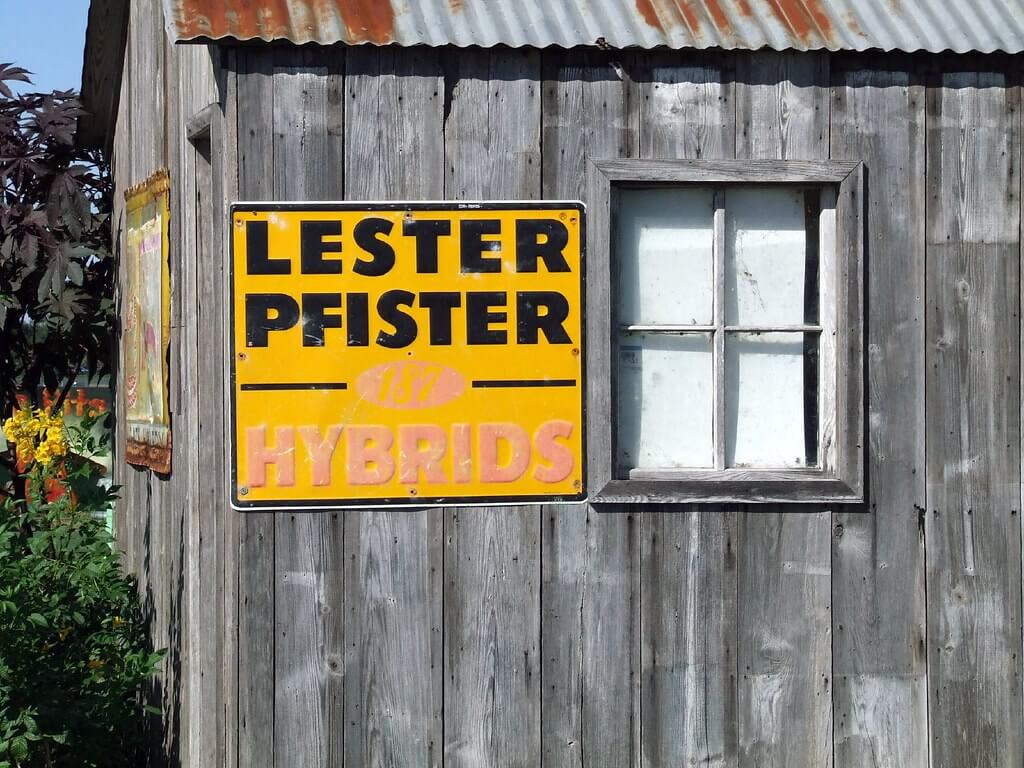
Lester Pfister of El Paso, Illinois, spent the late 1920s tying paper bags over corn tassels by hand while neighbors called him Crazy Lester. He nearly lost the farm before his inbred lines paid off, and by the late 1930s national magazines were profiling him as a rags-to-riches seed man.
His company’s signs are harder to find than DeKalb or Pioneer because the sales territory was smaller. Clean metal field signs bring $150 to $500.
The backstory sells them as much as the graphics do, particularly to buyers in central Illinois.
Northrup King
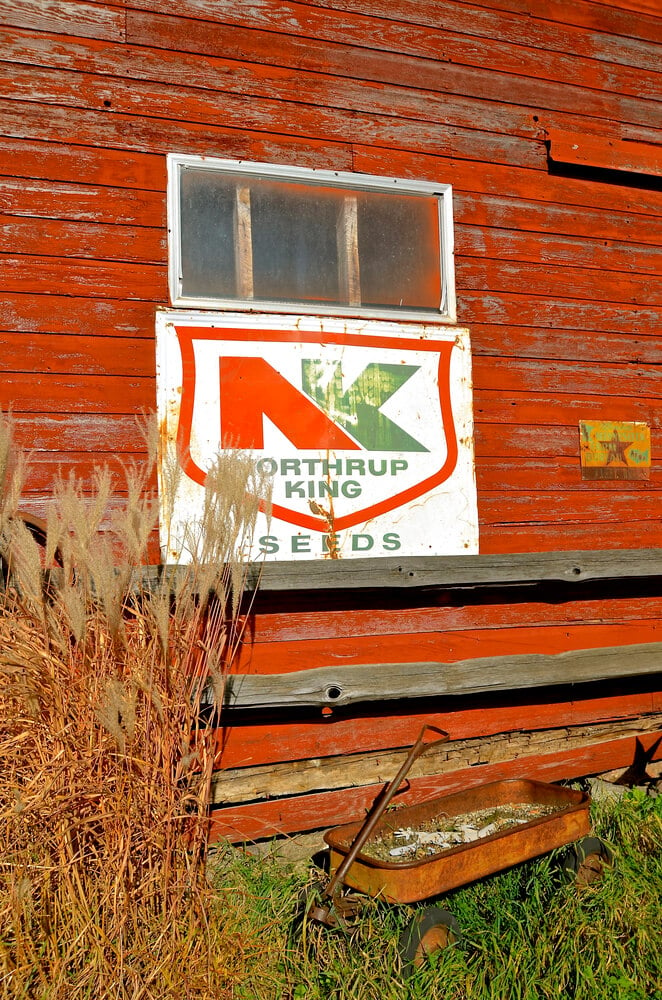
Northrup King traces to a Minneapolis seed house founded in 1884, which made it older than nearly every hybrid corn company it later competed against. The firm sold garden seed from countertop racks in hardware stores and marketed its hybrid corn under the Kingscrost name.
Field signs carrying the NK initials became common across the upper Midwest after the Second World War. Most bring $60 to $250 depending on age and paint.
Wooden seed display boxes and store racks with the company name often outsell the field signs, and the two look good together.
Purina Checkerboard
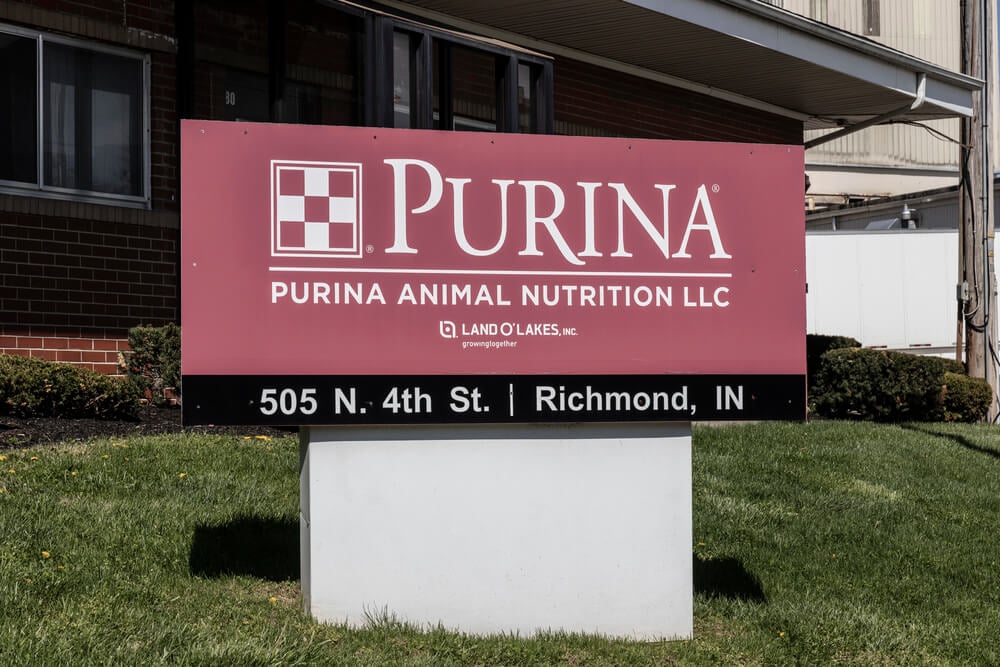
William Danforth adopted the red and white checkerboard in 1902, inspired by a childhood memory of a family whose mother dressed every child in the same checked cloth so none could be lost in a crowd. The pattern went on feed sacks, dealer signs, and eventually the St. Louis headquarters address, Checkerboard Square.
Porcelain Purina Chows dealer signs are the most wanted and bring $400 to $2,000 depending on size and chipping. Painted tin versions are more affordable.
Few agricultural logos read as clearly from across a room, which explains the steady demand.
MoorMan’s Feeds

Moorman Manufacturing began in 1885 and settled in Quincy, Illinois, where it built a business on mineral supplements sold by salesmen who called on farms directly rather than through stores. Customers often received a small sign for the lane announcing that the company’s products were fed there.
The odd capital M in the middle of the brand name is original and not a printing error. These signs are modest in size and price, usually $50 to $200.
They appeal to buyers who want something authentic that fits a narrow wall beside a door.
Dr. Hess Stock Tonic
Gilbert Hess was a veterinarian who teamed with J. L. Clark in Ashland, Ohio, in 1893 to sell remedies for livestock and poultry. The line included a stock tonic, a poultry powder called Pan-a-ce-a, and an insect powder whose tins are now collected on their own.
Dealer signs from the early twentieth century feature confident portraits of healthy hogs, horses, and hens. Tin and cardboard examples in good color bring $200 to $900.
Paper labels and countertop displays from the same firm turn up more often and cost far less.
Dr. LeGear’s Remedies
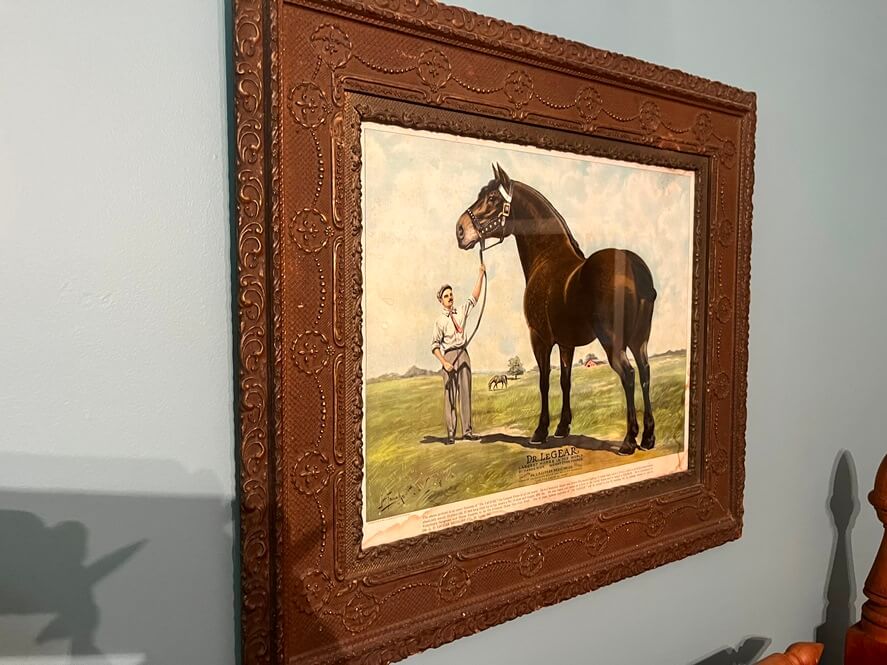
Dr. L. D. LeGear ran a veterinary medicine company in St. Louis and understood publicity better than most of his rivals. He owned a Percheron gelding, also named Dr. LeGear, that stood 21 hands and weighed 2,995 pounds in 1913, and he advertised the animal as the largest horse in the world.
The horse appeared on postcards and signs alongside the slogan promising one remedy for every ailment. Signs picturing the giant horse are the ones buyers want, at $300 to $1,200 in presentable condition.
Plain lettered versions bring considerably less.
John Deere Dealer Signs
The leaping deer was registered as a trademark in 1876, and the number of legs showing is the first thing a serious buyer counts. Older signs show all four legs, and the two-legged silhouette did not arrive until 1968.
At a 2022 auction of the Dave Anton collection in Greenville, South Carolina, an early porcelain neon John Deere sign sold for $108,000, and a joint Caterpillar and John Deere dealer sign in its original crate brought $91,000. Ordinary porcelain dealer signs from the 1930s still run $3,000 to $10,000.
Reproductions outnumber originals by a wide margin.
International Harvester and McCormick-Deering
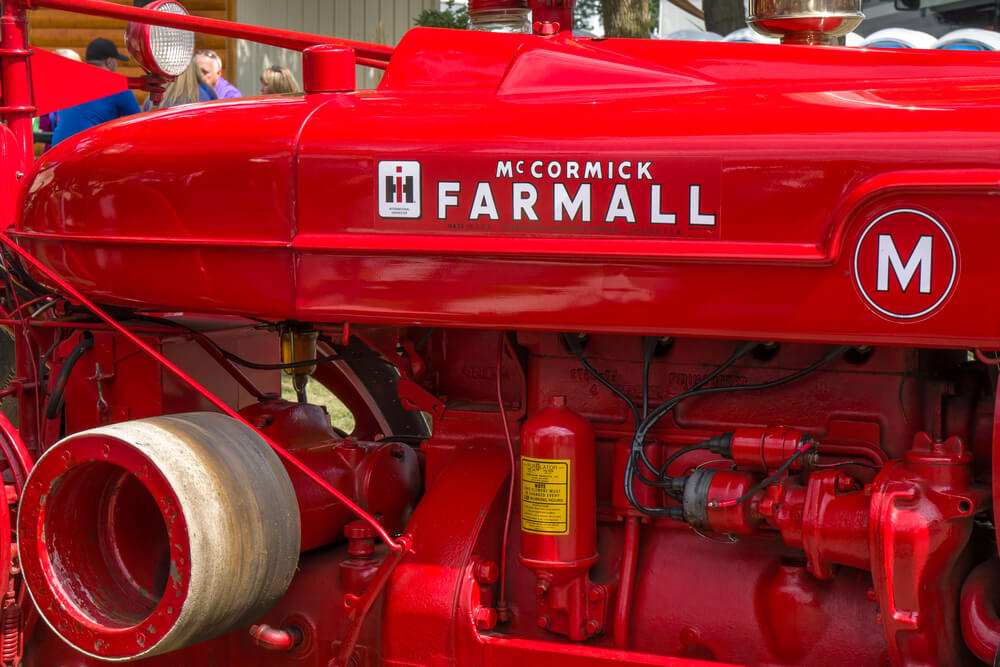
International Harvester was assembled in 1902 from the McCormick and Deering harvester companies and several smaller rivals, with J. P. Morgan’s bank arranging the deal. Dealer signs before the mid-1940s usually carry the McCormick-Deering name in plain lettering.
After that came industrial designer Raymond Loewy’s famous mark, the company’s two initials in red and black, arranged so they happen to look like a farmer seated on a tractor. Porcelain dealer signs bring $800 to $5,000 depending on size and era.
Farmall collectors tend to buy the sign to hang over the restored tractor.
Case Eagle Signs
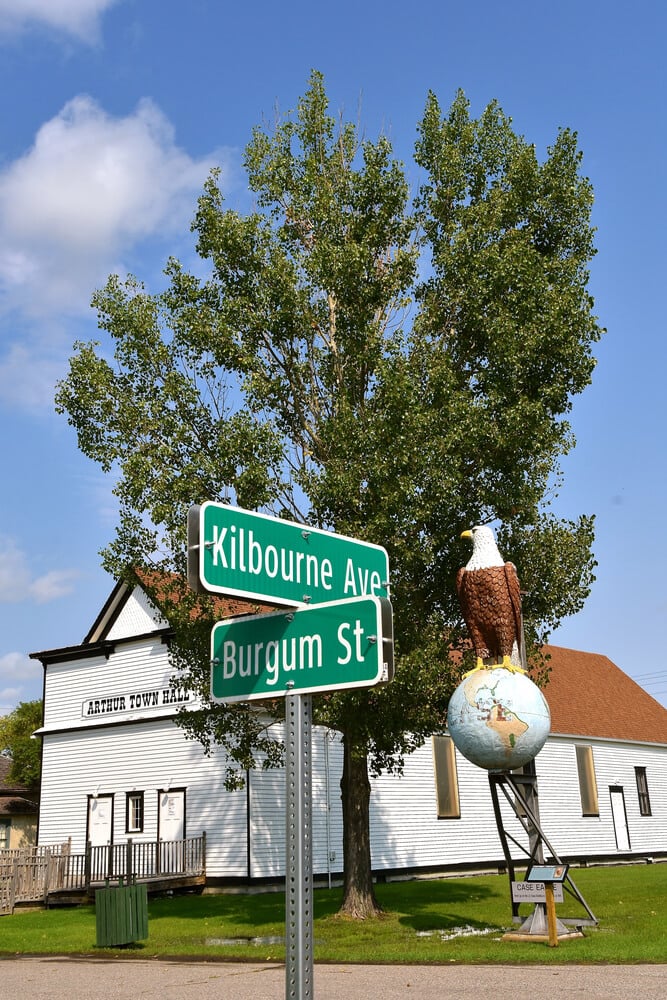
The Case eagle was a real bird. Old Abe was the mascot of the Eighth Wisconsin Infantry during the Civil War, and Jerome Case adopted the bird as his trademark in 1865 after seeing it with the regiment.
Later versions perch the eagle on a globe, and the company kept the emblem until 1969. Porcelain signs showing Old Abe on the globe are among the most valuable in the field, and a two-piece example reached $29,000 at the Anton auction in 2022.
Smaller and rougher signs still bring $1,500 and up.
Allis-Chalmers
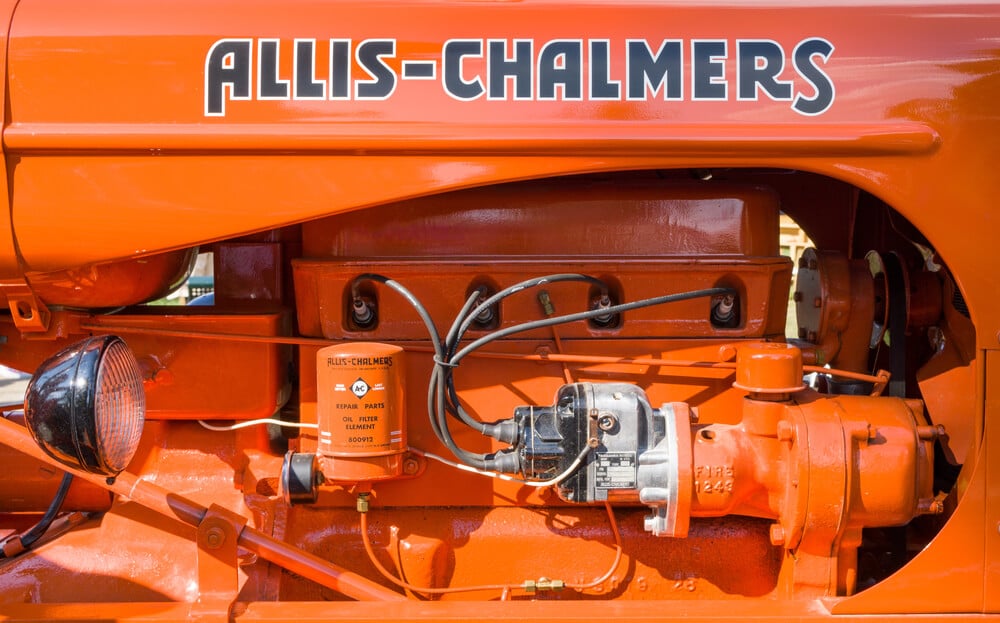
Allis-Chalmers tractors were a dull green until 1929, when tractor division manager Harry Merritt reportedly saw fields of California poppies and ordered the machines painted a color the company named Persian Orange. The shade carried over to dealer signs, which makes them easy to spot in a crowded antique mall.
The company also put the first rubber tires on a farm tractor in 1932. Porcelain and painted metal dealer signs bring $600 to $4,000.
The orange fades toward a chalky salmon in sunlight, so examples stored indoors command a real premium.
Oliver
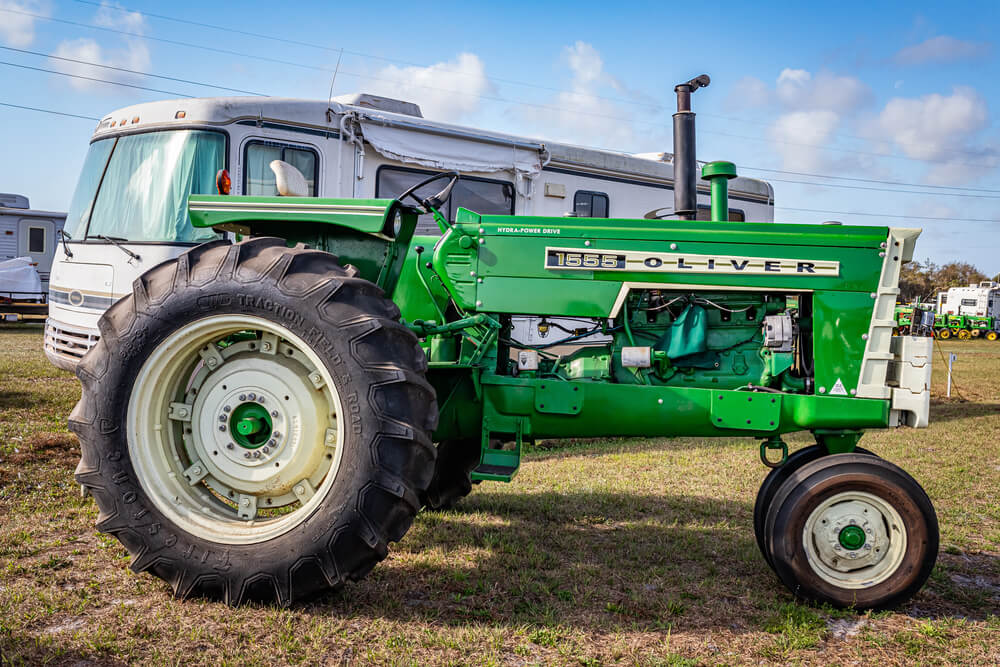
Oliver Farm Equipment was formed in 1929 by merging the Oliver Chilled Plow Works with Hart-Parr, Nichols and Shepard, and a seeding machine company. Hart-Parr of Charles City, Iowa, is generally credited with popularizing the word tractor in its advertising.
Dealer signs carry a shield emblem and, in the early years, both the Oliver and Hart-Parr names. The combined-name signs had a short life and bring the most, from $1,000 to $5,000.
Later shield signs are more affordable, and the brand has loyal followers because White Motor retired the name in the 1970s.
Massey-Harris
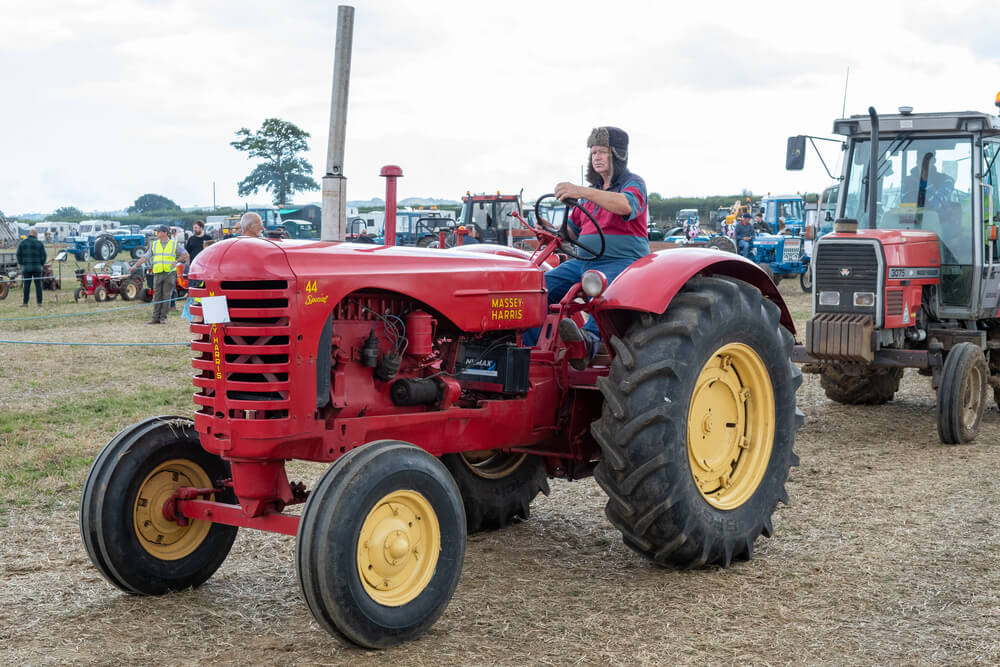
Massey-Harris came out of an 1891 merger between two Ontario implement makers and grew into the largest farm equipment firm in the British Commonwealth. The name changed after the company joined with Harry Ferguson’s tractor business in 1953, and by 1958 it read Massey-Ferguson.
That gives collectors a clean cutoff date for anything marked Massey-Harris alone. Dealer signs in red and yellow bring $500 to $3,500.
Canadian buyers compete hard for them, and cross-border auctions regularly see these signs head back north to the provinces where the machines were built.
Minneapolis-Moline
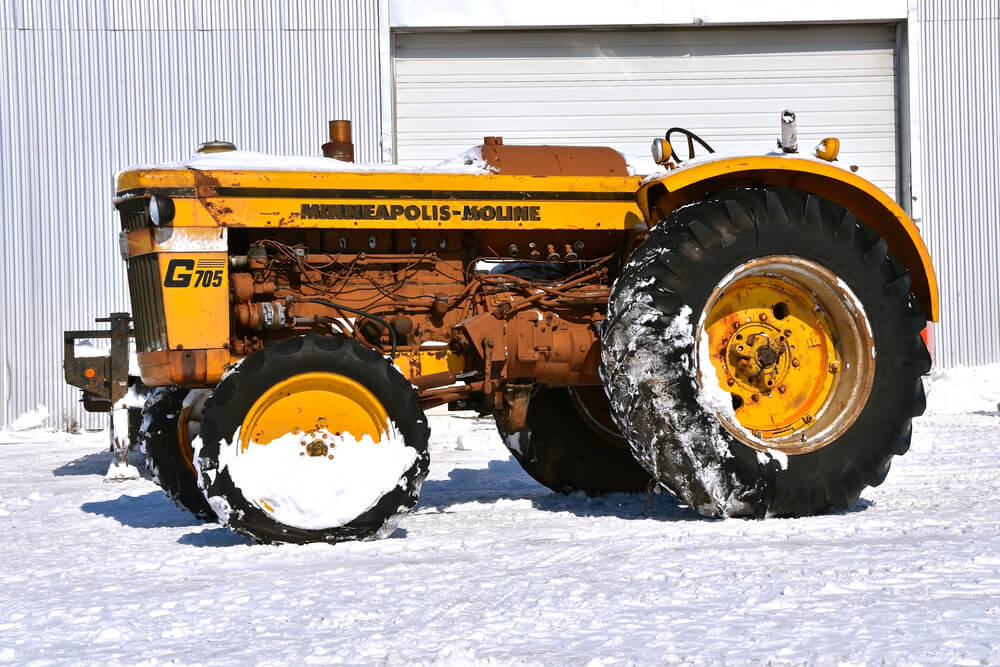
Three struggling Minnesota and Illinois firms merged in 1929 to form Minneapolis-Moline, and the company painted its tractors a warm yellow it called Prairie Gold. In 1938 it built the UDLX Comfortractor, which had an enclosed cab, a radio, and a heater at a time when most farmers sat on bare steel in the rain.
Only about 150 were made. A double-sided porcelain neon dealer sign brought $15,000 at the Anton auction in 2022.
Ordinary painted metal dealer signs run $400 to $2,000, helped by the fact that the brand vanished in the 1970s.
Ford Tractor Dealer Signs
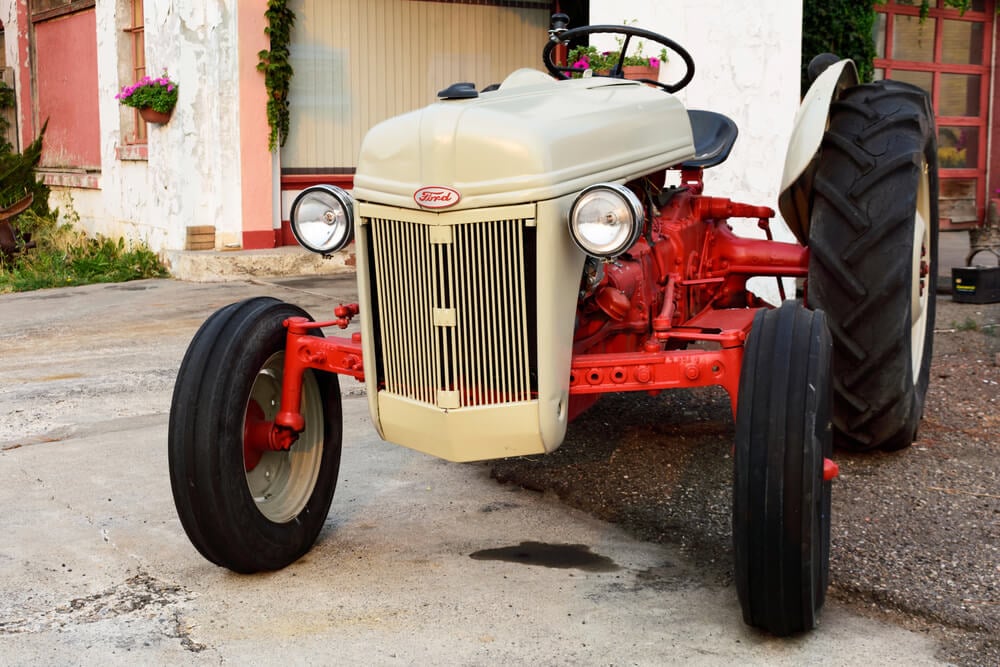
Henry Ford grew up on a Michigan farm and hated the labor, which is why he sold Fordson tractors from 1917 and launched the 9N in 1939 on a handshake agreement with Irish engineer Harry Ferguson. The handshake later turned into one of the largest patent lawsuits of its day.
Dealer signs from the 9N and 8N years are the ones collectors chase. A double-sided porcelain neon arrow sign for Ford Tractor service reached $48,000 at auction in 2022.
Smaller painted and porcelain signs bring $500 to $4,000.
De Laval Cream Separator
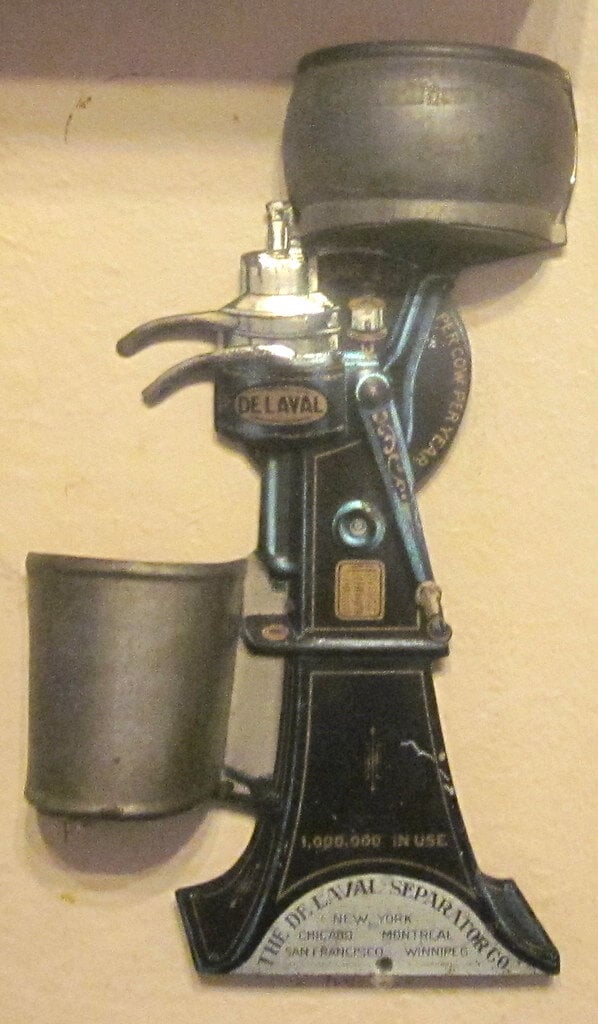
Swedish engineer Gustaf de Laval patented his centrifugal cream separator in 1878, and the American branch of his company advertised harder than any dairy supplier of its time. Its lithographed tin signs from about 1900 to 1915 show the machine surrounded by vignettes of dairy breeds and farm scenes, often in an original wood frame.
These are the classic farm sign for a kitchen wall. Strong examples bring $1,500 to $5,000, and condition of the lithography is everything.
Later porcelain signs announcing that a farm used De Laval equipment are smaller, cheaper, and far more common.
Surge Milkers
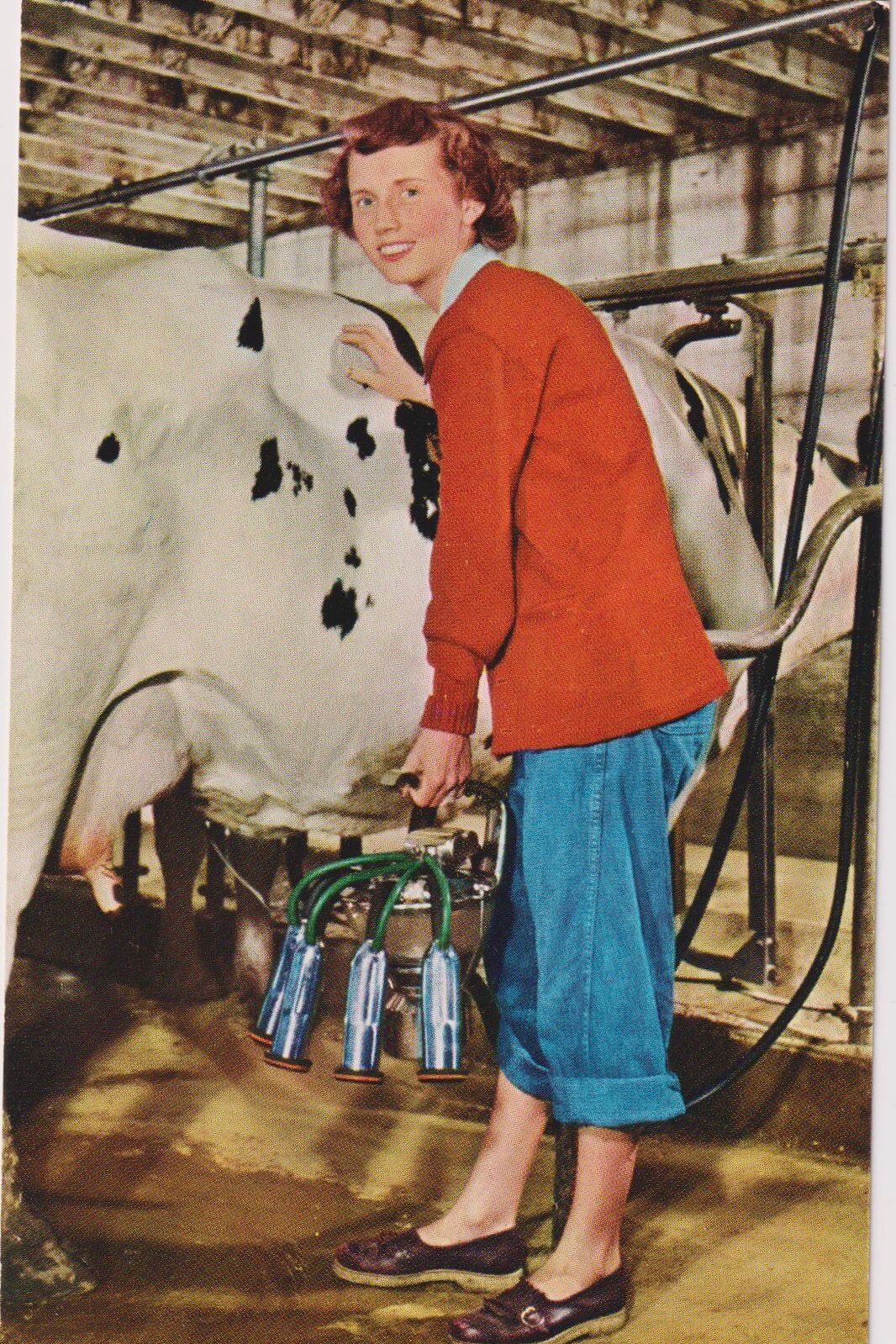
Babson Bros. of Chicago introduced the Surge bucket milker in 1923, a stainless pail that hung from a strap under the cow and swung gently as it worked. The motion was the selling point, and the name came from it.
Dealers and proud dairymen both posted Surge signs, so they turn up on barns as well as storefronts. Porcelain and painted metal versions bring $150 to $800.
Buyers who grew up on dairy farms often want one hung beside an actual Surge pail, which still sells for under $100.
Aermotor Windmill Vanes
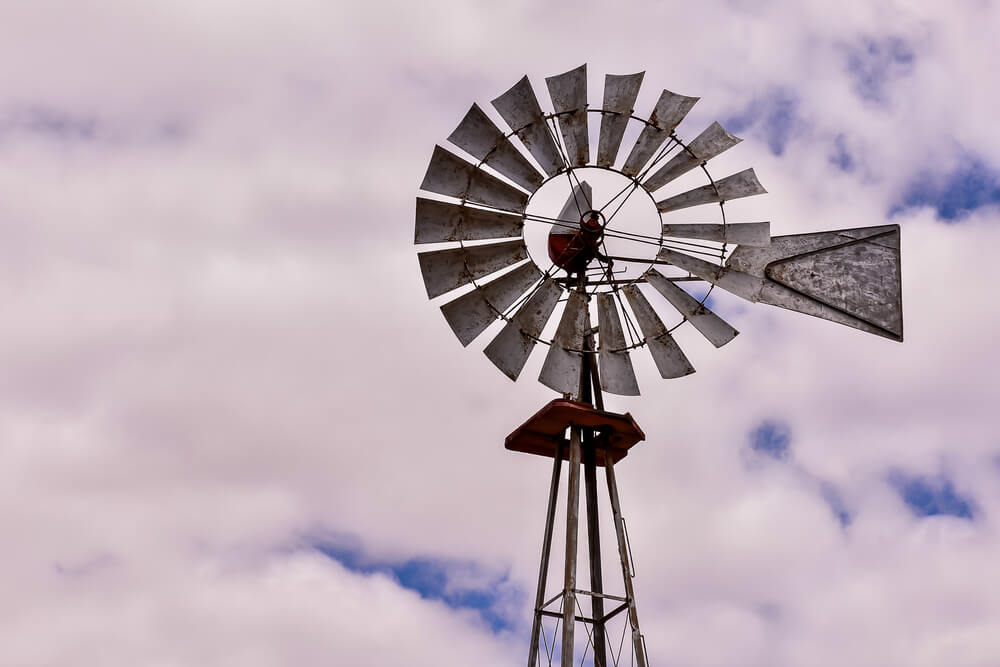
The tail vane of a windmill was a sign by design, lettered with the maker’s name and city for anyone within a mile to read. Aermotor of Chicago dates to 1888, when engineer Thomas Perry’s thousands of wind wheel experiments produced a steel mill that rivals mocked as the mathematical windmill.
It sold only a few dozen in the first year and tens of thousands annually soon after. Original stenciled vanes bring $200 to $700.
Vanes from smaller regional makers can bring more, because Aermotor built so many.
Farm Bureau Member Signs
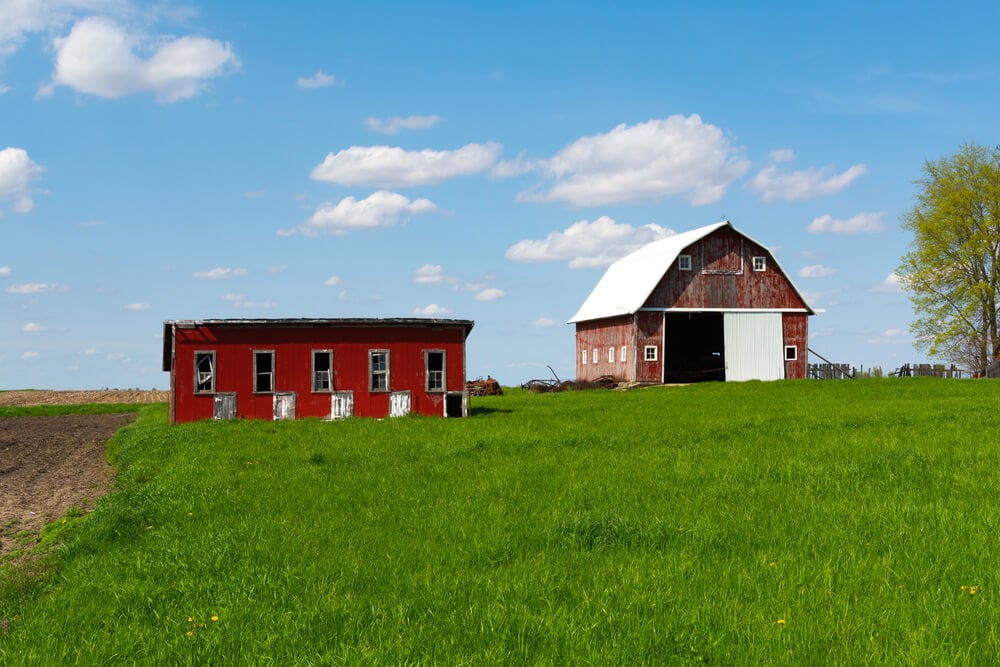
The first county farm bureau was organized in Broome County, New York, in 1911, and the American Farm Bureau Federation followed in 1919. Members received a sign for the gatepost, and state bureaus issued their own designs for decades.
That variety is the appeal, since a collector can pursue a single state or chase all of them. Most are embossed or painted tin and bring $40 to $200.
Porcelain examples and early signs naming a county bureau bring more. They hang well in groups, which helps dealers sell several at once.
4-H Club Member Signs
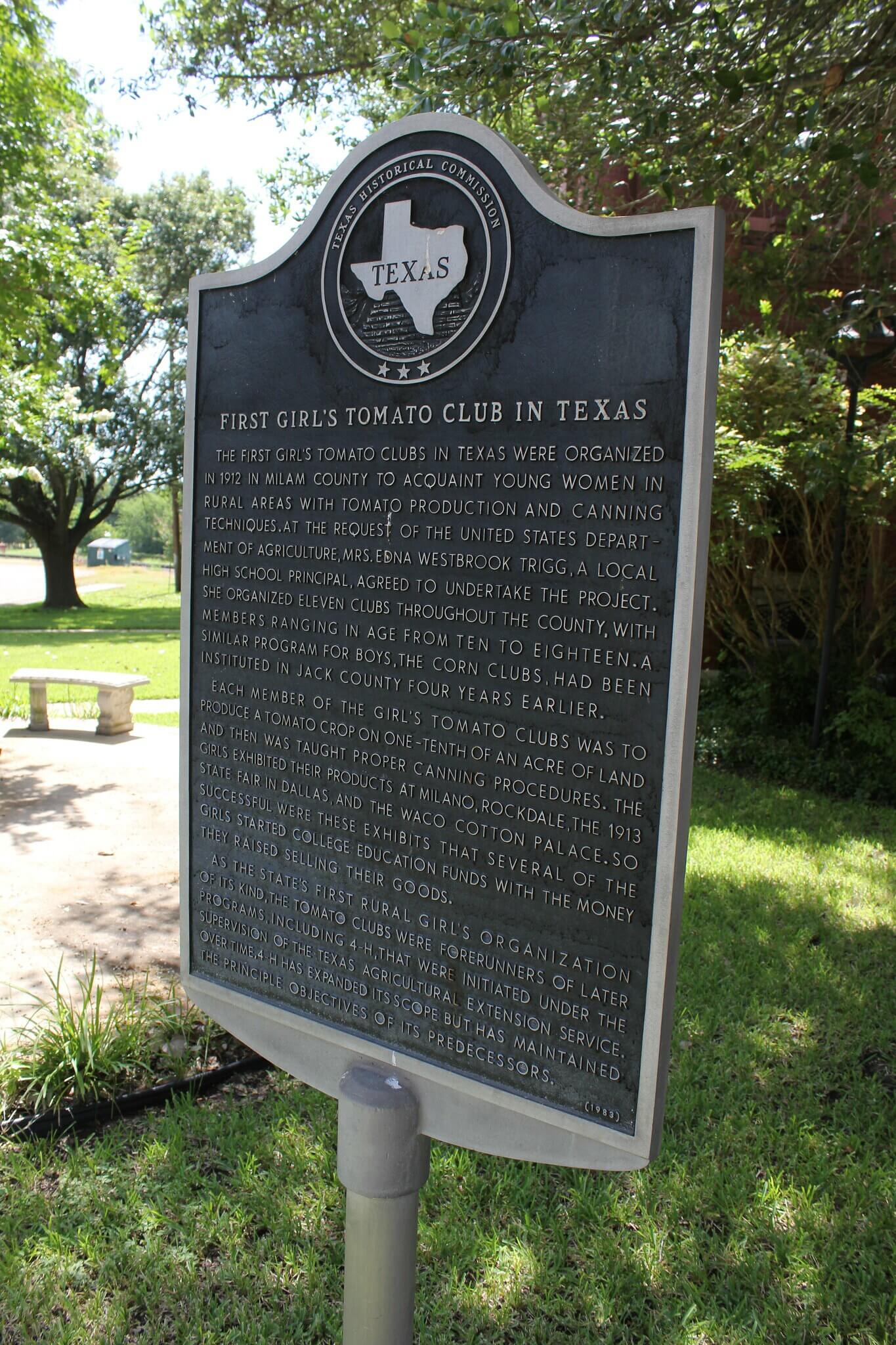
The clover emblem began with three leaves standing for head, heart, and hands. A fourth was added in 1911, and it originally stood for hustle before health replaced it.
Families posted signs announcing that a 4-H member lived on the property, and county fairs produced their own variations. The emblem is protected by a specific federal statute, which is unusual for a youth club logo.
Metal signs bring $40 to $175 depending on age and paint. Former members buy most of them, and green and white suits nearly any wall.
FFA Signs
The Future Farmers of America organized in Kansas City, Missouri, in 1928, and the blue corduroy jacket arrived five years later. The emblem packs in an owl, a plow, a rising sun, an eagle, and a cross-section of an ear of corn.
Chapter signs were posted at town limits and outside high school agriculture shops, and smaller versions marked the homes of members. Most bring $50 to $250.
Signs lettered with a specific chapter name sell fastest near that town, where half the bidders may have worn the jacket.
Willie Wiredhand Co-op Signs
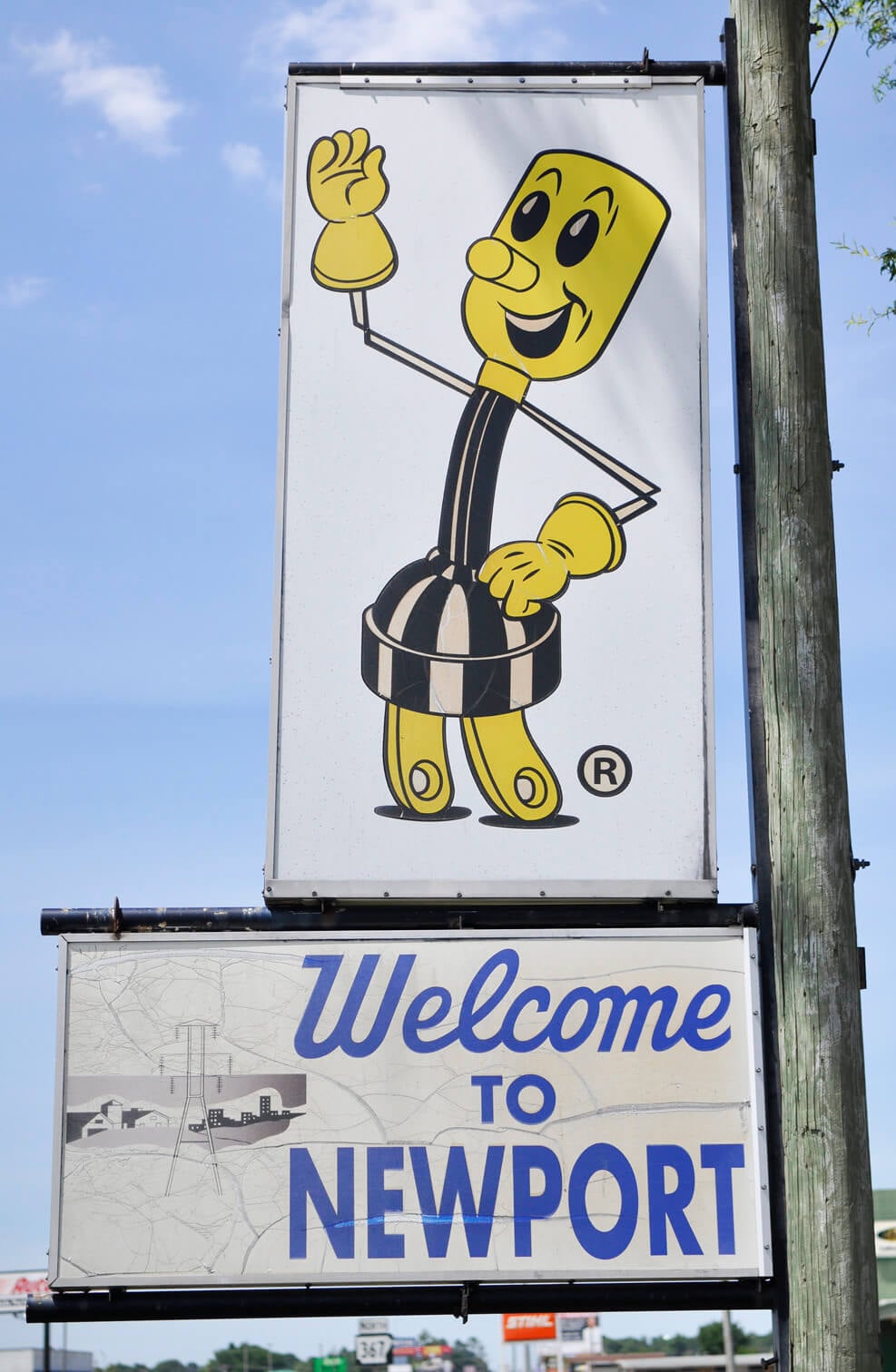
When the Rural Electrification Administration was created in 1935, only about one American farm in ten had power from a central station. The cooperatives that strung the lines wanted a mascot, and in 1950 they introduced Willie Wiredhand, a figure with a lamp socket head and a plug for legs.
The owner of a rival utility mascot, Reddy Kilowatt, sued, and a federal appeals court sided with Willie in 1957. Member signs and meter pole markers showing him bring $75 to $400.
His underdog court victory is a good story to tell guests.
Soil Conservation District Cooperator Signs
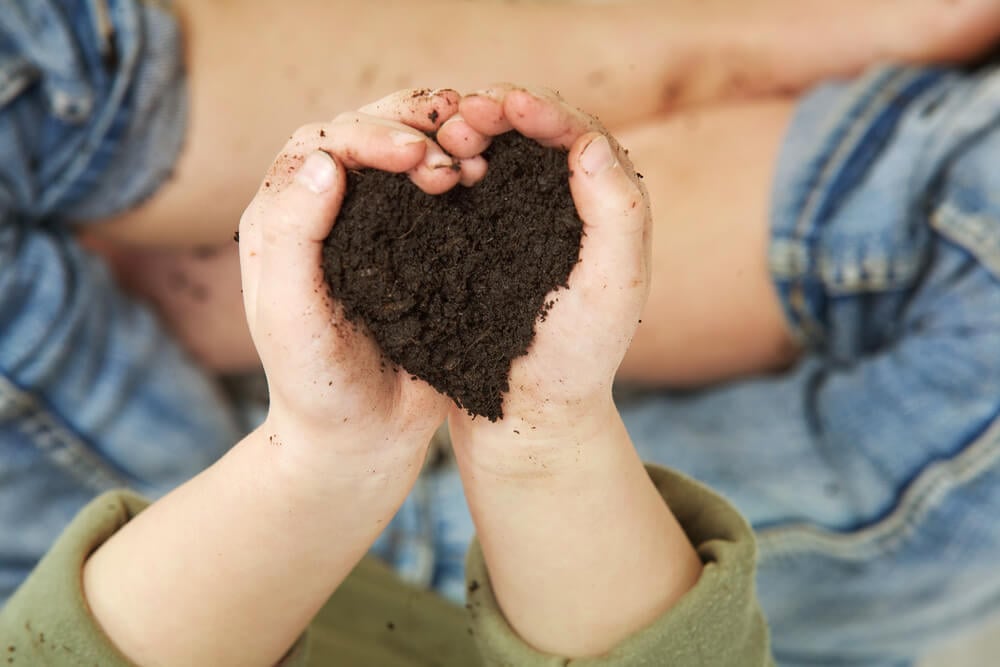
The Dust Bowl produced the Soil Conservation Service in 1935, led by Hugh Hammond Bennett, who famously timed his testimony to Congress to coincide with a dust storm darkening Washington. The first local district was organized at Brown Creek, North Carolina, in 1937.
Farmers who signed conservation plans received a cooperator sign for the fence. They are plain, usually green or white painted metal, and bring $40 to $150.
Buyers like them for what they represent, and they pair naturally with contour farming photographs from the same era.
Century Farm Markers
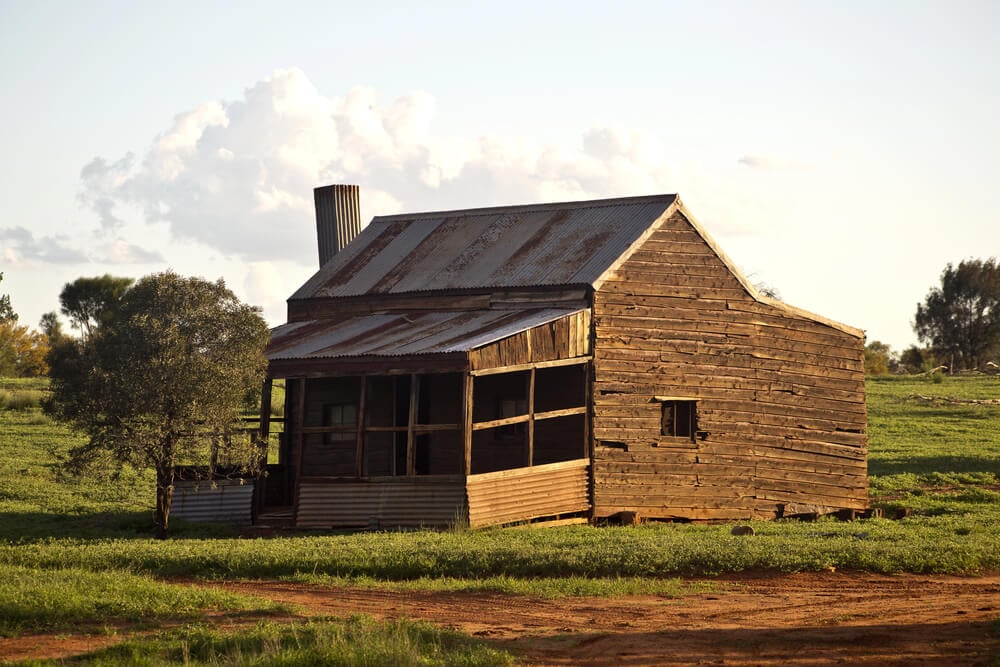
State programs honoring farms held by one family for 100 years have issued markers for generations, and New York’s dates to 1937. Most are cast or stamped metal bearing the state name and sometimes the year of the award.
Families usually keep them, which is why they seldom reach the market. When one does, it brings $75 to $300.
Some buyers are uneasy about hanging a marker earned by another family, so dealers do best when they can name the farm and the county it came from.
Registered Holstein Breeder Signs
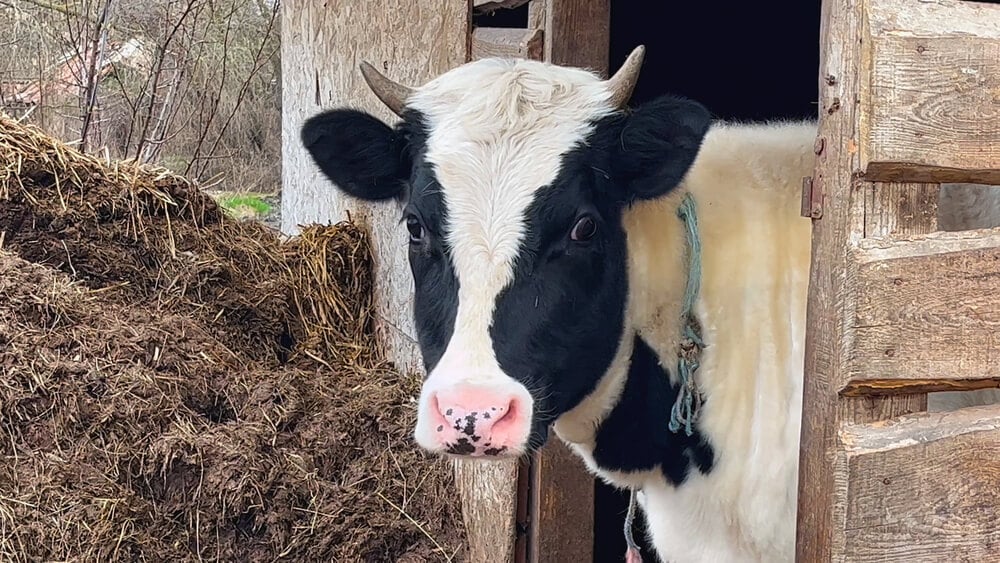
The Holstein-Friesian Association of America was formed in 1885 and headquartered for generations in Brattleboro, Vermont. Breeders hung association signs at the end of the lane, typically a black and white cow above a panel where the farm name was lettered by a local painter.
That hand lettering makes each one unique. Signs from other breed groups exist, but the Holstein is the image people picture when they think of a dairy cow.
Examples bring $150 to $600, with double-sided signs on original iron brackets at the top of the range.
Burma-Shave Boards
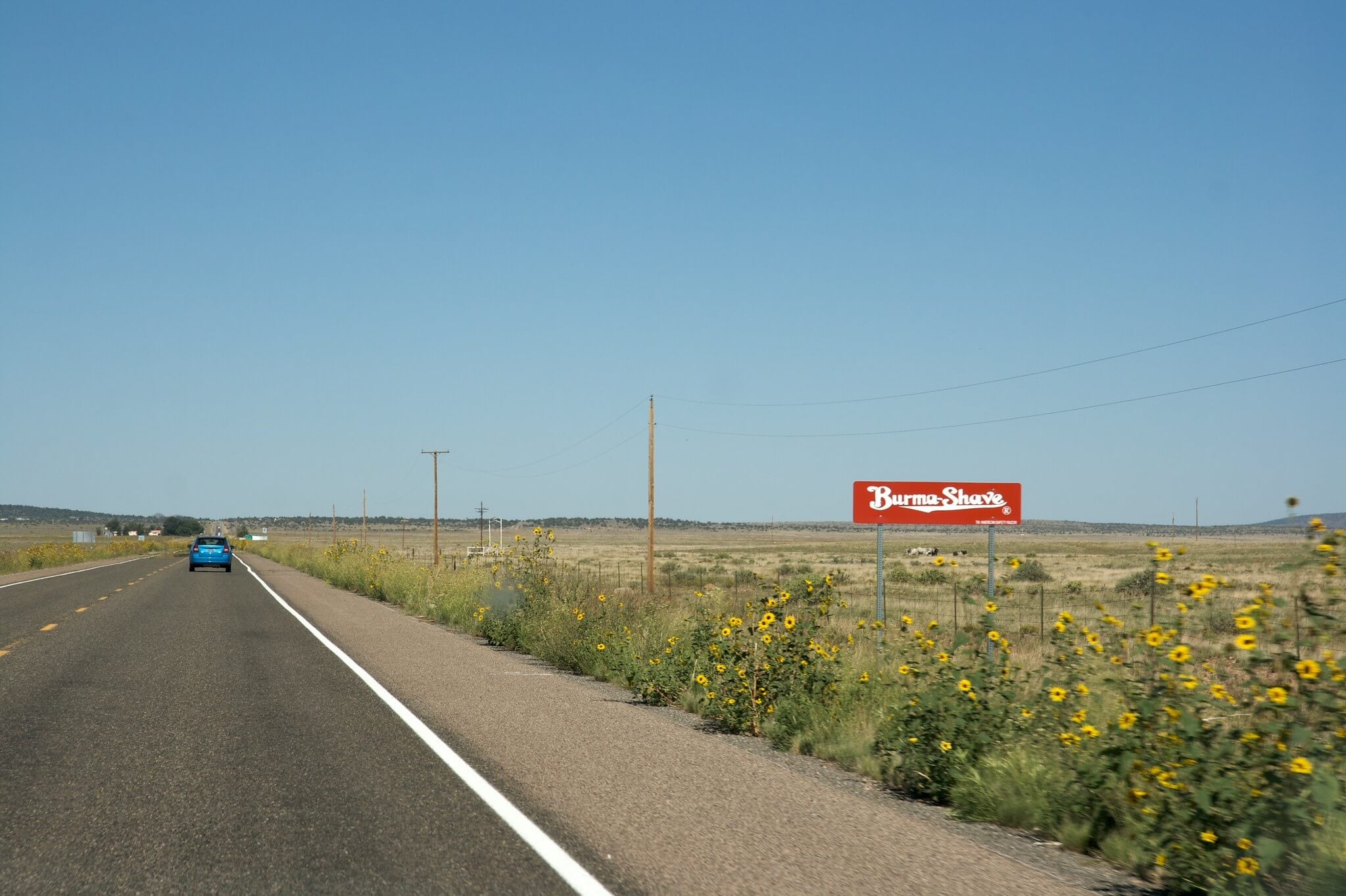
The little red boards stood on farmland. Beginning in the mid-1920s the Burma-Vita Company of Minneapolis rented fence-line space from farmers for a few dollars a year and planted its rhymes in sets of six, spaced to be read from a moving car.
Around 7,000 sets stood at the peak, and the campaign ended in 1963. Crews pulled most of the boards, and one set went to the Smithsonian.
A single original board brings $200 to $600, and complete rhymes are scarce enough that prices are set bid by bid.
Hand-Painted Roadside Produce Signs
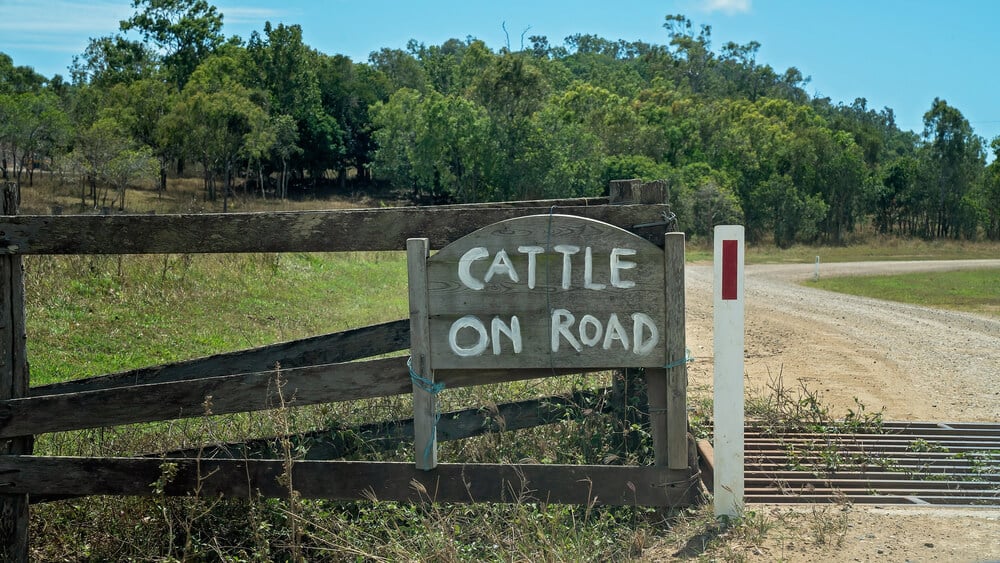
Nobody manufactured the sign that said fresh eggs, sweet corn, or honey. A farmer painted it on a barn board with whatever was in the shed, and the results are now sold as folk art.
Rock City used a similar homemade approach on a grand scale, paying painter Clark Byers to letter roughly 900 barn roofs in 19 states between the mid-1930s and 1969. Produce signs with good lettering, an arrow, or a painted vegetable bring $100 to $800.
Age is easy to fake, so genuine weathering and old nails matter.
What the Fence Post Knew
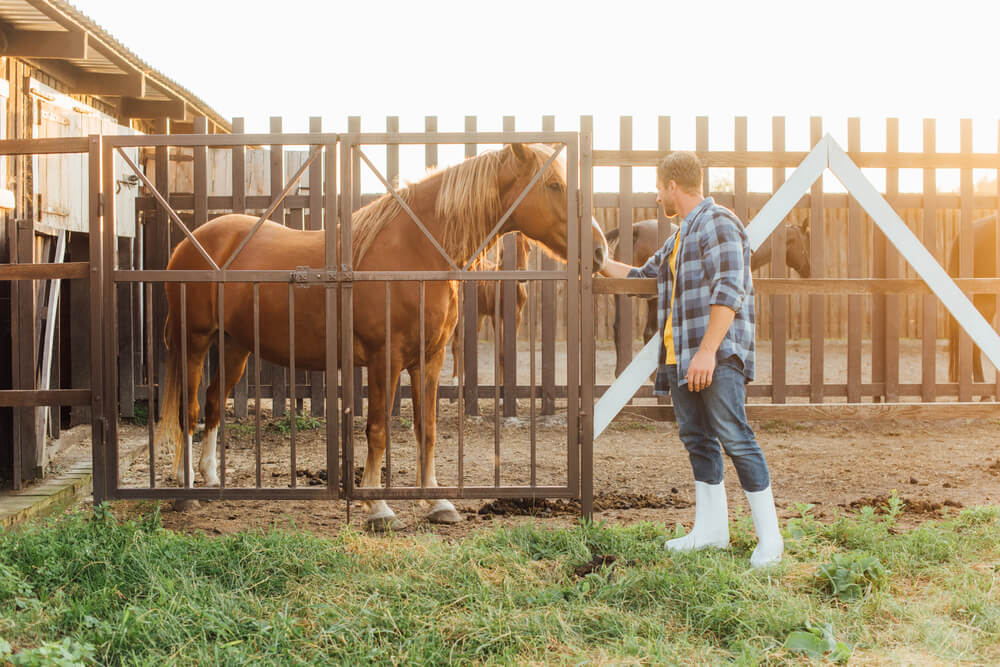
Every one of these signs was a small public declaration. A farmer who nailed up a seed sign was telling the township which company he trusted with the year’s income, and a dealer who paid for porcelain and neon was betting on a brand for decades.
The signs outlasted many of those brands, and quite a few of the farms. That is a large part of why they sell.
Buyers are not only decorating with color and old type. They are hanging up proof that someone once stood at the end of a lane, looked at a field, and was proud enough of it to put a name on the post.
More from Go2Tutors!

- The Romanov Crown Jewels and Their Tragic Fate
- 13 Historical Mysteries That Science Still Can’t Solve
- Famous Hoaxes That Fooled the World for Years
- 15 Child Stars with Tragic Adult Lives
- 16 Famous Jewelry Pieces in History
Like Go2Tutors’s content? Follow us on MSN.