26 Old Encyclopedia Sets Buyers Still Want
The hard truth comes first. Most encyclopedia sets from the 1950s through the 1990s have no resale value, and many thrift stores refuse them as donations.
They were printed in enormous numbers, they weigh a hundred pounds, and their facts expired long ago.
A short list of exceptions exists, wanted by book collectors, historians, decorators, and people who simply like the illustrations. Prices below are for complete sets in sound bindings, and condition, completeness, and shipping cost decide every sale.
Encyclopaedia Britannica, First Edition
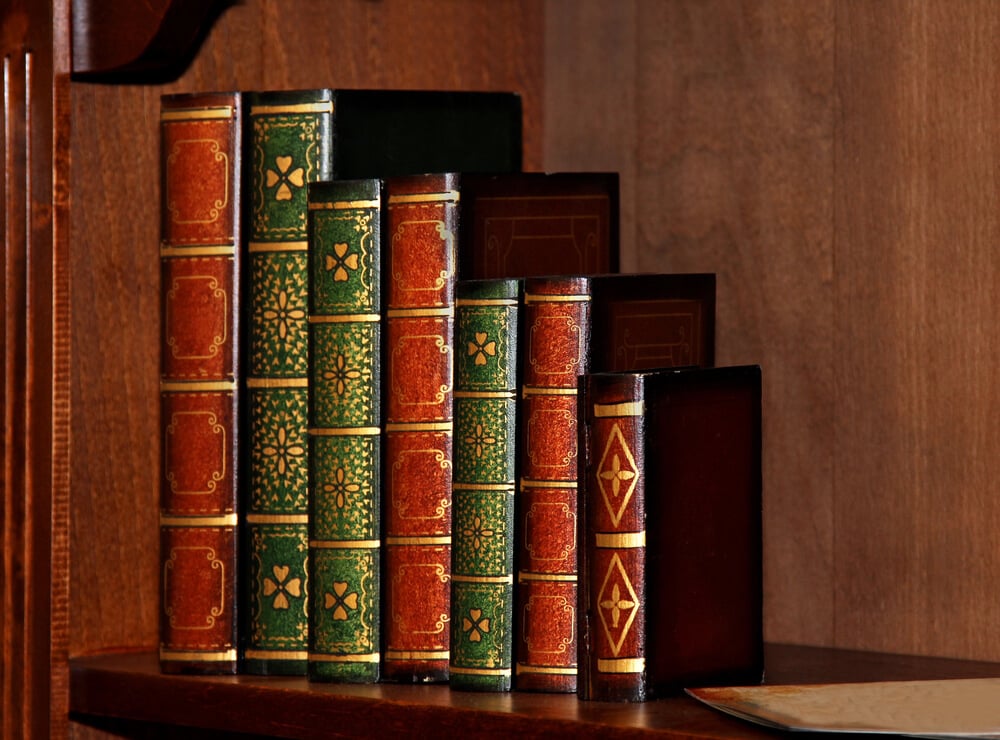
Three Scotsmen produced it in Edinburgh between 1768 and 1771, issuing it in about a hundred weekly parts that subscribers later bound into three volumes. Andrew Bell engraved the plates, Colin Macfarquhar printed it, and William Smellie, aged twenty-eight, compiled most of the text for two hundred pounds.
The frank anatomical plates in the midwifery article scandalized some buyers, who tore them out. Around 3,000 sets were sold.
Originals bring $10,000 to $30,000 or more depending on condition and completeness of plates, and the twentieth-century facsimile sells for $100 to $300.
Dobson’s Encyclopaedia
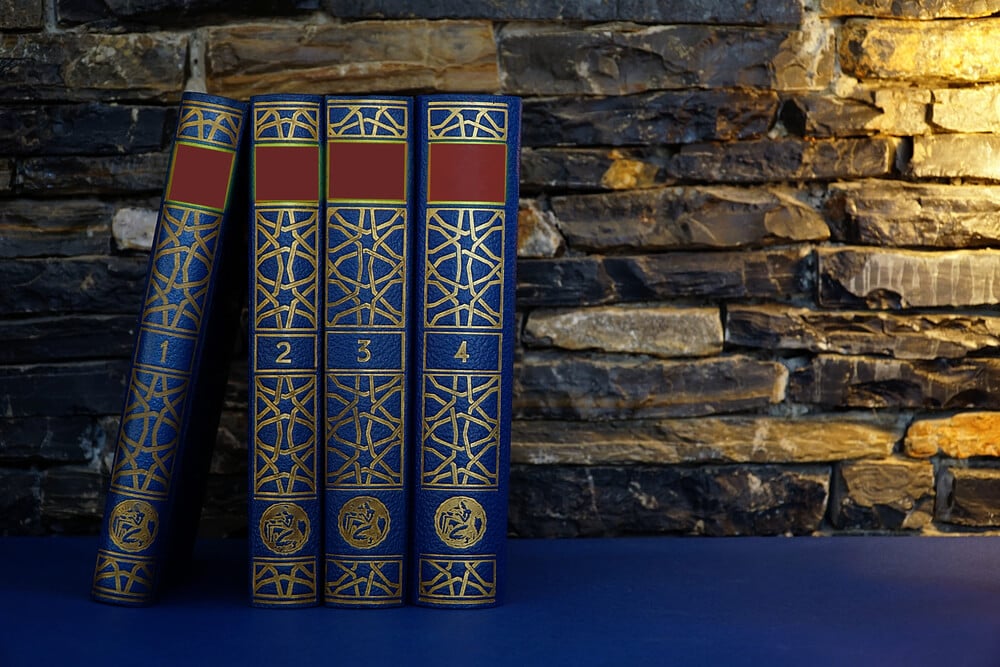
Thomas Dobson of Philadelphia reprinted the third edition of the Britannica between 1789 and 1798, dropped the word Britannica from the title, and rewrote entries that slighted the new republic. It ran to eighteen volumes and was the largest publishing project yet attempted in the United States.
Dobson used American paper and American type wherever he could. George Washington, Thomas Jefferson, and Alexander Hamilton were among the subscribers.
Complete sets in period calf bring roughly $3,000 to $10,000 depending on condition, and odd volumes sell readily to collectors of early American printing.
Britannica Ninth Edition

Published between 1875 and 1889 in twenty-four volumes plus an index, the ninth is known as the scholar’s edition. Its contributors included Thomas Huxley on biology, James Clerk Maxwell on physics, and the exiled anarchist Prince Kropotkin on Russian geography.
Articles ran to the length of short books. American publishers pirated it freely, so sets vary widely in paper and binding quality.
Authorized sets in good half leather bring $200 to $800 depending on condition. Dry, flaking spines are the common fault, and buyers should check the index volume is present.
Britannica Eleventh Edition
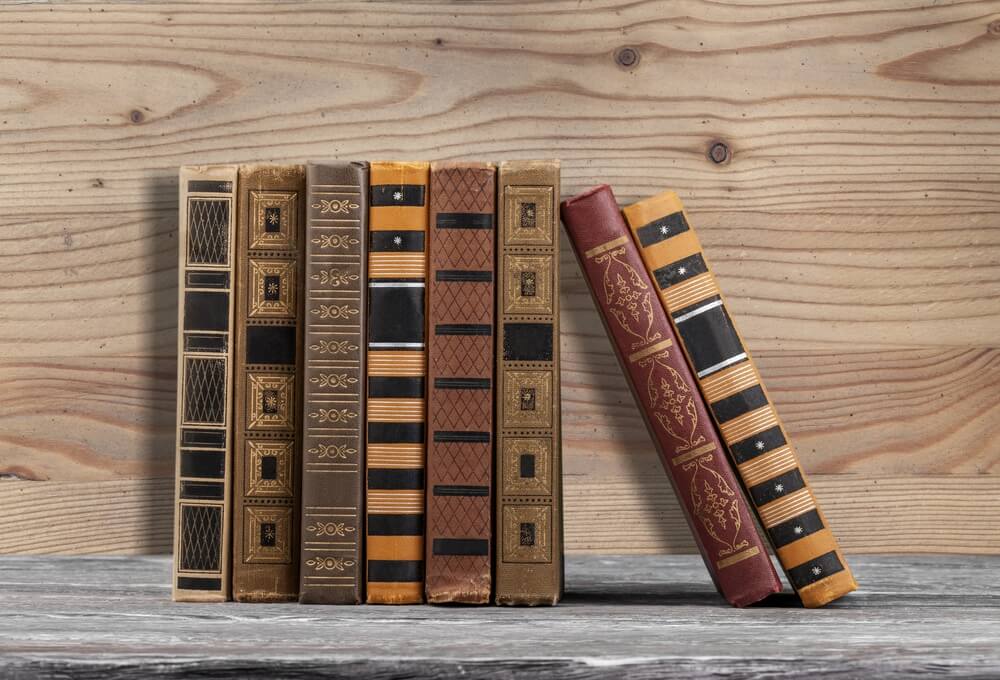
The twenty-nine volumes appeared in 1910 and 1911 under the imprint of Cambridge University Press, the first time an edition was issued nearly all at once. It is widely regarded as the high point of the form, confident, literary, and thoroughly Edwardian in its assumptions.
A special printing on thin India paper cut the shelf space by more than half. Sets bring $300 to $1,500 depending on binding and condition, with full morocco at the top.
Its text passed into the public domain and seeded many early online reference articles.
The Final Print Britannica
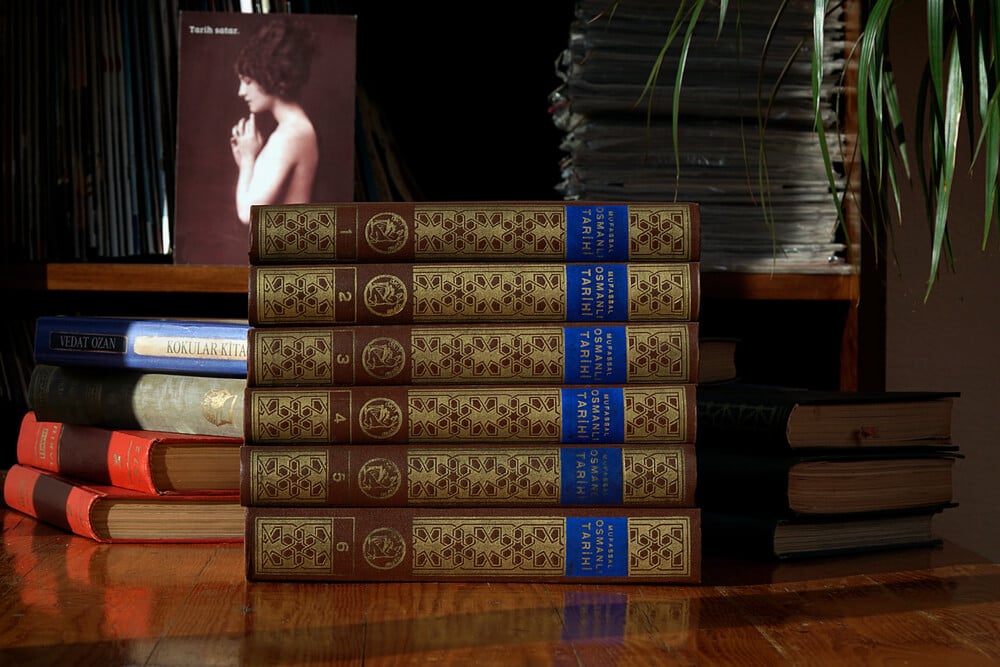
In March 2012 the company announced that the 2010 printing of the fifteenth edition would be its last after 244 years. The set ran to thirty-two volumes, weighed about 129 pounds, and listed at $1,395.
Of roughly 12,000 sets printed, some 4,000 remained in the warehouse on the day of the announcement, and they sold out within weeks. Owners who bought for sentiment have mostly held on.
Clean sets now change hands for several hundred dollars to more than a thousand, depending on condition, a rare case of a modern encyclopedia keeping its value.
Diderot’s Encyclopedie
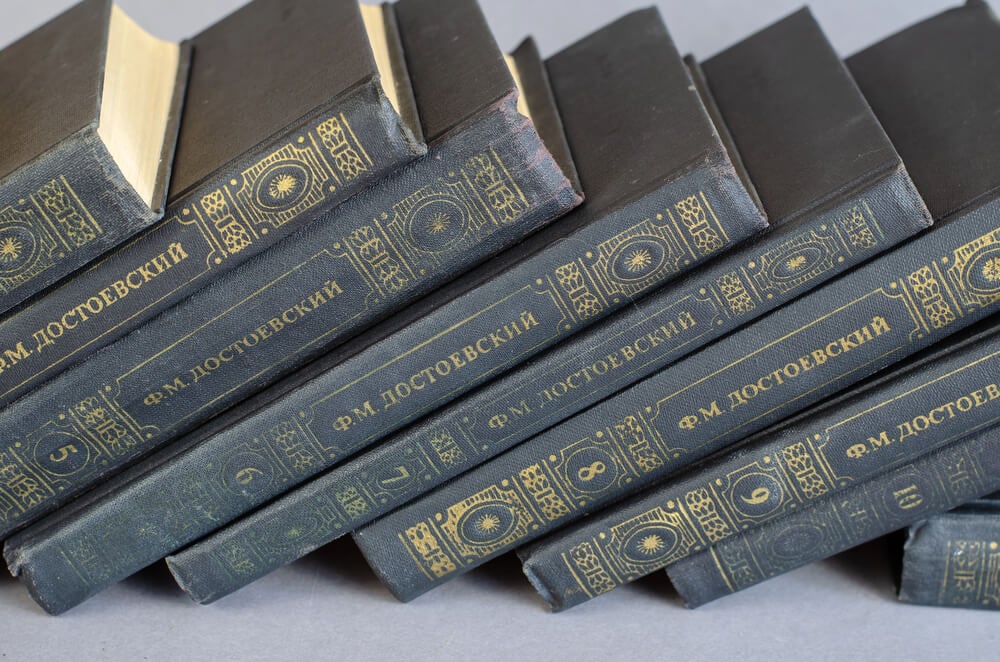
Denis Diderot and Jean d’Alembert published seventeen volumes of text and eleven of plates in Paris between 1751 and 1772, surviving a royal ban along the way. The engravings document every trade of the age, from pin making to shipbuilding, in exact detail.
A complete first edition in folio sells for six figures. Later eighteenth-century reprints from Geneva, Lucca, and Livorno bring less, and the smaller quarto editions less again.
Single plate volumes and loose plates trade steadily at $50 to $200 a sheet, condition dependent, mostly to decorators.
Chambers’s Cyclopaedia

Ephraim Chambers published his two folio volumes in London in 1728 and introduced a system of cross-references that tied scattered articles into a connected body of knowledge. The work was reprinted repeatedly during his lifetime.
A French publisher’s plan to translate it was the seed from which the great Parisian encyclopedia grew, after the project passed to Diderot and swelled. First editions with the large folding frontispiece bring $2,000 to $6,000 depending on condition and binding.
Later eighteenth-century editions sell for considerably less and are easier to find complete.
Rees’s Cyclopaedia
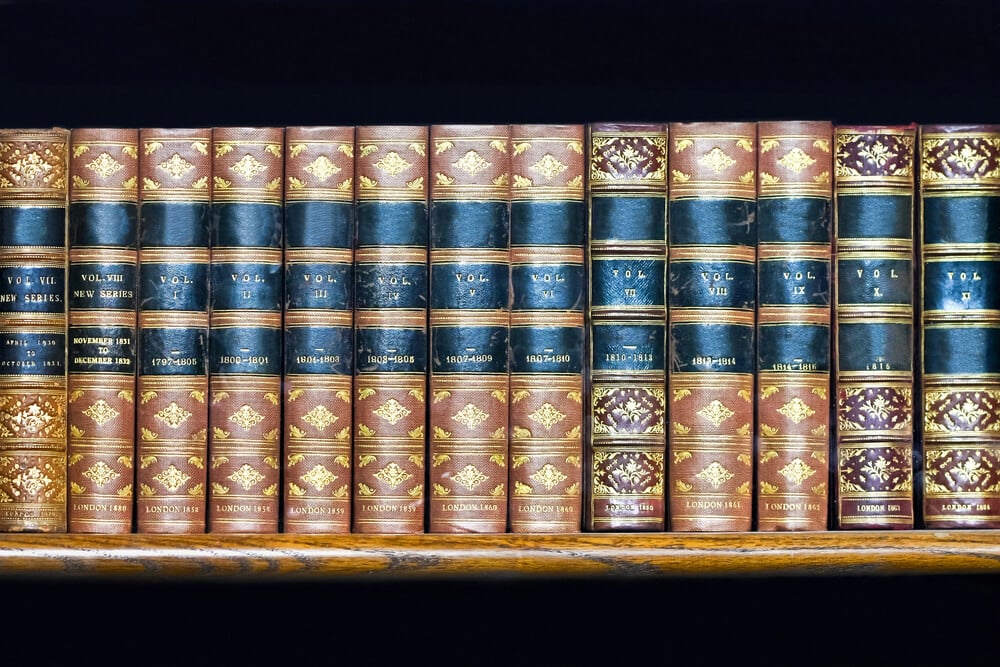
Abraham Rees, a Welsh minister, issued his expanded successor to Chambers in parts between 1802 and 1820, finishing with thirty-nine volumes of text and six of plates. Its coverage of science, manufacturing, and machinery during the early Industrial Revolution is unmatched.
The engraver Wilson Lowry used ruling machines of his own design to render instruments and engines with photographic precision. Historians of technology still cite it.
Complete sets bring $2,000 to $6,000 depending on condition. An American edition printed in Philadelphia also turns up, usually in worse bindings and at lower prices.
Harris’s Lexicon Technicum
John Harris, a London clergyman, published the first volume in 1704, and it is generally counted as the first alphabetical encyclopedia in English devoted to the arts and sciences. A second volume followed in 1710.
That later volume contains a short paper on acids by Isaac Newton, the only chemical work he allowed into print during his life. Subscribers to the original included many fellows of the Royal Society.
Copies of both volumes in contemporary bindings bring $3,000 to $10,000 depending on condition, and the engraved plates should be counted before purchase.
Encyclopaedia Americana, First Edition
Francis Lieber, a German scholar who had been jailed in Prussia for his politics, arrived in Boston in 1827 and proposed an American encyclopedia modeled on the German Brockhaus. A Philadelphia firm published the thirteen volumes between 1829 and 1833.
Lieber translated much of the German original and commissioned new articles on American law, geography, and biography. Joseph Story of the Supreme Court contributed unsigned legal entries.
Sets in original sheep bring $300 to $1,200 depending on condition. The leather has usually dried and the hinges cracked, so sound sets earn a premium.
The New American Cyclopaedia
D. Appleton and Company of New York issued these sixteen volumes between 1858 and 1863 under editors George Ripley and Charles A. Dana. Dana, who also worked at the New-York Tribune, offered freelance assignments to the paper’s London correspondent, a German exile named Karl Marx.
Marx needed the two dollars a page. He and Friedrich Engels supplied dozens of unsigned articles, most of them by Engels and most on military subjects such as artillery and infantry.
Sets bring $200 to $600 depending on condition, largely on the strength of that story.
Appleton’s Cyclopaedia of American Biography
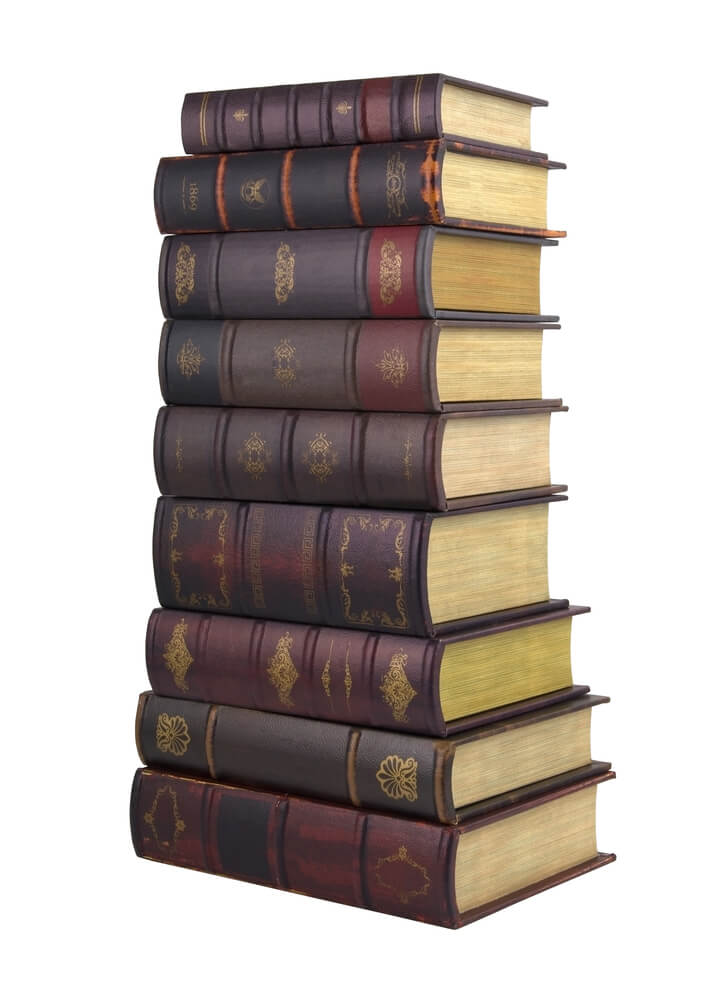
These six volumes, published between 1887 and 1889, profiled thousands of notable figures from across the Americas. Contributors were paid by the amount of space they filled, and no one checked their work.
In 1919 a botanist noticed that several naturalists described in the set had never existed. Later researchers have identified around two hundred wholly invented biographies, mostly of European scientists said to have explored Latin America.
The culprit was never named. Sets bring $150 to $500 depending on condition, and the hoax has made them more collectible.
The World Book, 1917
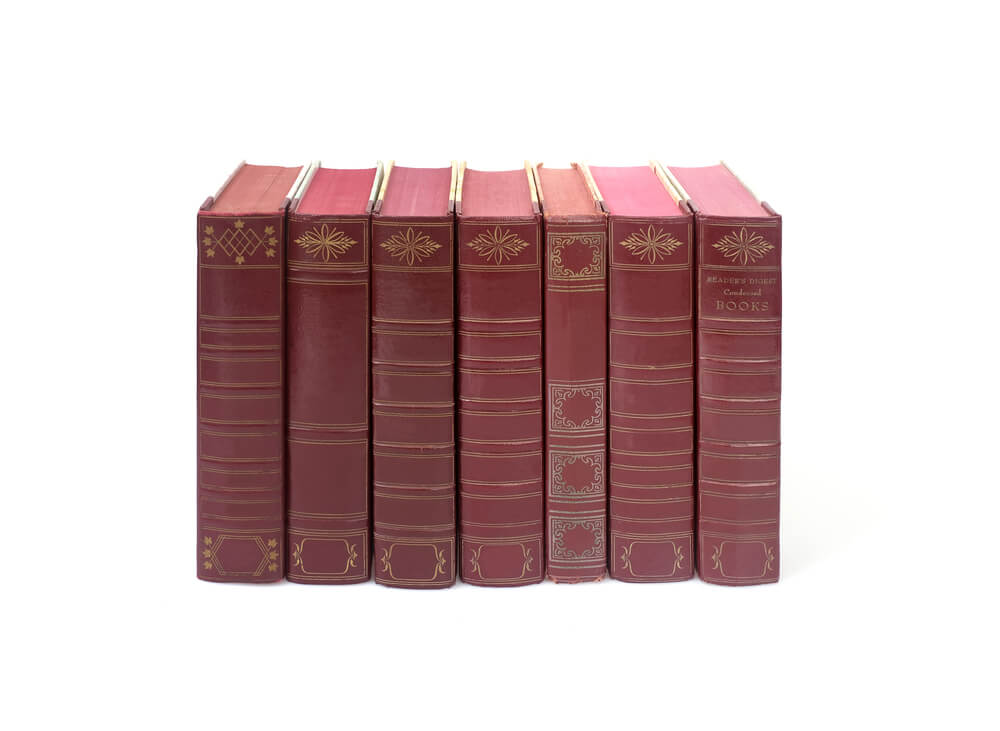
A Chicago firm published the first edition in eight volumes in 1917, written in plain language for schoolchildren and their families. It grew steadily, and by mid-century it was the best-selling encyclopedia in the country, sold door to door by a large force of teachers working through the summer.
First-edition sets bring $200 to $600 depending on condition. Later editions have little resale value, with one footnote.
World Book still issues a new printed set every year, which makes it the last major general encyclopedia in English to survive on paper.
Compton’s Pictured Encyclopedia
Frank Compton launched this set in Chicago in 1922 on the theory that children learn from pictures placed beside the text, not gathered in a separate section. Photographs and drawings appear on nearly every page.
Each volume ends with a fact index that doubles as a quick reference. Early editions in the original decorated bindings bring $50 to $250 depending on condition.
Buyers tend to be illustrators, teachers, and set decorators. The 1920s and 1930s printings, with their period photographs of factories, airships, and cities, are the ones people want.
The Book of Knowledge
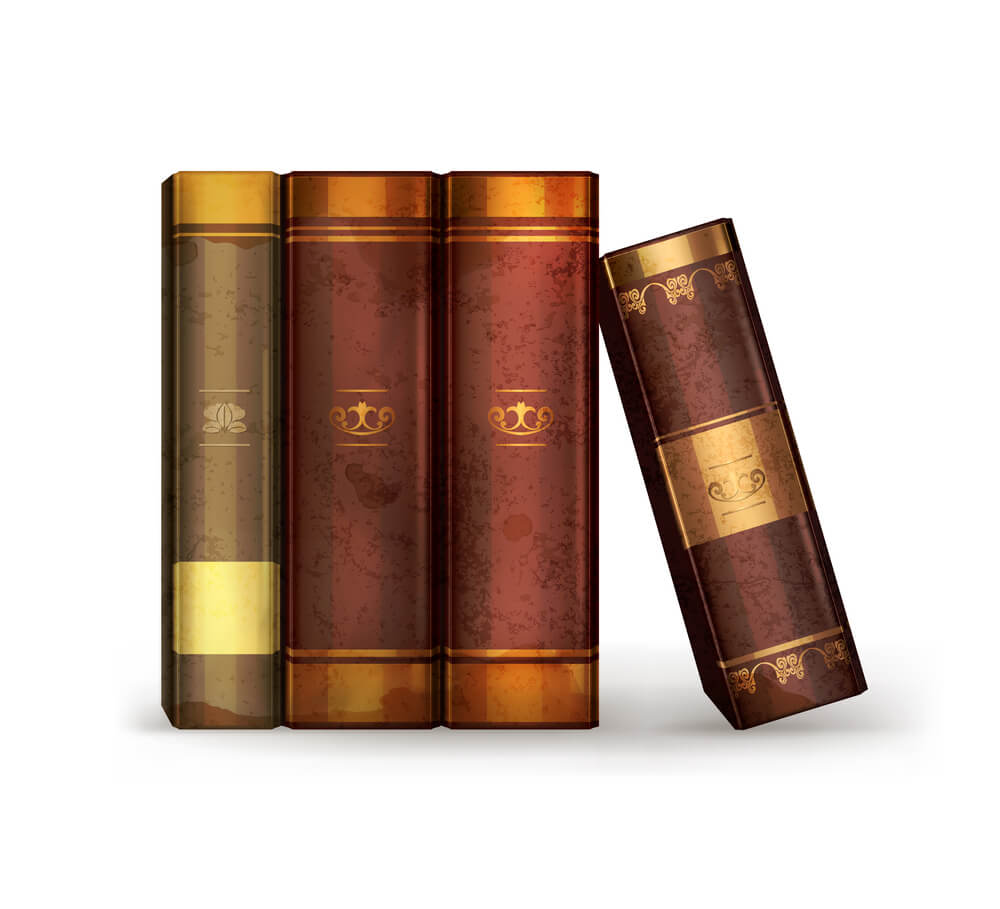
Arthur Mee created it in London in 1908 as a children’s encyclopedia, and the Grolier Society brought an American version to market around 1910. It was not alphabetical.
Each volume mixed departments on science, stories, poetry, things to make, and a section answering questions such as why the sea is salty. Children were meant to read it straight through, and many did.
Early sets in decorated cloth bring $100 to $300 depending on condition. The color plates and Art Nouveau page decorations attract buyers who never intend to look anything up.
The Golden Book Encyclopedia
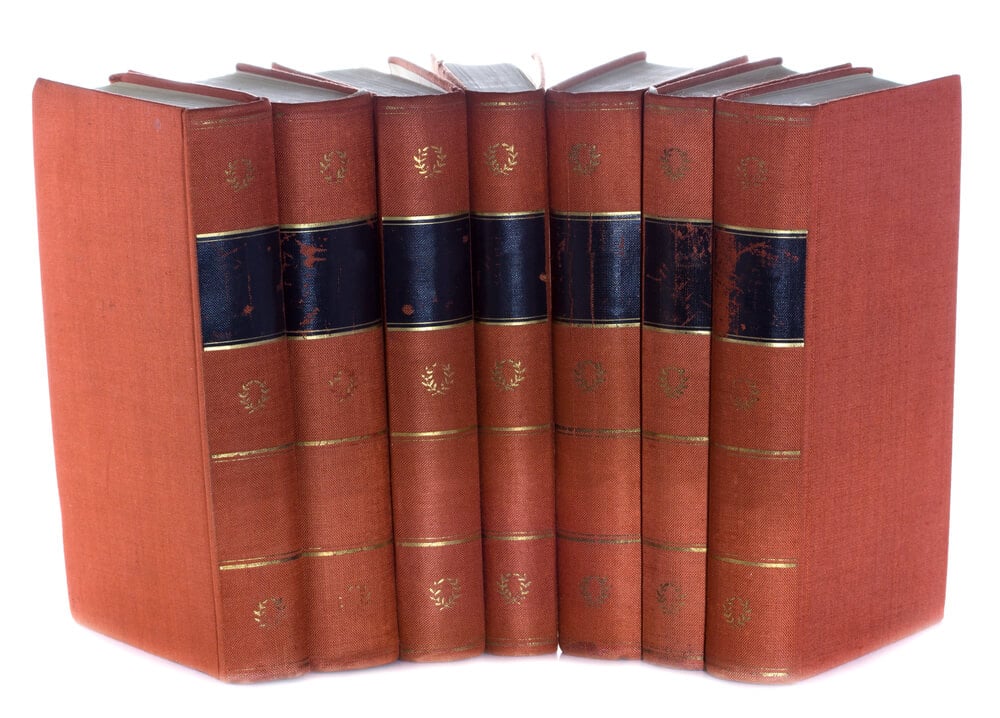
Supermarkets sold this sixteen-volume set one book at a time beginning in 1959. The first volume cost forty-nine cents as a lure, and the rest cost ninety-nine, so a family finished the set over several months of grocery trips.
Bertha Morris Parker, a Chicago science teacher, wrote the text. The painted illustrations on every page are pure mid-century, with rockets, dinosaurs, and cross-sections of volcanoes.
Complete sets bring $50 to $150 depending on condition. Buyers are typically adults who owned it as children, and volumes with heavy crayon damage are hard to sell.
Childcraft
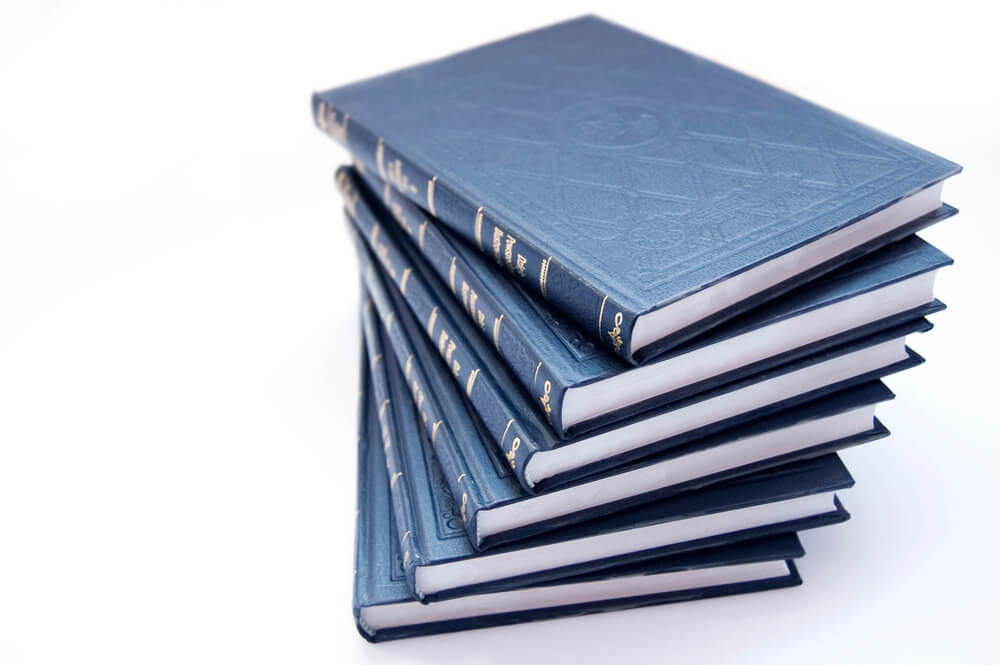
The publisher of World Book introduced Childcraft in 1934 for children too young for an encyclopedia. It was organized by theme, with volumes of poems and rhymes, stories, science, and guidance for parents.
The editors commissioned leading children’s illustrators, which is where the collector interest lies. Editions from the 1930s through the 1950s, often in orange or red bindings, bring $50 to $200 for a complete set depending on condition.
Individual poetry and story volumes sell well on their own. The parent-guidance volumes, full of period advice on discipline and diet, have their own curious readership.
The Jewish Encyclopedia
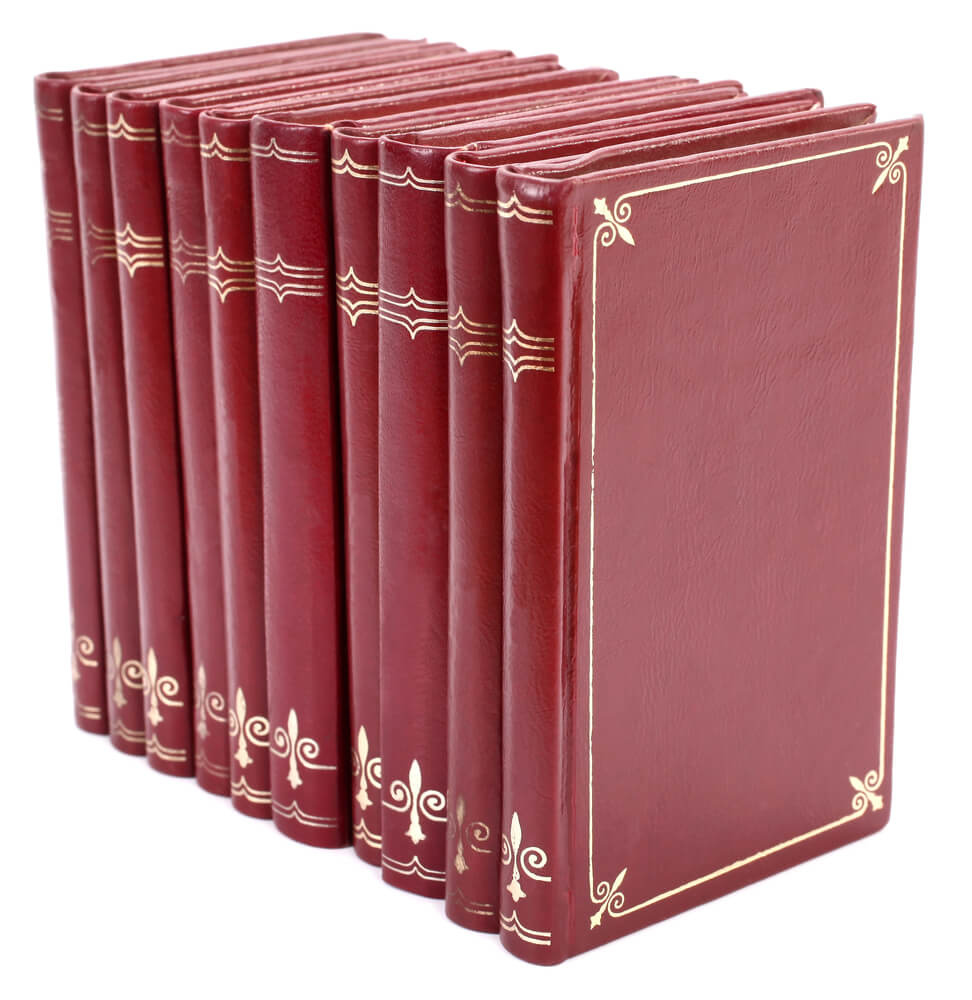
Funk and Wagnalls published these twelve volumes in New York between 1901 and 1906 under managing editor Isidore Singer. More than four hundred scholars contributed over fifteen thousand articles on history, literature, law, and biography.
Nothing comparable existed in any language, and it recorded European communities that would be destroyed within forty years. The text is now in the public domain and freely searchable.
Original sets in good bindings still bring $300 to $900 depending on condition, bought by synagogues, scholars, and families who want the physical books on a shelf.
The Catholic Encyclopedia
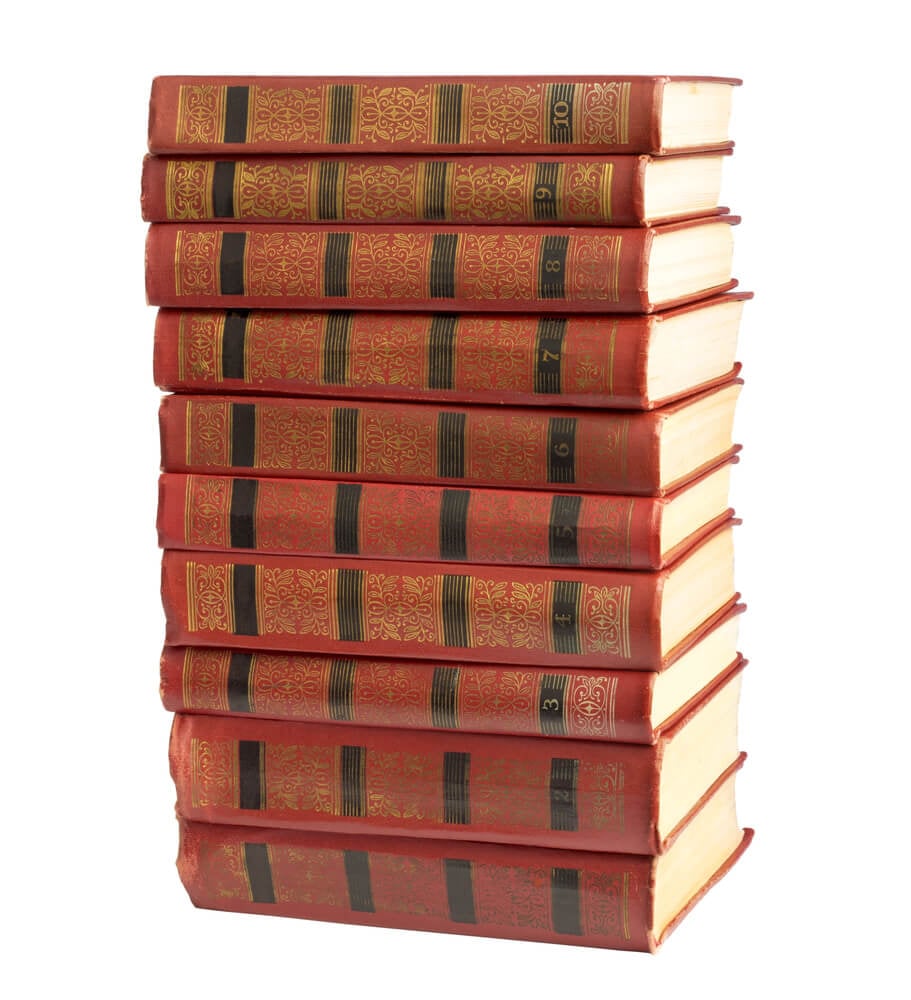
A group of American editors published fifteen volumes between 1907 and 1912, with an index volume in 1914. They aimed to present Catholic teaching, history, and culture to English-speaking readers in a single authoritative source.
The articles on medieval history, art, and philosophy remain useful. A special edition sponsored by the Knights of Columbus is the one most often found.
Sets bring $200 to $700 depending on binding and condition. Rectory and seminary library sales release them regularly, and copies with institutional stamps sell for somewhat less than clean ones.
Bailey’s Standard Cyclopedia of Horticulture
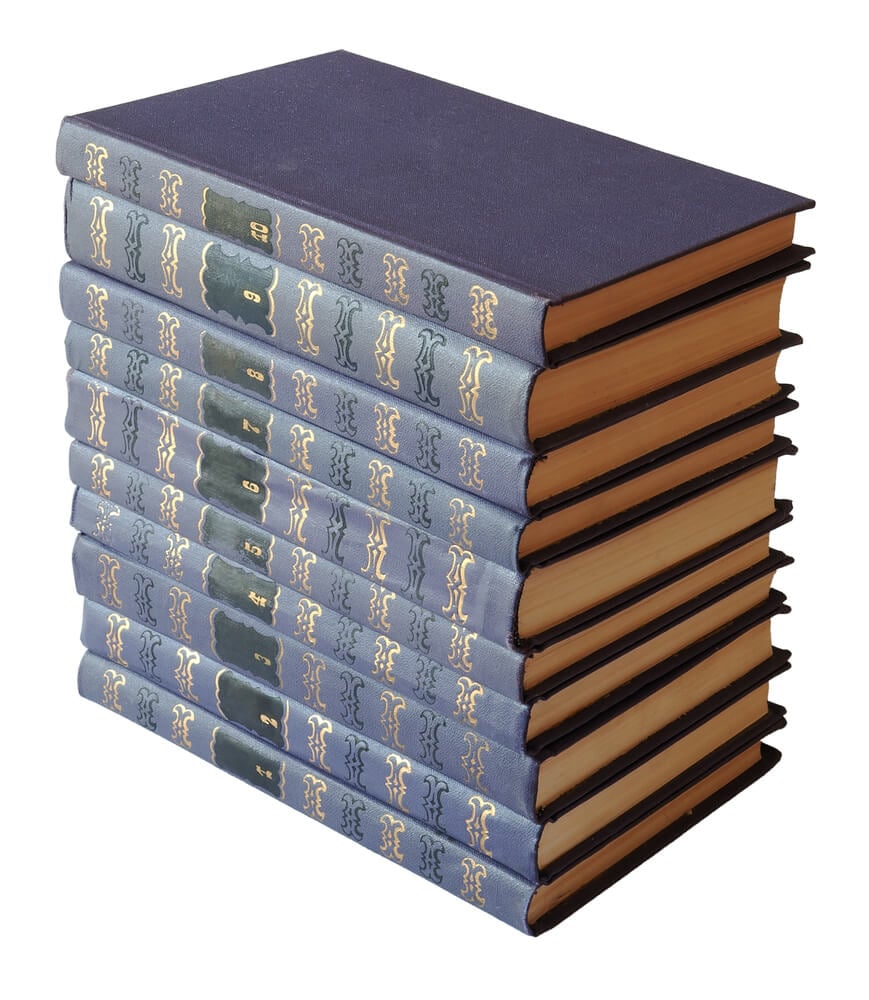
Liberty Hyde Bailey of Cornell University edited these six volumes, published by Macmillan between 1914 and 1917. The set describes thousands of plants grown in North America, with around four thousand engravings and a scattering of color plates.
It captures the fruit and vegetable varieties of the era, many of which have since vanished from commerce. Heirloom gardeners and orchardists use it to identify old cultivars.
Sets bring $150 to $400 depending on condition. The dark green cloth fades on the spine, and a bright, even set commands the upper end.
Cyclopedia of Applied Electricity
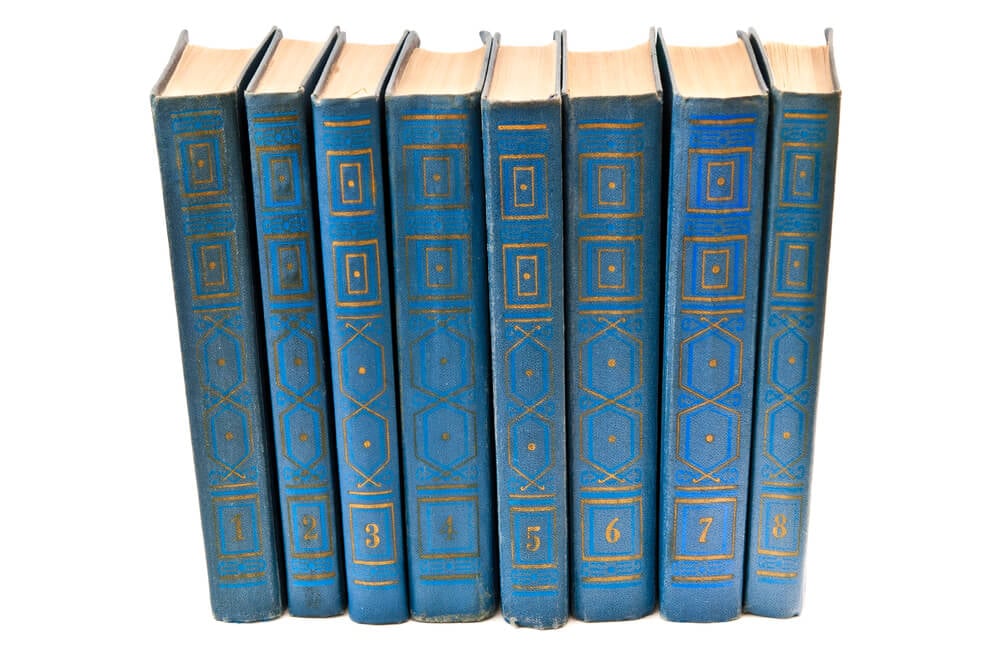
The American School of Correspondence in Chicago, and its successor the American Technical Society, sold multi-volume technical sets by mail on the installment plan from about 1905. Titles covered electricity, engineering, carpentry, and automobile repair.
The books are bound in red or black leatherette with gilt lettering and filled with wiring diagrams and photographs of dynamos. Sets bring $50 to $200 depending on condition and edition.
Restorers of antique machinery use them as working manuals, and interior designers buy them by the foot. Earlier editions, before about 1920, attract the most interest.
Meyers Konversations-Lexikon

The Bibliographic Institute of Leipzig published this German family encyclopedia in successive editions through the nineteenth century. The fourth, fifth, and sixth editions, issued between 1885 and 1908, are famous for their chromolithographed plates of beetles, minerals, orchids, national flags, and sea creatures.
The bindings are half leather with elaborate gilt spines. Complete sets bring $300 to $1,000 depending on edition and condition.
Print dealers have razored the color plates out of countless volumes for framing, so a buyer should check the plate list in each volume against what is actually there.
The Last Printed Brockhaus
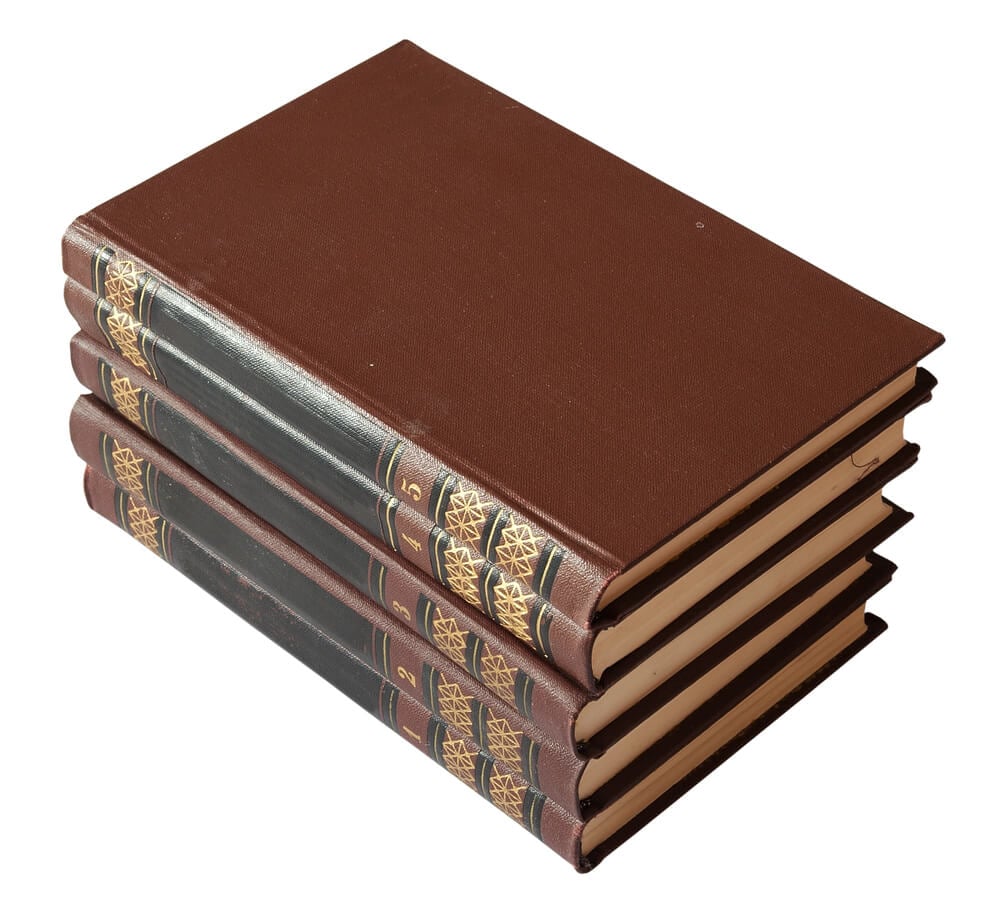
Friedrich Arnold Brockhaus bought the rights to an unfinished encyclopedia at the Leipzig book fair in 1808, and his name became the German word for the genre. The twenty-first edition, completed in 2006, filled thirty volumes and about 24,500 pages, and it was the last to be printed.
It cost well over two thousand euros new. Sets appear on the secondhand market at $500 to $1,500 depending on condition and binding.
Earlier editions from the 1890s and 1900s, with color plates and ornate spines, bring a few hundred dollars.
Larousse’s Grand Dictionnaire Universel
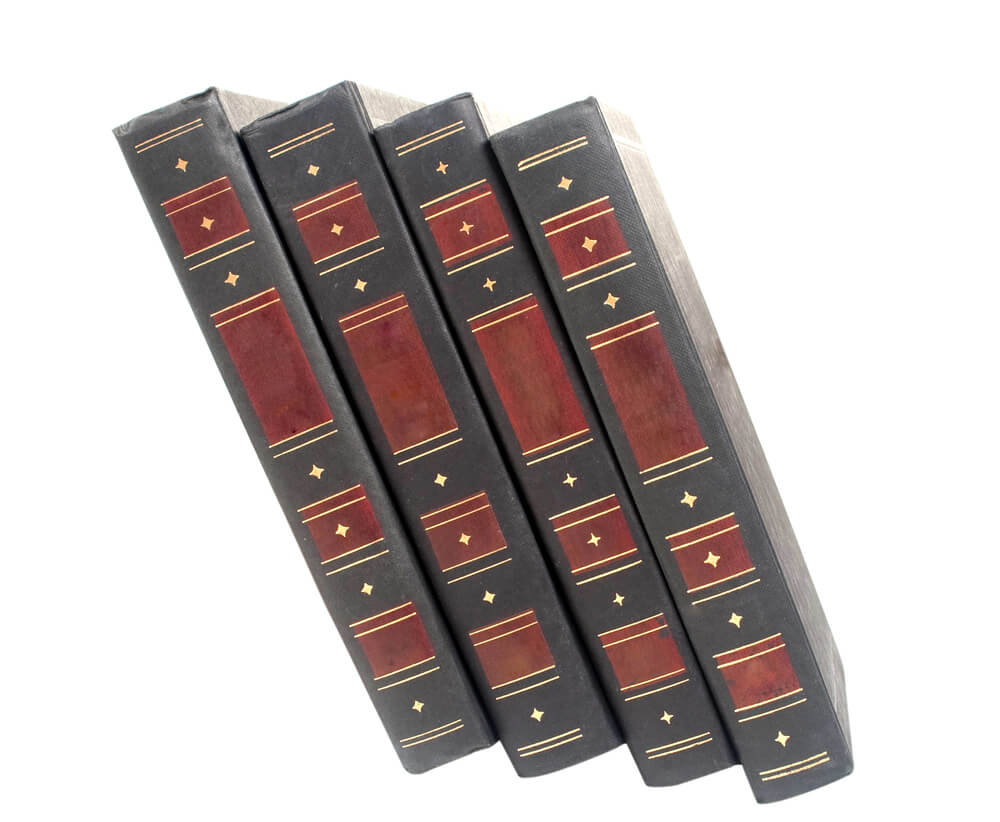
Pierre Larousse, a blacksmith’s son turned schoolteacher, published fifteen enormous volumes between 1866 and 1876, with supplements afterward. Despite the title it is an encyclopedia, and an opinionated one.
Larousse was republican and anticlerical, and he let it show in articles on kings, saints, and Bonaparte. The Vatican placed the work on its index of prohibited books.
He died in 1875, reportedly worn out by the labor, before the final volume appeared. Sets bring $500 to $1,500 depending on binding and condition, and French literary scholars still mine it for period detail.
The Espasa

The Enciclopedia Universal Ilustrada Europeo-Americana was published in Barcelona between 1908 and 1930 in seventy numbered volumes, two of them split in half, followed by a ten-volume appendix and periodic supplements. With those additions it exceeds a hundred volumes and ranks among the largest printed encyclopedias ever completed.
Its maps, color plates, and coverage of Spain and Latin America have never been replaced. Sets bring $1,000 to $3,000 depending on condition and completeness, which is modest for the bulk involved.
Shipping can cost as much as the books.
The Great Soviet Encyclopedia, Second Edition
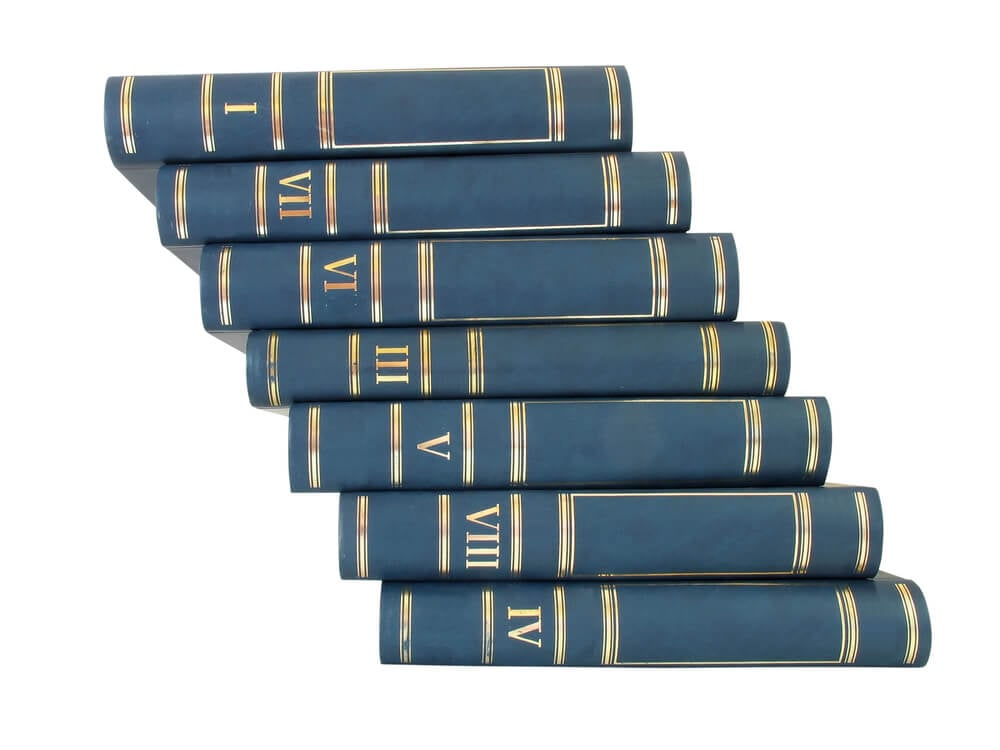
The fifty volumes of the second edition appeared between 1950 and 1958. Volume five, issued in 1950, contained a flattering article on secret police chief Lavrenty Beria.
After his arrest and execution in 1953, subscribers received a letter from the publisher with replacement pages and instructions to cut out the old ones with scissors or a razor. The substitute pages expanded the entry on the Bering Sea.
Collectors look for copies of volume five with Beria still in place. Sets are inexpensive, and that single volume can outsell the other forty-nine combined.
Knowledge Frozen at Press Time

An encyclopedia is out of date on the day it ships, and that is exactly what gives the old ones their interest. The eleventh Britannica shows how the educated world understood itself in 1911.
The Soviet set shows how a government wished to be understood in 1950, down to the razor marks.
Buyers have mostly stopped asking these books for facts. They ask them for evidence of what people once believed, how they drew a steam engine, and which varieties of apple they grew.
Read that way, an obsolete reference work never expires.
More from Go2Tutors!

- The Romanov Crown Jewels and Their Tragic Fate
- 13 Historical Mysteries That Science Still Can’t Solve
- Famous Hoaxes That Fooled the World for Years
- 15 Child Stars with Tragic Adult Lives
- 16 Famous Jewelry Pieces in History
Like Go2Tutors’s content? Follow us on MSN.