20 Historical Discoveries Found Hidden Inside Walls During Ordinary Home Renovations
Every old house has a second layer that nobody lists in the sale particulars. Behind the plaster sit the things previous owners hid on purpose, dropped by accident or used as insulation because they seemed worthless at the time.
Most renovations turn up dust, mouse nests and a stray newspaper. Occasionally a crowbar goes through the lath and lands on something that belongs in a museum.
Action Comics No. 1 Used as Insulation in Minnesota

Contractor David Gonzalez bought a run-down house in Elbow Lake, Minnesota, for about 10,100 dollars, outbidding a restaurant that wanted to knock it down for a parking lot. While tearing out walls, he found a copy of Action Comics No. 1 from 1938, the first appearance of Superman, stuffed among old newspapers used as insulation.
In the excitement, a relative grabbed the comic and tore its back cover, knocking its grade down sharply. It still sold at auction in 2013 for about 175,000 dollars.
Gonzalez had long made a habit of leaving dollar bills inside walls for future renovators to find.
Louis XIV Gold Coins in a Breton Manor

Three stonemasons restoring a manor house in Plozevet, Brittany, in 2019 broke into an interior wall and found a metal box packed with gold coins. Three days later, they found a cloth purse stashed above a beam in another wall.
Together the stashes held 239 gold coins minted under Louis XIII and Louis XIV between 1638 and 1692, including a rare 1646 double louis d’or showing the boy king with a long lock of hair. Under the rules that applied, the proceeds were split between the owners and the builders.
The coins sold in 2021 for about 1 million euros.
Norman Rockwell Original Behind a False Wall

Cartoonist Don Trachte bought Norman Rockwell’s painting Breaking Home Ties in 1960, and at some point he quietly made a copy and hid the original. After his death, his sons noticed differences between the painting the family owned and published reproductions of it.
In 2006, they searched their father’s home in Arlington, Vermont, and found the real canvas concealed behind a false wall panel. Later that year it sold at Sotheby’s for about 15.4 million dollars, a record for Rockwell at the time.
The copy that had hung openly for decades had fooled nearly everyone who saw it.
Derinkuyu Behind a Cellar Wall in Cappadocia
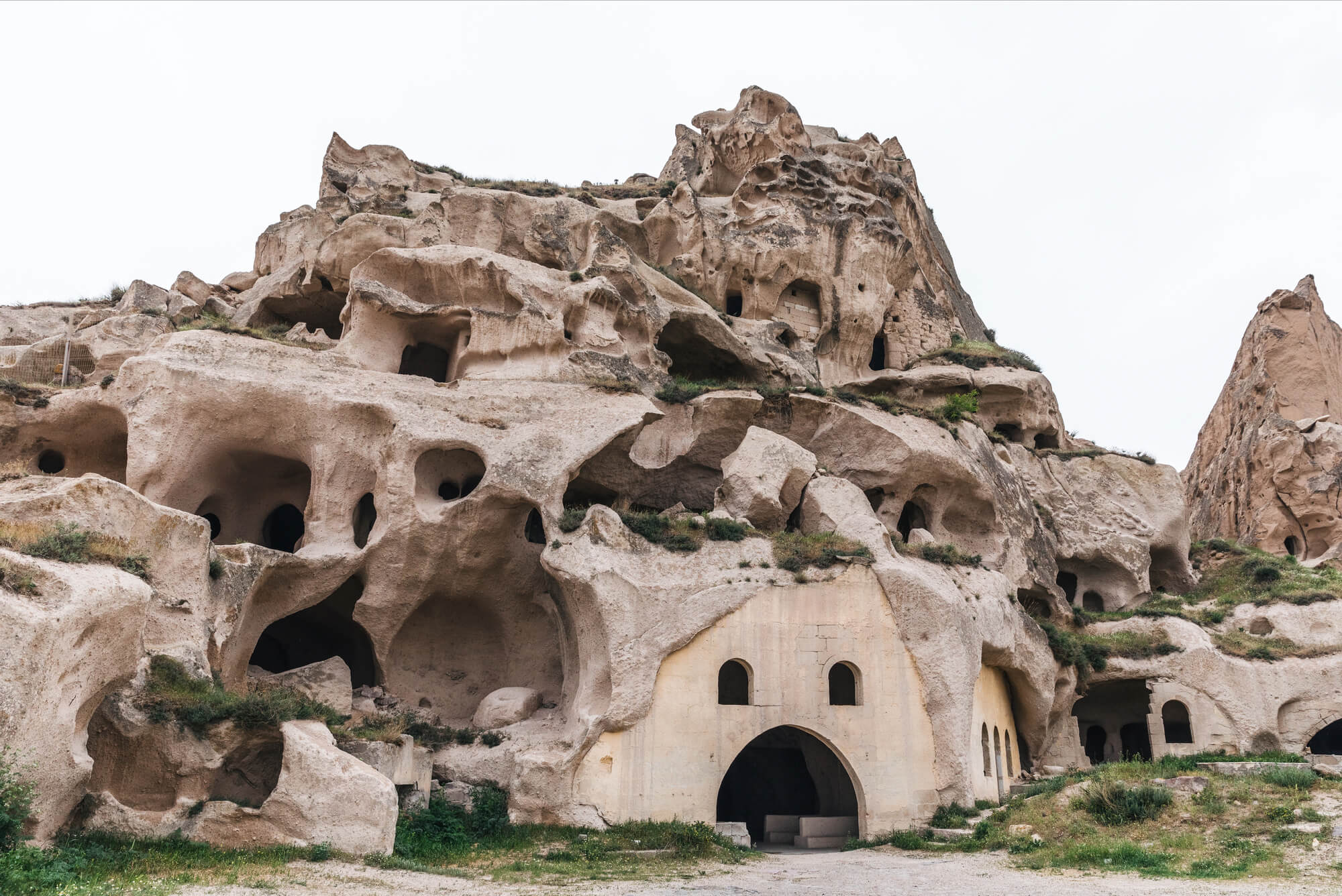
A resident of Derinkuyu in central Turkey was renovating his house in 1963 when he knocked through a wall and found a passage behind it. The tunnel led into an underground city carved from soft volcanic rock, reaching roughly 85 meters below the surface.
It had ventilation shafts, wells, stables, kitchens, chapels and massive rolling stone doors that could seal each level from inside. Historians believe it was expanded over many centuries and could shelter thousands of people along with their animals.
The site opened to visitors in 1969, and it remains one of the largest underground settlements known.
Concealed Shoes Near Chimneys and Doorways
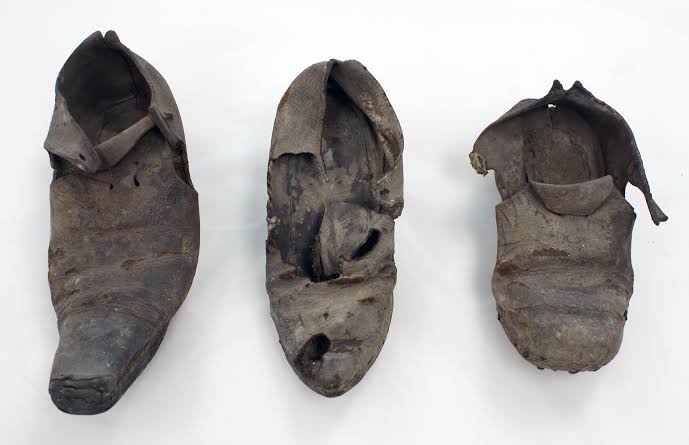
Builders across Britain, Europe and North America keep finding single, worn-out shoes hidden near chimneys, doorways and inside wall cavities. The Northampton Museum in England began recording them in the 1950s, and its Concealed Shoes Index has since logged well over a thousand examples.
Many belonged to children, and most date from the 17th to 19th centuries. The custom was almost never written down.
Historians think a shoe, which keeps the shape of its wearer, was meant to trap or deflect harm entering at the weakest points of a house, especially openings like hearths.
Dried Cats Sealed Inside Old Buildings

Mummified cats turn up in the walls, roofs and floors of old buildings, sometimes in poses that suggest they were placed deliberately rather than trapped by accident. In 1951, researcher Margaret Howard published a study of these finds in the journal Man under the blunt title Dried Cats.
Some animals probably did crawl into a gap and die, but others appear to have been positioned, occasionally alongside a rat or bird, as if hunting. One theory holds that they were meant to scare off vermin or bad luck.
Heritage specialists now ask owners to record such finds before disturbing them.
Witch Bottles Tucked Near the Hearth

Homeowners in 16th and 17th century England sometimes filled stoneware jugs with bent pins, nails, hair and urine, then sealed them near hearths and thresholds. These witch bottles were meant to trap a curse or turn it back on the person who cast it.
Many are German Bartmann jugs, called bellarmines in England, with a bearded face molded on the neck. Renovators still find them under hearths and inside walls.
When scientists examined a sealed example found in Greenwich in 2004, they identified bent pins, nail clippings, hair and traces of sulfur in the original contents.
Concealed Garments in Wall Cavities
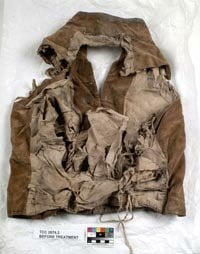
Worn clothing turns up behind old walls as well, including doublets, bodices, gloves and children’s caps, often stuffed into gaps near chimneys and roof spaces. The Deliberately Concealed Garments Project, based at a leading textile conservation institute in England, set out in the late 1990s to catalog these finds.
Many of the garments are heavily patched and worn, which suggests they were hidden only after they had been used for years. Like concealed shoes, they may have been intended to ward off evil.
They also preserve everyday clothing that almost never survives in museum collections.
Tudor Paintings Under Plaster at Calverley Old Hall
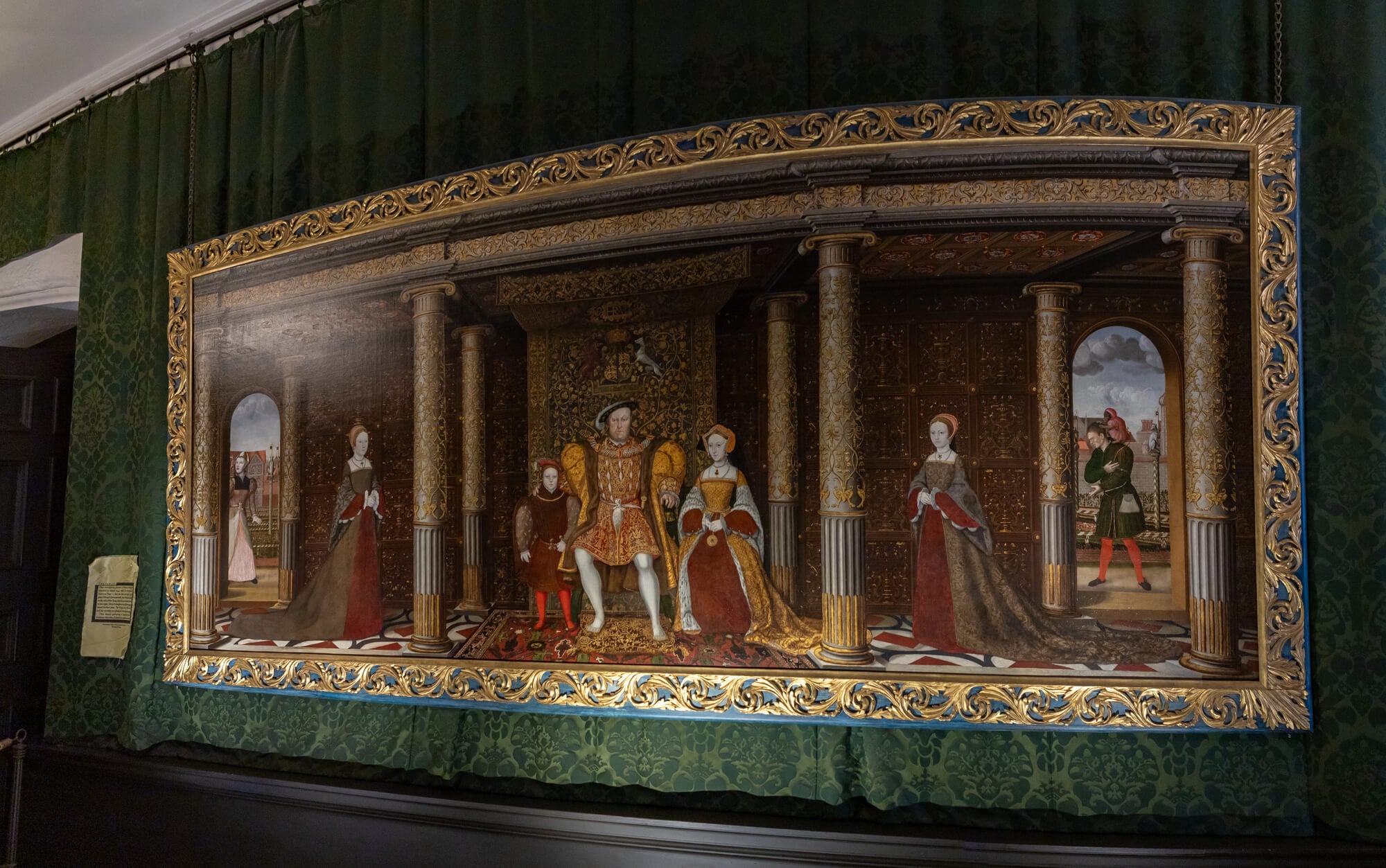
Conservators checking the timber frame of Calverley Old Hall, a medieval manor near Leeds under restoration by the Landmark Trust, lifted small patches of Victorian plaster in an unremarkable upstairs bedroom painted peach in the 1970s. Beneath it, they found Tudor wall paintings covering three walls from floor to ceiling.
The designs, in red, white and black, show birds, vines and little men in triangular hats in the grotesque style fashionable in the 16th century. Dating of the timber points to the middle or late 1500s.
The trust called it one of its most exciting finds ever.
Medieval Painting Under Wallpaper in Sherborne

Workers renovating a house called Tudor Rose on Long Street in Sherborne, Dorset, in 1962 peeled back heavy layers of wallpaper and found a medieval wall painting underneath. The image later became a prized item at the Sherborne Museum.
Local historian Katherine Barker has studied its imagery in detail and interpreted it as a scene involving a bishop, a devil and a boot. Painted walls were common in medieval English homes, but most were scraped off, whitewashed or papered over as tastes changed.
Survivals like this one exist largely because later owners covered them instead of destroying them.
Deliberately Hidden Painting at Cley-next-the-Sea

Renovations to a house in Cley-next-the-Sea, a village on the Norfolk coast, revealed a wall painting in 1976 that appeared to have been deliberately concealed. Specialists later compared its design to a woven wall hanging of about 1500 held at the Musee de Cluny in Paris.
The owner allowed archaeologists into his home to study and photograph it, and the find was published in the journal Norfolk Archaeology. Painted decoration was often hidden during periods of religious or stylistic change.
That kind of concealment explains why so many survivals surface only when someone opens a wall for practical reasons.
Razor Blades Behind the Medicine Cabinet

Many American bathrooms built from roughly the 1920s through the 1960s had medicine cabinets with a small slot in the back for disposing of used razor blades. The blades dropped into the wall cavity and were never seen again, at least by the people who used them.
Renovators opening those walls now find hundreds or even thousands of rusted blades piled between the studs. The system seemed tidy because nobody expected the wall to be opened in their lifetime.
It has become a known hazard for contractors, who learn to approach midcentury bathroom walls with gloves.
Letters From Ireland in a Casper House
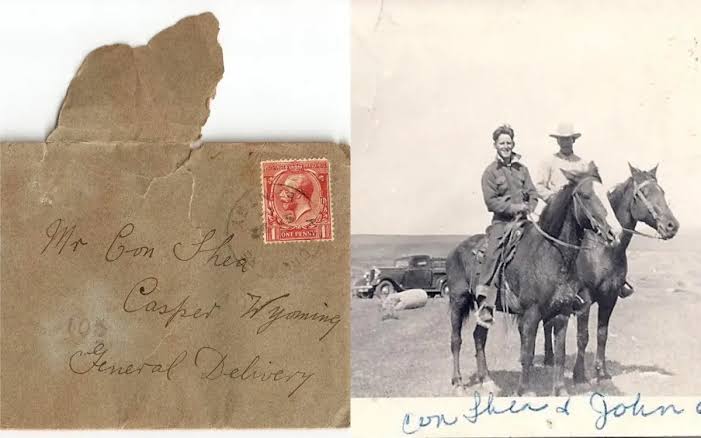
Wyoming homeowner Curtis Smith was cleaning up after renovation work on the roughly century-old house he had bought in Casper when he spotted a small blue envelope in the debris. It seemed to have been dropped into the wall while the house was being built.
The letter, like others he found, had been sent from Ireland to a successful sheep herder in Casper. Smith researched the recipient and posted the letters online through his Flickr account.
The posts eventually connected him with a distant relative of the builder, who could explain the family behind them.
Letters From the 1870s in an Elmira Duplex

Workers gutting a duplex at 600 Grove Street in Elmira, New York, found letters dated 1871 and 1879 tucked inside a wall, along with old newspapers, including a dirt-covered copy from Pittsburgh. In one letter from 1878, a husband tells his wife he is glad the baby is doing well and that money matters less than their health and happiness.
The house dates to at least the middle of the 1800s. Owner Ashley Reaume read the letters aloud for local reporters.
The envelopes had survived because the wall kept them dry and dark for about 150 years.
Forty Bags of Debris in Forest Hills

Erica Lyn, who lives in a 1920s house in the Forest Hills neighborhood of Queens, New York, was two days into a bathroom renovation in 2021 when she noticed a letter left on top of a light switch. It was from a mother to her son and dated nearly a century earlier.
When she asked the crew, they said they had found much more paper in the walls and thrown it away. Lyn then searched through 40 bags of construction debris and recovered two bags of letters, a photograph and several magazines, all of which had nearly gone to a landfill.
Nazi Documents Behind Plasterboard in Hagen
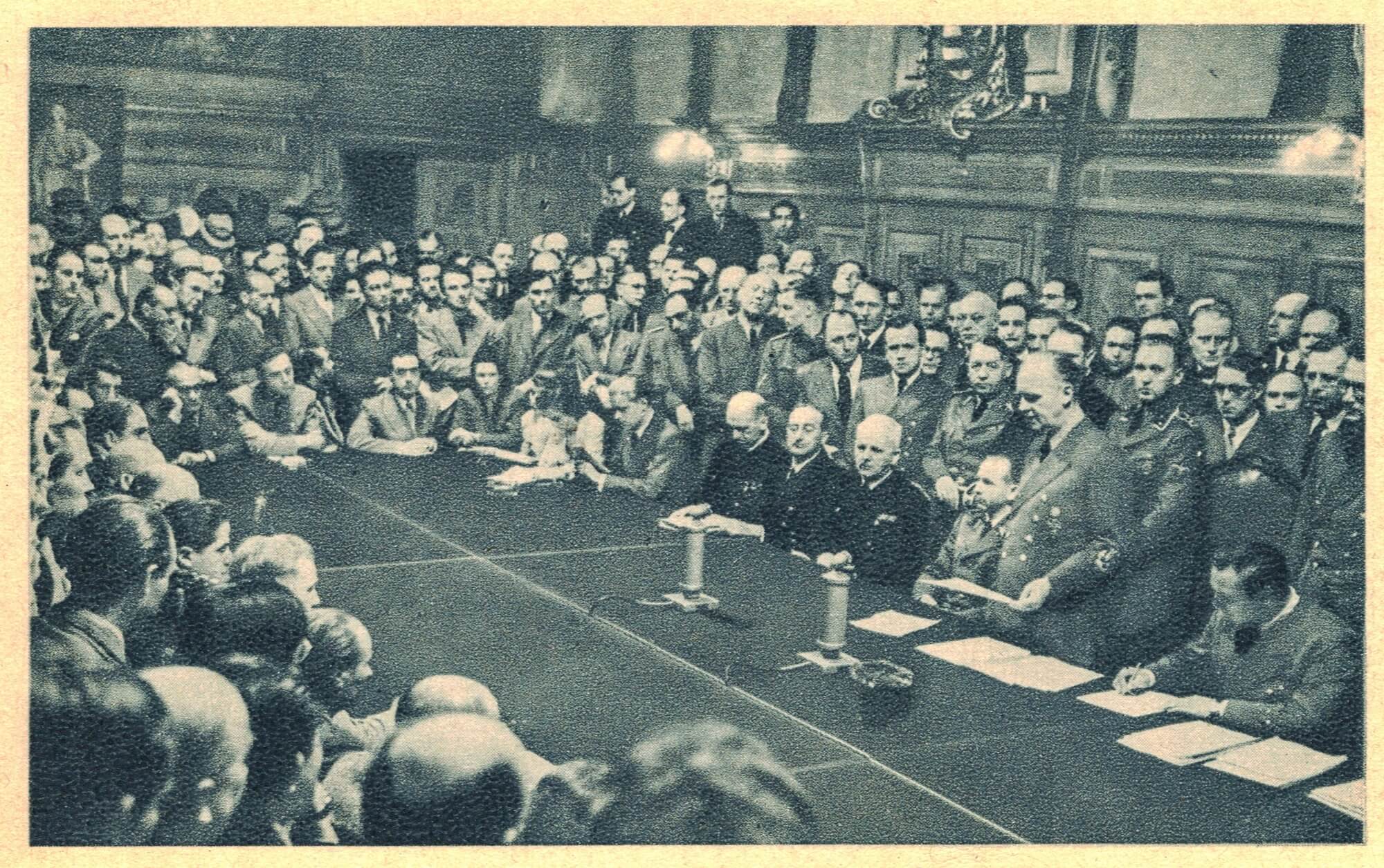
After severe flooding struck western Germany in 2021, history teacher Sebastian Yurtseven was cleaning up his aunt’s house in Hagen when he pulled away a rotten sheet of plasterboard. In a gap about a foot wide he found a newspaper from 1945, a portrait of Hitler, a revolver, gas masks, Nazi Party badges, letters and documents.
The building had housed a local office of the National Socialist People’s Welfare organization, which the family had not known when it bought the property in the 1960s. The city archivist believes members hid the material in a hurry as Allied troops arrived in April 1945.
A 1776 Note and an 1826 Report Card in New York

Carpenters removing a wall in a New York home in 1954 found a school report card dated 1826 along with a two-dollar note printed in 1776. The report card praised a pupil named Carolina Case for paying good attention to her studies.
The note was Continental currency, issued to fund the American Revolution, which lost so much value that the phrase not worth a Continental entered everyday speech. Neither item was particularly valuable in 1954.
Together, though, they offered a small, oddly personal record of the families who had lived in that house across more than a century.
Gold Coins in a Tin Can in Kansas

Two brothers renovating their Kansas home in March 1939 found a tin can hidden inside a wall that held 700 dollars in gold and another 100 dollars in coins, according to newspaper reports at the time. That sum would be worth many thousands of dollars today.
The discovery came with a complication. Since 1933, a presidential order had required Americans to turn in most gold coins, so a stash of hidden gold raised questions about who had hoarded it and why.
The most likely answer was a previous owner who trusted walls more than banks.
Two Hundred Love Letters in a Chicago Wall

Workers tearing down a house in Chicago in 1924 found more than 200 love letters hidden inside a wall, according to newspaper coverage of the discovery. The letters had been written about 40 years earlier, placing them in the 1880s.
Nobody knew why they had been hidden rather than kept in a drawer or burned. Secret courtships, disapproving parents or a simple lack of storage have all been suggested for similar finds.
Whatever the reason, the letters survived the house built around them. The walls had simply done a better job of keeping them than their owners did.
Forgotten Wall Safe in a Minneapolis Mansion

A new owner of a mansion in Minneapolis rediscovered a forgotten wall safe in 1942, and when it was finally opened it held a cache of jewelry and documents, as the Minneapolis Daily Times reported that June. Wall safes were popular in wealthy American homes in the late 1800s and early 1900s, often hidden behind paintings or paneling.
Many were later plastered over during remodeling and simply forgotten. Contractors still come across empty ones, sometimes with the door missing.
This one had been sealed up with its contents, which made it the rare exception.
Houses Keep Their Own Archives

Walls were never designed as storage, yet they turn out to be excellent at it. They are dark, dry and rarely opened, which is exactly what paper, cloth and metal need to survive.
A house can quietly hold the private life of a family long after every official record of that family has been lost.
The most striking pattern is how ordinary most of these finds were when they went in. A comic used as insulation, a worn-out shoe and a letter that slipped behind the studs all meant little to the people who left them.
Time did the work of turning household leftovers into history.
More from Go2Tutors!

- The Romanov Crown Jewels and Their Tragic Fate
- 13 Historical Mysteries That Science Still Can’t Solve
- Famous Hoaxes That Fooled the World for Years
- 15 Child Stars with Tragic Adult Lives
- 16 Famous Jewelry Pieces in History
Like Go2Tutors’s content? Follow us on MSN.