G.I. Joe Figures Collectors Pay For
Hasbro put the first GI Joe on shelves in 1964, a 12-inch soldier with a scar on his cheek and a footlocker full of gear sold separately. Eighteen years later the line came back at 3.75 inches tall, carded, and backed by a Marvel comic and a cartoon.
Two generations of kids wore those figures out in sandboxes, which is exactly why the survivors matter.
The figures below are the ones that move at auction and in collector trades today. Some are famous, some are obscure mail-away pieces, and all of them reward a careful look at the card, the box, and the joints.
The 1964 Hasbro Prototype
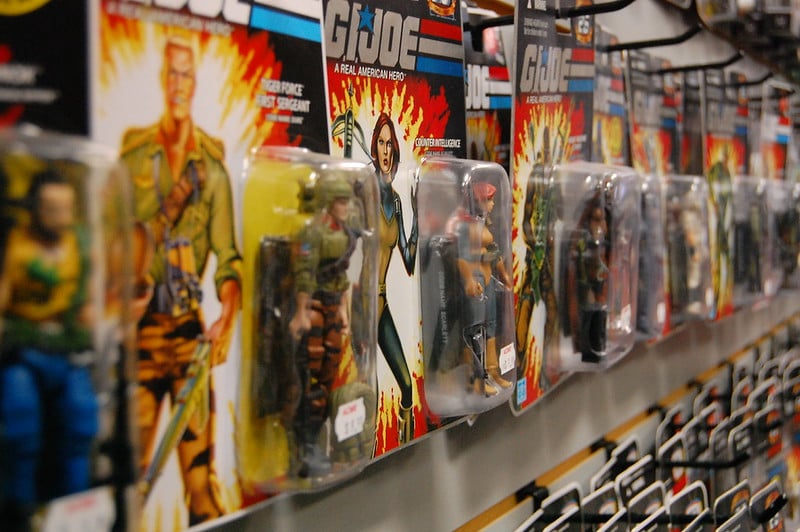
Before any production figure existed, Hasbro built a hand-finished prototype to pitch the idea of a poseable soldier for boys. That one-of-a-kind figure sold at auction for 200,000 dollars, and it remains the benchmark price for anything carrying the GI Joe name.
A related 1964 Navy prototype has brought 27,600 dollars, and a prototype dressed in a scuba suit about 6,600 dollars. These are museum pieces rather than flea market finds, and provenance matters more than paint.
Any supposed prototype without a documented chain of ownership from Hasbro or its designers should be treated as a fantasy piece until proven otherwise.
Boxed 1964 Action Soldier
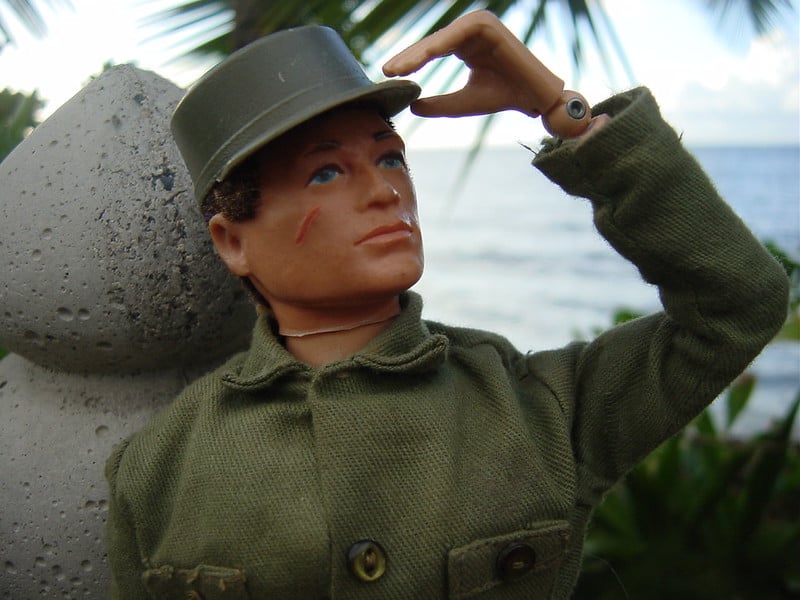
The Action Soldier was the Army branch of the original four figures, sold in a window box with fatigues, cap, boots, and a dog tag. First-year figures have the trademark stamp on the lower back and a distinctive scar on the right cheek that Hasbro added so the design could be protected.
Boxed examples of first-year figures sell for several hundred dollars, with loose, played-with soldiers often under 100. The box drives most of the value, and so does a figure whose elbows and knees still hold a pose instead of flopping.
Faded fatigues and missing dog tags drag the price down quickly.
Boxed 1964 Action Sailor
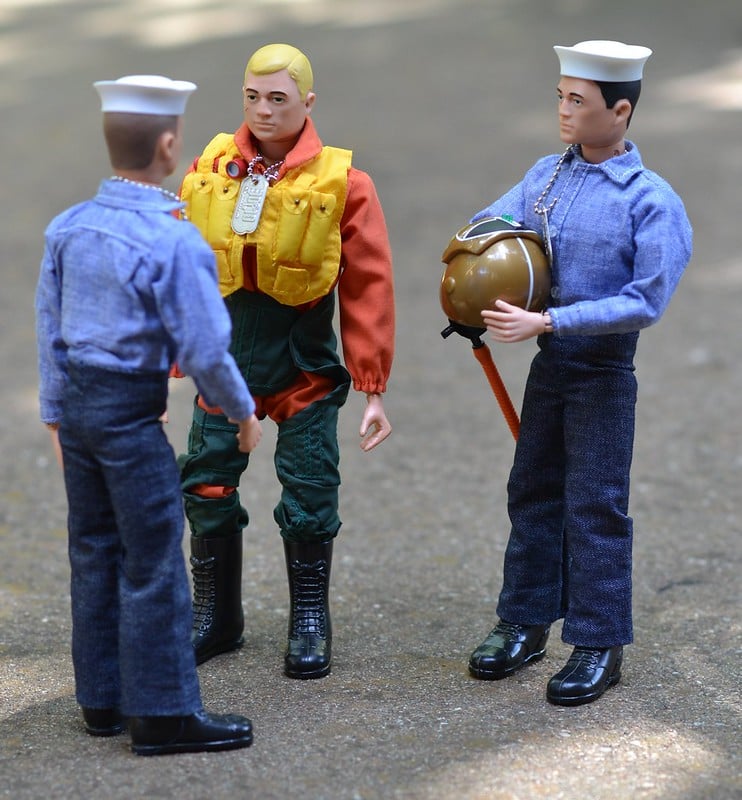
Dressed in a navy blue work uniform with a white cap, the Action Sailor represented one of the original four branches, and it tends to turn up less often than the soldier. A boxed 1964 Action Sailor has sold for about 335 dollars, and complete uniform sets add to that.
Collectors check for the original white sailor hat, which was easily lost, and for the manual that came folded in the box. Rusted rivets at the hip joints and cracked plastic at the shoulders are common on sailors stored in damp basements.
A clean figure with a crisp box and the small accessories intact can double the price of a bare one.
Boxed 1964 Action Pilot
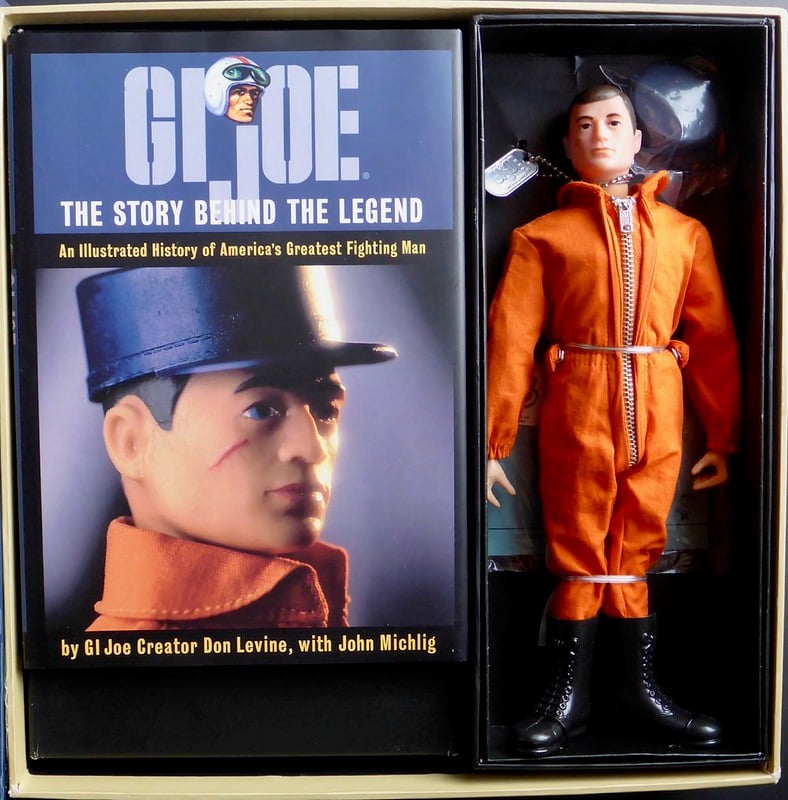
An orange jumpsuit set the Action Pilot apart, paired with a blue cap that made it the most visually distinct of the first four figures. Boxed examples typically sell in the low hundreds of dollars, and the fragile orange fabric tends to fade toward peach, which collectors notice at once.
The pilot sets that followed, including the Scramble flight suit and the Crash Crew gear, are harder to find complete than the figure itself. A pilot missing the cap loses a surprising share of value.
Buyers also watch for cracked necks, since the early hard plastic heads were prone to splitting where they met the body post.
Black Action Soldier From 1965
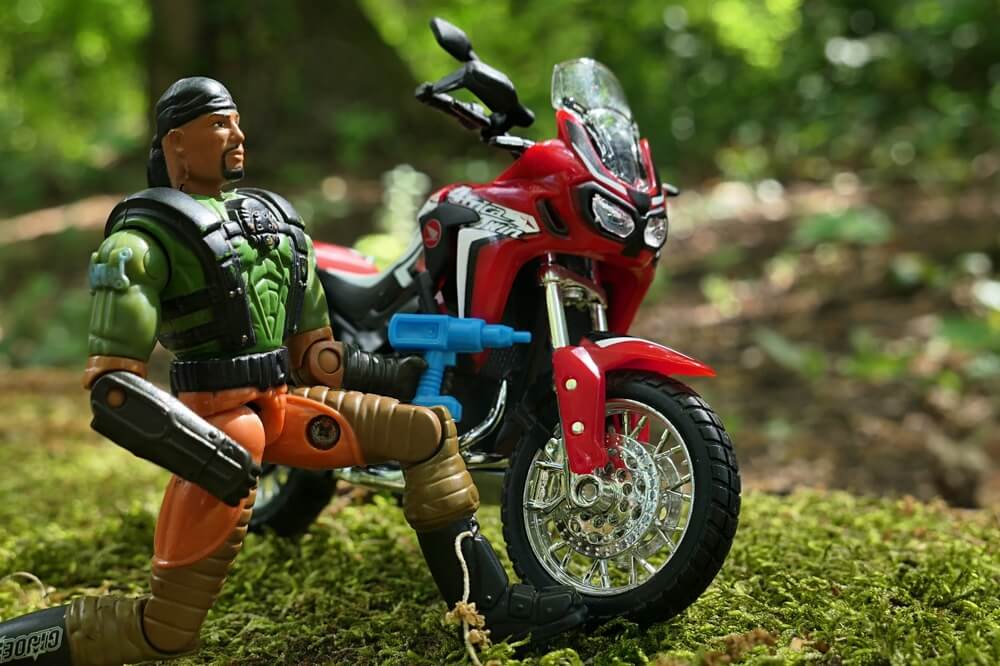
Hasbro issued an African American Action Soldier in 1965, using the same body and uniform as the standard release with a new head sculpt. Production was limited compared with the main figure, and boxed examples are among the harder 1960s pieces to locate.
Complete figures with the original box have sold for well into four figures, while loose examples typically sell for a few hundred dollars. Condition issues mirror the rest of the line, with brittle joints and faded fatigues the usual problems.
Collectors also study the trademark stamp, because reproduction heads on original bodies have circulated for years.
GI Nurse From 1967

Hasbro’s attempt at a female figure in the 1960s was the GI Nurse, released in 1967 with a white dress, cape, cap, and a medical kit. Girls did not buy her and boys ignored her, so she sold poorly and was dropped, which makes her one of the scarcest production figures in the vintage line.
A boxed 1967 GI Nurse sold for 4,200 dollars at Cordier Auctions, and loose figures with original uniform pieces still bring four figures. Reproduction dresses and accessories are widespread, so sellers must document originals carefully.
The medical bag and the tiny crutches are nearly impossible to find complete.
Talking Action Soldier
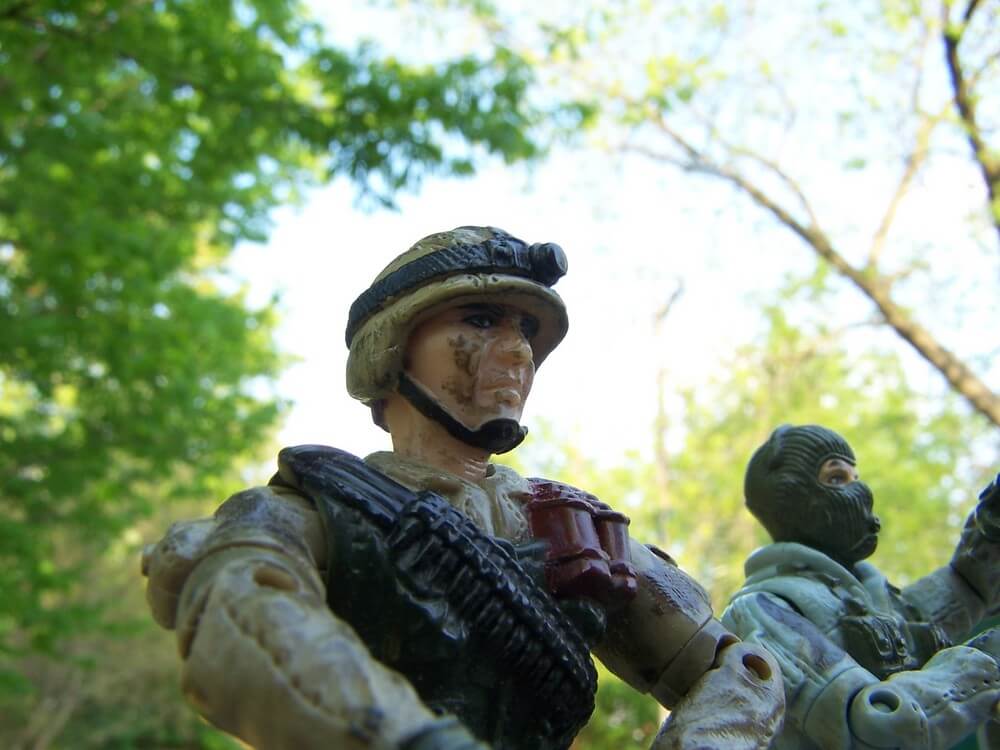
Hasbro added a pull-string voice box to the figure in 1967, and the Talking Action Soldier spoke recorded phrases through a speaker grille in its chest. Working examples are much rarer than mute ones, because the string mechanism and the record inside wore out or rusted.
Boxed talking figures in working order have sold for several hundred dollars, with silent examples at a fraction of that. The talking body is also heavier and stiffer at the waist, which collectors use to spot it when the chest is covered by a shirt.
Later Adventure Team Talking Commanders used the same mechanism with new recorded lines.
Adventure Team Kung Fu Grip
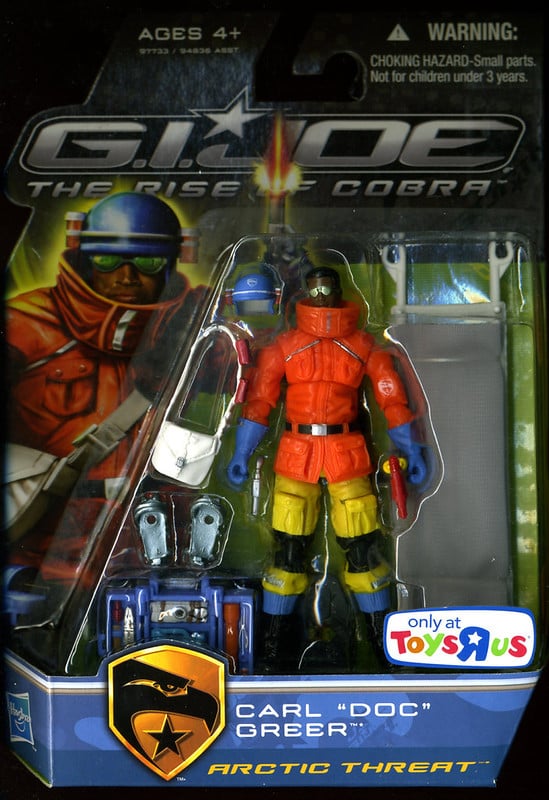
By 1974 the line had shifted from military to adventure, and Hasbro gave the Adventure Team figures flexible rubber hands marketed as Kung Fu Grip. The hands could hold accessories without pegs, but the soft plastic hardened and cracked with age, so figures with supple, intact fingers are worth considerably more.
Complete boxed Kung Fu Grip figures typically sell for 150 to 400 dollars depending on the set. The fuzzy flocked hair and beard introduced in 1970 also wear down at the high points, and bald patches cut the value.
Working Kung Fu Grip hands are the detail that collectors check first.
Eagle Eyes Figures From 1976
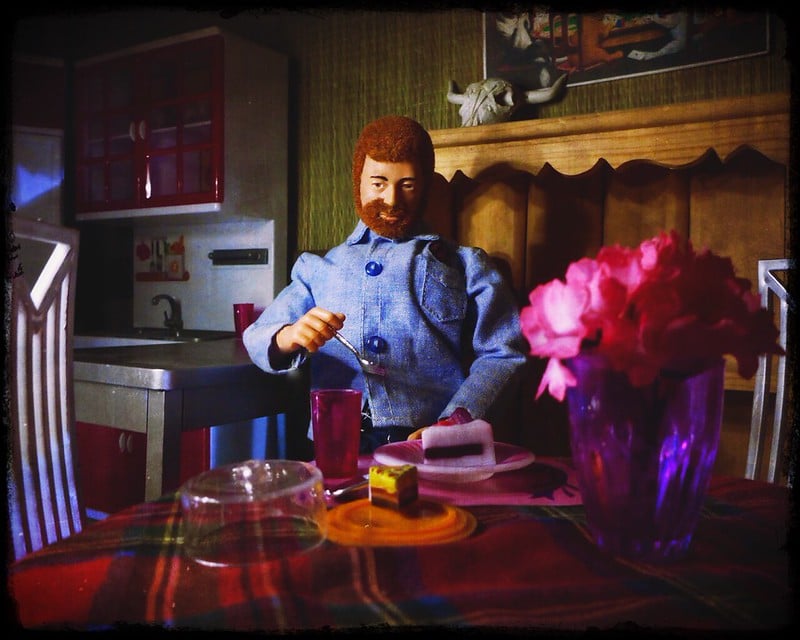
Eagle Eyes figures from 1976 had a lever on the back of the head that moved the eyes side to side, a late attempt to keep the 12-inch line alive against smaller toys. A moving-eyes figure has sold for 475 dollars, and boxed examples in working order sit at the upper end of the Adventure Team range.
The mechanism can seize, and the eyes sometimes stick at one extreme, which drops the price sharply. These figures also shipped with the Kung Fu Grip hands, so the usual cracking applies.
Eagle Eyes was among the last major innovations before Hasbro shrank the figure.
Mike Power, Atomic Man
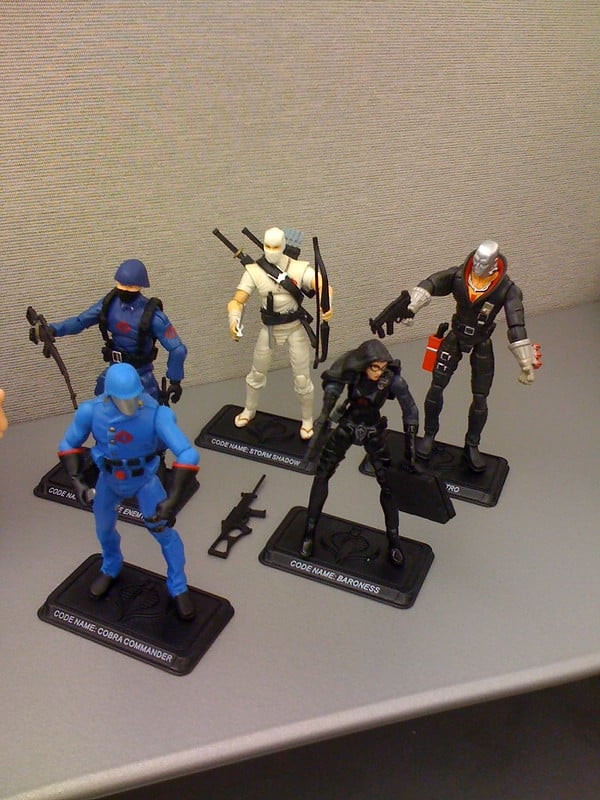
Released in 1975, Mike Power was a bionic adventurer with a clear plastic arm and leg showing internal mechanics, plus a spinning hand powered by a crank on the arm. The figure rode the popularity of television cyborgs without using any licensed name.
Boxed examples typically sell for 200 to 500 dollars, and the clear limbs are prone to yellowing and stress cracks. A functioning spinning hand matters a great deal to buyers.
Mike Power also came with distinctive packaging art, and the box is frequently missing or crushed, so a square, bright box commands a premium over a loose figure.
Carded 1982 Straight-Arm Snake Eyes
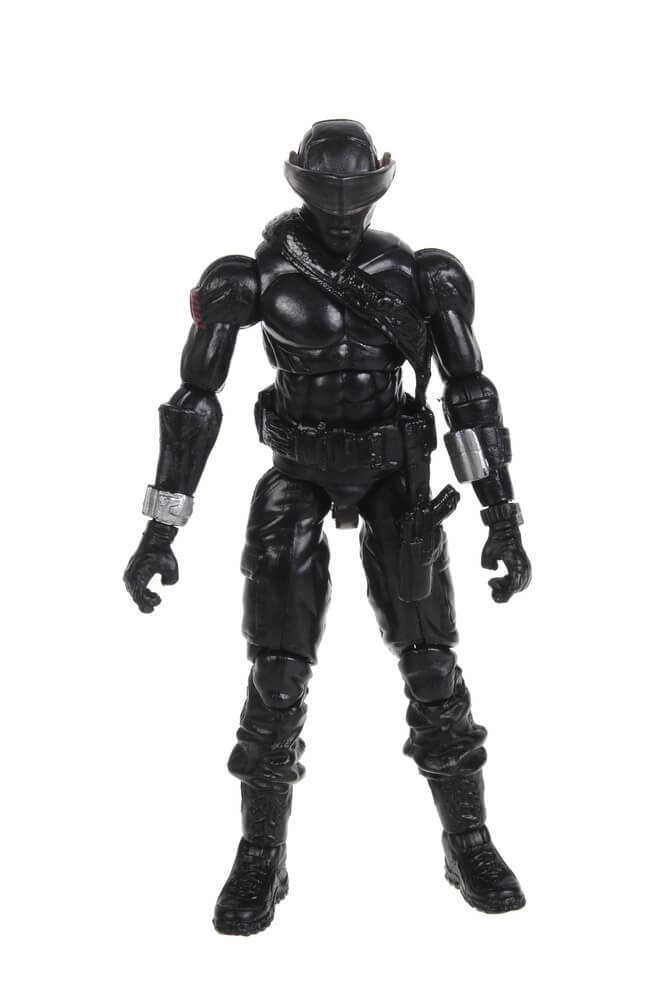
Hasbro’s 1982 relaunch introduced 11 carded 3.75-inch figures, and Snake Eyes, a silent commando in black, became the breakout character. First-year figures had straight arms, replaced by swivel-arm versions in 1983, so straight-arm carded examples are the scarcest form.
A carded 1982 straight-arm Snake Eyes sold for 26,400 dollars at Heritage Auctions, a figure that stunned even longtime collectors. Loose straight-arm figures sell for far less, and the black plastic shows scuffs and loose joints easily.
Card condition, bubble clarity, and whether the bubble has yellowed drive the value of sealed examples more than anything else.
Mickey Mouse Cobra Commander
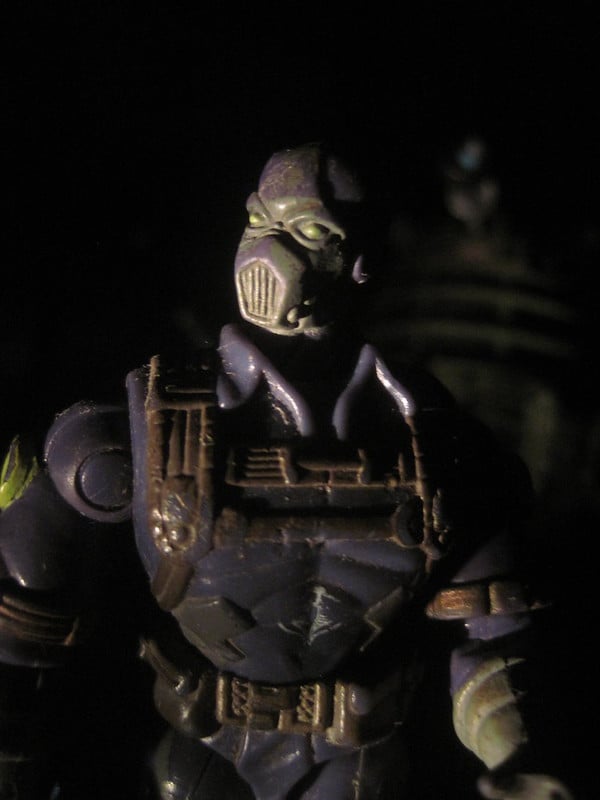
Cobra Commander was offered in 1982 only by mail order, and early figures carried a crude Cobra sigil on the chest that collectors nicknamed the Mickey Mouse logo because the sloppy shape resembled the cartoon ears. Later runs fixed the emblem, making the early version a sought-after variant.
Loose Mickey Mouse Cobra Commanders typically sell for 325 to 525 dollars, well above the standard figure. The chrome face plate wears through to the base plastic, and that paint loss shows up in every photo.
Because the figure shipped in a plain mailer, there is no card to grade, so the figure itself carries the value.
Scarlett on a 1982 Card
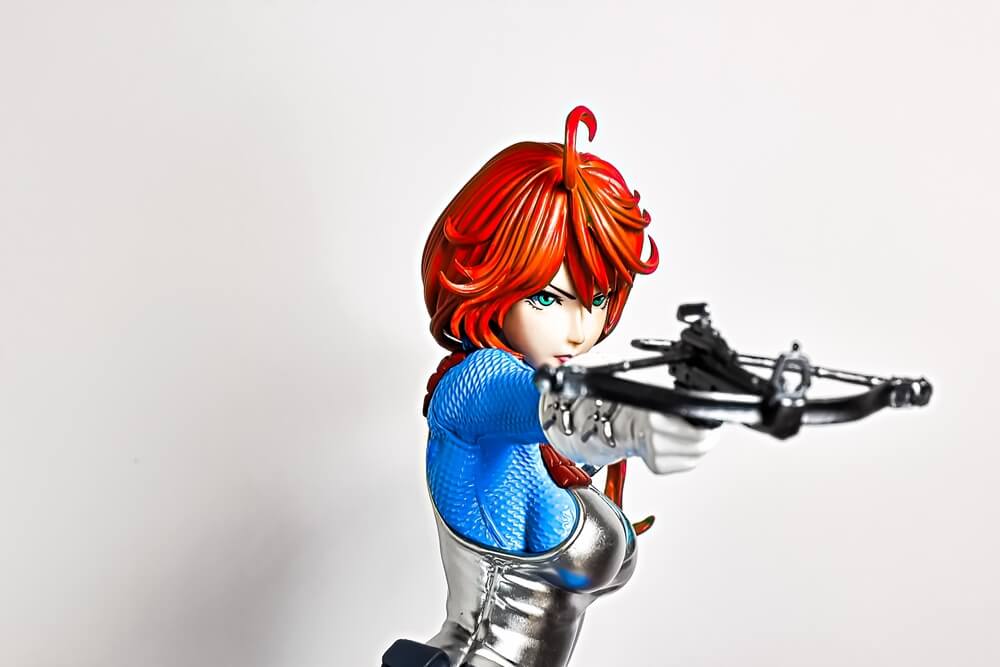
Scarlett was the only female figure in the 1982 lineup, a counterintelligence agent in a tan bodysuit with a crossbow. Carded 1982 straight-arm Scarletts have sold for about 1,400 to 1,500 dollars, and the figure holds value because she was produced in smaller numbers than the soldiers around her.
Loose examples often have bent or snapped crossbow arms and worn paint on the red hair. The 1982 cardback art and the file card on the back both matter to buyers, and a card with the file card cut away loses a noticeable share of value.
Swivel-arm 1983 reissues are easier to find and cheaper.
Cobra Missile Command Headquarters
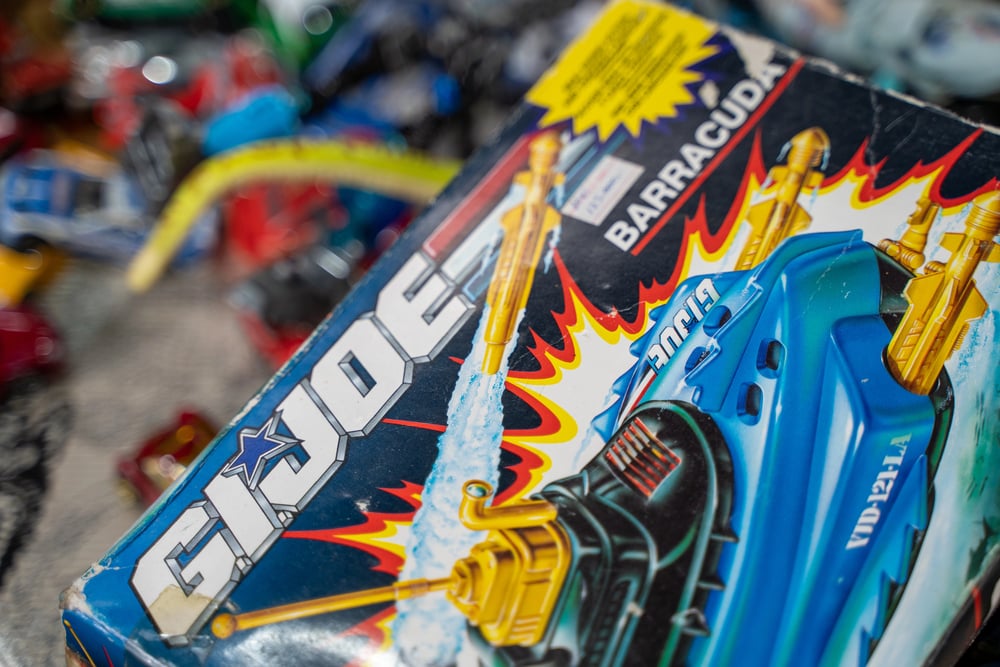
Sold as a 1982 Sears exclusive, the Cobra Missile Command Headquarters was a playset made of printed cardboard with plastic components, and it included three Cobra figures. Because cardboard playsets were thrown out or crushed, intact examples are among the hardest early Real American Hero items to find.
A complete set has sold for about 1,400 dollars, and sealed examples go higher. The cardboard shows water stains, splits at the fold lines, and missing tabs, each of which lowers the price.
The included figures alone are worth hunting, since they were variants of the standard Cobra troopers.
Carded 1983 Destro
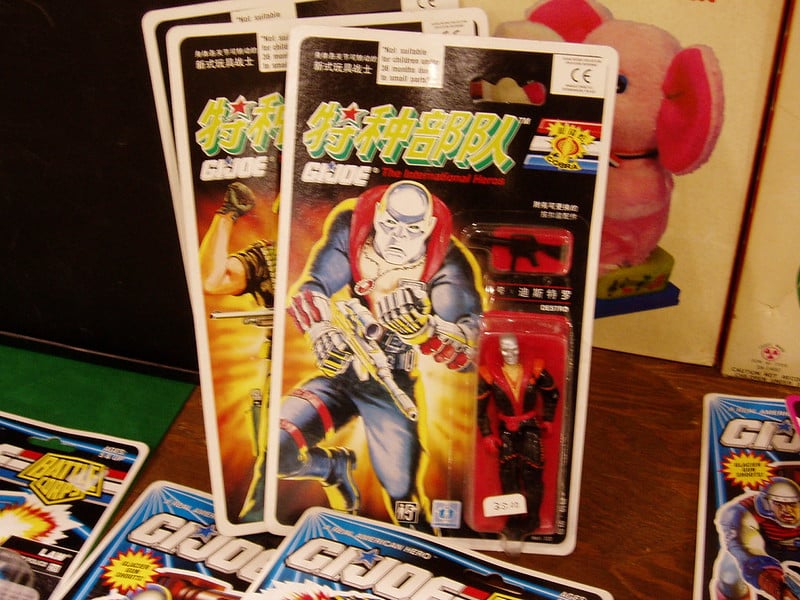
Destro debuted in 1983 as the chrome-faced arms dealer behind Cobra, and his vacuum-plated silver head is both his trademark and his weak point. The plating flakes off the sculpted mask with handling, so loose figures with bright, unflaked heads are scarce.
Carded 1983 Destros typically sell for several hundred dollars and climb higher with a clean card and clear bubble. The figure came with a briefcase and a pistol, both commonly lost.
Collectors also watch the red medallion on the chest, where paint wear on the raised detail is the first sign of a figure that saw heavy play.
Firefly, Cobra Saboteur
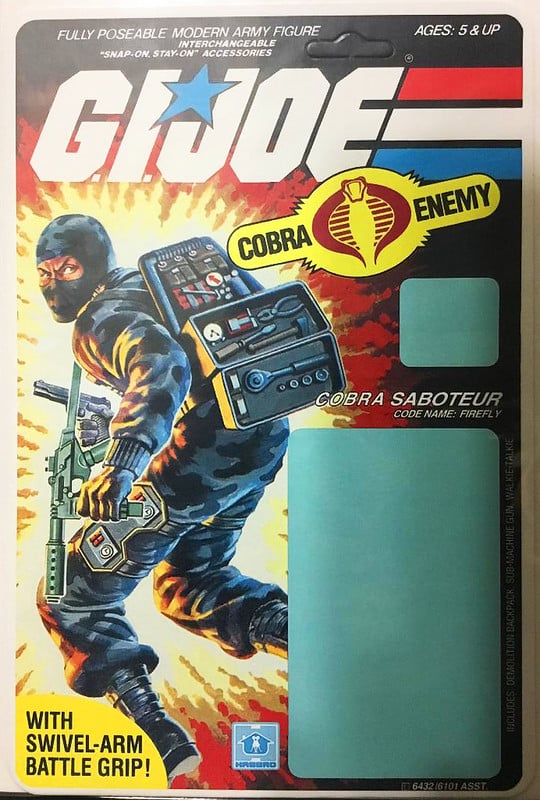
Firefly, the Cobra saboteur in gray urban camouflage, arrived in 1984 and became a fan favorite in the line. Carded examples have sold for about 2,000 dollars, and even loose complete figures with the phone, backpack, and tiny tool pouch hold value.
The gray camouflage paint is thin on the raised seams, and the file card describes a mercenary whose real identity is unknown, which fed the character’s cult. The 1984 cardback with the full Cobra lineup on the back is the version collectors want.
Repainted reproduction accessories are common, so originals are checked closely.
Carded 1984 Storm Shadow

Storm Shadow, the white-clad ninja, was also a 1984 release, and his popularity with kids means that pristine examples are rare because most were played with hard. A carded 1984 Storm Shadow has sold for about 4,100 dollars, putting him near the top of the 3.75-inch figures.
The white plastic yellows with age and sun exposure, which is the first thing collectors inspect. His accessories included a bow, swords, and a backpack, all easily lost.
Figures with bright white limbs and tight joints command a steep premium over yellowed ones, regardless of the card.
Baroness, Cobra Intelligence Officer

Released in 1984 as the Cobra Intelligence Officer, the Baroness was an early female villain in the line and one of the few female figures made before the 1990s. Her black uniform and glasses made the figure distinctive, and the glasses are molded on, so they do not get lost.
Carded 1984 Baroness figures typically sell for several hundred dollars and more with a clean card, while loose examples depend on the rifle and backpack being present. The black plastic shows scuffs at the knees and elbows, and the silver Cobra emblem on the chest wears away.
Her file card has been reprinted many times over the years.
Zartan, Master of Disguise
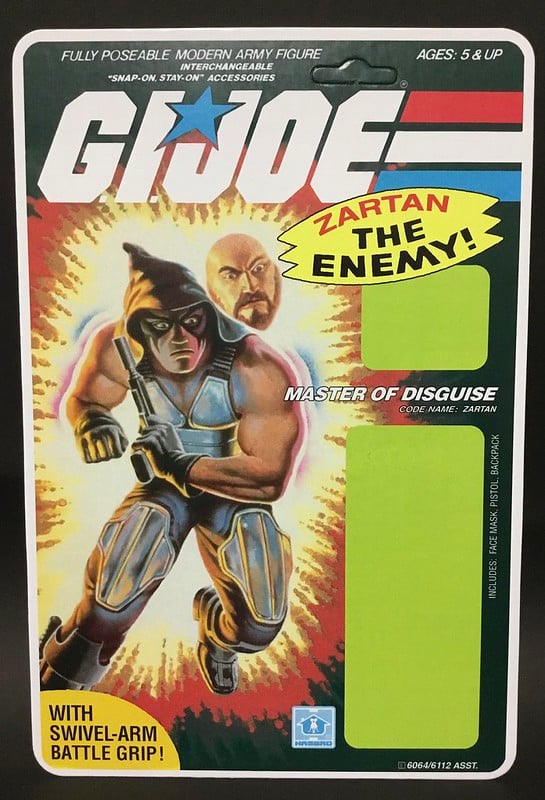
Zartan arrived in 1984 with a gimmick that set him apart, since his skin plastic changed color in sunlight, shifting to a bluish tone outdoors. He came with a Chameleon swamp skier vehicle, removable chest and leg armor, and a face mask.
Complete examples with all armor and the mask typically sell for 100 to 300 dollars loose, and boxed sets higher. The color-change plastic can become permanently discolored, which collectors regard as damage rather than a feature.
His original file card drew complaints for its description of his mental state and was revised, which makes first-printing cards a point of interest for buyers.
Crimson Guard Elite Trooper
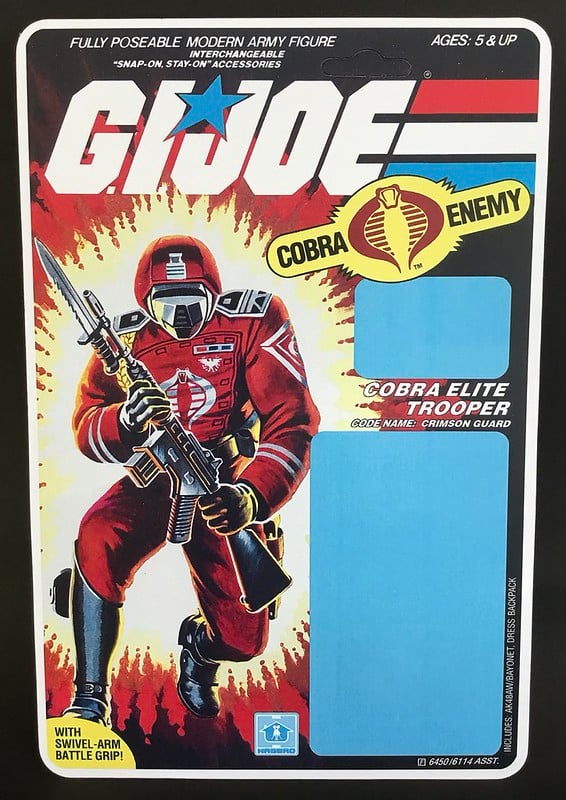
Cobra’s elite trooper, the Crimson Guard, was released in 1985 in a red uniform with a chrome helmet and bayonet rifle. Because kids wanted entire squads of them, loose Crimson Guards are plentiful, but carded examples with uncracked bubbles are far scarcer.
Carded figures typically sell for several hundred dollars, and army builders keep demand steady for even loose figures. The silver helmet paint scuffs at the crown and the red plastic fades unevenly if displayed near a window.
The bayonet on the rifle snaps off at the base, so complete weapons add to the price.
USS Flagg Aircraft Carrier
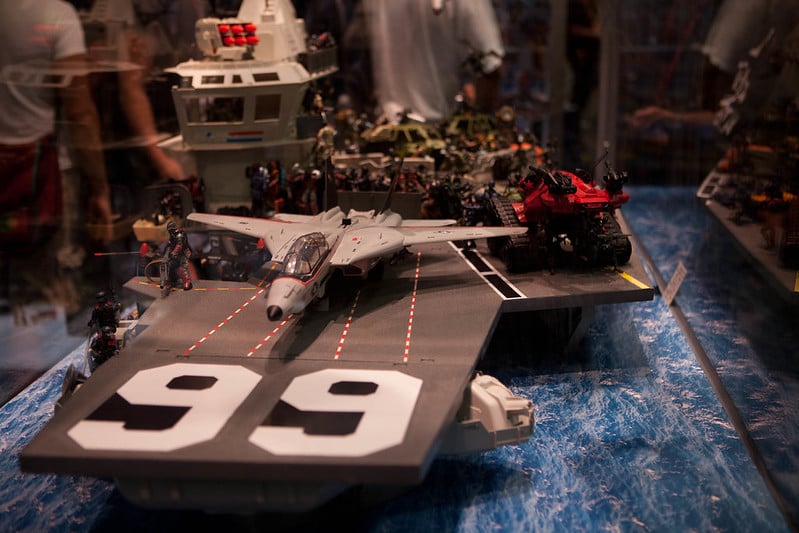
Stretching more than seven feet long when assembled, the 1985 USS Flagg was a scale aircraft carrier with an elevator, a working intercom, and a Keel-Haul admiral figure. Its size meant that few households kept it intact, and complete examples with all the small parts have sold for well into four figures, with sealed boxes far higher.
Missing fence railings, stickers that have peeled, and cracked hull panels are typical faults. The original box, a huge piece of printed cardboard, is scarce on its own.
Collectors with room to display one treat the Flagg as the centerpiece of a vintage collection.
Sgt. Slaughter Mail-In Figure
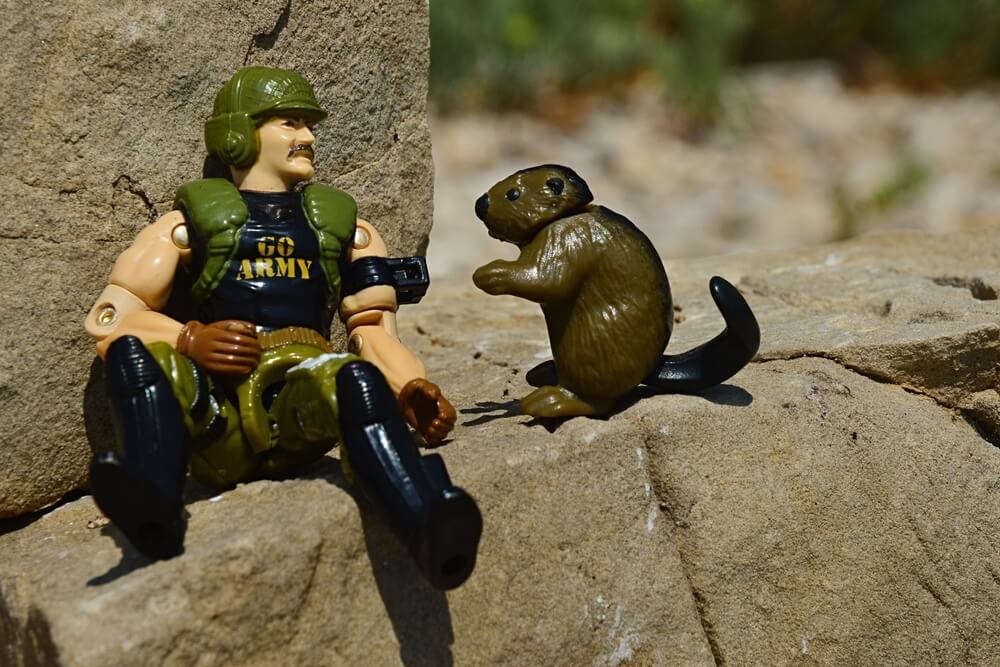
A Sgt. Slaughter figure was offered by mail in 1985, based on the professional wrestler who voiced himself in the cartoon, and the figure came with a whistle and a baton. A carded version followed in 1986 with the Triple T tank, but the mail-in figure in its plain packaging is the one collectors seek.
Loose figures typically sell for 30 to 80 dollars, with sealed mail-in bags higher. The figure’s drill instructor hat has sharp edges that chip, and the tiny whistle is almost always missing.
Slaughter is among a small group of real people turned into a vintage GI Joe figure.
Starduster Mail-Away
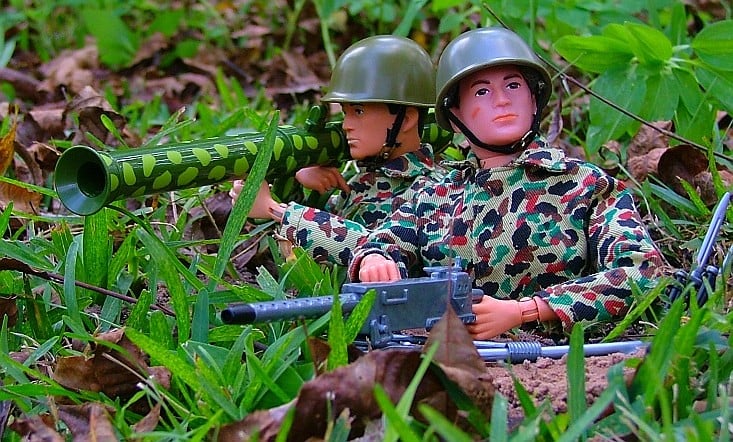
Starduster was a 1987 mail-away jet pack trooper built from parts of existing figures, available through an offer linked to GI Joe promotions. Because the figure never appeared on a store card, examples sealed in the original mailer bag are the most valuable form, and loose complete figures with the jet pack and rifle are also sought after.
Prices typically run from 50 to 150 dollars depending on completeness, and sealed examples can reach higher. The figure’s parts were borrowed from existing molds, so a Starduster is identified by the combination rather than any single piece. Its obscurity is exactly what collectors like.
Defiant Space Vehicle Launch Complex
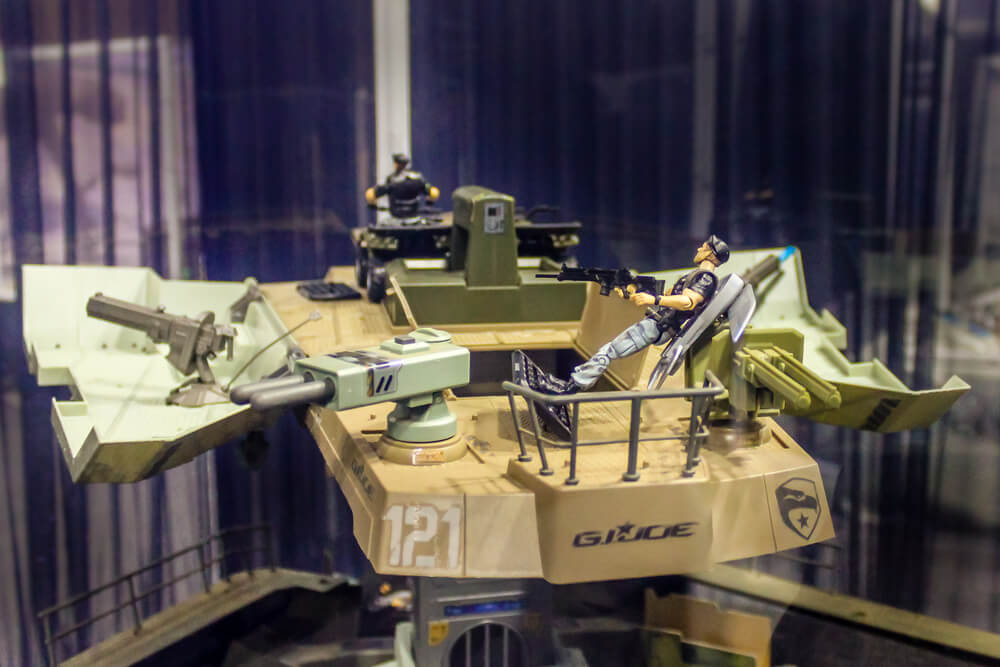
Pairing a space shuttle with a gantry crawler, the 1987 Defiant playset ranks with the USS Flagg among the biggest items in the vintage line. An uncirculated sealed Defiant sold for 57,596 dollars, a record for the toy, and another sealed example brought more than 26,000 dollars at auction.
Complete loose examples typically sell for well over 1,000 dollars, and even partial sets command interest because parts are hard to source. Peeling decals, stress-whitened plastic at the hinges, and missing tiny ladders are common.
Boxed examples carry a premium that rises with every intact flap.
Hall of Fame Duke From 1991
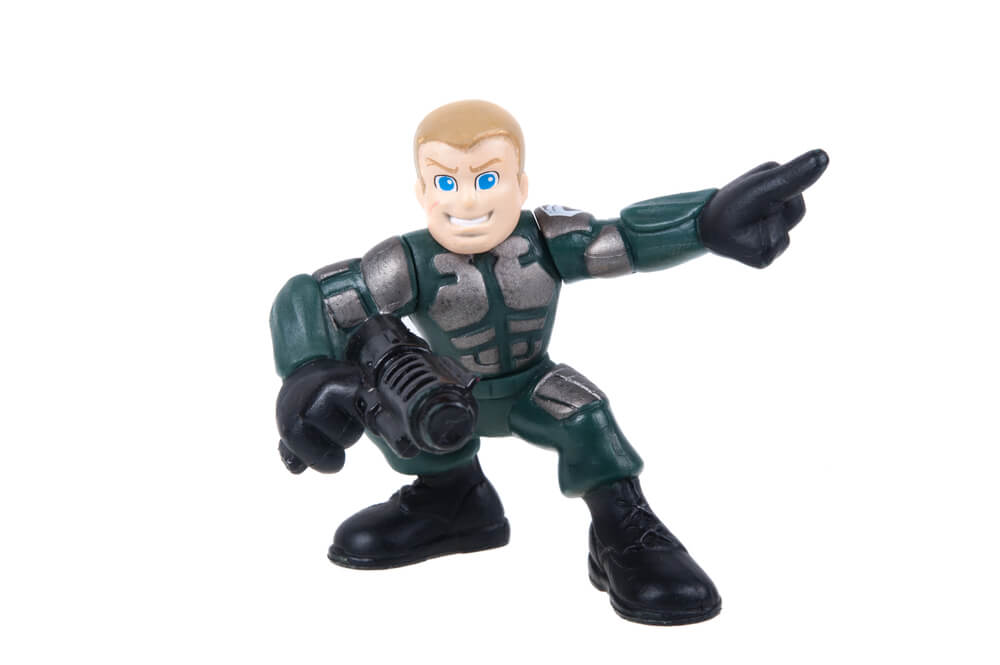
Hasbro revived the 12-inch format in 1991 with the Hall of Fame line, launching with a Duke figure that collectors regard as the flagship of the series. Sealed first-release Dukes typically sell for 60 to 150 dollars, far below vintage 1960s prices but rising as 1990s collectors mature.
The figure included an electronic sound feature powered by batteries, and corroded battery compartments are a common fault that ruins the box insert. The window box yellows and the inner tray cracks, so a crisp sealed example matters more than the figure.
Later Hall of Fame figures with molded bodies are less desirable than this launch piece.
Cardbacks, Boxes, and the Long Game
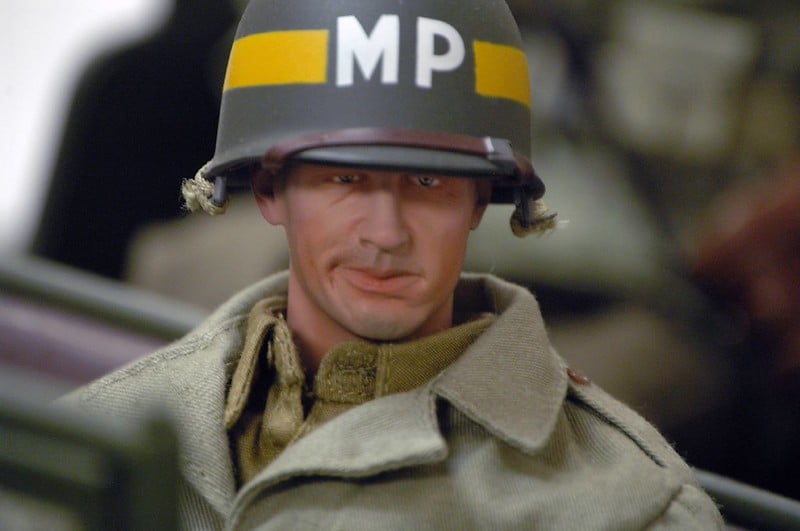
Across sixty years of production, the pattern repeats: the figure survives, the packaging does not. A carded 1982 Snake Eyes is worth more than a loose one by a factor that dwarfs the difference between a mint and a worn figure.
The same holds for the 1964 window boxes and the enormous cartons that held the Flagg and the Defiant. Collectors learned to value cardboard because cardboard is what children destroyed first.
That lesson shapes how the market treats every GI Joe now, from prototypes to mail-away bags. Authentication, completeness, and the state of a thin plastic bubble decide whether a figure is a nostalgic trinket or a serious asset.
The soldiers and villains themselves were built to be played with, and most were. The rare ones that escaped a childhood are the ones that pay.
More from Go2T
utors!

- The Romanov Crown Jewels and Their Tragic Fate
- 13 Historical Mysteries That Science Still Can’t Solve
- Famous Hoaxes That Fooled the World for Years
- 15 Child Stars with Tragic Adult Lives
- 16 Famous Jewelry Pieces in History
Like Go2Tutors’s content? Follow us on MSN.