28 Classic Halloween Movies From Decades Past
Every October, the same handful of films come back out of the cabinet, and nobody seems to mind. Some were shot in silence on German sets a century ago, others were made on modest budgets in Pennsylvania, and a few were summer releases that only found their audience once the leaves turned.
What they share is durability. Trends in horror and comedy have come and gone, but these particular films keep earning their place on the couch when the porch light goes on.
Nosferatu and the Lawsuit That Nearly Erased It
F. W.
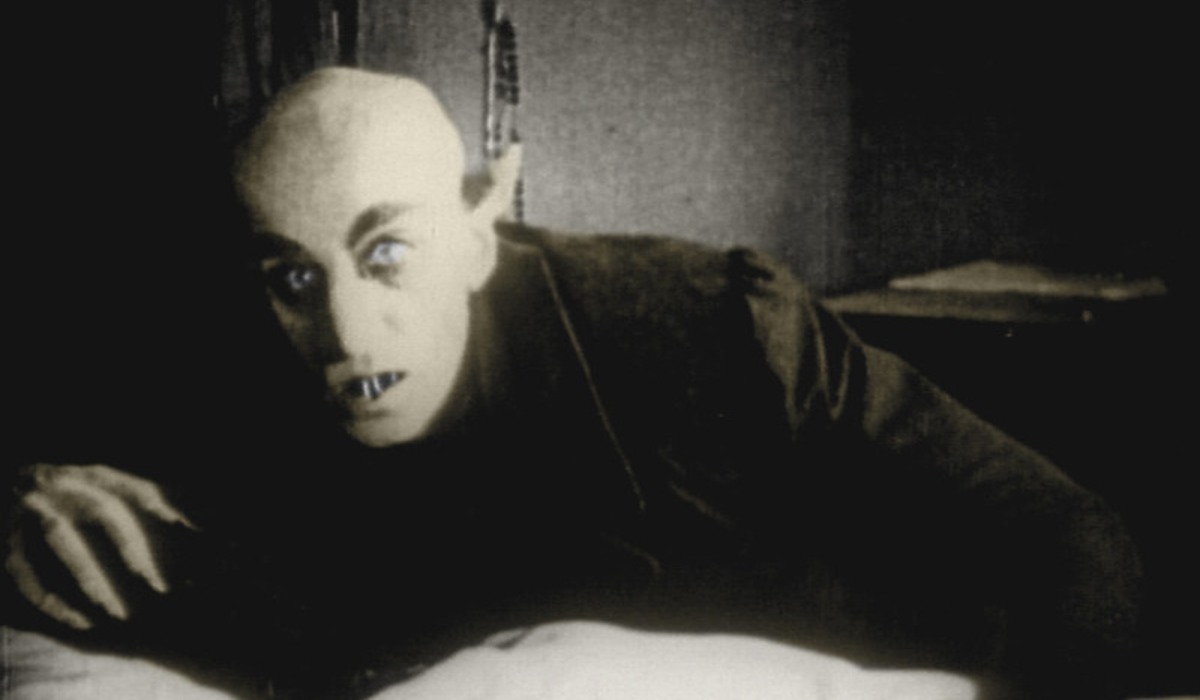
Murnau’s silent vampire picture from 1922 was produced by Prana Film, a small German company that did not survive the legal dispute over the film. The studio had adapted Bram Stoker’s novel without permission, swapping Count Dracula for Count Orlok and moving the action to a fictional German town.
Stoker’s widow sued, and a court ordered every print destroyed, though the order was never fully carried out. Copies had already slipped abroad, and the film survived through those surviving prints.
Max Schreck’s bald, rat-toothed Orlok, with his long fingers and shadow creeping up a staircase, remains one of the most recognizable images in horror more than a century later.
Dracula With Bela Lugosi in the Cape
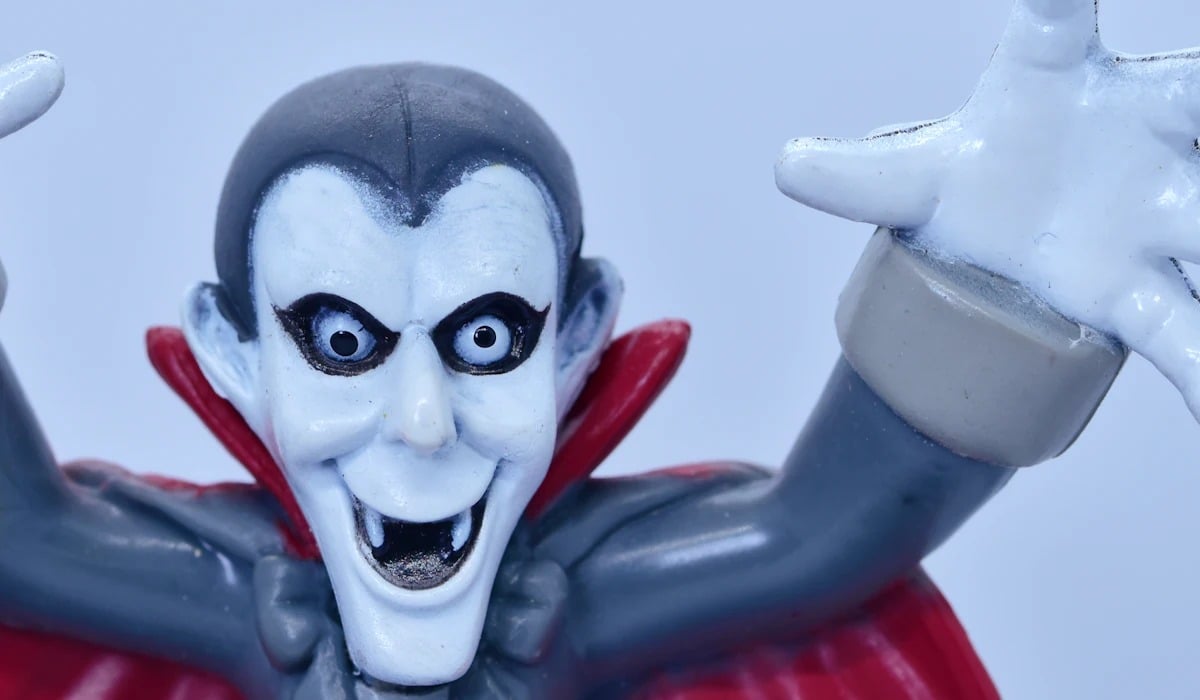
Universal released Tod Browning’s Dracula in February 1931, with Bela Lugosi reprising the role he had played on Broadway. The film helped launch the studio’s long run of monster pictures and made Lugosi’s Hungarian accent one of the defining sounds of the cinematic vampire for generations of imitators.
A lesser-known detail involves the Spanish-language version shot at night on the same sets, with a different cast led by Carlos Villarías, during the same production period. That nighttime crew studied the daytime footage and often found more dynamic angles.
Many film scholars consider the Spanish version more visually dynamic and, in some respects, better directed, though Lugosi’s performance keeps the English one on Halloween schedules.
Frankenstein and Boris Karloff Under the Makeup
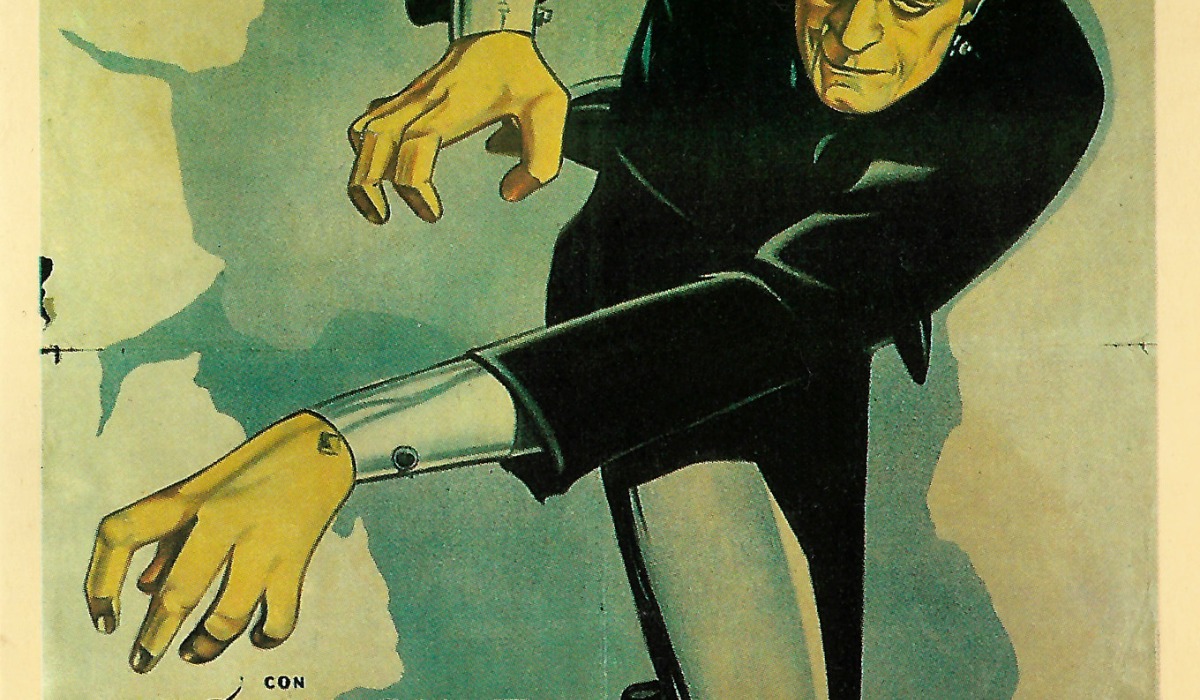
James Whale’s Frankenstein, released by Universal in November 1931, turned a little-known British actor named Boris Karloff into a household name. Makeup artist Jack Pierce designed the flat skull, heavy brow and neck electrodes that have defined the monster ever since, and the look took hours to apply each morning.
Universal listed the monster’s performer as a question mark in the opening credits, helping create an air of mystery around Karloff’s identity. Karloff played the creature with little dialogue, relying on gesture and a pleading expression that turned a killer into a figure of sympathy.
The film’s success helped convince the studio that horror could be a reliable business, and a sequel followed in 1935.
Bride of Frankenstein and the Lightning Hair
Universal brought James Whale back for Bride of Frankenstein in 1935, and the sequel is often rated above the original. Elsa Lanchester played two roles, appearing as author Mary Shelley in a prologue and then as the Bride, whose upswept hair with white streaks became a costume-shop staple.
The Bride is on screen for only a few minutes near the end, which makes her lasting fame all the more striking. Franz Waxman’s score gave the film an operatic sweep and helped distinguish it from earlier Universal monster movies.
Whale leaned into dark humor and camp, and the eccentric Dr. Pretorius, played by Ernest Thesiger, nearly steals the picture from the monster.
The Wolf Man and the Rules of Lycanthropy
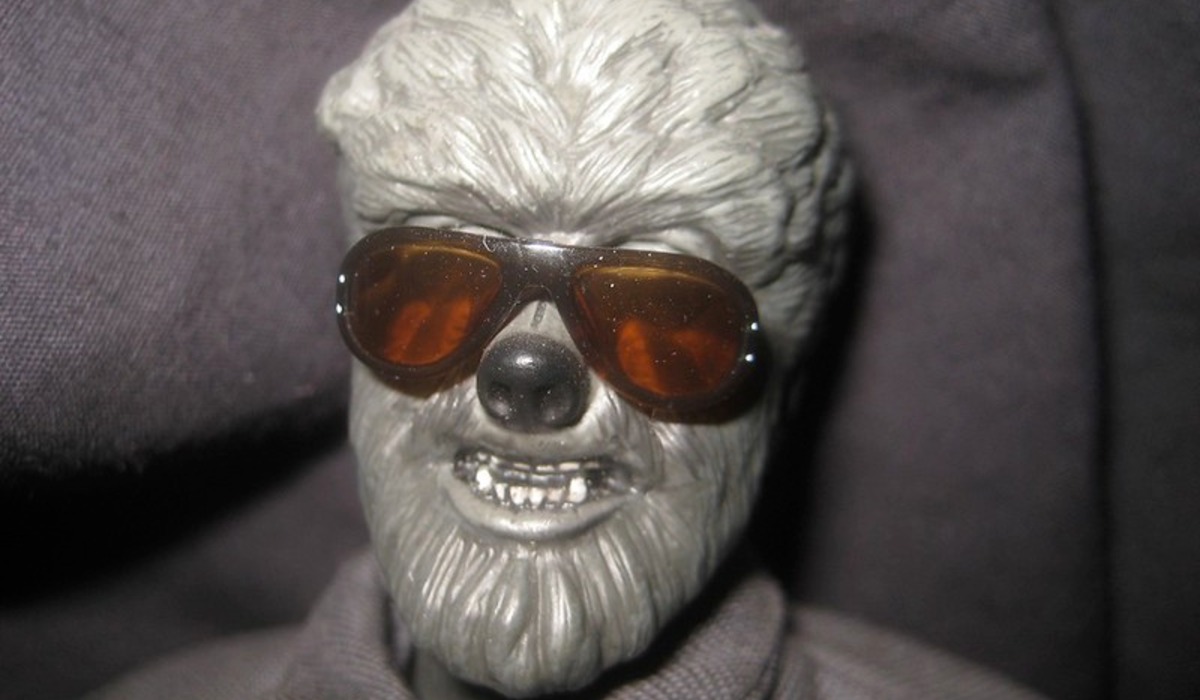
Universal’s 1941 film The Wolf Man gave Lon Chaney Jr. the role he would play in several later films. Screenwriter Curt Siodmak invented much of the werewolf lore that audiences now associate with the creature, including the idea that silver can stop it and that the curse passes through a bite.
Jack Pierce handled the makeup, applying yak hair to Chaney’s face in a process that took hours. Claude Rains played the skeptical father, and Maria Ouspenskaya’s fortune teller delivered the ominous warnings.
The film arrived in theaters in December 1941, days after Pearl Harbor, and became an important entry in Universal’s monster cycle. Its foggy Welsh village sets helped shape the look of later werewolf films.
Cat People and the Power of What Stays Unseen
RKO hired producer Val Lewton in 1942 to make low-budget horror pictures, and Cat People was the result, directed by Jacques Tourneur. The studio supplied the title and a small budget, and Lewton built a story around a Serbian immigrant, played by Simone Simon, who fears she will turn into a panther.
The film never shows a transformation clearly, relying instead on shadows, sound and suggestion. A sequence in an indoor swimming pool, with rippling light and an unseen growl, is still studied in film classes.
A sudden hiss of bus brakes used to break tension became known in film circles as the “Lewton bus”. The movie made RKO a substantial return relative to its modest production cost.
Arsenic and Old Lace in a Brooklyn Parlor on Halloween
Frank Capra filmed Arsenic and Old Lace for Warner Bros. in late 1941, but the studio could not release it until the Broadway play finished its long run, so the movie finally reached theaters in 1944. Cary Grant plays a drama critic who learns on Halloween that his two sweet elderly aunts have been poisoning lonely boarders with elderberry wine.
Josephine Hull and Jean Adair reprised their stage roles as the aunts. The story unfolds mostly in one Brooklyn house, with a graveyard next door and a brother who believes he is Theodore Roosevelt.
Grant later said he overacted, though audiences have never agreed with him.
Abbott and Costello Meet Frankenstein Reunites the Monsters
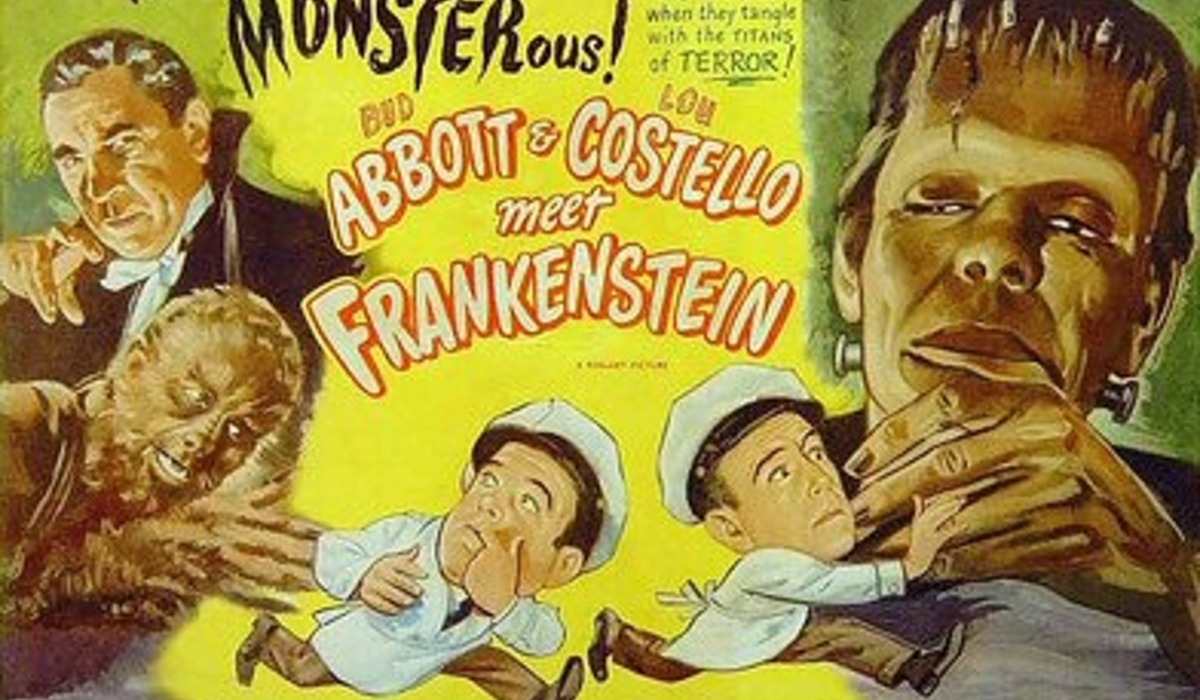
Universal-International paired its top comedy duo with its classic monsters in 1948, and the result became one of the studio’s major hits of the decade. Bela Lugosi returned to play Dracula on screen, Lon Chaney Jr. came back as the Wolf Man, and Glenn Strange wore the Frankenstein monster makeup.
The monsters play their parts straight, which lets Bud Abbott and Lou Costello do the panicking. A scene in which Costello sits on the monster’s lap without noticing is a famous bit of physical comedy.
The film brought Universal’s monsters together in a comedy that helped extend their screen lives beyond the studio’s earlier solo features.
Ichabod and the Headless Horseman From Disney
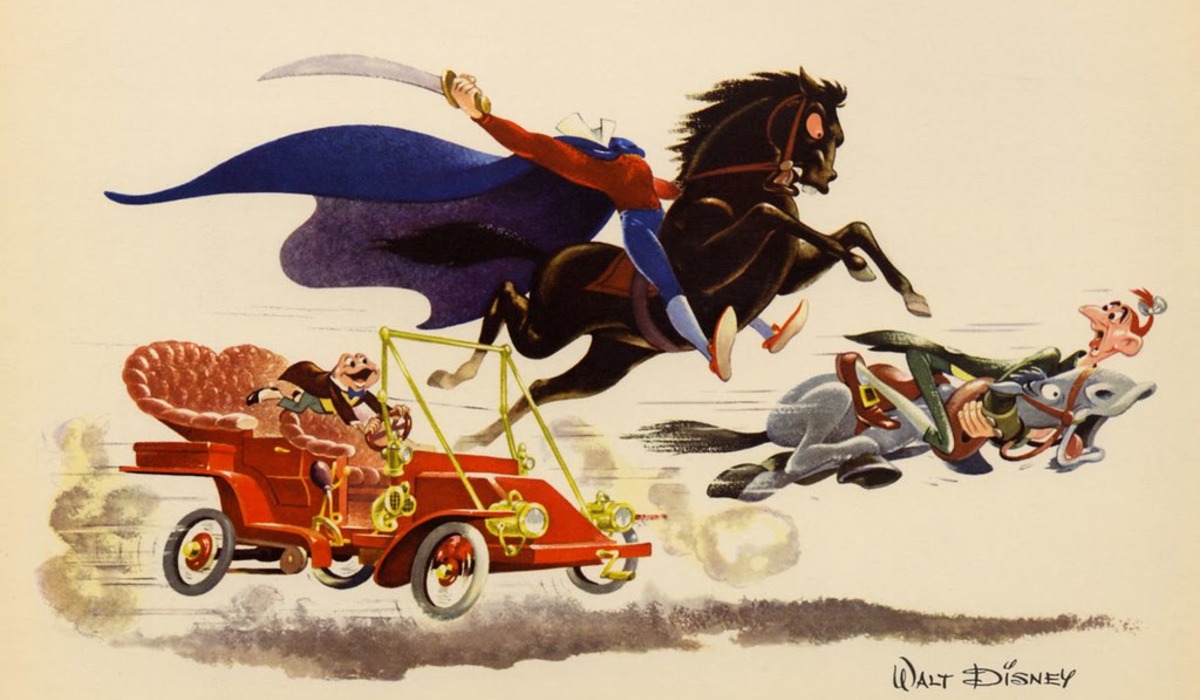
The Adventures of Ichabod and Mr. Toad, released by Walt Disney Productions through RKO in 1949, packaged two short literary adaptations into one feature.
The second half retells Washington Irving’s The Legend of Sleepy Hollow, with Bing Crosby narrating and singing. Ichabod Crane, the gangly schoolmaster, courts Katrina Van Tassel and earns the enmity of Brom Bones before his ride home through the dark woods.
The chase by the Headless Horseman, with a flaming pumpkin and a covered bridge, is among the most frightening sequences Disney ever animated. The segment later appeared separately on television, helping generations of viewers discover it as a Halloween favorite.
House on Haunted Hill and the Skeleton Over the Seats
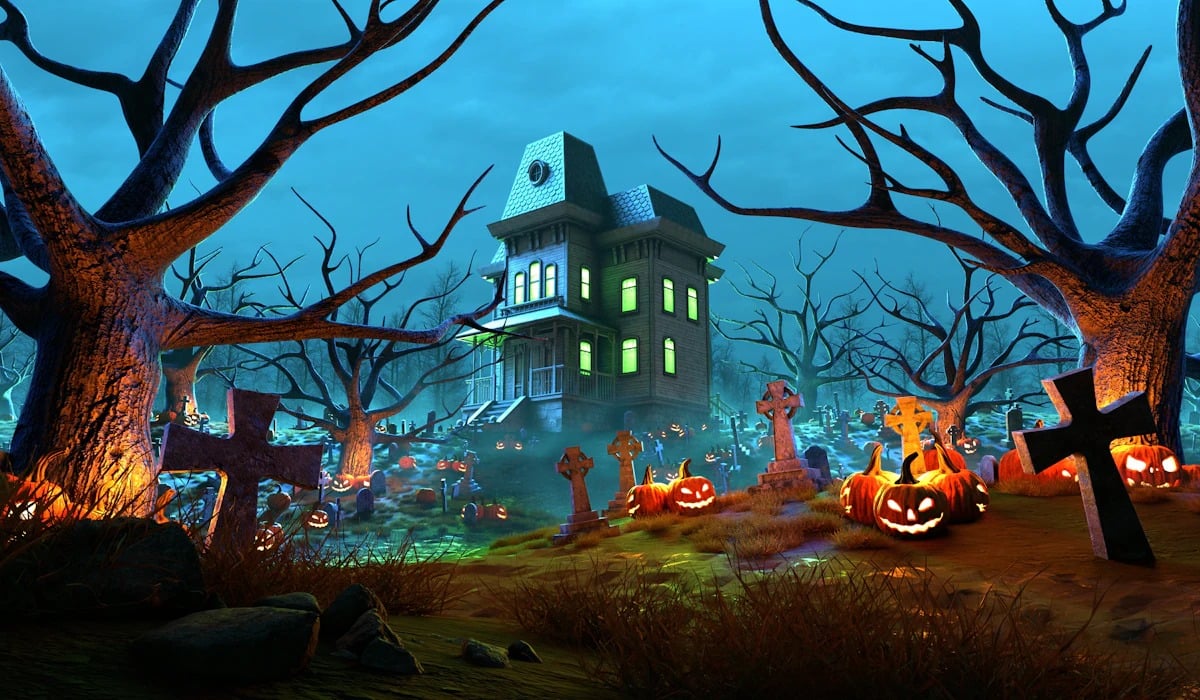
William Castle’s House on Haunted Hill, released by Allied Artists in 1959, stars Vincent Price as an eccentric millionaire who offers five guests $10,000 each to spend a night in a supposedly haunted mansion. Castle was a showman who sold gimmicks as much as movies, and for this one he devised Emergo, a plastic skeleton that glided over the audience on a wire during the climax.
Audiences reportedly reacted by throwing objects at the skeleton. The exterior used the Ennis House in Los Angeles, a Frank Lloyd Wright design with textured concrete blocks.
Price’s dry delivery and a vat of acid in the cellar keep the film a Halloween regular.
Psycho and the Shower That Changed Hollywood
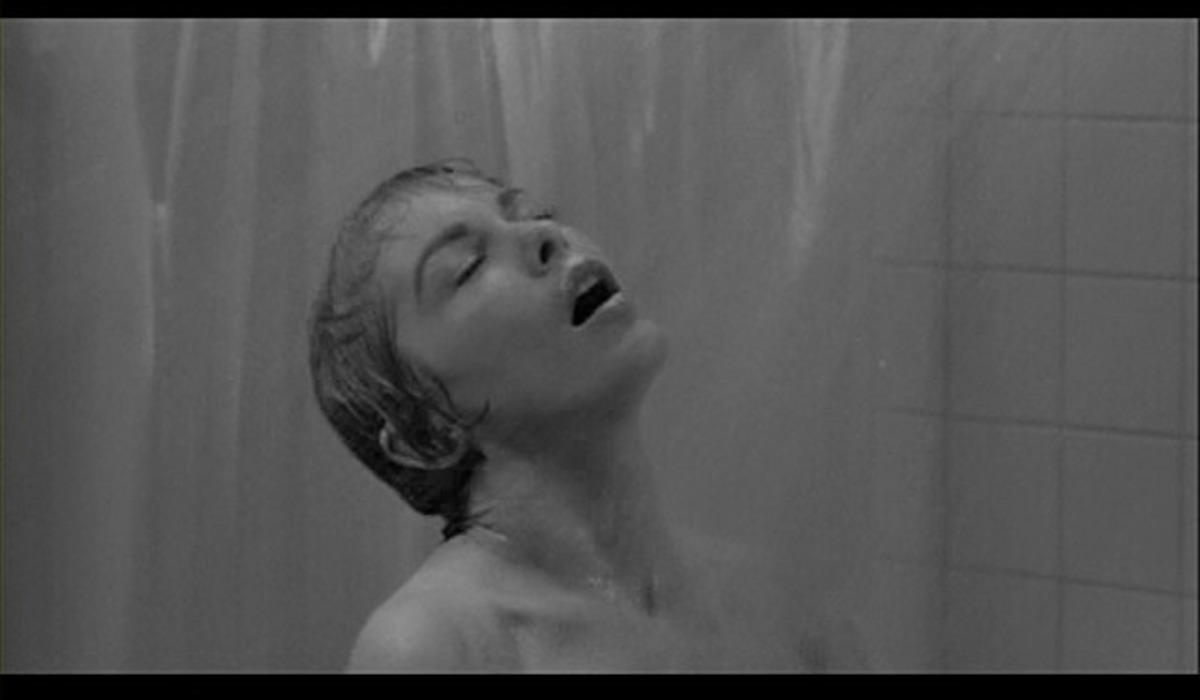
Alfred Hitchcock made Psycho for Paramount in 1960 on a modest budget, using the crew from his television show and shooting in black and white. The Bates house and motel were built on the Universal backlot, and the house still stands there as a tour attraction.
Bernard Herrmann scored the film entirely for strings, and the shrieking violins of the shower scene became shorthand for terror. Hitchcock bought up copies of Robert Bloch’s novel to keep the twist from spreading and refused to admit latecomers to screenings.
Janet Leigh’s early exit from the story broke a basic rule about movie stars and shocked many 1960 audiences.
The Haunting and the House That Was Born Bad
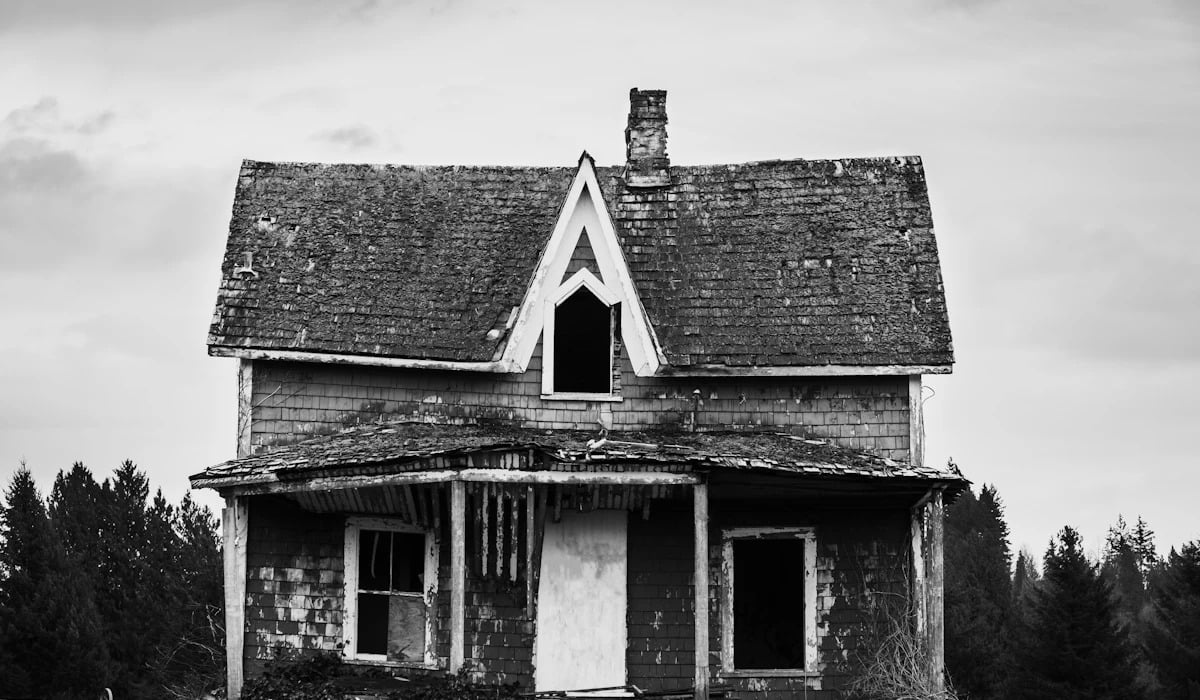
Robert Wise directed The Haunting for MGM in 1963, adapting Shirley Jackson’s novel The Haunting of Hill House, published in 1959. Julie Harris plays Eleanor, a lonely woman invited to join a paranormal study at a New England mansion, with Claire Bloom and Richard Johnson among the small cast.
Wise shot the exteriors at Ettington Park in England and used wide-angle lenses to make the interiors feel warped. Nothing supernatural is shown directly.
Pounding on doors, a bulging wall and Eleanor’s unraveling narration do the work. Many directors cite it as a model for how to frighten an audience without relying on visible monsters or elaborate special effects.
Night of the Living Dead and the Missing Copyright Notice
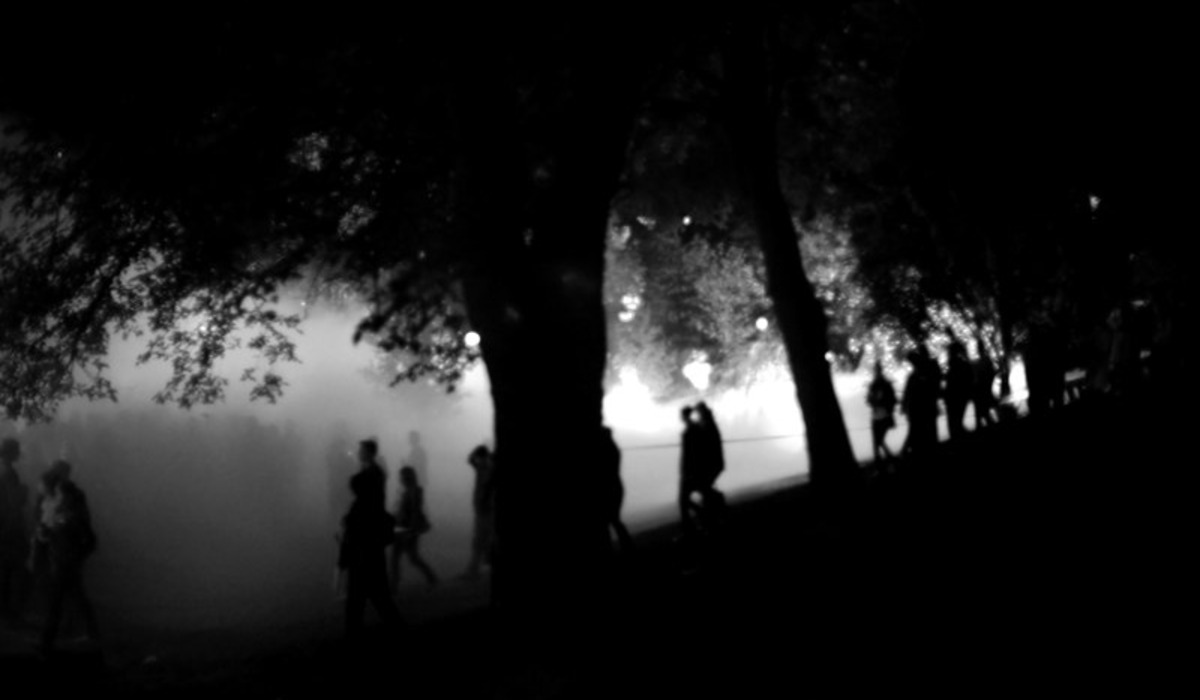
George A. Romero and a group of Pittsburgh partners calling themselves Image Ten shot Night of the Living Dead in rural Pennsylvania on a budget of roughly $114,000, and the Walter Reade Organization released it in 1968.
Duane Jones, a Black actor, played the lead in an era when that was rare, and the casting was never remarked on in the script. The distributor changed the title from Night of the Flesh Eaters, and the new title card lacked a copyright notice.
Because the film had originally been registered under its earlier title, the omission when the title changed contributed to its entering the public domain. That mistake also made it a late-night television fixture for decades, although it deprived the filmmakers of potential revenue from later distribution.
Rosemary’s Baby and the Neighbors at the Dakota
Paramount released Roman Polanski’s Rosemary’s Baby in 1968, adapted from Ira Levin’s bestseller about a young wife in a Manhattan apartment building with unusually attentive neighbors. Mia Farrow starred, and Ruth Gordon won the Academy Award for Best Supporting Actress as the nosy Minnie Castevet.
The exteriors used the Dakota on Central Park West, renamed the Bramford for the film. Polanski kept the horror in daylight and in ordinary conversations, which makes the dread hard to shake.
A tannis root charm, a Scrabble board and a chalky dessert carry more menace than any monster. The film is often credited with helping establish psychological and supernatural horror as serious adult drama.
The Exorcist and the Line Around the Block
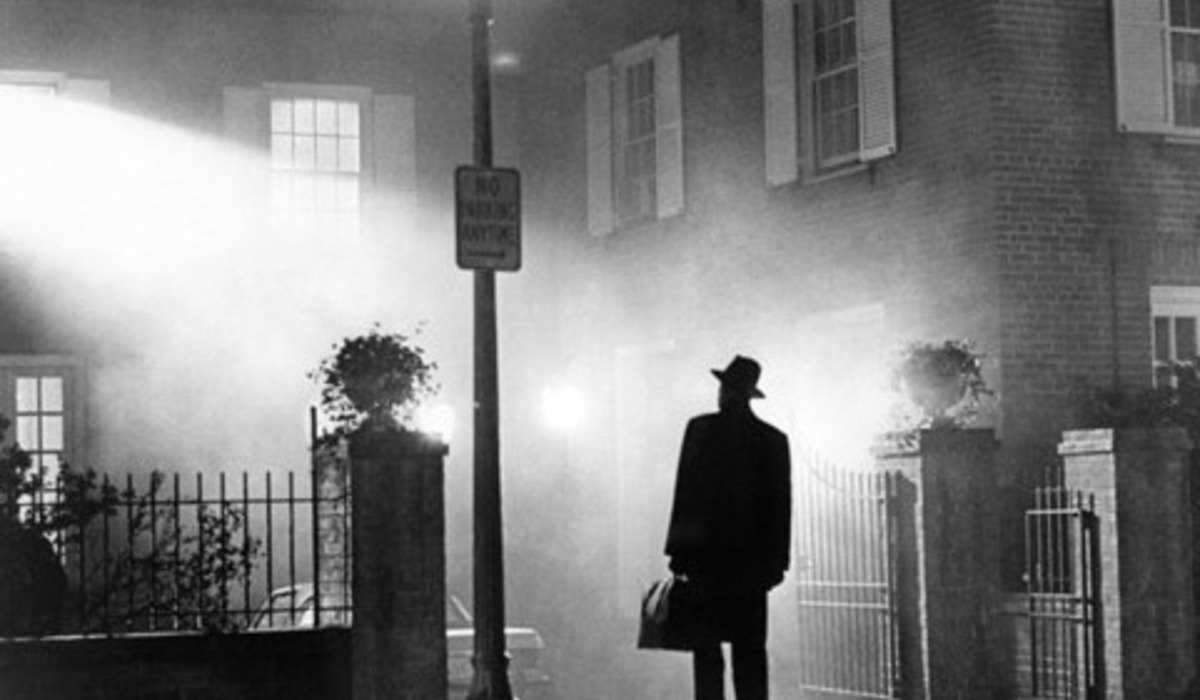
Warner Bros. released The Exorcist the day after Christmas in 1973, and reports of fainting and walkouts became part of the film’s public reputation. William Friedkin directed from William Peter Blatty’s novel, with Linda Blair as the possessed girl and Max von Sydow as the priest called to her Georgetown bedroom.
The production refrigerated the bedroom set so the actors’ breath would show. The film received 10 Academy Award nominations, including Best Picture, and won for sound and adapted screenplay.
Mike Oldfield’s Tubular Bells became widely associated with the film after its use in the soundtrack. The steep stone steps beside the house in Georgetown are now a tourist stop.
Young Frankenstein and the Original Lab Equipment
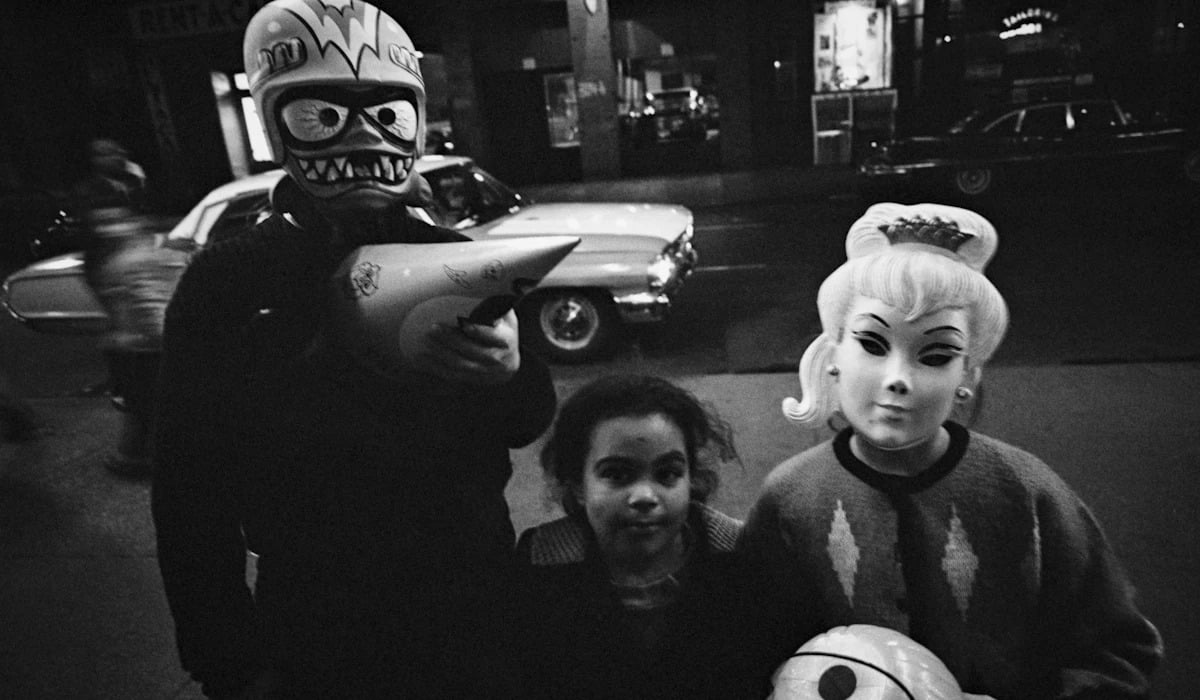
Mel Brooks shot Young Frankenstein in black and white for 20th Century Fox in 1974, a choice the studio resisted. Gene Wilder, who co-wrote the script, plays the grandson of the famous doctor, and Peter Boyle plays a monster who eventually performs a tap number in top hat and tails.
The laboratory set used electrical props originally built by Kenneth Strickfaden for Universal’s 1931 Frankenstein, which had been stored for decades. Marty Feldman’s hunchback and Cloris Leachman’s stern housekeeper round out the cast.
The film is a parody that clearly loves what it mocks, which is why it holds up alongside its targets.
Halloween and the Painted Leaves of Pasadena
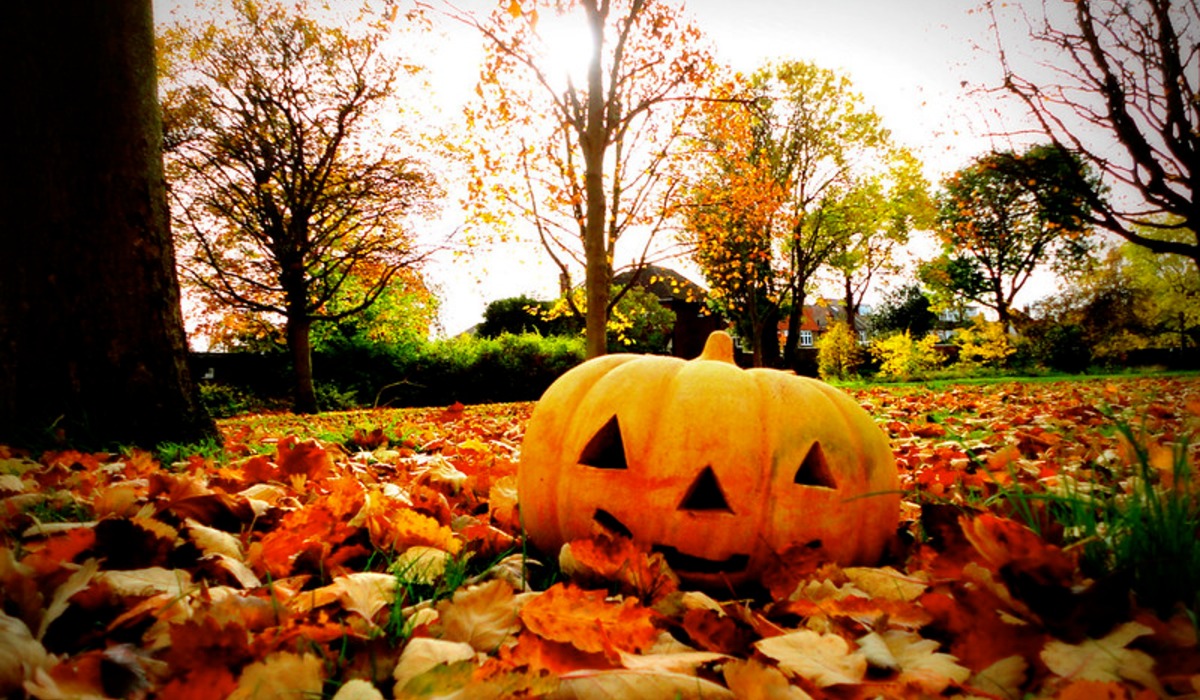
John Carpenter directed Halloween in 1978 for Compass International Pictures on a budget of about $300,000, and it went on to gross tens of millions, becoming one of the most profitable independent films of its era. Debra Hill co-wrote and produced.
Jamie Lee Curtis made her film debut as babysitter Laurie Strode in the fictional Haddonfield, Illinois, though the crew shot in South Pasadena in the spring and scattered painted leaves to fake autumn. Michael Myers wears a Captain Kirk mask that was modified and spray-painted white.
Carpenter composed the piano theme himself in a matter of days, and its distinctive 5/4 rhythm has never left the holiday.
Poltergeist and the Suburb Built on a Graveyard
MGM released Poltergeist in June 1982, with Tobe Hooper credited as director and Steven Spielberg as writer and producer, an arrangement that has fed arguments about who really ran the set ever since. JoBeth Williams and Craig T.
Nelson play parents in a California subdivision whose youngest daughter, played by Heather O’Rourke, is pulled into a static-filled television. Industrial Light & Magic handled the effects, and the film earned Academy Award nominations in technical categories.
A scene with a clown doll under the bed and another with a backyard tree have frightened more children than most R-rated films. It carried a PG rating.
Ghostbusters and the Firehouse in Tribeca
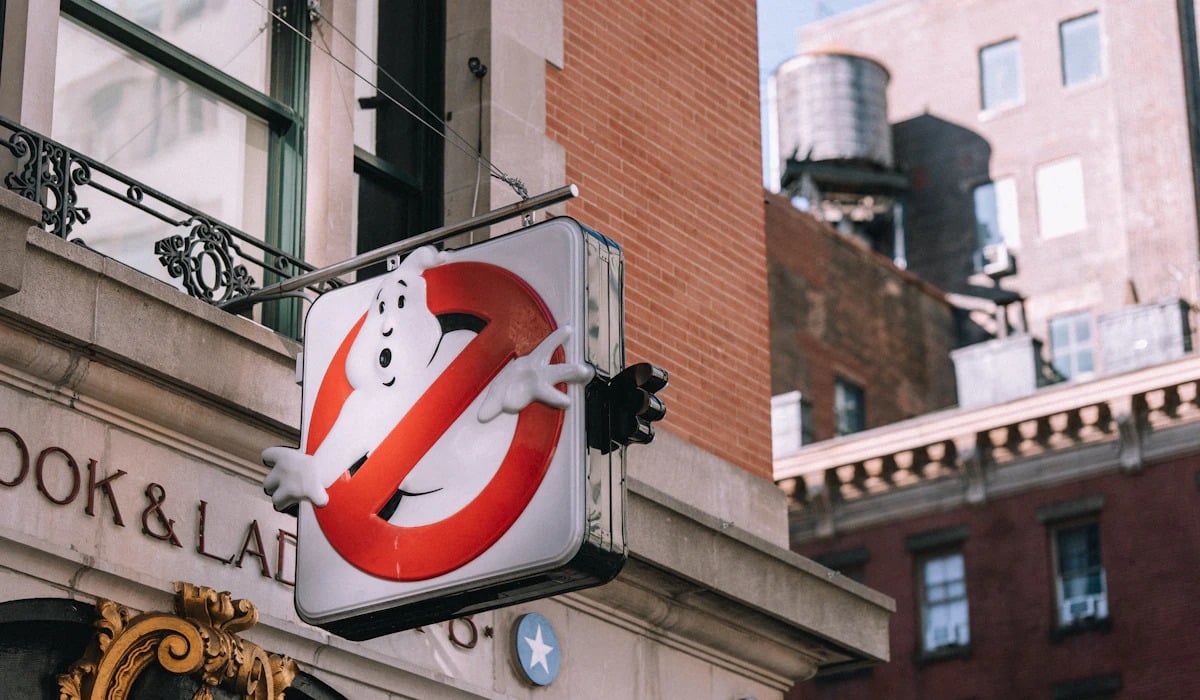
Columbia Pictures released Ghostbusters in June 1984, and it became one of the biggest comedies of the decade. Dan Aykroyd and Harold Ramis wrote the script, with Bill Murray bringing his own comic delivery to the role of the least scientific of three parapsychologists who open a ghost-removal business in Manhattan.
The exterior of their headquarters is Hook and Ladder Company 8, a working firehouse in Tribeca that still gets visitors. Ray Parker Jr.’s theme song topped the charts, and the Stay Puft Marshmallow Man stomping through Columbus Circle gave the finale a strange sweetness.
The film earned Academy Award nominations for visual effects and original song.
Beetlejuice and the Ghost With the Striped Suit
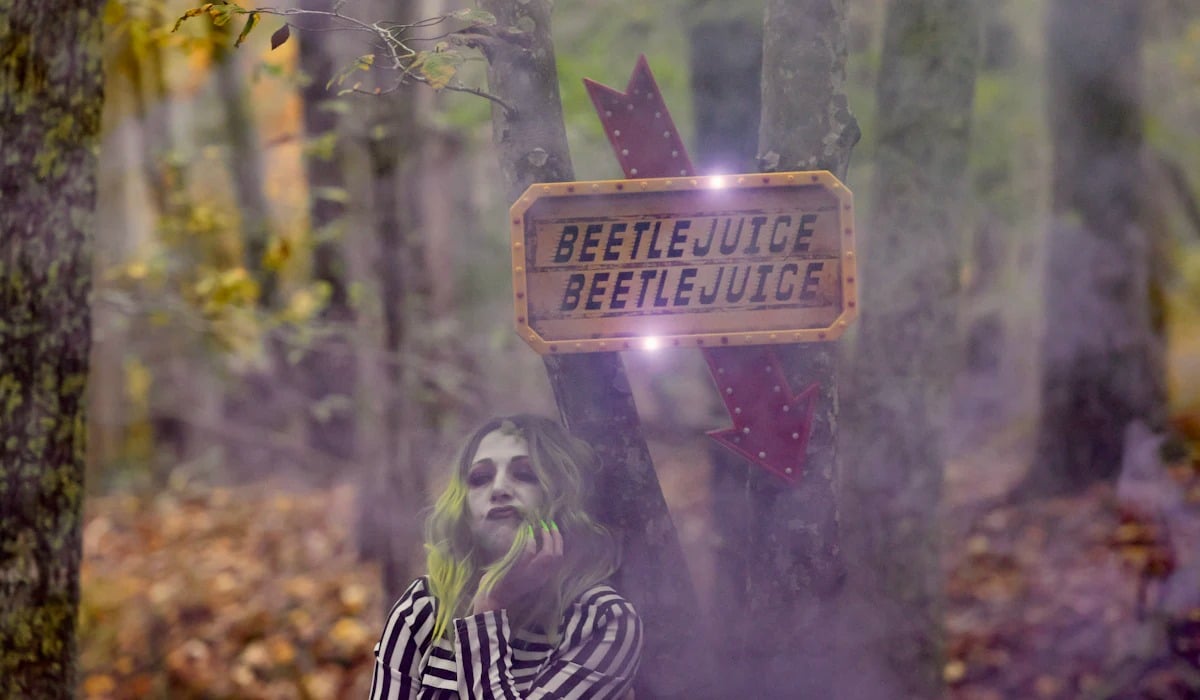
Warner Bros. released Tim Burton’s Beetlejuice in 1988, with Michael Keaton as a crude freelance exorcist hired by a recently deceased couple to drive the living out of their Connecticut farmhouse. Keaton’s title character appears for a relatively small portion of the film, yet he dominates it.
Alec Baldwin and Geena Davis play the polite ghosts, Winona Ryder the gloomy teenager who can see them, and Catherine O’Hara the sculptor mother. The movie won the Academy Award for Best Makeup.
A dinner party in which the guests are forced to perform a Harry Belafonte calypso number remains the scene people quote at costume parties, and the sandworm desert outside the windows is pure Burton.
Monster Squad Kids Who Fought Dracula
TriStar Pictures released The Monster Squad in August 1987, directed by Fred Dekker and co-written with Shane Black, who would write Lethal Weapon the same year. A group of suburban kids with a treehouse club discover that Dracula, the Wolf Man, the Mummy, the Gill Man and Frankenstein’s monster have come to their town.
Stan Winston’s studio designed the creatures, whose looks differed from Universal’s classic monster designs because the filmmakers did not have the rights to reproduce those makeups exactly. The film struggled at the box office but gained a devoted following on video and cable.
A 2018 documentary, Wolfman’s Got Nards, took its title from the most famous line of a film its fans can recite in full.
Addams Family With Raul Julia at the Head of the Table
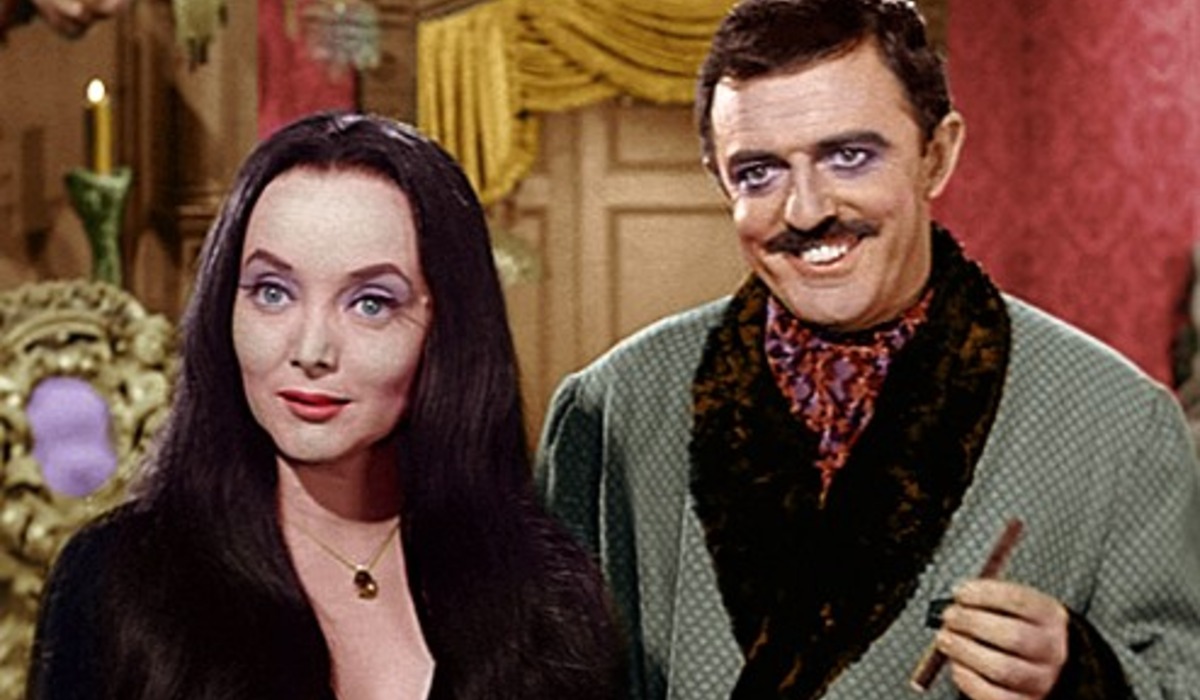
Paramount released The Addams Family in November 1991, a project that began at Orion Pictures before that studio’s financial troubles moved it. Barry Sonnenfeld, a cinematographer for the Coen brothers, made his directing debut.
Raul Julia played Gomez with manic joy, Anjelica Huston played Morticia with a carefully controlled, dramatic lighting style, and Christina Ricci’s deadpan Wednesday became the film’s breakout. Christopher Lloyd’s Uncle Fester arrives claiming amnesia, and the plot turns on whether he is who he says.
Ruth Myers earned an Academy Award nomination for costume design. The film was a hit that led to a sequel two years later.
Hocus Pocus and the Sanderson Sisters of Salem
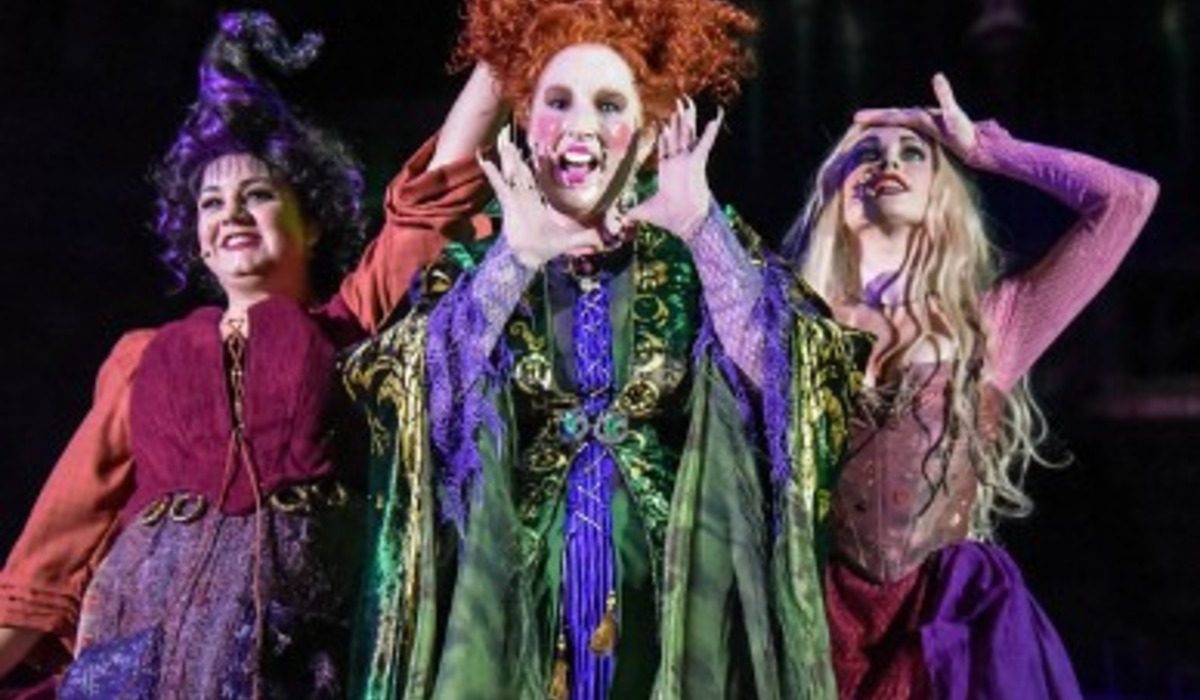
Walt Disney Pictures released Hocus Pocus on July 16, 1993, a midsummer date for a Halloween movie, and it opened to mixed reviews and modest initial box-office returns. Bette Midler, Sarah Jessica Parker and Kathy Najimy play three witches executed in Salem in 1693 and revived 300 years later when a teenager lights a black-flame candle.
The production shot exteriors in Salem, Massachusetts, including Pioneer Village and a house on Ocean Avenue. Later television airings and repeat viewings helped turn the film into a Halloween favorite, and Disney produced a sequel in 2022 with the original witches.
Midler’s performance of a Screamin’ Jay Hawkins song at a town-hall party is the number everyone remembers.
Nightmare Before Christmas and the Pumpkin King in Stop Motion
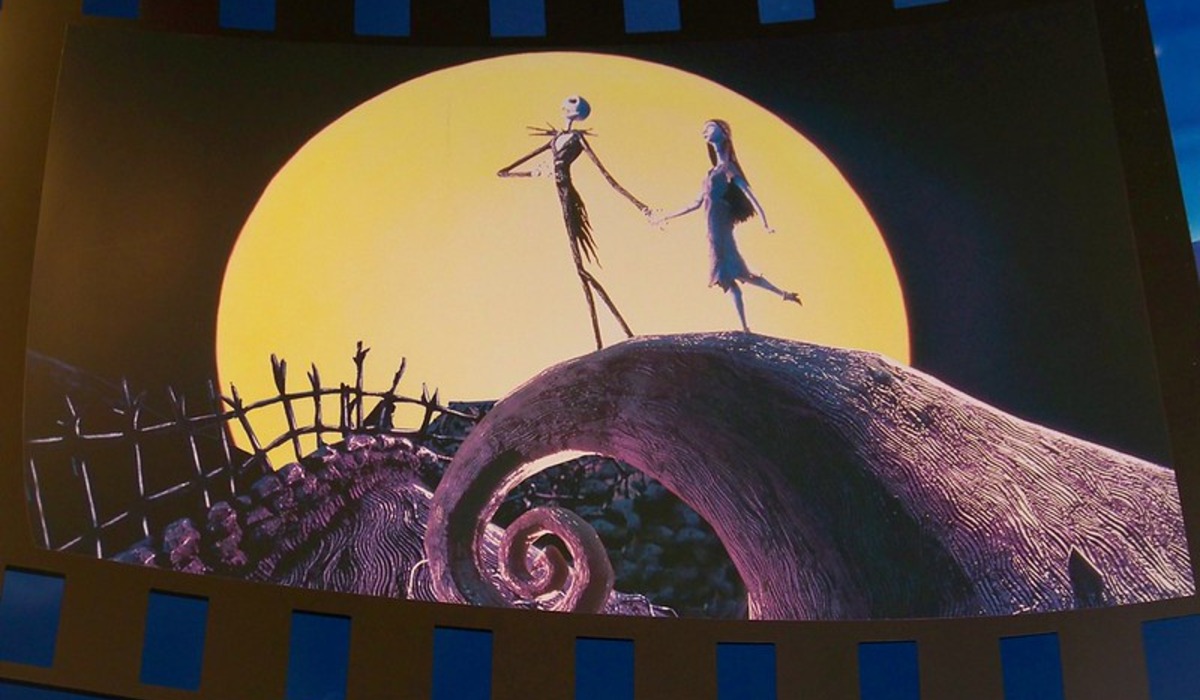
Touchstone Pictures, a Disney label, released The Nightmare Before Christmas in October 1993. Henry Selick directed, working from a poem and drawings Tim Burton had made years earlier while employed at Disney as an animator.
Danny Elfman wrote the songs and provided Jack Skellington’s singing voice, with Chris Sarandon handling the spoken lines. The crew spent roughly three years moving puppets a fraction of an inch at a time on miniature sets.
The film received an Academy Award nomination for visual effects. Disney has released it under its own name since, and it now runs in theaters in both October and December, which may be the point.
Casper and the Ghost in Whipstaff Manor
Universal Pictures and Amblin Entertainment released Casper in May 1995, directed by Brad Silberling. Christina Ricci plays the daughter of a ghost therapist, played by Bill Pullman, who moves into a decaying Maine mansion called Whipstaff Manor to clear out its spirits.
Industrial Light & Magic created Casper and his three obnoxious uncles with computer animation that had to share the frame with live actors in every scene, a heavy demand for the mid-1990s. The film had cameos from Dan Aykroyd in Ghostbusters gear and Clint Eastwood in a mirror.
It did strong business and became a reliable choice for families with children too young for more frightening films.
Scream and the Ghostface Mask
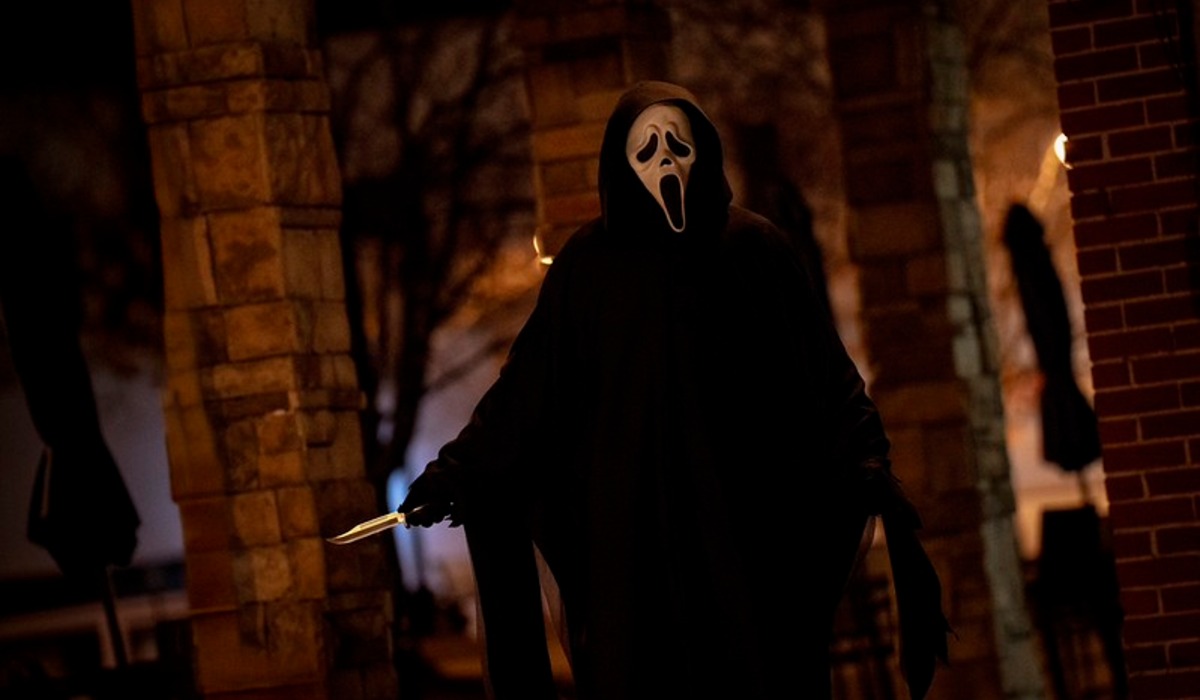
Dimension Films released Scream in December 1996, directed by Wes Craven from a script by Kevin Williamson. Drew Barrymore, one of the best-known actors in the cast, is killed in the opening sequence, a deliberate shock that told audiences the rules had changed.
The characters know horror movies and discuss their conventions while being stalked by a killer in a long white mask. That mask was an existing Fun World costume product the production spotted in a house while scouting.
Filming took place in Sonoma County, California, after a Santa Rosa school district withdrew permission to use its campus. The film helped revive the slasher genre and made Neve Campbell a star.
Sleepy Hollow and Tim Burton’s Fog
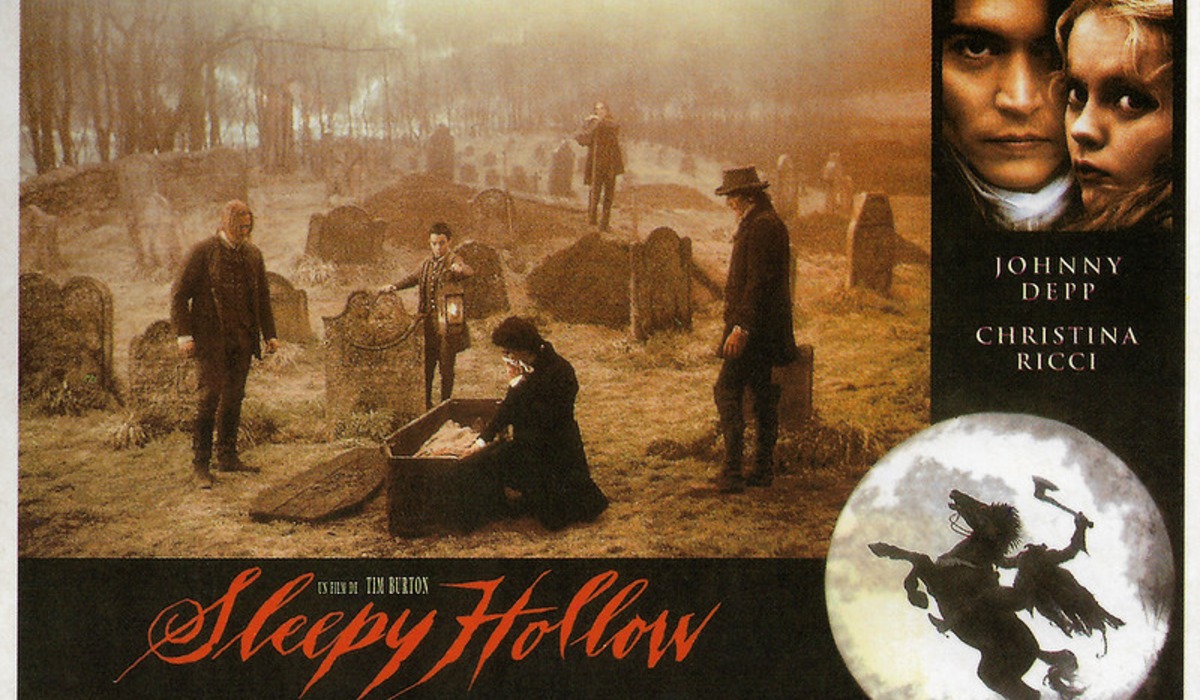
Paramount released Sleepy Hollow in November 1999, with Johnny Depp as a squeamish New York constable sent in 1799 to investigate beheadings in a Hudson Valley village. Christina Ricci plays Katrina, and Christopher Walken appears as the Horseman in flashbacks with filed teeth.
Tim Burton shot almost entirely on soundstages and a backlot village built in England, draping everything in fog and draining the color until the blood looks like paint. Rick Heinrichs and Peter Young won the Academy Award for Best Art Direction.
Burton has cited the Hammer horror films of his childhood as an influence, and Christopher Lee has a small role as a nod in that direction.
Trick ‘r Treat and the Boy in the Burlap Mask
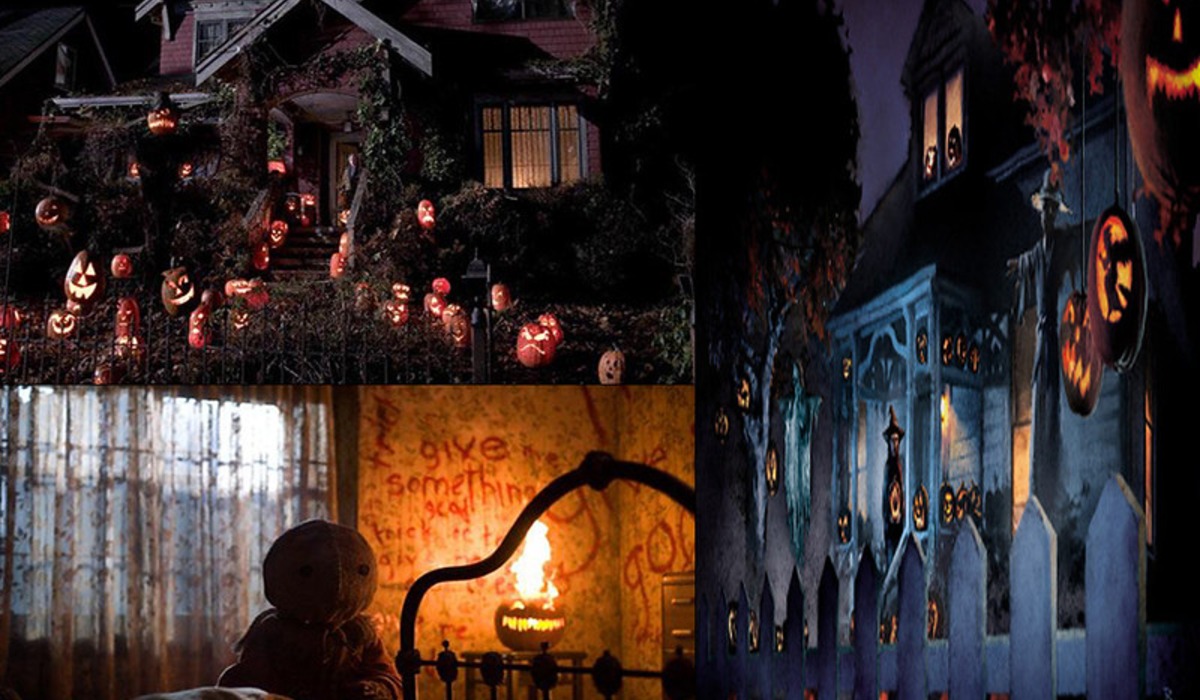
Michael Dougherty wrote and directed Trick ‘r Treat, which was produced by Warner Bros. and Legendary Pictures in 2007 but did not receive a wide theatrical release at that time. After festival screenings earned strong word of mouth, Warner Premiere released it directly to DVD in October 2009.
The anthology weaves four stories set on one Halloween night in a small Ohio town, with Anna Paquin, Brian Cox and Dylan Baker in the cast. Linking them is Sam, a small trick-or-treater in orange pajamas and a stitched burlap-sack mask who punishes anyone breaking the holiday’s unwritten rules.
Fans built the film’s reputation one October at a time, and it now plays in theaters and on cable each fall.
Projectors Still Warm in October
Most of these films were not made to be Halloween movies. Universal released its monsters whenever the schedule allowed, Disney eventually released individual segments from a feature for television, and Hocus Pocus opened in July.
The holiday chose them after the fact, through reruns, video rentals and the habits of families who wanted something familiar with the lights off.
That is the quiet trick of the season. New horror arrives every year with louder effects and bigger budgets, and some of it is very good.
But a Halloween night still tends to end with a skeleton on a wire, a painted leaf in Pasadena or a shadow climbing a staircase in 1922, because the old scares were built to be shared rather than endured.
MORE FROM GO2TUTORS!

- The Romanov Crown Jewels and Their Tragic Fate
- 13 Historical Mysteries That Science Still Can’t Solve
- Famous Hoaxes That Fooled the World for Years
- 15 Child Stars with Tragic Adult Lives
- 16 Famous Jewelry Pieces in History
Like Go2Tutors’s content? Follow us on MSN.