18 Government Mind Control Programs Finally Exposed
For decades, conspiracy theories about government mind control seemed like the stuff of science fiction movies. People whispered about secret experiments, brainwashing techniques, and covert operations designed to manipulate human behavior. What many didn’t realize was that some of these ‘theories’ were actually documented government programs that really happened.
Declassified documents, congressional investigations, and whistleblower testimonies have revealed a disturbing pattern of psychological experimentation conducted by various government agencies. Here’s a list of 18 government mind control programs that have been exposed through official records and investigations.
MKUltra

The CIA’s MKUltra program stands as perhaps the most infamous mind control operation in American history. Running from 1953 to 1973, this program involved experiments with LSD, hypnosis, and other psychological techniques on unwitting subjects. The CIA funded research at universities, hospitals, and psychiatric institutions across the United States and Canada — often without the knowledge or consent of the test subjects.
MKDelta
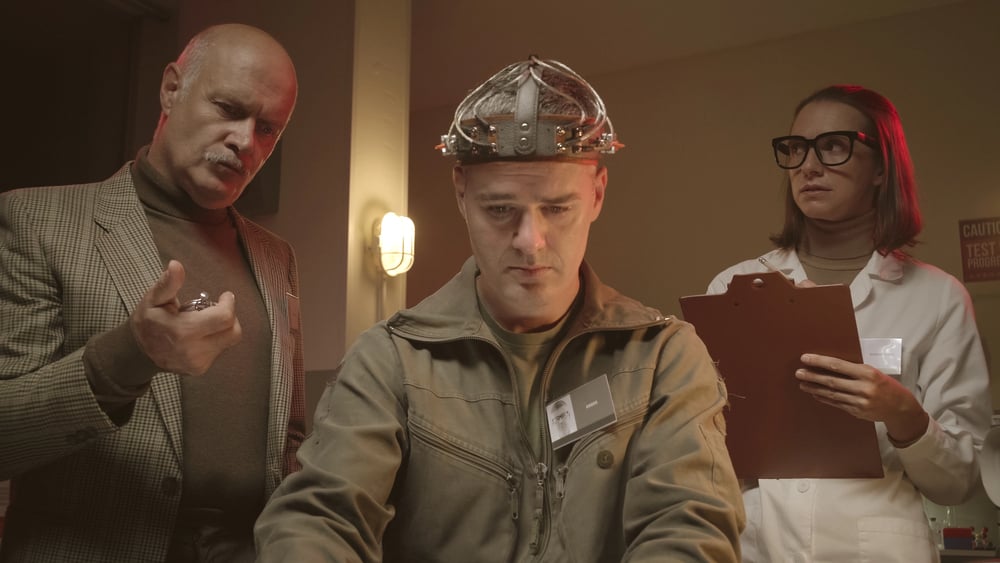
MKDelta served as the operational arm of MKUltra, though it focused specifically on overseas applications of mind control techniques. This program targeted foreign nationals and was designed to test psychological manipulation methods in real-world scenarios. The CIA used MKDelta to experiment with interrogation techniques and behavioral modification in various international locations.
MKNaomi

Developed alongside MKUltra, MKNaomi concentrated on biological and chemical agents for covert operations. The program explored ways to incapacitate or control individuals through various substances — including drugs that could alter memory or behavior. This project involved collaboration with the Army’s Special Operations Division at Fort Detrick.
Project Artichoke

Before MKUltra, there was Project Artichoke, which began in 1951 under the CIA’s Office of Scientific Intelligence. This program investigated whether people could be forced to perform acts against their will through psychological manipulation. Researchers tested various methods including hypnosis, forced morphine addiction — and electroshock therapy.
Project Bluebird

Project Bluebird was one of the earliest CIA mind control programs, initiated in 1950. The project aimed to develop techniques for extracting information from prisoners while controlling their behavior. Scientists working on Bluebird experimented with drugs, hypnosis — and other psychological methods to achieve these goals.
Project Chatter

The U.S. Navy’s Project Chatter began in 1947 as an investigation into truth serums and interrogation drugs. This program tested various substances on both volunteers and unwitting subjects to determine their effectiveness in extracting information. The Navy collaborated with civilian researchers — and pharmaceutical companies to develop these chemical agents.
Project Monarch

Though less documented than other programs, Project Monarch allegedly involved trauma-based mind control techniques. This program supposedly used severe psychological and physical trauma to create dissociative identity disorder in subjects — making them more susceptible to control. The existence of this program remains controversial, with some evidence suggesting it was a subset of MKUltra.
Project Mkoften

MKOften explored the potential of using occult and supernatural beliefs as tools for psychological manipulation. The CIA investigated whether superstitions, religious practices — and paranormal beliefs could be weaponized to control or influence behavior. This unusual program reflected the agency’s willingness to explore unconventional methods of psychological warfare.
Project Mksearch

After the official termination of MKUltra in 1973, the CIA continued similar research under the name MKSearch. This program maintained many of the same objectives as its predecessor — focusing on behavioral modification and psychological manipulation techniques. MKSearch represented the CIA’s ongoing interest in mind control despite public scrutiny.
Project Mkdelta

Different from the earlier MKDelta, this later program focused on developing new applications for psychological manipulation techniques. The CIA used this project to refine methods discovered in previous programs — and adapt them for contemporary operational needs. This program demonstrated the agency’s continued commitment to mind control research.
Project Spellbinder

The Air Force’s Project Spellbinder investigated the use of hypnosis and suggestion in military applications. This program tested whether soldiers could be programmed to perform specific tasks or resist interrogation through hypnotic techniques. Researchers explored the potential for creating ‘sleeper agents’ who would activate only when given specific triggers.
Project Third Chance

Project Third Chance was designed to test mind control techniques on prisoners and mental patients. The CIA used this program to experiment with various psychological manipulation methods on vulnerable populations. This project highlighted the ethical problems inherent in government mind control research, yet it continued despite these concerns.
Project Derby Hat

The CIA’s Project Derby Hat focused on developing portable devices for administering mind-altering substances. This program aimed to create covert delivery systems for drugs and other agents that could be used in field operations. Researchers worked on everything from aerosol dispensers to contaminated objects that could deliver psychoactive compounds.
Project Mknaomi

Building on the original MKNaomi program, this continuation explored more advanced biological and chemical agents for behavioral control. The CIA investigated new substances and delivery methods that could incapacitate or manipulate targets more effectively. This program represented the evolution of chemical-based mind control techniques, though it raised serious questions about weaponizing biology.
Project Pandora

The Defense Department’s Project Pandora investigated the potential health effects of microwave radiation and its possible use as a weapon. This program was prompted by reports that the Soviet Union was using microwave beams against the U.S. Embassy in Moscow. Researchers studied whether electromagnetic radiation could be used to influence behavior or cause psychological effects.
Project Bizarre

Project Bizarre was a CIA program that investigated unconventional methods of psychological manipulation. The project explored everything from subliminal messaging to environmental conditioning as potential tools for behavioral control. This program reflected the agency’s interest in finding new and innovative ways to influence human behavior, while pushing the boundaries of ethical research.
Project Medusa

The Air Force’s Project Medusa explored the use of electromagnetic fields to influence brain activity. This program investigated whether specific frequencies could be used to alter consciousness, memory, or behavior. Researchers tested various electromagnetic devices and studied their effects on human subjects, though results weren’t always conclusive.
Project Squid

Project Squid was a Navy program that investigated the potential military applications of psychoactive substances. This project tested various drugs and chemicals to determine their effectiveness in interrogation and behavioral modification. The Navy worked with civilian researchers to develop new compounds for these purposes, yet many experiments yielded unpredictable results.
The Legacy Lives On

These documented programs represent only the tip of the iceberg in government mind control research. Many files were destroyed before they could be declassified, while some programs may remain classified to this day. The revelation of these projects has led to stricter oversight of government research and better protections for human subjects in scientific studies. Though the golden age of unethical government experimentation may be over, the techniques developed in these programs continue to influence modern interrogation methods, advertising psychology, and our understanding of human behavior.
More from Go2Tutors!

- 16 Historical Figures Who Were Nothing Like You Think
- 12 Things Sold in the 80s That Are Now Illegal
- 15 VHS Tapes That Could Be Worth Thousands
- 17 Historical “What Ifs” That Would Have Changed Everything
- 18 TV Shows That Vanished Without a Finale
Like Go2Tutors’s content? Follow us on MSN.



