29 Vintage Bracelets Jewelers Love to Buy
A bracelet that comes across a jeweler’s counter gets judged in about ten seconds. Is it signed, is it complete, and does the clasp still do its job?
The pieces that earn a second look tend to share a short list of traits, and a maker’s name is only one of them.
Some of these bracelets carry famous hallmarks. Others are anonymous but built so well, or from materials so hard to find now, that dealers pay for them anyway.
Every price in this territory depends heavily on condition, and on whether the original box, papers, screwdriver, or extra links are still around.
Cartier Love Bracelet by Aldo Cipullo
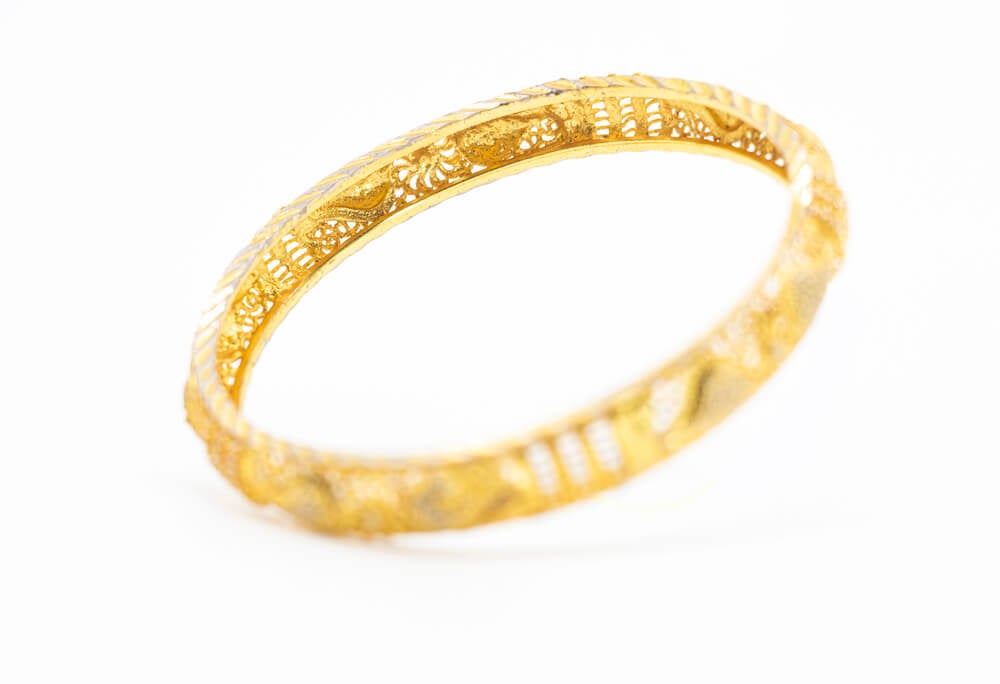
Designer Aldo Cipullo introduced the Love bracelet in New York in 1969, and it was sold with a tiny screwdriver because the wearer could not open it alone. That was the entire concept: a symbol of commitment that took two people to remove.
Early examples from the 1970s often turn up at auction with Cipullo’s name stamped beside Cartier’s. Jewelers pay the most for bracelets with crisp hallmarks, an intact screw mechanism, and the original screwdriver, since heavy polishing and deep scratches pull values down fast.
Cartier Juste un Clou Nail Bracelet
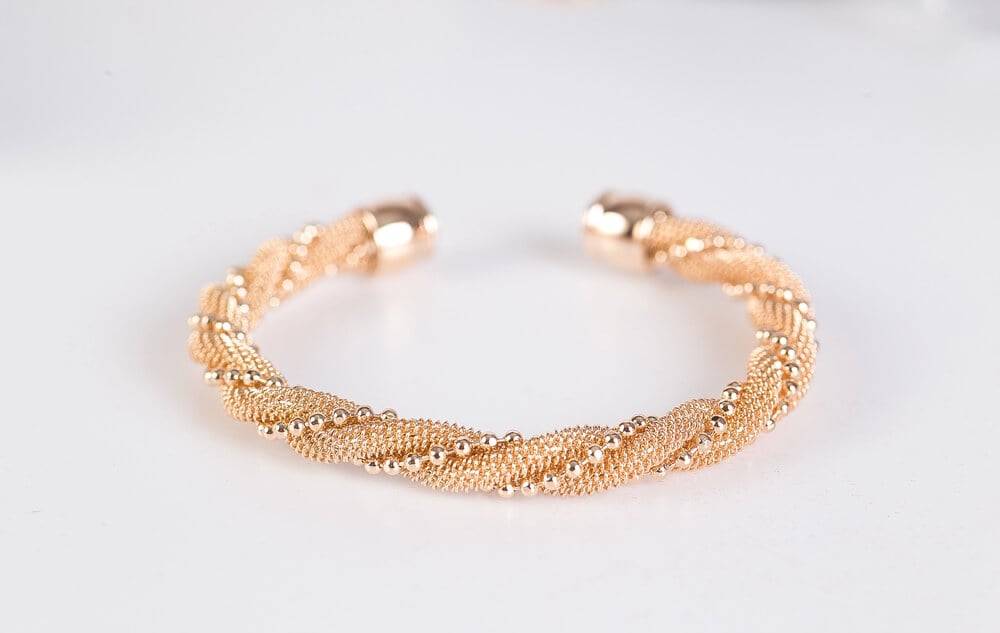
Cipullo followed Love with a bracelet built from nothing more than a bent gold nail, and the French name translates to “just a nail.” Examples dated to around 1971 still circulate among dealers, and the plain, almost industrial look has aged better than many more ornate designs of the era.
The simple shape hides a practical problem: a nail-shaped piece takes dents easily, so unmarred gold on the head and point matters a great deal. Buyers also check that the original hallmarks survived any previous resizing.
Van Cleef & Arpels Vintage Alhambra Bracelet
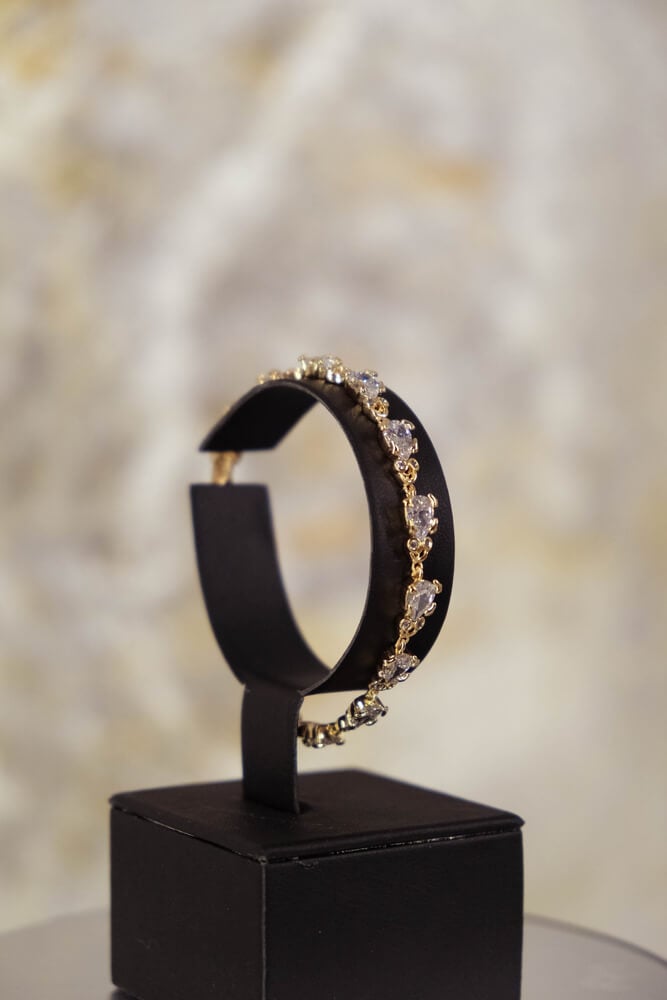
The Alhambra collection debuted in 1968, built around a four-leaf clover motif with a beaded gold edge, and the name nods to the Moorish palace in Granada. The bracelet version links a row of those clovers on a fine chain, each motif holding a stone such as onyx, malachite, or mother-of-pearl.
Jewelers favor pieces with their hallmarks and serial numbers still legible, plus stones that show no chips along the beaded rim. Original certificates and pouches lift the price, though the stone condition still does most of the work.
Elsa Peretti Bone Cuff for Tiffany
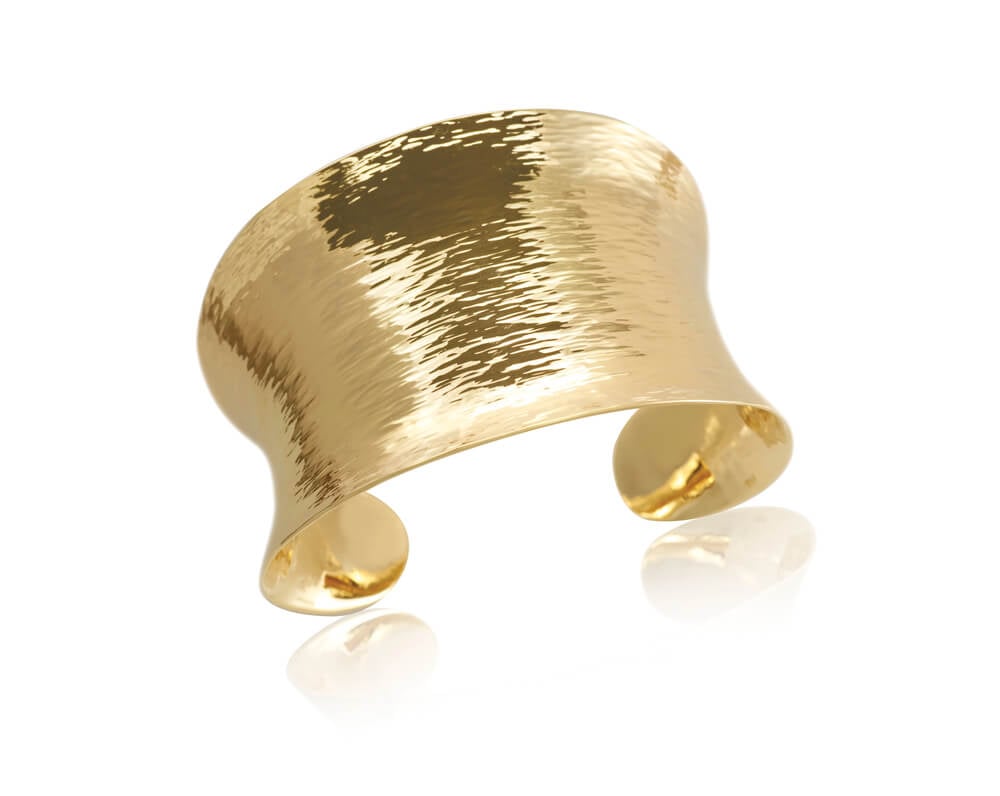
The sculptural Bone cuff arrived at Tiffany & Co. in the 1970s, and Elsa Peretti made it in separate versions for the left and right wrist. Auction records include sterling examples dated to 1978, and the shape looks as modern now as it did then.
Silver versions pick up fine scratches quickly, so buyers weigh the polish level carefully. Larger sizes and gold editions command more, as long as the interior is free of dents and the proportions remain even.
Jean Schlumberger Enamel Bangles for Tiffany
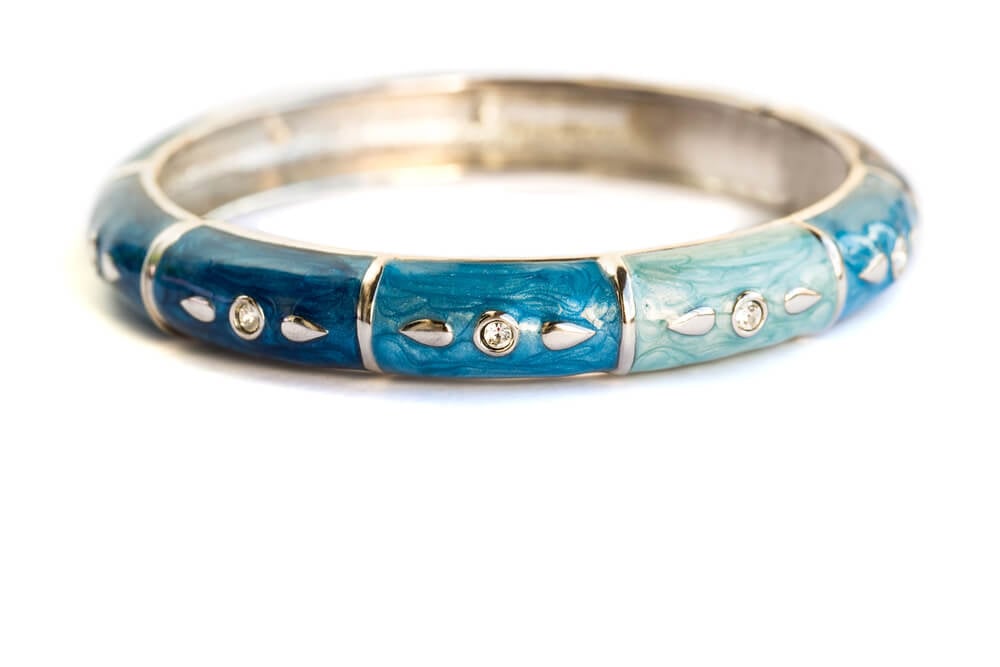
Alsace-born Jean Schlumberger joined Tiffany in 1956 after earlier work with Elsa Schiaparelli, and his bright enamel bangles in gold became signatures of the house. Pieces usually carry both his name and Tiffany’s stamp, which dealers look for first.
Enamel is the weak point, so chips, cracks, and re-enameled patches matter more than the gold itself. A bangle with flawless color and original stamps sells in a different tier than one with visible repairs.
Hermès Collier de Chien Bracelet
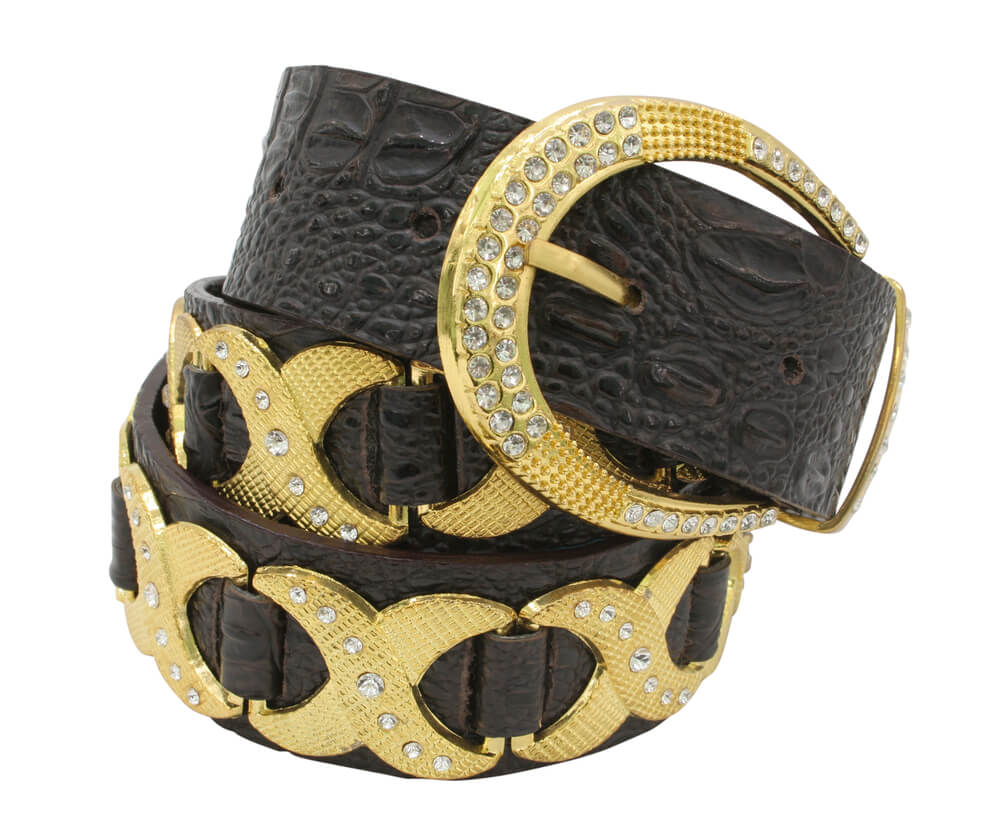
The name means “dog collar” in French, and the studded cuff borrows from the heavy leather collars that gave the style its edge. Hermès itself began in 1837 as a Paris workshop making harnesses, which explains the leather craft behind the bracelet.
Jewelers and resellers pay attention to the plating on the hardware and the stamp that marks the year of manufacture. Cracked or darkened leather cuts the value sharply, and the closure plate should snap without any wobble.
Bulgari Tubogas Bracelet
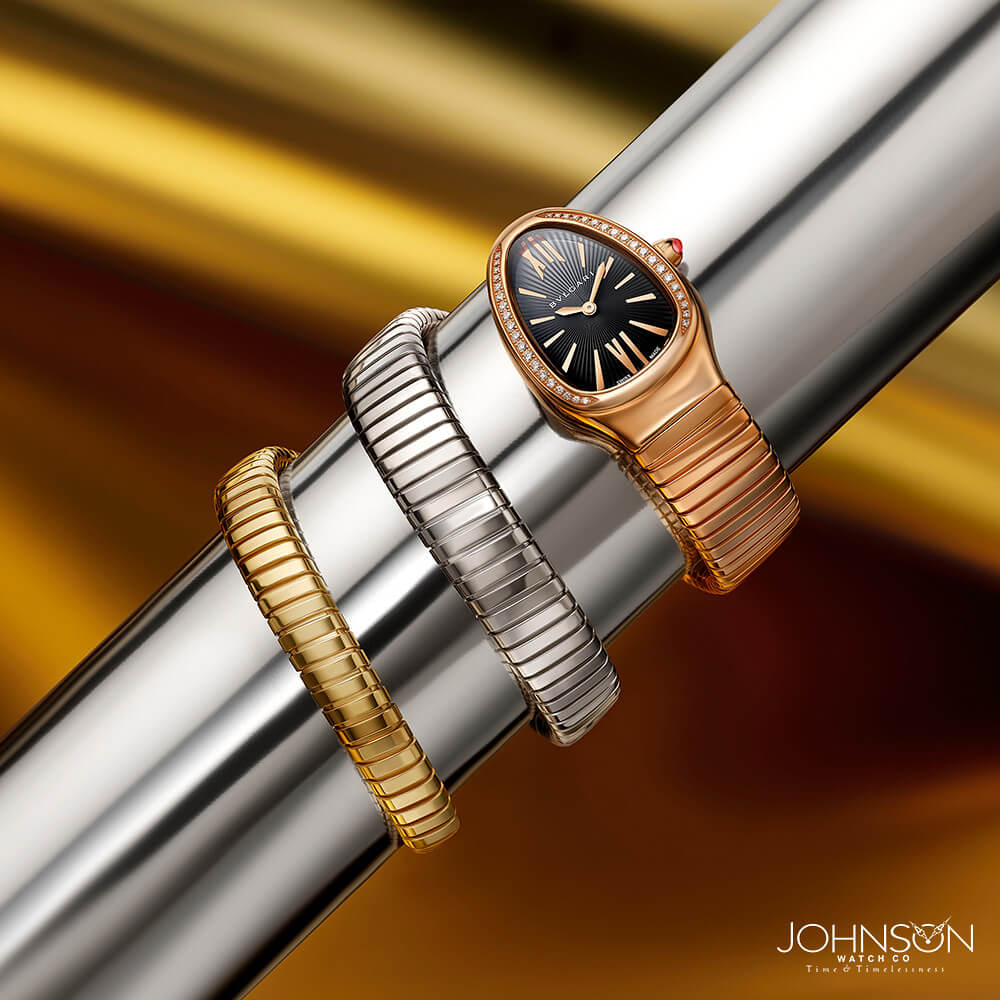
Tubogas takes its name from flexible gas piping, and the technique winds strips of gold into a springy, seamless-looking coil. Bulgari adopted the style in the 1940s and kept it central to its watches and jewelry for decades.
Because the construction depends on tension rather than solder joints, a crushed or stretched coil is hard to repair cleanly. Dealers look for tight, even spirals and a clasp that closes with a firm click.
Buccellati Textured Gold Bracelets
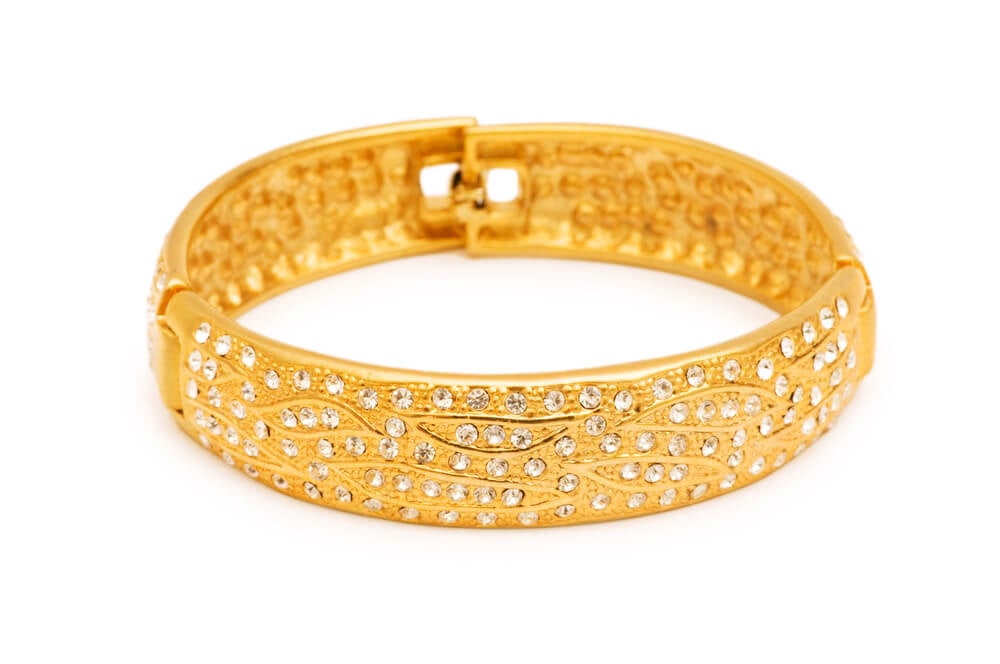
Mario Buccellati opened his Milan workshop in 1919, and the poet Gabriele D’Annunzio is said to have called him the Prince of Goldsmiths. His house became known for hand engraving that makes gold look like lace or woven fabric.
Vintage pieces are valued for the depth of that engraving, because years of polishing can soften the lines until the effect is lost. Intact signatures and clean, sharp texture bring the highest offers.
Georg Jensen Torun Silver Bangle
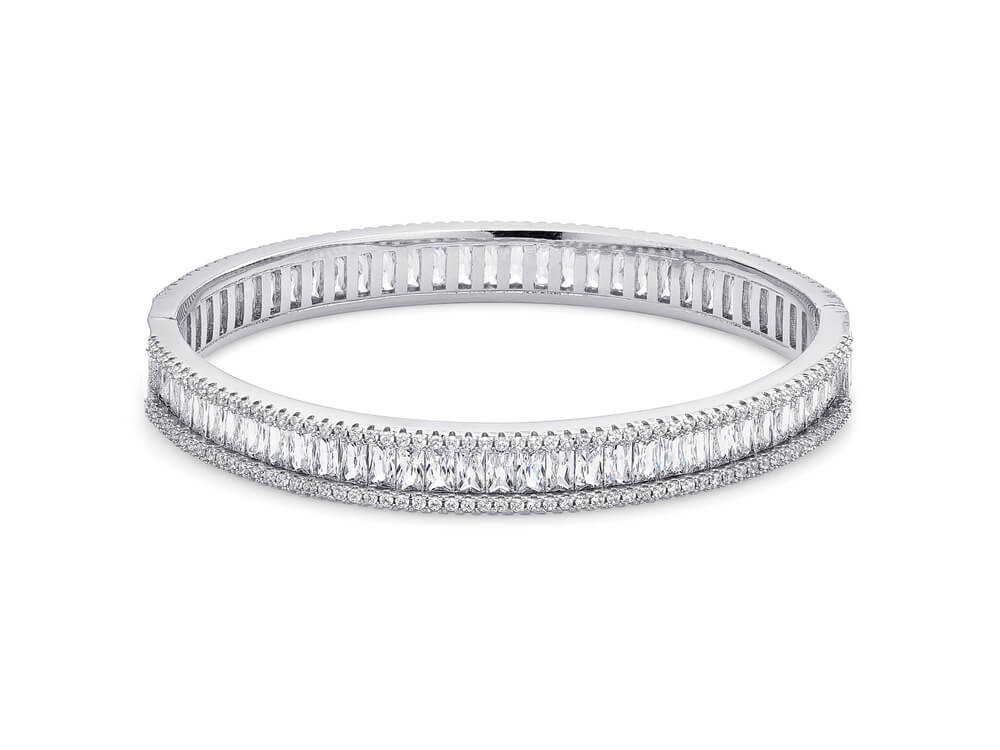
Georg Jensen founded his silversmithing house in Copenhagen in 1904, and the open silver bangle designed by Vivianna Torun Bülow-Hübe, who worked simply as Torun, became one of its most recognizable modern pieces. Auction listings include versions set with rutilated quartz, which draw extra interest because of the golden needle-like inclusions inside the stone.
Dealers check the hallmarks first, then the shape, since bangles that have been squeezed or pried open rarely return to their original curve. A clean example with sharp marks is easier to resell than a bent one.
David Webb Animal Cuffs
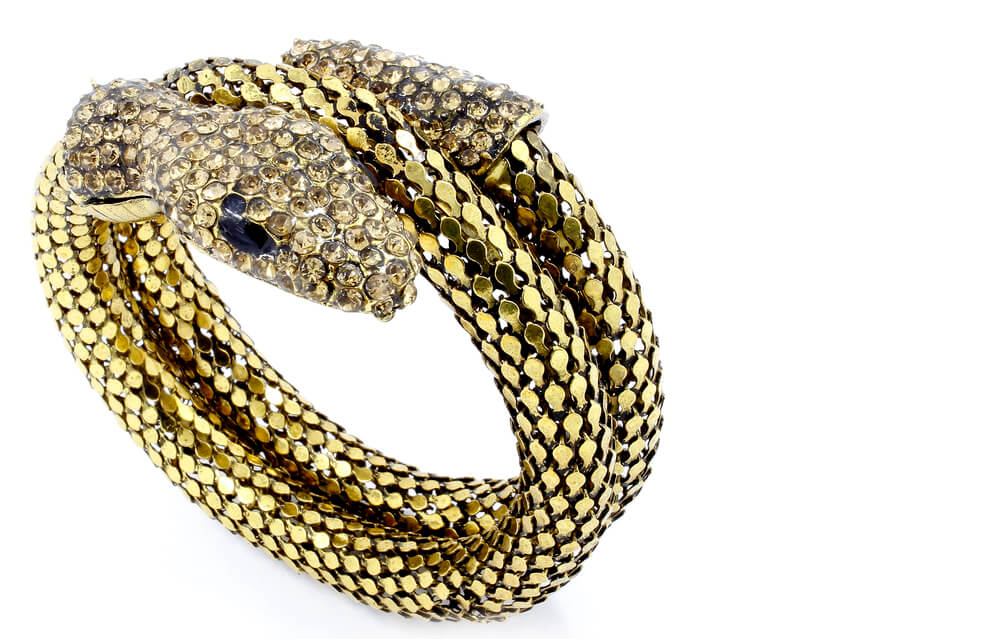
David Webb opened his New York firm in 1948 and became famous for bold animal bangles in hammered gold, enamel, and cabochon gemstones. Frogs, zebras, and lions looked out from wrists, and the pieces were large enough to read from across a room.
Dealers have long linked his name to high-profile clients such as Jacqueline Kennedy Onassis, which keeps interest strong. Enamel condition and stone replacement are the key variables, and original signed pieces sell at a premium over unsigned imitations.
Verdura Maltese Cross Cuffs
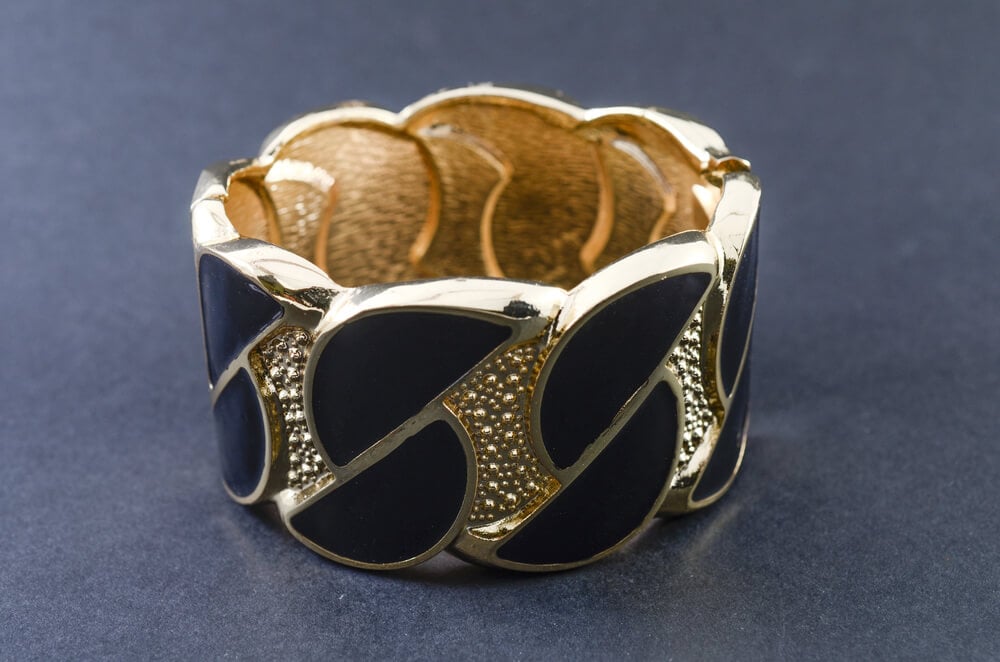
Sicilian duke Fulco di Verdura designed the enameled cuffs with a jeweled Maltese cross that Coco Chanel made famous around 1930. Chanel wore them stacked on her wrists, and the design has been copied ever since.
Jewelers separate genuine Verdura pieces from the many tributes by checking marks and construction carefully. Original enamel in good shape, without flaking or repairs, is a major factor in value.
Art Smith Modernist Cuffs
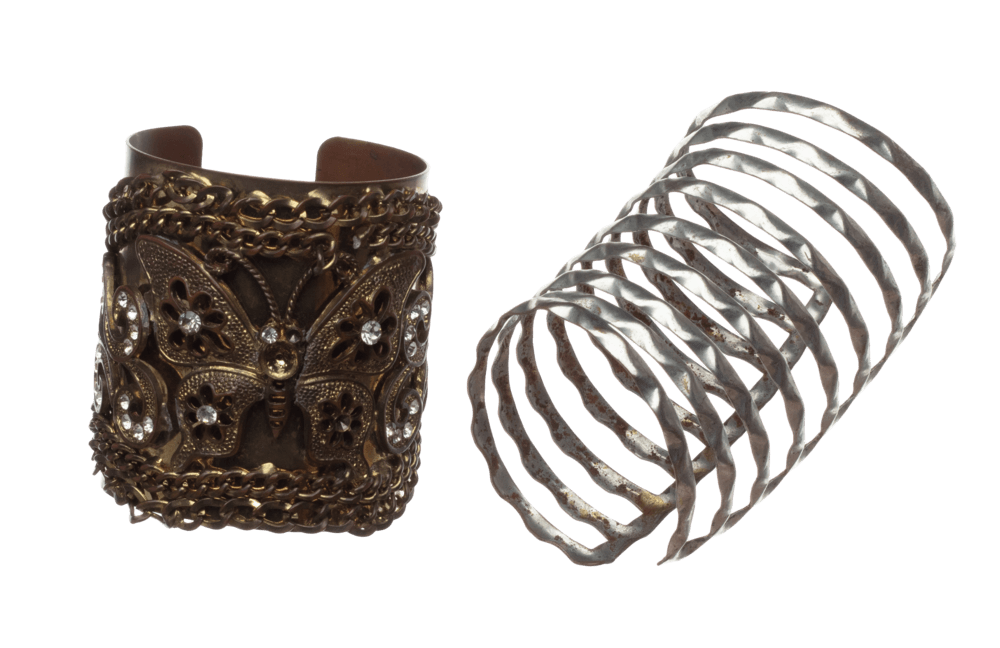
Art Smith worked from Greenwich Village in the mid-twentieth century and shaped copper, brass, and silver into cuffs that move with the arm. A Modernette cuff dated to around 1945 has been appraised on Antiques Roadshow, which helped bring wider attention to his name.
The pieces are sculptural rather than flashy, and jewelers look for his signature mark and an intact original finish. Bends, heavy cleaning, or refinishing can erase the character collectors want.
Miriam Haskell Hand-Wired Bracelets
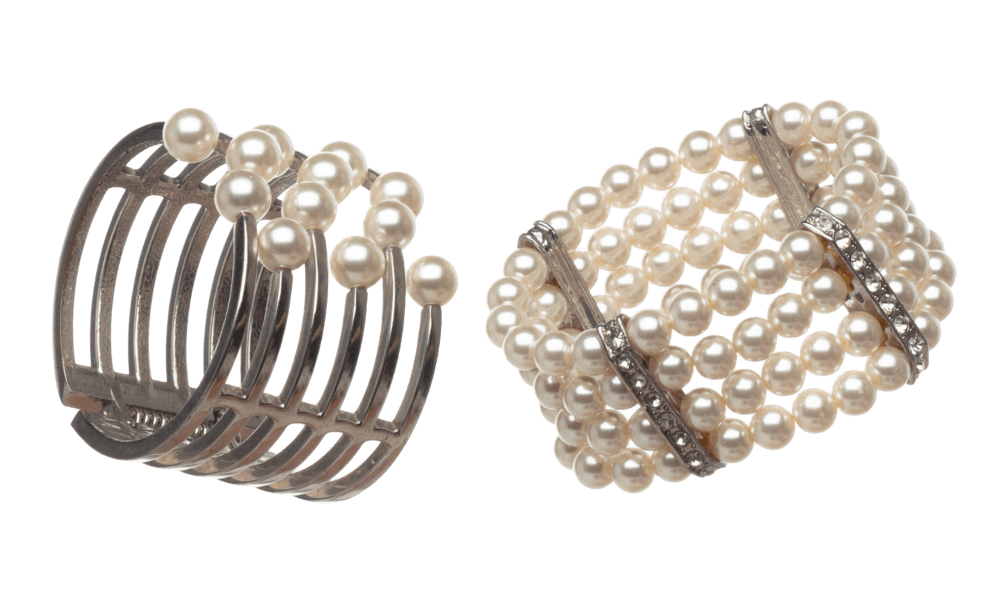
Miriam Haskell launched her costume jewelry house in New York in 1926, and designer Frank Hess shaped many of the pieces most prized today. Beads, pearls, and glass components are wired by hand onto filigree backs rather than glued, giving the bracelets a dense, almost sculptural look.
Dealers check for missing beads and rusted wire, since replacement parts are hard to match. Signed pieces in complete condition move quickly among costume collectors.
Chanel Gripoix Glass Bracelets
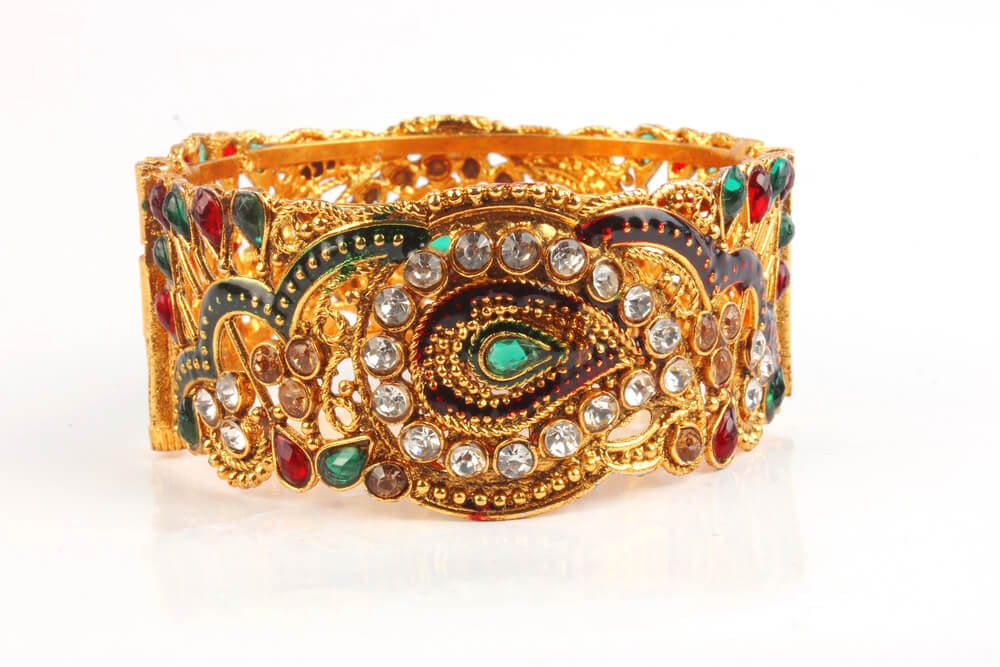
Maison Gripoix is the Paris workshop that poured colored glass paste into metal frames to imitate gemstones for Chanel. Pieces from the 1930s and 1940s are especially sought after, and the glass can look uncannily like cabochon emerald or ruby.
Jewelers examine the pour for cracks, bubbles that have enlarged over time, and any glue marks from past repairs. Authentic Chanel markings on the clasp and original construction are essential for a strong price.
Carved Bakelite Bangles
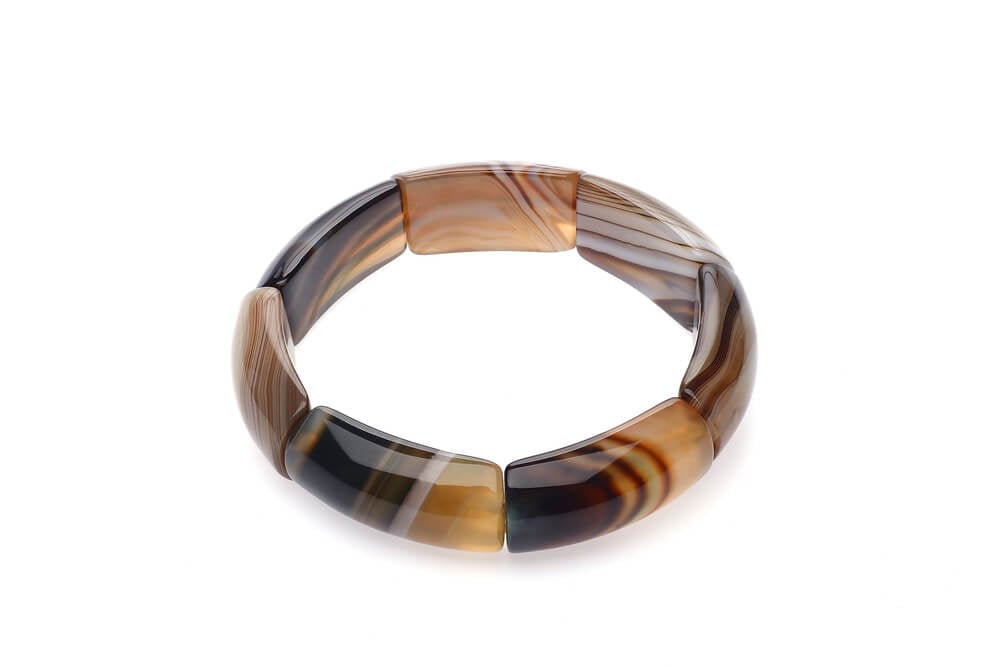
Belgian-born chemist Leo Baekeland developed Bakelite in the early 1900s, and carved bangles in yellow, red, and butterscotch became popular in the 1930s and 1940s. Dealers test pieces with a dab of Simichrome polish, which turns yellow on genuine Bakelite, and by running a bangle under hot water to catch the faint chemical smell.
Deep carving, rare colors, and pairs of matching bangles raise values, but cracks and heavy surface wear lower them. Reproductions are common enough that testing is routine.
William Spratling Taxco Silver Bracelets
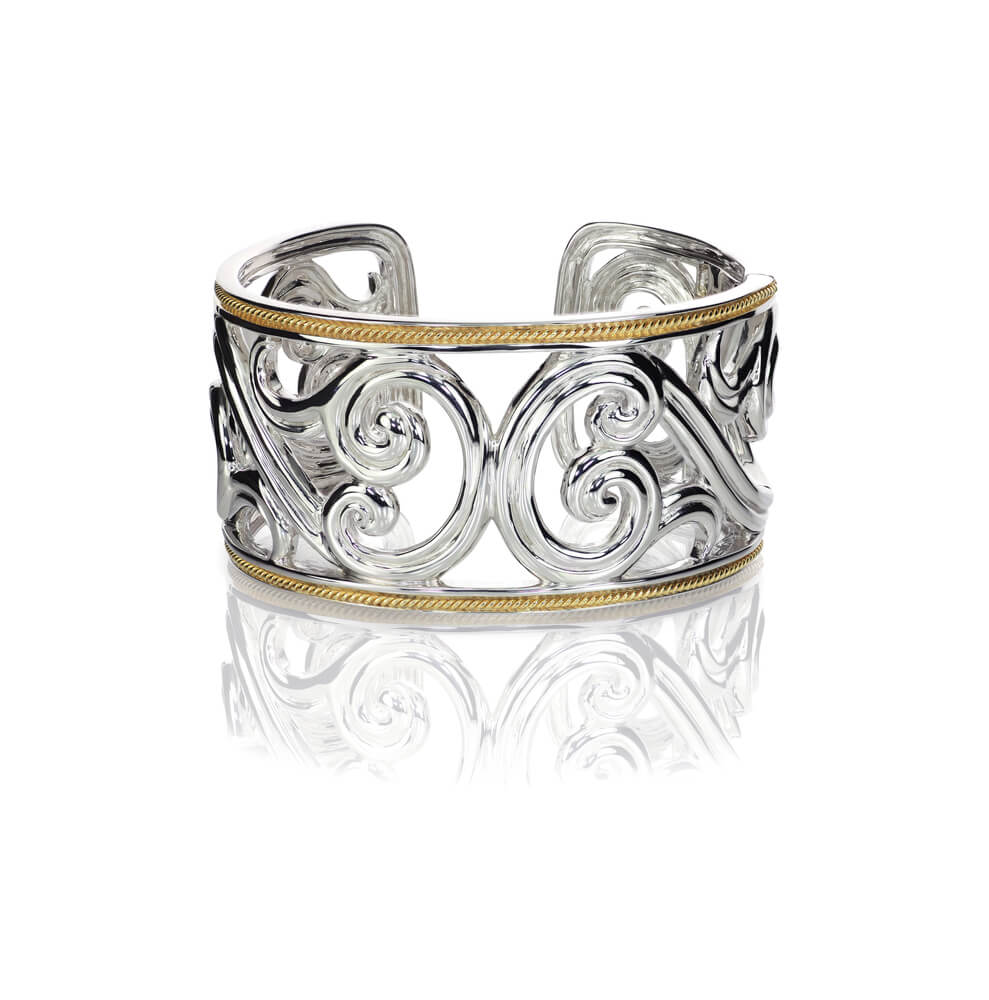
American writer and architect William Spratling moved to Taxco, Mexico, in 1929 and later opened a silver workshop that trained local craftsmen. His designs drew on pre-Hispanic motifs, and bracelets often combine silver with wood or stone.
Marks reading “Spratling Silver” help separate authentic pieces from the many Taxco imitations. Condition counts for much, since heavy wear to the mark or alterations can reduce the appeal for serious collectors.
Fred Harvey Era Navajo Cuffs
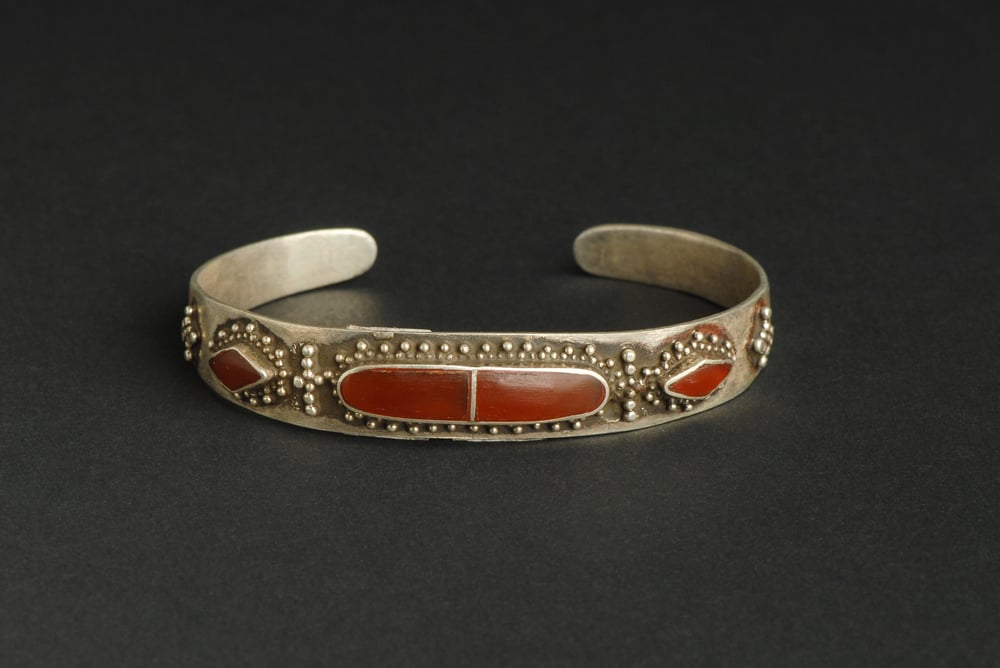
The Fred Harvey Company sold Native American jewelry to travelers along the Santa Fe Railway, and the bracelets sold through its Harvey Houses are now collected as a category of their own. Many are hand stamped with simple arrows, thunderbirds, and bold lines, and are lighter than later heavy tourist pieces.
Jewelers look for old, even patina and well-matched turquoise, since replaced stones are common. Unsigned pieces are normal for this era, so appearance and construction do much of the authenticating.
Whitby Jet Mourning Bracelets
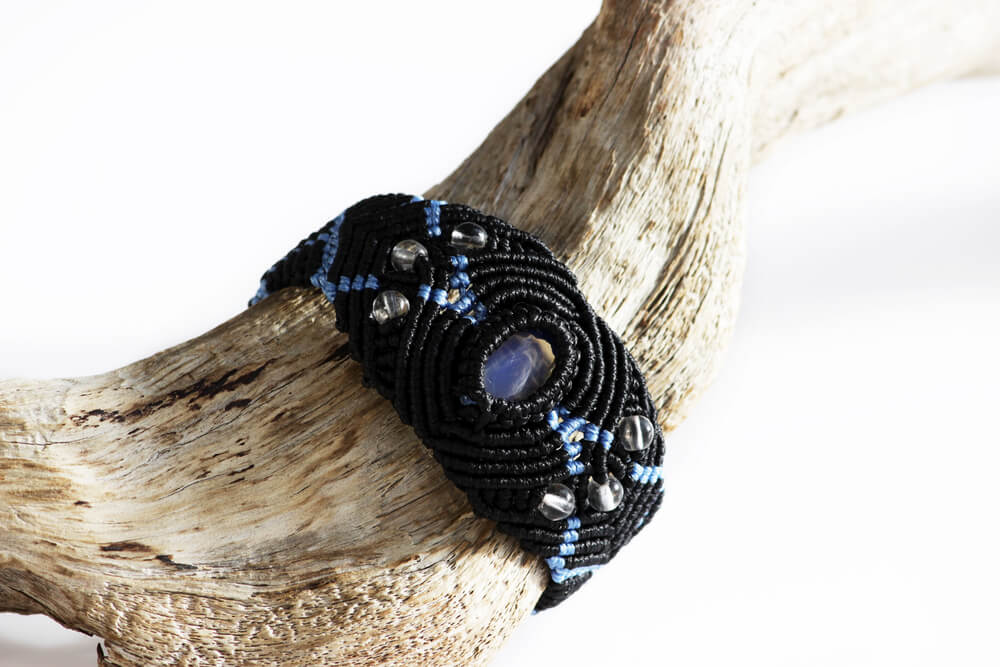
Queen Victoria wore black after Prince Albert died in 1861, and jet jewelry from Whitby, England, became the standard accessory for mourning. Jet is fossilized wood, which makes it light and warm to the touch compared with black glass imitations.
Carved floral and hinged bracelets were common, and dealers inspect them for cracks, which jet is prone to. Pieces with crisp carving and no repairs are the ones that sell for the most.
Victorian Snake Bangles
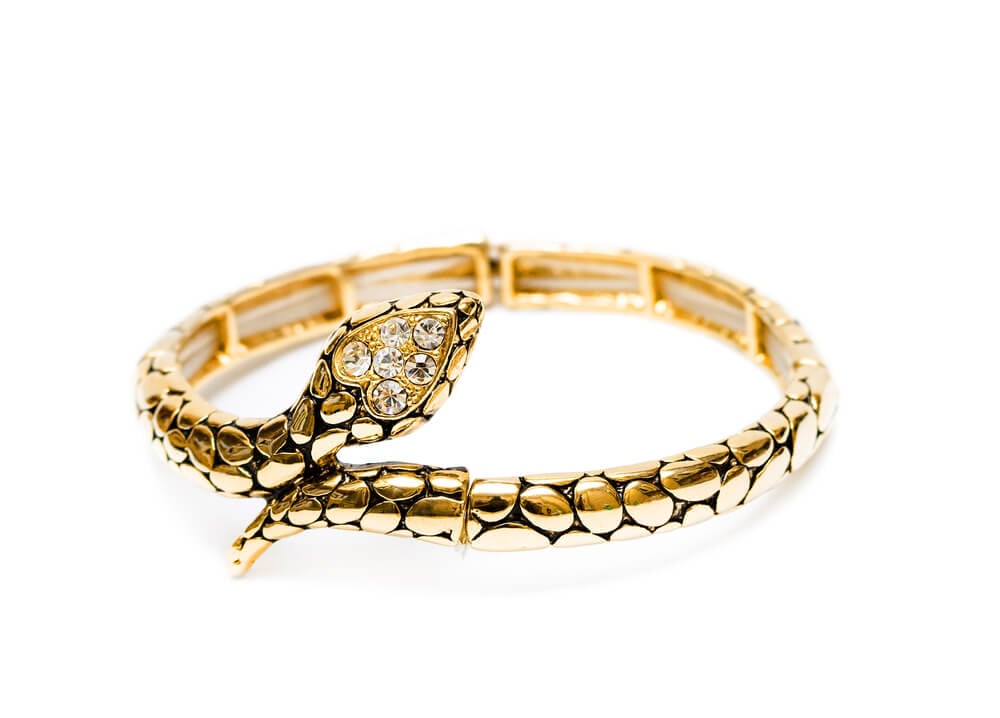
Prince Albert gave Queen Victoria a snake engagement ring in 1840, and the reptile became a fashionable symbol of eternal love. Bracelets followed, with coiled gold bodies and heads set with garnets, turquoise, or small pearls.
Dealers check the head and tail for solder repairs and the stones for replacements, since the delicate mounts took plenty of knocks. A well-preserved example carries both history and a clear visual hook.
Edwardian Platinum Filigree Bracelets
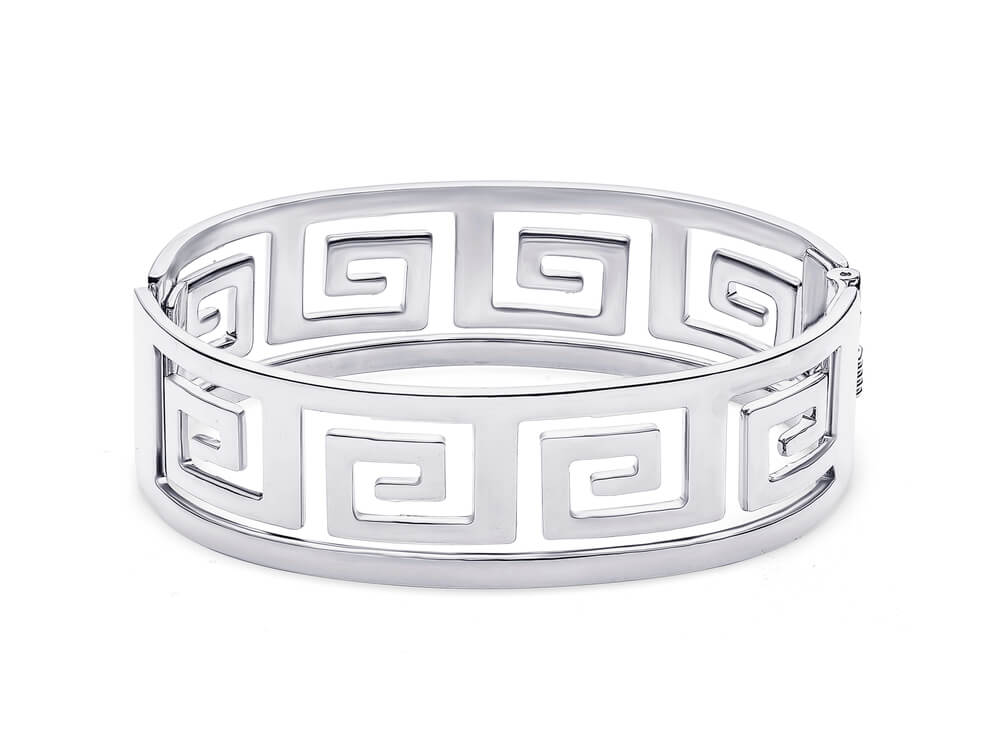
The Edwardian period, which ran from 1901 to 1910, favored lacy platinum-topped gold set with diamonds and fine milgrain edges. Jewelers prize these bracelets for their airy openwork, which resembles thread rather than metal.
That delicacy is also the risk, so dealers inspect carefully for stretched links, worn joints, and missing stones. A tight, complete piece is increasingly hard to find.
Art Deco Calibre-Cut Line Bracelets
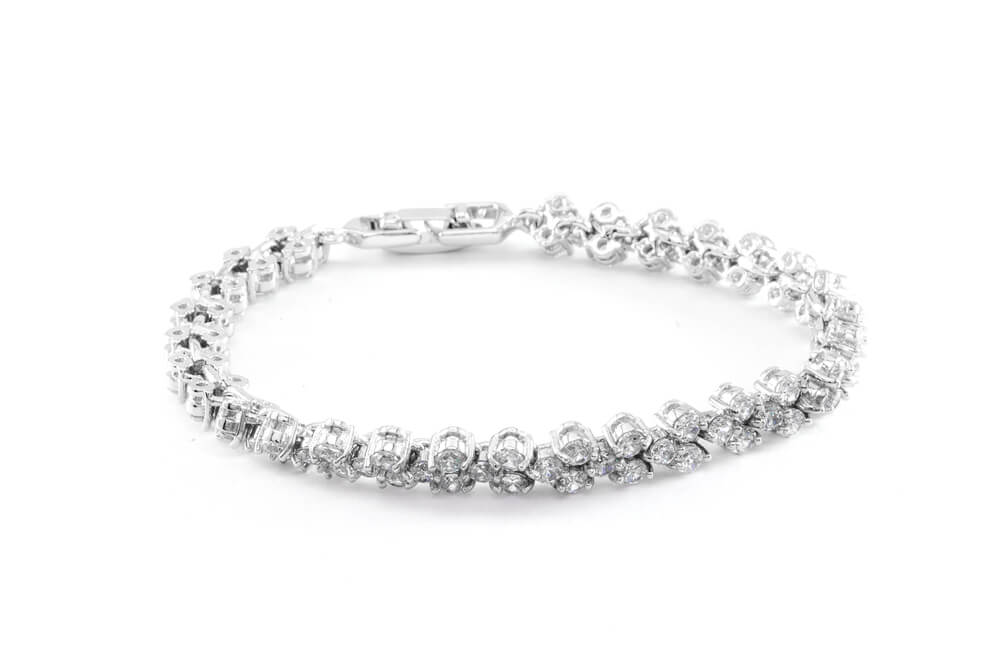
Art Deco jewelers in the 1920s and 1930s set platinum bracelets with rows of precisely cut sapphires, rubies, or emeralds beside diamonds. The stones were cut to fit the design rather than the other way around, so a lost stone is difficult to replace.
Dealers check the hinges and safety catches, then look for replaced stones that differ slightly in color. Complete bracelets with original stones sell far above ones with mismatched repairs.
Egyptian Revival Scarab Bracelets
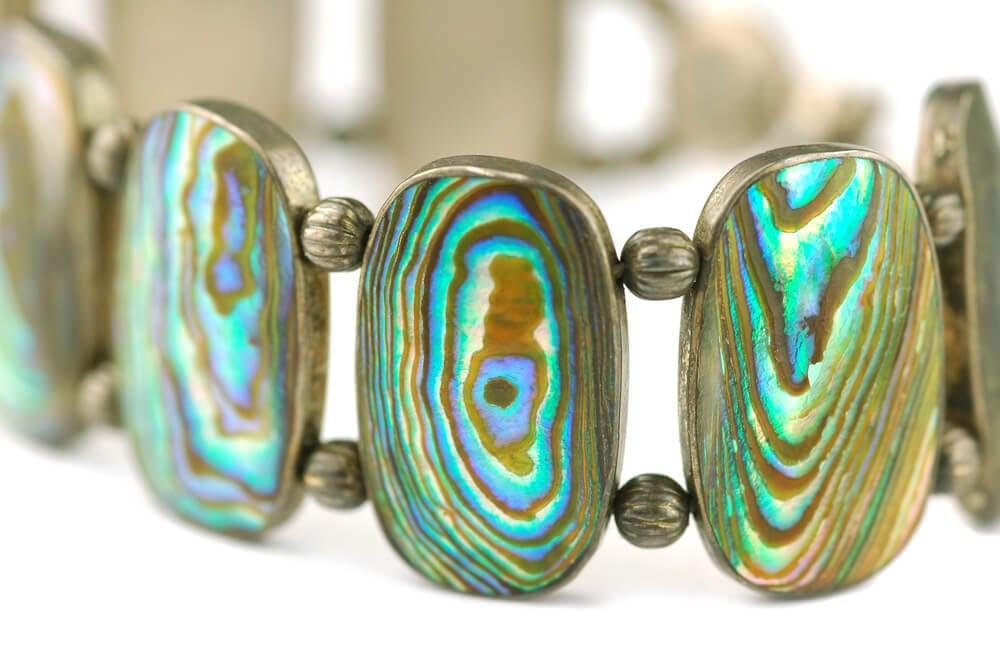
Howard Carter’s discovery of Tutankhamun’s tomb in 1922 set off a wave of jewelry decorated with scarabs, lotus flowers, and winged sun disks. Jewelers in Paris and New York responded with bracelets that mixed Deco geometry with ancient motifs.
Dealers value pieces with real carved scarabs, quality enamel, and strong hallmarks. Replacement stones and altered clasps lower the interest of serious buyers.
Retro Era Gold Bracelets
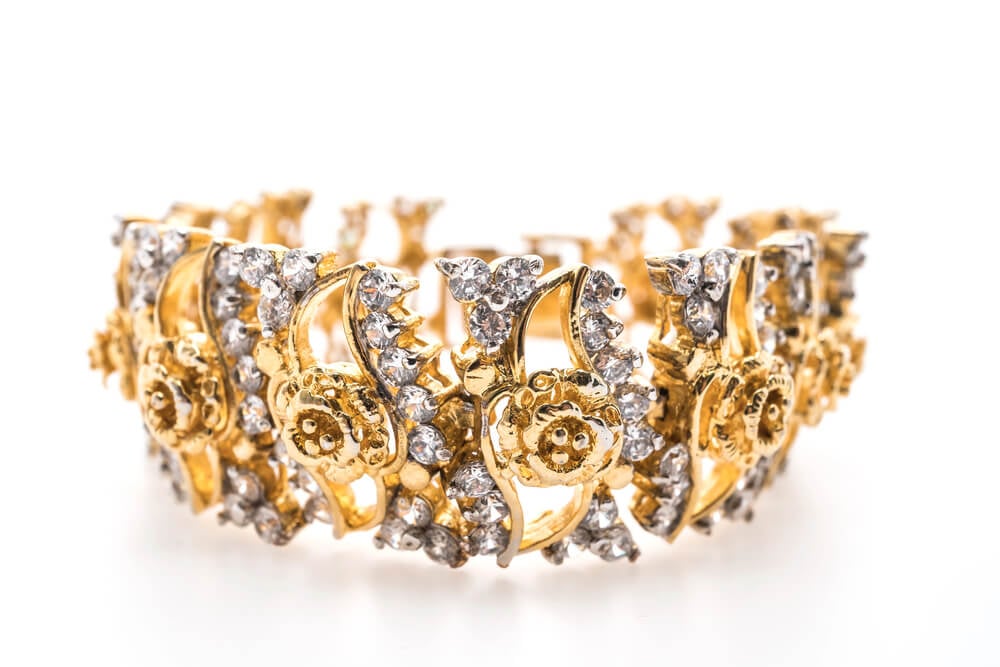
During World War II, the United States restricted platinum for military use, and jewelers turned to yellow and rose gold in big, sculptural shapes. The results were chunky gas-pipe bracelets, bows, and buckles that looked bold and a bit theatrical.
Dealers value substantial weight, clean workmanship, and original clasps. Pieces that have been thinned by polishing or resized awkwardly lose a good share of their appeal.
Berlin Iron Bracelets
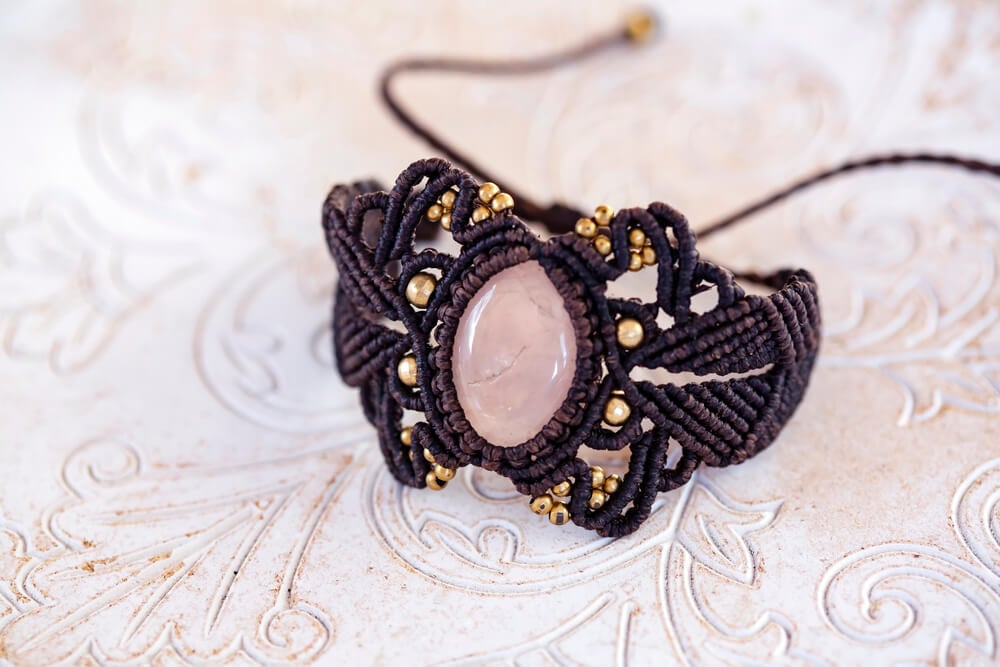
In 1813, Prussians were urged to donate gold jewelry to fund the war against Napoleon, and some received iron pieces in return with inscriptions about giving gold for iron. The result was Berlin iron jewelry, cast in fine detail and often shaped like lace.
Bracelets in this style are now collected as cultural curiosities as much as accessories. Rust and broken links are the big hazards, and jewelers pay most for pieces with crisp casting and little corrosion.
Castellani Etruscan Revival Bracelets
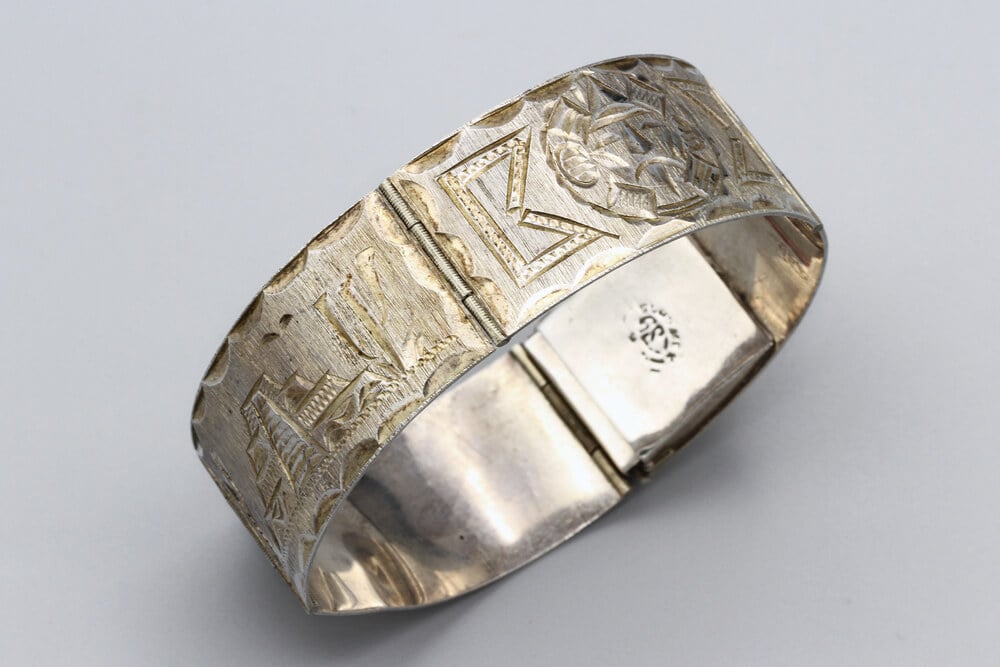
The Castellani firm was founded in Rome in 1814 by Fortunato Pio Castellani, and his sons Alessandro and Augusto became famous for reviving ancient Etruscan gold techniques. One of those methods, granulation, fuses tiny beads of gold onto a surface to form patterns.
Bracelets in this style are valued for their archaeological look and meticulous craft. Authentic examples require careful attribution, and condition of the granulation is critical.
Liberty Cymric Silver Bracelets
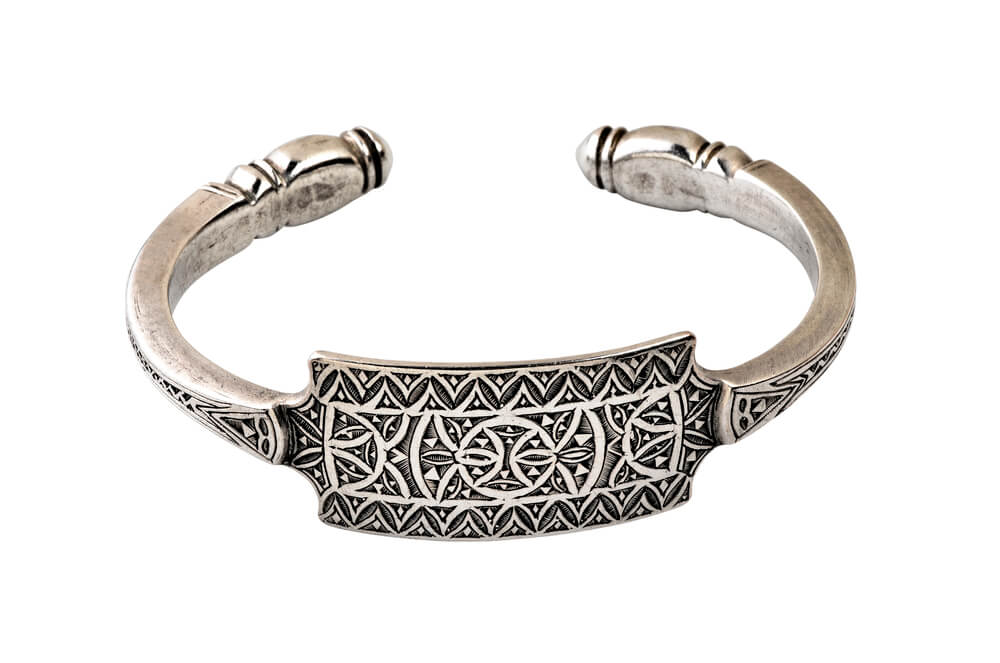
Liberty & Co. launched its Cymric line of silver and enamel in 1899, with many of the designs credited to Archibald Knox. The name means “Welsh,” even though Knox himself was from the Isle of Man.
Celtic knotwork patterns and soft enamel colors define the look, and pieces carry the Cymric and L&Co marks. Dealers check enamel for chips and the silver for dents, which affect value more than age does.
Whiting & Davis Mesh Bracelets
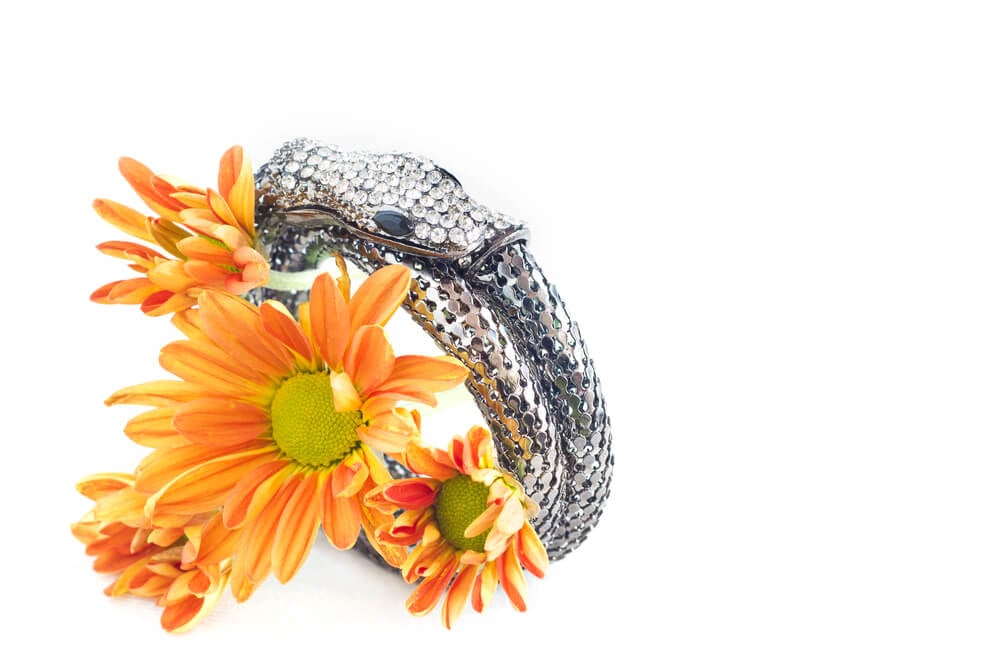
Whiting & Davis, a Massachusetts company best known for metal mesh handbags, also produced mesh cuffs and bracelets that flex like fabric. The woven look gives them a surprisingly modern feel, and some Deco-era examples have enameled or geometric patterns.
Jewelers examine the mesh for kinks, tears, and worn plating, which are difficult to correct. A flexible, intact bracelet with its maker’s mark attracts the strongest interest.
Diamond Line Tennis Bracelets
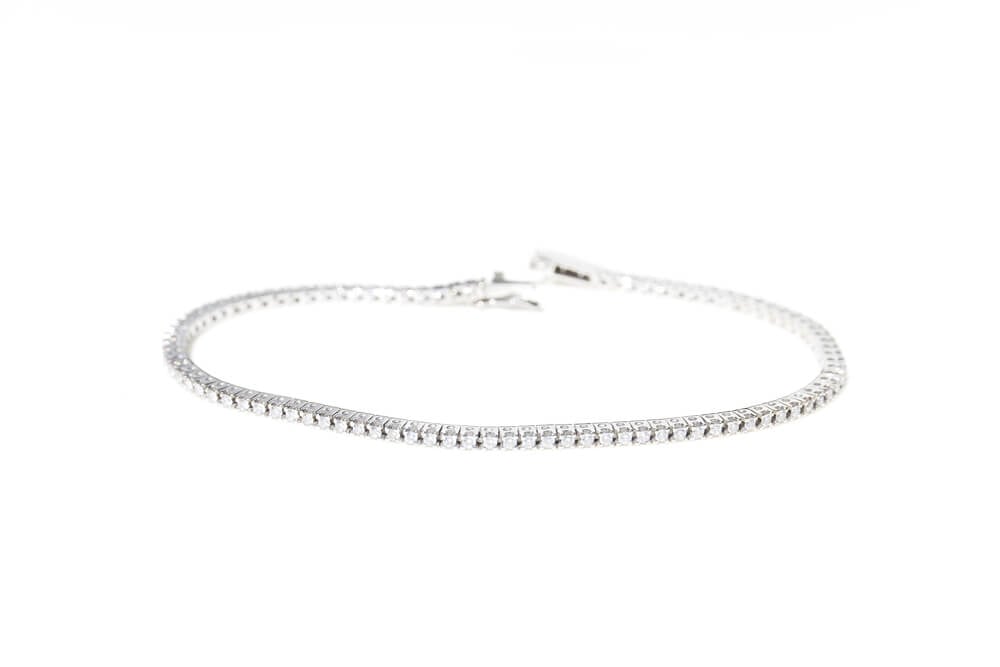
The name “tennis bracelet” dates to the 1987 US Open, when Chris Evert’s diamond line bracelet came loose and she asked for a pause so she could look for it. Before that, the style was usually called a line bracelet.
Vintage examples with older stone cuts and handmade settings appeal to buyers who prefer individuality to uniform modern stones. Jewelers test every clasp and safety catch, since a loose link or worn prong turns a valuable bracelet into a risk.
Gold Charm Bracelets
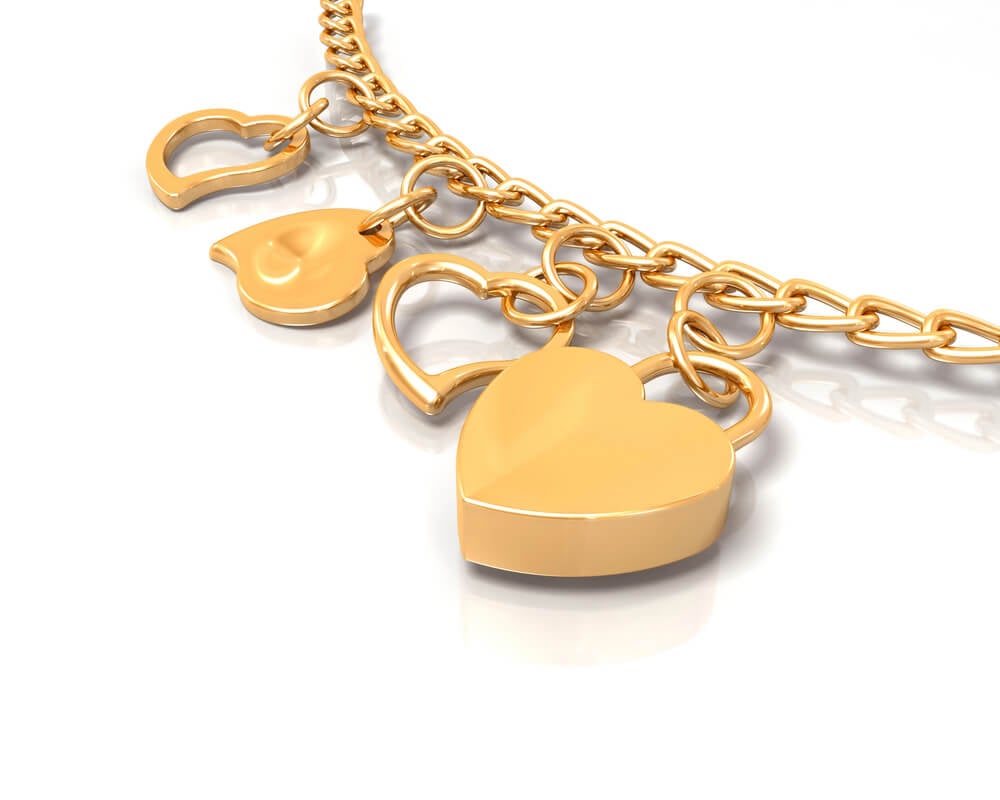
Queen Victoria is widely credited with popularizing charm bracelets in the nineteenth century, and the style returned in force in the mid-twentieth century. Vintage versions in karat gold often carry articulated or mechanical charms, and each charm is valued separately from the chain.
Dealers check solder points and jump rings, since these small connections fail over decades of wear. A bracelet with a documented story behind its charms can be worth more than the sum of its metal.
What Makes a Bracelet Worth Buying Twice
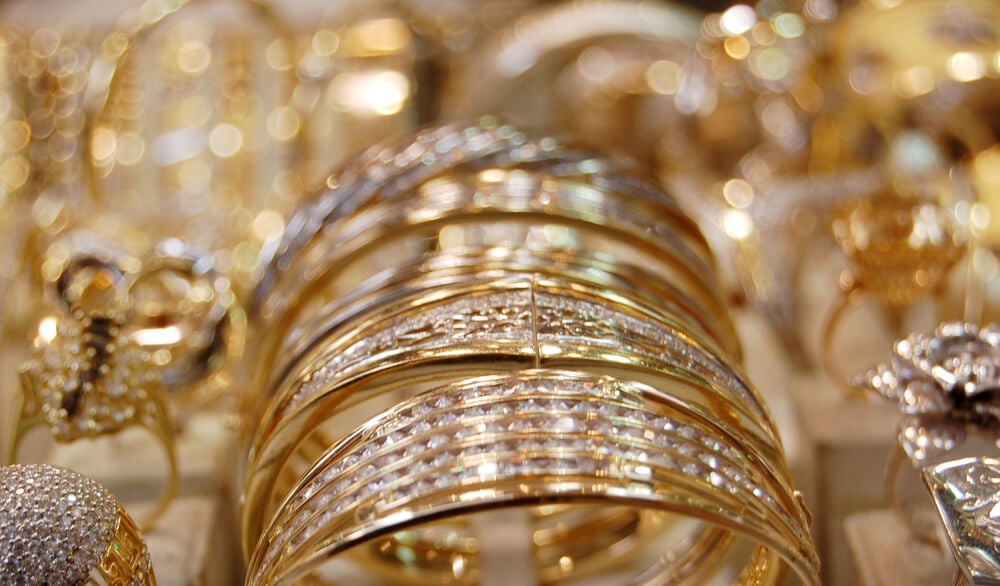
Nearly every bracelet here sells for the same reasons: a maker who can be identified, materials that are hard to replace, and construction that survived decades of daily wear. A famous name helps, but a clean hallmark on a damaged piece usually leaves a jeweler unimpressed.
The cheap bracelet in perfect shape often beats the grand bracelet that has been polished, resized, and patched.
That is why dealers handle each piece slowly, checking hinges, stones, and finishes before ever naming a number. A bracelet is a mechanical object worn on the most active part of the arm, and the survivors are the ones that were well made and well looked after.
Anyone shopping or selling can learn from that habit: the story matters, but the condition decides the price.
Add a clear value-checking frameworkMake each entry follow one structure
More from Go2Tutors!

- 27 Silver Dollars and Half Dollars Worth Keeping
- 28 Restaurant Menu Items Nobody Orders Anymore
- 17 Places Built in Seemingly Impossible Spots
- 27 Vintage Rings Worth More Than They Look
- 25 Restricted Sites Tourists Can’t Enter
Like Go2Tutors’s content? Follow us on MSN.