13 Historic Photos of Traveling Circuses
A traveling circus arrived like a small city, built itself in a morning, and vanished by midnight. Cameras were there for much of it, and the archives that kept those pictures now hold the best record of how the whole machine worked.
The photographs below come from museums, libraries, and historical societies across the country. Each one catches a different piece of the show, from the tracks to the tents to the faces under the greasepaint.
Walker Evans and the Downie Bros. Posters Near Lynchburg
In 1936, Walker Evans photographed a building near Lynchburg plastered with posters for a Downie Bros. three-ring circus. The picture is held by the Library of Congress.
Evans was working in the Depression-era documentary tradition, and the image shows that the advertising arrived long before the elephants did. Entire walls became a promise of spectacle, sold to people who might not see a color picture again until the next season.
The Hagenbeck-Wallace Wreck at Hammond, Indiana
In 1918, a Hagenbeck-Wallace circus train was wrecked near Hammond, Indiana, in what newspapers later called the worst circus train disaster in American history. Photographs of the scene survive in the Hammond Historical Society’s online collection, where a numbered series begins with wreck photo number one, and in the Chicago History Museum, which catalogs a related image as a Hagenbeck-Wallace circus train accident.
The pictures make a hard point plainly: the glamour of the show rode on the same rails as everyone else.
Clyde Beatty’s Cole Bros. Parade Into Bloomington, Illinois
A 1935 photograph shows the Cole Bros. Circus and Clyde Beatty’s Wild Animal Exhibition parading into Bloomington, Illinois. Beatty was the famous big-cat trainer whose name gave the show its draw, and the parade was how a town learned he had arrived.
The image is cataloged through the Digital Public Library of America. It records a street procession that functioned as free advertising for the ticket wagon.
A Cole Brothers Side Show in Wisconsin Historical Society Files
The Wisconsin Historical Society holds a photograph titled Cole Brothers Side Show. Sideshows ran on a separate ticket from the main tent, and the banner line out front did the selling for them.
The picture preserves that approach, with painted canvas promising marvels that the performers inside then had to deliver on. For a circus historian, the banners are as revealing as the people standing under them.
Sells-Floto and Buffalo Bill Parade Personnel
The Ringling Museum in Sarasota holds a photograph of Sells-Floto and Buffalo Bill circus parade personnel, a title that reflects a time when two famous names shared one show. The picture is a group portrait of the people who marched, rode, and drove the wagons through town.
It shows that a parade was a large staffing operation, and that each figure in costume was a paid member of the company.
Barnum & Bailey’s Elephants in 1903
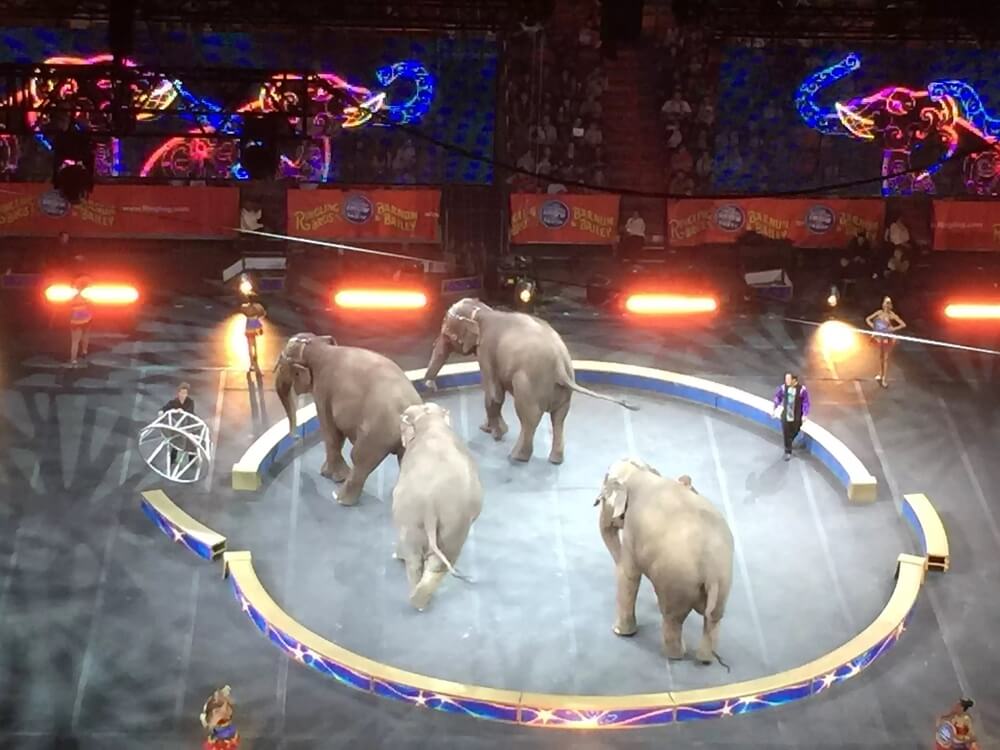
The Circus Historical Society presents a project on the Barnum & Bailey Circus in 1903 that centers on the show’s elephants. The images suit a circus that built its reputation on herds of them.
Elephants were the heaviest live asset on the lot, and they pulled wagons, raised poles, and walked in parade. In a photograph from that season, the animals read less as performers than as the show’s working muscle.
The Combined Ringling and Barnum & Bailey Train
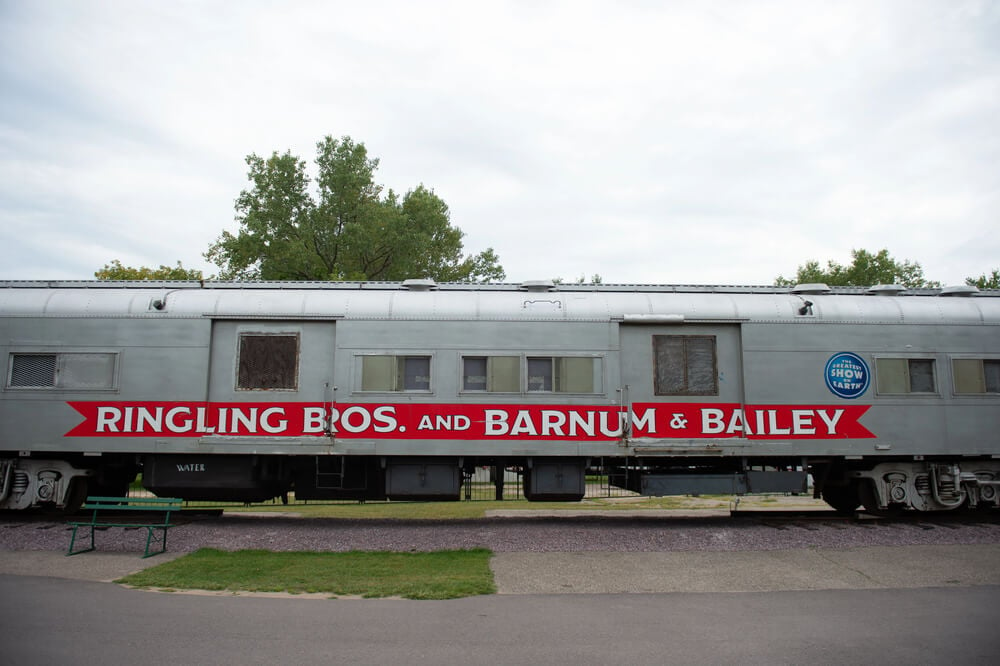
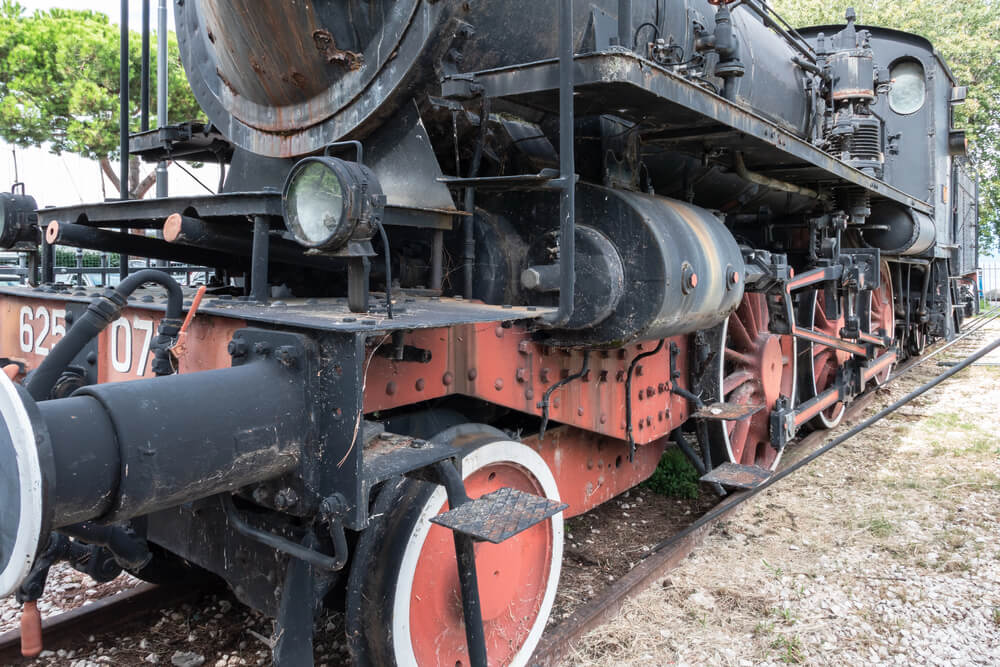
The Ringling Museum’s collection includes a photograph of the Ringling Brothers and Barnum & Bailey combined circus train. Moving a show of that size depended on rail cars loaded in a set order, with wagons rolled on and off flatcars by the crew.
The image captures the string of cars as infrastructure, not as spectacle. Without it, nothing else in the archive would have reached the next town.
Rehearsal at Ringling Winter Quarters
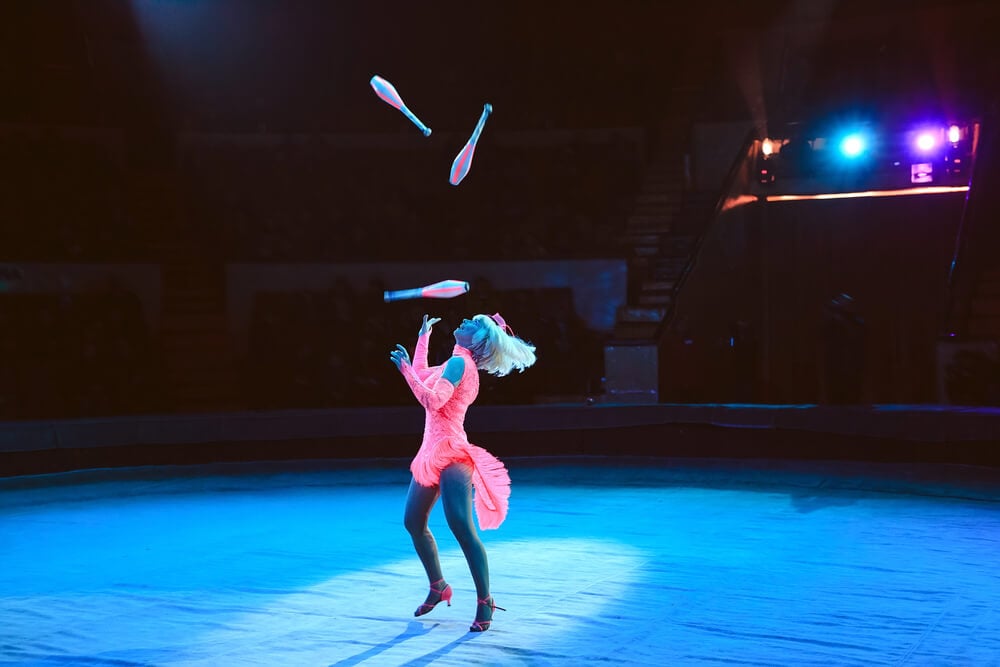
The Ringling Museum in Sarasota catalogs photographs titled as rehearsals at the winter quarters of Ringling Bros. and Barnum & Bailey. Between seasons, the company settled in Florida and worked up acts for the road.
These pictures show the unglamorous part of the business, where performers practiced in daylight with the tent nowhere in sight. The wintering routine explains why Sarasota later became known as a circus town.
Elephants in Howell, Michigan, July 15, 1910
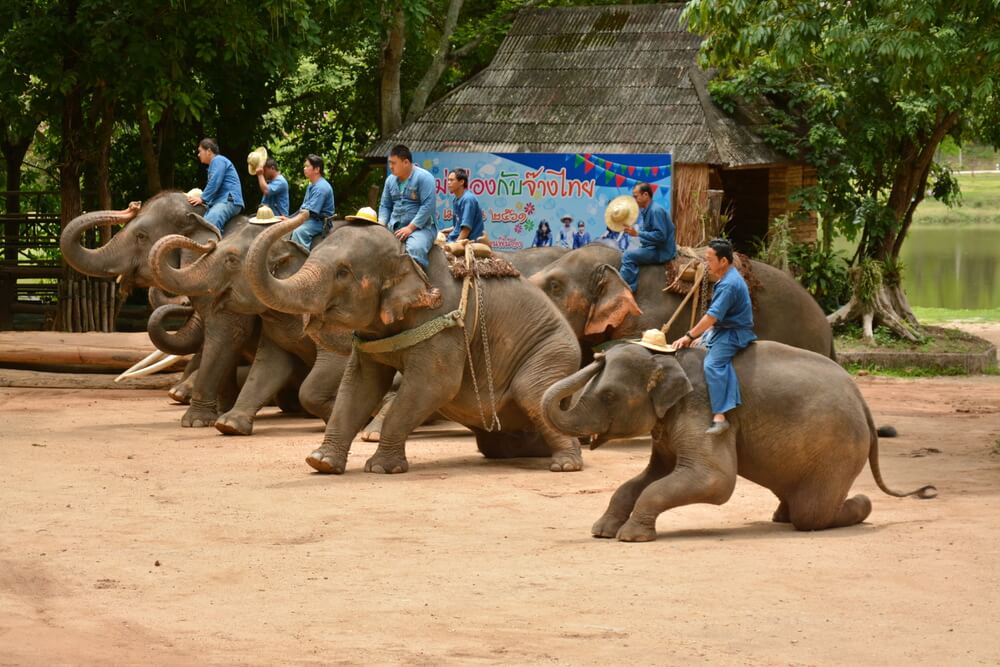
The Howell Carnegie District Library in Michigan preserves a photograph titled Circus Parade with Elephants, Howell, Michigan, July 15, 1910. The exact date matters, because it ties a small-town street scene to a single summer afternoon.
A modest Michigan main street became a stage for an animal procession, and local photographers understood that crowds would want a record of it. The picture is a reminder that the circus visited small places, not only cities.
A Ringling Brothers Parade in 1907
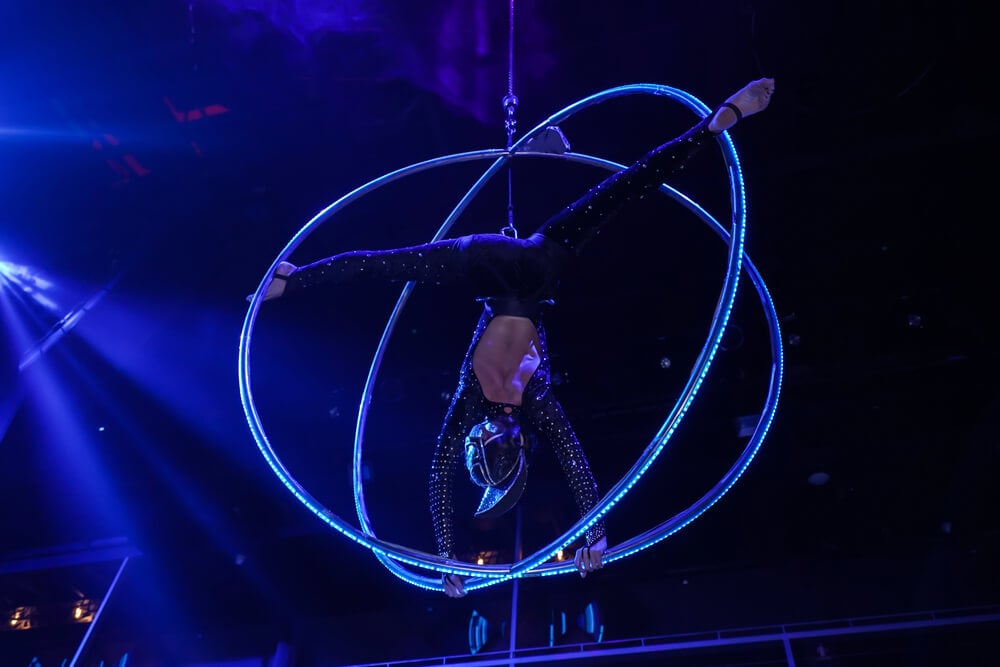
Utah State University’s archives list a photograph titled Ringling Brothers Circus Parade, 1907. By that year the Ringling name was among the most recognized in the business, and the parade was the traveling advertisement that proved it.
A photograph from that date shows the brothers’ operation at a stage when street processions were still considered essential. Crowds lined the route for a show many had not yet paid to see.
The Forepaugh-Sells Brothers Parade in Charleston
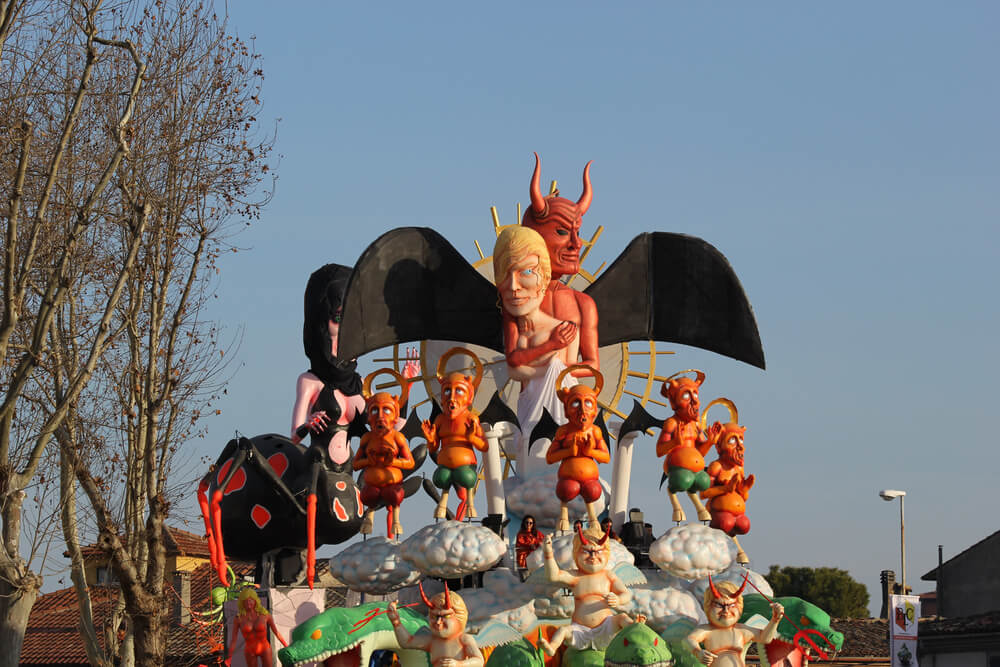
The Charleston Museum holds a photograph called Forepaugh-Sells Brother’s Circus Parade, a record of a combined show passing through South Carolina. Forepaugh and Sells Brothers merged their names and resources, and the combination meant larger parades with more wagons to display.
The picture is useful because it places that merged operation on an ordinary Southern street. It also shows how much of the spectacle was staged for people who never entered the big top.
The Sells-Floto Elephant Tableau
The Circus Historical Society documents a photograph of the Sells-Floto Elephant Tableau, a carved and painted parade wagon built around elephant imagery. Tableau wagons were the rolling showpieces of a circus parade, covered in sculpture and gilded decoration.
The photograph preserves details of craftsmanship that were meant to be seen from a curb for a few seconds. Because most of these wagons were later lost or burned, a picture may be the only complete record.
The Great Forepaugh Five Graces Bandwagon
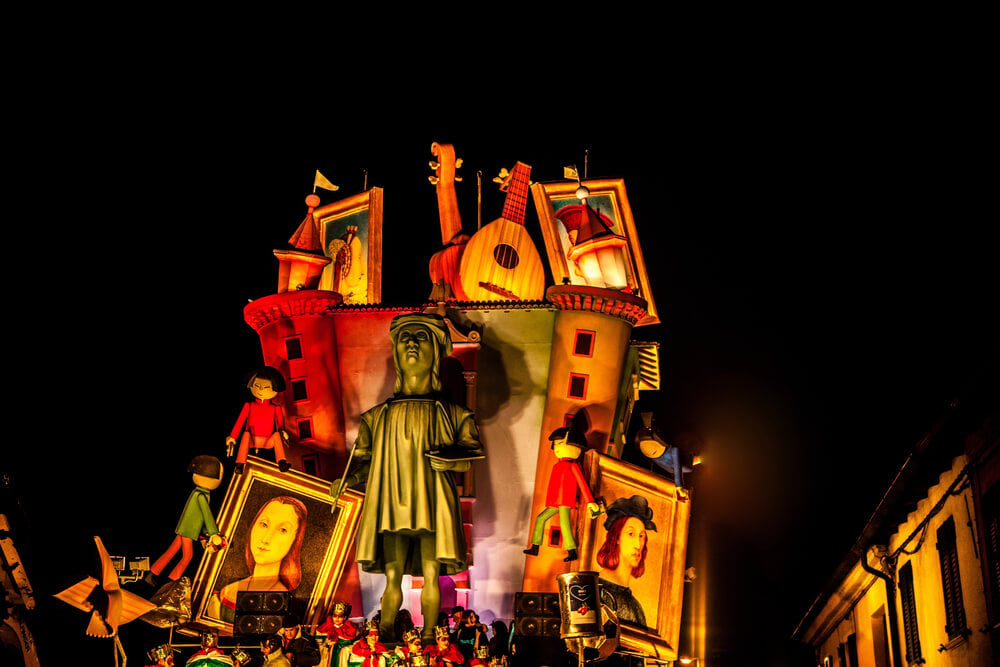
The Ringling Museum holds a photograph titled Great Forepaugh Five Graces Bandwagon. A bandwagon carried the musicians at the head of a parade, and its design set the tone for everything behind it.
Figures representing the five graces decorated the wagon, turning a vehicle for a brass band into a piece of moving sculpture. The photograph shows how much money a circus was willing to spend on its opening impression.
What the Camera Kept
Taken together, these pictures show that a traveling circus was as much logistics as performance. Trains, parades, wagons, tents, and posters carried the show from town to town, and each had its own photographers and archivists.
The performers got the applause, but the infrastructure made the applause possible. That is why these archives matter.
A museum drawer of circus photographs documents American entertainment, rail travel, advertising, and small-town life all at once. The big top has come down in most of these places, but the pictures still show where it stood.
More from Go2Tutors!

- 27 Silver Dollars and Half Dollars Worth Keeping
- 28 Restaurant Menu Items Nobody Orders Anymore
- 17 Places Built in Seemingly Impossible Spots
- 27 Vintage Rings Worth More Than They Look
- 25 Restricted Sites Tourists Can’t Enter
Like Go2Tutors’s content? Follow us on MSN.