16 Bizarre Intelligence Tests Used in History
Looking back at the history of intelligence testing is like peering into a funhouse mirror of scientific ambition gone wrong. While today’s IQ tests have their own limitations, the methods used by earlier researchers were often downright strange, scientifically questionable, and sometimes deeply disturbing.
These weren’t just theoretical ideas dreamed up in laboratories — they were actual practices used to make life-altering decisions about people’s education, employment, and even their right to have children. From measuring skull bumps to timing reaction speeds, here’s how our ancestors tried to crack the code of human intelligence.
Here is a list of 16 bizarre intelligence tests that were actually used throughout history to evaluate cognitive abilities.
Phrenology – Reading Skull Bumps
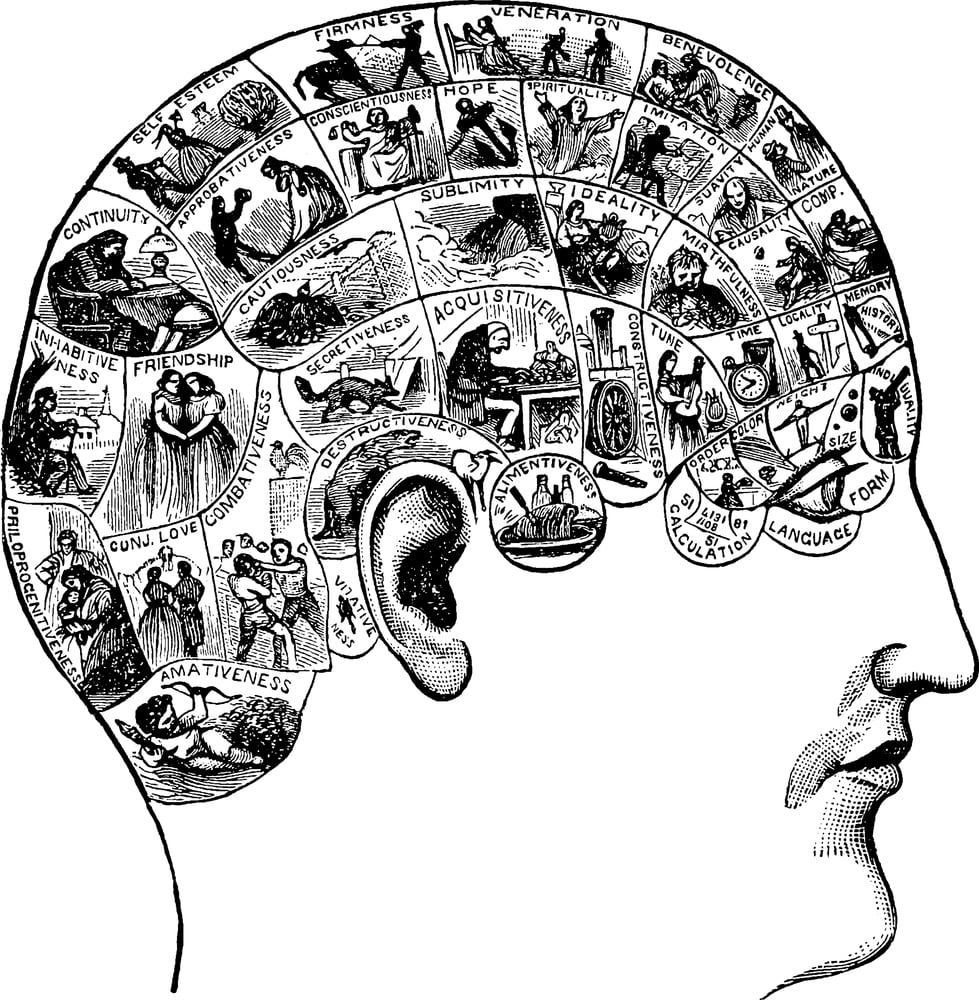
In the 1790s, Viennese physician Franz Joseph Gall invented phrenology — the practice of feeling bumps on people’s skulls to determine their personality traits and intelligence. Gall believed the brain had 26 to 40 distinct “organs” that controlled different mental faculties, and larger regions meant stronger abilities.
Phrenology parlors became wildly popular, where couples sought compatibility advice and employers had potential workers’ heads examined. The practice was so mainstream that Thomas Edison and Sir Arthur Conan Doyle embraced it, which explains why Sherlock Holmes was given a high forehead to signify intelligence.
Galton’s Anthropometric Laboratory

Sir Francis Galton established his “measurement of man” laboratory at London’s 1884 International Health Exhibition, where over 9,000 people paid admission fees to have their intelligence measured through sensory tests. Visitors moved through stations testing visual acuity, auditory accuracy, breathing capacity, and reaction times to various stimuli.
Galton firmly believed that people with sharper senses and faster reflexes were more intelligent. His laboratory was so popular that he opened a permanent location at the South Kensington Museum, though later research showed virtually no correlation between these measurements and actual intellectual ability.
The Psychograph Machine
American Henry Lavery took skull measurement to mechanical extremes in 1905 with his invention of the “psychograph” — a helmet-like contraption with hundreds of moving parts that measured skull topology at 32 different points. Department stores and theater lobbies featured these machines, which gave customers detailed readouts ranging from “deficient” to “very superior.”
People happily paid for printouts telling them things like “you do not make enough effort towards expressing consideration of others.” The machine was essentially a high-tech version of phrenology, dressed up with impressive-looking technology.
Craniometry – Skull Measurement with Calipers
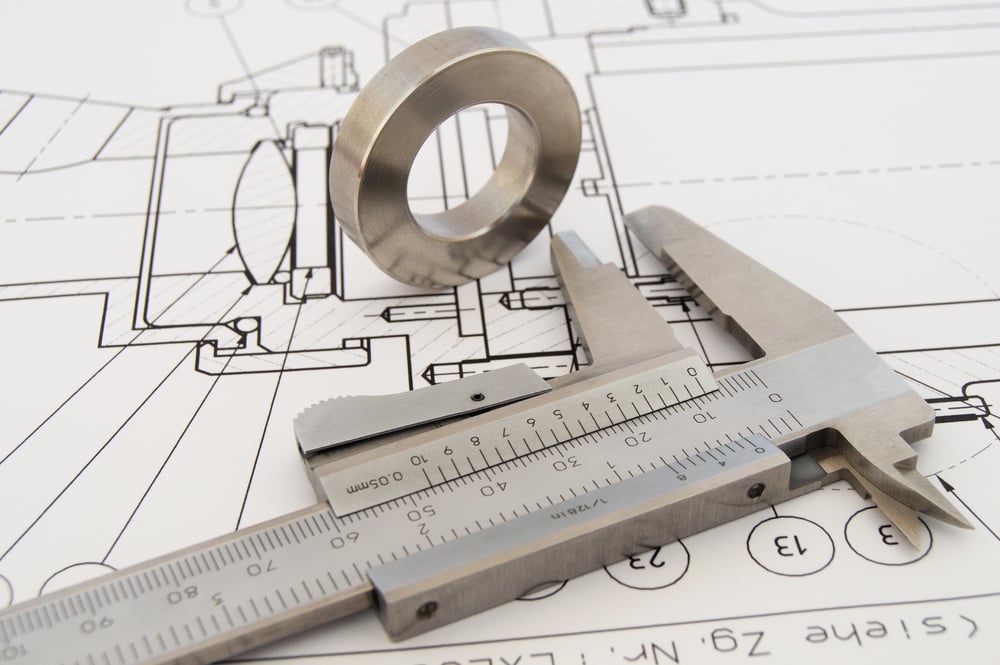
Throughout the 19th century, researchers obsessively measured human skulls with calipers, convinced that cranial capacity directly indicated intelligence levels. Scientists like Samuel Morton collected thousands of skulls and meticulously recorded their volumes, often by filling them with lead shot or mustard seeds.
The practice was used to create supposed hierarchies of racial intelligence, with researchers manipulating their measurements to support predetermined conclusions. This “science” was so flawed that when Alice Lee re-examined the data in 1900, she found the methodology was completely unreliable.
Beauty Mapping for Intelligence

Francis Galton created what he called a “beauty map” of Britain by secretly grading local women on a scale from attractive to repulsive as he traveled through different regions. He believed that physical attractiveness correlated with intelligence and moral character, recording his observations with a concealed counting device.
According to Galton’s system, Aberdeen scored lowest on his beauty-intelligence scale. This bizarre conflation of physical appearance with mental ability reflected the era’s troubling assumptions about the relationship between external traits and internal worth.
Composite Portraiture for Criminal Detection
Galton developed a photographic technique called “composite portraiture” by superimposing multiple portraits of individuals to create average faces of different groups. He was particularly interested in creating composite images of criminals, believing this would reveal the “typical” criminal face that indicated lower intelligence and moral deficiency.
The technique involved carefully registering photographs on subjects’ eyes and layering them to produce what Galton thought were scientifically meaningful average representations of criminal types versus law-abiding citizens.
Breathing Capacity as Brain Power

Victorian researchers seriously believed that lung capacity indicated mental capacity, leading to intelligence tests that measured how much air people could inhale and exhale. The logic was that since the brain needed oxygen to function, people with larger lung capacity could supply more oxygen to their brains and therefore think better.
Testing stations at anthropometric laboratories included devices to measure breathing volume, and the results were factored into overall intelligence assessments. This method ignored countless variables like physical fitness, respiratory health, and body size.
Facial Angle Measurements
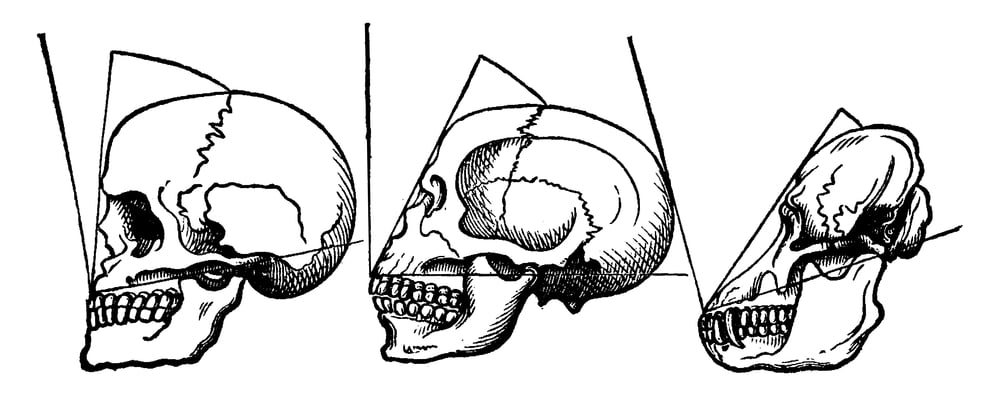
Dutch anatomist Petrus Camper developed a theory of measuring “facial angles” — the angle between the forehead and the jaw — as an indicator of intelligence. His measurements were specifically designed to compare non-European skulls to those of apes, creating a supposed evolutionary hierarchy with Europeans at the top.
Camper’s facial angle theory was used throughout the 18th and 19th centuries to justify racial prejudices, with steeper angles supposedly indicating higher intelligence. The method completely ignored the enormous variation within all human populations.
Form Board Tests for “Feeblemindedness”

American psychologist Henry Goddard was particularly fond of the form board test — a simple wooden board with ten shapes carved into its surface that children had to match with corresponding blocks. While this sounds like a reasonable children’s toy today, Goddard used timing and error rates on this single task to classify children as “feebleminded” and recommend their removal from regular classrooms.
He claimed this one test could reveal more about a child’s condition than complicated expert evaluations, leading to the widespread tracking and segregation of students based on minimal evidence.
Army Alpha and Beta Tests

During World War I, the U.S. military developed two versions of intelligence tests — Army Alpha for literate recruits and Army Beta for those who couldn’t read. The Alpha test included questions that heavily favored American cultural knowledge, like “Christy Mathewson is famous as a writer-artist-baseball player-comedian.”
Immigrants and minorities who scored poorly were classified as intellectually inferior, with results used to justify discriminatory immigration policies. The testing program was largely ineffective for its military purposes but had lasting damaging effects on how society viewed different ethnic groups.
Sensory Discrimination Testing

Researchers developed elaborate tests measuring people’s ability to distinguish between subtle differences in pressure, weight, temperature, and sound frequencies. Test subjects would be asked to identify which of two nearly identical stimuli was heavier, warmer, or louder, with their accuracy supposedly indicating their intellectual capacity.
These tests required expensive equipment and trained administrators, yet showed no meaningful correlation with actual problem-solving abilities or academic performance. The approach fundamentally misunderstood the relationship between basic sensory processing and complex reasoning.
Criminal Skull Classification

Italian criminologist Cesare Lombroso claimed he could identify “born criminals” by measuring specific skull and facial features, arguing that criminal tendencies were visible in physical characteristics. He developed detailed classification systems based on jaw prominence, ear shape, and skull asymmetries, believing these features indicated evolutionary throwbacks to primitive human types.
Lombroso’s methods were used in courts to argue that defendants were naturally predisposed to criminal behavior based solely on their physical appearance. His theories influenced criminal justice systems well into the 20th century despite having no scientific basis.
Cephalic Index Categories

Swedish anatomist Anders Retzius developed a system classifying human skulls as “dolichocephalic” (long and thin), “brachycephalic” (short and broad), or “mesocephalic” (intermediate), with each category supposedly indicating different intellectual and character traits. Researchers spent decades measuring skull length-to-width ratios, creating elaborate charts and databases to support theories about racial and individual differences in intelligence.
The classifications were used to make sweeping generalizations about entire populations, completely ignoring the reality that skull shape has no relationship to cognitive ability.
Brain Weight Measurements

Some researchers took the most direct approach possible by weighing actual human brains removed during autopsies, convinced that heavier brains meant greater intelligence. Scientists carefully recorded brain weights to the nearest gram and compared them across different groups, often using small, unrepresentative samples to make broad conclusions about gender and racial differences.
The method ignored crucial factors like body size, cause of death, and preservation techniques, while also failing to account for the fact that brain structure and efficiency matter far more than raw weight for cognitive function.
Word Association Profiling
Early psychologists developed word association tests where subjects had to respond quickly to stimulus words with the first thing that came to mind, believing that response patterns revealed intellectual capacity and personality traits. Researchers timed responses to the millisecond and analyzed the content of associations, creating elaborate scoring systems based on whether answers were “common” or “unusual.”
These tests were used to make decisions about mental competency and educational placement, despite the obvious cultural and linguistic biases that influenced how people responded to verbal prompts.
Cognitive Profile Analysis

Even into the late 20th century, some psychologists practiced cognitive profile analysis — looking for patterns of strengths and weaknesses across different subtests of IQ batteries to diagnose learning disabilities and predict academic performance. This approach involved creating detailed charts of subtest score variations and interpreting minor differences as meaningful indicators of specific cognitive deficits.
Research eventually showed this practice was “no more accurate than a coin flip,” yet it persisted for decades because it appeared scientific and gave practitioners confidence in their diagnostic abilities.
The Dangerous Legacy of Measuring Minds

These bizarre attempts to quantify human intelligence reveal how easily scientific-sounding methods can mask cultural prejudices and flawed assumptions. Many of these tests were used to justify horrific policies, from forced sterilization to educational segregation to immigration restrictions.
While modern intelligence testing has evolved beyond these obviously problematic approaches, the history serves as a reminder that any attempt to reduce the complexity of human cognition to simple measurements must be approached with extreme caution and constant scrutiny of underlying biases.
More from Go2Tutors!

- The Romanov Crown Jewels and Their Tragic Fate
- 13 Historical Mysteries That Science Still Can’t Solve
- Famous Hoaxes That Fooled the World for Years
- 15 Child Stars with Tragic Adult Lives
- 16 Famous Jewelry Pieces in History
Like Go2Tutors’s content? Follow us on MSN.