15 Inventions That Led to Unexpected Tragedies
Human ingenuity has always pushed boundaries, creating innovations that transform society and improve lives in ways we never thought possible. Sometimes though, the very inventions meant to make life better end up causing harm on a scale their creators couldn’t have imagined.
History’s filled with brilliant minds who developed groundbreaking technologies, only to watch in horror as their creations became instruments of destruction, environmental disaster, or widespread human suffering. These inventions started with noble intentions—from the laboratory bench to mass production—yet spiraled into tragedy through unforeseen consequences, military applications, or simple human error.
Here is a list of 15 inventions that led to unexpected tragedies that changed our world forever.
Nuclear Weapons

J. Robert Oppenheimer and his Los Alamos team believed they were creating a weapon to end World War II quickly—potentially saving countless lives. What they unleashed instead was humanity’s most destructive force, capable of wiping out entire cities in mere seconds.
The atomic bombs dropped on Hiroshima and Nagasaki killed over 200,000 people, while the nuclear arms race that followed brought the world to the brink of extinction multiple times during the Cold War.
Agent Orange

Herbicides like 2,4-D and 2,4,5-T were developed in the 1940s for agricultural purposes to increase crop yields and control unwanted vegetation. When the U.S. military later combined and used these chemicals as Agent Orange in Vietnam to strip away jungle cover, they didn’t realize the formulation contained dioxin—one of the most toxic substances known to science.
Millions of Vietnamese civilians and American veterans have suffered from cancer, birth defects, and other serious health problems that persist today.
CFCs (Chlorofluorocarbons)

Thomas Midgley Jr. invented CFCs in 1930 as a safe, non-toxic refrigerant to replace dangerous chemicals like ammonia and sulfur dioxide. These so-called ‘miracle’ compounds seemed perfect for refrigeration and aerosol cans—until scientists discovered they were environmental disasters.
CFCs destroyed the ozone layer, creating that massive pit over Antarctica and exposing our planet to harmful ultraviolet radiation that causes skin cancer and ecosystem damage.
Leaded Gasoline

The same Thomas Midgley Jr. who created CFCs also developed tetraethyl lead as a gasoline additive in 1921 to prevent engine knocking. This innovation made cars run smoother and more efficiently, though it poisoned entire generations through lead exposure.
Children living near busy roads suffered from learning disabilities, behavioral problems, and reduced IQ levels—long before scientists understood the connection between leaded gasoline and neurological damage.
Asbestos Products

Ancient Greeks discovered that asbestos fibers could be woven into cloth that wouldn’t burn, and by the 20th century, manufacturers were using this ‘magic mineral’ in everything from building insulation to brake pads. The fireproof properties seemed like a blessing for construction and manufacturing—yet asbestos causes mesothelioma, lung cancer, and other deadly diseases.
Millions of workers and their families developed fatal illnesses from exposure to asbestos dust.
DDT Pesticide

Swiss chemist Paul Hermann Müller won the Nobel Prize in 1948 for discovering DDT’s insecticidal properties, which seemed like a miracle for controlling disease-carrying mosquitoes and agricultural pests. DDT saved millions of lives by preventing malaria and typhus during World War II—but it also nearly drove bald eagles and other birds to extinction.
The pesticide accumulated in the food chain, causing eggshell thinning and reproductive failure in wildlife across the globe.
Radium Products

Marie and Pierre Curie’s discovery of radium in 1898 launched a decades-long craze for radioactive consumer products. Companies marketed radium as a health tonic—adding it to toothpaste, cosmetics, and even chocolate—while watch makers used radium paint to create glowing dials.
The ‘Radium Girls’ who painted watch faces developed jaw cancer and bone disease, while countless consumers suffered radiation poisoning from products they thought would improve their health.
Thalidomide

German pharmaceutical company Chemie Grünenthal developed thalidomide in the 1950s as a sedative and morning sickness remedy that seemed safer than existing drugs. Doctors prescribed it to pregnant women across Europe, Australia, and Canada as a gentle treatment for nausea—but thalidomide caused severe birth defects in thousands of babies.
Children were born with missing or deformed limbs, and this tragedy led to much stricter drug testing requirements worldwide.
The Titanic’s Design

Naval architects designed the RMS Titanic with cutting-edge safety features, including watertight compartments that could supposedly keep the ship afloat even if several sections flooded. The ‘unsinkable’ ship represented the pinnacle of early 20th-century engineering and luxury travel—though design flaws proved fatal on April 14, 1912.
The watertight bulkheads didn’t extend high enough, and the ship lacked sufficient lifeboats, leading to over 1,500 deaths when it struck an iceberg.
Early Automobiles

Karl Benz created the first practical automobile in 1885 to provide faster, more convenient transportation than horse-drawn carriages. Cars promised freedom and mobility for everyone—transforming how people lived and worked—yet they also became the leading cause of accidental death for people under 30.
Traffic accidents kill over 1.3 million people worldwide each year, while car emissions contribute significantly to air pollution and climate change.
Dynamite

Alfred Nobel invented dynamite in 1867 to make mining and construction safer by replacing unpredictable explosives like nitroglycerin. His stable explosive revolutionized industry and helped build railroads, tunnels, and canals across the world, though it also became a weapon of war and terrorism.
Nobel was so horrified by dynamite’s military applications that he established the Nobel Peace Prize to promote harmony between nations.
Zyklon B
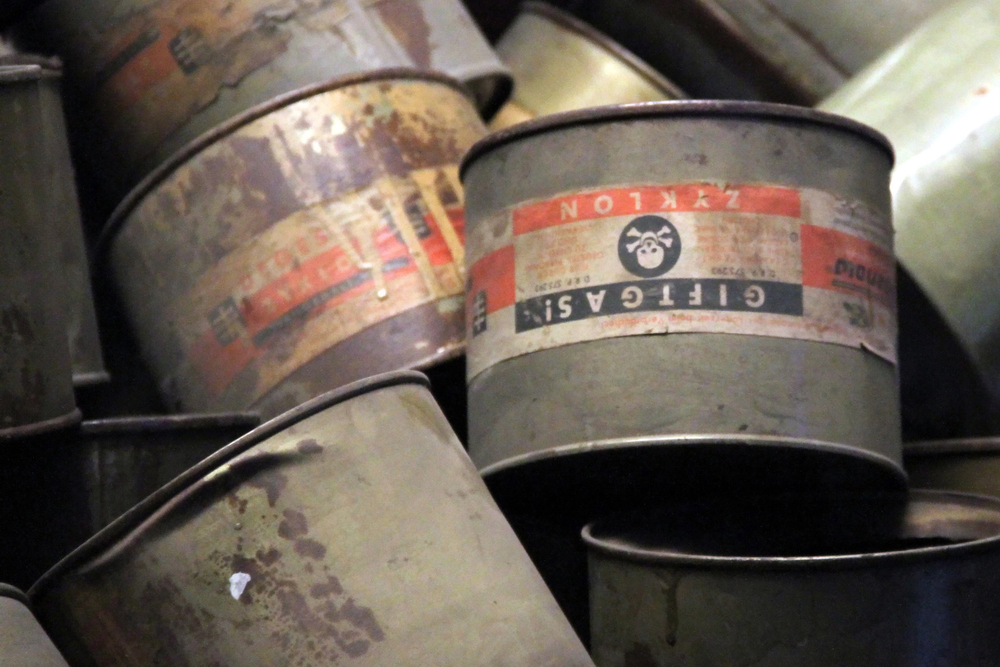
Fritz Haber developed hydrogen cyanide-based pesticides in the early 1900s to protect stored grain from insects and fumigate buildings effectively. Zyklon B seemed like an effective way to control disease-carrying pests and improve public health.
However, Nazi Germany perverted this pest control agent into an instrument of genocide. The chemical that was meant to preserve food and prevent disease became the primary tool used to murder millions of people in concentration camps.
Television

Philo Farnsworth and other inventors developed television in the 1920s to bring education, news, and entertainment into every home around the world. This revolutionary technology promised to create a more informed and connected society by sharing information across vast distances.
Yet television has also become a powerful tool for propaganda and social manipulation. It’s been used to spread misinformation, promote violence, and undermine democratic institutions in countries worldwide.
Chemical Fertilizers

Fritz Haber also developed the Haber-Bosch process in 1909 to create synthetic nitrogen fertilizers that could feed the world’s growing population effectively. This breakthrough in chemistry enabled the Green Revolution and prevented mass starvation by dramatically increasing crop yields worldwide.
However, it also made modern warfare more deadly. The same factories that produced fertilizer could easily switch to manufacturing explosives, while nitrogen runoff from farms creates dead zones in oceans and lakes.
When Good Intentions Meet Unintended Consequences

The inventors behind these tragic technologies weren’t villains plotting humanity’s downfall. They were problem-solvers trying to make the world better through innovation and scientific progress.
Thomas Midgley Jr. genuinely believed CFCs and leaded gasoline would improve lives, just as social media algorithm creators thought they were building tools to connect and inform people more effectively. These stories remind us that innovation without careful consideration of long-term consequences can transform today’s miracle cure into tomorrow’s catastrophe.
The responsibility lies not just with inventors, but with society as a whole to evaluate new technologies thoughtfully and regulate them wisely before they cause irreversible harm to future generations.
More from Go2Tutors!

- The Romanov Crown Jewels and Their Tragic Fate
- 13 Historical Mysteries That Science Still Can’t Solve
- Famous Hoaxes That Fooled the World for Years
- 15 Child Stars with Tragic Adult Lives
- 16 Famous Jewelry Pieces in History
Like Go2Tutors’s content? Follow us on MSN.