How One Nurse Changed War Medicine
Picture this: it’s 1854, and wounded British soldiers are dying not from their battle injuries, but from infections they picked up in their own military hospitals. The mortality rate sits at a staggering 42%, and the conditions are so horrific that one observer called it ‘the nearest thing to hell on earth.’ Then a wealthy socialite named Florence Nightingale shows up with 38 nurses, and within six months, she slashes that death rate down to just 2%.
This isn’t just another feel-good story about someone who cared. Nightingale didn’t just save lives during the Crimean War—she completely revolutionized how the world thinks about medicine, hygiene, and patient care. Her impact stretched far beyond that single conflict, reshaping military medicine, civilian hospitals, and nursing education for generations to come.
Here’s a list of the key ways one determined woman took on an entire medical establishment and won.
The Unlikely Revolutionary

Florence Nightingale was born into privilege on May 12, 1820, in the Italian city that gave her name. Her wealthy English parents had mapped out a predictable path for their daughter: marry well, raise children, and manage a household. But Florence had other ideas.
As a teenager, she spent time helping the sick and poor in villages near the family estate, convinced that nursing was her calling. When she announced her decision to become a nurse at age 24, her parents were horrified. In Victorian England, nursing was considered one of the lowest professions—barely a step above being a servant. Most nurses were working-class women with little training and even less respect. Florence’s family forbade her from pursuing such an ‘unseemly’ career, but she refused to back down. Stubbornly refused, actually.
Breaking Through Barriers
After years of family opposition, Florence finally got her chance in 1850 when her father allowed her to study for three months at a hospital in Germany. She followed this with additional training in Paris with the Sisters of Mercy. By 1853, she had returned to England and landed a position as superintendent of a hospital for ‘gentlewomen’ in London. She was already making a name for herself when the Crimean War broke out in 1854.
The British government was struggling with reports of horrific conditions facing wounded soldiers in Turkey. Sydney Herbert, the Secretary of War and a friend of Florence’s family, made an unprecedented decision: he asked Florence to lead a team of female nurses to the front lines. Revolutionary thinking for the time—women had never been officially deployed to military hospitals before.
Like Go2Tutors’s content? Follow us on MSN.
Confronting the Horror
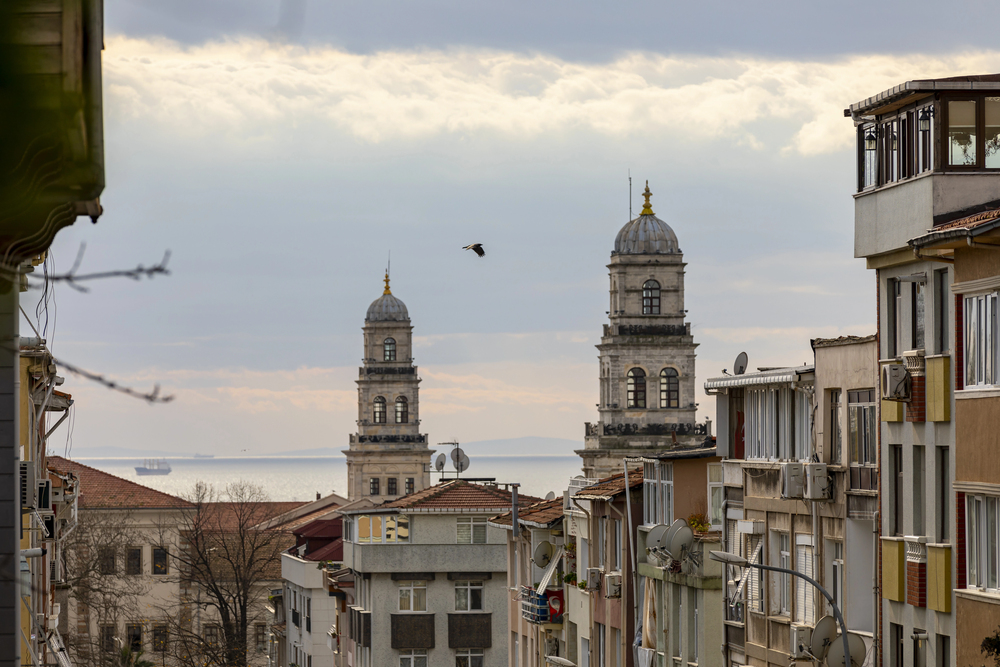
When Florence and her 38 nurses arrived at the Selimiye Barracks in Constantinople on November 4, 1854, they found conditions that defied description. Wounded soldiers lay in overcrowded, filthy rooms without blankets, proper food, or medicine. Rotting animal corpses littered the area outside while piles of sewage accumulated inside. Basic supplies like bandages and soap were practically nonexistent, and cavalry horses were actually living in the hospital basement. Yes, horses. In a hospital.
The smell alone was overwhelming, but Florence quickly realized the real enemy wasn’t Russian bullets—it was the unsanitary conditions that were killing soldiers through preventable diseases. Her statistical mind began cataloging everything: who died, when they died, and most importantly, why they died.
The Data-Driven Revolution

Florence approached the crisis like a scientist. She meticulously tracked mortality rates and causes of death, discovering that disease was killing ten times more soldiers than battle wounds. This wasn’t just observation—it was rigorous data analysis that would later earn her recognition as the first woman elected to the Royal Statistical Society in 1858.
Armed with these insights, she implemented systematic reforms. Her team established a mandatory three-foot distance between patients to reduce overcrowding. They flushed the sewers multiple times daily and disinfected latrines with peat charcoal. They moved the horses out of the basement (imagine explaining that to your supervisor today), improved ventilation throughout the facility, and established proper kitchen facilities with strict washing protocols.
Immediate Impact
The results were dramatic and undeniable.
Within six months of Florence’s arrival, the mortality rate plummeted from 42% to just 2.2%. Word of this miraculous turnaround spread quickly, and Florence became known as ‘The Lady with the Lamp’ for her nighttime rounds checking on patients. But she was less interested in fame than in proving that proper sanitation and organized care could save lives on a massive scale.
Her success caught the attention of military leaders worldwide. During the American Civil War, Union officials sought her advice on organizing field medicine, leading to the establishment of the United States Sanitary Commission. Medical professionals from the Franco-Prussian War also consulted with her on hospital management and casualty reduction.
Like Go2Tutors’s content? Follow us on MSN.
Building a Lasting Legacy
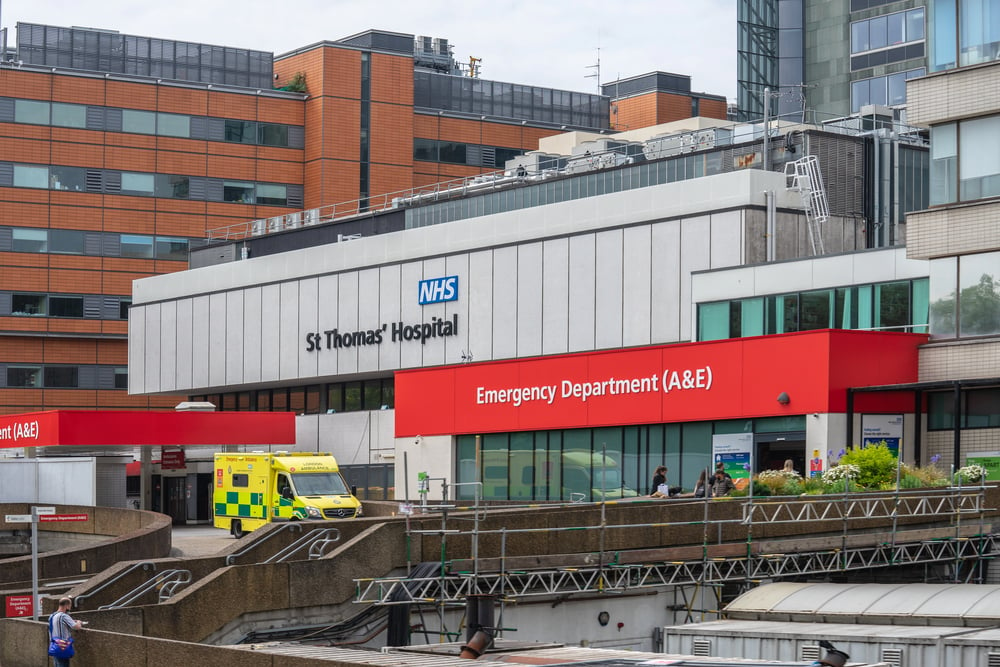
Florence returned to England in 1856 as a national hero, but she wasn’t content to rest on her wartime achievements. Using donations from well-wishers that totaled over £40,000, she established the Nightingale Training School at St. Thomas’ Hospital in 1860. This became the world’s first secular nursing school, fundamentally changing nursing from a disreputable job into a respected profession requiring proper education and training.
She also authored influential books including ‘Notes on Nursing’ in 1859, which became the foundation for nursing education worldwide. The book emphasized that nurses didn’t need to understand every disease, but they absolutely needed to know how to maintain sanitary environments and help patients manage symptoms and pain. Simple wisdom, really.
The Statistical Pioneer

Beyond nursing, Florence pioneered the use of statistics in medical decision-making. She created innovative visual representations of data, including the famous ‘Nightingale rose diagram’—essentially a circular histogram that made complex mortality data easy to understand. Her charts clearly showed government officials that poor sanitation, not enemy action, was the primary killer of British soldiers.
This evidence-based approach to medicine was revolutionary. She convinced authorities to establish the Army Medical College and pushed for the use of chloroform during surgeries. Her insistence on data-driven healthcare decisions laid crucial groundwork for modern epidemiology and evidence-based medicine. Still pretty impressive stuff for someone working with quill pens and candlelight.
Training the Next Generation

The nurses trained at Florence’s school became ambassadors of her methods, spreading her approaches to hospitals across Britain and beyond. One of her most accomplished students was Linda Richards, who became the first trained nurse in the United States and went on to develop nursing programs in America and Japan.
Florence personally trained hundreds of nurses in her methodologies, and many became leaders in the profession. Her emphasis on cleanliness, patient observation, and environmental health became standard practice. So did her focus on building trusting relationships with patients, which established nursing as a profession grounded in both science and compassion.
Like Go2Tutors’s content? Follow us on MSN.
Beyond the Battlefield

Florence’s influence extended well beyond military medicine.
She campaigned tirelessly for improved sanitation in civilian hospitals and advocated for healthcare reforms that would benefit all levels of British society. Her work contributed to better hunger relief in India, helped abolish harsh laws targeting women, and expanded acceptable forms of female workforce participation.
Even while bedridden due to illness in her later years, she continued her advocacy work. Writing over 130,000 campaign letters and publishing more than 200 books, pamphlets, and articles on nursing, hospital management, and social reform—an absolutely staggering output for someone supposedly confined to bed.
The Ripple Effect That Never Stopped
Florence Nightingale died on August 13, 1910, at age 90, but her revolution in war medicine continues today. The International Committee of the Red Cross created the Florence Nightingale Medal in 1912, awarded to excellent nurses every two years. International Nurses Day has been celebrated on her birthday since 1965. Modern infection control protocols, evidence-based medicine, and professional nursing education all trace their roots back to her innovations during those crucial months in the Crimean War.
Her core insight—that proper sanitation, organized care, and systematic observation could dramatically improve medical outcomes—seems obvious now. But in 1854, it was radical thinking that challenged centuries of medical tradition. By combining compassion with rigorous data analysis, Florence proved that caring for patients was both an art and a science, requiring both heart and systematic methodology.
Pretty remarkable for someone who started out just trying to help.
More from Go2Tutors!

- 16 Historical Figures Who Were Nothing Like You Think
- 12 Things Sold in the 80s That Are Now Illegal
- 15 VHS Tapes That Could Be Worth Thousands
- 17 Historical “What Ifs” That Would Have Changed Everything
- 18 TV Shows That Vanished Without a Finale
Like Go2Tutors’s content? Follow us on MSN.