Trees That Have Survived for Millennia
There’s something humbling about standing near a tree that was already ancient when the pyramids were being built. These living giants have witnessed the rise and fall of empires, survived ice ages, and continue to grow while humans come and go in the blink of an eye.
They’re not just old—they’re survivors in the truest sense. Scattered across the globe, these ancient trees have endured droughts, fires, floods, and everything nature could throw at them.
Methuselah

This bristlecone pine in California’s White Mountains has been alive for over 4,850 years. That means it was already a thousand years old when the ancient Egyptians were building their civilization.
The tree’s exact location is kept secret to protect it from vandalism, but it lives somewhere in the Inyo National Forest at an elevation where most plants struggle to survive. The harsh, dry conditions and cold temperatures actually help bristlecone pines live longer because fewer pests and diseases can survive up there.
Prometheus
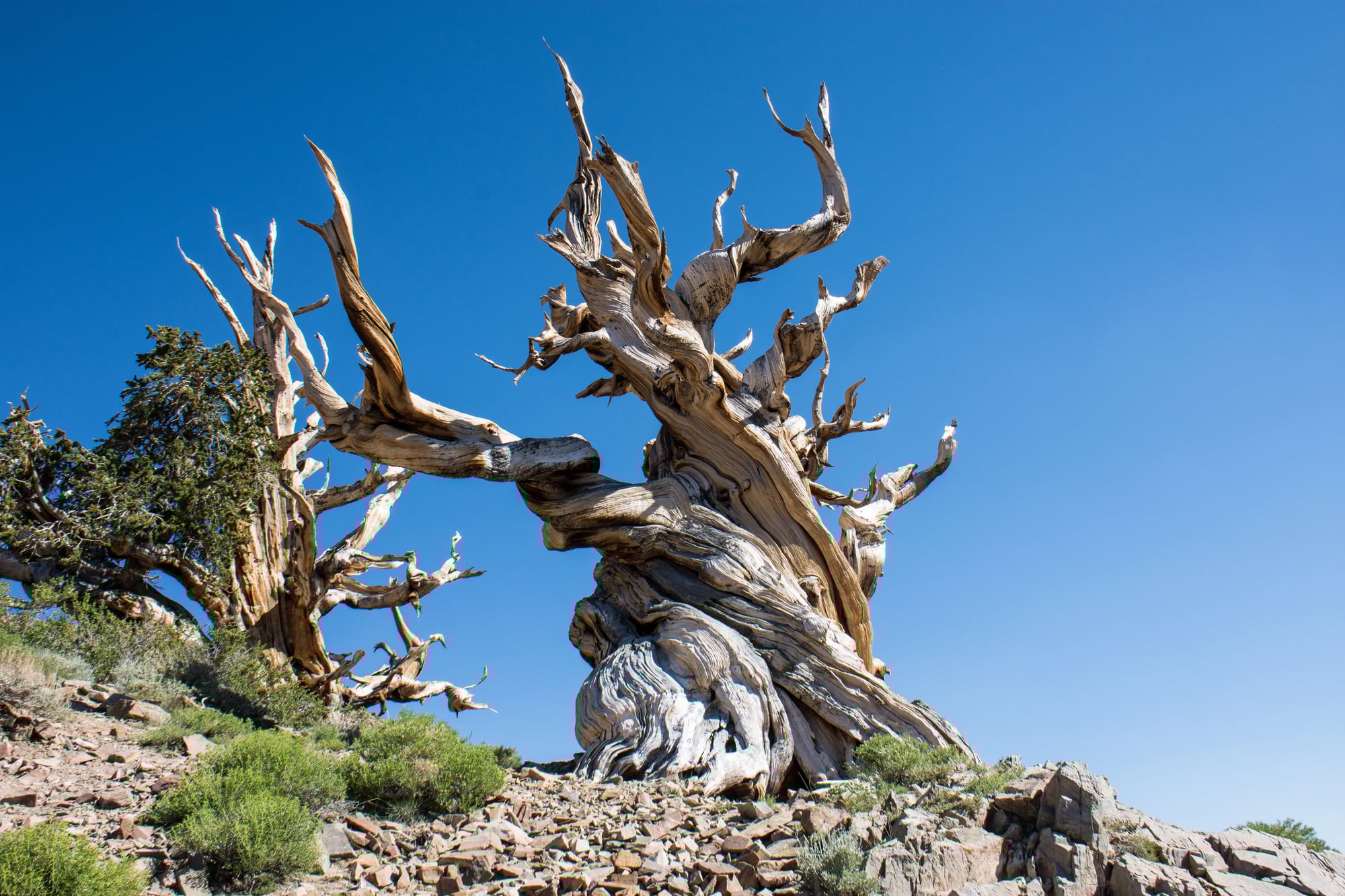
This was once the oldest known tree in the world until a researcher cut it down in 1964 to study its rings. The bristlecone pine was at least 4,900 years old, growing in Nevada’s Wheeler Peak area.
After counting the rings, scientists realized what had been lost—a tree that had survived since before the Bronze Age. The incident led to much stricter protections for ancient trees and changed how researchers approach studying these living relics.
The Senator

Florida was home to this massive bald cypress that stood 125 feet tall and was roughly 3,500 years old. It survived hurricanes, lightning strikes, and centuries of harsh weather until 2012 when a fire destroyed it.
Investigators later determined that a person accidentally started the fire while taking drugs inside the hollow trunk. A clone of The Senator, grown from its seeds, now stands nearby as a reminder of what was lost.
Sarv-e Abarkuh

Iran’s Zoroastrian Sarv is a cypress tree that local estimates place between 4,000 and 5,000 years old. The tree stands in Abarkuh and is considered a national monument, protected by cultural heritage laws.
Zoroastrians regard it as sacred, and legends claim Zoroaster himself planted it. Whether that’s true or not, the tree has definitely been around long enough to see the Persian Empire at its height and its eventual fall.
Llangernyw Yew

This yew tree in a small Welsh churchyard has been growing for an estimated 4,000 to 5,000 years. The church of St. Digain was built around it centuries ago, and the tree continues to thrive despite its incredible age.
Yew trees have a unique way of regenerating—new growth can emerge from the old trunk, making it difficult to determine their exact age. Local legend says a spirit called Angelystor resides in the tree and predicts which parishioners will die in the coming year.
Alerce Milenario
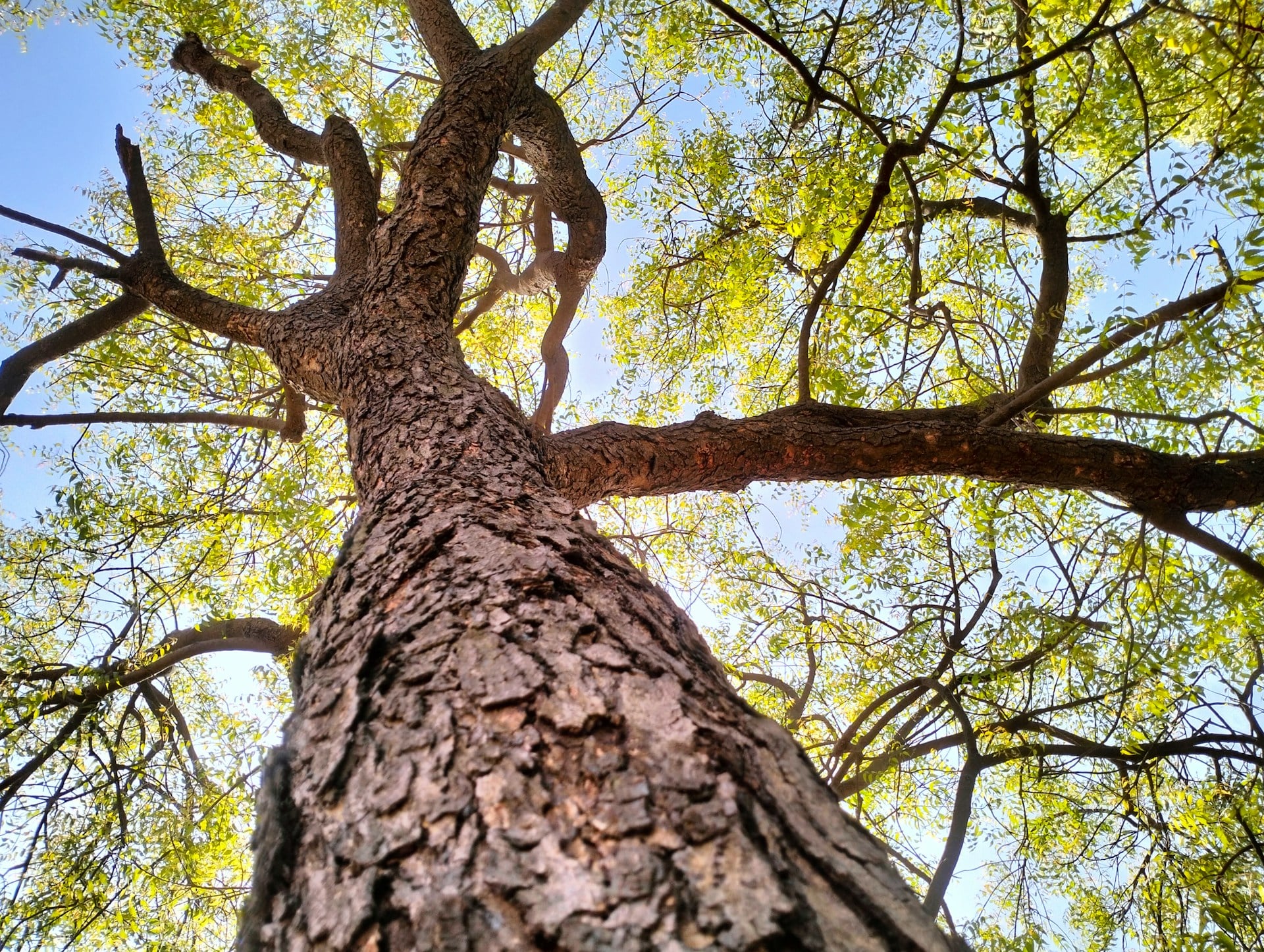
Chile’s Gran Abuelo, or Great Grandfather, is a Patagonian cypress estimated to be over 5,400 years old according to some studies. If confirmed, it would be the oldest living tree on Earth.
The tree grows in Alerce Costero National Park in a temperate rainforest where moisture and mild temperatures create ideal conditions. Scientists use a combination of core samples and modeling to estimate its age since taking a full core sample would damage the tree too severely.
Jōmon Sugi

Japan’s oldest tree is a massive cryptomeria growing on Yakushima Island, estimated to be between 2,170 and 7,200 years old. The wide range exists because the tree’s core is partially hollow, making accurate ring counting impossible.
Visitors must hike for hours through misty mountain forests to see it, and a viewing platform keeps people from getting too close. The tree’s name comes from the Jōmon period of Japanese prehistory, suggesting it might have been alive when Japan’s earliest cultures were forming.
Olive Tree of Vouves

Crete is home to an olive tree that still produces olives despite being an estimated 2,000 to 4,000 years old. The trunk is massive and gnarled, measuring over 40 feet around at its base.
A small museum next to the tree displays artifacts and information about its history. Scientists have used radiocarbon dating on the wood, but olive trees grow in such irregular patterns that getting a precise age remains challenging.
Hundred Horse Chestnut
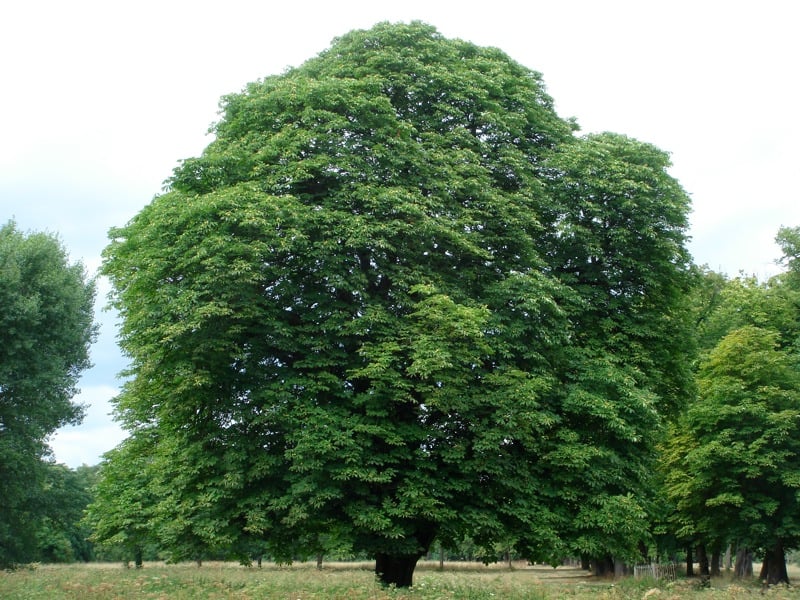
Sicily’s famous chestnut tree once had a trunk so wide that legend says a queen and her hundred knights sheltered under it during a storm. The tree is estimated to be between 2,000 and 4,000 years old, though it has since split into multiple trunks.
Mount Etna’s volcanic soil provides rich nutrients that have helped the tree survive for so long. Today, the separate trunks are considered part of the same root system, making it technically one tree.
Fitzroya cupressoides colony
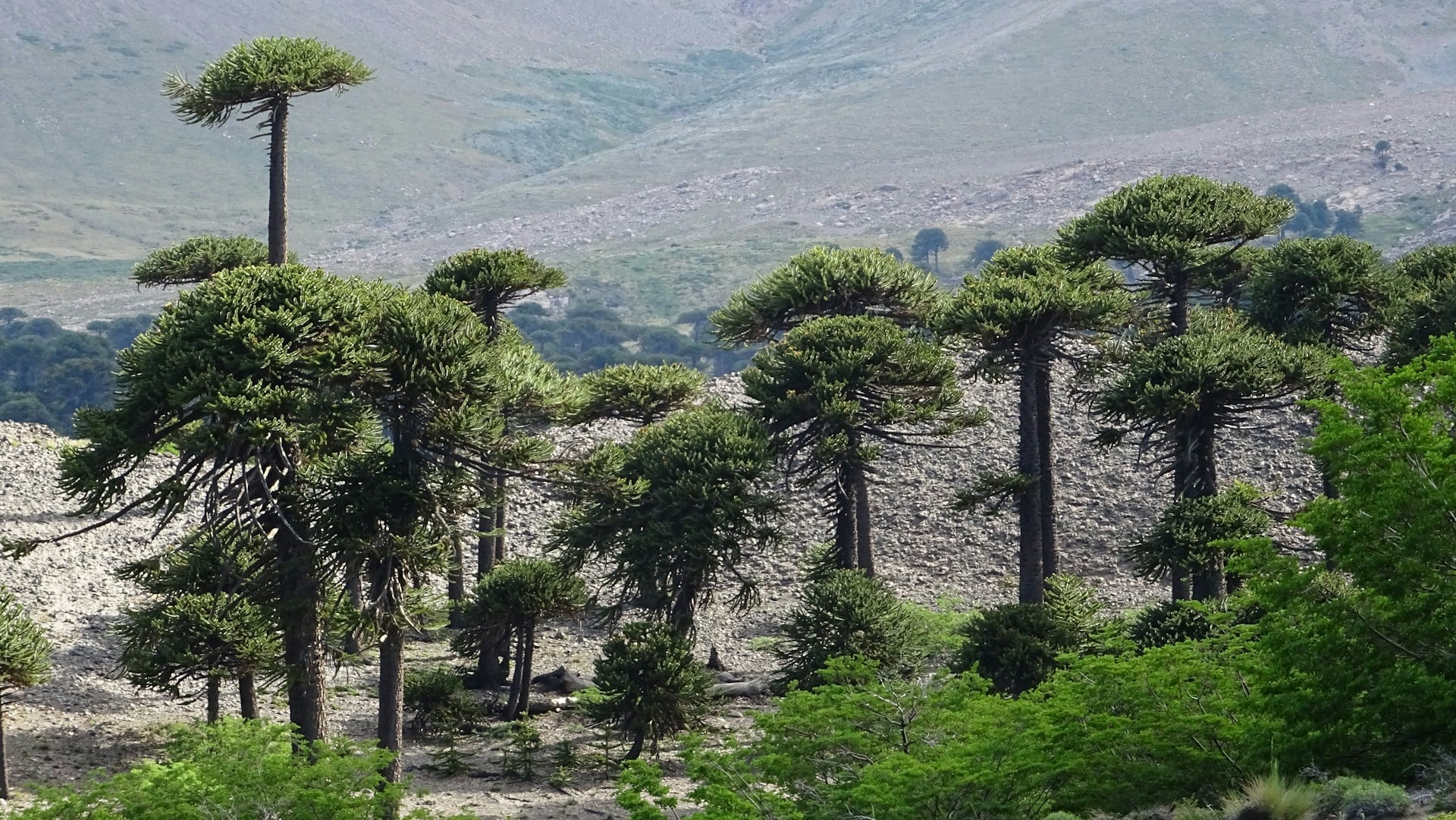
Several ancient Fitzroya trees in Chile and Argentina have been confirmed to be over 3,600 years old. These relatives of the redwood grow incredibly slowly in the Andes Mountains, adding barely a millimeter to their diameter each year.
Logging threatened these trees for decades until conservation efforts increased protections. The wood is naturally resistant to rot and insects, which helped many of these trees survive fires and other disasters that would have killed other species.
General Sherman

California’s General Sherman is the largest living tree by volume, though not the oldest. This giant sequoia is roughly 2,200 years old and weighs an estimated 2.7 million pounds.
The tree stands in Sequoia National Park and continues to add the equivalent of a 60-foot-tall tree’s worth of wood to its trunk every year. Its fire-resistant bark, sometimes over two feet thick, has protected it from the many wildfires that have swept through the Sierra Nevada.
Pando

Utah’s Pando isn’t a single tree but a clonal colony of quaking aspens sharing one root system. The colony covers over 100 acres and is estimated to be around 80,000 years old, making it one of the oldest living organisms on Earth.
Each individual trunk might only live 100 to 150 years, but the roots keep sending up new shoots. Unfortunately, overgrazing by deer and elk has prevented new growth, and scientists worry the colony might be dying.
Old Tjikko

Sweden’s Old Tjikko is a Norway spruce with a root system carbon-dated to 9,565 years old. The visible trunk is much younger, but the tree has survived by cloning itself—when the trunk dies, the roots send up a new one.
This survival strategy has allowed it to persist through climate changes that would have killed most trees. The tree was discovered by a professor who named it after his late dog.
Patriarca da Floresta

Brazil’s Patriarca da Floresta is a jequitibá-rosa tree estimated to be around 3,000 years old and one of the largest trees in the Atlantic Forest. The trunk is so wide that it would take several people with outstretched arms to circle it.
Deforestation has destroyed much of the Atlantic Forest, making the tree’s survival even more remarkable. Conservation groups now protect the area around it to ensure it survives for future generations.
The Fortingall Yew
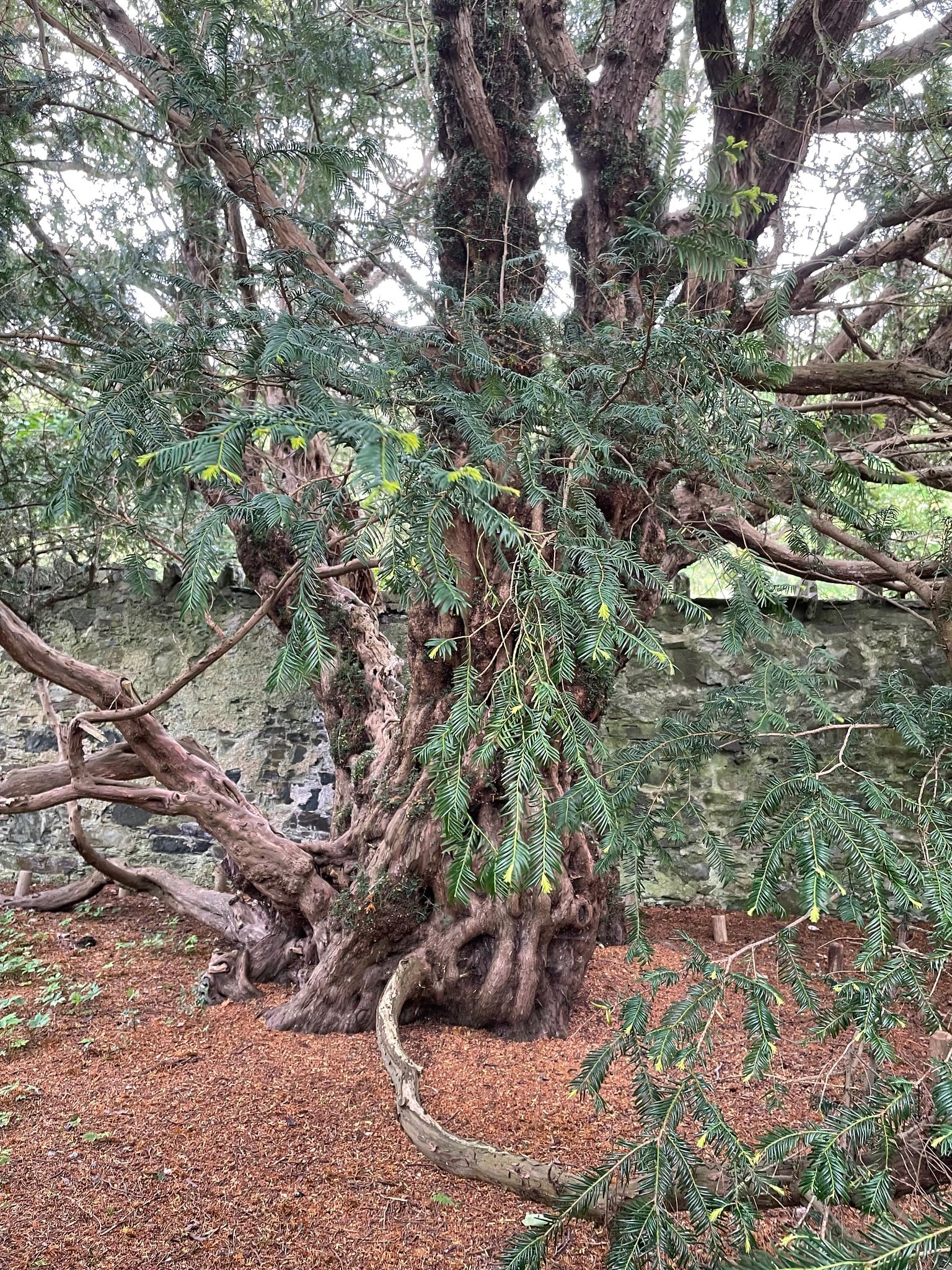
Scotland’s Fortingall Yew sits in a churchyard in Perthshire and is estimated to be between 2,000 and 5,000 years old. Historical records from the 1700s describe a trunk so wide that funeral processions could pass through it.
Souvenir hunters damaged the tree over the centuries by taking pieces of bark and wood. Today, a protective wall surrounds it, and in a strange twist, part of the tree that was previously male started producing female berries in 2015.
Te Matua Ngahere

New Zealand’s Te Matua Ngahere, meaning Father of the Forest, is a giant kauri tree estimated to be between 2,000 and 3,000 years old. The Maori people consider it sacred and believe it embodies their ancestors’ spirits.
Kauri dieback disease now threatens these ancient trees, and strict biosecurity measures require visitors to clean their shoes before entering kauri forests. The tree’s trunk measures over 52 feet in girth, making it one of the widest trees in the country.
Alishan Sacred Tree

Long ago, a massive red cypress stood tall in Alishan, believed to have lived more than three millennia. This ancient tree became well known across Taiwan, showing up on money and postal labels.
When storms struck hard in 1997, it finally gave way and toppled. Scientists later learned that strikes from lightning plus rot at the roots had slowly weakened it over time.
Not far away, another large tree – just shy of two thousand years in age – now stands where people come to wander and look.
Chapel Oak of Allouville-Bellefosse
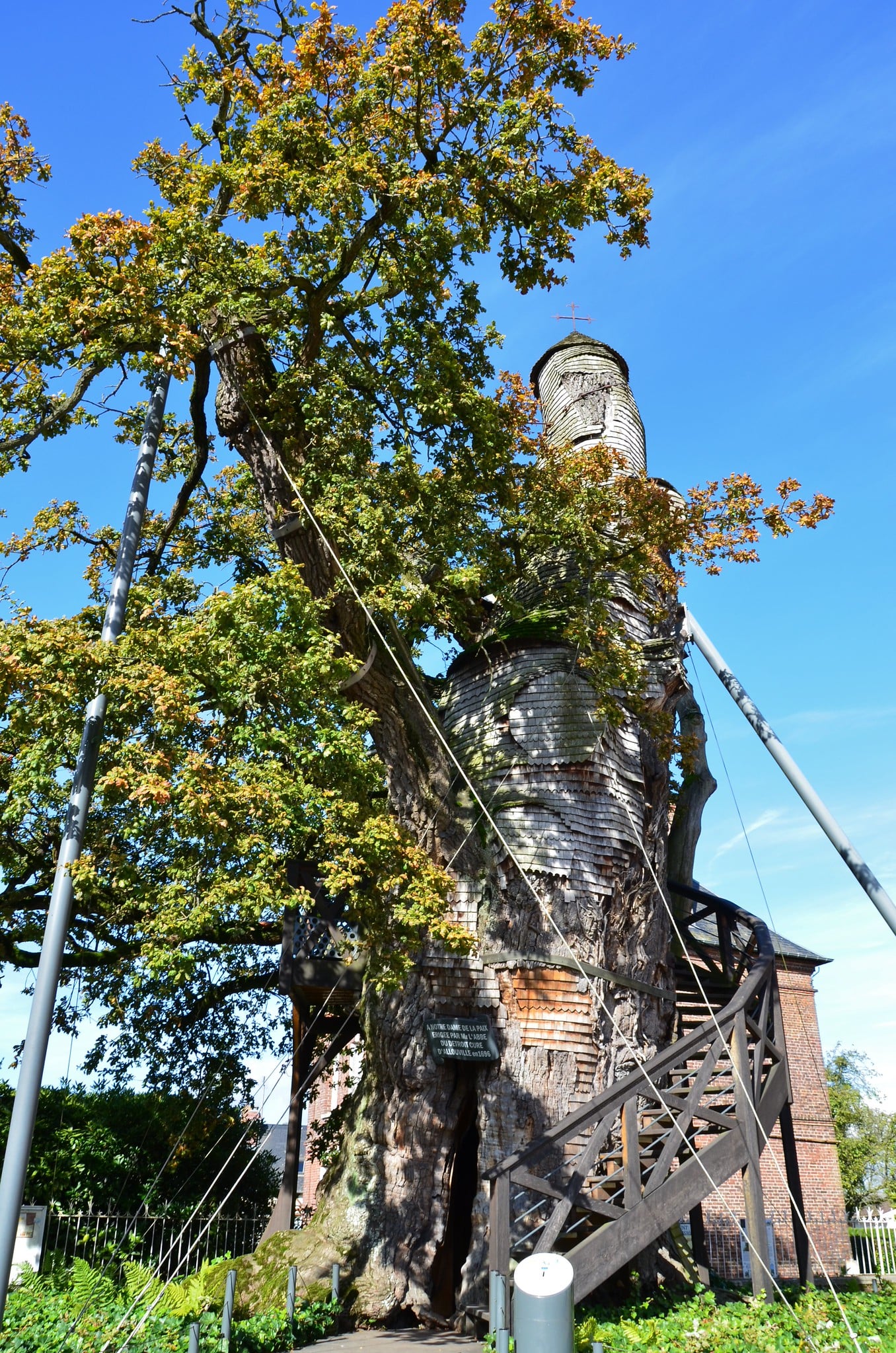
Ancient roots dig deep beneath Allouville-Bellefosse, where a living oak has stood between eight hundred and twelve centuries. Inside its vast hollowed core, twin chapels took shape back in the seventeenth century.
This Norman landmark now draws quiet visitors seeking stillness among gnarled bark and time-worn wood. Spiral steps climb skyward along the trunk, guiding feet toward the elevated sanctuary above ground level.
When revolutionary fury swept through France, voices rose demanding fire be set to the sacred structure. Yet one local spoke fast – reframing the tree as proof of freedom, not faith – and saved what age had already preserved.
Among trees older than memory, roots grip deep into silent earth

Long before our time, these trees began growing. While mammoths roamed, they stood small and young.
By the height of Rome, they had already reached full size. Now, heat shifts, sickness, destruction – each adds pressure.
Their survival hangs thinner now, despite lasting centuries. Guarding them feels less like choice, more like duty.
More from Go2Tutors!

- The Romanov Crown Jewels and Their Tragic Fate
- 13 Historical Mysteries That Science Still Can’t Solve
- Famous Hoaxes That Fooled the World for Years
- 15 Child Stars with Tragic Adult Lives
- 16 Famous Jewelry Pieces in History
Like Go2Tutors’s content? Follow us on MSN.



