Fashion Accessories Once Banned for Excess
The diamond-encrusted brooch on your blazer.
The pearl earrings brushing your shoulders.
The gold buttons glint on your coat.
All perfectly normal today — but once upon a time, these could have gotten you fined, shamed, or even arrested.
For centuries, laws across Europe, Asia, and colonial America dictated who could wear what.
These were called sumptuary laws — and they didn’t just shape fashion, they tried to shape society.
What you wore wasn’t just a style choice; it was a statement about your place in the world.
A few too many jewels or the wrong color could turn your outfit into a crime scene.
Governments claimed these laws protected public morals and social order, but really, they were about keeping people in their “proper” lanes.
If a merchant’s wife wore pearls and looked too much like a noblewoman, that blurred the lines of class — and that, apparently, was chaos.
Of course, people being people, they found ways around it.
Fines were treated like a luxury tax, loopholes were discovered faster than they could be closed, and many simply ignored the rules altogether.
Still, these old restrictions tell us a lot about what different societies once considered too flashy, too bold, or too dangerous to be worn.
Here’s a closer look at the accessories that once stirred enough trouble to get themselves banned.
Pearls
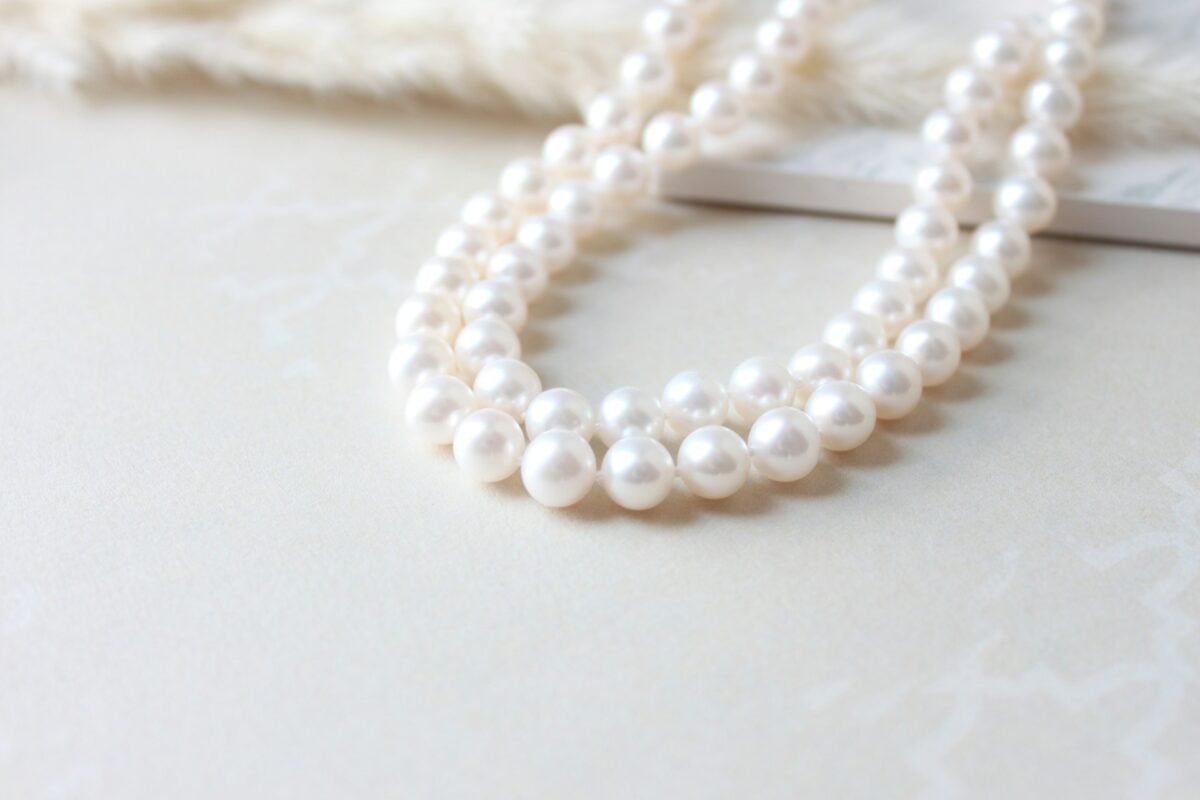
Few accessories caused as much fuss as pearls.
They’ve always symbolized both purity and wealth, two things that made them prime targets for regulation.
In Renaissance Venice, laws passed in 1562 said women couldn’t wear pearls more than twelve years after marriage.
Florence went even further, reserving them mostly for brides, young wives, and unmarried women.
Pearls were linked to youth and fertility — and apparently, once you’d crossed a certain age or marital milestone, your jewelry was supposed to know it too.
Ancient Greece had similar ideas long before that.
In Locri, around the 7th century BCE, only courtesans could wear gold jewelry — free-born women weren’t allowed.
Rome followed suit centuries later, with Julius Caesar himself reportedly declaring pearls an aristocratic privilege.
By the Renaissance, Italy had turned pearl regulation into an art form.
Florence updated its dress codes fourteen times between 1550 and 1650. Siena did it eight.
Every version added new limits — how many pearls you could wear, how they could be stitched into clothing, and how large they were allowed to be.
It was bureaucracy meets vanity, and somehow, everyone still wore them anyway.
Gold buttons and metallic embellishments
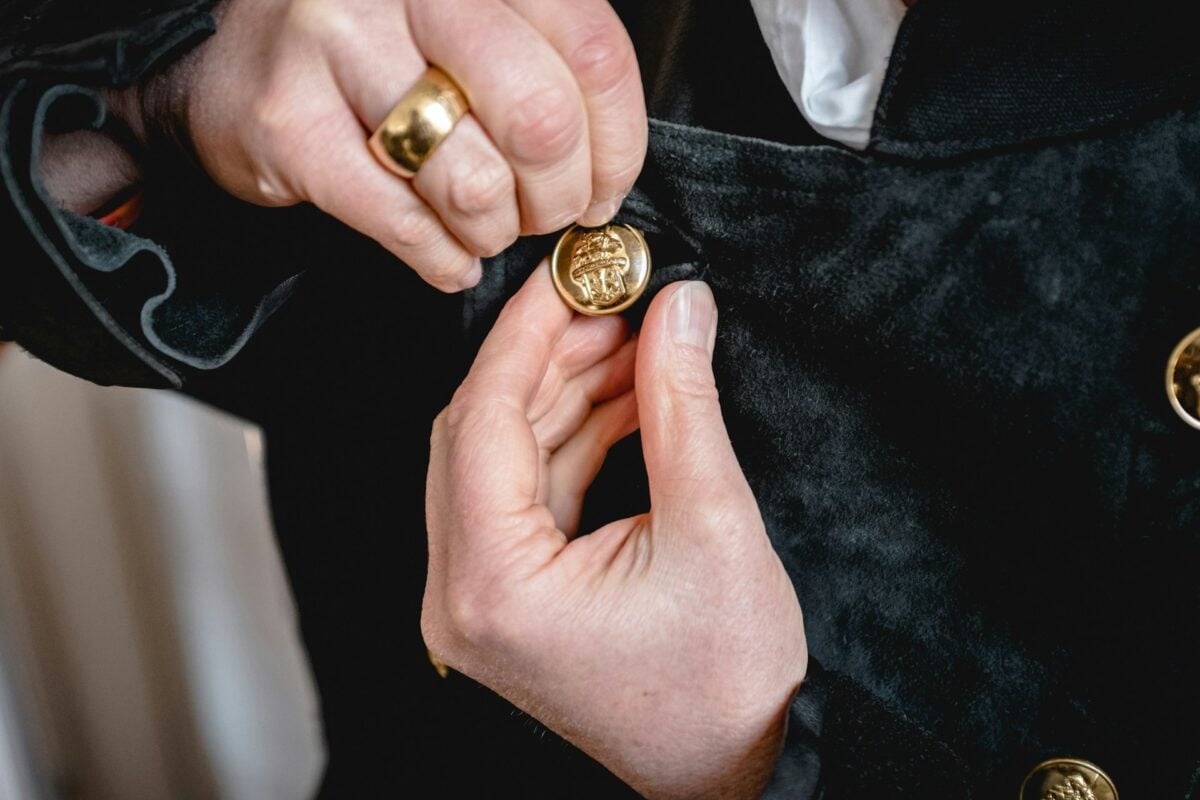
Believe it or not, even buttons caused legal drama. Gold buttons, silver buttons, buttons with tiny jewels — they all became symbols of wealth that lawmakers felt needed “controlling.”
In colonial Massachusetts, only people with personal fortunes above 200 pounds were allowed to wear decorative items like buttons, hatbands, or capes with metallic trimmings.
England’s 1574 sumptuary law complained about “the excess of apparel and unnecessary foreign wares,” worrying that imported luxury goods were draining the economy and tempting young men into debt just to look like nobles.
But creative rebellion thrived.
When gold buttons were banned, tailors responded with stunning embroidered buttonholes — so intricate they became fashion statements themselves.
Others simply renamed their accessories to slip through legal loopholes.
Once again, fashion found a way.
Scented gloves and feathered hats

Some bans sound almost comical today — like the ones against scented gloves, feathered hats, and slippers.
But in their time, these items represented sophistication and privilege.
Scented gloves were expensive, imported, and perfumed with rare oils. Feathers — especially from exotic birds — showed off one’s connections to global trade.
And slippers? They simply said, “I don’t have to walk through mud to earn my living.”
Nuremberg even outlawed Italian silver daggers, trying to steer its citizens toward local craftsmanship instead of imported luxury.
These laws weren’t really about feathers or gloves; they were about money, politics, and protecting local economies from being overshadowed by foreign style.
Purple dye

If there was one color you didn’t mess with in ancient Rome, it was purple — specifically Tyrian purple.
The dye, extracted from sea snails, was so expensive and rare that it became a symbol of absolute imperial power.
Roman emperors took that symbolism so seriously that wearing Tyrian purple without authorization could get you executed for treason.
This wasn’t about vanity anymore — it was about authority.
Tyrian purple wasn’t just color; it was command.
Only the emperor and a few chosen elites were allowed to wear it, turning a simple hue into the most powerful fashion statement in history.
The enforcement problem

Writing the laws was one thing.
Enforcing them was another story entirely.
Florence created its first “fashion police” in 1330 — a group called Ufficiali delle donne — tasked with catching women wearing illegal accessories.
Citizens were even encouraged to snitch anonymously, dropping names and outfit details into special boxes.
Officials patrolled markets, churches, and public squares, sometimes physically ripping banned jewelry off offenders.
Imagine walking into church only for someone to yank your necklace off because you’d been married too long to wear it legally.
Of course, the wealthy had options. Some paid for licenses allowing them to break the rules.
Others simply paid the fine each time — treating it as a fee for looking fabulous. In the end, the laws failed miserably.
Historians often call them a textbook example of regulatory overreach — the harder authorities tried to restrict luxury, the more people wanted it.
Where fashion freedom came from

The decline of these laws had less to do with changing tastes and more to do with changing economics.
By the 17th and 18th centuries, thinkers began to realize that luxury goods actually benefited society.
Philosophers like Montesquieu argued that for one person to dress elegantly, many others had to work — banning luxury, he said, would hurt economies, not help them.
As the middle class grew, enforcement became almost impossible.
Merchants, professionals, and skilled workers could now afford accessories once reserved for nobility.
No law could stop people from dressing for the lives they’d earned.
By the early 1600s, England scrapped its sumptuary laws altogether, and others soon followed.
What excess means now

We may not have fashion police today, but the idea of “acceptable appearance” never really vanished.
Ivory jewelry and exotic animal skins are banned for ethical reasons. Workplaces and schools still set dress codes, quietly deciding what looks “professional.”
The difference is that modern restrictions rarely admit what they’re really about — class, control, and belonging.
We’ve traded legal enforcement for social pressure.
A raised eyebrow, a dress code memo, or a viral “outfit fail” post does the job just as effectively.
Pearls, purple, gold, jeweled fur — all once too luxurious to wear — now sit in museums or jewelry boxes as relics of a time when fashion itself was a crime.
But the old impulse remains.
Society still finds ways to tell us who we should be by what we wear — only now, the rules are unspoken.
More from Go2Tutors!

- The Romanov Crown Jewels and Their Tragic Fate
- 13 Historical Mysteries That Science Still Can’t Solve
- Famous Hoaxes That Fooled the World for Years
- 15 Child Stars with Tragic Adult Lives
- 16 Famous Jewelry Pieces in History
Like Go2Tutors’s content? Follow us on MSN.



