Biggest Sports Scandals of the 21st Century
Sports in the 2000s were supposed to be cleaner, more transparent, and better governed than ever before.
Technology improved testing.
Media scrutiny intensified.
Leagues promised accountability.
And yet, the 21st century has produced scandals so massive they’ve redefined how we think about cheating, corruption, and institutional failure.
Some involved individuals gaming the system.
Others revealed rot that went all the way to the top.
These aren’t minor rule violations or tabloid gossip.
They’re stories that led to stripped titles, criminal convictions, lifetime bans, and fundamental changes in how sports operate.
Here’s a look at the scandals that shook the sports world in ways we’re still reckoning with today.
Lance Armstrong’s Fall from Grace
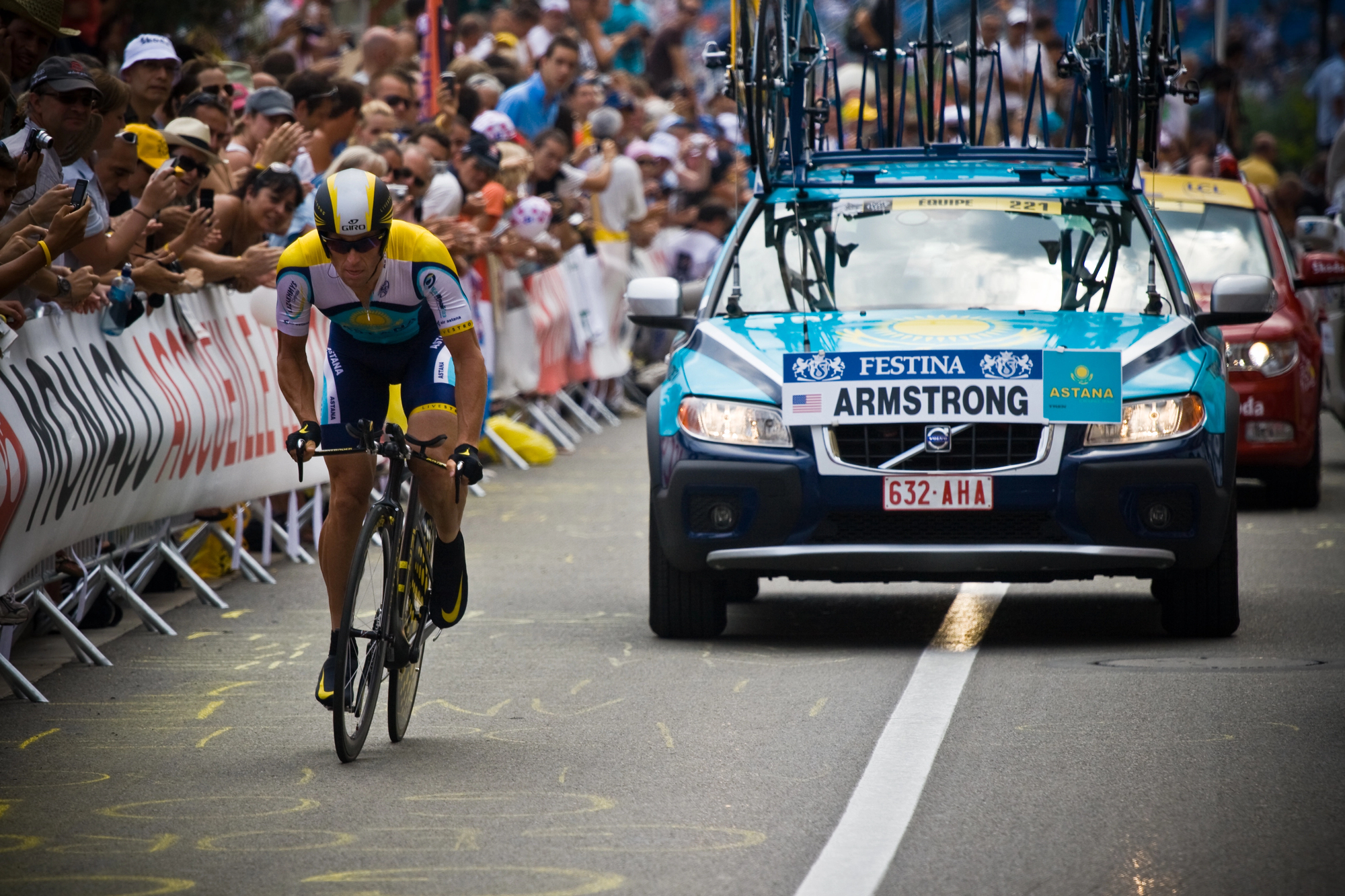
For years, Lance Armstrong wasn’t just a cyclist—he was a symbol of human triumph.
Seven consecutive Tour de France victories after surviving cancer made him an icon.
His Livestrong foundation raised hundreds of millions for cancer research over the years.
He was untouchable, and he aggressively attacked anyone who suggested otherwise.
Journalists, former teammates, and anti-doping officials who questioned him found themselves on the receiving end of lawsuits and public smear campaigns.
Then the U.S. Anti-Doping Agency released a devastating report in 2012.
It detailed a systematic doping program spanning Armstrong’s entire career—blood transfusions, EPO, testosterone, and a culture of intimidation that kept teammates silent.
Armstrong was stripped of all seven Tour titles and banned from competitive cycling for life.
He eventually admitted to doping in a 2013 interview with Oprah Winfrey, though even that confession felt calculated and incomplete.
The scandal didn’t just destroy one man’s legacy.
It cast a shadow over an entire era of professional cycling and proved that the most aggressive denials sometimes hide the biggest lies.
The Houston Astros Sign-Stealing Scheme
Baseball has always had gamesmanship—stolen signs, subtle cheating, unwritten rules about what’s acceptable.
But what the Houston Astros did in 2017 crossed every line.
Players used a video feed from a replay review camera located near center field to steal catchers’ signs, then banged on a trash can in the dugout to signal what pitch was coming.
One bang meant off-speed, no bang meant fastball.
They did this during their World Series championship run.
When the scheme came to light in 2019, the fallout was severe.
Manager A.J. Hinch and general manager Jeff Luhnow were suspended for a year and then fired.
The team was fined $5 million and lost draft picks.
But no players were punished, which infuriated fans and other teams.
The Astros kept their championship, a decision that remains deeply controversial.
Every away game for years afterward featured fans mocking them with trash can noises.
The scandal raised uncomfortable questions about how widespread electronic sign-stealing might be and whether the punishment fit the crime.
Houston won a title, but they’ll never escape the asterisk.
The FIFA Corruption Indictments
Everyone knew FIFA was corrupt.
It was practically an open secret that hosting rights for the World Cup went to the highest bidder, that officials enriched themselves through kickbacks, and that the organization operated more like a cartel than a sports governing body.
But knowing something and proving it are different things.
In May 2015, Swiss authorities raided a Zurich hotel and arrested seven FIFA officials on corruption charges filed by the U.S. Department of Justice.
The indictments eventually ensnared more than 45 individuals and entities, detailing bribes totaling over $150 million related to marketing rights and tournament hosting.
Long-serving FIFA president Sepp Blatter was suspended in 2015 and formally banned from football that December for eight years, later reduced to six.
The 2022 World Cup in Qatar, awarded under deeply suspicious circumstances, went ahead despite widespread criticism about labor conditions and the bidding process.
FIFA instituted reforms and elected new leadership, but skepticism remains about whether the culture truly changed or just got better at hiding.
The scandal confirmed what everyone suspected—that world football’s governing body had been rotten for decades.
Russia’s Olympic Doping Program
State-sponsored doping sounds like something from the Cold War, not the 21st century.
But investigations revealed that Russia had been running exactly that—a government-backed scheme to ensure Olympic success through systematic cheating.
The operation involved the Russian sports ministry, intelligence services, and anti-doping labs working together to swap dirty urine samples for clean ones, sometimes through a literal opening in the wall of the Sochi testing facility during the 2014 Winter Games.
The World Anti-Doping Agency investigation led to Russia facing severe sanctions.
WADA initially imposed a four-year ban in 2019, which was later reduced to two years covering 2020 to 2022.
During this period, athletes could participate as neutrals if they proved they were clean, but no Russian anthem played and no Russian flag flew.
Dozens of medals were stripped retroactively.
The scandal exposed how far a nation would go when Olympic success became tied to political prestige, and it raised questions about how many other countries might be running similar programs with better secrecy.
Russia denied state involvement despite overwhelming evidence, and the geopolitical tensions around the scandal continue to complicate international sports.
The Penn State Abuse Scandal

Some scandals are about cheating.
This one was about institutional failure to protect children.
In 2011, former Penn State assistant football coach Sandusky was arrested on 52 counts of child abuse spanning 15 years.
The charges were horrific enough, but what made the scandal even worse was the cover-up.
Head coach Joe Paterno, university president Graham Spanier, and other officials had received reports about Sandusky’s behavior years earlier and failed to notify police or take meaningful action.
Sandusky was convicted on 45 of those counts and sentenced to 30 to 60 years in prison.
Paterno was fired and died months later, his legendary reputation in tatters.
The NCAA initially imposed severe sanctions on Penn State’s football program, including vacated wins and scholarship reductions, though some penalties were later reduced.
The scandal forced a national conversation about how institutions protect their reputations at the expense of victims, and how powerful figures can operate unchecked when everyone around them refuses to speak up.
It wasn’t about sports so much as about the failure of people in authority to do the right thing when it mattered most.
Tim Donaghy and the NBA Betting Scandal
Professional sports depend on one fundamental assumption: the games are fair.
Referees make mistakes, but they’re trying to get calls right.
That assumption shattered in 2007 when NBA referee Tim Donaghy pleaded guilty to betting on games he officiated and providing inside information to gamblers.
His betting activity occurred during the 2005 to 2007 seasons, and he’d been making calls that influenced point spreads while his gambling associates profited.
Donaghy claimed he wasn’t alone, that other referees engaged in similar behavior or that the NBA itself influenced games for ratings purposes.
The league denied it vigorously and characterized Donaghy as a rogue actor.
He served 15 months in federal prison.
The scandal forced the NBA to overhaul its officiating oversight, implement stricter monitoring of referee behavior, and confront uncomfortable questions about game integrity.
Whether Donaghy was truly alone or just the one who got caught remains debated, but his case showed how vulnerable professional sports are when the people enforcing the rules have incentives to break them.
The BALCO Steroid Scandal
The BALCO scandal broke in 2003 and revealed just how sophisticated doping had become.
The Bay Area Laboratory Co-operative wasn’t just distributing steroids—it was designing them.
The lab created ‘the clear’ and ‘the cream,’ designer substances specifically engineered for elite athletes to evade drug testing.
Athletes across multiple sports were clients, but the biggest names were in baseball and track and field.
Barry Bonds, the sport’s all-time home run leader, was linked to BALCO through his trainer.
He was indicted in 2007 for perjury and obstruction of justice, convicted of obstruction in 2011, and had that conviction overturned in 2015.
Olympic sprinter Marion Jones admitted to using BALCO substances and returned five medals.
The scandal led to congressional hearings, the Mitchell Report on steroid use in baseball, and a fundamental rethinking of drug testing protocols.
It also left records in limbo—Bonds has never been inducted into the Baseball Hall of Fame, and his home run numbers carry permanent questions.
BALCO showed that athletes and chemists were often a step ahead of testers, and catching up would require constant vigilance.
The Damage That Lingers
These scandals share a common thread beyond their magnitude: they all eroded trust.
Trust that athletes are competing clean.
Trust that officials are calling games fairly.
Trust that governing bodies prioritize integrity over money.
Trust that institutions protect the vulnerable instead of the powerful.
Rebuilding that trust takes years, if it happens at all.
What’s striking is how often the warning signs were there before the scandals exploded.
People knew about Armstrong’s doping.
People knew about FIFA’s corruption.
People had heard rumors about Sandusky.
The scandals didn’t emerge from nowhere—they emerged when the evidence became undeniable and the cover-ups collapsed.
That pattern suggests the next major scandal is probably already happening somewhere, waiting for the moment when someone finally speaks up or the proof becomes too overwhelming to ignore.
Sports will always have cheaters and bad actors.
The question is whether the systems meant to catch them are actually working or just creating the illusion that they are.



