Historic Bridges With Unique Engineering Feats
Bridges tell stories that textbooks never quite capture. They stand as proof that humans can span impossible distances, defy gravity, and create pathways where nature said no.
Some bridges became famous just for existing—built when the technology seemed decades away from making them possible. Others pushed engineering so far that even today, looking at their blueprints makes you wonder how anyone convinced investors to fund them.
These structures changed how people moved, where cities grew, and what engineers believed they could build next.
Brooklyn Bridge—Pneumatic Caissons Under Water
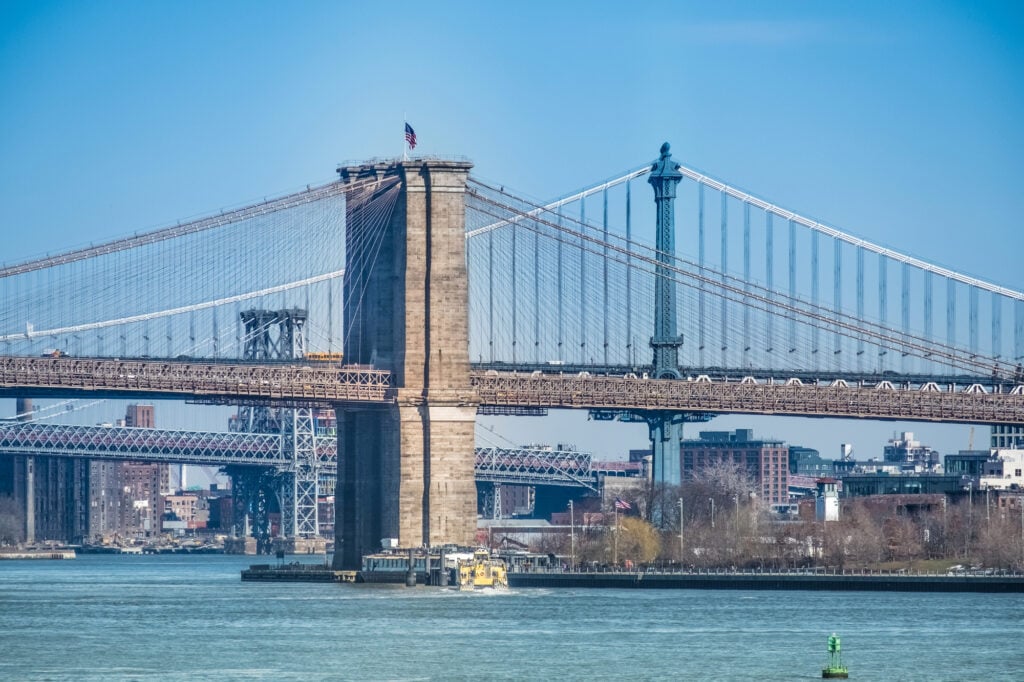
The Brooklyn Bridge went up in the 1870s and 1880s, when most people still traveled by horse. John Roebling designed it, but he died before construction started. His son Washington took over, and the project nearly killed him too.
The towers needed foundations deep underwater. Workers dug down using pneumatic caissons—massive wooden boxes pumped full of compressed air to keep water out.
Men climbed down through airlocks and dug through mud and rock at the river bottom. The pressure gave many workers “caisson disease,” what we now call decompression sickness or the bends.
Washington Roebling got it so bad he became bedridden and had to direct construction from his apartment window, watching through a telescope while his wife Emily carried his instructions to the site. The bridge used steel cables for the first time on this scale.
Four main cables, each made from thousands of individual wires, still hold up the roadway. When it opened in 1883, the span between towers measured 1,595 feet—50 percent longer than any suspension bridge built before it.
Golden Gate Bridge—Fighting Wind and Fog
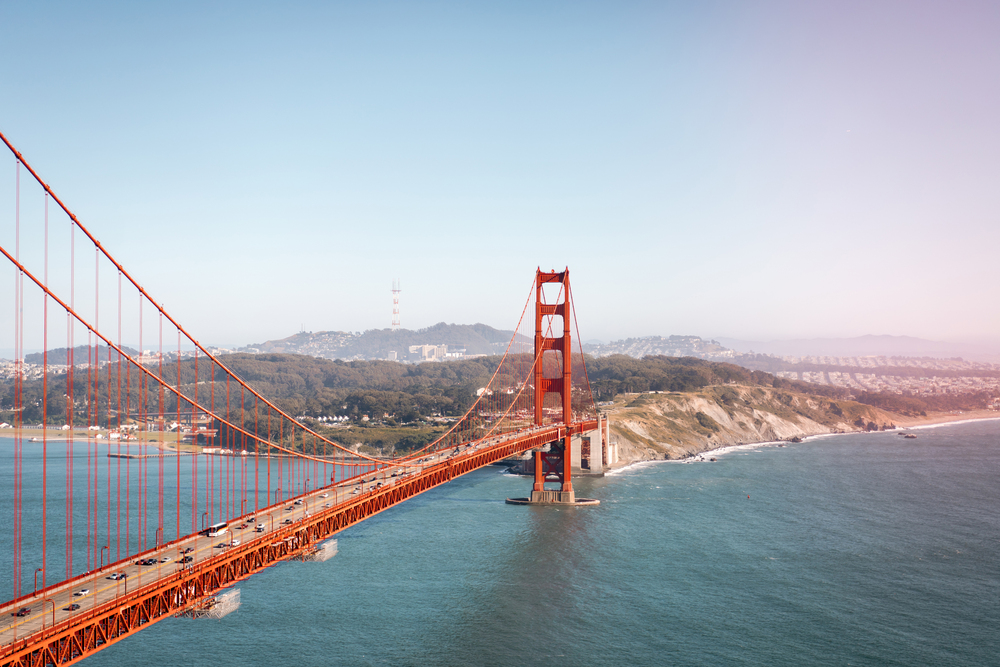
San Francisco’s Golden Gate Bridge faced problems that went beyond just spanning water. The strait it crosses churns with strong currents, deep water, and wind that howls through at speeds that can knock you sideways.
Fog rolls in so thick that workers sometimes couldn’t see from one end of the construction site to the other. Chief engineer Joseph Strauss dealt with water 500 feet deep at the south tower.
His team built a massive fender around the construction site to protect it from ships and waves. The north tower went up on land, but barely—the crew had to blast away rock just to create a spot for it to sit.
The bridge moves. The roadway can sway 27 feet sideways.
The towers can flex 16 inches toward or away from each other. The whole structure was designed to dance with the wind rather than fight it.
That flexibility kept it standing during multiple earthquakes, including the 1989 Loma Prieta quake that killed 63 people and collapsed other bridges in the area. When it opened in 1937, the main span stretched 4,200 feet—the longest in the world at the time.
Pont du Gard—Roman Precision Without Mortar

The Romans built the Pont du Gard in southern France around 50 AD to carry water across a valley. The aqueduct stands three tiers high, reaching 160 feet at its tallest point.
What makes it remarkable isn’t just its height—it’s that the Romans cut limestone blocks so precisely they fit together without mortar. Each stone weighs up to six tons. Workers used wooden scaffolding and probably hundreds of slaves to lift blocks into place.
The math had to be perfect. The water channel at the top descends just 0.4 inches per 100 feet—barely noticeable but enough to keep water flowing by gravity alone.
The bridge carried about 44 million gallons of water daily to Nîmes, 31 miles away. After the aqueduct stopped operating around the 6th century, locals used the bridge for regular foot traffic.
Some even carved their names into the stones, marks you can still see today. The structure survived floods, wars, and nearly 2,000 years of weather without major repairs.
Forth Bridge—Cantilever Design Over Deep Water
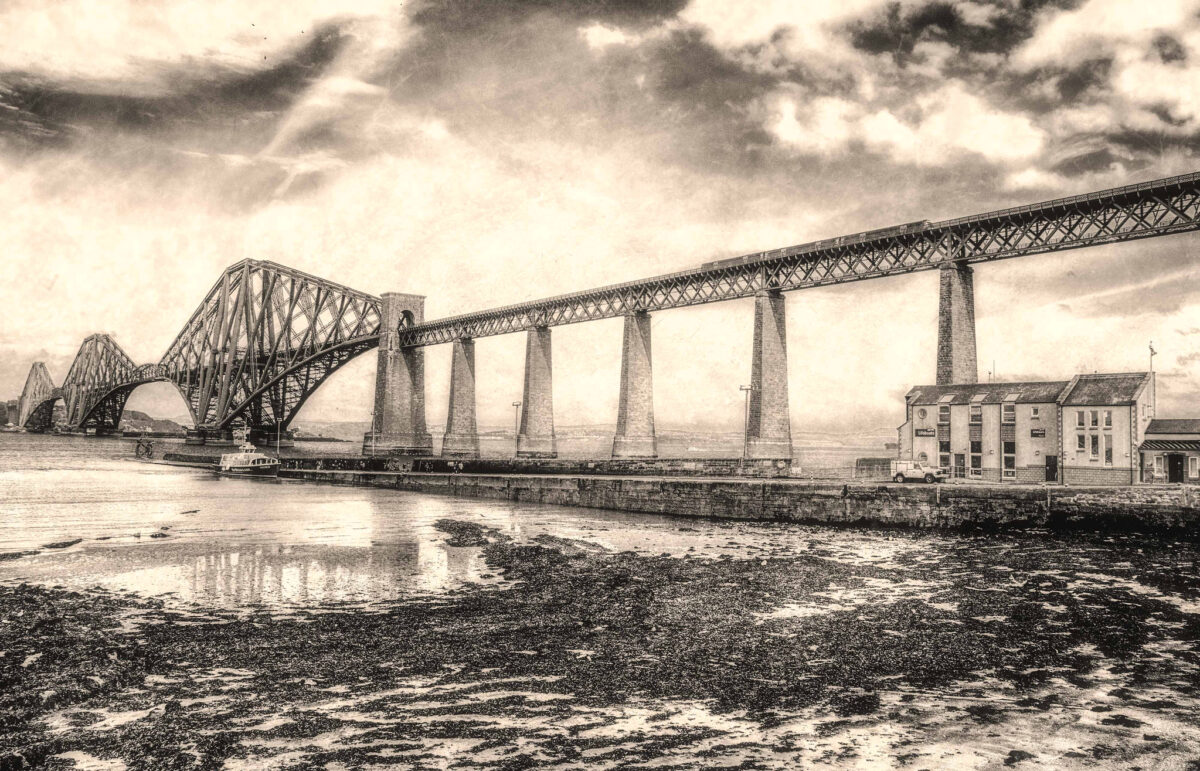
Scotland’s Forth Bridge looks like something from a construction toy kit, all red steel and diagonal braces. But when it opened in 1890, it represented the biggest cantilever bridge ever built.
Engineers Benjamin Baker and John Fowler designed it after a suspension bridge collapsed in 1879, killing 75 people. They wanted something that couldn’t fail the same way.
The cantilever design means each section balances without needing support from adjacent parts during construction. Three massive towers anchor the structure.
Between them, cantilever arms reach out from both sides, meeting in the middle. Workers used 58,000 tons of steel and drove 6.5 million rivets to hold it together. The Firth of Forth runs 150 feet deep where the bridge crosses.
Teams sank caissons to bedrock, working underwater in compressed air chambers just like the Brooklyn Bridge crews did. The main spans measure 1,700 feet each. \
Trains still cross it daily, more than 130 years after it opened.
Millau Viaduct—Taller Than the Eiffel Tower
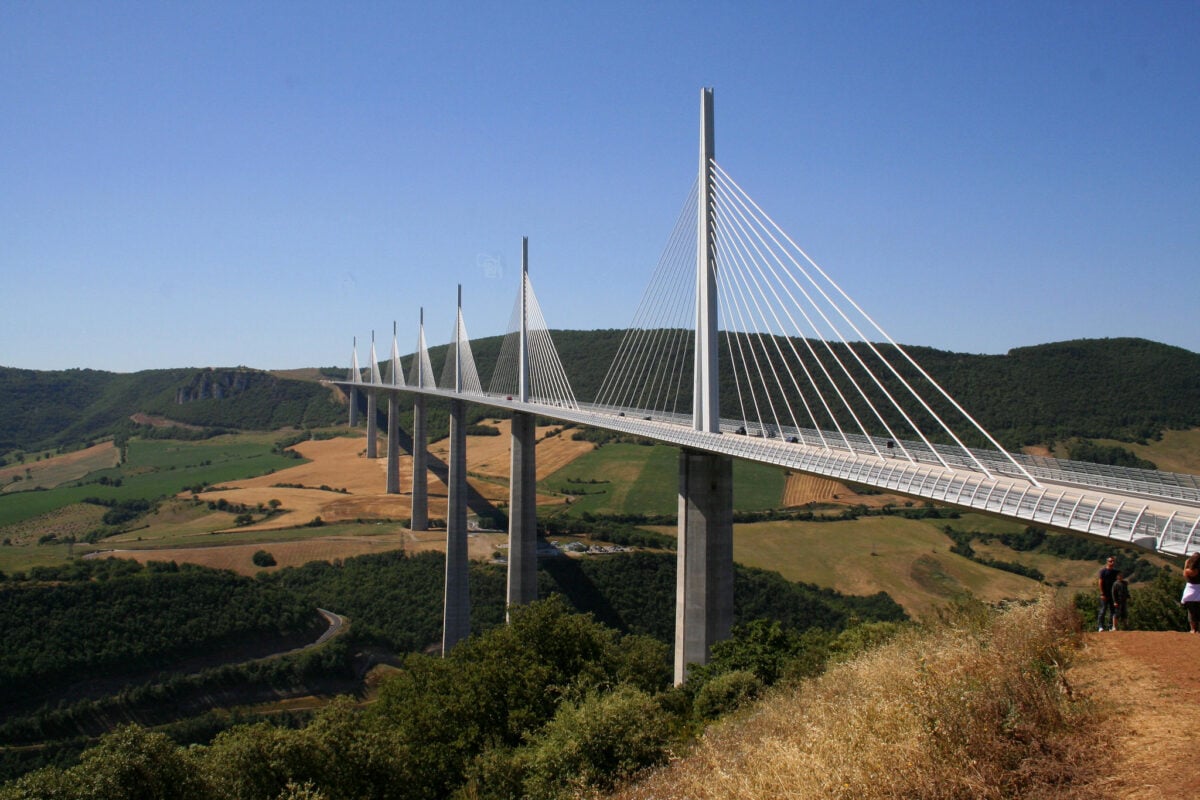
The Millau Viaduct in southern France holds the record for the tallest bridge pier in the world. The tallest support tower reaches 1,125 feet from its base to the roadway—taller than the Eiffel Tower.
The roadway sits 890 feet above the valley floor at its highest point. Architect Norman Foster and engineer Michel Virlogeux designed the bridge to look light despite its massive scale.
Seven concrete pillars support a steel roadway that curves gently as it crosses the valley. Each pillar is a different height because the valley floor rises and falls underneath.
Construction teams built the road deck on both sides of the valley, then pushed the sections out over the supports using hydraulic rams. When sections met in the middle, they welded them together with millimeter precision.
The bridge weighs 290,000 tons and spans 8,070 feet. It opened in 2004 and immediately became the fastest route from Paris to Spain, cutting driving time by four hours.
The deck height keeps it above fog and low clouds that often fill the valley.
Akashi Kaikyō Bridge—Surviving an Earthquake During Construction
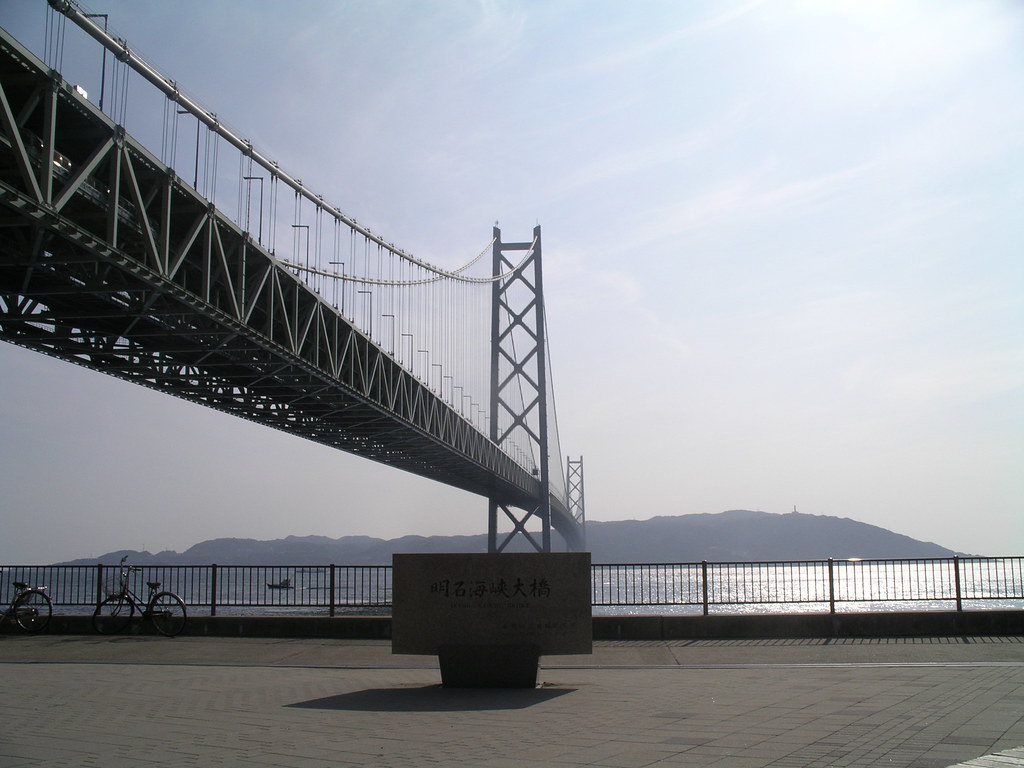
Japan’s Akashi Kaikyō Bridge holds the record for the longest central span of any suspension bridge: 6,532 feet. The bridge connects Kobe to Awaji Island across a strait known for earthquakes, typhoons, and strong currents.
Engineers designed it to withstand earthquakes up to 8.5 magnitude and winds up to 180 mph. The towers stand 928 feet tall. If you stacked two Washington Monuments on top of each other, they’d still fall short.
Each tower sits on a foundation that required digging through 200 feet of soft seabed to reach solid rock. The 1995 Great Hanshin earthquake struck during construction. It measured 6.9 magnitude and killed over 6,000 people.
The bridge survived, but the quake shifted one of the towers more than three feet sideways. Engineers recalculated everything and lengthened the bridge by three feet to account for the new tower position.
The main cables contain 300,000 kilometers of wire—enough to circle Earth seven times. Workers spun the cables on-site using a system that carried wire bundles back and forth between towers. The bridge opened in 1998 and handles 23,000 vehicles daily.
Sydney Harbour Bridge—Building from Both Sides

Sydney’s most recognizable landmark started as an engineering puzzle: how do you build an arch bridge across deep harbor water without using falsework? Traditional arch bridges were built from temporary supports underneath, but Sydney Harbour was too deep and too busy with ship traffic for that approach.
Engineer John Bradfield solved it by building the arch from both sides simultaneously. Massive steel cables anchored to bedrock held each half of the arch in place as it grew.
Workers added sections piece by piece, and the cables adjusted tension to keep everything balanced. When the two sides met in the middle in 1930, they were less than an inch off alignment.
The arch spans 1,650 feet and rises 440 feet above the water. It contains 52,800 tons of steel held together by six million rivets.
Sixteen people died during construction, a number that sounds high now but was considered acceptable for projects of this scale back then. The bridge carries eight lanes of traffic, two rail lines, a pedestrian path, and a bike lane.
Workers repaint it constantly—by the time they finish one coat, it’s time to start again.
Chesapeake Bay Bridge-Tunnel—Under and Over Water
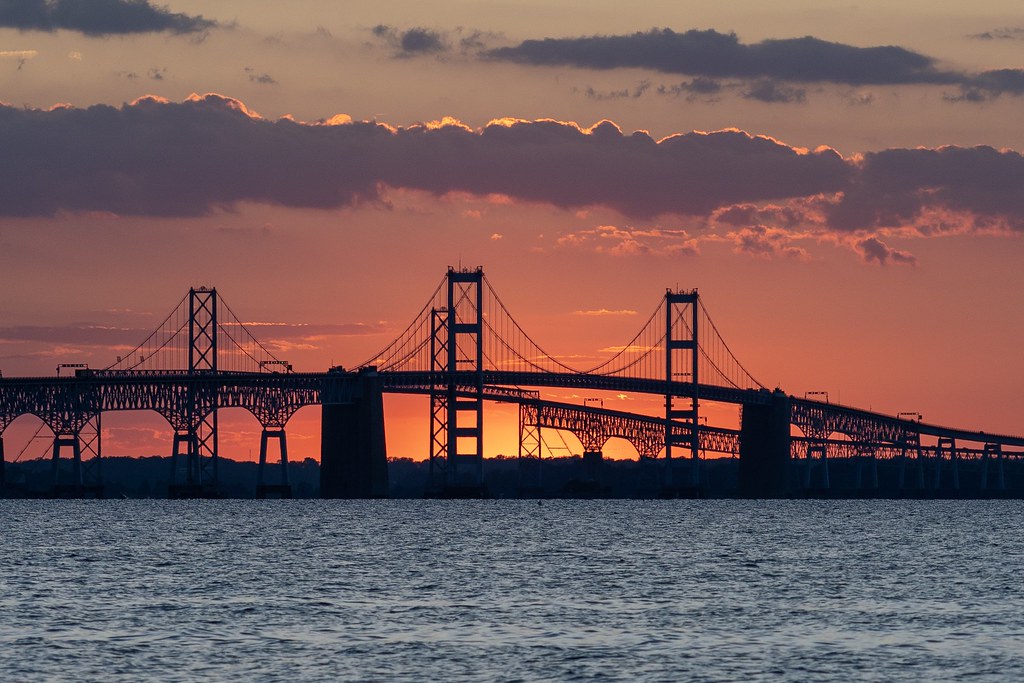
The Chesapeake Bay Bridge-Tunnel doesn’t pick between being a bridge or a tunnel. It’s both.
The 17.6-mile structure connects Virginia’s mainland to the Eastern Shore peninsula using a combination of trestle bridges, tunnels, artificial islands, and causeways. Two tunnels run underwater for a mile each.
Why tunnels? The U.S. Navy insisted. Building bridges high enough for aircraft carriers to pass underneath would have been too expensive, and low bridges would have blocked ship traffic.
So engineers bored tunnels beneath the shipping channels. The tunnels sit in prefabricated sections that were floated into place and sunk into trenches dug in the bay floor.
Crews then covered them with rock and sand. Four artificial islands mark the tunnel entrances. Workers created these islands by dredging sand from the bay bottom and piling it up around sheet steel walls.
Construction took four years and cost $200 million in 1960s money. The structure handles hurricanes, nor’easters, and ships that occasionally crash into the supports despite clear markings and warnings.
It opened in 1964 and transformed the Eastern Shore from an isolated peninsula into a place you could reach by car in two hours.
Garabit Viaduct—Eiffel’s First Great Arch
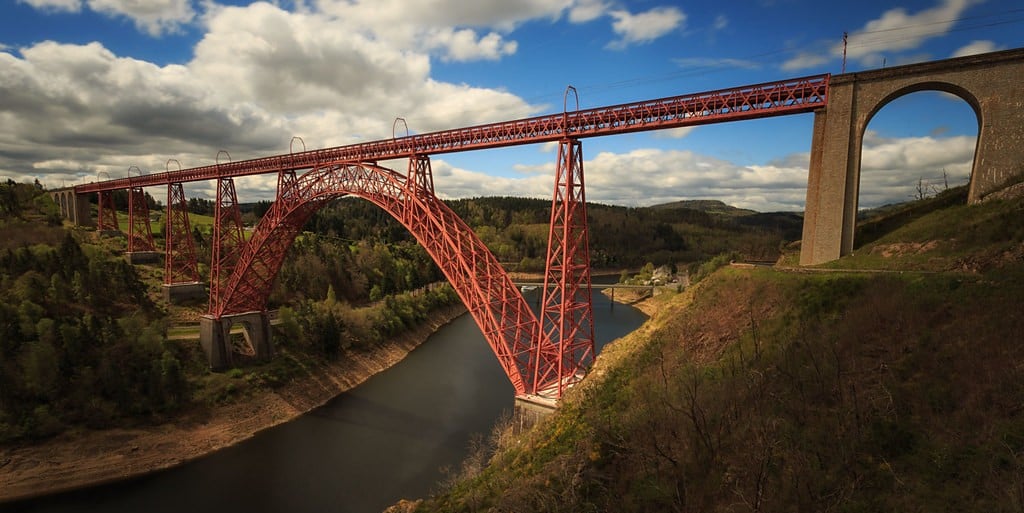
Before Gustave Eiffel built his famous tower, he designed the Garabit Viaduct in southern France. The railway bridge spans a valley 400 feet deep.
When it opened in 1884, its 540-foot arch was the longest in the world. Eiffel used wrought iron instead of steel, which was still expensive at the time.
The arch design meant the structure could support heavy trains without needing piers in the valley bottom. The curved iron sections distribute weight efficiently, just like the arches in medieval cathedrals.
Workers assembled the bridge using a brilliant technique: they built the arch from both sides of the valley, using temporary cables anchored to the cliffsides to hold each half in place. When the sections met in the middle, they bolted them together and removed the cables.
The entire structure weighs 3,587 tons but looks delicate against the landscape. Trains still cross it daily.
The viaduct proved Eiffel could build tall structures from iron lattice work—experience that led directly to his tower five years later.
Tacoma Narrows Bridge—The One That Failed
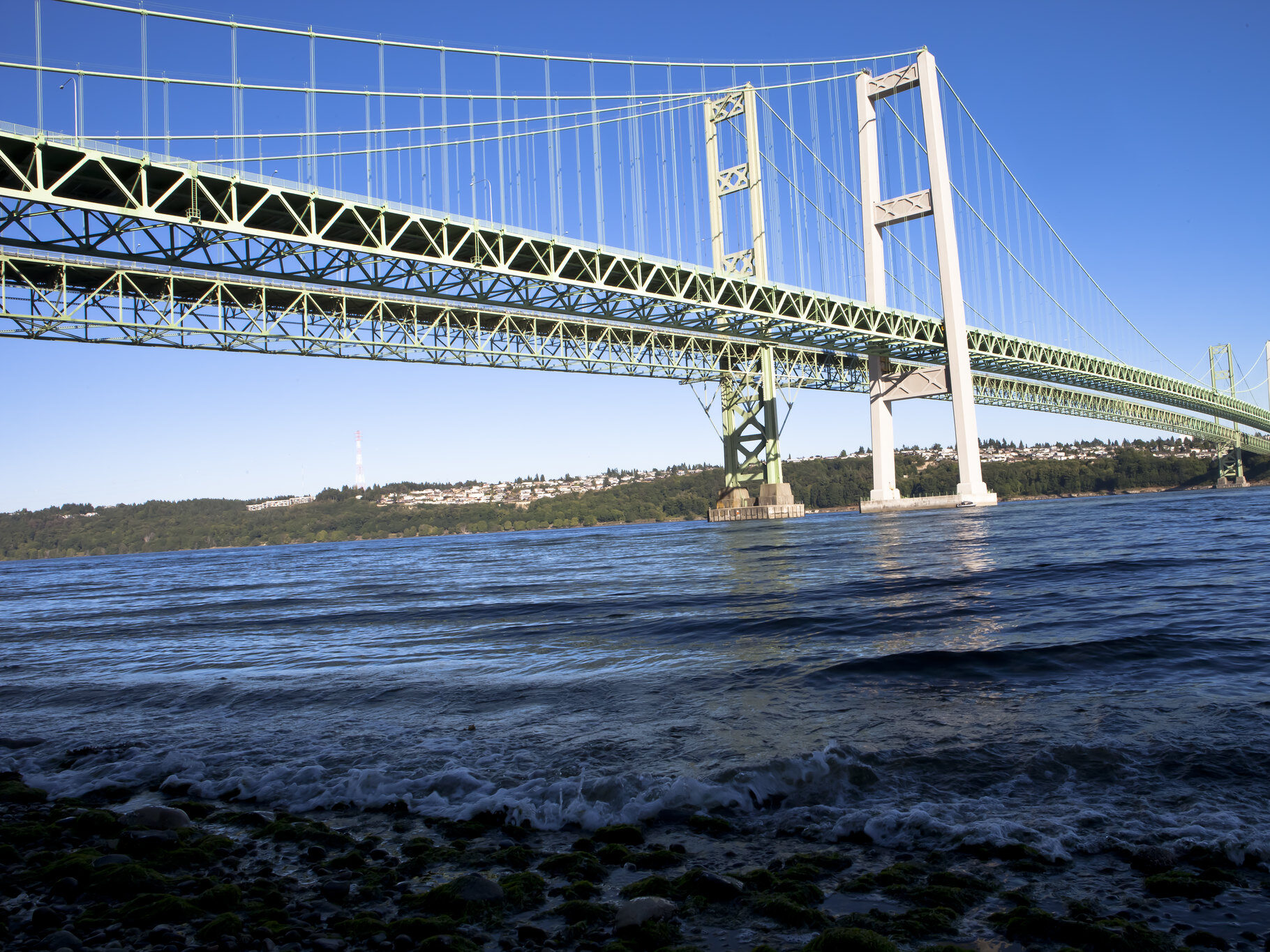
The original Tacoma Narrows Bridge earned the nickname “Galloping Gertie” because it bounced and swayed in the wind. It opened in July 1940.
Four months later, it tore itself apart in a moderate windstorm. Engineers had made it too flexible.
The roadway was thin and light compared to its length—2,800 feet between towers. When wind hit the sides, the deck started oscillating, twisting back and forth in waves that grew larger and larger.
The concrete and steel couldn’t handle the stress. On November 7, 1940, the center span broke apart and fell into Puget Sound.
A dog died in the collapse, trapped in a car. Its owner tried to save it but couldn’t—the deck was moving too violently. The collapse changed bridge engineering permanently.
Designers started using wind tunnel tests before building. They added stiffening trusses and changed deck designs to let wind pass through instead of pushing against solid surfaces.
The replacement bridge opened in 1950, built much stiffer and stronger. Engineers keep “Galloping Gertie” footage in textbooks as a reminder that making something too flexible can be just as dangerous as making it too rigid.
Iron Bridge—The World’s First Metal Span
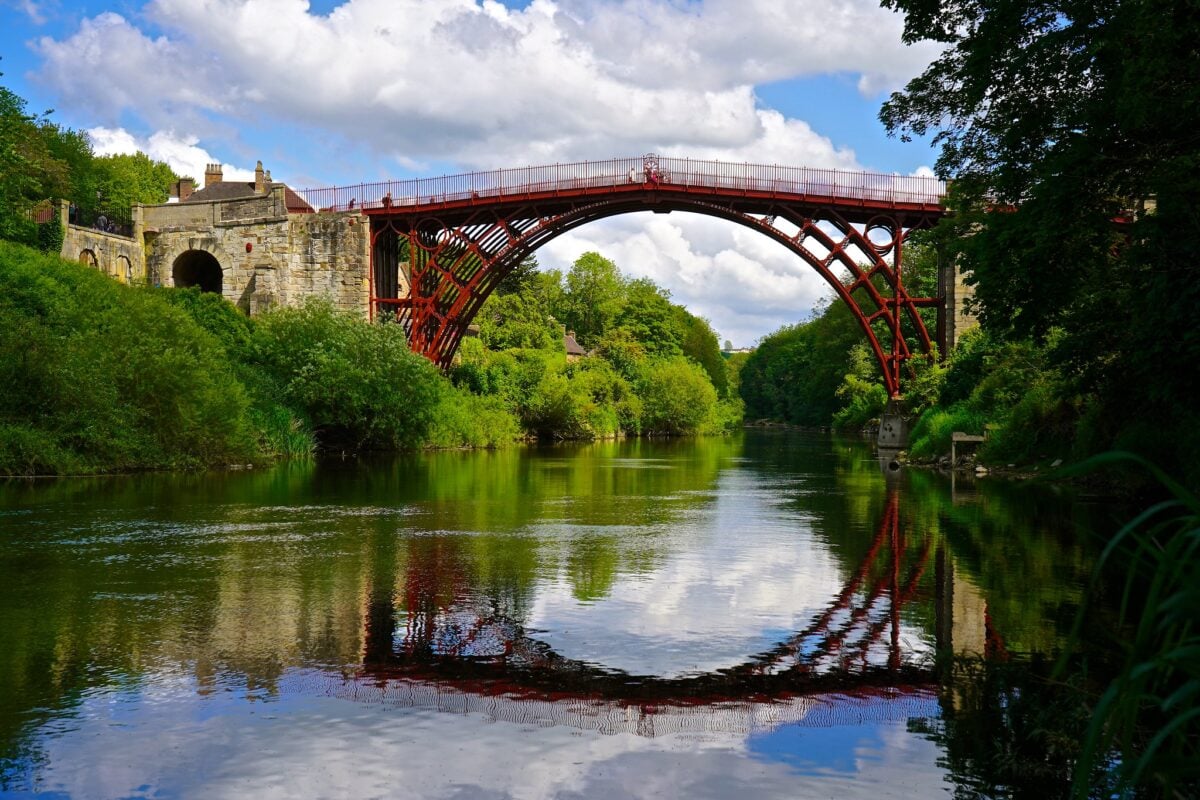
The Iron Bridge in Shropshire, England, looks modest now. But when it opened in 1779, no one had ever built a bridge from metal before.
Abraham Darby III cast it from iron using techniques developed in nearby ironworks. The arch spans just 100 feet, but it proved that metal could replace stone for major structures.
Darby used traditional carpentry joints—mortise and tenon, dovetails—but cast them in iron. Each piece fits together like a wooden frame.
The entire bridge weighs 384 tons and rises 60 feet above the River Severn. It cost £6,000 to build, about $1 million in today’s money. The bridge opened to pedestrians only.
Horses and carts had to cross elsewhere because Darby worried the deck couldn’t handle the weight. The concern turned out to be unnecessary—the bridge proved far stronger than anyone expected.
It’s still standing 245 years later, now protected as a UNESCO World Heritage Site. The success inspired engineers across Europe to experiment with metal construction.
Within 50 years, iron bridges and buildings were common.
Bayonne Bridge—Raising a Roadway Under Traffic
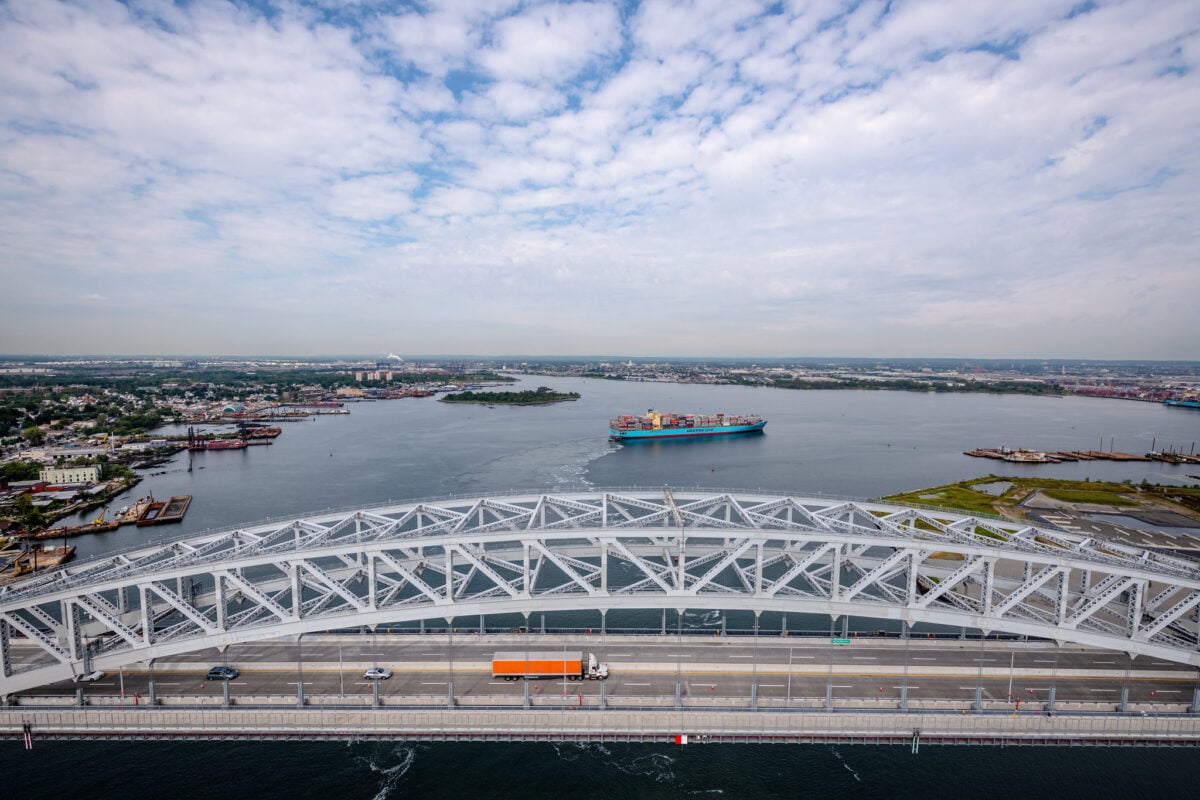
New Jersey’s Bayonne Bridge originally opened in 1931 with a 1,675-foot steel arch—the longest arch span in the world for 46 years. But by 2013, it had a problem: modern cargo ships couldn’t fit underneath.
The Port of New York and New Jersey needed more clearance for bigger vessels. Engineers decided to raise the roadway 64 feet without closing the bridge.
They built a new deck above the existing one while traffic continued below. Construction crews worked section by section, lifting steel beams and concrete slabs into place.
When the new roadway was complete, they demolished the old deck and let it fall into catch nets below. The project took four years.
During that time, 40,000 vehicles crossed the bridge daily, driving on the old roadway while workers built the new one directly overhead. The raised deck now provides 215 feet of clearance at mean high water—enough for the largest container ships to pass through.
The technique proved you could dramatically alter a bridge without disrupting the traffic it carries. Other bridges have since used similar approaches for major renovations.
Hartland Covered Bridge—Wood That Won’t Quit
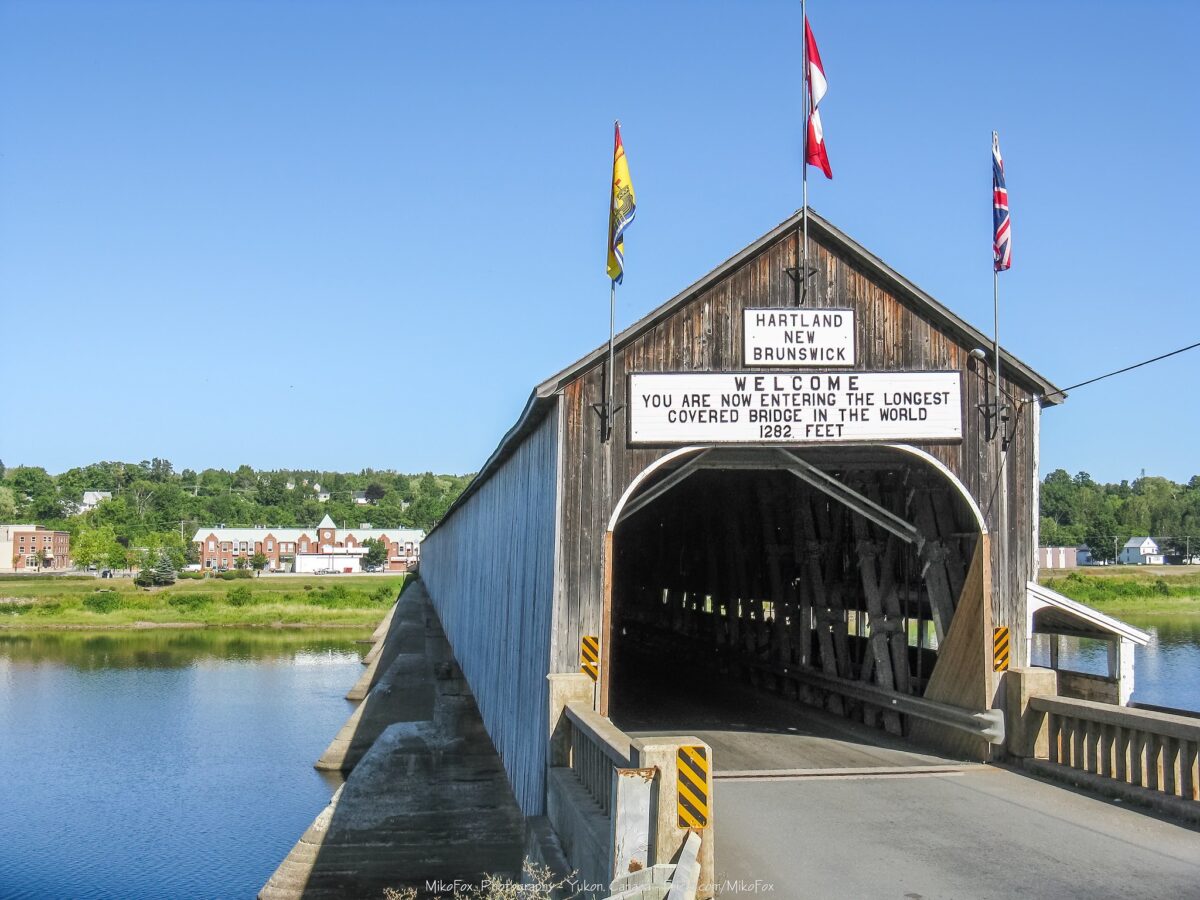
New Brunswick’s Hartland Covered Bridge stretches 1,282 feet, making it the longest covered bridge in the world. It opened in 1901, built from wood when most new bridges were switching to steel or concrete. Why cover a bridge?
The roof and walls protect the wooden support beams from rain and snow. Exposed wood rots. Covered wood can last for centuries.
The Hartland Bridge used traditional timber frame construction—large wooden beams held together with pegs and iron straps. Seven piers support the spans.
The bridge started as a toll crossing. You paid three cents to walk across, five cents for a horse and wagon.
Cars eventually replaced horses, and the bridge needed reinforcement to handle the weight. Engineers added steel beams underneath the wooden structure in the 1940s.
Locals call it “the kissing bridge” because of an old tradition: you kiss when you enter and don’t stop until you exit the other side. The bridge remains open to vehicles, though with a weight limit.
Pedestrians can walk through anytime—no toll required anymore.
Quebec Bridge – Learning from Catastrophe
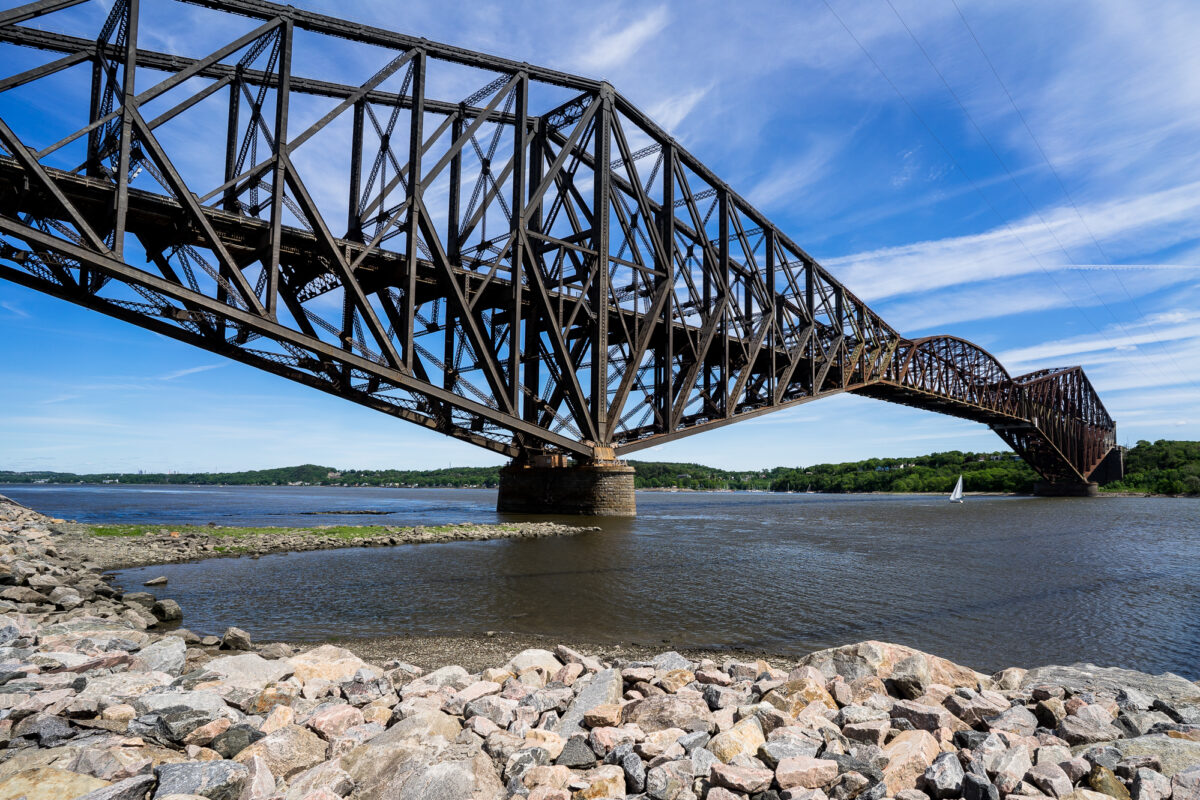
The Quebec Bridge fell apart two times before builders figured it out. Each failure caused deaths – yet led to changes shaping how experts design big constructions now.
The first plan called for a 1,800-foot stretch – set to become the globe’s biggest cantilever bridge. Work kicked off in 1904. Come 1907, experts saw the south side drooping way more than predicted.
Some talked about halting progress, yet pushed forward anyway. Then on August 29, 1907, the whole southern section crashed into the St. Lawrence River.
Seventy-five laborers lost their lives. The probe found issues with how it was planned.
Since the metal parts weren’t strong enough, changes had to happen – so experts rebuilt the whole thing, adding bulk and toughness. Progress started again by 1913.
Then, during 1916, while shifting the middle section up, gear snapped; the piece dropped, claiming 13 lives. The bridge opened at last in 1917, featuring an 1,800-foot central stretch.
Even now, it carries trains across. After the accidents, engineers toughened license rules while setting up stricter checks.
Nobody in the field wishes to face another collapse like the Quebec Bridge.
When Iron Met Ambition
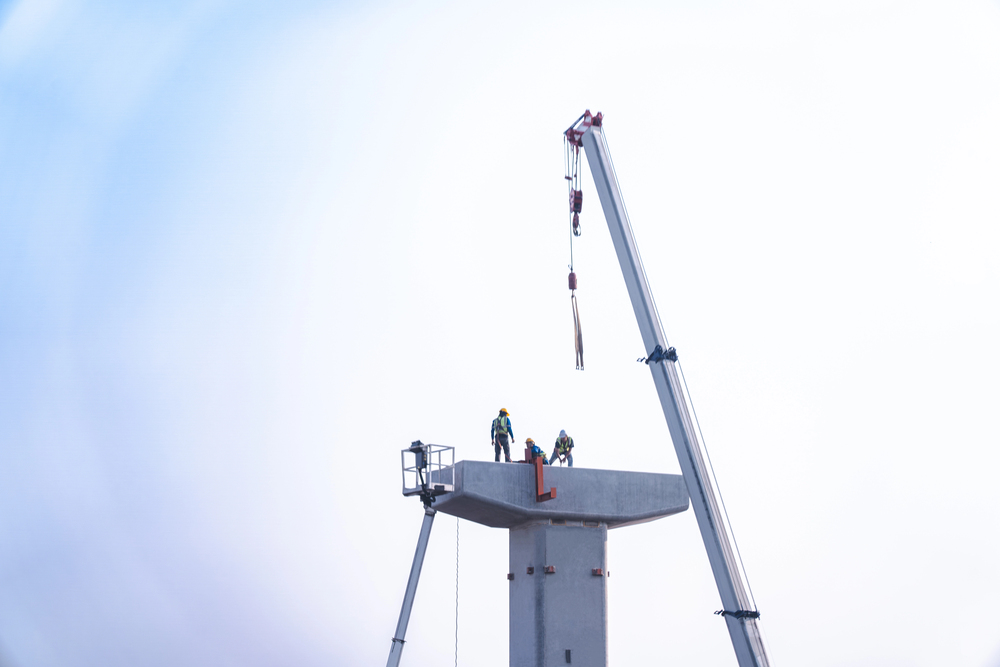
Some bridges have more in common than just size or record-breaking stats. Each came from a person who saw a huge gap and simply said no to giving up.
Often, the tools needed weren’t even around when work began. Builders made new methods on the spot – figuring out issues nobody faced earlier, since nothing like these structures had ever been attempted at such height, scale, or reach.
Some bridges showed us what went wrong. Yet others worked even when odds were against them. They reshaped terrain, linked towns together – while showing how smart thinking with strong materials beats nearly every natural challenge thrown at it.
You walk over bridges like it’s nothing these days. Yet every single one stands on countless choices, endless effort stretching through years, sometimes even human cost – all spent chasing what people once thought couldn’t be done.
More from Go2Tutors!

- 16 Historical Figures Who Were Nothing Like You Think
- 12 Things Sold in the 80s That Are Now Illegal
- 15 VHS Tapes That Could Be Worth Thousands
- 17 Historical “What Ifs” That Would Have Changed Everything
- 18 TV Shows That Vanished Without a Finale
Like Go2Tutors’s content? Follow us on MSN.