Actors with the Most Award Nominations
Awards shows dominate entertainment news cycles every year. Actors walk red carpets, give speeches, and collect trophies.
But the real measure of sustained excellence isn’t winning once or twice. It’s getting nominated year after year, decade after decade.
Some performers have turned award nominations into a career-long pattern, racking up numbers that seem impossible to match.
Meryl Streep’s Unmatched Oscar Record

Meryl Streep has been nominated for an Academy Award 21 times. That’s more than any other actor in history.
She won three times, but the nominations themselves tell the bigger story. From 1979 to 2018, she earned recognition almost constantly, sometimes getting nominated in consecutive years.
The range of roles is staggering. She played a Polish Holocaust survivor, a British Prime Minister, a fashion magazine editor, and a singing innkeeper in a musical.
The Academy kept nominating her because she kept disappearing into completely different characters. Age didn’t slow her down either.
She received nominations in her 30s, 40s, 50s, and 60s.
Katharine Hepburn’s Legendary Run

Katharine Hepburn earned 12 Oscar nominations across a career that spanned from the 1930s to the 1980s. She won four times, which remains the record for acting wins.
But even with four victories, she lost eight times, which shows just how consistently she worked at the highest level.
Hepburn’s nominations came from playing strong, independent women at a time when those roles weren’t common. She refused to conform to Hollywood expectations about how actresses should behave, and the Academy rewarded her anyway.
Her last nomination came at age 74 for “On Golden Pond,” proving she could still command leading roles decades into her career.
Jack Nicholson’s Decades of Recognition

Jack Nicholson has 12 Oscar nominations to his name, winning three times. His first nomination came in 1970 for “Easy Rider.”
His last came in 2003 for “About Schmidt.” That’s 33 years of consistent recognition from the Academy.
Nicholson played psychopaths, romantic leads, tough guys, and sad losers. He could do intense drama and dark comedy with equal skill.
The nominations kept coming because directors kept casting him in challenging roles, and he kept delivering performances that stood out.
Even when he played villains, you couldn’t look away.
Denzel Washington’s Consistent Excellence

Denzel Washington has earned 10 Oscar nominations since 1988. He won twice—once for a supporting role in “Glory” and once for leading in “Training Day.”
The nominations span multiple decades and show remarkable versatility.
Washington moved between historical figures, fictional heroes, and complex antiheroes. He got nominated for playing Malcolm X, a wrongfully convicted boxer, a corrupt cop, and an alcoholic pilot.
Each performance felt completely different from the last. The Academy kept nominating him because he never phoned it in or repeated himself.
Bette Davis Commands Attention

Bette Davis received 10 Oscar nominations between 1935 and 1963. She won twice, both times in the 1930s.
What makes her record impressive is how she earned recognition despite fighting with studios constantly over the quality of roles they offered her.
Davis played women who refused to be a victim or a decoration. She took roles with substance and fought for better scripts when she didn’t get them.
The Academy responded by nominating her repeatedly, even when the films themselves weren’t particularly successful. She proved you could be difficult and still be recognized for great work.
Laurence Olivier’s Stage and Screen Dominance

Laurence Olivier earned 10 Oscar nominations across his career, winning once for “Hamlet” in 1949. He also received two honorary Oscars for his overall contributions to film.
The nominations covered everything from Shakespearean adaptations to contemporary dramas.
Olivier came from the theater and brought that intensity to movies. His performances felt big without being overdone.
He could play tragic heroes, villains, and historical figures with equal conviction. The Academy kept nominating him even as his style of acting fell out of fashion, recognizing his technical skill and commitment.
Spencer Tracy’s Quiet Power

Spencer Tracy received nine Oscar nominations and won twice, both times back-to-back in 1937 and 1938. His nominations continued into the 1960s, showing staying power that few actors match.
Tracy’s approach was understated compared to many of his peers. He didn’t go for big emotional moments or obvious technique.
He just inhabited characters so completely that you forgot you were watching an actor. The nominations recognized this consistency.
Whether he played a priest, a lawyer, or a father dealing with his daughter’s interracial marriage, he made it look natural.
Paul Newman’s Long Career of Near-Misses
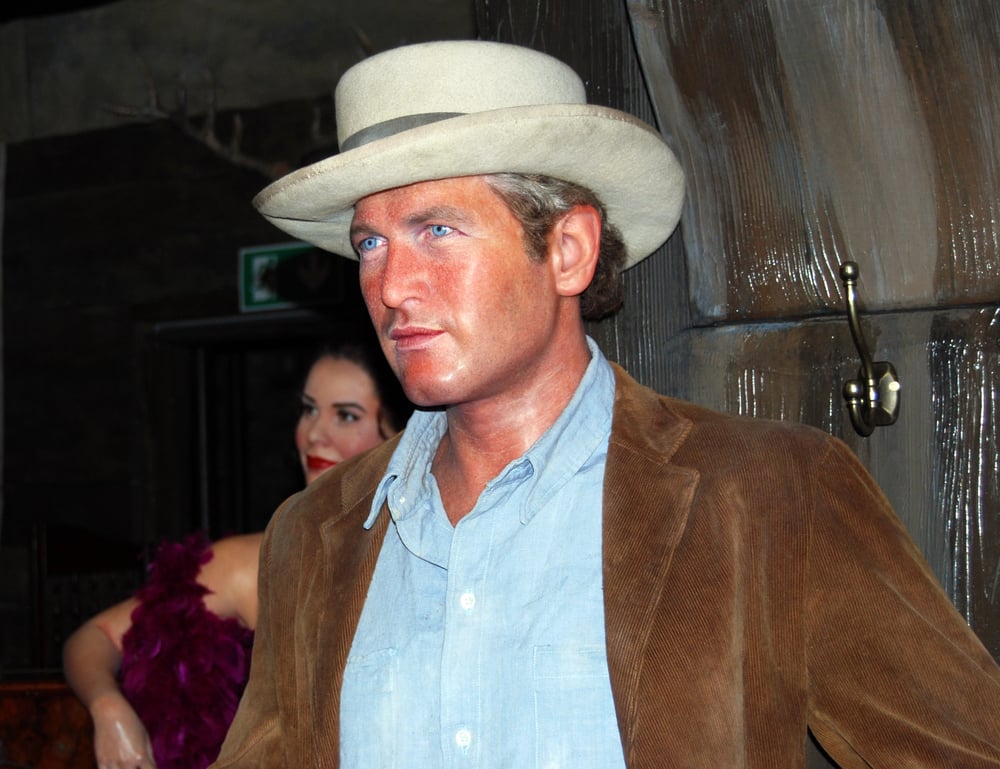
Paul Newman earned nine Oscar nominations before finally winning on his eighth try in 1987 for “The Color of Money.” He later received an honorary Oscar for lifetime achievement.
The string of nominations without wins became almost comical, but it proved how consistently great his work was.
Newman played antiheroes, rebels, and complicated men who didn’t fit easy categories. He aged gracefully on screen, transitioning from young leading man to character actor without losing his appeal.
Each nomination represented a different facet of his range, from “Cool Hand Luke” to “The Verdict” to “Nobody’s Fool.”
Al Pacino’s Intense Decades

Al Pacino has nine Oscar nominations, winning once for “Scent of a Woman” in 1993. He got nominated for the first two “Godfather” films but lost both times.
He lost for “Serpico,” “Dog Day Afternoon,” and “…And Justice for All” too.
Pacino’s early career was defined by intense, explosive performances that changed how actors approached dramatic roles. Later nominations showed he could dial it back and play quieter characters when the role required it.
The Academy kept recognizing him even after his style evolved and Hollywood moved on to new trends.
Judi Dench’s Late-Career Surge

Judi Dench earned eight Oscar nominations starting in 1998 when she was already in her 60s. She won once for playing Queen Elizabeth I in “Shakespeare in Love,” despite being on screen for only eight minutes.
The other nominations came for films where she played much larger roles.
Dench spent decades doing acclaimed theater and television work in Britain before Hollywood fully recognized her. When American filmmakers finally started casting her regularly, the Academy responded by nominating her repeatedly.
She proved that great careers don’t have to peak young.
Cate Blanchett’s Modern Dominance

Cate Blanchett has eight Oscar nominations and has won twice. Her nominations started in 1999 and have continued into the 2020s.
She’s played Queen Elizabeth I, Katharine Hepburn, Bob Dylan, and various fictional characters across different genres.
Blanchett moves between big-budget films and independent productions without any apparent pattern. She’ll do a Marvel movie, then a small art film, then a period drama.
The Academy keeps nominating her because the quality stays consistent regardless of the project size or genre.
Glenn Close’s Unfortunate Streak

Eight times an Oscar nominee, Glenn Close has never won. Her roles in “The World According to Grop” brought her first recognition.
A nod came next for “The Big Chill,” followed by one for “The Natural.” Then there was “Fatal Attraction” – another mention.
“Dangerous Liaisons” earned acclaim too. Later, “Albert Nobbs” added another nomination.
Time passed before “The Wife” gave her yet another chance. Most recently, “Hillbilly Elegy” joined the list.
Every occasion ended the same way – someone else took the prize.
Spanning nearly four decades, the nods began in 1983 and stretched into 2021. From rugged pioneers to icy nobility, then twisted obsessives – she’s done them all.
Though victory still eludes her, insiders chuckle at the pattern. Yet each mention on that list cements something quiet: few wield craft like she does.
What the Numbers Actually Mean

Getting lots of award nods won’t crown you history’s best performer. What it does suggest is steady work on visible films that the voters notice.
Different kinds of characters helped prove versatility along the way. Staying in the game, season after season, built those tall numbers over time.
A few standout performers never earn nods since their films aren’t what the Academy pays attention to. Yet some rise fast, then vanish just as quickly.
Those collecting ten or more nods learn to blend bold choices with crowd-pleasing roles, keeping active in movies that resonate with voting circles.
Over time, these honors reflect endurance far beyond mere skill. What sticks isn’t a single moment of brilliance.
Staying sharp, year after year, earning nods from peers – that carves a different path altogether.
More from Go2Tutors!

- The Romanov Crown Jewels and Their Tragic Fate
- 13 Historical Mysteries That Science Still Can’t Solve
- Famous Hoaxes That Fooled the World for Years
- 15 Child Stars with Tragic Adult Lives
- 16 Famous Jewelry Pieces in History
Like Go2Tutors’s content? Follow us on MSN.



