Airports Built on Artificial Islands
Built where space runs short, airports sometimes stretch into the ocean. Not every region offers wide open plots – thick urban growth, rocky shores, and protected habitats block expansion inland.
So engineers shifted direction, aiming beyond the shore. Out there, new ground rises from water, made solid by human design.
Floating on foundations driven deep, these runways stand as man-made platforms rising above waves. Fresh designs didn’t drive these airport projects.
What mattered was solving problems where old fixes wouldn’t work. By going out into open water, planners kept engines roaring away from homes.
Space on solid ground became available again. Urban centers grew flight access while leaving city layouts untouched.
A fresh view of big airports sitting on man-made land shows how cities tackle space limits. These hubs rise above water because coastlines ran out of room.
Building them takes bold design choices shaped by necessity. Each one reflects clever problem-solving in tight spots.
Rising sea levels add pressure to rethink where runways go. Engineers adapt by going wider into the ocean.
Some projects reshape entire skylines just to keep flights moving. Land reclamation turns shallow bays into busy terminals.
The scale surprises even seasoned planners. What emerges is less fantasy than practical response to growth.
Kansai International Airport
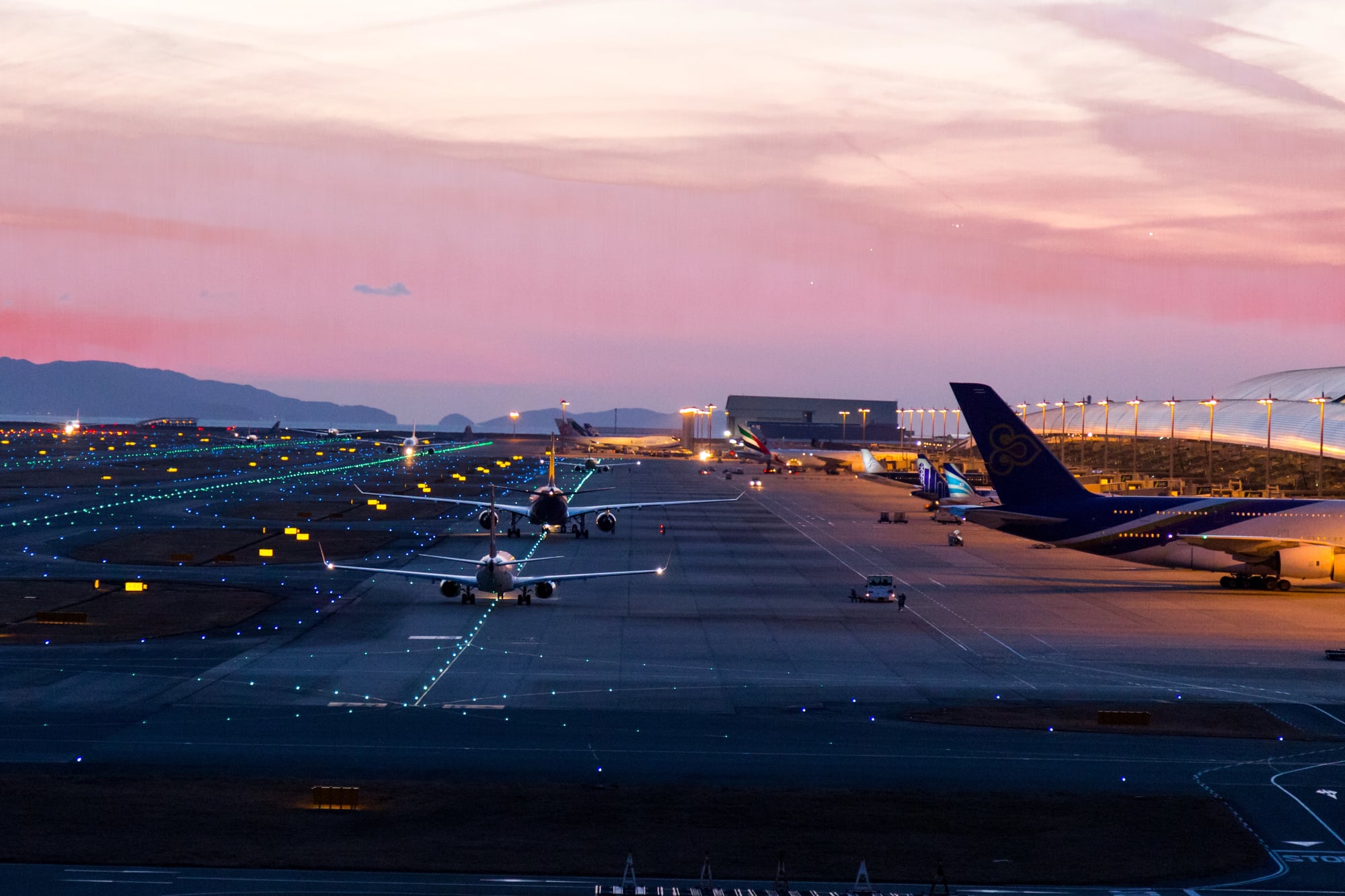
Kansai International Airport is often considered the most famous airport built entirely on an artificial island. Located in Osaka Bay, it was designed to relieve congestion at land-based airports while avoiding noise complaints from nearby neighborhoods.
Construction began in the late 1980s, with engineers creating a vast man-made island several miles offshore. The project was groundbreaking but challenging.
One of the biggest issues has been subsidence, as the island gradually sank more than expected under its own weight. Engineers accounted for this with adjustable foundations and constant monitoring, turning the airport into a long-term experiment in structural adaptation.
Despite these challenges, Kansai remains a vital international gateway and a symbol of Japan’s engineering ambition.
Chubu Centrair International Airport

Built off the coast of Nagoya, Chubu Centrair International Airport represents a more refined second-generation approach to island airports. Lessons learned from Kansai influenced its design, particularly around soil stabilization and long-term settlement management.
Centrair was constructed to serve Japan’s industrial heartland, providing a modern hub without consuming valuable coastal land. Its compact layout and efficient connections earned praise for passenger experience.
By placing the airport offshore, planners minimized noise impact while allowing Nagoya to maintain its dense urban footprint.
Hong Kong International Airport

Hong Kong International Airport sits on reclaimed land formed by leveling two small islands and expanding them into a single platform. Opened in the late 1990s, it replaced the famously constrained Kai Tak Airport, which had severe limitations due to surrounding buildings and terrain.
The new airport transformed Hong Kong’s aviation capacity almost overnight. Its offshore location allowed for longer runways, safer approaches, and room for expansion.
The project also reshaped shipping lanes and marine ecosystems, highlighting the scale of environmental trade-offs involved in island construction.
Nagoya Airport

Before Centrair opened, Nagoya relied on a smaller land-based airport that struggled to support growing demand. The shift offshore was driven by space limitations and the need for modern infrastructure.
While the older airport still handles some domestic and private flights, Centrair took over as the region’s primary international gateway. This transition illustrates a broader pattern seen worldwide.
As cities grow denser, aviation infrastructure often must move outward rather than upward. Artificial islands offering one of the few remaining options.
Macau International Airport

Macau International Airport was built on reclaimed land along the coast, extending outward into surrounding waters. While smaller than some other island airports, it plays a critical role in connecting Macau to regional destinations.
The airport’s location reflects Macau’s extreme land scarcity. With limited space for expansion onshore, reclamation offered the only viable solution.
Its construction also supported broader land reclamation projects that reshaped the territory’s coastline.
Kobe Airport

Kobe Airport is another example of Japan’s offshore aviation strategy. Built on an artificial island in Osaka Bay, it primarily handles domestic flights but serves as a valuable relief airport for the Kansai region.
Unlike Kansai International, Kobe’s smaller scale allowed for a simpler construction process. Still, its existence underscores how regional planning in Japan often favors shared airspace supported by multiple offshore facilities rather than overburdening a single hub.
Why Cities Build Airports at Sea

The decision to build an airport on an artificial island usually begins with constraint. Coastal cities often lack flat, undeveloped land large enough for modern runways.
Expanding inland may require displacing communities or disrupting established infrastructure. Noise is another major factor.
Airports generate constant sound, and offshore placement significantly reduces the impact on residents. By moving flight paths over water, cities can operate around the clock with fewer restrictions.
There is also flexibility. Artificial islands can be engineered to precise specifications, allowing planners to design optimal runway layouts and terminal configurations without adapting to uneven terrain.
Engineering Challenges Below the Surface

Building an airport on water is as much about geology as architecture. Engineers must deal with soft seabed soils, shifting sediments, and long-term settlement.
Stabilizing these foundations requires deep piling, soil improvement techniques, and constant monitoring. Maintenance never truly ends.
Sea walls, drainage systems, and foundations must be inspected and reinforced over time. Climate conditions such as storms and rising sea levels add further complexity, forcing designers to think decades ahead rather than just years.
These challenges make island airports expensive, but they also push engineering innovation forward. Techniques developed for these projects often influence other forms of coastal infrastructure.
Environmental Trade-Offs

Artificial island construction inevitably affects marine ecosystems. Dredging alters water flow, disrupts habitats, and can impact fisheries.
Environmental assessments and mitigation strategies are now standard parts of planning, though they cannot eliminate all effects. Some projects attempt to offset impact by creating new habitats or carefully managing sediment movement.
Even so, environmental concerns remain one of the most debated aspects of offshore airport construction. Balancing economic necessity with environmental responsibility continues to shape how future island airports are planned.
Operational Advantages and Limitations

Once operational, island airports offer clear benefits. They can expand more easily, manage noise better, and operate with fewer urban constraints.
Access is typically provided through bridges, tunnels, or rail links, which must be engineered to withstand harsh marine conditions. However, isolation introduces vulnerabilities.
Severe weather can disrupt access routes, and maintenance costs remain higher than for land-based airports. Every advantage comes with trade-offs that must be managed over the airport’s lifetime.
Why It Still Matters
What happens when land runs short? Some cities build airports on made ground.
Necessity pushes them there, ambition pulls them forward. When old answers fail, new shapes emerge from water and concrete.
Coastlines shift because of these places, so does flight, so do city designs. Lasting change comes quietly, one reclaimed plot at a time.
With skies busier and shorelines tighter, floating runways might show up more often than not. What works – and what fails – shapes how we design tomorrow’s structures.
These platforms aren’t merely tarmacs on water; they’re experiments in rethinking where people fit. How we adjust room for living could hinge on lessons learned out there.
Quiet shifts now may signal louder changes later.
More from Go2Tutors!

- The Romanov Crown Jewels and Their Tragic Fate
- 13 Historical Mysteries That Science Still Can’t Solve
- Famous Hoaxes That Fooled the World for Years
- 15 Child Stars with Tragic Adult Lives
- 16 Famous Jewelry Pieces in History
Like Go2Tutors’s content? Follow us on MSN.