Album Covers That Caused Major Controversy
Album covers have always been more than just packaging.
They’re the first impression, the visual punch that either draws you in or makes you look twice for all the wrong reasons.
Throughout music history, some artists have pushed boundaries so far with their cover art that retailers refused to stock them, countries banned them outright, or they sparked public outcry that overshadowed the actual music inside.
Here is a list of album covers that stirred up massive controversy and forced the music industry to confront questions about censorship, artistic freedom, and what’s acceptable to display on store shelves.
The Beatles – Yesterday and Today
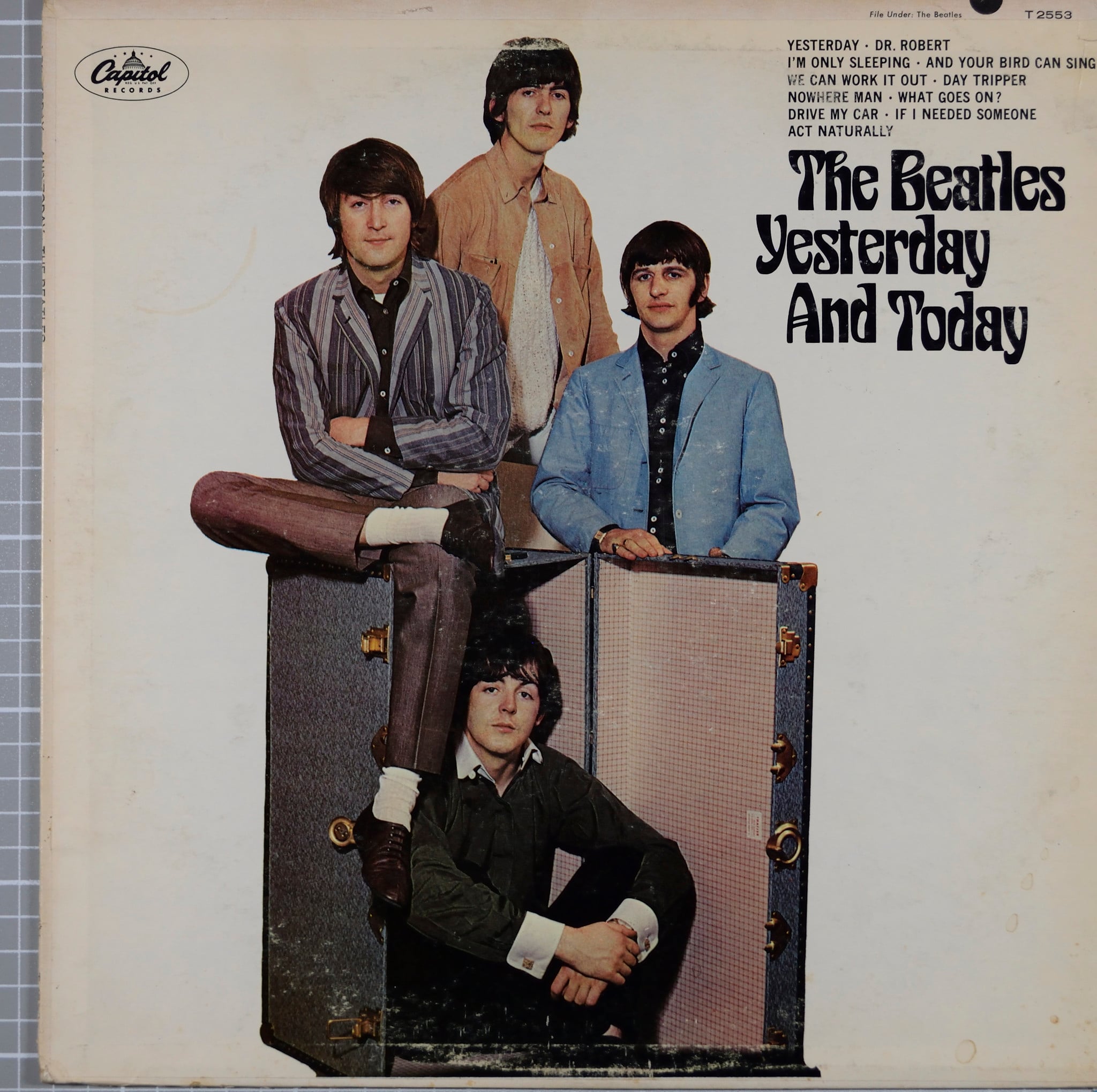
The Fab Four shocked everyone in 1966 when Capitol Records slapped their ‘butcher cover’ onto this compilation album.
The image showed the band draped in raw meat and dismembered doll parts, part of a surreal photo series by Robert Whitaker that was meant as an art statement.
Retailers recoiled so hard that Capitol recalled the album within days, pasting a new, boring photo over the controversial one—which meant some copies could literally be peeled to reveal the infamous image underneath.
Nirvana – Nevermind

That baby swimming after a dollar bill became one of rock’s most recognizable images, but it also became one of its most controversial.
Store chains like Walmart and Kmart initially refused to carry the album in 1991, and Kurt Cobain famously refused to censor it.
The controversy followed Spencer Elden into adulthood, eventually leading him to file a lawsuit against the band three decades later, though the case was ultimately dismissed.
Scorpions – Virgin Killer

This 1976 album remains one of the most banned covers in music history and for obvious reasons.
The German band’s label apparently pushed the envelope to generate controversy and boost sales, featuring an image that crossed every line imaginable.
Most countries immediately replaced it with a simple band photo, and singer Klaus Meine later admitted they went way over the edge with their album art during that era.
Guns N’ Roses – Appetite for Destruction
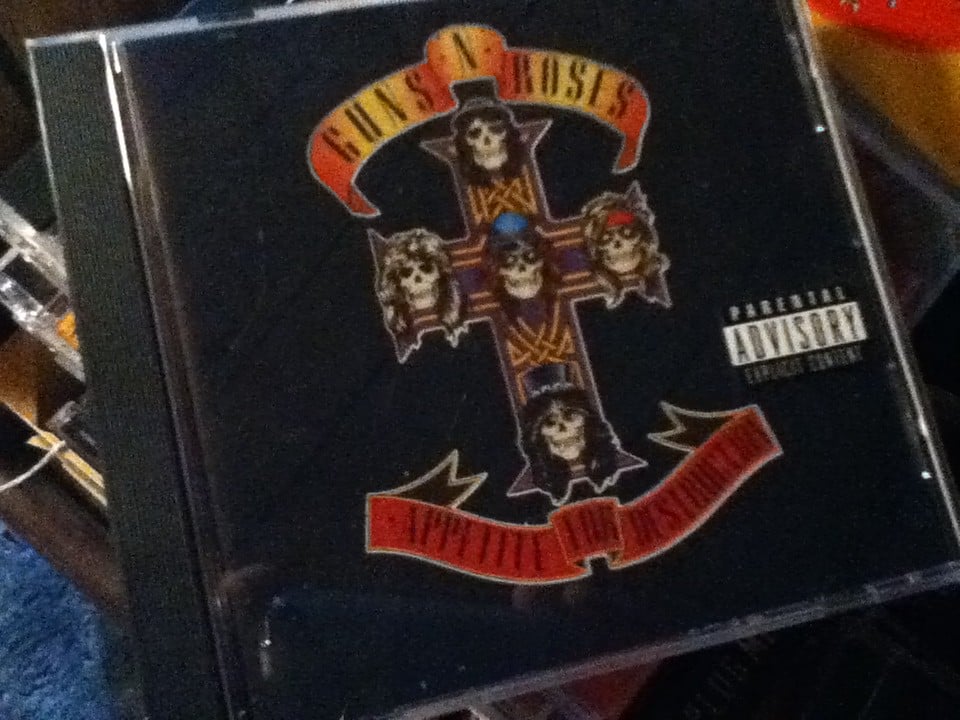
The original 1987 cover featured a Robert Williams painting depicting a robotic predator scenario that was far too graphic for mainstream retail.
Geffen Records quickly moved the controversial artwork to the inner sleeve and replaced it with the now-iconic cross and skull design.
Axl Rose reportedly wanted something even more shocking initially—a photo of the Challenger explosion—but thankfully that idea never made it past the planning stage.
Jane’s Addiction – Nothing’s Shocking

Perry Farrell’s vision for this 1988 cover featured conjoined figures with flaming heads, which was artistic but also pushed the boundaries of what major retailers would tolerate.
Walmart and Kmart refused to stock it, forcing some stores to sell it in brown paper bags.
The controversy only amplified the album’s alternative rock credibility, proving that sometimes censorship is the best marketing tool an artist never asked for.
Blind Faith – Blind Faith
— Photo by claudiodivizia
Eric Clapton’s supergroup created one of rock’s most haunting controversies with their 1969 debut.
The cover showed a young girl holding a futuristic toy spaceship, and American audiences immediately demanded it be replaced with a simple band photo instead.
The image remains contentious decades later, representing a time when album art boundaries were being tested without much thought for long-term implications.
Jimi Hendrix – Electric Ladyland

Track Records in the UK made a decision that Hendrix himself hated, replacing his preferred band photo with an image featuring nineteen women lounging around.
The label thought it would be provocative and sales-driving, but Jimi found it crass and several record shops refused to stock it.
The US version kept things simple with Linda McCartney’s tasteful shot of the band, proving that sometimes the artist’s original vision is the smarter choice.
The Black Crowes – Amorica

A close-up from a vintage magazine showing an American flag-themed bikini bottom sparked immediate retail resistance in 1994.
The image came straight from an old issue of a certain adult publication, complete with visible evidence that this wasn’t exactly a professionally styled photoshoot.
Major chains demanded a censored version, and the band complied while the uncensored version became a collector’s item for fans who appreciated the rock and roll rebellion.
Marilyn Manson – Holy Wood

Manson depicted himself as a crucified Christ figure on this 2000 album, which predictably sent conservative America into an uproar.
US stores banned it completely, though that was likely exactly the reaction the shock rocker wanted.
Given that his previous albums like ‘Mechanical Animals’ and ‘Portrait of an American Family’ had already sparked moral panic, Manson probably viewed the controversy as validation that his critique of censorship was hitting its mark.
John Lennon and Yoko Ono – Two Virgins
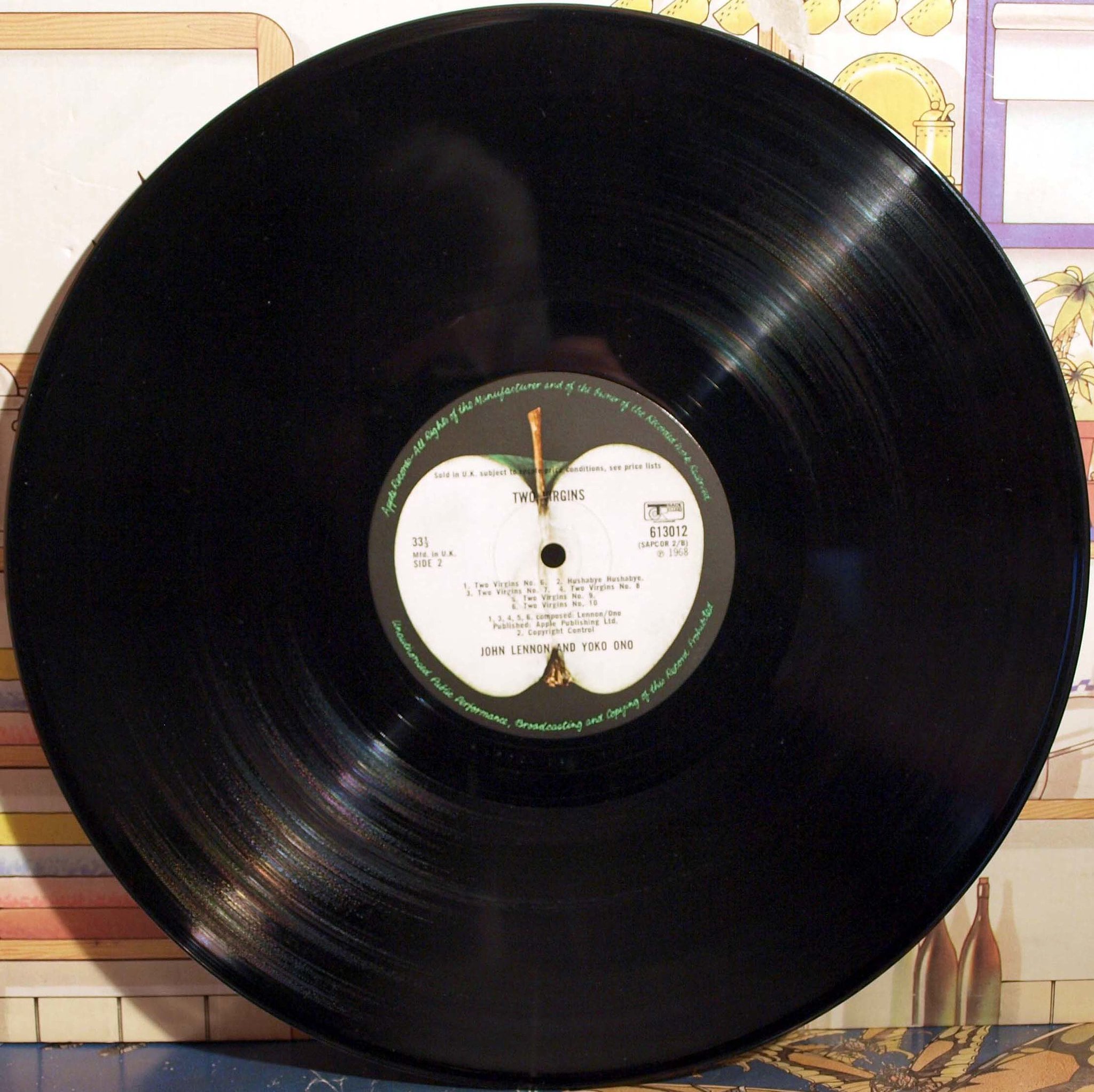
The former Beatle and his partner went for full vulnerability on this 1968 experimental album, appearing completely unclothed on both the front and back covers.
Retailers wrapped it in brown paper bags, which ironically probably made more people curious about what was inside.
The cover became a statement about artistic freedom and breaking taboos, even if most people remember it more for the controversy than the avant-garde music it contained.
Roxy Music – Country Life

This 1974 album featured two models in revealing attire standing in a forest, one of whom was related to Can guitarist Michael Karoli.
American retailers censored the image, though the album still managed to crack the Billboard 200 Top 40.
The UK kept the original, creating one of those transatlantic divides that highlighted different cultural attitudes toward what was considered acceptable in the mid-1970s.
The Rolling Stones – Beggars Banquet

Mick Jagger wanted something different for this 1968 release, choosing a photo of a graffiti-covered bathroom wall instead of the planned medieval feast imagery.
Decca Records was horrified and refused to release the album as scheduled, delaying it by months.
Mick defended the choice by pointing out that bathroom walls are simply where most graffiti appears, but the label saw only obscenity where the band saw art.
Red Hot Chili Peppers – Mother’s Milk

The 1989 cover showed the band members positioned in front of a proportionally larger woman, with careful placement meant to obscure certain features.
Several national chains still refused to stock it, claiming the image displayed too much.
A censored version was manufactured with the band members enlarged significantly, covering more of the model and satisfying the moral gatekeepers at retail chains across America.
Alice Cooper – Love It to Death
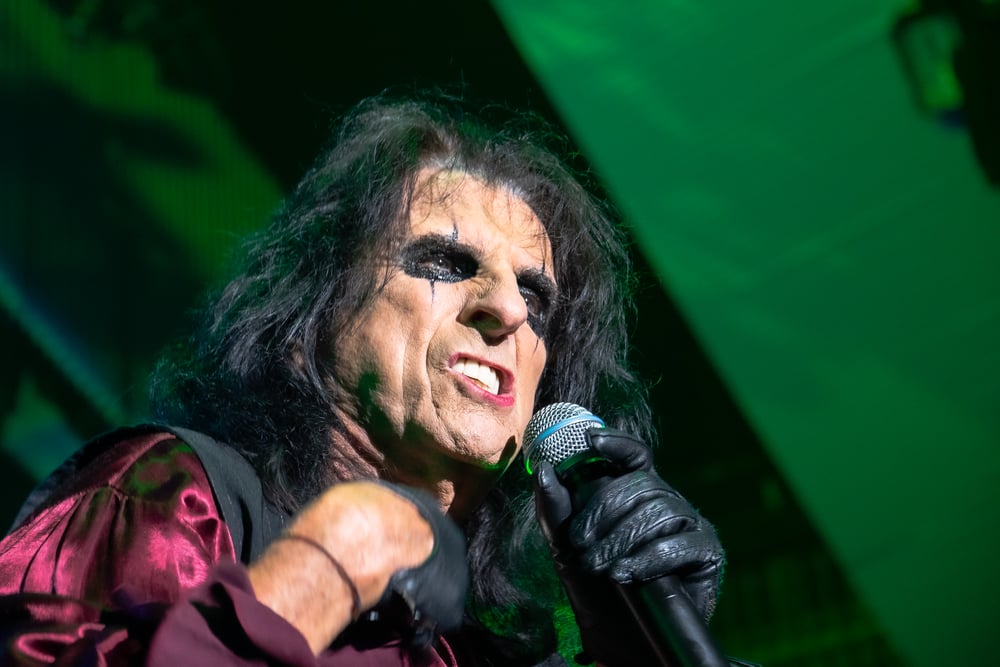
The original 1971 cover on Frank Zappa’s Straight Records label showed Alice with his hand positioned in a way that created an unfortunate visual illusion.
Warner Bros. stepped in and airbrushed the image to obscure the hand placement entirely.
It seems almost quaint by today’s standards, but in the early 1970s, even the suggestion of impropriety was enough to trigger censorship from nervous record executives.
Cannibal Corpse – Butchered at Birth

This death metal band built their entire reputation on graphic album art, and this 1991 release was no exception.
The grotesque imagery was so extreme that distributors wrapped early pressings in butcher’s paper stamped with the logo and title in red ink.
Germany banned all their albums until the mid-1990s, and various other countries imposed restrictions, proving that there’s definitely a line somewhere between artistic expression and what society will tolerate on record store shelves.
Dead Kennedys – Frankenchrist

The 1985 album came with an insert featuring H.R. Giger’s painting ‘Landscape XX,’ which depicted graphic imagery that landed the band in legal trouble.
Alternative Tentacles Records and several band members faced obscenity charges in California, though they were eventually acquitted.
The controversy overshadowed the politically charged punk music inside, turning an album about American hypocrisy into a landmark free speech case that cost the band dearly in legal fees.
The Strokes – Is This It

Colin Lane’s spontaneous photo of his girlfriend after a shower—showing just a leather-gloved hand on a bare hip—was apparently too suggestive for American sensibilities in 2001.
European fans got the original cover, while US audiences received a particle trail image instead.
The censorship seemed particularly arbitrary given that far more provocative images had appeared on album covers for decades, but the post-2000s retail environment had grown increasingly cautious about anything that might offend.
When Provocation Becomes Legacy

The album covers that sparked the biggest controversies often become the most memorable pieces of music history, even when the actual songs fade from cultural memory.
Many of these images forced conversations about artistic freedom, censorship, and cultural boundaries that went far beyond the music itself.
While streaming services have largely eliminated the shock value of physical album art, these controversial covers remain important reminders of when visual presentation could make or break a record’s commercial success.
The artists who pushed these boundaries didn’t always intend to cause outrage, but they certainly left their mark on an industry that continues to grapple with where creativity ends and offense begins.
More from Go2Tutors!

- The Romanov Crown Jewels and Their Tragic Fate
- 13 Historical Mysteries That Science Still Can’t Solve
- Famous Hoaxes That Fooled the World for Years
- 15 Child Stars with Tragic Adult Lives
- 16 Famous Jewelry Pieces in History
Like Go2Tutors’s content? Follow us on MSN.