Amazing Details About the First Air Travel
Long before the Wright brothers took to the skies at Kitty Hawk, humans had already tasted flight.
The story begins not with engines or propellers, but with fabric, hot air, and two French brothers who ran a paper mill.
Their invention didn’t just lift people off the ground—it changed how humanity saw its place in the world.
Within a single year, air travel went from impossible dream to spectacular reality, captivating kings and commoners alike.
The journey from earth to sky involved daring experiments, frightened animals, and passengers who literally bet their lives on untested technology.
Here’s a closer look at the remarkable details surrounding humanity’s first venture into the air.
The Montgolfier Brothers and Their Discovery

Joseph-Michel and Jacques-Étienne Montgolfier weren’t scientists or engineers by training.
They were papermakers from Annonay, a town in southeastern France.
The brothers noticed something curious while watching laundry dry over a fire—fabric billowed upward in the heat.
Joseph, the more scientifically minded of the two, began experimenting with paper bags held over flames.
The bags rose toward the ceiling.
He theorized that smoke itself possessed some kind of lifting property, a substance he called ‘Montgolfier gas.’
He was wrong about the mechanism, but right about the potential.
By late 1782, the brothers had progressed to outdoor experiments.
They built increasingly larger envelope structures from taffeta and paper, lighting fires beneath them to generate lift.
The breakthrough came when they realized that heat, not smoke, created the buoyancy they needed.
Still, they continued using damp straw and wool to create thick smoke, believing it enhanced the effect.
Their misconception didn’t matter—the balloons flew anyway.
The First Public Demonstration
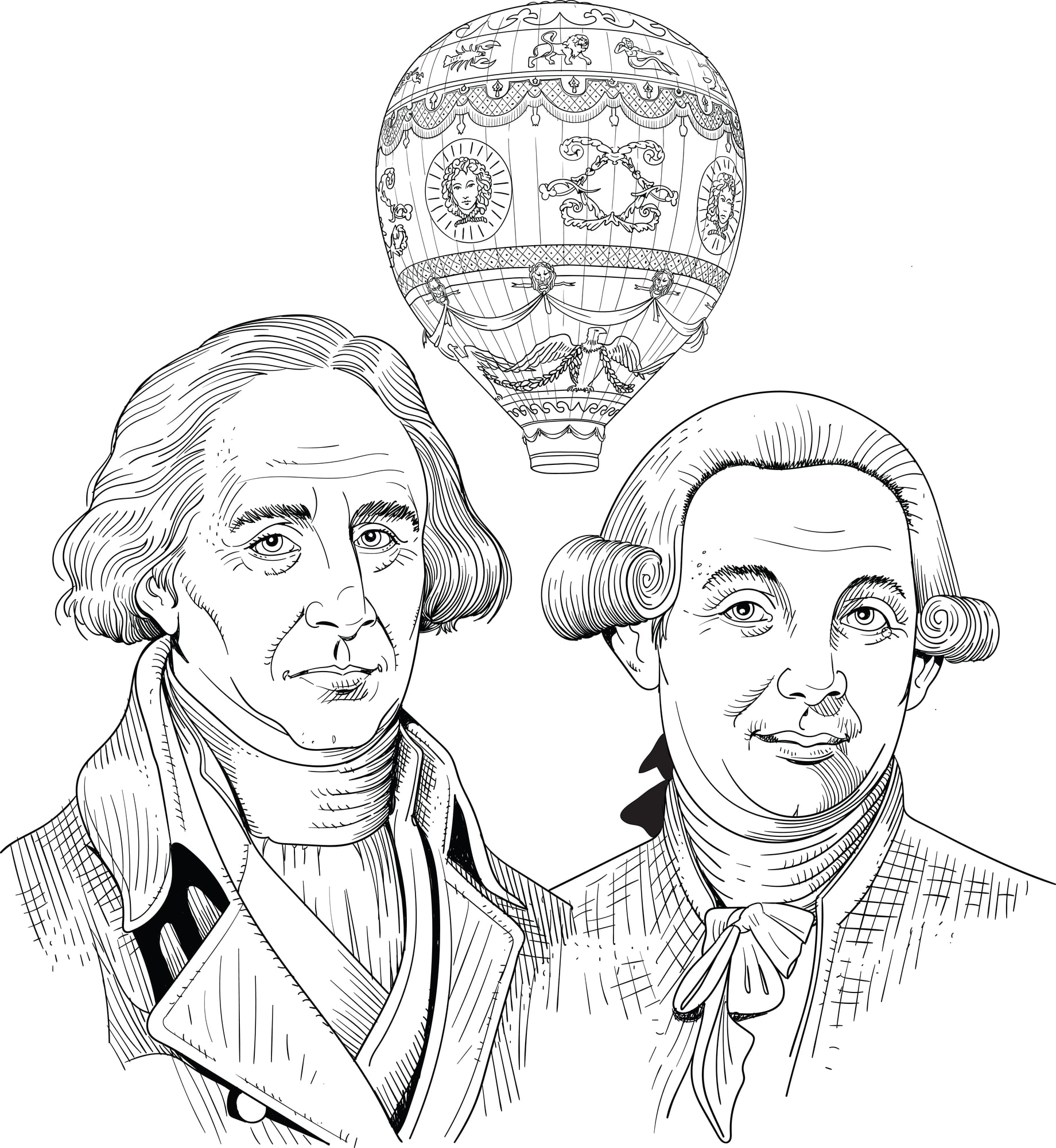
On June 4, 1783, the Montgolfiers unveiled their invention to the public in Annonay’s marketplace.
They had constructed a globe-shaped balloon nearly 35 feet in diameter, made from linen lined with paper.
Before a crowd of local dignitaries and curious townspeople, they lit the fire.
The balloon strained against its tethers, then lifted skyward when released.
It climbed to an estimated altitude of 6,000 feet and traveled more than a mile before landing in a vineyard.
The spectacle caused an immediate sensation.
Word spread to Paris, where the scientific community buzzed with excitement and skepticism.
King Louis XVI himself expressed interest.
The Montgolfiers received an invitation to demonstrate their ‘aerostatic machine’ at Versailles, the heart of French royal power and prestige.
The Royal Flight at Versailles
The pressure was on.
Performing before the king meant the stakes had never been higher.
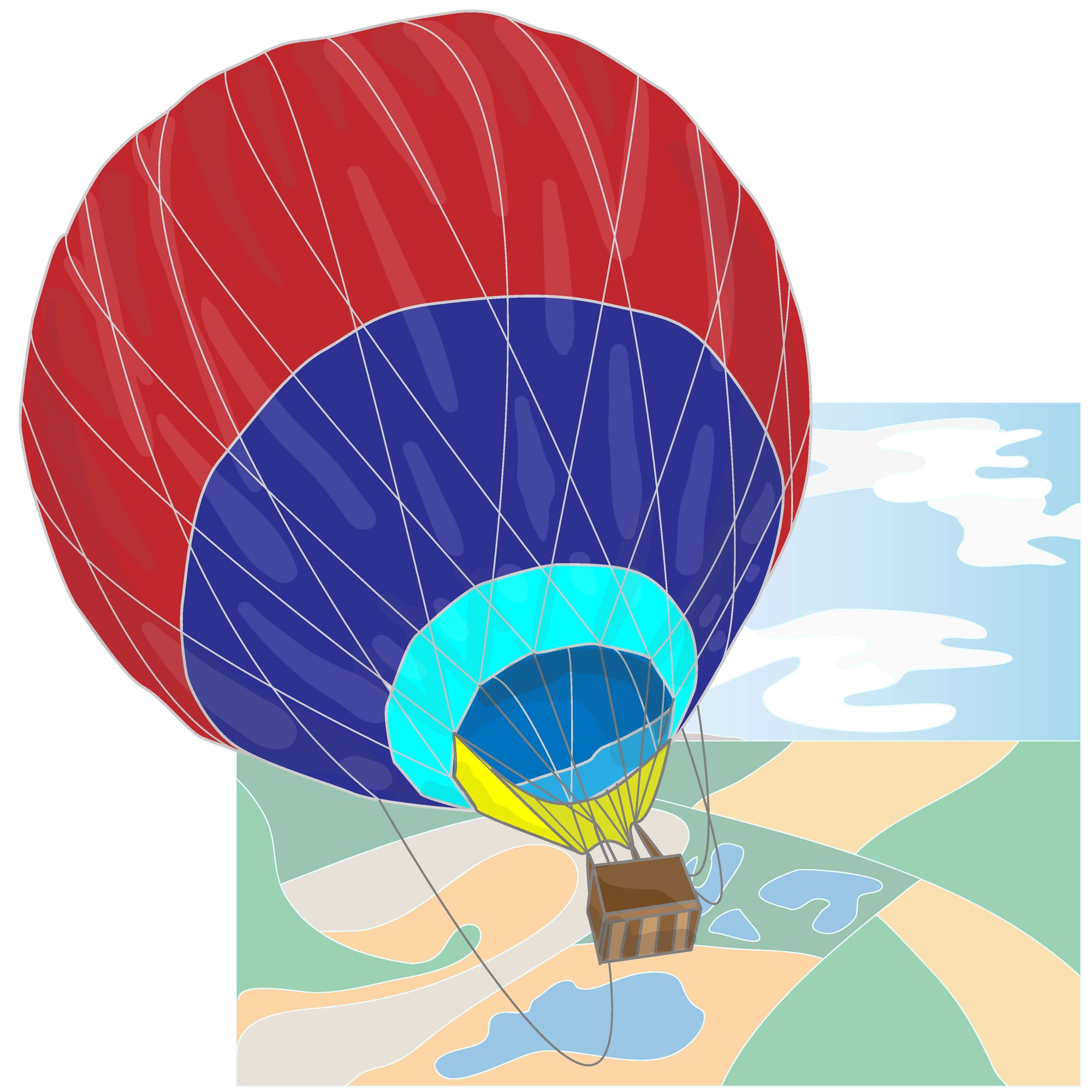
The brothers constructed an elaborately decorated balloon in blue and gold, adorned with royal flourishes and zodiac signs.
But they faced a crucial question: was it safe for humans?
Nobody knew what might happen to a living creature at altitude.
The air might be poisonous.
The ascent might cause fatal injuries.
On September 19, 1783, the Montgolfiers sent up the world’s first test pilots—a sheep named Montauciel, a duck, and a rooster.
The reasoning was clever: the sheep’s physiology resembled a human’s, the duck was already adapted to high altitude, and the rooster served as a control since it flew but not at great heights.
Before a crowd that included Louis XVI, Marie Antoinette, and Benjamin Franklin, the balloon rose with its animal passengers in a wicker basket beneath.
The flight lasted eight minutes and covered two miles.
All three animals survived, though the rooster suffered a minor injury—probably from a kick by the sheep before takeoff.
The First Human Flights

With animal survival confirmed, attention turned to human passengers.
Jean-François Pilâtre de Rozier, a physics teacher and ambitious showman, volunteered enthusiastically.
Starting in October 1783, he made a series of tethered flights, rising as high as 80 feet while remaining anchored by ropes.
These weren’t joyrides—Pilâtre de Rozier was testing whether humans could maintain consciousness at altitude and whether they could control the balloon by feeding the fire.
The experiments proved successful enough to attempt a free flight, untethered and uncontrolled except by the aeronauts themselves.
On November 21, 1783, Pilâtre de Rozier and François Laurent d’Arlandes climbed into the gallery of a massive balloon in the Bois de Boulogne, on the western edge of Paris.
The balloon measured 70 feet tall and weighed about 1,600 pounds.
Beneath it hung the brazier where the men would burn straw to maintain heat and altitude.
At 1:54 in the afternoon, they lifted off.
The balloon drifted over Paris as Parisians watched from streets, windows, and rooftops.
The two men took turns stoking the fire with bundles of straw, adjusting their altitude as they went.
At times, sparks from the brazier burned small pits in the fabric above them—d’Arlandes later recalled frantically dampening embers with a sponge on a stick.
They reached a maximum altitude estimated at 3,000 feet and traveled more than five miles in 25 minutes before landing safely on the outskirts of the city.
They had done it.
Humans had flown.
The Hydrogen Balloon Rivalry

Even as the Montgolfiers perfected their hot air designs, another approach was gaining momentum.
Professor Jacques Charles, a physicist, believed hydrogen gas—recently isolated and studied—offered superior lifting power without the fire hazard.
Charles was right.
Hydrogen provided more lift per volume than hot air and didn’t require constant fuel burning.
Just ten days after Pilâtre de Rozier’s historic flight, Charles and Nicolas-Louis Robert launched from the Tuileries Gardens in a hydrogen-filled balloon.
They flew 25 miles in two hours, far surpassing the Montgolfier flight in both distance and duration.
When Robert disembarked, Charles took off again alone and shot up to nearly 10,000 feet, becoming the first person to witness sunset twice in one day.
He also experienced severe ear pain from the rapid altitude change, one of the first documented cases of aviation-related medical distress.
The hydrogen balloon quickly proved more practical for serious aerial navigation.
Yet the Montgolfier brothers retained fame as the original pioneers, the ones who first proved human flight was possible.
Public Fascination and Cultural Impact
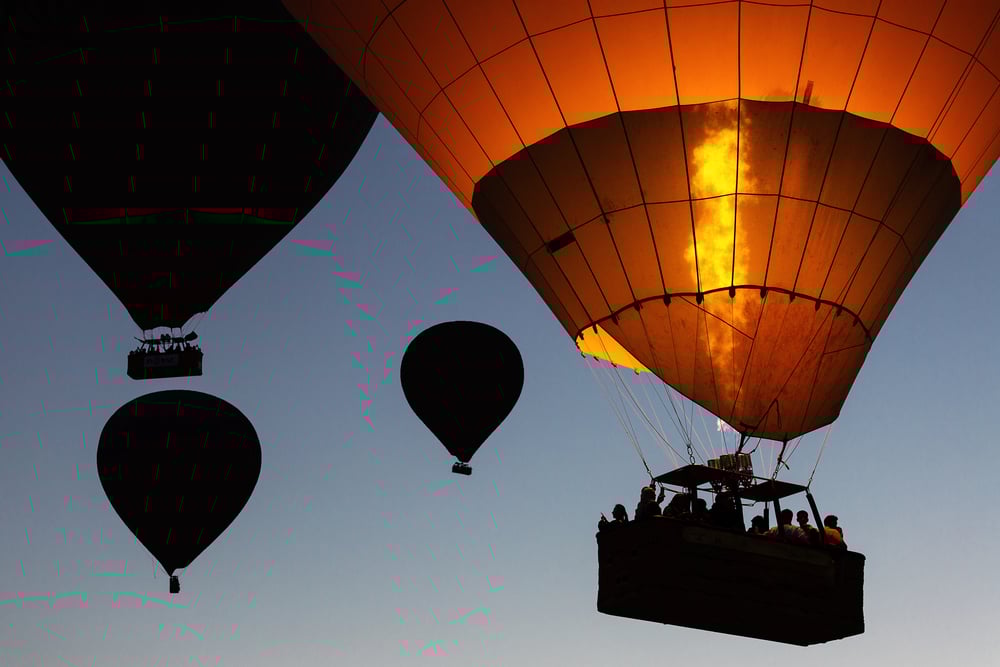
Balloon fever swept Europe.
Within months, ascents were happening in England, Italy, and across France.
Entrepreneurs offered tethered balloon rides for paying customers.
Artists created prints, paintings, and decorative objects featuring balloons.
Fashion designers incorporated balloon motifs into clothing and accessories.
The balloon became a symbol of Enlightenment progress, human ingenuity triumphing over natural limitation.
Not everyone celebrated.
Some religious figures condemned ballooning as hubris, humans venturing into spaces reserved for divine beings.
Practical-minded critics dismissed it as expensive entertainment with no real utility.
Benjamin Franklin, when asked what use a balloon might serve, supposedly replied, ‘What use is a newborn baby?’ His point: the technology was in its infancy, its applications yet unknown.
Franklin’s optimism proved warranted.
Balloons soon found military use for reconnaissance.
They advanced meteorological research.
They enabled the first aerial photographs.
They even carried mail across enemy lines during wartime.
All from a discovery made by two papermakers who wondered why laundry floated over fires.
Why It Still Matters

The Montgolfier flights of 1783 represent more than a technical achievement.
They mark the moment when humans permanently broke their bond with the earth’s surface.
Within a person’s lifetime, travel had been confined to foot, horse, or ship.
Suddenly, the air itself became navigable terrain.
The psychological impact was profound—if humans could fly, what else might be possible?
The brothers never imagined jet engines or spacecraft, but they opened the door.
Every airplane, helicopter, and rocket traces its lineage back to that November afternoon when two Frenchmen drifted over Paris, feeding straw into a fire and watching the city shrink beneath them.
They flew for 25 minutes, traveled five miles, and launched humanity into the sky for good.
The age of aviation began not with a roar, but with the quiet crackle of burning straw and the collective gasp of thousands watching from below.
More from Go2Tutors!

- The Romanov Crown Jewels and Their Tragic Fate
- 17 Halloween Costumes Once Considered Taboo
- Famous Hoaxes That Fooled the World for Years
- 15 Child Stars with Tragic Adult Lives
- 16 Famous Jewelry Pieces in History
Like Go2Tutors’s content? Follow us on MSN.