Amusement Rides With Fascinating Origins
Any amusement park has rides that seem timeless. The roller coaster ascending its first hill, the carousel horses frozen in mid-gallop, the Ferris wheel spinning against the sky.
These attractions appear to have been around for a very long time. However, each has a unique origin story that is frequently more bizarre and useful than you might anticipate.
A few began as engineering demonstrations. Others came from industrial mishaps or medieval forms of punishment.
Many of the rides that are now only used for amusement had entirely different origins.
The Ferris Wheel Started as a Rivalry

For the 1893 World’s Columbian Exposition in Chicago, George Ferris constructed his wheel. The Eiffel Tower had dominated the 1889 Paris Exposition, and American organizers wanted something to compete with it.
The majority of the structures that engineers suggested appeared hazardous or unfeasible. A revolving wheel that could securely transport people to remarkable heights was sketched out by bridge builder Ferris.
The design’s success was questioned by the organizers. A large portion of the building was financed by Ferris.
The wheel was 264 feet tall and could accommodate 36 wooden cars carrying 2,160 people at once. It proved that amusement rides could be large-scale engineering achievements and became the main draw of the exposition.
Ferris never made much money from his invention and died penniless three years later.
Roller Coasters Came From Ice Slides

Modern roller coasters have their roots in Russian ice slides from the 17th century. People constructed wooden ramps, covered them with ice, and used sleds to slide down.
Both aristocrats and commoners could enjoy the 70-foot-tall slides during the winter. The idea was brought back to Europe by French visitors, who modified it for warmer climates by giving the sleds wheels and switching from ice to waxed tracks.
In 1884, Coney Island hosted the nation’s first roller coaster. Even though LaMarcus Thompson’s Switchback Railway only went six miles per hour, it was profitable at the time, earning $600 per day for a nickel.
The popularity of the ride led to a roller coaster boom that revolutionized theme parks.
Carousels Began as Combat Training

Medieval knights used carousel-like devices to practice for tournaments. Riders sat on wooden horses attached to a rotating platform while trying to spear rings with lances.
The exercise improved aim and timing for actual combat. By the 1600s, these training devices had become entertainment for royalty.
Craftsmen added ornate decorations to the horses. Steam power replaced human-pushed platforms in the 1800s, making carousels practical for public amusement parks.
The horses’ up-and-down motion came from an American innovation in the late 1800s that mimicked real galloping movement. What started as military preparation became one of the gentlest rides at the fairground.
Bumper Cars Evolved From Dodgem Technology

The bumper car concept emerged in the 1920s when several inventors tried to create electric cars for amusement parks. Early versions had major problems—cars that couldn’t touch each other, complicated steering mechanisms, and unreliable power systems.
Max and Harold Stoehrer’s Dodgem, introduced in 1920, solved these issues by making the collisions intentional rather than something to avoid. Their design used an overhead grid for power and allowed cars to bump safely.
The Dodgem name stuck in many countries even as other companies created their own versions. The ride’s appeal comes from legitimizing behavior that’s normally forbidden—deliberately crashing into other vehicles without consequences.
The Log Flume Mimicked Lumber Transport

Log flumes in the late 1800s and early 1900s transported timber from mountain forests to sawmills. Workers built long wooden troughs, filled them with water, and floated logs downstream.
Occasionally, workers would ride the logs through the flumes. The combination of water, speed, and splashing made an impression.
Arrow Development created the first amusement park log flume in 1963 at Six Flags Over Texas. The ride recreated the lumber industry experience but made it safe and repeatable.
Modern log flumes keep the basic concept—a water-filled trough, floating boats, and a final drop that soaks riders—but they’re far removed from their industrial logging origins.
Drop Towers Were Inspired by Research

NASA and military studies on weightlessness and free fall served as the inspiration for amusement park drop towers. Drop towers were used by scientists to test apparatus and replicate zero-gravity situations.
In the 1980s, amusement ride engineers independently created their own versions after realizing the potential for entertainment. One of the first to offer controlled falling to the general public was Intamin’s free-fall tower at Six Flags Magic Mountain in 1982.
The rides used ideas from aerospace technology, such as magnetic braking systems, even though they weren’t directly adapted from research structures. The link between theme park thrills and scientific research demonstrates how the serious work of one field can motivate the pursuit of exhilaration in another.
Tilt-A-Whirls Were Backyard Experiments

Herbert Sellner built the first Tilt-A-Whirl in his Minnesota backyard in 1926. He was a woodworker and part-time inventor with no engineering training.
Sellner wanted to create a ride that was unpredictable—where each car would spin differently based on weight distribution and momentum. His design succeeded brilliantly.
The ride’s chaotic motion comes from its free-spinning cars on an undulating platform. No two rides feel exactly the same.
Sellner Manufacturing still produces Tilt-A-Whirls nearly 100 years later using essentially the same design. The ride proves that sometimes the best innovations come from tinkerers experimenting in their spare time rather than from formal research programs.
Pirate Ship Rides Started as Nautical Displays
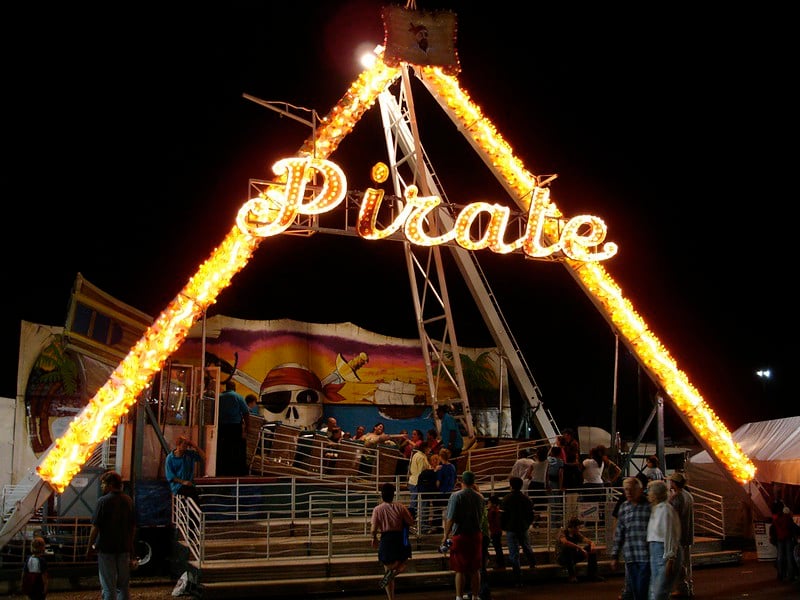
Swinging ship rides originated from static pirate ship displays at amusement parks. Operators realized that making these ships actually swing would create a more engaging experience.
The first swinging ships appeared in the 1970s, using hydraulic systems to create pendulum motion. The ride combines the visual appeal of a themed ship with the stomach-dropping sensation of swinging.
Early versions swung in relatively small arcs, but modern versions can rotate completely upside down. The pirate theme stuck because it justified the nautical setting, though the ride mechanism would work with any themed vehicle.
The transformation from static display to kinetic thrill ride shows how parks constantly search for ways to add motion to existing attractions.
Haunted House Rides Emerged From Vaudeville

Haunted attractions began as walk-through exhibits in the early 1900s. Vaudeville shows and world’s fairs featured spooky displays with mechanical effects and costumed performers.
The addition of vehicles came later, allowing more guests to experience the attraction per hour. Disneyland refined the concept with omnimover technology, which debuted in 1967—continuous loading vehicles that never stop moving.
This solved the capacity problems that plagued earlier walk-through attractions. The ride format also gave designers more control over pacing and ensured everyone saw the same effects in the same order.
What started as theatrical exhibitions became sophisticated dark rides combining storytelling, special effects, and gentle movement through carefully controlled environments.
Spinning Tea Cups Have Medieval Roots

The spinning tea cup ride traces back to European folk dances where couples would spin each other in circles. Festival rides in the 1800s recreated this motion mechanically using steam power.
The modern version with tea cup theming came from Disneyland in 1955, as part of the Mad Hatter’s Tea Party attraction. The ride’s genius lies in its three-level rotation system—the platform spins, the groups of cups spin on that platform, and individual cups spin on their own axes.
Riders control how fast their cup spins, making it suitable for both cautious children and thrill-seeking teenagers. The simple concept of spinning has been refined over centuries into a ride that works for almost everyone.
Water Slides Started as Pool Additions

Water slides began as simple additions to swimming pools in the 1950s. Hotel operators installed basic slides to attract families with children.
The first major water slide park, Wet ‘n Wild, opened in Orlando in 1977, treating water slides as the main attraction rather than pool accessories. Modern water slides use sophisticated engineering—calculating water flow rates, friction coefficients, and rider speeds to balance excitement with safety.
The industry has created rides that send people through vertical loops, drop them through trapdoors, and launch them upward using water jets. What started as a gentle slope into a pool has evolved into elaborate systems that rival roller coasters for intensity and engineering complexity.
Swing Rides Were Venetian Entertainment

Chain swing rides originated in Venice during the 1700s, where operators would spin platforms with hanging seats for carnival entertainment. The rides were human-powered, with workers pushing the platform to create rotation.
Steam power in the 1800s made larger versions possible. Electric motors in the early 1900s allowed the rides to reach greater heights and speeds.
The basic physics haven’t changed—centrifugal force pushes the swings outward as the platform rotates. Modern versions can lift riders high above the park while spinning them in circles, but the sensation remains similar to what Venetian carnival-goers experienced centuries ago.
The ride’s longevity demonstrates that sometimes simple concepts don’t need improvement, just scaling up.
Observation Towers Served Practical Purposes
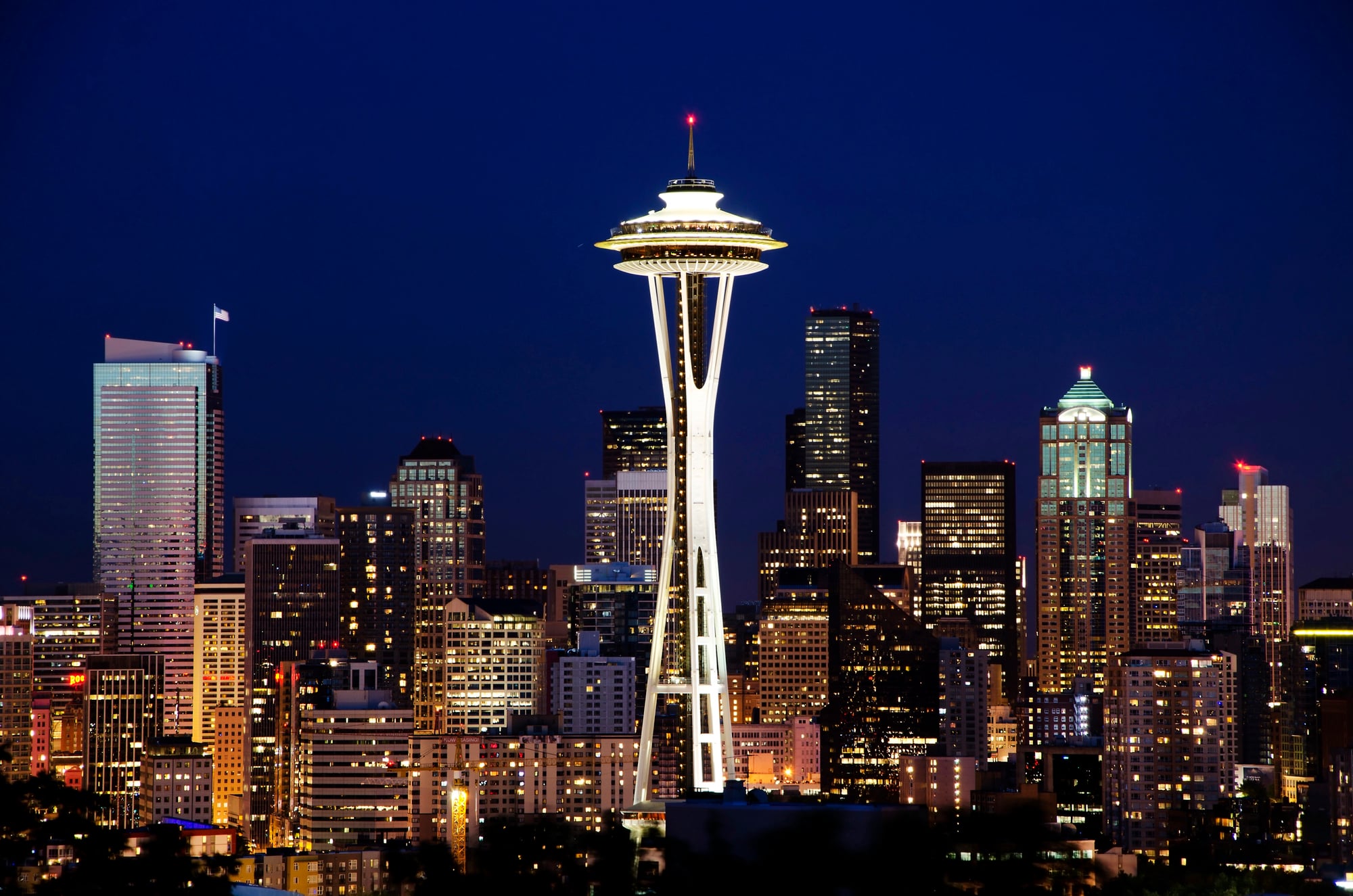
Observation towers at amusement parks evolved from actual watchtowers and lighthouses. The first park towers were built in the late 1800s to give visitors panoramic views of the fairgrounds and surrounding areas.
Some doubled as communication towers or weather observation stations. The addition of rotating platforms in the mid-1900s improved the viewing experience.
Modern versions like the Space Needle in Seattle or the Stratosphere in Las Vegas combine observation decks with restaurants and thrill rides. The towers serve the same basic function as their ancestors—providing elevated vantage points—but they’ve become destinations themselves rather than just functional structures.
What began as practical infrastructure became entertainment through elevation and engineering.
From Function to Fun

There is a common pattern among these rides. They started fulfilling practical needs or showcasing engineering concepts before someone realized they could be entertaining.
A system for transporting lumber turns into a thrilling, splashing experience. Equipment used for combat training becomes a carousel.
Drop rides are created from research towers used to study free fall. The transition from utility to amusement demonstrates how creatively people can find joy in unlikely places.
The rides that excite millions of people began as fixes for entirely different issues, demonstrating how entertainment frequently results from reinterpreting the serious and useful as lighthearted and enjoyable.
More from Go2Tutors!

- The Romanov Crown Jewels and Their Tragic Fate
- 13 Historical Mysteries That Science Still Can’t Solve
- Famous Hoaxes That Fooled the World for Years
- 15 Child Stars with Tragic Adult Lives
- 16 Famous Jewelry Pieces in History
Like Go2Tutors’s content? Follow us on MSN.



