16 Ocean Crossings Without Boats
Throughout history, humans have demonstrated remarkable ingenuity and determination in conquering the vast expanses of our planet’s oceans. While boats and ships remain the conventional mode of oceanic travel, adventurous souls have devised numerous alternative methods to traverse these watery barriers.
The challenge of crossing oceans without traditional watercraft has inspired incredible feats of human creativity and endurance. Here are 16 unconventional ways people have managed to cross oceans without using conventional boats.
Swimming

Perhaps the most straightforward alternative is simply swimming across. In 1998, Benoît Lecomte became the first person to swim across the Atlantic Ocean without a kickboard, covering approximately 3,700 miles from Massachusetts to France.
The journey took him 73 days, with a shark cage and support boat accompanying him for safety and rest periods. Other notable ocean swimmers include Diana Nyad, who at age 64 successfully swam from Cuba to Florida across the Straits of Florida.
Paddleboarding
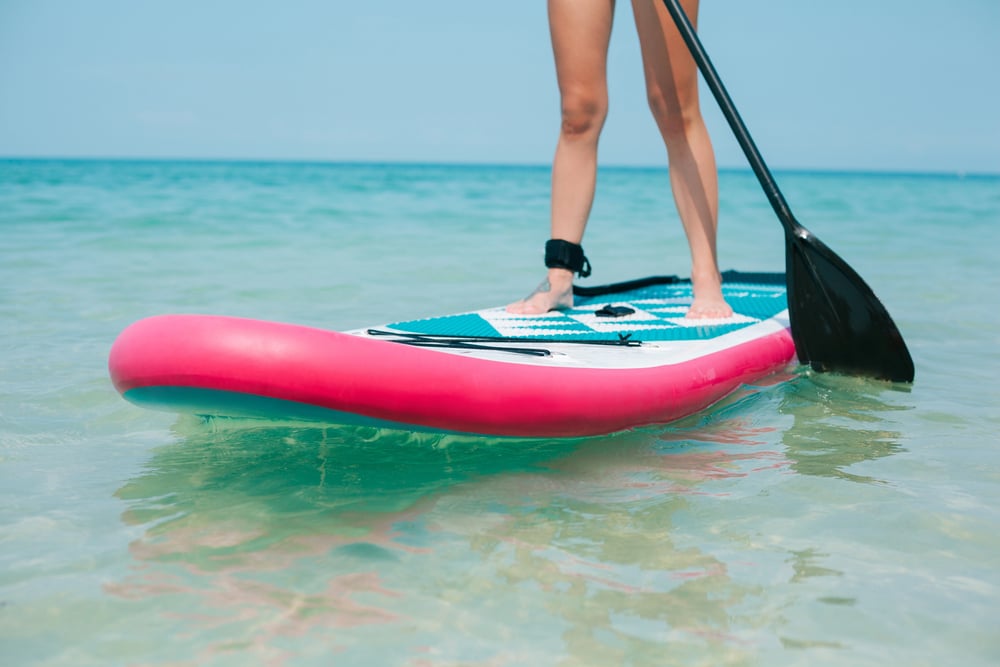
Stand-up paddleboarding has evolved from a casual beachside activity to a serious means of ocean crossing. In 2017, Chris Bertish made history by paddleboarding solo across the Atlantic Ocean, traveling 4,050 miles from Morocco to Antigua over 93 days.
His custom-designed 20-foot paddleboard featured a small cabin for shelter and solar panels for power, allowing him to navigate and communicate throughout this remarkable journey.
Rafts

Primitive rafts constructed from natural materials have enabled ocean crossings for millennia. The most famous example is Thor Heyerdahl’s Kon-Tiki expedition in 1947, where he and five crew members sailed a balsa wood raft 4,300 miles across the Pacific from Peru to Polynesia.
This 101-day journey demonstrated how ancient peoples might have populated Pacific islands using only materials and techniques available to pre-Columbian civilizations.
Rowboats

Human-powered rowboats have conquered all major oceans. In 1896, George Harbo and Frank Samuelsen became the first people to row across the Atlantic, completing their journey from New York to England in just 55 days.
Modern ocean rowing has evolved with specialized boats featuring watertight compartments and advanced navigation equipment, allowing solo adventurers like Roz Savage to row across the Atlantic, Pacific, and Indian Oceans.
Kayaks

These small, human-powered vessels have proven capable of incredible ocean journeys. In 1987, Ed Gillet completed the first solo kayak crossing from California to Hawaii, paddling 2,200 miles in 64 days.
More recently, Sarah Outen kayaked portions of her human-powered circumnavigation of the globe, including sections of the North Pacific and North Atlantic oceans, demonstrating the capabilities of these nimble watercraft.
Pedal-Powered Boats

Combining cycling mechanics with watercraft design, pedal-powered boats use familiar leg muscles to drive propellers through water. Jason Lewis spent 13 years circumnavigating the globe using exclusively human power, with significant portions aboard his pedal-powered boat ‘Moksha.’
His journey included pedaling across the Atlantic and Pacific oceans, proving the efficiency of this human-powered approach to ocean crossing.
Kiteboarding

Harnessing wind power with a large controllable kite, kiteboarders stand on a small board while being pulled across the water. In 2013, Bruno Sroka kiteboarded from France to Ireland across the Celtic Sea, covering 240 miles in 16 hours.
While not a complete ocean crossing, this demonstrated the potential of kiteboarding for significant maritime journeys when conditions are favorable.
Submersibles

Human-powered submarines have tackled ocean crossings beneath the waves. Lloyd Godson’s ‘BioSUB’ project demonstrated sustainable underwater travel by creating a self-sufficient submerged habitat powered by human pedaling and algae-generated oxygen.
While complete ocean crossings remain challenging, these technologies continue to advance the possibilities of subsurface human-powered travel across significant distances.
Amphibious Vehicles
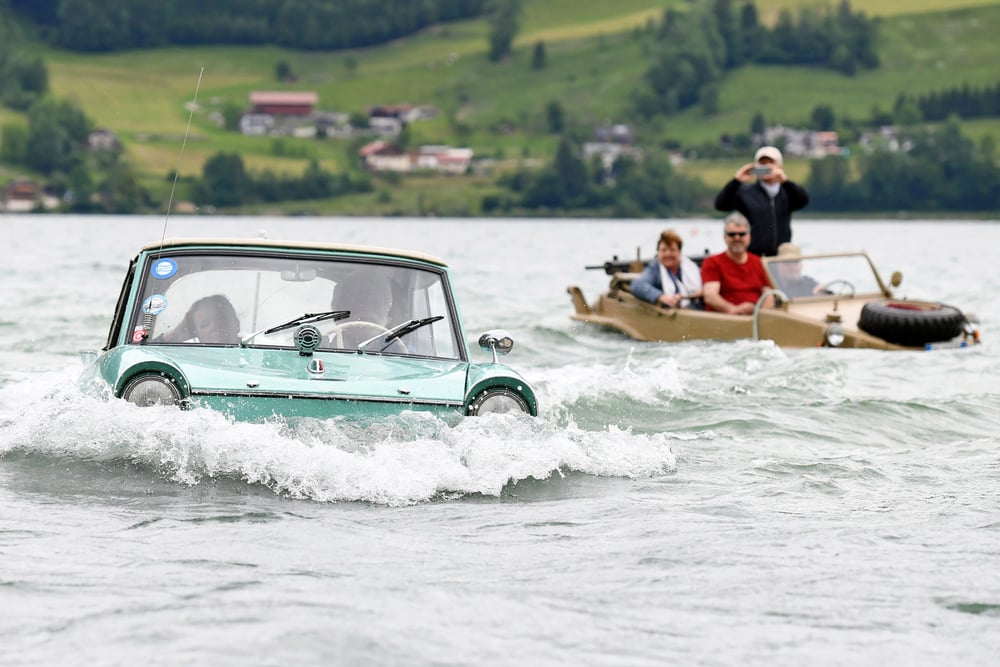
Ocean crossings have been accomplished by vehicles that can function both on land and in the water. ‘Half-Safe,’ a modified Ford GPA amphibious jeep, drove Ben Carlin across the world in 1998, traversing both the Atlantic and Pacific oceans.
Despite their hybrid nature, amphibious vehicles can withstand open ocean conditions, as demonstrated by his ten-year expedition that spanned 11,000 miles of water and 38,000 miles of land.
Barrel Vessels

Some daring individuals have crossed oceans inside barrel-like vessels. In 1952, Dr. Alain Bombard drifted across the Atlantic in an inflatable raft to prove that survival was possible on seawater and caught fish.
More recently, in 2019, Jean-Jacques Savin, at age 72, crossed the Atlantic in a barrel-shaped capsule, using only ocean currents to travel from the Canary Islands to the Caribbean in 128 days.
Ice Floes

Indigenous peoples of the Arctic have traditionally used floating ice as transportation. While not typically used for complete ocean crossings, hunters have survived long, unintentional journeys when ice floes broke away from shore and drifted into open ocean.
In 2005, Russian scientists at a North Pole research station were rescued after their ice floe fractured and drifted for miles, demonstrating both the dangers and potential of ice as an ocean transport medium.
Aircraft Dropped Life Rafts

During World War II, numerous pilots and aircrews ditched in the oceans and survived long journeys in life rafts. Eddie Rickenbacker and his crew drifted for 24 days in the Pacific after their B-17 went down in 1942, traveling hundreds of miles before rescue.
These unintentional journeys demonstrated human survival capabilities during passive ocean crossings with minimal equipment.
Submarine Surfboards

Combining surfing principles with submarine technology, the ‘Subwing’ allows users to be towed underwater while controlling their depth and direction with wing-shaped boards. While primarily recreational over short distances, innovators continue developing advanced versions that could potentially enable longer human-powered underwater journeys using ocean currents to maximize efficiency.
Windsurfing

Though typically a coastal activity, long-distance windsurfing has achieved remarkable ocean crossings. In 1986, Stéphan Peyron windsurfed across the Atlantic from Senegal to Guadeloupe, covering over 2,500 miles in 37 days.
The combination of a sail and surfboard creates a minimalist vessel capable of sustained ocean travel in the hands of skilled athletes with proper planning and support.
Solar-Powered Vessels
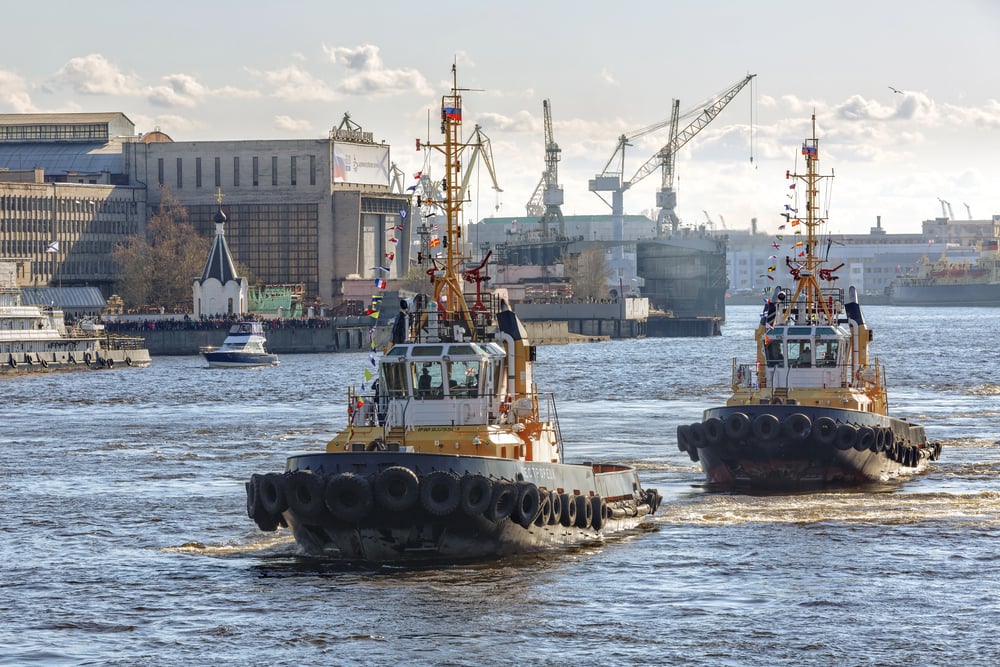
Without using traditional fuel, solar boats have successfully traversed oceans by harnessing the energy of the sun. In 2007, the catamaran ‘Sun21’ made history by being the first boat propelled by solar energy to traverse the Atlantic, sailing from Spain to the Bahamas.
Although not propelled by humans, these boats are a sustainable substitute that runs entirely on renewable energy that is absorbed along the way rather than conventional boat engines.
Walking Pods

Perhaps the most unusual ocean crossing method involves specialized walking pods that roll across the ocean surface. In 2014, Reza Baluchi attempted to ‘run’ across the Bermuda Triangle in a homemade hydro pod—essentially a floating hamster wheel.
Though his attempts required Coast Guard rescue, the concept represents the continued innovation in human-powered ocean crossing technology, however unconventional.
The Human Spirit of Adventure

These remarkable ocean crossings without conventional boats reveal much more than just alternative transportation methods—they demonstrate the boundless human drive to challenge perceived limitations. From ancient rafts to modern solar vessels, each crossing represents a triumph of preparation, technology, and human will against one of nature’s greatest barriers.
As materials science and human endurance training continue advancing, we’ll likely witness even more innovative approaches to crossing Earth’s vast oceans in the years ahead.
More from Go2Tutors!

- The Romanov Crown Jewels and Their Tragic Fate
- 13 Historical Mysteries That Science Still Can’t Solve
- Famous Hoaxes That Fooled the World for Years
- 15 Child Stars with Tragic Adult Lives
- 16 Famous Jewelry Pieces in History
Like Go2Tutors’s content? Follow us on MSN.



