Ancient Games That Influenced Modern Strategy
Thinking ahead? It’s been around forever. Skills that helped folks beat rivals in old tabletop games line up with what you need now, whether sealing deals, leading troops, or playing team sports.
Those pastimes weren’t mere fun. Instead, they built sharp choices, smart use of supplies, even guessing foes’ moves.
Ideas baked into thousand-year-old matches still guide how we tackle challenges head-on.
Go Taught Territory Control
Go is at least 2,500 years old, though some evidence suggests it may have originated even earlier, possibly between 1000 and 2000 BCE—the exact origins remain uncertain. Players place black and white stones on a grid, attempting to control more territory than their opponent.
The rules are simple, but the strategic depth is profound. Go teaches the concept of influence over direct confrontation.
You don’t always capture enemy pieces—sometimes you surround them, making them irrelevant. This mirrors modern military strategy where controlling territory matters more than eliminating every opposing force.
Business strategists use Go principles when thinking about market positioning and long-term competitive advantage rather than immediate profits.
Chess Demonstrated Asymmetric Warfare
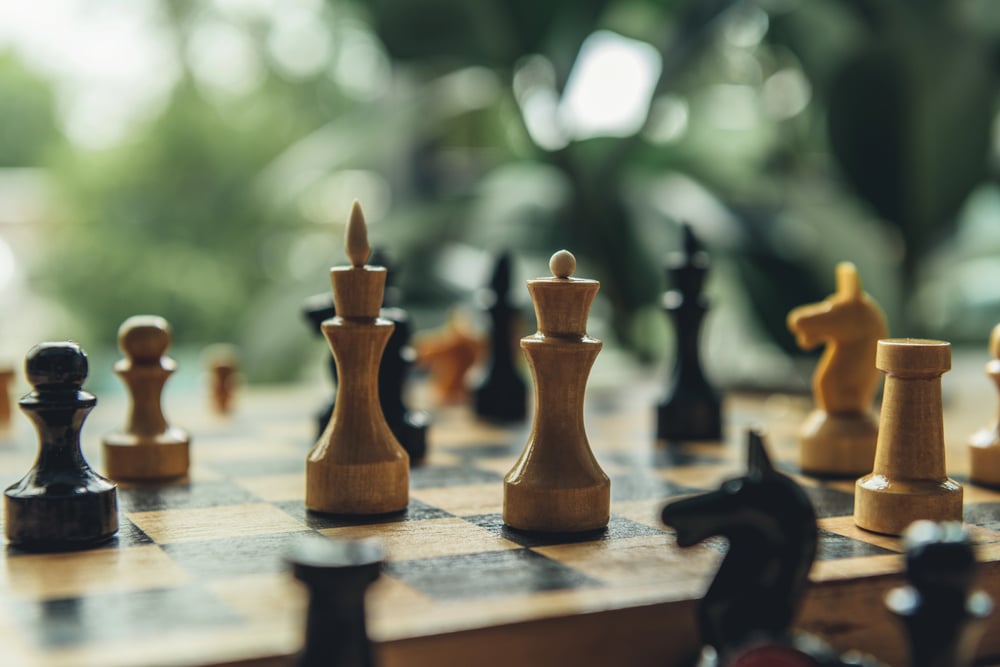
Chaturanga appeared in India around the 6th century CE, but modern chess as we know it evolved much later in medieval Europe around 1450 to 1500 CE. Each piece moves differently, creating asymmetric capabilities.
A knight moves in L-shapes while bishops travel diagonally. This forces players to think about using different tools for different situations.
Modern military doctrine follows this principle—you use the right asset for each tactical scenario. Infantry, armor, air power, and naval forces each have specific capabilities and limitations.
Chess also introduced the concept of sacrificing valuable pieces for strategic advantage, a calculation that appears in modern negotiations and competitive tactics where short-term losses enable long-term victories.
Senet Introduced Probability Management

Ancient Egyptians played Senet as early as 3100 BCE. The game used throwing sticks as randomizers, similar to dice.
While the exact rules aren’t fully known and modern reconstructions remain speculative, the game clearly combined random elements with player decisions. The concept of managing randomness and positioning appears throughout modern strategy.
Investment portfolios diversify to manage probability. Military commanders plan for multiple contingencies.
Business leaders hedge against uncertainty. Even if we can’t know precisely how skilled Senet players managed their dice rolls, the principle that strategic thinking involves working with randomness rather than pretending to eliminate it remains foundational to competitive decision-making.
Mancala Established Resource Distribution

Mancala isn’t a single game—it’s a large family of pit-and-pebble games that spread across Africa and Asia for thousands of years. While rules vary considerably between versions, many involve distributing stones between pits, trying to capture more than opponents.
Strategic depth varies across different Mancala games, with some emphasizing counting and planning ahead more than others. The general resource allocation challenge these games present appears constantly in modern strategy.
Project managers distribute limited resources across competing priorities. Military logistics involves moving supplies to where they’re needed most.
Personal finance requires balancing current spending against future needs. Mancala games made resource distribution into a competitive discipline.
The Royal Game of Ur Used Positional Advantage

Discovered in Iraq and dating to 2600 BCE, the Royal Game of Ur combined dice rolls with tactical positioning. Our understanding of the rules comes from interpretation of a Babylonian tablet, though parts remain uncertain.
Based on reconstructions, players raced pieces along a path, with certain squares appearing to offer safety while others left pieces vulnerable. This created decisions about when to advance aggressively versus when to play defensively.
Modern strategy constantly weighs aggression against caution. Athletes decide when to push hard versus when to conserve energy.
Businesses choose between expanding rapidly or building sustainable foundations. The timing decision between aggressive and conservative play appears throughout competitive thinking.
Liubo Explored Information Asymmetry

Liubo was popular in ancient China during the Han Dynasty (206 BCE to 220 CE). While the exact rules and mechanics aren’t definitively known, archaeological evidence suggests it involved dice, pieces moving on a board, and betting.
Claims about specific strategic elements like information asymmetry are interpretive rather than factual. However, the principle of imperfect information does define modern strategy regardless of Liubo’s specifics.
Business competitors don’t share their plans. Military forces conceal intentions.
Negotiators withhold their true priorities. Games that required strategic thinking despite incomplete information, whether Liubo was one of them or not, trained people for real-world decision-making where you never have complete data.
Hnefatafl Demonstrated Defensive Strategy

Vikings played Hnefatafl, an asymmetric game where one player defended a king while the other player’s larger force tried to capture it. The game existed in multiple rule variants—in some versions the defender won by getting the king to the board’s edge, though rules varied.
This was one of the first games to formalize defensive strategy as distinct from offensive tactics. The defender typically had fewer pieces but better positioning.
Modern strategy recognizes this principle—defensive positions can neutralize numerical superiority. Castle design, fortification theory, and modern cybersecurity all follow principles where successfully defending rather than attacking constitutes victory.
Backgammon Combined Luck and Skill
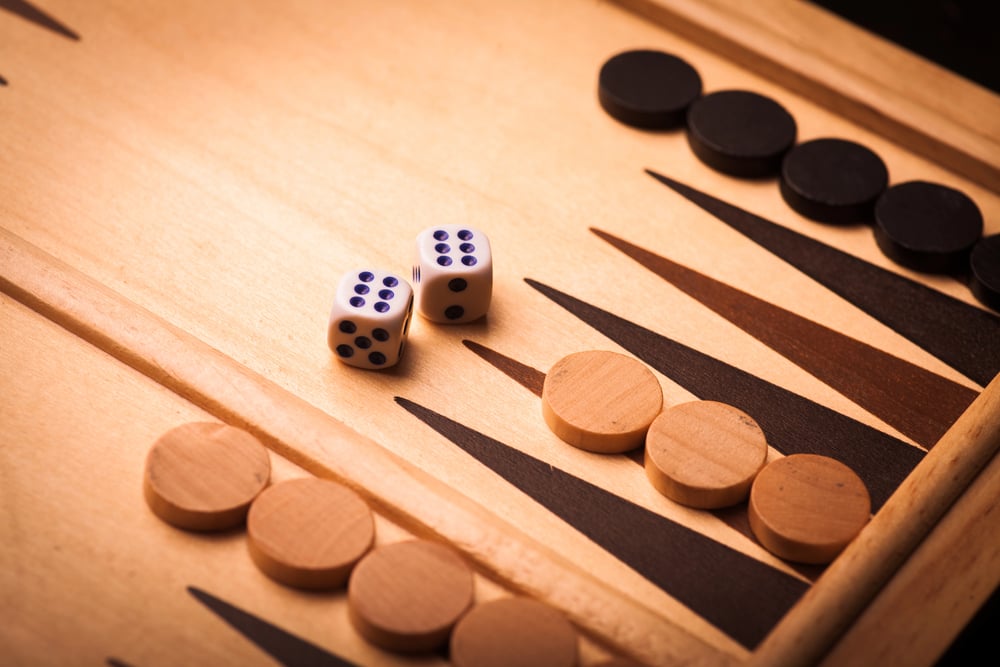
Backgammon emerged from earlier race games in Mesopotamia around 3000 BCE, possibly the oldest board game still widely played. Dice rolls determine how far pieces move, but positioning and probability management separate skilled players from novices.
The doubling cube, which introduced explicit risk assessment and psychological warfare, was added much later in the 1920s. Even without this modern addition, the ancient game required players to evaluate positions and manage probability.
Modern strategy constantly balances quantifiable odds against psychological factors. Poker professionals make similar calculations.
Traders assess market positions with incomplete information. Backgammon formalized this blend of mathematical and psychological strategy.
Patolli Incorporated Social Strategy

Aztecs played Patolli, a race game involving dice and betting. The game was often used for gambling, and social elements like alliances and group dynamics are inferred from historical context rather than documented rules.
The social strategic element these contexts suggest appears throughout modern competition. Business networking involves forming alliances.
Political campaigns require coalition building. Team sports need internal cooperation to defeat external opponents.
Whether or not Patolli specifically formalized social strategy, the principle that strategy happens in social contexts where human relationships matter as much as tactical calculations remains fundamental to competitive thinking.
Ludus Latrunculorum Practiced Tactical Maneuvers

Romans played Ludus Latrunculorum, a game resembling checkers where pieces captured opponents by surrounding them. The exact rules remain uncertain, and details about specific patterns and tactics come from educated reconstructions rather than complete ancient documentation.
The concept of pattern recognition nonetheless appears throughout modern strategic thinking. Experienced chess players recognize board positions instantly.
Traders spot market patterns. Doctors diagnose based on symptom patterns.
Treating strategy as a learnable set of patterns rather than pure improvisation, an approach these Roman-era games may have fostered, remains central to modern training programs.
Chaturanga Established Unit Differentiation

Chaturanga, the Indian predecessor to chess from around the 6th century CE, created distinct unit types representing different military forces—infantry, cavalry, elephants, and chariots. While these pieces didn’t map cleanly onto later chess roles (their movements differed substantially from modern equivalents), the game established the principle that each piece type moved differently, requiring players to understand comparative advantages.
Modern organizational strategy follows this broader principle. Companies build teams with complementary skills.
Military forces combine different capabilities. Sports teams need players with varied strengths.
Chaturanga made unit specialization and combined capabilities into strategic gameplay that would influence thinking for centuries.
Xiangqi Developed Restricted Movement

Chinese chess, or Xiangqi, emerged during the Tang Dynasty (618-907 CE) and created strategic depth through movement restrictions. Pieces couldn’t cross the river boundary freely, and the general was confined to a palace area.
This created distinct strategic zones on the board. Pieces that were powerful on one side became limited on the other.
Modern strategy recognizes how environmental constraints shape options. Regulatory boundaries restrict business operations in different markets.
Geographic terrain limits military tactics. Legal jurisdictions create zones with different rules.
Xiangqi made environmental restrictions into strategic elements that players had to navigate, anticipating how modern strategists work within imposed constraints rather than assuming unlimited freedom of action.
Nine Men’s Morris Emphasized Formation Control

Nine Men’s Morris dates back at least to 1400 BCE based on Egyptian archaeological finds, though these early depictions don’t confirm the exact later rules were used. In known versions, players placed and moved pieces trying to form rows of three, which allowed capturing opponent pieces.
The key was creating formations while preventing opponent formations, a simultaneous offensive and defensive challenge. Modern strategy constantly balances these dual requirements.
Sports teams must attack while maintaining defensive structure. Businesses must pursue new opportunities while protecting existing operations.
Military forces must advance while securing supply lines. This simultaneous dual focus requires mental discipline that appears throughout competitive thinking.
Alquerque Pioneered Capture Mechanics
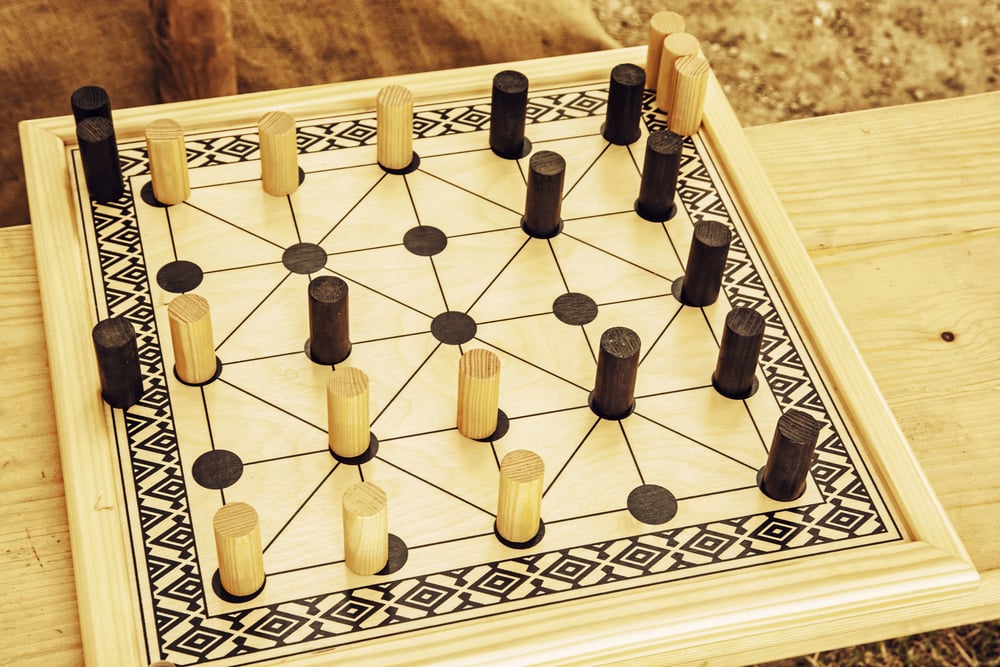
Alquerque might’ve started in the Middle East, then caught on in medieval Spain, eventually leading to modern checkers. You’d take an opponent’s piece by hopping over it.
Even though forced captures were fine-tuned later, planning multiple jumps early added real strategy. Figuring out future moves meant watching how your setup could open chances, or invite trouble.
Today’s smart moves work like this, put rivals in spots where every option sucks. Court debates build chains of logic others can’t escape.
Sales systems push buyers step by step without obvious pushes. Forcing someone into set reactions takes prep plus reading what they’ll do next.
Playing to Win
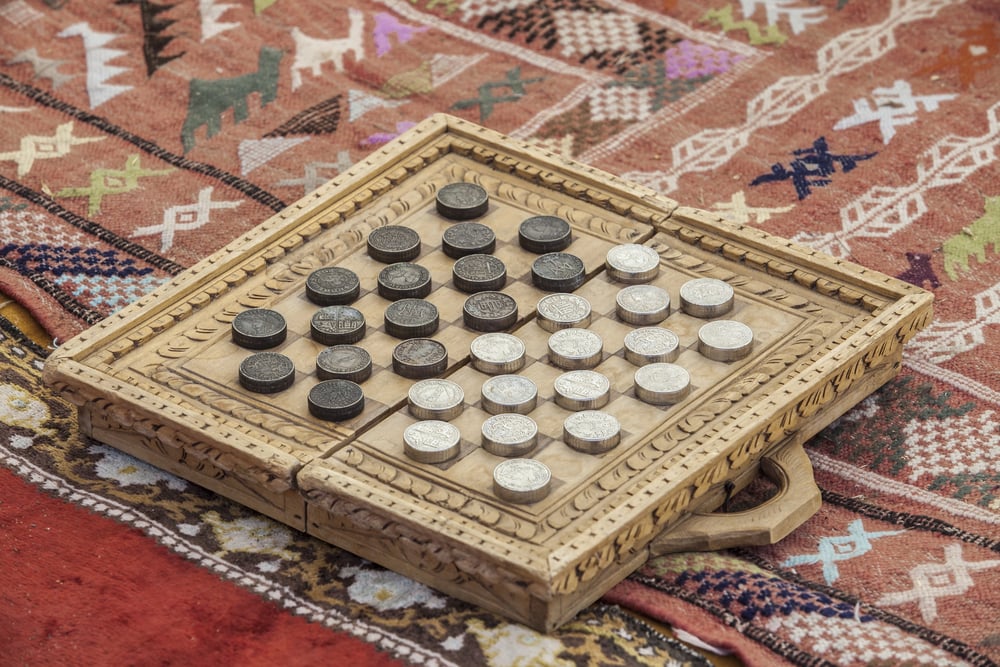
Those old games weren’t only fun. Instead, they trained minds, influencing how folks saw rivalry, handling resources, or choosing moves.
Their core ideas, claiming space, uneven strengths, weighing odds, missing details, still matter since competing hasn’t really shifted. Even now, we decide without knowing everything.
We keep juggling tight supplies while others push back. Instead of following rivals, we stay one step ahead.
Back then, game tables acted like testing grounds, skills sharpened there worked just as well off the board. Today’s planners gain a real edge when they use tactics shaped across centuries of mind games.
More from Go2Tutors!

- The Romanov Crown Jewels and Their Tragic Fate
- 13 Historical Mysteries That Science Still Can’t Solve
- Famous Hoaxes That Fooled the World for Years
- 15 Child Stars with Tragic Adult Lives
- 16 Famous Jewelry Pieces in History
Like Go2Tutors’s content? Follow us on MSN.