Best-Selling Cellphones of All Time
The phones selling hundreds of millions show more than stats – they reflect times when good design hit a fair price at the perfect moment. Yet some turned into icons of their age; others simply helped countless users who wanted no fuss, just function.
Nokia 1100: The Quiet Champion

Over 250 million people owned this phone. Released in 2003, the Nokia 1100 wasn’t trying to impress anyone.
It had a small screen, basic buttons, and a flashlight built into the top. That flashlight mattered more than you’d think when electricity wasn’t reliable.
The phone cost almost nothing compared to other models. In developing countries across Africa, Latin America, and Asia, it became many people’s first connection to mobile communication.
The battery lasted for days. The body could survive drops that would destroy most modern phones.
People bought it because it worked, and it kept working.
Nokia 1110: The Follow-Up That Matched the Original

The 1110 arrived in 2005 and sold around 248 million units in just two years of production. That pace actually outstripped its predecessor when you look at units per year.
Nokia added support for MP3 ringtones, but otherwise kept things simple. Budget-conscious buyers in emerging markets snapped them up.
The phone proved Nokia understood what people needed when they couldn’t afford anything fancy. No camera, no color screen, just calls and texts that never let you down.
iPhone 6 and 6 Plus: When Apple Finally Got Big

Apple held out on large screens longer than most companies. When the iPhone 6 series finally launched in 2014 with 4.7 and 5.5-inch displays, people responded by buying 220 million units.
These remain the best-selling smartphones ever made. The design felt different from previous iPhones.
Thinner body, rounded edges, better cameras. Touch ID made unlocking feel natural.
But that bigger screen was what people had been asking for, and Apple’s delay only made the demand stronger. The “Shot on iPhone” campaign showed what the camera could do, and that marketing worked.
Nokia 105 Series: Simplicity Sells for a Decade
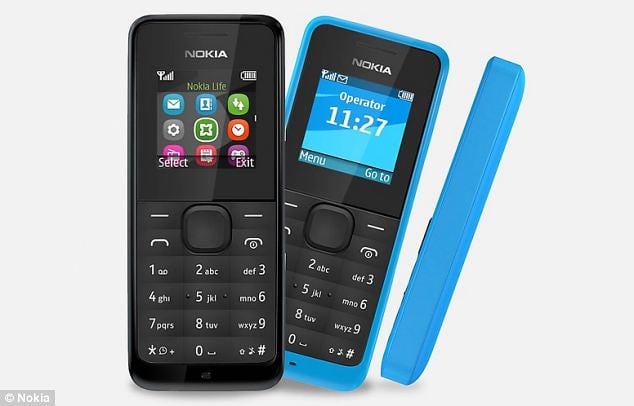
Starting in 2013, the Nokia 105 line has sold over 200 million units. These phones targeted the same market the 1100 had found success with a decade earlier.
Even as smartphones became common in wealthy countries, billions of people still needed basic, affordable devices. The 105 series has been manufactured by Nokia, then Microsoft, then HMD Global.
Different companies, same winning formula. The phone makes calls, sends texts, and lasts forever on a single charge.
That’s enough.
iPhone 6S and 6S Plus: Refinement After Success

Apple sold 174 million units of the 6S series in 2015. The phones looked nearly identical to the iPhone 6, but added 3D Touch technology that let the screen sense pressure.
Not everyone cared about that feature, but the improved processor and better camera kept people buying. The design proved strong enough that some people kept their 6S phones running for years.
Apple’s long software support meant the hardware kept pace with newer apps longer than most Android phones could manage.
iPhone 5S: The Fingerprint Scanner Breakthrough

Touch ID changed how people thought about phone security when the iPhone 5S launched in 2013. Around 165 million people bought one.
Before that, most people either used a PIN code or no security at all. A fingerprint scanner made security convenient enough that people actually used it.
The phone came in a new gold color that became hugely popular. The smaller 4-inch screen felt dated compared to Android phones.
But the combination of speed, security, and Apple’s ecosystem kept sales strong for years.
iPhone 7 and 7 Plus: The Headphone Jack Controversy

Roughly 160 million iPhone 7 series devices sold after launching in 2016. Apple removed the headphone jack, which sparked complaints across the internet.
But they also added water resistance, stereo speakers, and a more powerful processor. The 7 Plus introduced a dual-camera system with optical zoom and Portrait Mode.
People complained about the missing headphone jack and then bought the phone anyway. The backlash got headlines, but the improvements mattered more to most buyers.
iPhone 11: Performance Without the Premium Price

At $699, the iPhone 11 cost less than the Pro models but delivered most of the same experience. Launched in 2019, it sold approximately 159 million units.
The dual-camera system with ultra-wide lens gave people creative options they’d never had on a phone before. Night mode made low-light photos actually look good.
The phone came in six colors, and the battery lasted noticeably longer than previous models. People who wanted an iPhone but balked at spending $1,000 found exactly what they needed.
iPhone X Series: Three Models, One Strategy

The iPhone X, XS, and XR models combined for about 151 million sales after launching in 2018. The X marked a major design shift with its edge-to-edge OLED display and Face ID replacing Touch ID.
No home button, just swipe gestures that took a day or two to learn and then felt natural. The XR offered most of the X’s features for several hundred dollars less.
Its LCD screen wasn’t as impressive as the OLED on the XS, but it was good enough. That pricing strategy expanded Apple’s reach while keeping the premium models for people who wanted everything.
Motorola RAZR V3: When Style Mattered Most

Over 130 million RAZR V3 phones sold between 2004 and 2008. The aluminum flip phone was impossibly thin for its time.
It looked expensive and fashionable in a way most phones didn’t. Motorola initially priced it at $500, positioning it as a luxury item.
But then they dropped the price steadily. First to $400, then $350, eventually down to $50.
Each price cut brought in new buyers who’d been waiting. The RAZR dominated the U.S. market for three straight years.
Motorola bet everything on this design and it paid off spectacularly, though they struggled when they couldn’t produce another hit.
Nokia 3310: The Indestructible Legend

Around 126 million Nokia 3310 phones were sold between 2000 and 2005. The phone’s reputation for durability has only grown over time.
Drop it down stairs, run it over with a car, throw it at a wall, and it would probably still work. The phone introduced threaded SMS messaging, which made texting feel more like a conversation.
It came with Snake II, an improved version of the game that had made the 3210 popular. The customizable Xpress-On covers let people personalize their phones in ways that seem quaint now but felt special then.
Nokia 6600: The Smartphone Before Smartphones

This model sold 150 million units after launching in 2003. It ran Symbian OS and had a VGA camera, music player, video player, and Bluetooth.
For its time, that made it remarkably capable. Business professionals loved it because it could handle email and productivity apps.
The 6600 cost about $600 at launch, pricing it as a premium device. But its capabilities justified that cost for people who needed a phone that could do more than just calls and texts.
It proved there was a market for powerful phones years before the iPhone existed.
Samsung Galaxy S4: Android’s Biggest Winner

The Galaxy S4 shifted around 80 million units once it dropped in 2013. Its 5-inch AMOLED screen appeared sharp and vivid.
Software inside aimed to handle tons – like tracking your eyes or responding to hand motions. Some of these tricks didn’t quite hit the mark, yet Samsung proved they’d take risks.
The S4 put Samsung on the map in the Android world. With solid hardware, big ad spending, while a wide sales reach, it could go head-to-head against Apple.
Later Galaxies improved things here and there, yet the S4 showed when high-end Android phones started feeling top-tier.
When Hardware Becomes Memory

Those phones mean way more than numbers or specs ever show. Nokia’s devices brought mobile access to countless folks across poorer regions.
Instead of just calling, they opened up entire worlds. Apple’s iPhone shifted how humans use tech in daily life.
Rather than being tools, gadgets became part of living. Motorola’s RAZR showed that looks can boost appeal far past what a phone actually does.
You can follow how phone desires changed by looking at these models. Toughness faded out when big displays came in, followed by sharper cameras, alongside tighter app ecosystems.
Every hit model reveals what folks cared about back then. Yet top sellers weren’t packed with the newest tech – just offered the right features at prices people handled.
More from Go2Tutors!

- The Romanov Crown Jewels and Their Tragic Fate
- 13 Historical Mysteries That Science Still Can’t Solve
- Famous Hoaxes That Fooled the World for Years
- 15 Child Stars with Tragic Adult Lives
- 16 Famous Jewelry Pieces in History
Like Go2Tutors’s content? Follow us on MSN.



