Beyblade Trivia Fans Still Talk About
Beyblade has been spinning for over two decades, and the franchise has accumulated enough trivia to fill entire forums. Casual fans know the basics—spinning tops that battle each other.
But dedicated fans dig deeper, uncovering details about rare releases, anime inconsistencies, competitive meta shifts, and the weird decisions manufacturers made over the years. These aren’t just random facts.
These are the details that spark debates, shape collecting decisions, and define what it means to be deep into Beyblade culture. Once you know this stuff, you start seeing the franchise differently.
The Original Dragoon Design Was Nearly Lost
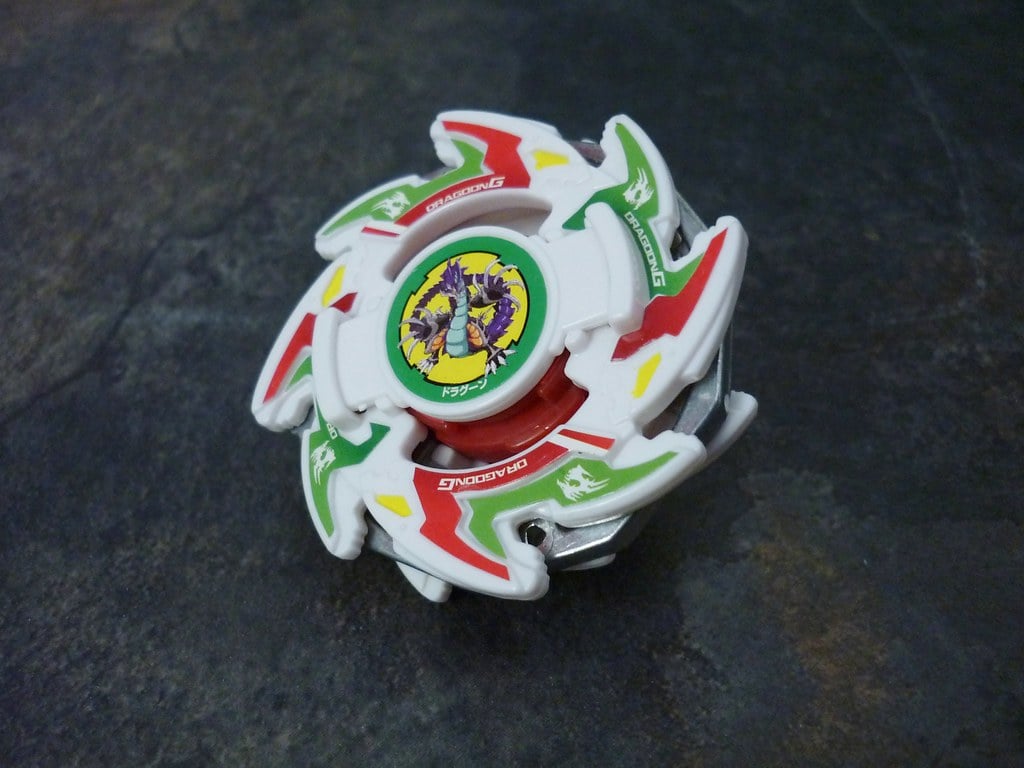
Takao Aoki designed the original manga and toy concept in 1999, but the Dragoon design almost didn’t make it to production. The initial prototypes had balance issues that made consistent spinning nearly impossible.
Engineers had to redesign the weight distribution three times before the top could battle effectively. This matters because Dragoon became the franchise’s most iconic Beyblade.
Tyson’s signature top defined what competitive Beyblades should look like. If those early prototypes had failed completely, the entire franchise might have taken a different direction—or not existed at all.
The final Dragoon design set standards that other Beyblades followed. The weight distribution, the attack patterns, the way it moved in the stadium—all of it came from solving those early engineering problems.
Fans who know this history see Dragoon as more than just the main character’s top. It’s the proof of concept that made everything else possible.
Dranzer’s Flame Design Caused Manufacturing Nightmares
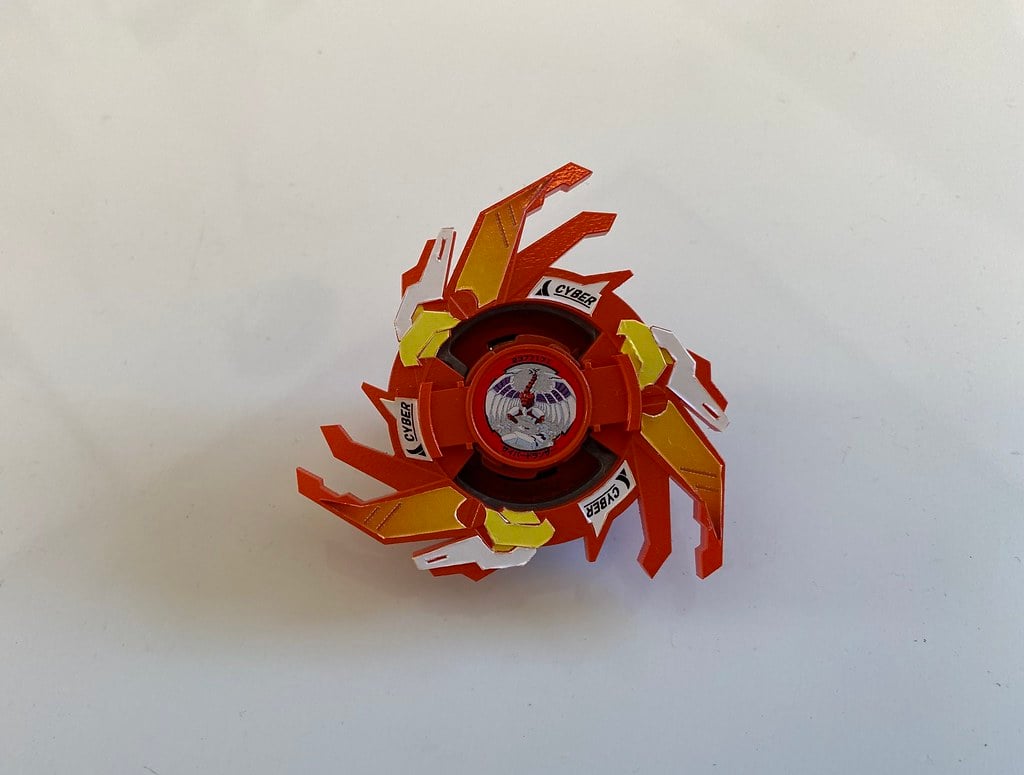
Kai’s Dranzer featured a detailed phoenix design that looked amazing in the anime. Translating that to a physical toy created problems.
The early Dranzer releases had paint that chipped after a few battles, and the intricate molding required more expensive manufacturing processes than simpler designs. Hasbro’s Western releases simplified the design significantly.
The phoenix details got streamlined, the paint schemes changed, and some versions lost fine details entirely. Japanese collectors noticed immediately and started a market for genuine Takara versions.
This split between Takara and Hasbro releases became a defining feature of Beyblade collecting. Japanese versions maintained design accuracy but cost more and were harder to find outside Asia.
Western versions were accessible but compromised on details. The Dranzer differences were so obvious that they became the go-to example when explaining why collectors prefer certain releases.
The Plastic Generation Weight Disks Had Hidden Codes

Every plastic generation Beyblade had weight disks with small stamped numbers that most people ignored. These codes indicated which factory produced the disk and when.
Competitive players eventually realized that certain factory codes produced more balanced weight disks than others. This created an entire subculture of code checking.
Players would buy multiple Beyblades, check the codes, test each disk, and keep only the best ones. The practice was technically legal in tournaments since the disks were all official parts, but it gave an advantage to players who knew what to look for.
The codes varied by region and release wave. A weight disk from an early Japanese release might have different balance characteristics than an identical disk from a later American release.
Fans compiled lists of “good” and “bad” codes based on tournament results and testing data. That information still circulates in collector communities, even though plastic generation tournaments are rare now.
HMS Beyblades Were Too Expensive to Succeed
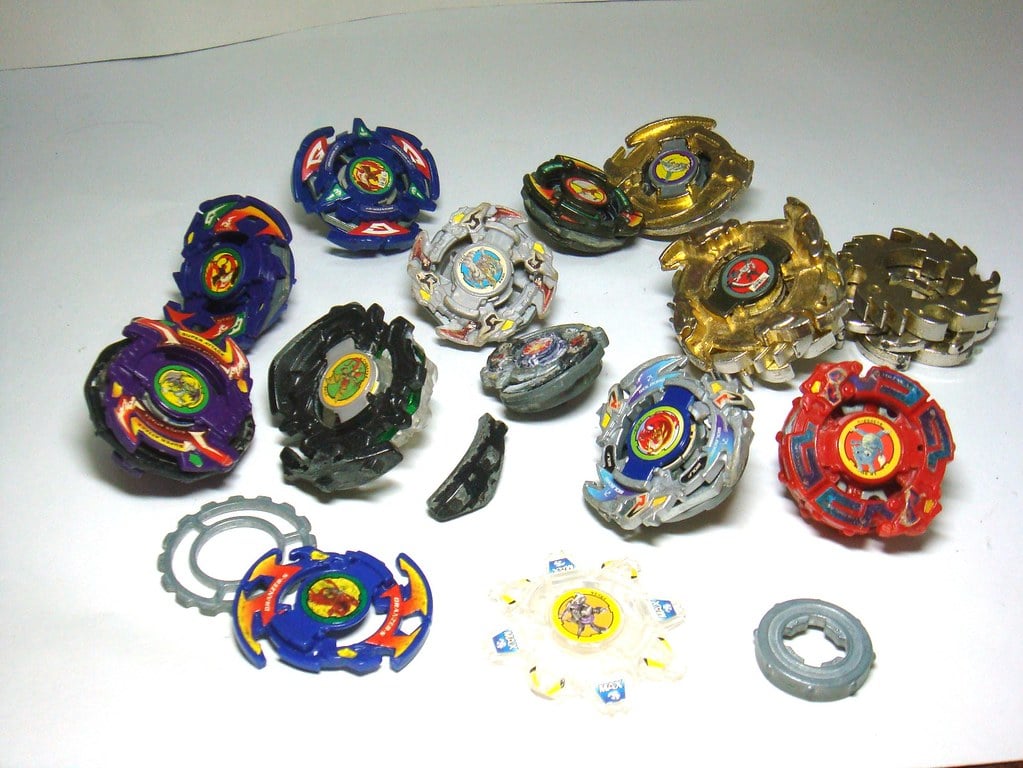
The Heavy Metal System generation lasted only about two years, from 2003 to 2005. These Beyblades used metal parts instead of plastic, making them heavier and more powerful.
They were also significantly more expensive than plastic generation tops. Kids who’d been collecting plastic Beyblades couldn’t afford to rebuild their collections with HMS parts.
The higher price point limited the customer base to serious collectors and competitive players. Hasbro barely released HMS Beyblades in Western markets, which further restricted their reach.
Despite the commercial failure, HMS Beyblades are now highly sought by collectors. The limited production run means many HMS tops are rare and expensive.
Some releases, like the tournament-exclusive versions, sell for hundreds of dollars when they appear on the secondary market. The HMS generation also introduced design innovations that influenced later Metal Fight and Burst generations.
The metal performance tips, the compact design, the reduced size—all of these elements reappeared in modified forms years later. HMS failed commercially but succeeded as a testing ground for ideas that worked better in subsequent generations.
The Anime Had Different Physics Than the Toys

Every Beyblade anime series shows tops doing things the physical toys can’t do. Beyblades flying through the air, creating elemental attacks, generating special moves that defy gravity—none of this happens with real tops.
But the specific ways the anime broke physics became talking points among fans. The original series had Beyblades summoning bit-beasts that would physically manifest and fight each other.
This was pure fantasy, but it made the battles exciting. The Metal Fight series toned down the supernatural elements but still showed the tops performing impossible maneuvers.
Fans debate which series had the most realistic battles. Some argue that the later series improved by making the physics slightly more plausible.
Others prefer the original’s full commitment to fantasy. The disconnect between anime battles and real battles is acknowledged by everyone—the question is how much that disconnect matters.
Tournament players sometimes reference anime moves when describing battle strategies, even though the moves aren’t real. “Sliding shot” is an actual technique, but calling it “Pegasus Starblast Attack” connects it to the anime version.
The terminology blurs the line between fiction and reality in ways that make the hobby more fun for fans who grew up watching the shows.
Takara and Hasbro Releases Were Different Products
When Hasbro brought Beyblade to Western markets, they didn’t just translate the packaging. They changed the products.
Sticker quality differed. Paint applications changed.
Some parts used slightly different plastics. In rare cases, entire components were redesigned for manufacturing efficiency or safety compliance.
This created two parallel markets. Japanese collectors sought Takara versions for accuracy and quality.
Western fans bought Hasbro versions because they were available locally and cheaper. Competitive players mixed parts from both manufacturers, which was legal in most tournaments.
The differences matter most for rare or special releases. A tournament prize Beyblade from Japan might have no Hasbro equivalent.
Conversely, some Hasbro exclusive releases never appeared in Japanese markets. Collectors trying to get every version of a particular Beyblade need both the Takara and Hasbro releases, which doubles the collecting challenge.
The most debated differences involve performance. Do Takara tips spin longer? Do Hasbro stadiums play differently?
Testing shows measurable differences in some cases, but fans argue about whether those differences significantly impact battles. The debates continue because there’s no definitive answer—it depends on which specific releases you’re comparing.
Wolborg MS Had Illegal Tournament Potential
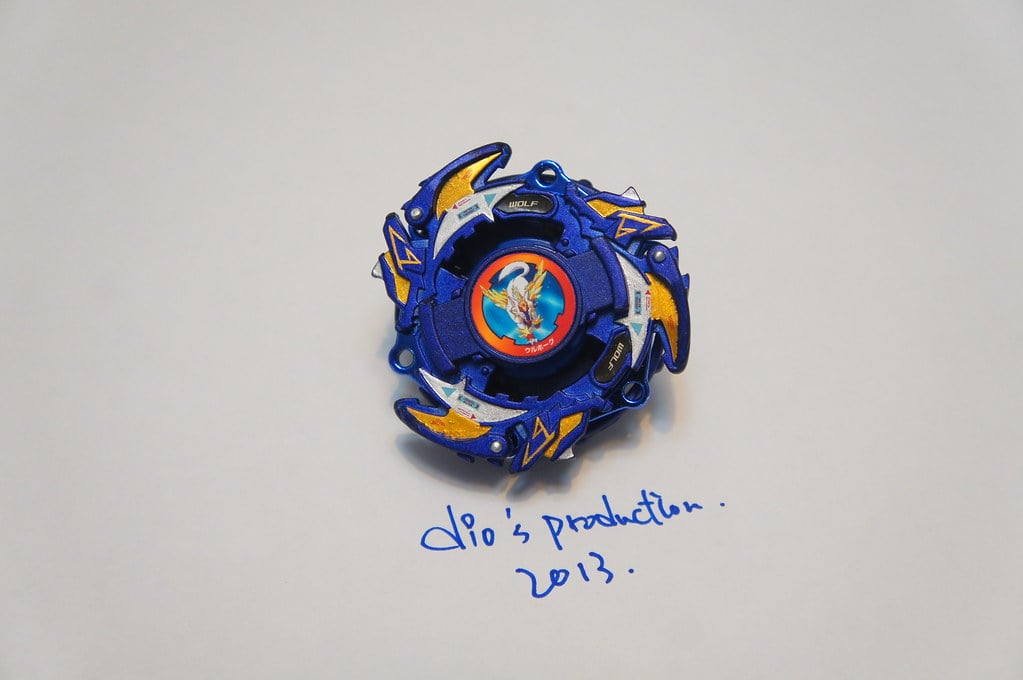
Wolborg MS became infamous in the HMS competitive scene for having bearing-based performance tips that spun far longer than other tops. In stamina-type matches, Wolborg MS could outlast almost anything.
The problem was that slight manufacturing variations made some Wolborg MS tops significantly better than others. Players started buying multiple Wolborg MS Beyblades and testing each one to find versions with the smoothest bearings.
The best ones became tournament staples, while the average ones were mediocre. This created an arms race where competitive players hoarded good Wolborg MS copies.
Tournament organizers eventually had to decide whether this was fair. The Beyblades were all legitimate Takara products, but the performance variation between copies was larger than for other models.
Some tournaments banned Wolborg MS entirely. Others allowed it but tried to regulate which versions were legal.
The inconsistent rulings made the situation worse. The Wolborg MS controversy highlighted a broader issue in Beyblade tournaments: manufacturing tolerances matter.
No two physical tops are perfectly identical. Usually the differences are negligible, but sometimes—like with Wolborg MS—the variations become significant enough to affect competitive balance.
The Random Booster System Created Gambling Mechanics
Takara introduced random boosters in the Metal Fight generation. These blind-box products contained one of several possible Beyblades, with different rarities for different tops.
You didn’t know which one you’d get until you opened the package. This made certain Beyblades deliberately hard to obtain.
The rarest pulls from random boosters became collector’s items immediately. Kids who wanted specific tops either had to buy multiple boosters hoping for luck or pay inflated prices on the secondary market.
The system was controversial from the start. Parents saw it as encouraging gambling behavior in children.
Collectors hated the unpredictability. But from a business perspective, random boosters worked—they generated more sales than if all the Beyblades were sold individually at fixed prices.
Random boosters continued through the Burst generation, becoming a standard part of Beyblade releases. The controversy faded as fans accepted it as normal.
Now collectors budget for buying multiple boosters to get the variants they want, treating it as part of the hobby’s cost rather than a predatory practice.
Gold Beyblades Were More Than Cosmetic

Special gold-colored Beyblades appeared throughout the franchise’s history as prizes, contest rewards, or limited releases. These weren’t just recolors—some gold Beyblades used different materials or had slightly different weights than standard releases.
The weight differences were small, usually just a few grams. But in competitive play, those grams mattered.
A gold Beyblade might have marginally different balance or stamina characteristics. Whether this gave an advantage was debatable, but the possibility meant gold tops weren’t purely decorative.
Collectors treat gold Beyblades as premium items regardless of performance differences. The rarity and aesthetic appeal make them desirable.
Tournament legality varies—some competitions allow any official Beyblade including special editions, while others restrict entries to standard retail releases. The most famous gold Beyblade controversy involved a Dragoon GT gold version that supposedly spun longer than a regular Dragoon GT.
Testing showed inconsistent results. Some copies performed better, others didn’t.
Whether the gold color correlated with better performance or whether the differences were just normal manufacturing variation was never definitively proven.
The Metal Fight System Introduced Power Creep
When Metal Fight Beyblades launched in 2008, the early releases were relatively balanced. As the generation progressed, new releases became progressively more powerful.
Later Metal Fight tops could easily defeat earlier ones, creating obvious power creep that frustrated collectors who’d bought the early models. This was partly intentional design.
Takara wanted players to buy new releases, so making newer tops stronger encouraged upgrades. But the power creep accelerated beyond what maintained competitive balance.
By the end of the Metal Fight run, only the most recent releases were viable in serious tournaments. The 4D system bottoms and Zero-G chrome wheels represented the peak of Metal Fight power creep.
These parts were so dominant that using earlier generation pieces became pointless. The meta narrowed to a small pool of competitive options, which reduced strategic variety.
Burst generation design tried to address this by implementing the burst mechanic itself—a top that’s too aggressive might burst itself rather than win. This created a risk-reward dynamic that reduced pure power creep.
Newer Burst Beyblades are still generally better than older ones, but the gap is less extreme than late Metal Fight.
Fake Beyblades Flooded the Market
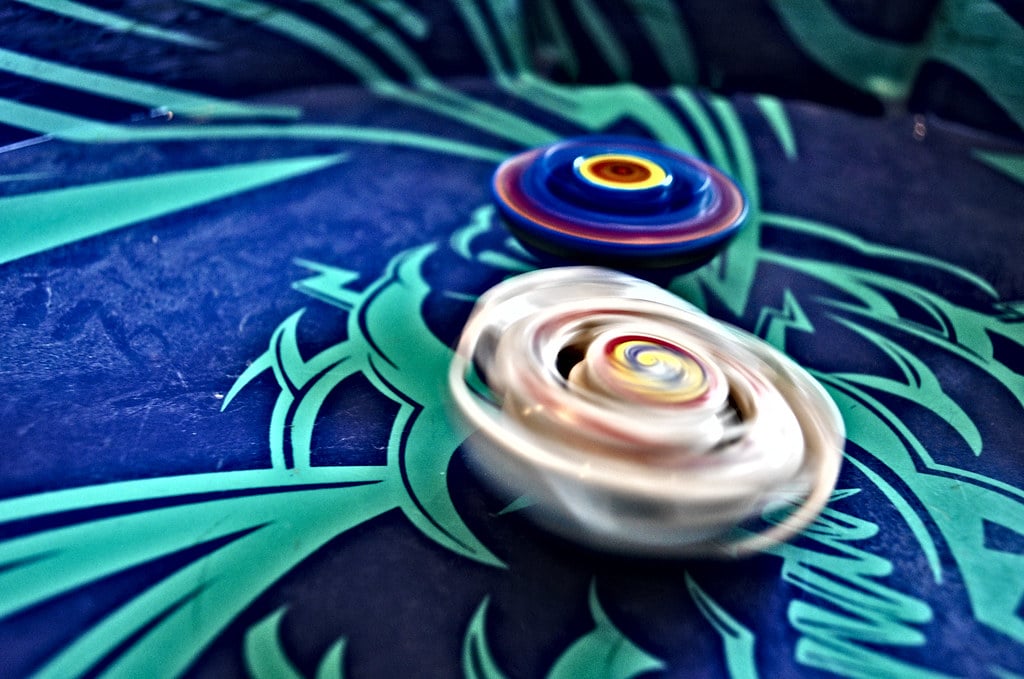
Counterfeit Beyblades appeared almost immediately after the toys became popular. These fakes ranged from obvious knock-offs to convincing replicas that fooled inexperienced buyers.
The materials were of lower quality, the performance was worse, and safety standards were often ignored. The fake problem got worse as genuine Beyblades became harder to find.
When a popular model sold out, fakes filled the gap. Online marketplaces became flooded with listings where buyers couldn’t tell if they were getting authentic products.
Even some physical retailers unknowingly stocked counterfeits from sketchy distributors. Experienced collectors learned to identify fakes by checking specific details: the quality of the stickers, the precision of the molding, the weight of the parts, and the markings on the performance tips.
But casual fans and parents buying gifts often couldn’t distinguish real from fake until after purchase. The community’s response was to create guides and comparison resources.
Fan forums compiled lists of reliable sellers and warning signs of counterfeits. YouTube channels made videos showing how to spot fakes.
These educational efforts helped, but the fake problem persists. Any popular Beyblade will have counterfeit versions within months of release.
Burst’s Mechanism Changed Everything
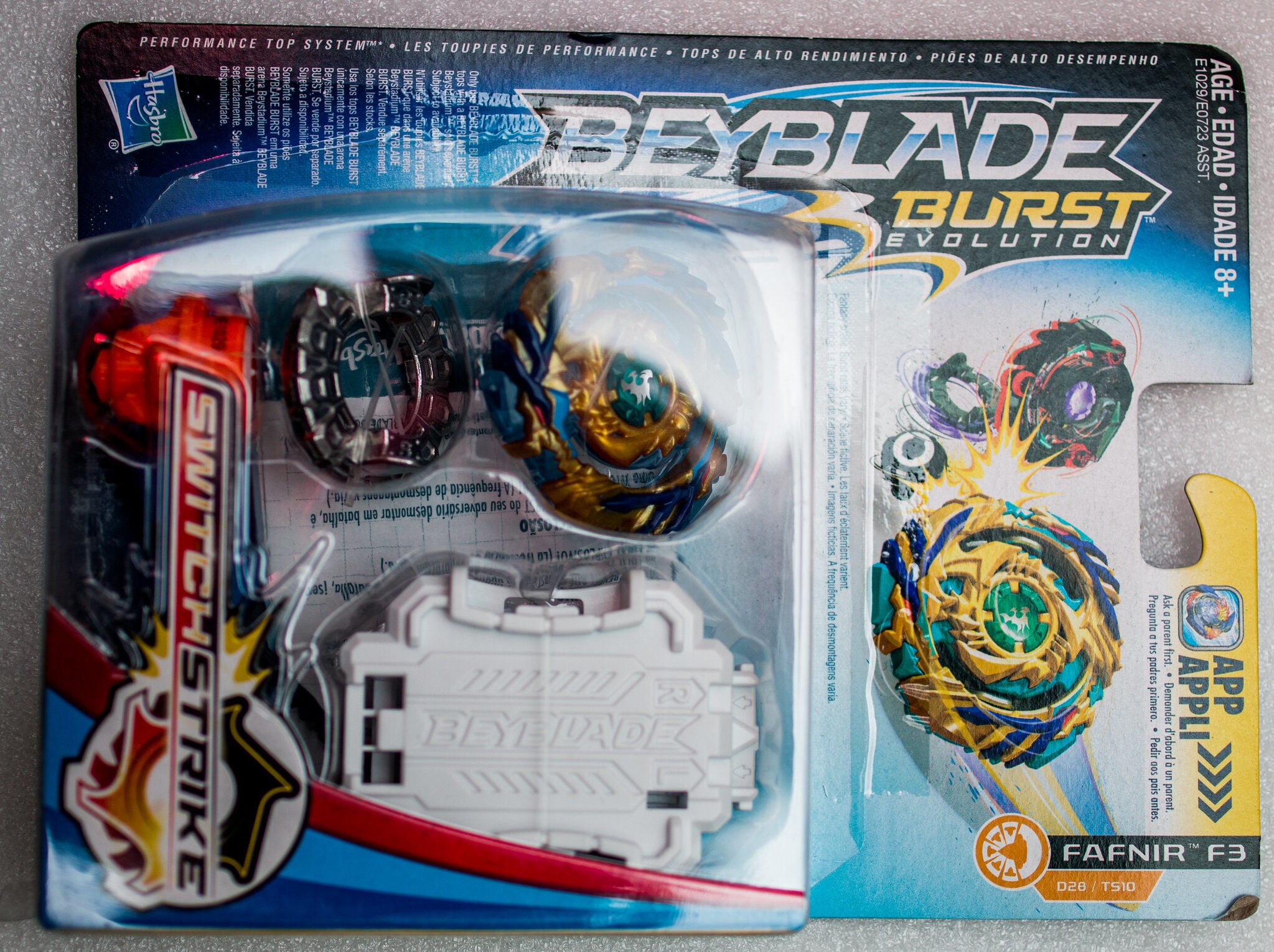
The Burst generation introduced a new loss condition: if your Beyblade comes apart during battle, you lose. This fundamentally changed how battles worked.
Tops that were too aggressive risked bursting. Defense types needed to stay tight under impact.
The entire strategic calculation shifted. Early Burst releases had inconsistent burst resistance.
Some tops burst too easily, making them uncompetitive despite good stats. Others rarely burst, which made them dominant.
Takara adjusted the design over time, improving the mechanism’s balance through multiple revisions. The burst mechanic divided fans.
Some loved the added complexity and the dramatic moments when a top exploded mid-battle. Others disliked how bursts added randomness—a battle could be decided by whether a top happened to burst rather than by superior design or skill.
Tournaments had to create new rules around bursts. Is a burst worth more points than a knockout?
Should burst-resistant parts be restricted? Different tournaments answered these questions differently, creating regional variations in how Burst Beyblades compete.
The Stadium Material Affects Everything
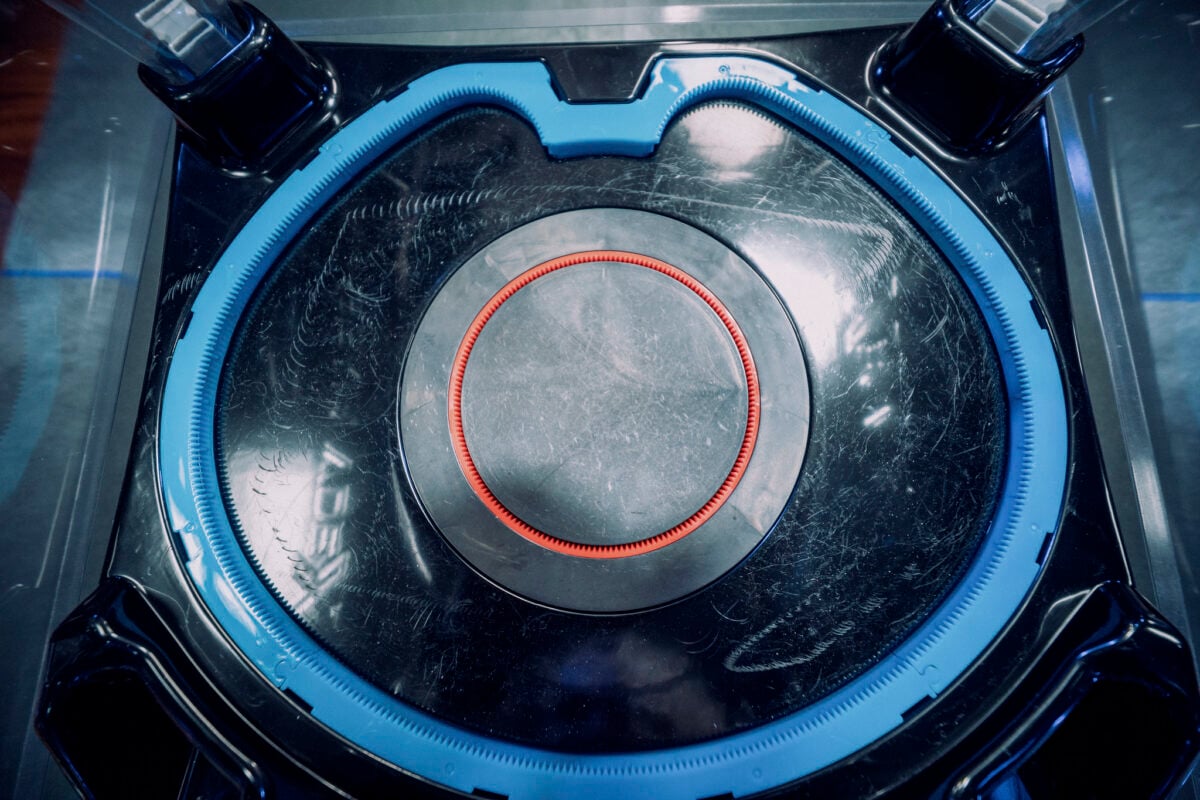
Beyblades behave differently depending on what surface they battle on. Official Takara stadiums use specific plastics with controlled friction properties.
Hasbro stadiums use different materials that alter how tops move. Cheaper third-party stadiums create unpredictable results.
This matters enormously in competitive play. A combination that works perfectly in a Takara Attack Stadium might fail in a Hasbro Stadium.
Tournament results are stadium-specific—you can’t directly compare performance across different battle environments. The stadium issue became contentious when Western tournaments used Hasbro stadiums while Japanese tournaments used Takara stadiums.
Strategies that worked in one region failed in another. International competitions had to standardize on one stadium type, which immediately disadvantaged players who’d trained in the other type.
Collectors debate which stadiums are “correct.” Purists insist on Takara stadiums that match the anime and Japanese competitive scene.
Pragmatists use whatever stadium they can access. The right answer depends on what you’re optimizing for—authentic experience or practical availability.
Limited Edition Parts Created Artificial Scarcity

Throughout Beyblade’s history, certain parts were only available through specific limited releases. A particular performance tip might only come with one tournament prize: Beyblade.
A special face bolt might only appear in a specific random booster at low odds. This created situations where certain competitive combinations were functionally inaccessible to most players.
You could theoretically build an optimal top, but one of the required parts might cost hundreds of dollars on the secondary market. Budget players were locked out of top-tier competition by artificial scarcity.
The community’s response was to develop budget alternatives—combinations that performed similarly but used more accessible parts. Tournament organizers sometimes banned extremely rare parts to level the playing field.
But the fundamental problem remained: the best competitive parts weren’t distributed evenly across releases. Takara later started re-releasing previously limited parts in new products, which helped accessibility but frustrated early adopters who’d paid premium prices for the originals.
The tension between collectibility and competitive accessibility was never fully resolved. Limited parts remain a feature of the franchise, for better or worse.
When Tops Become More Than Toys

Beyblade facts pile up when you spend years watching each version roll out. One era after another brings strange rules, debates, and even rare parts people hunt down.
Those who stuck around through reboots and redesigns treat what they know like a badge earned slowly. A detail here, a memory there – it all adds up without trying.
Little things count since they show effort. Spotting which weight disk types work best or what golden Beyblades fit tournament rules means hours of digging into specifics.
This kind of awareness links you with others who value those odd truths. Details build bridges where interest meets attention.
Turns out, even tiny battle-spinners need serious planning behind them. Not just random shapes thrown together – every curve, every weight shift matters.
Materials picked on purpose, parts made slightly different on machines, all those tweaks add up. At first glance they seem basic, yet underneath lie layers waiting to be noticed.
A child’s plaything? Maybe – but one built with hidden precision. New bits of trivia pop up every time the series releases something fresh.
Across eras, through odd twists, along endless chase cards. Just when someone believes they know it all, a hidden fact slips out, an argument sparks, and a scarce edition shows its face.
Spinning? Never really ends.
More from Go2Tutors!

- The Romanov Crown Jewels and Their Tragic Fate
- 13 Historical Mysteries That Science Still Can’t Solve
- Famous Hoaxes That Fooled the World for Years
- 15 Child Stars with Tragic Adult Lives
- 16 Famous Jewelry Pieces in History
Like Go2Tutors’s content? Follow us on MSN.