Bizarre Things People Did During Plagues
Fear makes people do strange things. When disease swept through towns and cities, logic often took a backseat to desperation.
People tried anything that might keep them alive, even if it made no sense. Some of these attempts were just misguided.
Others crossed into territory that’s hard to explain even centuries later.
Wearing Bird-Beaked Masks Stuffed with Flowers

Plague doctors walked through infected streets wearing long leather coats and masks with enormous curved beaks. They looked like nightmarish birds.
The beak wasn’t just for show. Doctors packed it with dried flowers, herbs, and spices, believing the sweet smells would protect them from diseased air.
The theory was that bad smells spread sickness, so good smells must block it. They were wrong about how disease spread, but those masks remain one of history’s most disturbing images.
Whipping Themselves Through Town
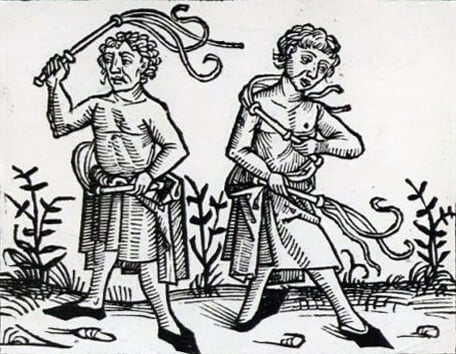
Groups called flagellants marched from town to town, publicly beating themselves with leather whips embedded with metal spikes. They believed the plague was divine punishment, and if they punished themselves first, God might show mercy.
Thousands joined these processions, leaving trails of their own blood through the streets. Some did this for weeks.
Church authorities eventually banned the practice, but not before it spread across Europe during the Black Death.
Slaughtering Every Cat and Dog They Could Find
Authorities in many plague-stricken cities ordered mass killings of cats and dogs. The animals seemed suspicious—they moved through garbage, touched diseased areas, and might carry illness.
In London during the 1665 plague, the city paid people to kill and remove tens of thousands of animals. This backfired spectacularly. With fewer cats hunting rats, the rat population exploded. Since rats actually carried the fleas that spread plague, this made everything worse.
Sitting in Sewers Breathing the Fumes

Some people genuinely believed that bad air from sewers would protect them from plague. The idea was that if you filled your body with terrible smells first, the plague couldn’t get in.
People would sit near open sewers or latrines for hours, deliberately inhaling the fumes. They thought they were building immunity.
They were just making themselves sick in different ways.
Holding Dead Chickens Against Infected Swellings
When plague caused painful swellings called buboes, people tried to draw out the disease. One popular method involved killing a chicken, plucking it, then strapping the warm, dead bird directly against the swelling.
The theory was that the chicken would absorb the disease from your body. After a few hours, you’d remove the dead bird and repeat with a fresh one.
Live pigeons and toads got the same treatment. None of it worked.
Drinking Crushed Emeralds

The wealthy turned to expensive remedies that regular people couldn’t afford. Crushed emeralds mixed with water were one of them.
The green color supposedly had healing properties, and emeralds were rare enough that they must contain power. Some recipes called for pearls or gold dust instead.
These people were essentially drinking their fortune. The plague killed them anyway.
Locking Infected Families Inside Their Homes

Cities painted red crosses on doors of infected households and posted guards to prevent anyone from leaving. Healthy family members got locked in with the sick.
Food was delivered to the doorstep if you were lucky. Sometimes entire families died inside these sealed houses.
Neighbors could hear them for days, then silence. This was official policy in London and other cities, enforced by law.
Dancing Until They Collapsed

During and after plague outbreaks, strange dancing manias swept through towns. Large groups would start dancing and couldn’t stop.
They danced for hours, then days. Some danced until they collapsed from exhaustion. Others died from heart attacks or strokes.
Historians still debate what caused this, but it happened repeatedly in plague-affected areas. The most famous case in Strasbourg in 1518 killed dozens of dancers.
Poisoning Their Own Wells

Frightened communities looked for someone to blame. In many places, particularly during the Black Death, accusations flew that Jewish communities had poisoned wells to spread the plague.
Mobs attacked Jewish quarters and burned entire communities. The accusations made no sense—Jewish people died from plague at the same rates—but thousands were murdered based on these conspiracy theories.
Sniffing Vinegar and Roses Constantly

People carried small containers of vinegar or rose water and held them to their noses constantly. They believed breathing through these scents created a protective barrier.
Some versions included dozens of herbs steeped in vinegar, called “Four Thieves Vinegar” because the recipe supposedly protected grave robbers. People walked around with vinegar-soaked clothes pressed to their faces all day.
At least it didn’t hurt anyone, unlike most remedies.
Stripping Unclothed and Rolling in Snow

Some plague sufferers, burning with fever, would run outside and throw themselves into snow or icy water. They were desperately trying to cool down. In a few cases, perfectly healthy people would do this preventatively, thinking the shock to their system would make them stronger.
The sudden temperature change killed some of them faster than the plague would have.
Smoke Nicotine in Children’s Faces

When cig arrived in Europe, some people believed its smoke could protect against plague. Schools in England forced children to smoke cig, thinking it would prevent infection.
Boys who refused got beaten. The practice was so widespread that for decades, people genuinely believed puffing prevented disease.
They were adding health problems instead.
Burying People with Bread and Salt

Varieties of traditions shaped special ways to lay plague victims to rest. Some places tucked loaves and salt jars into graves – folk thought those things soaked up sickness beyond death, stopping the deceased from coming back to spread harm.
Different customs had bodies placed facedown or pinned under thick rocks. Worry about rotting bodies climbing out wasn’t just myth – it pushed entire communities to alter how they buried their own.
The Weight of Watching the Sky

When things fell apart, folks turned skyward. By following where planets and stars moved, they hoped to make sense of their pain.
Comets? Seen as signs of coming disaster. A few groups believed certain line-ups of celestial bodies spoiled the air, leaving no choice except to sit tight until skies changed once more.
That feeling of being powerless might’ve been the truest reaction – realizing, after every odd ceremony and frantic fix, they were dealing with forces way outside their grasp.
More from Go2Tutors!

- The Romanov Crown Jewels and Their Tragic Fate
- 13 Historical Mysteries That Science Still Can’t Solve
- Famous Hoaxes That Fooled the World for Years
- 15 Child Stars with Tragic Adult Lives
- 16 Famous Jewelry Pieces in History
Like Go2Tutors’s content? Follow us on MSN.



