Board Games Played by Ancient Royals
Picture this: long before video games, streaming services, or even playing cards existed, kings and queens sat in their palaces rolling dice and moving pieces across beautifully crafted boards. These weren’t just ways to pass time between battles and banquets.
Board games were serious business in royal courts, often reflecting the politics, warfare, and social structures of their time. Some games required deep strategic thinking, while others relied purely on luck.
Many of these ancient pastimes reveal surprising details about how royalty lived, thought, and competed. So what were these rulers actually playing? Let’s look at the games that kept ancient royalty entertained for centuries.
Senet
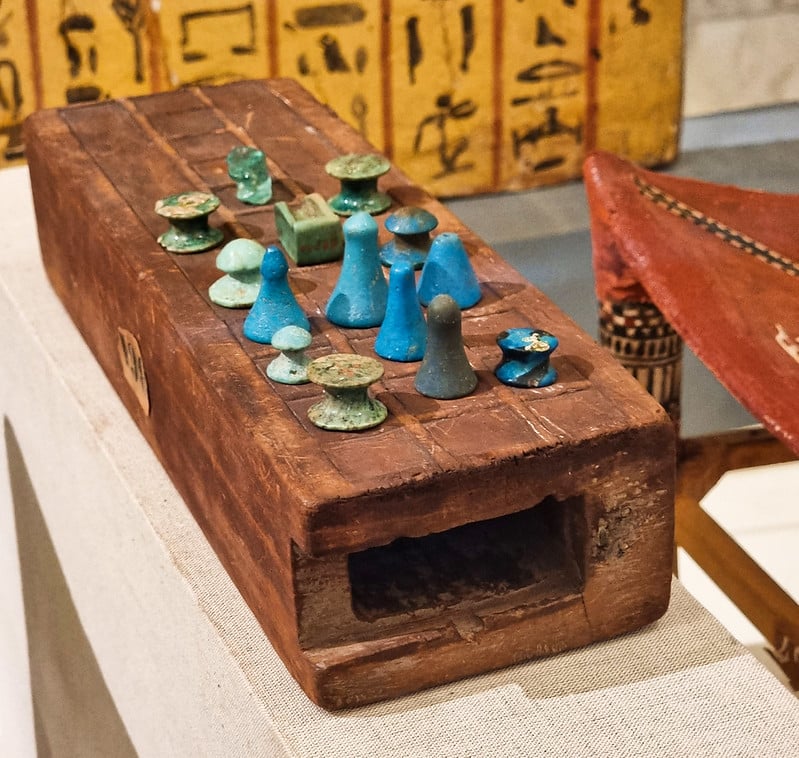
The pharaohs of Egypt were absolutely obsessed with this game. Archaeologists have found Senet boards in tombs dating back to 3100 BCE, making it one of the oldest known board games in human history.
The game used a grid of thirty squares arranged in three rows of ten, and players moved their pieces according to the throw of sticks or bones. What made Senet special was its religious significance—Egyptians believed the game represented the journey of the soul through the afterlife.
Tutankhamun was buried with at least four Senet boards, showing just how important this game was to Egyptian royalty.
The Royal Game of Ur
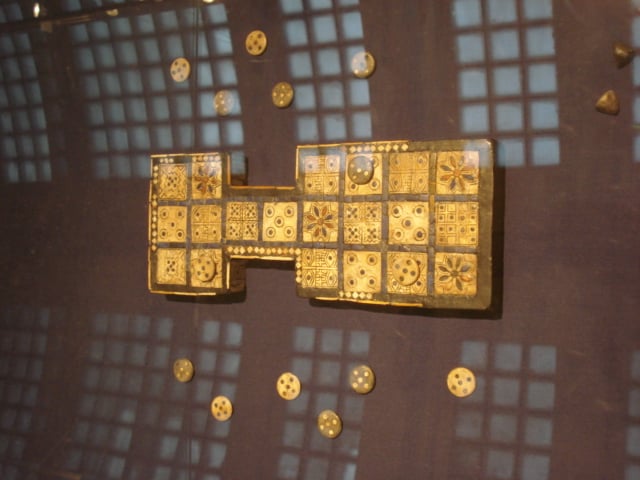
Discovered in the royal tombs of ancient Mesopotamia, this game predates even Senet by a few centuries. The most famous board was found in the 1920s in what is now Iraq, dating to around 2600 BCE.
Players raced their pieces along a distinctive figure-eight track, using pyramid-shaped dice to determine their moves. The game was so popular that a cuneiform tablet from Babylon gives detailed rules for playing it.
Kings and queens across Mesopotamia played this game for over 3,000 years, making it one of the longest-running games in history.
Liubo

Chinese emperors during the Han Dynasty couldn’t get enough of this complex game. Liubo involved moving pieces on a board marked with cosmic symbols representing heaven and earth.
Players threw six-sided sticks instead of dice, and the game incorporated elements of divination and fortune-telling. The rules have been lost to history, but ancient texts mention that skilled players could win fortunes.
Emperor Wu of Han was particularly fond of Liubo and often played it with his court officials.
Ludus Latrunculorum

Roman emperors played this strategic war game that resembled modern chess. The name translates to ‘Game of Mercenaries’ or ‘Game of Soldiers,’ which tells you everything about what Romans valued.
Players commanded armies of glass or stone pieces on a gridded board, trying to capture enemy pieces by surrounding them. Julius Caesar himself reportedly enjoyed this game during his military campaigns.
The game was so widespread that archaeologists have found boards carved into stone surfaces across the Roman Empire.
Hnefatafl

Viking kings and Norse royalty dominated their opponents in this asymmetric strategy game. Unlike most board games where both players have equal forces, Hnefatafl put one player in charge of a king and his defenders while the other commanded a larger attacking force.
The defending player had to get their king to safety at the edge of the board while the attacker tried to capture him. This game spread throughout Scandinavia, Britain, and Iceland wherever Vikings settled.
It remained popular until chess eventually replaced it in the medieval period.
Chaturanga
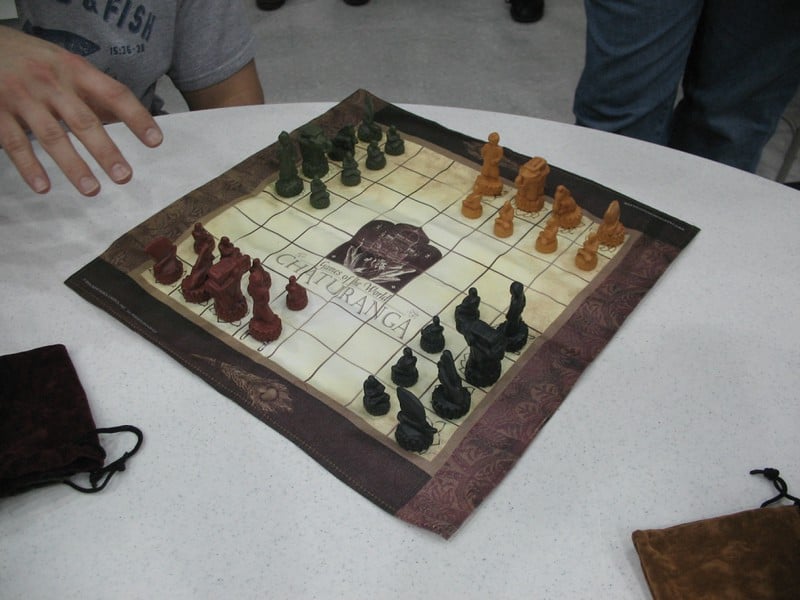
Indian royalty created what would become the ancestor of modern chess. Chaturanga emerged sometime before the 6th century CE and featured four divisions of the military: infantry, cavalry, elephants, and chariots.
The game’s name literally means ‘four divisions’ in Sanskrit. Kings and nobles across India played this game to sharpen their tactical thinking and military strategy.
When the game spread to Persia and then to Europe, it evolved into the chess we know today.
Petteia

Greek kings and aristocrats gathered around boards to play this game of pure strategy. Ancient writers like Plato mention Petteia in their works, suggesting it was considered intellectually respectable.
The game involved capturing opponent pieces by surrounding them, similar to the Roman Latrunculorum that came later. Archaeological evidence shows boards carved into stone surfaces at Greek settlements throughout the Mediterranean.
Alexander the Great’s tutors likely taught him this game as part of his royal education.
Go

Chinese emperors and their courts treated Go as more than entertainment—it was one of the four essential arts of a cultured person. The game appeared in China around 2,500 years ago and quickly became associated with scholarly and royal pursuits.
Two players place black and white stones on a grid, trying to control more territory than their opponent. The simplicity of the rules contrasts sharply with the game’s incredible depth and complexity.
Emperors often employed Go masters at their courts, and the game spread to Korea and Japan where it also became popular among royalty.
Mancala games

African kings and queens played various versions of these counting and capturing games for thousands of years. The basic concept involves moving stones or seeds around a board with small pits, trying to capture your opponent’s pieces.
Different regions developed their own versions with unique rules and board designs. Some versions were carved into stone, while royal families owned elaborate boards made from precious materials.
The games required mathematical thinking and planning several moves ahead.
Backgammon

Persian royalty perfected this ancient race game that combines luck and strategy. The game emerged from earlier Mesopotamian games and became incredibly popular throughout the Persian Empire.
Kings played elaborate versions on boards inlaid with precious stones and ivory. The game involves rolling dice and moving pieces around a board while trying to block your opponent and send their pieces back to the start.
Backgammon remains one of the few ancient royal games still widely played today in nearly its original form.
Parcheesi
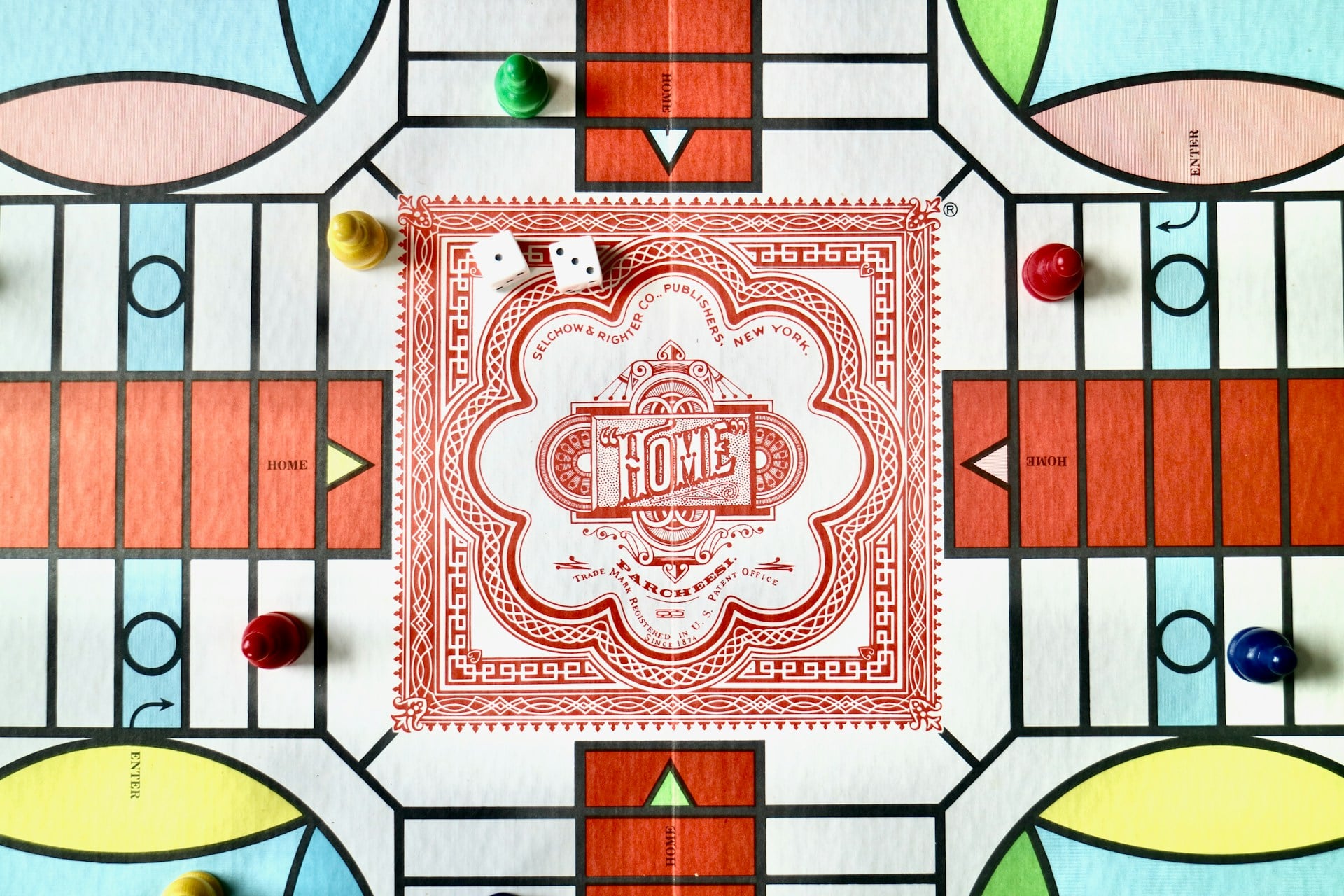
Indian maharajas and nobility enjoyed this cross-and-circle race game for centuries. The game’s name comes from the Hindi word ‘pachisi,’ meaning twenty-five, which relates to the highest score possible with the game’s cowrie shells used as dice.
Players raced their pieces around a cross-shaped board, trying to get all four pieces home before their opponents. The Mughal emperor Akbar reportedly had a massive courtyard version where servants dressed in colorful costumes served as the game pieces.
Nine Men’s Morris
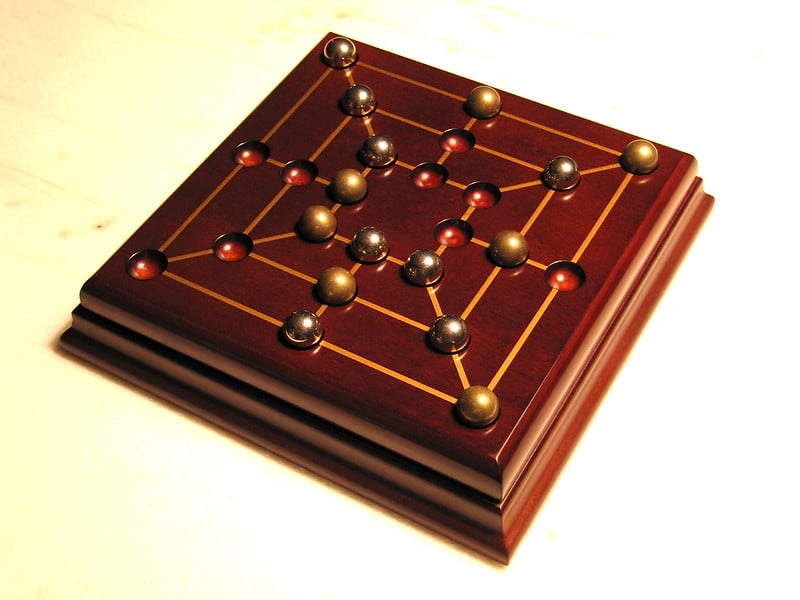
European kings and nobles played this alignment game on boards that appeared everywhere from castle floors to monastery courtyards. The game dates back to the Roman Empire but became especially popular during the Middle Ages.
Players try to form rows of three pieces while blocking their opponent from doing the same. Once rows are formed, players can capture opponent pieces.
The game required minimal equipment—just a board and eighteen pieces—making it accessible even during travel or military campaigns.
Alquerque
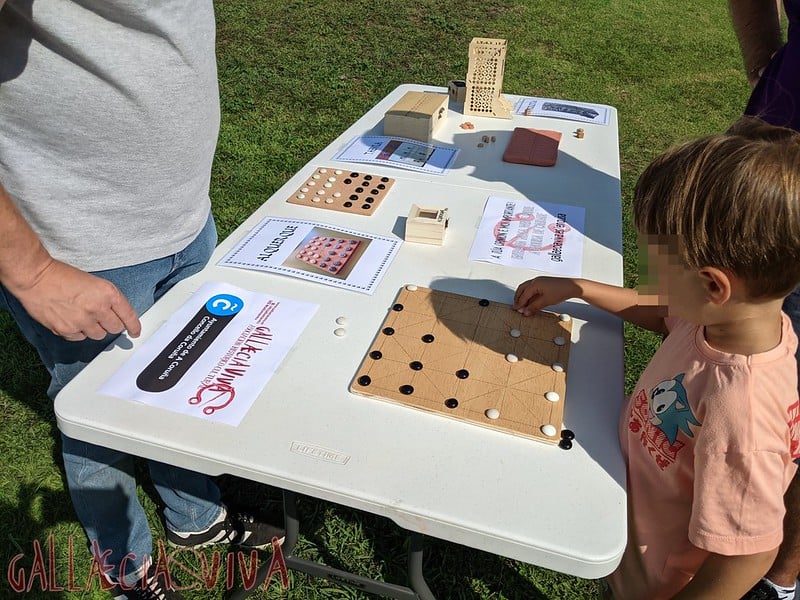
Spanish royalty and nobility imported this game from the Moorish kingdoms of North Africa. Alquerque appeared in Spain during the 10th century and spread throughout medieval Europe.
The game involved moving pieces diagonally across a distinctive pattern of intersecting lines, jumping over opponent pieces to capture them. This game directly influenced the development of checkers, which would eventually become more popular.
Kings Alfonso X of Castile included detailed descriptions and diagrams of Alquerque in his famous Book of Games from 1283.
Tafl games
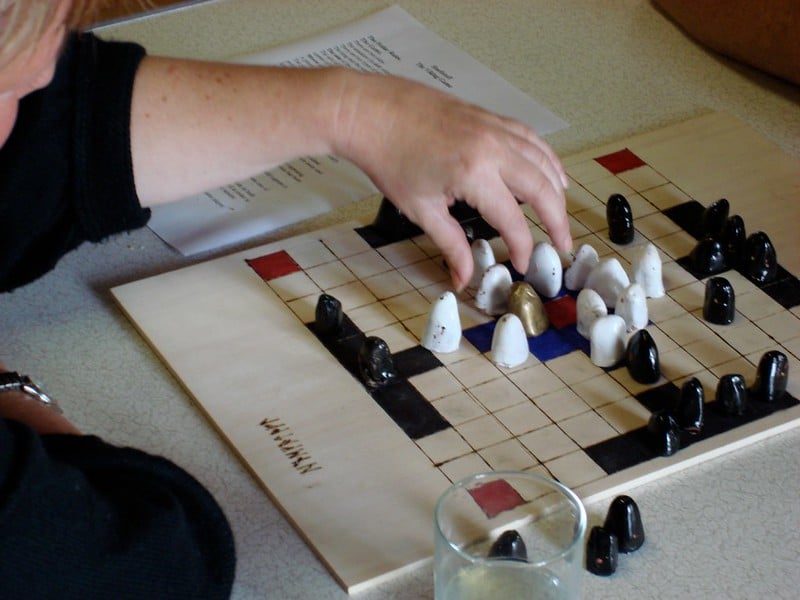
Scandinavian rulers fought alongside Celtic chieftains in these lopsided strategy games. One side had a central king protected by loyal units, while the other brought overwhelming numbers to break through.
Instead of fixed sizes, some boards were compact enough to carry around, others built grand for special occasions. Excavations near ancient palaces keep turning up fancy game pieces carved from walrus tusk, glowing amber, or rare imported goods.
Once chess took over during the Middle Ages, these older matches slowly faded out.
Fox and Geese

Folks in medieval Europe’s upper crust liked a chase game – one ran the fox, another led geese. Instead of teaming up, they faced off: the fox leapt over birds to snatch them, but the geese boxed it in till it froze.
Each role worked differently – no copycat moves here. Rulers often used fancy sets, pieces shaped by skilled hands.
Even during the Renaissance, nobles kept playing it now and then.
Carrom

Indian kings and wealthy folks huddled over big wooden tables, sliding disks toward corner pits. Though Carrom may not be as old as others here, it gained popularity in palace courts by the 1700s.
Instead of using cues, players snap a heavier disk to knock smaller ones into slots – kinda like a pool, just flatter. Success depends on sharp aim plus thinking ahead about bounces and edges.
Fancy versions had detailed carvings, crafted with fine woodwork and smooth counters made for royalty.
Latrunculi

Byzantine rulers picked up the game from the Romans, carrying it through centuries across their lands. It wasn’t just fun – also helped train minds in warfare moves.
Pieces slid over a grid, aiming to corner opponents by flanking them with two of your own. Nobles and army leaders sat down for Latrunculi to stay sharp in planning.
Its appeal held strong in Byzantium right up till Constantinople’s end in 1453.
The games that built empires

Those old tabletop games were never only about victory or defeat. Instead, they showed how societies thought – about war, rank, life itself.
Rulers played to prove cleverness, get through icy months, or resolve fights peacefully once in a while. Trade roads and wars helped carry many of these pastimes across continents, from palace to distant court.
Right now, cozy game spots and big competitive meets keep alive rituals born way back in royal halls ages ago.
More from Go2Tutors!

- The Romanov Crown Jewels and Their Tragic Fate
- 13 Historical Mysteries That Science Still Can’t Solve
- Famous Hoaxes That Fooled the World for Years
- 15 Child Stars with Tragic Adult Lives
- 16 Famous Jewelry Pieces in History
Like Go2Tutors’s content? Follow us on MSN.