Castles That Still Have Working Moats
Water-filled ditches often live on today as drawings beside fairy-tale towers or quirks at tourist sites. Yet they were built for function, not charm.
Their purpose? To hinder attacks by slowing down anyone who tried to cross. They controlled flooding too, channeling flow away from stone bases below.
Some remain active now – kept whole through care and deliberate upkeep across different regions.
Water sitting still isn’t the odd part – it’s that the ditch keeps working. Routes in stay managed because of it, ground nearby holds firm, defense layout stays intact.
Not decorations dreamed up after construction. Old systems running beneath the surface, quietly guiding how each fortress fits into the landscape even now.
Moats flow around these castles like they always did, not relics but real. Water still cuts a ring where history once drew lines.
Some walls rise straight from liquid mirrors that shift each morning. These ditches fill on purpose, not by old rules but present choice.
Where others imagine defense long gone, here it swims beneath swans. Not recreated, just never stopped.
Wet edges guard stone exactly as before.
Bodiam Castle

Bodiam Castle remains one of the clearest examples of a classic water-filled moat functioning exactly as intended. Built in the late fourteenth century, the castle sits within a broad, rectangular moat that fully surrounds the structure and remains carefully maintained.
The water here was as much about perception as defence. Approaching Bodiam requires crossing open ground with no cover, followed by a narrow controlled entry.
The moat amplifies the castle’s presence, reflecting its walls and reinforcing the sense of separation. Today, water levels are actively managed to protect the foundations and maintain the original defensive layout.
The moat still defines how the castle is entered, viewed, and understood.
Leeds Castle

Leeds Castle is often described as a castle on islands, and that description is accurate. Rather than a single ring of water, the site uses the River Len to form multiple surrounding channels, creating a layered moat system that remains fully operational.
Water flow is regulated throughout the year to prevent erosion and flooding, making the moat part of a living hydraulic network rather than a static feature. The castle’s isolation depends entirely on this system.
Every approach is shaped by water, forcing movement along specific paths. Even centuries later, the moat continues to dictate access, reinforcing the original defensive logic through landscape rather than walls alone.
Château de Sully-sur-Loire
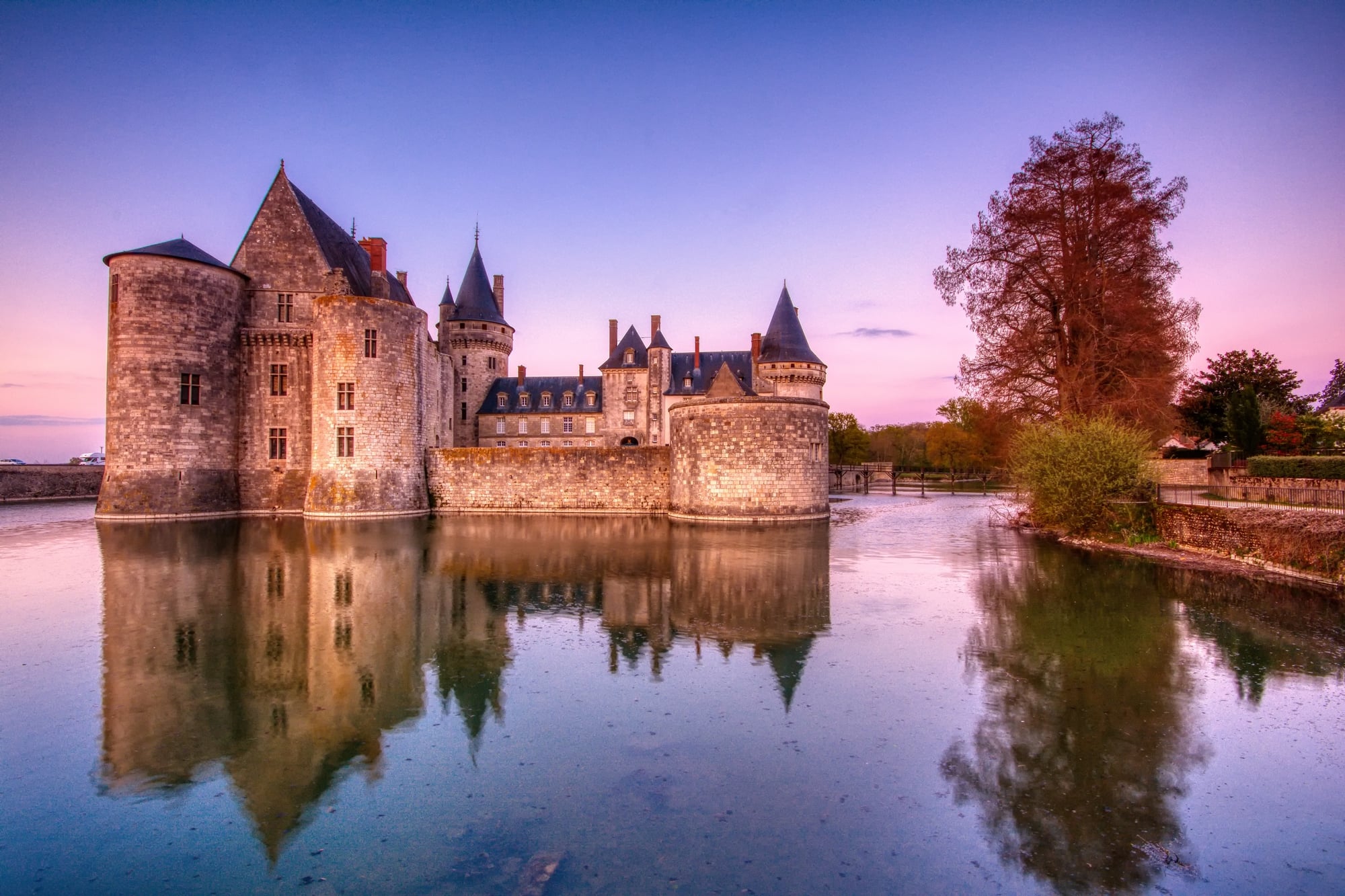
Château de Sully-sur-Loire sits within a floodplain, and its moat works in tandem with surrounding waterways. The wide, water-filled channel encircling the castle remains intact and carefully controlled.
This moat was never optional. It formed part of a broader strategy to manage seasonal water while reinforcing defence.
Even today, the water protects the structure by buffering changes in ground moisture and stabilising the surrounding land. Visitors cross into the castle the same way medieval occupants did, passing over water that still enforces distance and containment.
Matsumoto Castle

Matsumoto Castle is surrounded by multiple concentric moats, several of which remain water-filled and actively maintained. These moats form a layered defensive system that once worked alongside walls and gates to control movement precisely.
In Japanese castle design, moats often served both defensive and civic roles. At Matsumoto, the water still shapes the urban landscape around the castle, creating a clear boundary between historic core and modern development.
Seasonal changes affect water colour and plant life, but the moat’s function remains constant. It protects, separates, and defines the space exactly as it did centuries ago.
Osaka Castle

Osaka Castle’s moat system operates on a monumental scale. Wide water channels encircle the inner and outer grounds, remaining filled year-round and forming one of the most imposing moat systems still in use.
These moats are not decorative remnants. They regulate access, preserve elevation differences, and protect stone embankments from erosion.
Bridges mark deliberate crossing points, reinforcing the psychological shift from city to fortress. Despite surrounding urban density, the moat ensures the castle retains physical and symbolic separation, proving that water defences can survive even in modern metropolitan environments.
Himeji Castle
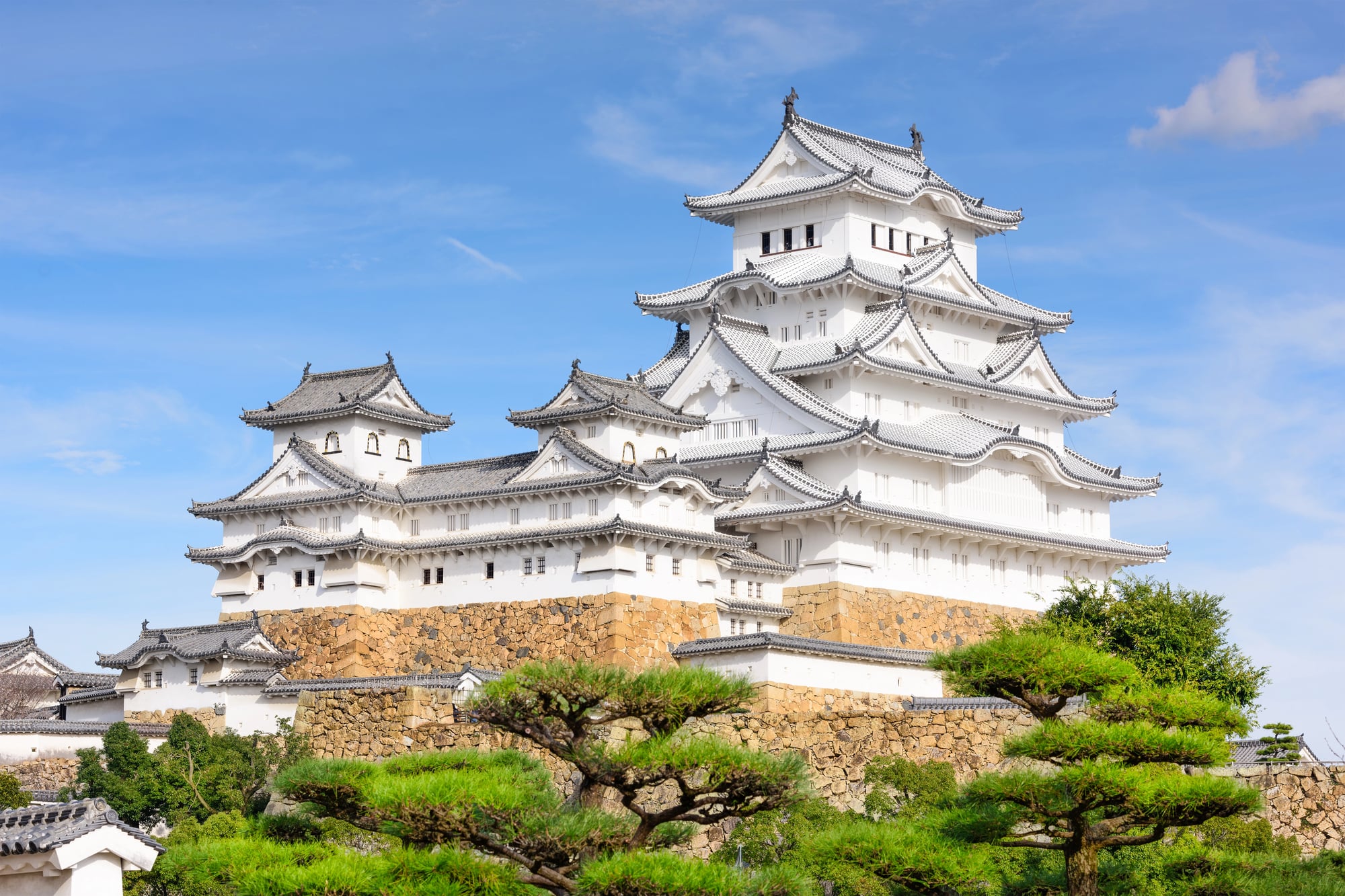
Himeji Castle’s defensive design relies on complexity rather than brute force. Its moat system includes multiple water-filled sections that work alongside winding paths and layered gates.
The moats are carefully preserved to maintain sightlines and restrict direct approach. Water continues to manage drainage across the site, preventing damage to the castle’s foundations.
What stands out is how seamlessly the moat integrates into the broader defensive maze. It still shapes movement, forcing visitors to follow routes chosen centuries ago.
Trakai Island Castle
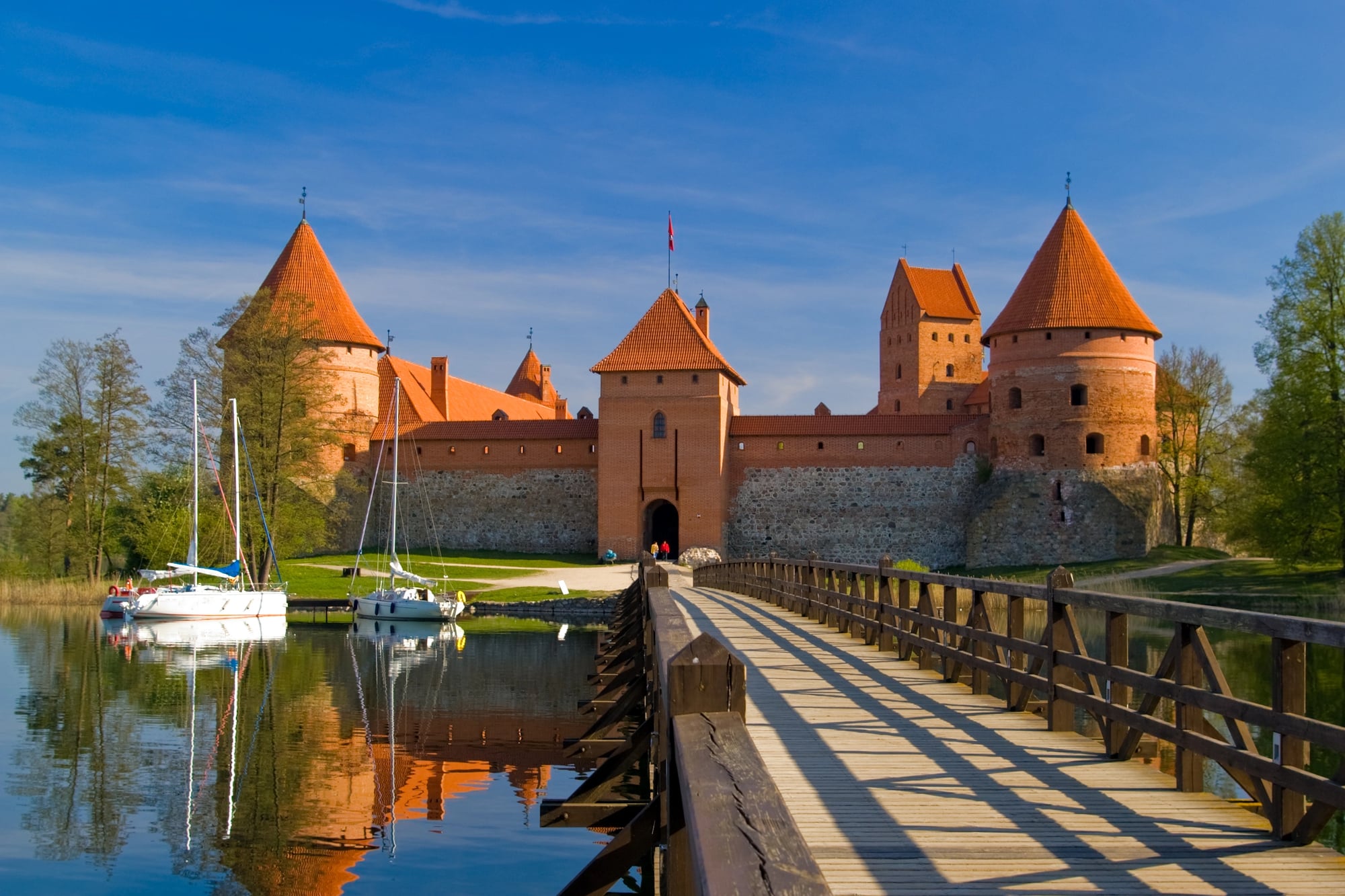
Trakai Island Castle occupies an island within Lake Galvė, using the lake itself as a natural moat. This arrangement remains entirely functional.
Water surrounds the castle on all sides, limiting access to narrow bridge crossings.
Because the castle depends on the lake rather than a constructed channel, the moat’s effectiveness never diminished. Seasonal ice, changing water levels, and natural currents all play roles in maintaining separation.
The water remains an active defensive feature, even though its purpose today is preservation rather than protection from attack.
Malbork Castle
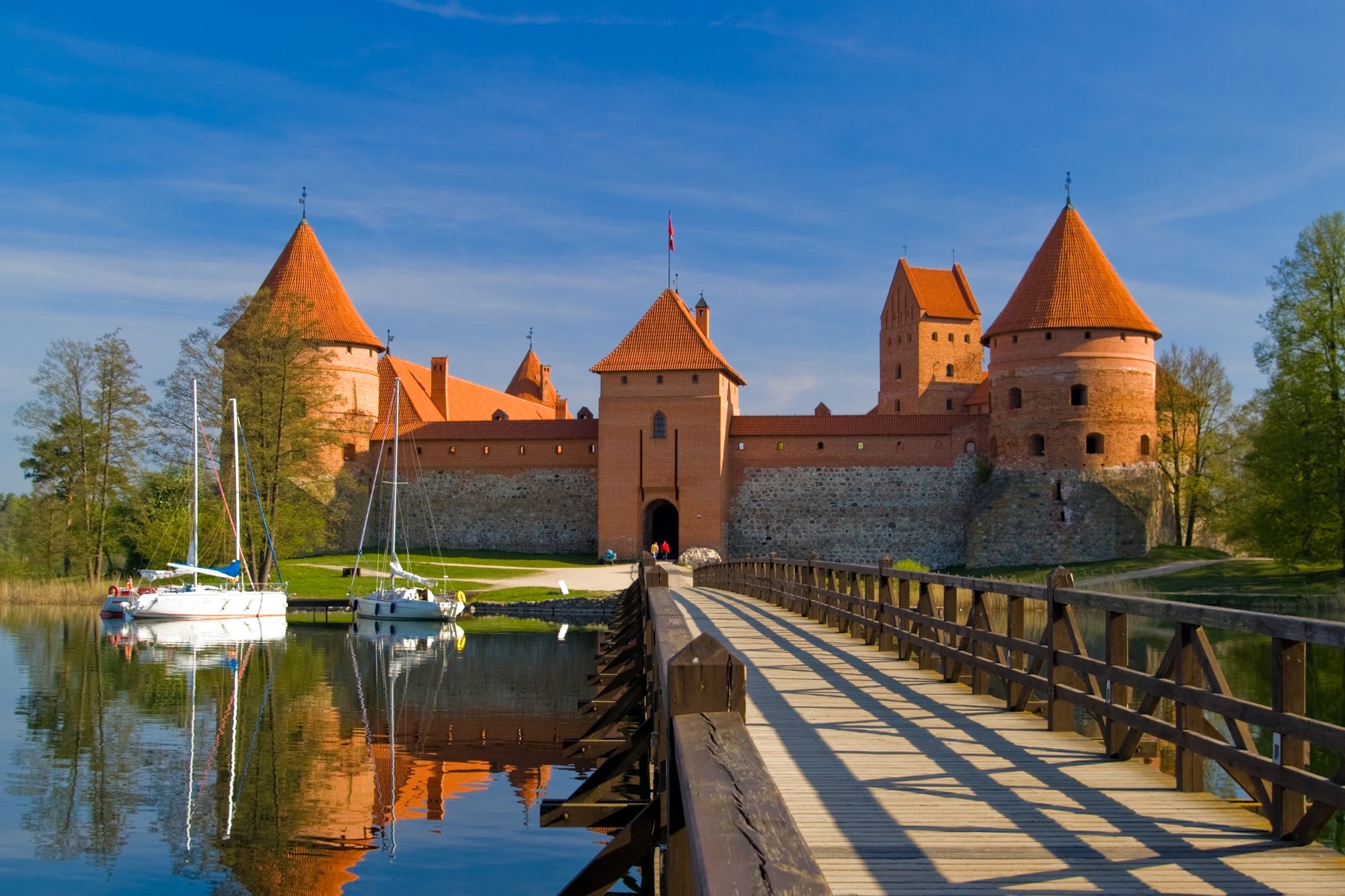
Malbork Castle incorporates water defences as part of an immense fortified landscape. Several sections of its moat system remain water-filled and carefully managed, contributing to drainage and structural protection.
Given the castle’s size, the moat functions less as a single barrier and more as a network. Water channels separate outer wards, control access routes, and protect brick foundations from moisture damage.
The system remains essential to preservation efforts, demonstrating how medieval engineering continues to solve modern conservation challenges.
Cahir Castle

Cahir Castle relies on geography rather than excavation. The River Suir flows around much of the structure, functioning as a natural moat that remains fully active.
This water barrier dictated the castle’s placement and shape from the outset. Preservation efforts focus on maintaining the river’s relationship to the castle rather than altering it.
The water still controls approach and reinforces isolation, proving that a moat does not need to be artificial to remain effective.
Hever Castle

Hever Castle retains a broad, water-filled moat that continues to encircle the property. While later adaptations softened its defensive role, the moat remains structurally relevant.
Water management protects the castle’s base and defines its boundaries. The moat still limits direct access and preserves the original footprint.
Even as the site evolved into a residence rather than a fortress, the water defence remained too useful to remove.
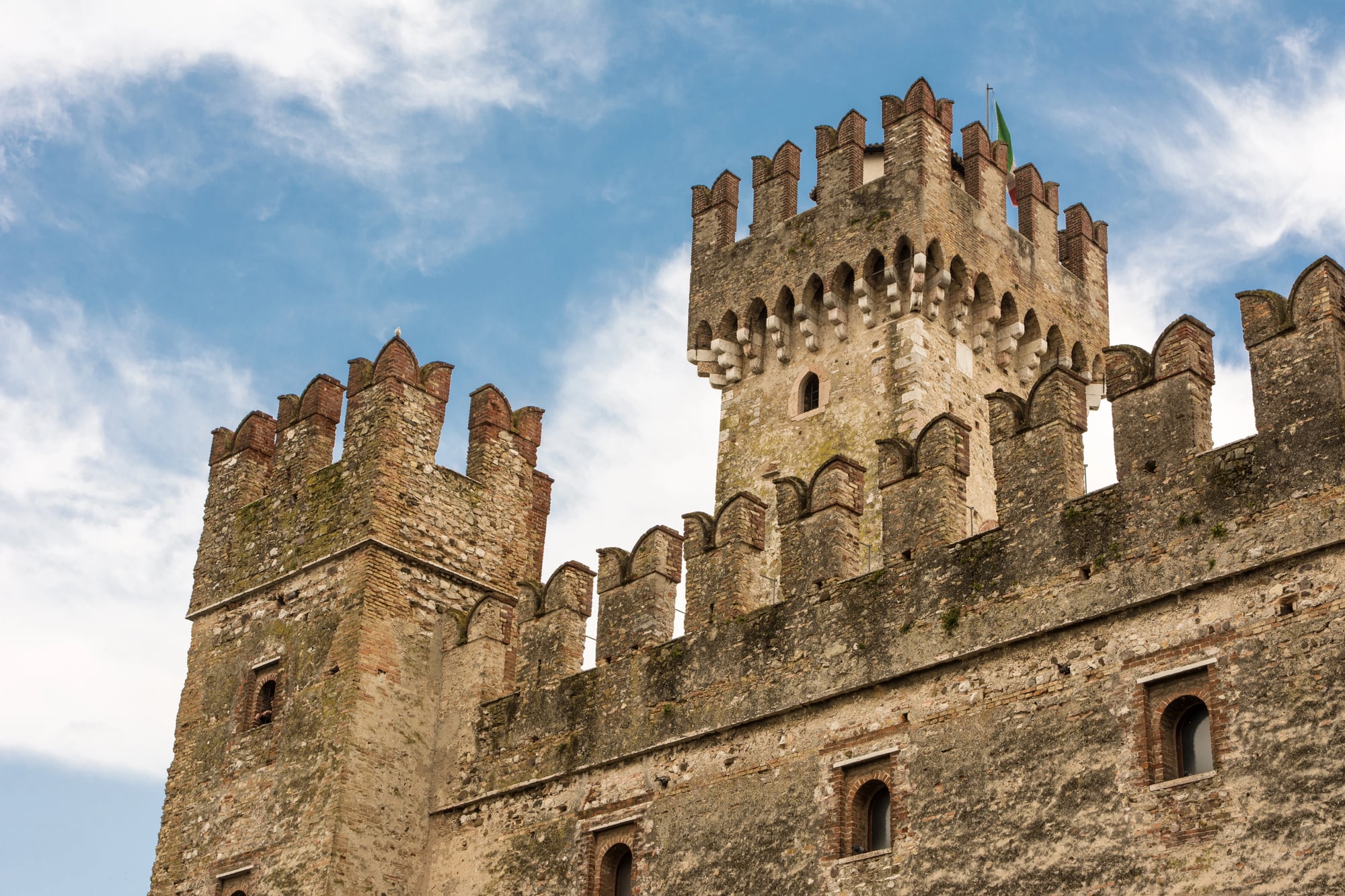
Castello Scaligero di Sirmione

This castle sits directly on Lake Garda, using the lake as a natural extension of its moat system. Water surrounds the structure on multiple sides, remaining deep and actively connected to the wider body of water.
The castle’s harbour-like enclosure demonstrates how moats could integrate with transport and supply routes. The water still isolates the castle from the town while maintaining structural stability.
Its defensive logic remains readable, even in a tourist-heavy environment.
Why Working Moats Endure
Still found today, moats stick around by handling real tasks. Temperature shifts slow near water, thanks to its stabilizing effect.
Drainage gets easier when flow is guided away naturally. Foundations stay safer behind these wet barriers.
Take the feature out, though, and structures may wobble instead of standing firm.
Water around castles does more than stop attackers. It forces space between worlds, slows feet that rush forward.
Moving across liquid ground marks change inside your mind. That moment of stillness – built on purpose – still holds weight now.
Stopping matters because it makes you notice.
Water keeps moving around old castles, not stuck but active. These places breathe with care taken daily, since function survives long past war’s end.
Even when battle plans vanished, flow remained, doing its slow job. Space shifts where it seeps, paths change by design, stories grow beneath stone.
More from Go2Tutors!

- The Romanov Crown Jewels and Their Tragic Fate
- 13 Historical Mysteries That Science Still Can’t Solve
- Famous Hoaxes That Fooled the World for Years
- 15 Child Stars with Tragic Adult Lives
- 16 Famous Jewelry Pieces in History
Like Go2Tutors’s content? Follow us on MSN.



