Civil Rights Lessons Inspired by Rosa Parks
Rosa Parks made a choice on December 1, 1955, that changed America forever. By refusing to give up her bus seat to a white passenger in Montgomery, Alabama, she didn’t just challenge a local law—she challenged an entire system built on inequality.
Her quiet act of resistance sparked a movement that would ripple through generations, teaching us lessons that remain just as important today as they were nearly 70 years ago.
So what can we learn from her courage and the movement she helped ignite? Let’s explore the powerful lessons that continue to shape how we think about justice, equality, and standing up for what’s right.
One person can start a revolution
Rosa Parks wasn’t planning to become the face of a movement when she boarded that bus. She was tired from work and tired of being treated as less than human.
But her refusal to move became the spark that lit the Montgomery Bus Boycott, a 381-day protest that eventually led to the Supreme Court declaring bus segregation unconstitutional. Sometimes the biggest changes start with one person saying ‘enough is enough.’
Quiet strength can be louder than shouting
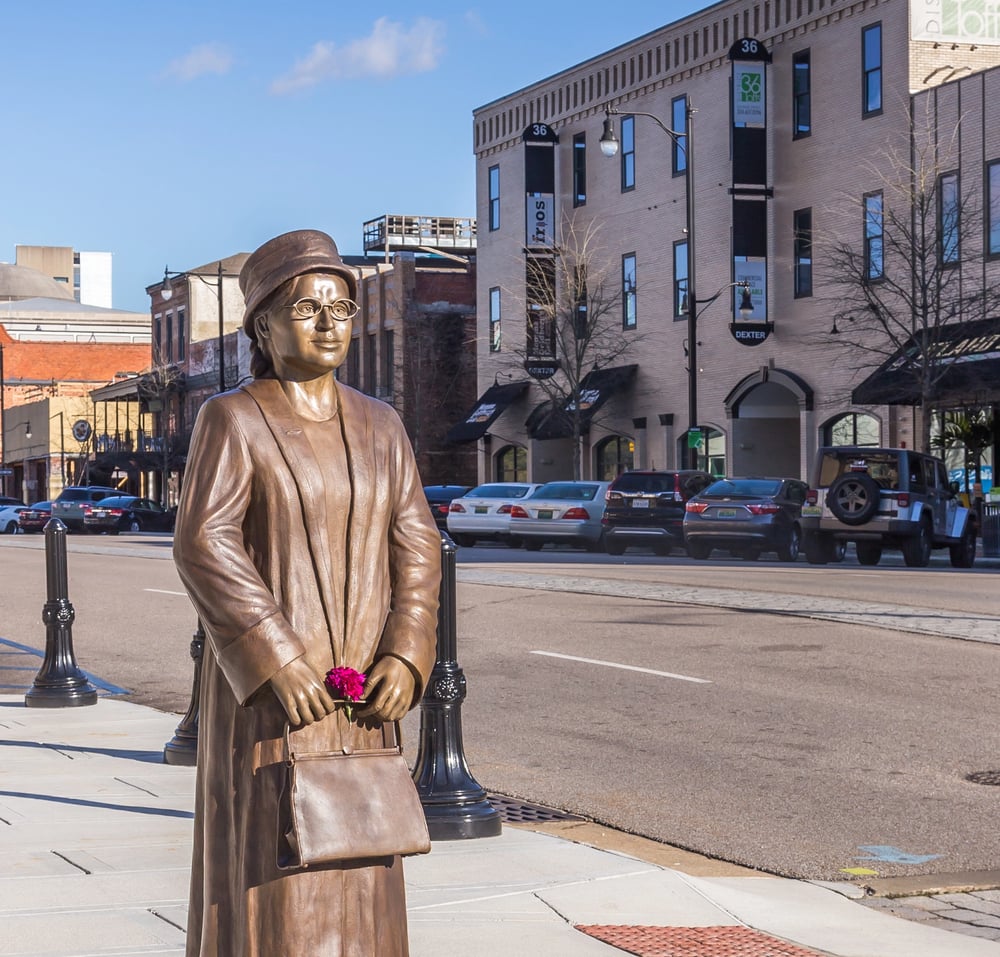
Parks didn’t throw a fit or cause a scene when the bus driver demanded she move. She simply said no and sat there with calm determination.
This kind of quiet resistance proved more powerful than any angry outburst could have been. It showed that real strength doesn’t always come with raised voices or dramatic gestures—sometimes it’s found in the steady resolve to hold your ground.
Planning matters as much as passion

Many people think Rosa Parks acted spontaneously, but the truth is more complex. She had been an active member of the NAACP for years and had attended workshops on civil disobedience.
The Montgomery Improvement Association was ready to mobilize quickly after her arrest because activists had been waiting for the right moment and the right case. Passion fuels movements, but smart planning turns that energy into real change.
Economic pressure creates political change
The Montgomery Bus Boycott worked because Black residents made up about 75% of bus riders in the city. When they stopped using the buses, the transit company lost massive amounts of money.
City officials couldn’t ignore empty buses and shrinking revenue. This taught activists everywhere that hitting people in their wallets often gets faster results than appealing to their conscience.
Community support turns individuals into movements

Rosa Parks didn’t fight alone, and she couldn’t have succeeded without her community. Thousands of people walked to work, organized carpools, and endured harassment to keep the boycott going.
Churches opened their doors for meetings, and neighbors looked out for each other when things got tough. One brave act became a movement because an entire community decided to stand together.
Sacrifice is part of the price for justice

Parks lost her job at a department store after her arrest. She and her husband faced constant threats and eventually had to leave Montgomery for Detroit to find work and safety.
Many boycott participants faced similar hardships—lost jobs, legal troubles, and violence. Fighting for what’s right often comes with a personal cost, but those who came before us showed that some things are worth the sacrifice.
The legal system can be both barrier and tool

Segregation laws seemed impossible to defeat because they were backed by the full force of the government. But civil rights lawyers like Thurgood Marshall used the legal system itself to challenge these unjust laws.
The Supreme Court’s decision in Browder v. Gayle, which ended bus segregation, proved that the same system upholding injustice could also be used to tear it down. Understanding how to work within and against the system at the same time became a key strategy.
Young leaders bring fresh energy to old fights

Martin Luther King Jr. was only 26 years old when he was chosen to lead the Montgomery Improvement Association. His youth brought energy, new ideas, and a willingness to take risks that complemented the experience of older activists like E.D. Nixon and Jo Ann Robinson.
Movements need both the wisdom of experience and the boldness of youth. Every generation has something unique to contribute to the ongoing struggle for justice.
Women’s leadership often goes unrecognized

Rosa Parks became famous, but Jo Ann Robinson and the Women’s Political Council actually organized the initial boycott. They distributed 35,000 fliers overnight to spread the word about the protest.
Countless women kept the movement running through their work in churches, schools, and neighborhoods. History books often focus on male leaders, but women have always been the backbone of civil rights work.
Local actions can have national impact
What started as a city bus boycott in Alabama became front-page news across America and around the world. Montgomery’s success inspired similar protests in other cities and gave the civil rights movement momentum that built through the 1960s.
Never underestimate how a local fight can grow into something much bigger when it captures people’s imagination and speaks to a broader truth.
Dignity isn’t something anyone can take away

The segregation system tried to convince Black Americans they were inferior and didn’t deserve basic respect. Rosa Parks and everyone who joined the boycott rejected that lie.
They walked miles in the heat and cold rather than accept second-class treatment. Their insistence on being treated with dignity—no matter what the law said—reminded everyone that human worth isn’t determined by unjust rules.
Patience and persistence outlast opposition

The boycott lasted more than a year. People got tired, frustrated, and scared, but they kept going.
City officials tried everything to break the protest—arrests, intimidation, even bombing Martin Luther King Jr.’s house. But the movement held firm because participants understood that real change takes time.
Quick fixes rarely last, but changes won through sustained effort create foundations that are much harder to tear down.
Education and preparation reduce fear

Rosa Parks attended the Highlander Folk School, where activists learned about organizing and civil rights strategies. This training gave her confidence and practical skills she used throughout her life.
Knowledge is a powerful weapon against fear. When people understand their rights and have a plan, they’re more likely to take action instead of staying silent.
Coalition building strengthens every cause

The Montgomery Bus Boycott brought together people from different churches, social classes, and backgrounds. Labor unions, white allies, and national organizations provided support and resources.
Building bridges between groups creates a broader base of support and makes movements harder to dismiss or defeat. Going it alone limits what you can accomplish, but finding common ground with others multiplies your impact.
Children learn what they see adults do

Young people in Montgomery watched their parents and neighbors fight for justice with courage and determination. Those children grew up to become the next generation of activists in the civil rights movement and beyond.
The lessons they learned about standing up to injustice shaped their entire lives. What we do today teaches the young people watching us what’s possible and what’s worth fighting for.
A single step can start a shift

Resistance often begins quietly. Tiny actions build pressure over time.
Victory shows up after unseen efforts. Change grows where it’s least expected.
Parks was not the first held back for staying put on a Montgomery bus yet past moments did not shake things loose like this. A spark lands differently depending on the air around it perhaps.
Small refusals pile up like stones under water until one ripple pulls everything forward. Voices that rise when silence is easier – they lay groundwork without asking for notice.
Ordinary people make history
Ordinary folks showed up when it mattered most. A quiet woman stitched clothes for a living, yet stood tall one December afternoon.
Across town, a preacher with little experience found his voice in a crowded hall. Day after day, those without cars moved on foot – cleaning houses, serving meals, shaping young minds – all choosing dignity over convenience.
Wealth never touched their hands, nor did headlines chase them down streets. Still, something powerful grew where silence once lived.
Power does not always wear a suit; sometimes it wears worn-out shoes walking together. Change didn’t arrive in a limousine – it came step by steady step.
Footprints stay because of steps taken, not thoughts held

What matters grows from doing, never just recalling. These days, folks know Rosa Parks as a key figure in the push for equal rights – there are statues, honors, even schools named after her.
Still, what truly honors her life’s work isn’t stone or signs; it’s how others keep pushing for fairness because she stood up – or stayed seated.
Each new wave of young people runs into fresh forms of unfairness they didn’t create. She proved regular folks can spark big shifts by holding firm when it counts most, and that truth holds strong today like it did back on a quiet bus ride in Alabama long ago.
More from Go2Tutors!

- The Romanov Crown Jewels and Their Tragic Fate
- 13 Historical Mysteries That Science Still Can’t Solve
- Famous Hoaxes That Fooled the World for Years
- 15 Child Stars with Tragic Adult Lives
- 16 Famous Jewelry Pieces in History
Like Go2Tutors’s content? Follow us on MSN.