Clever Codes That Took Centuries To Break
For centuries, cryptographers and scholars stared at mysterious symbols, desperate to unlock their secrets. Some of these codes held the keys to ancient civilizations, while others guarded precious treasures or military secrets.
Breaking them required patience, brilliance, and sometimes just dumb luck. The journey from encrypted mystery to decoded message often spanned hundreds of years, with each generation of codebreakers building on the failures of those who came before.
Here is a list of codes that stumped the world’s brightest minds for centuries before finally revealing their secrets.
Cuneiform Script

The wedge-shaped marks pressed into ancient clay tablets baffled scholars for centuries after the last scribes stopped using them around the beginning of the Common Era. These weren’t just random scratches but one of humanity’s earliest writing systems, used across Mesopotamia for over three millennia.
The breakthrough came in the 1800s when scholars like Georg Friedrich Grotefend and Henry Rawlinson worked to decipher inscriptions, particularly the famous Behistun Inscription in Iran. By 1857, cuneiform was finally readable again, unlocking stories like the Epic of Gilgamesh and revealing the laws, trade records, and literature of civilizations like the Sumerians and Babylonians.
The decipherment took centuries because nobody had even known where to start until trilingual inscriptions provided the necessary Rosetta Stone moment.
Vigenère Cipher

In the 1500s, this encryption method earned the nickname ‘le chiffre indéchiffrable’—the indecipherable cipher. Unlike simple substitution ciphers that could be cracked through frequency analysis, the Vigenère used multiple shifting alphabets based on a keyword, making it fiendishly difficult to break.
For over 300 years, this cipher protected secrets across Europe, giving its users tremendous confidence in their communications. The code finally fell in the mid-1800s when mathematician Charles Babbage figured out how to crack it during the Crimean War, though German cryptographer Friedrich Kasiski gets credit for publishing the solution in 1863.
The Vigenère remained popular even after being broken, partly because many didn’t realize it was no longer secure.
Great Cipher of Louis XIV

France’s King Louis XIV employed a cipher so complex that when its creator Antoine Rossignol died, the secret died with him. This encryption system used numbers to represent syllables rather than individual letters, with some numbers serving as nulls to throw off codebreakers and others representing common words.
The cipher protected some of France’s most sensitive state secrets for about 200 years until French military cryptanalyst Étienne Bazeries finally broke it in 1890. When decoded, the messages revealed fascinating historical details, including information about the Man in the Iron Mask, one of history’s most enduring mysteries.
The Great Cipher showed how a well-designed system could protect secrets long after its creators had turned to dust.
Copiale Cipher

An ornate manuscript bound in gold and green brocade paper sat in an archive for over 260 years, its 75,000 handwritten characters completely indecipherable. Created in the 1730s, this homophonic cipher used abstract symbols mixed with Greek and Roman letters in a way that stumped everyone who examined it.
The key breakthrough came in 2011 when an international team led by Kevin Knight used computer algorithms to crack the code, discovering that the Roman letters were actually meaningless distractions while the symbols contained the real message. The decoded text revealed initiation rituals of a secret society called the Oculists, who had an odd fascination with eye surgery and ophthalmology.
Sometimes the most obvious elements of a cipher turn out to be red herrings designed to waste a codebreaker’s time.
Mayan Hieroglyphics

Spanish conquistadors destroyed countless Mayan books in the 1500s, viewing them as works of the devil, and knowledge of how to read the intricate glyphs faded away. For over 400 years, the beautiful symbols that covered Mayan temples and the few surviving codices remained silent.
The breakthrough began in the 1950s when Soviet linguist Yuri Knorozov proved that Mayan glyphs were a mix of phonetic and logographic symbols, not purely pictorial as many had assumed. Additional work by scholars like Tatiana Proskouriakoff in the 1960s revealed that many inscriptions recorded actual historical events and rulers, not just astronomical or religious information.
By the 1980s, much of the Mayan script could be read, bringing an entire civilization’s history back to life.
Linear B
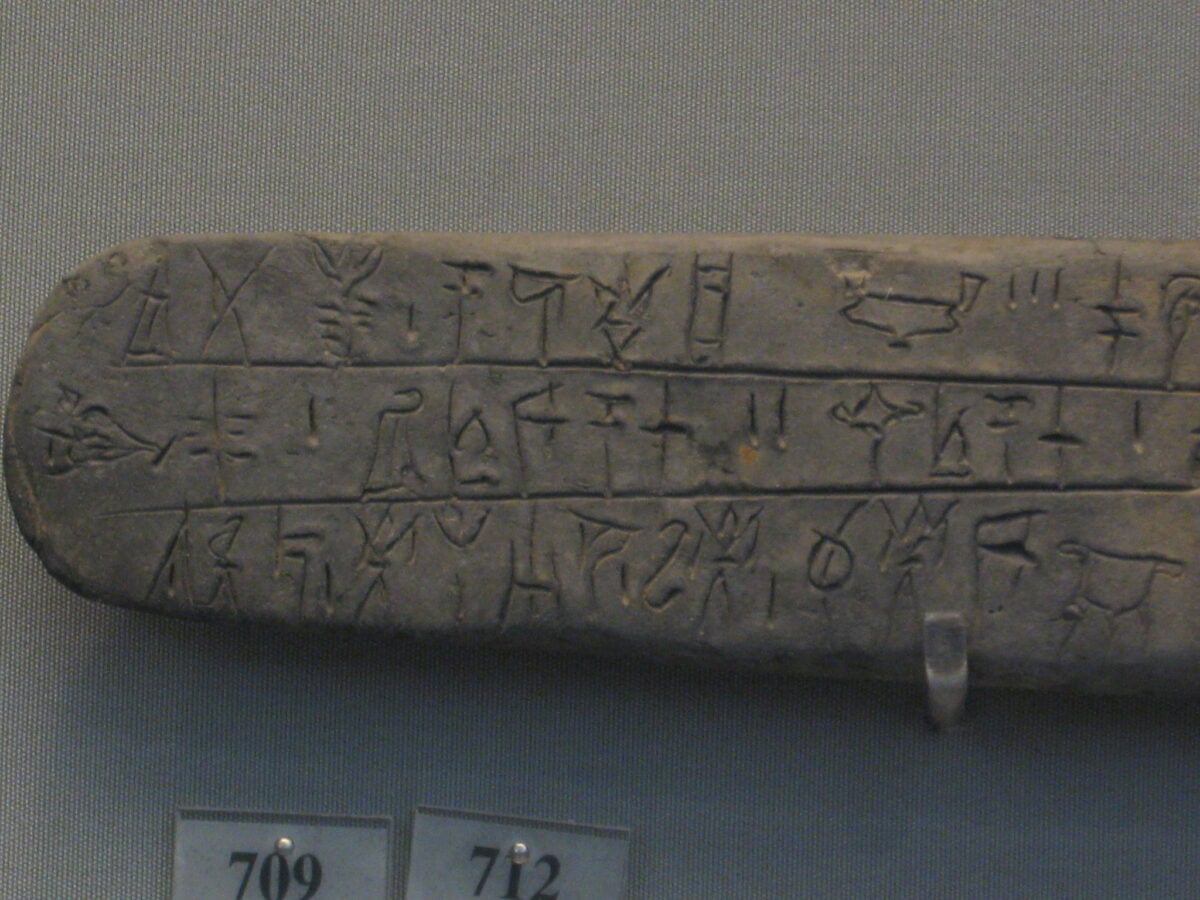
British archaeologist Arthur Evans discovered tablets covered in mysterious symbols at Knossos in Crete starting in 1900, but he spent his entire life unable to read them. The script appeared to be some form of ancient Minoan writing, and Evans was convinced it recorded a lost language.
In 1952, architect and amateur linguist Michael Ventris finally cracked Linear B after 17 years of obsessive work, discovering something shocking—it was actually an early form of Greek, not Minoan at all. This finding pushed the documented history of Greek civilization back by several centuries and revealed details about Mycenaean palace economies, religious practices, and society.
Sometimes the biggest breakthroughs come when someone questions the fundamental assumptions everyone else has accepted.
Beale Ciphers

In 1885, a pamphlet appeared claiming that a man named Thomas J. Beale had buried a fortune in gold, silver, and jewels worth millions in Bedford County, Virginia, and left behind three encrypted messages revealing its location. Using the Declaration of Independence as a key, someone managed to decode the second cipher, which described the treasure’s contents in tantalizing detail, but the other two ciphers have resisted all attempts at decryption for nearly 140 years.
Professional cryptographers, the military, and countless treasure hunters have tried everything from supercomputers to psychic visions, yet the location remains hidden. Many now suspect the whole story is an elaborate hoax designed to sell pamphlets, but that hasn’t stopped people from digging up half of Bedford County looking for that elusive vault.
Zodiac Killer’s Z340 Cipher

When the Zodiac Killer sent a 340-character cipher to the San Francisco Chronicle in November 1969, he probably didn’t expect it to remain unsolved for 51 years. Unlike his first cipher, which was cracked in days, the Z340 used a combination of homophonic substitution and transposition that created a nearly impenetrable puzzle.
In December 2020, an international team of amateur cryptographers finally broke the code using custom software and discovered the killer’s chilling message, which included the misspelled words ‘paradice’ and claims about collecting people to serve him in the afterlife. The solution required over 650,000 different transposition attempts tested by computer algorithms that could automatically insert spaces where words likely belonged.
Sometimes centuries-old techniques meet cutting-edge technology to crack a code that’s only half a century old.
Rosetta Stone and Egyptian Demotic

While hieroglyphics get all the attention, the Rosetta Stone actually featured three scripts, and the middle one—Demotic—was equally mysterious. This cursive Egyptian script had evolved from hieroglyphics for everyday use but had been forgotten for over 1,400 years.
The beauty of the Rosetta Stone was that it provided the same text in three languages, allowing scholars to work out both the hieroglyphic and Demotic scripts simultaneously. Champollion’s 1822 breakthrough depended on understanding all three texts and how they related to each other.
Demotic opened up a treasure trove of everyday documents—contracts, letters, and records—that showed how ordinary Egyptians actually lived.
Great Zimbabwe Script
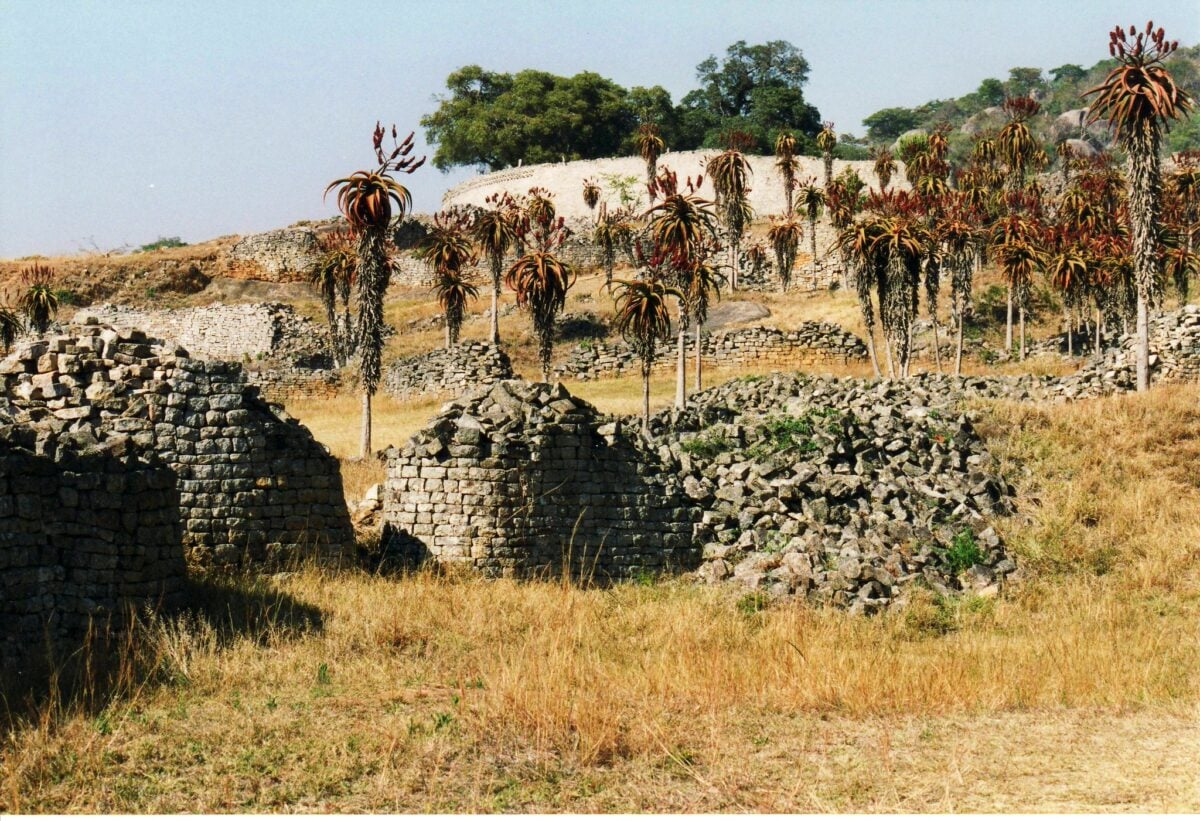
The sophisticated stone structures of Great Zimbabwe featured mysterious symbols and patterns that colonial scholars initially refused to believe were created by indigenous Africans. For centuries, various theories proposed everyone from Phoenicians to the Queen of Sheba as the builders, partly because the symbols couldn’t be read.
Modern archaeological and linguistic work over the past century has slowly decoded elements of the site’s symbolic language, revealing it as the work of the ancestors of the Shona people who built a powerful trading empire between the 11th and 15th centuries. The ‘code’ here wasn’t just written symbols but architectural patterns, soapstone carvings, and cultural knowledge that had been disrupted by colonization.
Sometimes deciphering a code means rebuilding lost cultural connections rather than just translating text.
Proto-Elamite Script

Around 3200 BCE in what’s now Iran, scribes created one of the world’s oldest writing systems, leaving behind over 1,600 texts on clay tablets. For more than 5,000 years, nobody has been able to read it.
Unlike cuneiform, which was eventually cracked, Proto-Elamite remains stubbornly silent because there’s no bilingual text to serve as a key and the language it represents is completely unknown. Scholars can identify some numerical and administrative symbols but can’t read actual words or sentences.
The script appears to mix logograms and syllabic signs, but without knowing the underlying language or having a Rosetta Stone equivalent, it might remain undeciphered for centuries more. Some ancient codes haven’t been broken yet, and some may never be.
The Enduring Challenge

The codes that took centuries to crack teach us something important about human persistence. Each generation of cryptographers built on the failures of those who came before, slowly accumulating knowledge even when breakthroughs seemed impossible.
Modern computers have accelerated this process dramatically, but they still can’t replace human intuition and creativity. The Copiale Cipher fell to algorithms, but those algorithms had to be designed by people who understood what questions to ask.
As new technologies emerge, old mysteries continue to fall, suggesting that some of today’s unsolved codes might finally reveal their secrets in the centuries to come.
More from Go2Tutors!

- The Romanov Crown Jewels and Their Tragic Fate
- 13 Historical Mysteries That Science Still Can’t Solve
- Famous Hoaxes That Fooled the World for Years
- 15 Child Stars with Tragic Adult Lives
- 16 Famous Jewelry Pieces in History
Like Go2Tutors’s content? Follow us on MSN.